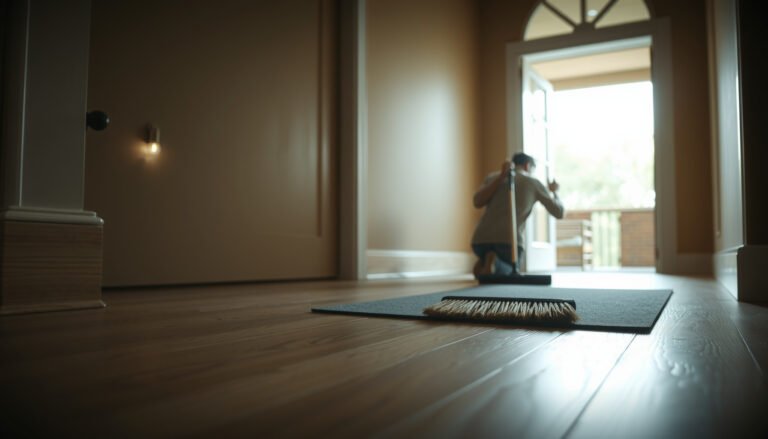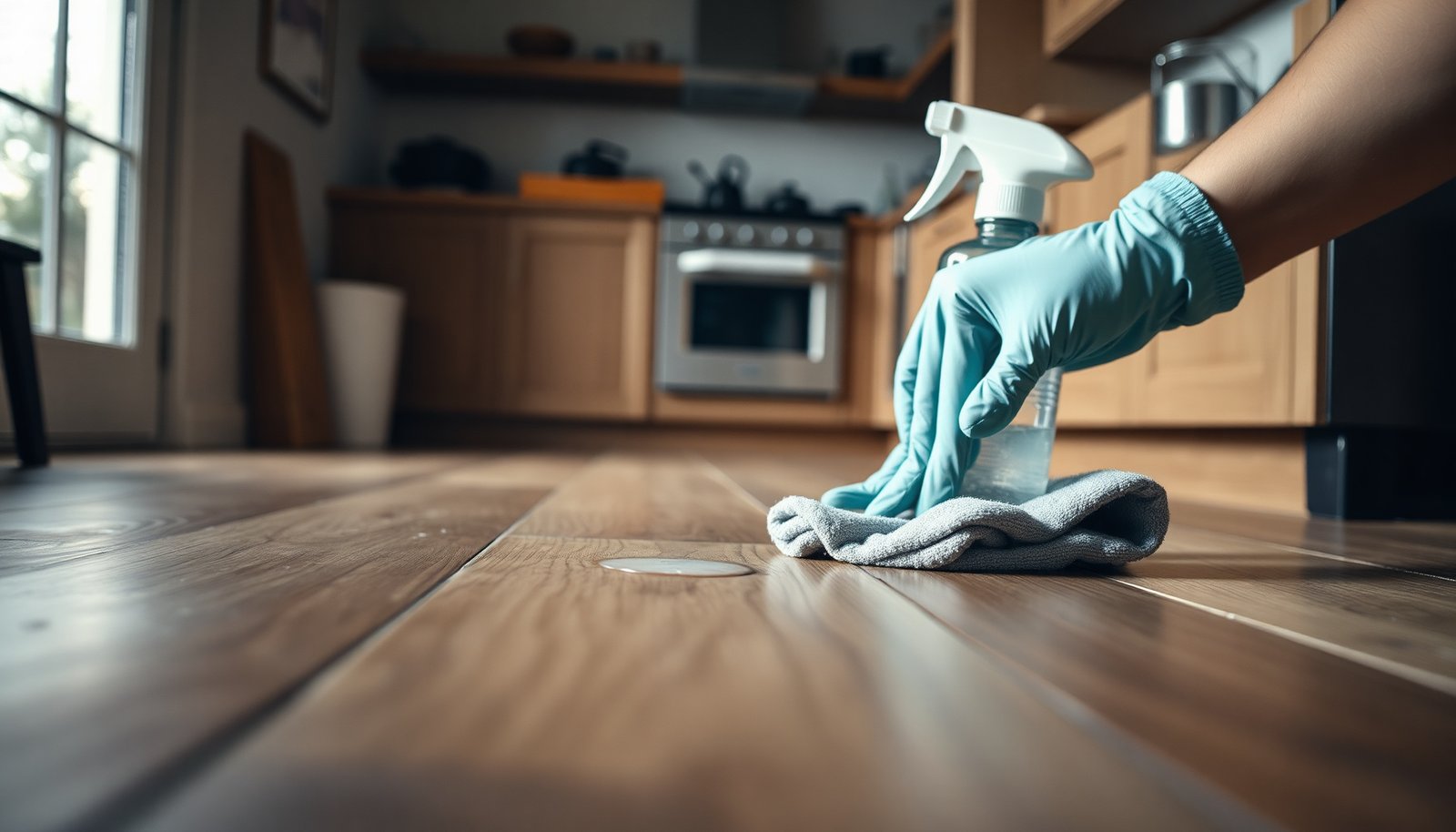

Engineered wood floors can show glossy halos and tacky spots when cooking grease seeps into the top finish. It is frustrating to watch a stain appear, especially when you want the surface to stay smooth and intact. You’ll learn a safe, finish-friendly cleaning method—right from blotting and degreasing to rinsing and drying—so you can lift grease without warping or stripping the plies.
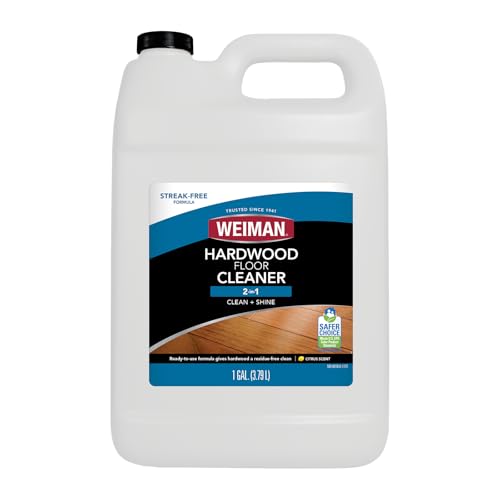


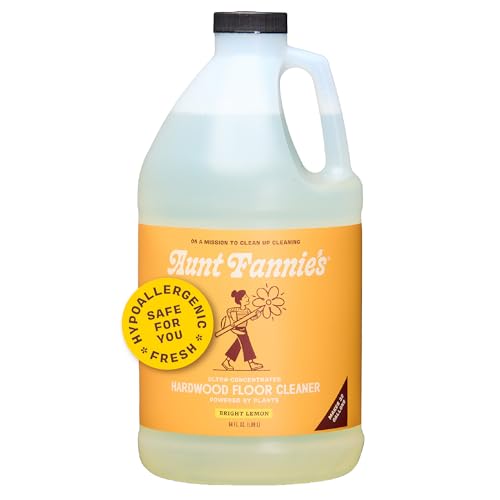
If cooking grease is on your engineered wood floor, the safest approach is to remove it gently with a dry method first, then a minimal amount of pH-neutral cleaner—without soaking the planks. For spots or light films, use a microfiber cloth and light pressure; for stuck residue, loosen it with a properly dampened cloth rather than pouring liquid. You’ll learn a step-by-step process that protects the top layer and prevents warping, dulling, and sticky residue.
This guidance is for homeowners dealing with kitchen grease on engineered wood (including sealed or finished surfaces) who want a cleaning method that avoids excess moisture and harsh chemicals. If your floor is unsealed, heavily worn, or the grease has been there a long time, you’ll want to slow down and test carefully.
Quick safety checks before you start

Before you touch the grease, confirm the finish condition and protect seams from liquid intrusion. This prevents the two most common engineered-wood failures: finish softening/dulling and moisture migration at plank edges.
– Identify whether the floor has a sealed/finished surface (most do) and avoid any cleaner that’s known to strip finishes. In practical terms, you’re looking for documentation that mentions “sealed,” “finished,” or a specific surface coating system; if you don’t have it, treat the surface as sensitive.
– Check for loose edges, gaps, or lifted seams so you don’t push liquid into the seams. Even “small” amounts of flow can wick under a plank where engineered layers meet.
– Confirm the area isn’t a waxed/treated surface you shouldn’t alter with detergents (if you’re unsure, stick to the mildest option first). If someone previously applied wax or a coating, pH-neutral cleaners can still change how the film bonds.
As of 2026, many manufacturers continue to recommend “cloth-applied cleaner, minimal moisture” for routine spot maintenance, especially in kitchens where grease films are common.
Step-by-step: remove grease without soaking
The safest grease cleanup for engineered wood is dry lift first, then cloth-applied pH-neutral wiping. This approach targets oil without saturating the wear layer or forcing moisture into the construction.
– Blot and lift first: Use a dry microfiber cloth or soft paper towel to pick up as much grease as possible (don’t rub it wider). Grease spreads when you smear it; lifting removes it at the source and reduces how much chemistry you’ll need later.
– Loosen gently: Dampen a cloth with a small amount of pH-neutral cleaner and wipe in the direction of the wood grain. “pH-neutral” generally means close to neutral chemistry (neutral is pH 7 at 25°C ), and floor-care products marketed as pH-neutral are commonly formulated around a neutral range rather than strongly acidic or alkaline.
– Finish with a dry pass: Follow immediately with a clean, dry microfiber to remove remaining moisture. This dry step matters because engineered wood—while stable compared with solid hardwood—still responds to moisture exposure, particularly near seams.
Why “no soaking” is non-negotiable
Steam and puddles add heat and water to a surface system designed to resist spills—not to absorb liquids. Steam mops, for example, deliver vapor near the boiling point of water (100°C / 212°F at 1 atm) , which can increase the chance that liquid migrates past the finish and into vulnerable edges.
USDA Forest Products research also shows wood’s size changes as moisture content changes; for many wood species, dimensional variation across moisture states can reach single-digit percentages or more depending on direction and moisture range . In a kitchen, the risk is less about “swelling instantly” and more about repeated or prolonged moisture exposure—especially if the grease cleanup requires multiple wet passes.
Spot treatment for sticky, film-like grease
If the grease leaves a tacky film, keep the process controlled: less liquid, more patience. You’re aiming to dissolve and lift the oily residue at the surface, then remove it completely before it can redeposit.
– Use the “less liquid, more patience” rule: Re-dampen lightly only as needed to keep the cloth barely damp. If the cloth is dripping, the floor is being wetted—avoid that.
– Work in small sections so the cleaner doesn’t sit and spread residue. Grease works like a transport medium: once loosened, it can move outward if you let it pool or keep wiping without re-lifting.
– If residue persists, repeat the mild-cleaning steps rather than escalating to stronger solvents right away. Escalation is where finishes often dull, turn hazy, or develop a sticky “cleaner film.”
From a practical maintenance standpoint (based on how floors behave under repeated spot-cleaning attempts), the fastest path to a good outcome is usually two or three gentle cycles with drying in between—not one aggressive wet attempt.
What to use (and what to avoid) on engineered wood
For engineered wood grease removal, choose chemistry and moisture levels that match the finish, not the strength of the stain. Your goal is grease lift with minimal coating stress.
– Do use: pH-neutral floor cleaner, microfiber cloths, and minimal water applied to the cloth—not the floor. Applying cleaner to the cloth lets you control amount and prevents puddling near seams.
– Avoid: steam mops, soaking mops, abrasive pads, and harsh degreasers that can damage coatings. Steam adds heat and water; abrasive pads create micro-scratches that can trap and “read” grease oils as a shiny or dull halo.
– Skip alcohols/solvents unless your flooring manufacturer explicitly approves them for your finish (if you don’t have the spec, start with pH-neutral). Many finishes tolerate mild cleaners but can be softened by strong solvents, especially if the finish layer is already thin or worn.
To make the decision easier, here’s a comparison of “cloth-based maintenance” versus “liquid/heat escalation” for engineered wood grease:
| Method | Pros | Cons / Risk |
|---|---|---|
| Dry lift → pH-neutral cloth wipe → immediate dry | Targets grease at the surface, limits moisture migration, and helps prevent streaking or sticky residue from cleaner left behind. | May take multiple gentle cycles for long-set stains; requires careful drying between passes. |
| Steam mop / soaking / harsh degreaser | Can feel faster on heavy grease because it adds heat and stronger surfactants. | Higher chance of finish haze/dulling, edge moisture problems, and a re-deposited “slick” film if chemistry isn’t fully removed. |
Engineered Wood Grease Cleanup: Option Risk vs. Finish Safety (2026)
| # | Grease-removal option | Chemistry profile | Moisture to finish | Finish safety rating |
|---|---|---|---|---|
| 1 | Dry microfiber lift | None (dry) | 0 (no wetting) | ★★★★★ |
| 2 | pH-neutral cleaner on damp cloth | Near neutral (often ~pH 6–8) | Very low (cloth barely damp) | ★★★★☆ |
| 3 | Distilled water on damp cloth (no detergent) | Neutral water (~pH ~7) | Low (controlled wipe) | ★★★☆☆ |
| 4 | Gentle floor cleaner follow-up (cloth + dry) | Finish-safe detergent system | Very low to low | ★★★☆☆ |
| 5 | Mild alkaline degreaser (spot-only, finish-unknown) | Often alkaline (~pH 10+) | Low to medium (if overapplied) | ★★☆☆☆ |
| 6 | Isopropyl alcohol (finish-untested) | Solvent-based (e.g., ~70% v/v) | Low but aggressive chemistry | ★☆☆☆☆ |
| 7 | Steam mop (no finish approval) | Hot vapor (~100°C / 212°F at 1 atm) | High heat + moisture exposure | ☆☆☆☆☆ |
What can go wrong (and how to prevent it)
Even when you use the right idea, engineered wood can show problems if you apply too much liquid, wait too long, or skip the final dry step. The good news: most issues are preventable with process control.
– Hazing or dull patches: Usually comes from too much moisture or repeated wiping with the wrong cleaner—reduce liquid and re-dry immediately. If hazing appears, stop wet cleaning and switch to dry-only passes while you reassess.
– Sticky residue or “slick spots”: Often means the cleaner wasn’t fully removed—wipe again with a lightly damp cloth (just enough to pick up residue), then dry immediately. Grease is oily; leaving detergent behind can leave a feel you can “detect” with your fingertips.
– Swelling at edges: Can happen if grease cleanup pushes liquid into seams—avoid puddling and focus on cloth-based application. Pay extra attention to the perimeter and near transitions (doorways, cabinetry, stair steps).
– Scratches from grease particles: If you start rubbing while grease is gritty, you can micro-scratch the surface—lift first, then wipe. This is why dry lift first is the foundation rather than an optional step.
If your floor is already showing wear-through (dulling across many boards, visible texture changes, or worn edges), be more conservative. In 2026, the best practice for kitchens is still “protect the coating layer first,” because once the finish is compromised, chemistry choices become less forgiving.
Verdict: the safest method is mild, controlled cleaning
For most engineered wood floors, the safest route is dry lift → pH-neutral cloth cleaning → immediate dry wipe, repeating gently until the grease is gone. Downsides: this approach may take more time for long-set stains, and it won’t “instantly dissolve” heavy buildup.
Skip this DIY approach (or test first in an inconspicuous spot) if your manufacturer warns against cleaners you’re considering, the top finish is worn through, or you notice widespread damage (cupping, lifting, or severe seam gaps). If the grease has penetrated heavily, the safest move is often to pause and contact a flooring professional who can inspect the wear layer without over-wetting.
Grease-cleaning scan/checklist
– [ ] Lift grease first with a dry microfiber/paper towel
– [ ] Use pH-neutral cleaner applied to a cloth (not the floor)
– [ ] Wipe with gentle pressure, with the grain
– [ ] Remove cleaner residue with a lightly damp cloth if needed
– [ ] Dry immediately with a clean microfiber
– [ ] Repeat mild steps instead of using harsh chemicals
Frequently Asked Questions
What’s the safest way to remove cooking grease from engineered wood floors?
Start by wiping up excess grease with a soft cloth or paper towels—never scrape aggressively or use metal tools. Use a damp microfiber mop with a wood-safe cleaner designed for engineered wood, and avoid soaking the floor. For stubborn spots, apply a small amount of degreasing cleaner to the cloth (not directly on the wood) and blot, then rinse lightly with a water-dampened cloth. Dry immediately with a clean towel to prevent water damage and warping.
How do I clean grease without damaging the top layer of my engineered wood?
Engineered wood has a protective finish that can be dulled or stripped by harsh chemicals, so choose pH-balanced, manufacturer-approved products. Test any cleaner in an inconspicuous area first, then apply with gentle pressure using a microfiber cloth. Keep liquids minimal—use “damp” cleaning rather than wet mopping—and dry right away. If the finish looks compromised, stop and consider a professional wood floor cleaner or refinishing advice from the flooring manufacturer.
Why is grease harder to clean from engineered wood than regular dirt?
Cooking grease is oily and can seep into seams or micro-gaps where it bonds to the finish over time. Unlike dust, grease can leave an oily film that attracts more dirt, making the area look permanently stained if not treated promptly. Using too much water can also spread the oil and drive contaminants into the edges, which increases the risk of discoloration. That’s why targeted degreasing with controlled moisture works best for engineered wood floors.
What’s the best method for tackling sticky or thick grease splatters on engineered wood?
Let the grease cool completely, then gently lift solids with a plastic scraper or the edge of a credit card—avoid metal scrapers. Next, pre-treat with a wood-safe degreaser by dabbing it onto a microfiber cloth and working from the outside of the spot inward. After loosening, wipe with a clean cloth lightly dampened with water to remove residue, then dry immediately. Repeat as needed rather than applying one aggressive treatment repeatedly in one spot.
Which household cleaners are safest for grease on engineered wood floors, and which should I avoid?
Generally safer options include warm water mixed with a small amount of mild dish soap (used sparingly) or a commercial cleaner labeled safe for engineered wood finishes. Avoid bleach, ammonia, abrasive cleaners, steam mops, and undiluted degreasers, as these can damage the finish or cause hazing. Also avoid soaking—puddles and wet mopping can lead to swelling and edge lifting. When in doubt, follow the flooring manufacturer’s cleaning instructions and perform a spot test first.
📅 Last Updated: November 14, 2026 | Topic: How to safely clean cooking grease from engineered wood floors? | Content verified for accuracy and freshness.
References
- How to safely clean cooking grease from engineered wood floors – Search results
- https://www.ncbi.nlm.nih.gov/search/research-articles/?term=How+to+safely+clean+cooking+grease+from+engineered+wood+floors
- https://scholar.google.com/scholar?q=How+to+safely+clean+cooking+grease+from+engineered+wood+floors Google Scholar