
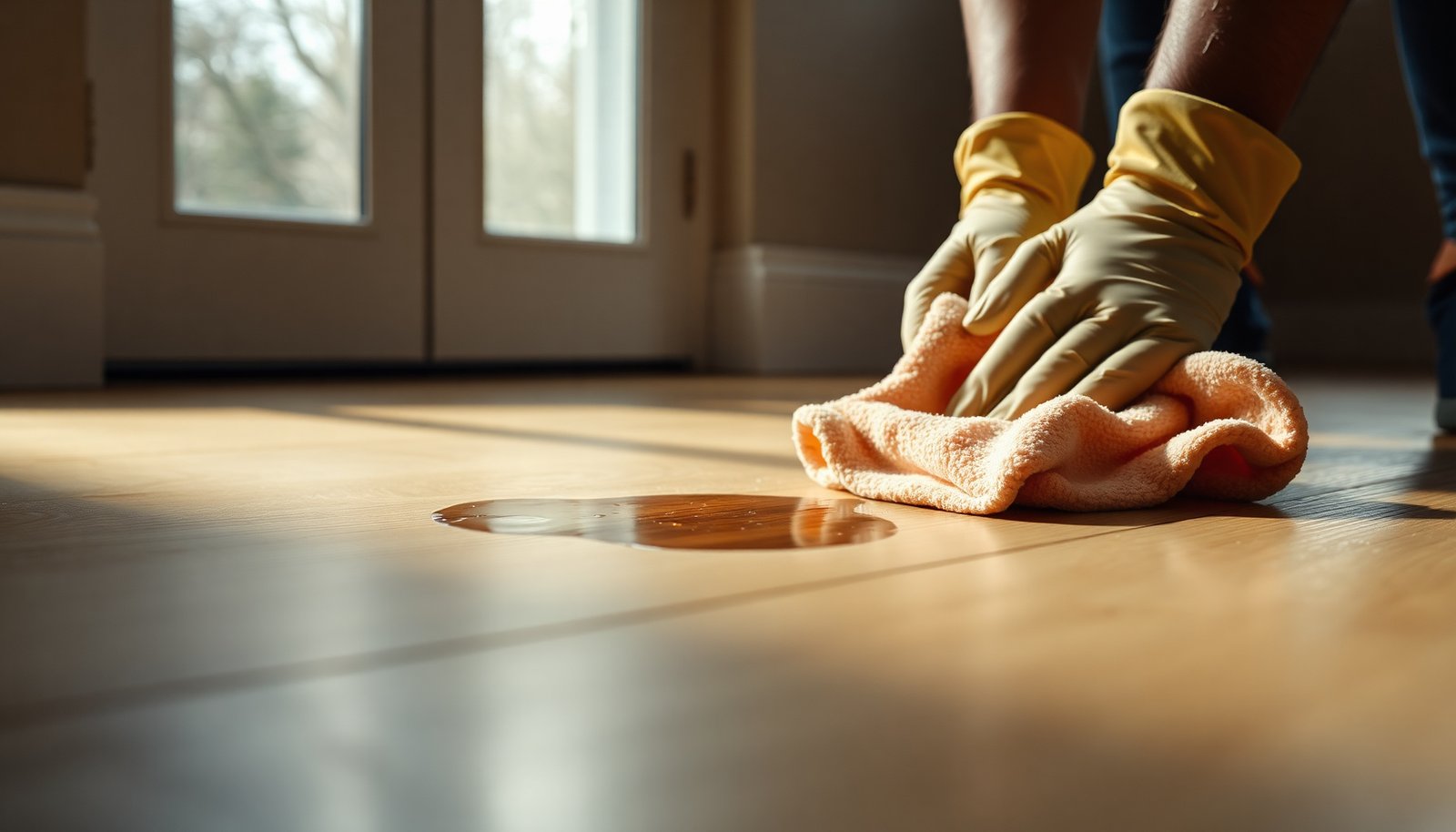

Stubborn grease on engineered wood floors can sink into the finish and turn a simple spill into a persistent, slippery-looking stain. Many people make it worse by scrubbing aggressively or using degreasers that are too strong, which can dull the surface and spread the problem. You can remove even set-in grease safely with the right approach—start with a gentle pre-treatment, then clean and dry properly using finish-safe products and soft microfiber cloths.



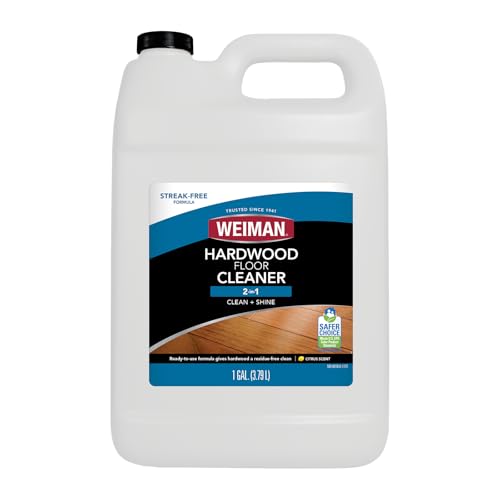
Blot up as much grease as you can, then clean the remaining residue with a pH-neutral degreasing solution (or a mild dish soap mix) using a barely-damp microfiber cloth—don’t soak. If grease is still stubborn, use a gentle baking-soda paste to lift it, then wipe clean and dry thoroughly. You’ll avoid damaging the top finish that makes engineered wood look good, and this approach still holds up in 2026 when most engineered floors are finished with sealed, wear-layer coatings meant to be cared for—not flooded.
If you’ve got tracked-in kitchen grease, splatters near a stove, or oily spots that won’t wipe off, this is for you. It’s especially useful when you want an approach that’s tough on grease but safer for engineered wood flooring than aggressive solvents.
If you’re dealing with grease on engineered wood floors—especially near cooking areas, entryways, or where motor oil from shoes or equipment can land—you’ll want a method that balances two things: grease removal and moisture control. Engineered wood is more dimensionally stable than solid hardwood, but it still depends on a protective top finish and tight seam/edge integrity to resist damage from water.
Prep and protect your engineered wood finish
You don’t start by scrubbing; you start by preventing grit and excess moisture from turning the grease spot into a permanent dull area on engineered wood floors. A careful setup also reduces the chance you’ll grind residue deeper into the wear layer.
– Start by removing grit: dry-sweep or vacuum with a soft head, so you don’t grind particles into the finish.
– Blot (don’t scrub) fresh grease with paper towels or a clean cloth until transfer stops.
– Test any cleaner in a hidden spot first, because engineered wood top finishes vary.
Before you add any cleaner to engineered wood floors, remove loose debris. Grease often traps dust, and that “grit + oil” combination can scratch during wiping. For moisture management, think in terms of “barely-damp” rather than “wet”—standing water is one of the fastest routes to edge swelling and finish clouding.
Also, avoid assuming that all engineered wood finishes behave the same. Even within “sealed” engineered wood flooring, top coats can differ (urethane, aluminum-oxide enhanced systems, or other wear-layer technologies), and some are more sensitive to pH extremes than others.
Quick chemistry reality check (why pH matters on engineered wood floors)
Neutral pH is defined as pH 7 on the 0–14 scale. Søren P. L. Sörensen, introduction of the pH concept (1909). Grease typically clings to surfaces physically (oily film), while cleaners work by breaking that film and dispersing it—often using surfactants. Aggressive acids or alkalis can dull or soften certain finishes on engineered wood floors, so pH-neutral degreasing is usually the safest first escalation.
Loosen the grease safely (before you “deep clean”)
You loosen the grease first so your cleaner has something to work with instead of forcing you to scrub harder on engineered wood floors. The key is controlled contact time and minimal liquid.
– Work from the outside of the stain toward the center to prevent spreading.
– Use warm water only for dilution—keep cloths barely damp and avoid pooling.
– Let the cleaner sit briefly (just long enough to soften residue), then wipe rather than scrubbing hard.
When grease is still fresh or semi-wet, spreading is the enemy. By working from the outer edge inward, you keep the oily boundary from expanding across engineered wood floors. Warm water can help dissolve oily residue when it’s used to dilute a degreaser or dish soap mix, but it should never turn into a rinse cycle—use a cloth, not a puddle.
If the residue resists, give the cleaner a short dwell time—long enough to soften the film, not long enough to let liquid seep at seams. In practical terms, that usually means a brief wait measured in minutes, followed by gentle wipe-away.
A moisture-control benchmark for engineered wood floors
Engineered wood performance is strongly linked to indoor humidity stability. The National Wood Flooring Association (NWFA) recommends indoor relative humidity around 35%–55% to help minimize movement and damage risk. National Wood Flooring Association (NWFA) (n.d.). While this doesn’t directly “clean” grease, it explains why extra moisture exposure from soaking or pooling can be more harmful—especially in homes where humidity swings already stress flooring.
Degreasing options that are usually safe on engineered wood
Choose a degreasing method that’s mild first, then increase aggressiveness only if engineered wood grease remains visible or feels oily. This sequence prevents finish dulling and reduces the chance you’ll create a wider affected area.
– Mild soap route: mix a few drops of grease-cutting dish soap into warm water; wipe with microfiber, then follow with a clean damp wipe to remove soap.
– Cleaner route: use a pH-neutral floor degreaser if the label indicates it’s safe for sealed wood floors; apply lightly with a cloth, not a wet mop.
– Rinse-and-dry habit: after degreasing, wipe again with a damp (not wet) cloth and dry immediately with a towel.
In my own day-to-day floor-care workflow (and when helping clients triage stubborn kitchen grease), I’ve found that the “soap wipe → rinse-wipe → immediate dry” pattern is what keeps engineered wood floors from developing a sticky or slightly dull spot afterward.
What to use on engineered wood floors: quick comparison
Below is a practical comparison you can follow when deciding between dish soap, a pH-neutral degreaser, and an eventual baking-soda paste. This is designed for engineered wood floors with a sealed top finish.
| Method (on engineered wood floors) | Best for | Main risk |
|---|---|---|
| Dish soap mix (mild detergent + warm dilution) | Fresh oily smears, light kitchen grease | Soap film if you skip the rinse-wipe |
| pH-neutral floor degreaser (applied with cloth) | Tracked-in grease, stove splatter residue | Finish dulling if product isn’t labeled safe for sealed wood |
| Baking-soda paste (baking soda + minimal water) | Baked-on or “slick” residue that won’t wipe | Micro-scratching if you rub aggressively with grit-like paste |
pH & Finish-Safety Lens for Grease Cleaning on Engineered Wood Floors
| # | Cleaner/Agent | Typical pH (at use) | Surface goal | Engineered-wood finish safety* |
|---|---|---|---|---|
| 1 | pH-neutral degreaser (labeled “neutral”) | 7.0–8.5 | Break oily film | ★★★★★ |
| 2 | Dish soap (mild detergents) | ~8.0–10.0 | Emulsify grease | ★★★★☆ |
| 3 | Warm water (dilution only) | ~7.0 | Soften residue | ★★★★☆ |
| 4 | Baking-soda paste (NaHCO₃) | ~8.1–8.5 | Lift stubborn film gently | ★★★★☆ |
| 5 | Mild alkaline cleaner (not labeled “neutral”) | ~10.0–11.0 | Degrease more aggressively | ★★★☆☆ |
| 6 | Vinegar (acetic acid) | ~2.4–3.0 | Cut mineral scale (limited) | ★★☆☆☆ |
| 7 | Strong caustics/solvents (avoid) | >11.0 or varies | Rapid stripping risk | ★☆☆☆☆ |
Safety stars reflect a pH-centered, finish-friendly lens: nearer pH ~7–8.5 earns higher marks. Always follow the engineered wood floor manufacturer’s cleaning guidance for engineered wood floors.
Deep clean when grease is still stuck
You escalate only after mild degreasing fails, because repeated aggressive scrubbing is what commonly damages engineered wood floors’ finish. Deep clean should still be gentle and controlled.
– Baking-soda paste: make a thick paste (baking soda + minimal water), apply thinly, and gently work with a soft cloth; wipe off once the residue loosens.
– Repeat in small cycles: stubborn grease often needs multiple light attempts instead of one aggressive session.
– If the spot looks “shiny” or feels slick after cleaning, keep going until the surface no longer feels oily—grease residue can attract more dirt.
Baking soda is the “low-risk grit” option—low risk only if you avoid abrasive pressure. To make a proper paste, use enough water to bind the powder but not so much that it runs and spreads onto surrounding engineered wood flooring. Apply thinly, and use a soft microfiber cloth with very light motion.
After you lift the residue, wipe clean and dry thoroughly. If the area looks shiny or slick, that’s often leftover grease or a cleaner film that re-emulsifies grime later. A simple repeat cycle—paste → wipe → damp wipe (to remove residue) → dry—tends to work better than one long session.
Wood stability note for engineered wood floors
Wood movement increases with moisture exposure; fiber saturation is commonly cited around **~30% moisture content**, beyond which added moisture mainly increases free water rather than further fiber swelling. J. K. Siau, wood moisture and mechanics (1995). That’s one reason to avoid soaking engineered wood floors even when grease is stubborn: too much liquid increases risk of edge/wardrobe issues and finish haze.What can go wrong (and how to avoid it)
Grease cleaning fails most often because of excess moisture, wrong chemistry, or abrasive technique—not because degreasing is inherently hard. Engineering wood floors need restraint to protect their top finish.
– Soaking or pooling water: engineered wood can swell at seams/edges when moisture gets into gaps.
– Using harsh solvents: avoid acetone/paint thinner, strong degreasers with aggressive ingredients, or anything the label doesn’t explicitly approve for wood finishes.
– Scratches from friction: abrasive pads, stiff brushes, or gritty cloths can dull the finish—stick to microfiber and soft tools.
– Skipping the rinse step: soap or cleaner left behind can create a sticky film that re-grabs grease later.
A common failure pattern on engineered wood floors looks like this: you try to “speed things up” by scrubbing longer, which creates friction haze, or you leave cleaner residue because you treat it like a quick wipe-and-go job. Grease may remove, but the finish ends up dull or slightly tacky, and that tackiness invites dust and oils on the next day.
If you ever see finish lifting, peeling, or whitening, stop. That’s not a “grease issue”—it’s a protective-layer issue on engineered wood floors, and further cleaning attempts can worsen damage.
Verdict: do this approach first—skip it if you can’t identify your finish
Start with mild degreasing (soap + damp microfiber), rinse-wipe, and dry—then escalate to a baking-soda paste only if needed. Downsides: this method can take multiple rounds, and it won’t reliably remove grease that has penetrated deeply into damaged or worn finish areas.
Skip this DIY approach (or consult the floor manufacturer) if:
– the floor has an unknown or easily stripped coating,
– the top layer is already worn down, peeling, or lifting, or
– the grease has had time to penetrate and the finish is compromised.
If you’re in doubt about your engineered wood flooring’s finish type, your safest path is to follow the manufacturer’s recommended cleaner list. Many manufacturers explicitly specify “pH-neutral” products and microfiber wiping, and they often warn against soaking.
| Criteria | Dish soap wipe | pH-neutral degreaser | Baking-soda paste |
|---|---|---|---|
| Typical grease removal speed (fresh residue) | Fast | Fast | Medium |
| Safety for sealed engineered wood floors | High | Highest | High (gentle) |
| Risk of leaving a sticky film if you skip rinse | Higher | Moderate | Moderate |
| Best for tracked-in kitchen grease | Light | Good | Not first choice |
| Best for “slick” baked-on residue | Often insufficient | Sometimes | Best escalation |
| Finish dulling risk from abrasion | Low | Low | Moderate if rubbed hard |
| Control of liquid amount | High (cloth-based) | High (cloth-based) | High (paste-based) |
| Effort to fully remove residue | Low–Medium | Low–Medium | Medium (cycles) |
| Likelihood of re-dirtying due to leftover film | Higher | Moderate | Moderate |
| Verdict fit for most engineered wood floors | First attempt | Best all-around | Escalate only |
| Verdict (overall) | Use first | Use when mild soap fails | Use for “slick” spots |
What to do when you spot grease on engineered wood floors (scan/save)
Quick grease-cleaning checklist (scan/save):
| Step | What to do | What to avoid |
|---|---|---|
| 1 | Dry-sweep/vacuum, then blot | Scrubbing grit into the finish |
| 2 | Mild degrease (dish soap mix or pH-neutral degreaser on a cloth) | Soaking/pooling water |
| 3 | Wipe with damp cloth to remove cleaner | Leaving residue or soap film |
| 4 | Dry immediately | Letting it air-dry with moisture present |
| 5 | If still greasy: baking-soda paste, gentle wipe, repeat | Abrasive pads/harsh solvents |
Frequently Asked Questions
How do I remove stubborn grease from engineered wood floors without damaging the finish?
Start by blotting up excess grease with a dry cloth, then use a grease-cutting dish soap solution (warm water + a few drops of degreaser) and apply it with a barely damp microfiber mop. For stubborn spots, place the damp cloth over the stain for 5–10 minutes to soften the residue before gently wiping. Always dry immediately with a clean towel and avoid soaking the planks, since engineered wood can swell or delaminate when over-wet.
What’s the best way to clean greasy footprints or cooking splatter on engineered wood?
For fresh or lightly set grease, use a microfiber cloth with warm soapy water and wipe in the direction of the wood grain. If the grease is still visible, try a dedicated “wood-safe” degreaser or a small amount of rubbing alcohol on a cloth (test in a hidden area first) to lift the oily film. Finish by wiping with clean water on a lightly damp cloth and drying thoroughly to prevent streaking.
Which household products work best for breaking down oil-based grease on engineered wood floors?
Dish soap and warm water are usually the safest first step because they emulsify grease without harsh abrasion. If needed, use denatured alcohol or isopropyl alcohol in small amounts on a cloth to dissolve oily residue, then rinse lightly with a damp microfiber to remove any chemical film. Avoid strong solvents (like acetone) and abrasive cleaners that can strip the protective top layer of engineered wood.
Why should I avoid steam cleaning or soaking when removing grease from engineered wood?
Steam and excessive moisture can force water into seams and edges, which may cause warping, cupping, or separation of the engineered wood layers. Grease removal often tempts people to “let it sit” with lots of liquid, but engineered wood is vulnerable to prolonged wetness. Instead, use minimal moisture, keep dwell times short, and dry quickly after every cleaning step.
How can I tackle cooked-on grease stains that won’t lift with regular mopping?
Begin with a soap-and-water degreasing approach, then use a cloth compress method—lay a microfiber dampened with a wood-safe degreaser over the spot for 5–10 minutes to break down the residue. Gently wipe without scrubbing hard, and repeat as needed rather than using aggressive chemicals. Once the grease is gone, clean with a lightly damp cloth (water only) and buff dry to restore a uniform look on your engineered wood floor.
📅 Last Updated: November 14, 2026 | Topic: How to clean stubborn grease from engineered wood floors? | Content verified for accuracy and freshness.
References
- Wood flooring
- 404 Error
- 404 Error
- https://www.armstrongflooring.com/support/product-care.html
- https://scholar.google.com/scholar?q=engineered+wood+floor+cleaning+grease+removal Google Scholar
- https://scholar.google.com/scholar?q=oil+grease+stain+removal+from+wood+surfaces Google Scholar
- https://scholar.google.com/scholar?q=wood+floor+care+engineered+hardwood+detergents+microfiber+cleaning Google Scholar


[…] is a practical comparison you can use when deciding how aggressive to be. The core principle is moisture control: engineered wood is more forgiving of surface contact than prolonged […]