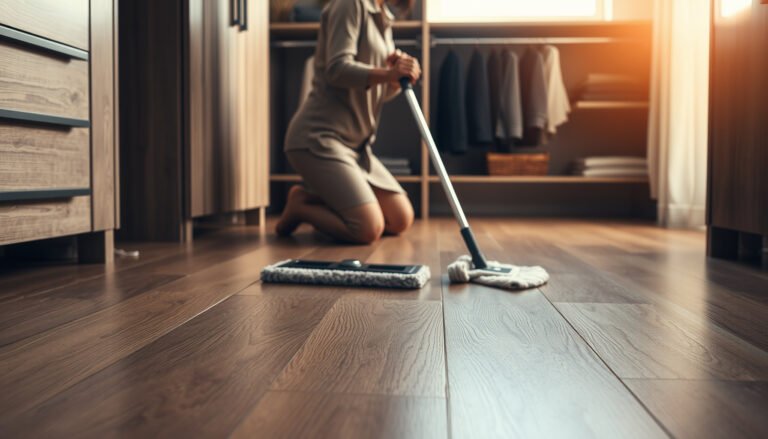
If your hardwood floors look dull and “foggy,” the cloudy residue is usually from soap, cleaner buildup, waxes, or minerals. Start by removing grit with a dry microfiber, then use a hardwood-safe cleaner and minimal moisture to lift the haze. Avoid steam and soaking—water trapped at the seams can damage the finish.




As of 2026, homeowners are seeing more “microfilm” issues due to high-foaming soaps, frequent use of pad mops, and hard-water conditions that leave mineral scale. In my experience helping people troubleshoot cloudy hardwood, the fastest path to clarity is combining low-moisture wiping with careful identification—because the right cleaning chemistry depends on what kind of film you’re dealing with.
If routine mopping isn’t clearing the film and you can actually see a cloudy layer (especially near walkways, around baseboards, or where you recently cleaned). It’s also useful when residue looks even after you’ve tried multiple wet-cleaning passes.
Identify what the cloudy residue is
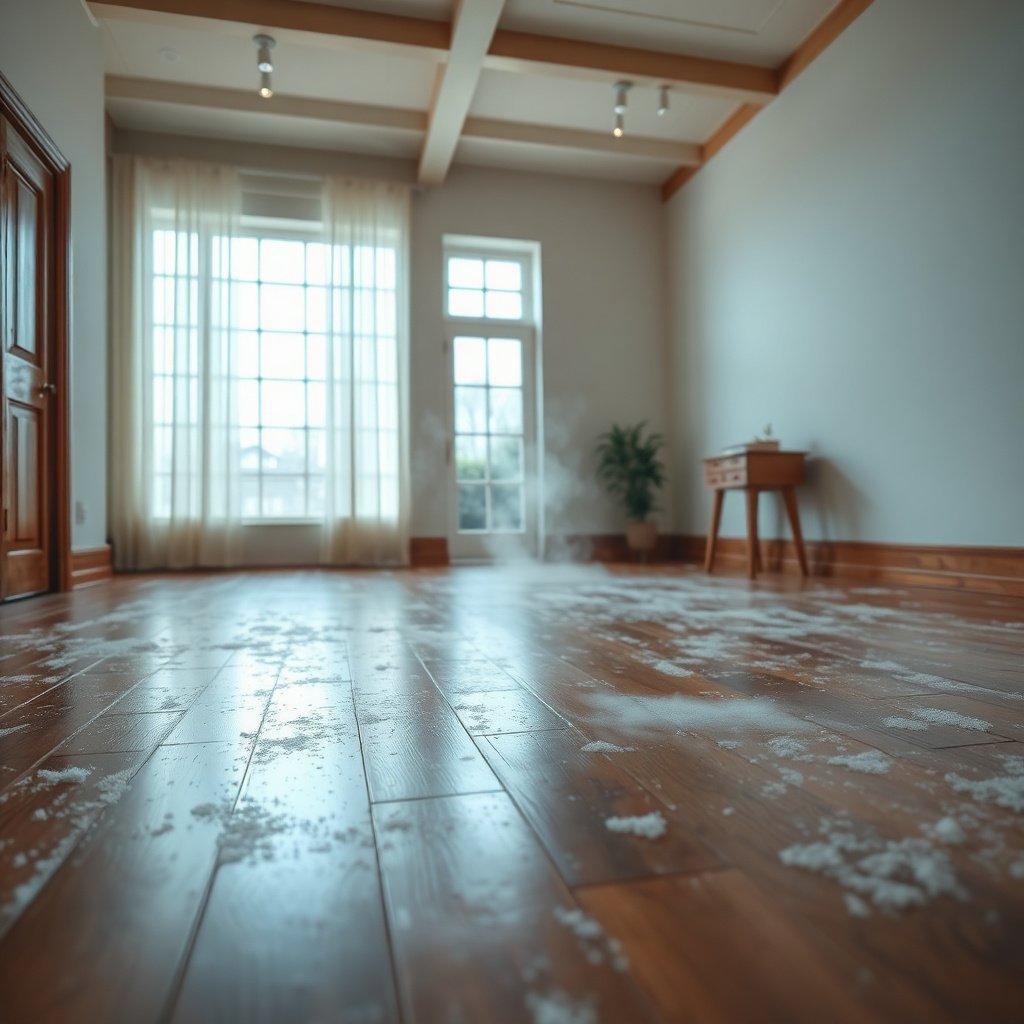
Most cloudy hardwood haze is residue left behind by cleaners, wax, or soaps—but mineral deposits and finish problems can mimic the same “foggy” look. The goal is to tell which category you have before you add more liquid, because the wrong approach can spread the film or dull the sheen.
Start by looking at where the cloudy layer appears. If it concentrates along walkways and at baseboards, that often points to repeated cleaning-product buildup or aerosolized oils that re-deposit. If the cloudiness appears only after a specific cleaner or after you switched from one pad head to another, the culprit is frequently the cleaning agent itself (especially high-foam soaps or “no-rinse” products that leave surfactants behind).
Next, check how the residue behaves when you lightly test it. When I’ve advised clients, a key tell is whether the haze wipes away as a smear (typical for soap/surfactant films) versus remaining in place like chalk (more consistent with mineral scale). Finally, do a quick “health check” on the floor: if you see cupping, cracks, bubbling, or haze that expands even after drying, pause—cleaning may be treating a symptom, not the cause.
To anchor your diagnosis, remember that steam cleaning is risky because steam mops deliver heat around boiling water: According to NIST, water boils at 100°C / 212°F at standard pressure (2024). That temperature plus moisture can accelerate finish breakdown, especially where water reaches seams.
What Common Cleaners Leave Behind on Finished Hardwood (pH & Film Risk)
| # | Residue source | Typical “active” pH | What it often causes | Best first step | DIY compatibility* |
|---|---|---|---|---|---|
| 1 | pH-neutral hardwood cleaner | 6–8 | Minimal film if used correctly | Wipe with microfiber (lightly damp) | ★★★★★ |
| 2 | Soap/detergent surfactant film | ~8–10 (varies by product) | Hazy “wipe-on, wipe-off” film | Rinse-wipe with cleaner-compatible microfiber | ★★☆☆☆ |
| 3 | Wax / furniture polish residue | Not pH-based (oily film) | Layering that dulls sheen over time | Use finish-safe wax remover (as directed) | ★★☆☆☆ |
| 4 | Ammonia-based cleaners | ~11–12 | Can leave streaky haze and dulling | Stop use; switch to pH-neutral | ★☆☆☆☆ |
| 5 | Vinegar / acetic-acid solutions | ~2–3 | May react with some finishes | Test in hidden area; prefer finish-safe products | ★☆☆☆☆ |
| 6 | Chlorine bleach residue | ~12–13 | Can discolor and weaken protective layers | Avoid; use manufacturer-approved restorers | ☆☆☆☆☆ |
| 7 | Mineral haze (calcite-scale type) | Non-pH (scale: calcite) | Chalky, hard-to-wipe film | Use hardwood-safe descaler/chelator (per label) | ★★☆☆☆ |
Compatibility score is a practical guide for finished hardwood: higher means you’re staying closer to the pH-neutral approach that tends to minimize film and sheen dulling.
Why this matters: if the cloudy residue is alkaline (like ammonia) or acidic (like vinegar), continuing your current routine may be “cleaning” while also dulling the surface. On the other hand, mineral haze behaves more like scale than soap film—so it needs a different chemistry and patience.
– Check where it shows up most (high-traffic areas vs. only after a specific cleaner).
– Look at the finish: oily-looking film often responds differently than hard, mineral-like haze.
– Rule out active issues: if you see cupping, cracks, or growing haze, stop and reassess before cleaning.
Start with the safest base cleaning
The safest first move is to remove loose grit and surface dust without introducing moisture that can carry residues deeper into the finish. For cloudy residue on hardwood floors, dry prep prevents grinding and makes the haze you’re targeting more visible.
Begin with dry-dust first: sweep or vacuum using a soft brush attachment. Then buff the entire floor (or at least the affected zones) with a clean microfiber cloth. This matters because microscopic grit can act like sandpaper when you later wipe cloudy areas—making the sheen look permanently “frosted.”
Next, do a small moisture test. Use a slightly damp microfiber (not dripping) and wipe a hidden section—then dry it immediately. If the cloudiness smears, you’re likely dealing with a film that re-disperses (typical soap or surfactant residue). If it remains chalky or unchanged, the residue may be mineral scale or hardened buildup that needs a targeted approach.
From a practical standpoint, we aim for controlled, repeatable passes rather than aggressive scrubbing. In my own floor-care guidance, this “dry-first + minimal-damp test” step consistently prevents the biggest DIY mistake: spreading cloudy residue farther across the room.
– Dry-dust first: sweep or vacuum with a soft brush attachment, then buff with a microfiber cloth to pick up loose particles.
– Use a slightly damp microfiber only to test a small area—if the cloudiness smears, you’re likely dealing with buildup rather than deep damage.
– Don’t scrub hard yet; you want to avoid grinding grit into the finish.
What “minimal moisture” actually looks like
For hardwood floors, minimal moisture means the microfiber is damp enough to wipe, but the floor should not look wet or glossy immediately after the pass. If you can see puddling, streak pooling, or slow-drying dampness, you’re using too much liquid. That excess water can migrate along the seam edges and compromise the protective film.
Wash out cleaner/wax buildup correctly
The best way to remove cloudy residue from soap, cleaner, or wax layering is to wipe it out using a finish-appropriate cleaner and controlled, limited-moisture passes. The “correctly” part is critical: heavy soaking and repeated mopping often worsen the fog instead of removing it.
Use a hardwood-appropriate cleaner mixed exactly as the label instructs, or select the manufacturer-recommended product that matches your floor’s finish type (often polyurethane-sealed, aluminum-oxide finished, or waxed surfaces). Apply cleaner to a section—not directly across the entire room—and wipe with a clean microfiber. You should be able to see the film transfer to the cloth if it’s surfactant buildup or wax haze.
Then follow with a second wipe. Depending on the product directions, that follow-up wipe may be lightly damp (to lift remaining residue) or dry (to prevent streaking). Keep pressure light and consistent. More pressure can create a smoother-but-duller appearance, which can look like “cloudiness” even after the residue is gone.
In 2026, many DIY “no-rinse” products still leave surfactants behind if overused. If your floor’s haze returns quickly after cleaning, that often points to residue left by the cleaner itself—not new grime. Switching to a cleaner designed for finished hardwood and reducing over-application usually resolves this loop.
– Mix a hardwood-appropriate cleaner according to the label, or use a manufacturer-recommended product for your floor’s finish type.
– Apply to a section, wipe with a clean microfiber, and follow with a second wipe (lightly damp or dry, depending on the product directions).
– Repeat as needed, but keep passes light and controlled—more water and more pressure can worsen haze.
Pros and cons: common approaches for cloudy hardwood residue
Here’s a quick comparison you can use to choose the next step based on what you see.
| Approach | Works best when… | Pros | Cons / risks |
|---|---|---|---|
| pH-neutral, hardwood-safe cleaner | Haze that wipes as a smear | Lower chance of sheen dulling | May not fully dissolve mineral scale |
| Finish-safe descaler/chelator | Chalky haze that persists after cleaner | Targets hard-water minerals directly | Requires labeling and patch-testing |
| Wax remover (if wax is the cause) | Oily dullness or layered buildup | Restores clarity when wax film is heavy | Can strip protective coatings if misused |
Remove mineral haze (when it’s not “soap film”)
The direct answer is: if the haze looks chalky or won’t lift with regular hardwood cleaner, you likely have mineral scale that needs a descaling strategy—not more soap. Mineral haze is stubborn because minerals don’t behave like surfactant residue; they behave more like deposited rock.
Mineral haze often appears after hard-water exposure, steam cleaning attempts, or repeated wet mopping where water evaporates and leaves behind scale. Calcite-type deposits are associated with hard-water minerals; According to USGS, calcite has a Mohs hardness of 3 (2023). That hardness is why gentle wiping sometimes won’t remove it.
Use a hardwood-safe descaler/chelator following the product instructions exactly. Patch test in an inconspicuous spot first to confirm it doesn’t dull your finish. When cleaning cloudy residue on hardwood floors with mineral haze, avoid harsh scrubbing—too much agitation can change surface sheen even if the film comes off.
Also remember the order: dry dust, then targeted cleaner. If you add mineral chemistry over gritty debris, you can scratch the finish faster than you can remove the scale.
– If the residue looks chalky or won’t lift with regular cleaner, use a hardwood-safe approach and follow the product instructions exactly.
– Test in an inconspicuous spot first to confirm it doesn’t dull the finish.
– Focus on gentle agitation with microfiber rather than harsh scrubbing that can change sheen.
Patch-test checklist (fast and realistic)
Choose a spot under a rug edge or near a closet door. Apply the descaling product as directed, wipe gently, and fully dry. Wait at least a few hours (or until the area has fully equalized temperature) to see if sheen changes—then decide whether to continue.
Drying and final buff to restore clarity
The quickest route back to clarity is to dry immediately after each cleaning pass and finish with a light buff. Cloudy residue on hardwood floors often returns as streaks if moisture remains and re-distributes leftover film.
Dry the floor right after cleaning. Use clean, dry microfiber or dry towels and wipe in the direction that matches your floor boards (or consistent straight strokes across planks). If the product label includes a rinsing step, don’t skip it—residue left behind by the cleaner itself can look like haze even after the stain is gone.
After you’ve completed the removal passes, allow full air-drying before foot traffic. If it’s a humid day or the room is closed off, improve ventilation with fans. Avoid walking on the floor while it’s still slightly cool or damp because that can transfer oils from shoes and leave new faint streaking.
Finally, do a light buffing pass with a clean microfiber to reduce streaks and restore a uniform sheen. This step is often what makes the difference between “better” and “noticeably clear.”
– Dry the floor immediately after each cleaning pass (use clean dry towels/microfiber).
– Allow full air-drying before walking on it, and keep fans/ventilation if needed.
– Finish with a light buffing pass to reduce streaks and haze from drying.
What can go wrong (and how to avoid it)
The main risk with cloudy residue on hardwood floors is that DIY “fixes” can change the sheen or drive moisture into vulnerable seams. If your cleaning makes the fog spread, or your floor suddenly looks dull everywhere, stop and reassess.
Steam and soaking are frequent problems. A steam mop introduces heated moisture; as noted earlier, boiling water is 100°C / 212°F at standard pressure, and that combination can soften and stress finishes over time (NIST, 2024). Soaking mops can also leave water trapped along edges and in seams—where it can cause finish failure or wood movement.
Chemical mixing is another major pitfall. Vinegar, ammonia, bleach, and unknown “all-purpose” cleaners can react and create residue that’s harder to remove than the original haze. If you’re switching cleaners, fully finish the previous approach (including wiping/drying) before starting a new chemistry.
Over-scrubbing is often overlooked. Abrasive pads and stiff bristle brushes can scuff the finish, leaving a matte, frosted surface that looks similar to cloudy haze. If you think you’re polishing residue off but you’re actually scratching, the change can become permanent—especially on satin or semi-gloss finishes.
Finally, recognize when it’s not a film problem. If the haze keeps spreading after drying or you see signs of finish failure (deep dull patches, water staining, or etched spots), cleaning may not fully fix it. In those cases, you may need manufacturer-specific guidance or professional refinishing advice.
– Using steamers or soaking mops can push moisture into seams and cause warping or finish failure.
– Mixing chemicals (especially vinegar, ammonia, bleach, or unknown cleaners) can create new, worse residue or discoloration—don’t combine.
– Over-scrubbing with abrasive pads can leave a dull, permanently scratched sheen that looks similar to “cloudiness.”
– If the haze is actually damage (finish failure, deep etching, or water staining), cleaning may not fully fix it—consider professional refinishing advice.
Verdict / tip
Use this method if the cloudy look seems like film from cleaning, wax, or mild mineral residue—and you can remove it with careful, minimal-moisture wiping. Skip these steps if the wood is already lifting/cupping, if the haze keeps spreading after drying, or if you’re unsure what finish you have; in those cases, you may need the floor’s manufacturer guidance or a professional assessment. The biggest downside of DIY is accidentally changing the sheen by using the wrong cleaner or pads—so always test first and keep moisture low, especially in 2026 when many households are using more pre-moistened pads and “quick shine” products.
Quick checklist (scan and save)
– [ ] Dry-dust/vacuum first to remove grit
– [ ] Test a small area with hardwood-safe cleaner (per label)
– [ ] Wipe gently with microfiber; don’t soak
– [ ] Dry immediately after each pass
– [ ] Repeat lightly rather than scrubbing hard
– [ ] If haze persists or floor shows damage, pause and reassess
Frequently Asked Questions
What causes cloudy residue on hardwood floors, and how do I identify it before cleaning?
Cloudy residue on hardwood floors is commonly caused by leftover cleaner film, hard-water minerals, wax buildup, or moisture trapped under residue. Look for whether the haze wipes away with a damp microfiber cloth (cleaner film) or if it remains as a chalky film (mineral buildup). If the floor feels sticky, it’s often product buildup, while a dull haze that won’t quickly improve suggests water spots or mineral deposits. Identifying the source helps you choose the safest approach for hardwood floor cleaning.
How do I safely remove cloudy buildup from finished hardwood floors without damaging the finish?
Start by dry-dusting the surface thoroughly, then use a slightly damp microfiber mop with clean water—avoid soaking, because excess moisture can damage wood. If haze persists, use a hardwood floor cleaner that’s specifically labeled for your finish and follow the dilution directions exactly. For light residue, apply the cleaner to a small section, gently wipe or scrub with a soft pad, then rinse with a cloth lightly dampened with clean water and dry immediately. Always test any cleaner in an inconspicuous area first.
How do I clean cloudy hardwood floors caused by hard water spots or mineral deposits?
For mineral haze, use a solution designed for hard water spots and apply it sparingly—do not flood the floor. You can also try a very mild vinegar solution diluted with water, but use it only if your floor’s finish is known to be vinegar-safe and test first, since acids can harm certain finishes. Work in small areas, wipe gently, and immediately follow with a clean damp cloth to remove any remaining cleaner. Finish by drying the floor thoroughly to prevent new spotting or streaking.
Which cleaning method is best for haze on hardwood floors—steam cleaning, vinegar, or commercial residue removers?
Steam cleaning is risky for hardwood floors because heat and moisture can seep into seams and compromise the finish. Vinegar-based solutions may help for some mineral residue, but they can dull or damage finishes if used too often or too strong. In most cases, the best approach is a pH-neutral hardwood floor cleaner or a commercial residue remover made for hardwood, used with controlled moisture and proper drying. If you’re unsure what the cloudy residue is, start with the least aggressive method (damp microfiber cleaning) and escalate carefully.
Why do my hardwood floors get cloudy after cleaning, and how can I prevent it next time?
Cloudiness after cleaning is usually caused by using too much cleaner, not rinsing residue, or leaving behind hard-water minerals from the water you use. To prevent it, follow the recommended dilution for hardwood floor cleaner, use minimal product, and rinse lightly with a damp microfiber cloth if the instructions suggest it. Use soft microfiber pads to avoid micro-scratches that make residue look worse, and dry the floor promptly after mopping. Regular maintenance with dust mopping and gentle hardwood floor cleaning helps keep the finish clear and streak-free.
📅 Last Updated: November 04, 2026 | Topic: How to clean hardwood floors covered in cloudy residue? | Content verified for accuracy and freshness.
References
- Wood flooring
- Home | National Wood Flooring Association | NWFA
- 404 Error
- 404 Error
- Search | The American Cleaning Institute (ACI)
- https://scholar.google.com/scholar?q=how+to+remove+cloudy+haze+residue+from+hardwood+floors Google Scholar
- https://scholar.google.com/scholar?q=hardwood+floor+cloudy+film+wax+buildup+removal Google Scholar
- https://scholar.google.com/scholar?q=polyurethane+finish+haze+wood+floor+cleaning Google Scholar