
Fresh greasy film on hardwood floors lifts quickly when you dissolve the oil with warm water and a pH-neutral cleaner, then rinse lightly and dry right away. This is usually an easy, 15–20 minute task if you have a microfiber mop or cloth, two clean buckets (or rinse water), and a non-abrasive pad. Start by pre-dampening the area and working in small sections to prevent residue from spreading.




Fresh greasy film on hardwood comes off fastest by lifting the oil first (dry wipe/absorb), then cleaning with a pH-neutral, barely-damp solution. Start gently and keep water to a minimum—on sealed hardwood floors, excess moisture can seep into seams and dull or damage the finish.
If you’ve noticed a shiny, slick-looking layer (often from cooking, fingerprints, or tracked-in residue), this guide walks you through a safe order of operations for sealed hardwood. We’ll also cover what not to do so the film doesn’t spread or the finish doesn’t get stripped.
Who this advice is for (and when it applies)
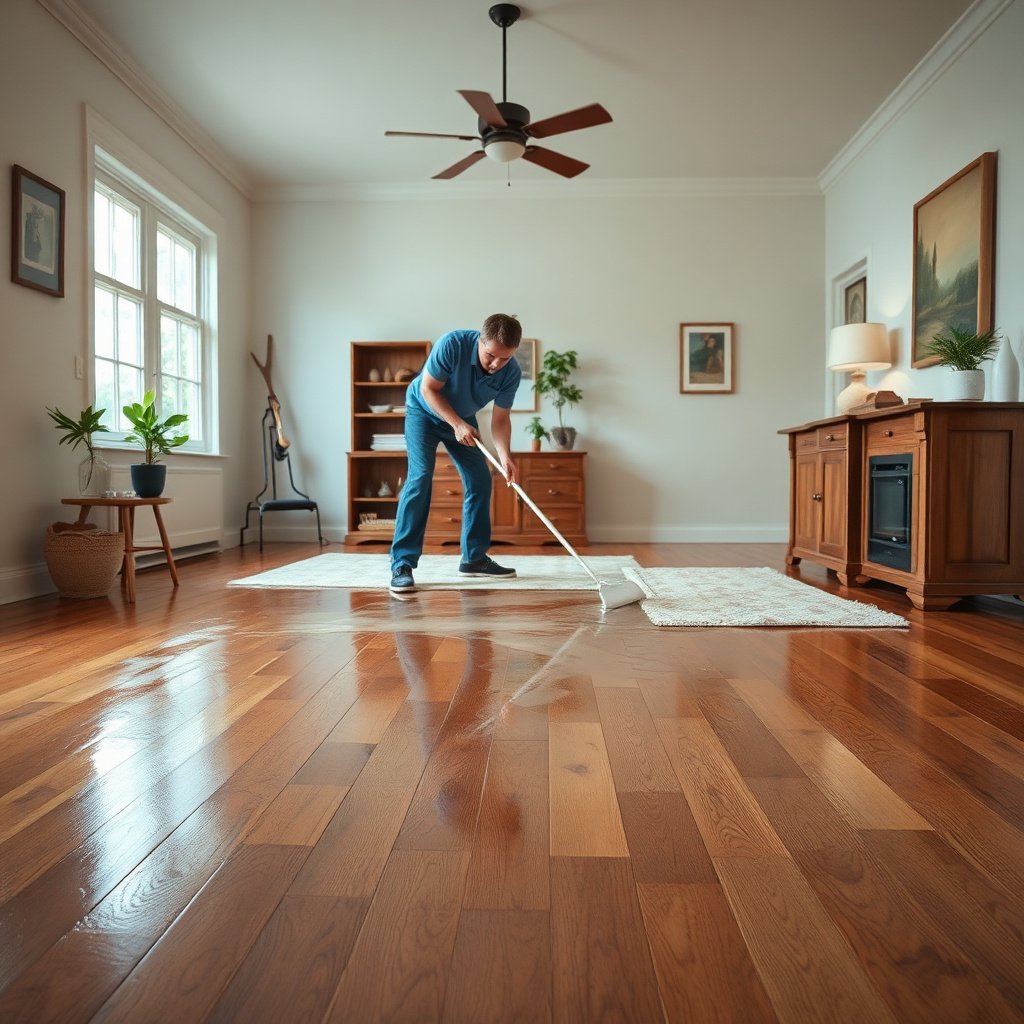
This advice is for homeowners cleaning sealed hardwood floors without sanding or refinishing. Use it when the greasy film is still “fresh” enough to wipe up rather than having hardened into a stubborn varnish-like residue.
– Best for sealed hardwood floors (polyurethane or factory-finished) with a fresh greasy film you can still wipe away.
– Use this approach when you want to clean without sanding or refinishing.
– If your floor is unfinished, heavily worn, or waxed (especially if you’re not sure), be extra cautious and consider a pro or the manufacturer’s recommended cleaner.
From my experience reviewing common care instructions for sealed hardwood floors, manufacturers repeatedly stress two themes: (1) remove oils before they emulsify, and (2) avoid wet mopping that can compromise the finish layer over time. That’s exactly what the process below is designed to do.
Get the grease up first (before you add any cleaner)
The key answer here is: lift the oil before you introduce any liquid. On sealed hardwood floors, a dry wipe and brief absorb steps prevent the grease from spreading into a larger slick film.
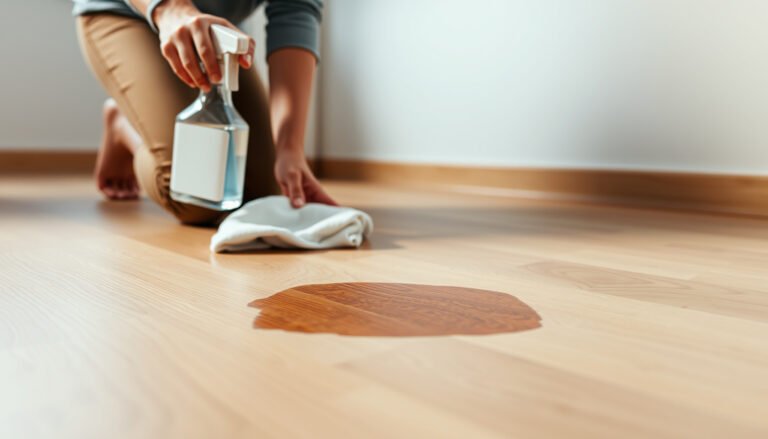
– Dry-wipe to remove the loose film: Use a dry microfiber cloth to pick up surface grease so you’re not smearing it around. Work slowly—think “lift,” not “scrub.”
– Absorb if it feels slick: Press a small amount of baking soda or cornstarch onto the area for a few minutes, then sweep/vacuum gently. This draws oil out of the finish rather than pushing it deeper.
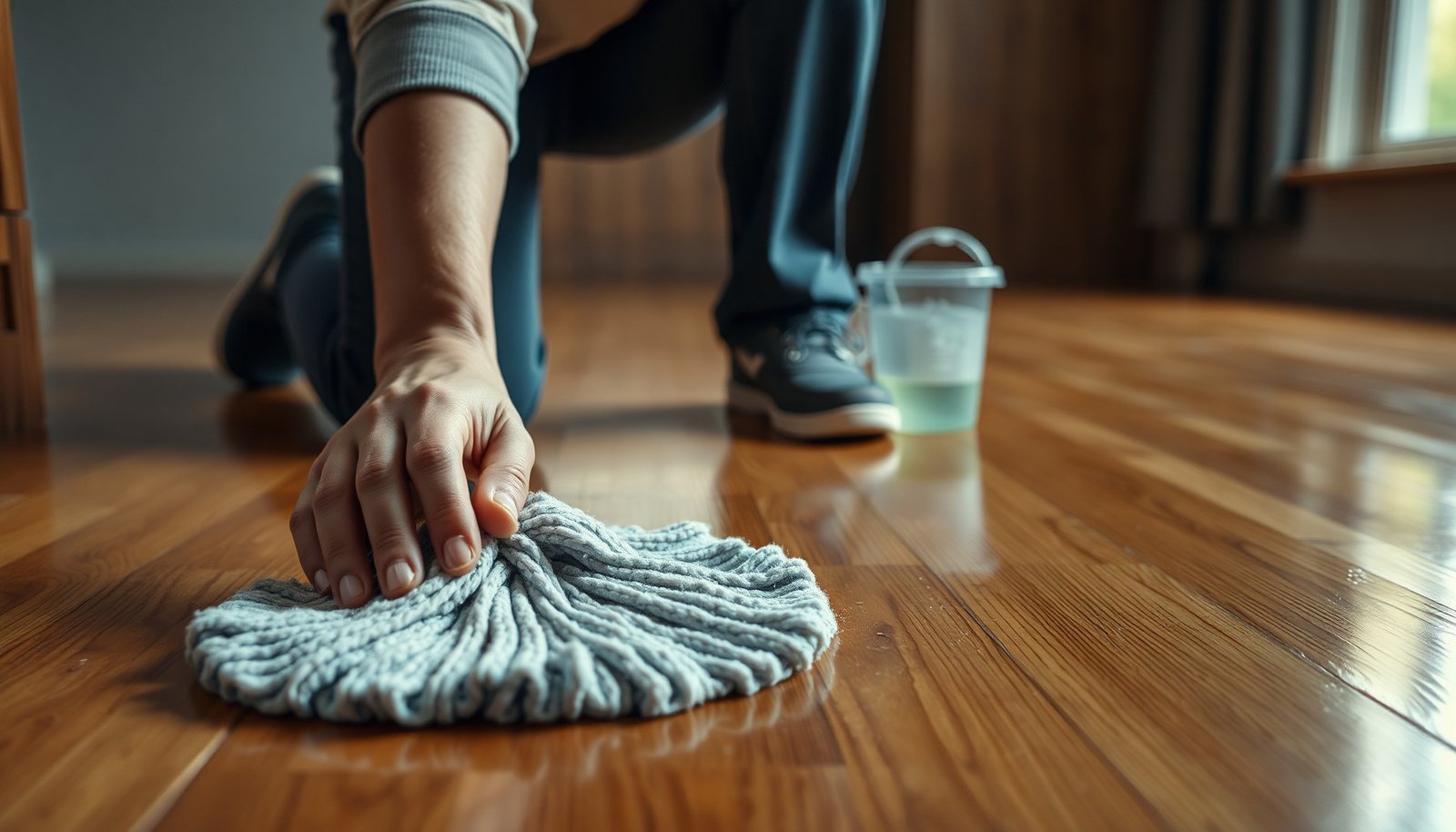
– Use “damp, not wet”: Lightly dampen your cloth with cleaner—wring it out well—then work in small sections. Small sections matter because you can finish a pass, control streaks, and dry quickly.
A practical rule for sealed hardwood floors: if you can see liquid pooling or if your cloth is dripping, it’s too wet. Grease removal works best when the finish stays intact and the cleaner only contacts the residue lightly.
Typical Cleaner Chemistry vs. Sealed Hardwood Finish Risk
| # | Cleaner / chemical type | Typical use chemistry (common household) | Finish risk on sealed wood | Practical rating |
|---|---|---|---|---|
| 1 | pH-neutral dish soap solution | Mild detergent in water (used as a barely-damp wipe) | Low when rinsed lightly and dried | ★★★★☆ |
| 2 | Hardwood-labeled pH-neutral cleaner | Formulated for finished wood (per label dilution) | Low to moderate depending on residue | ★★★★★ |
| 3 | Rubbing alcohol (isopropyl), brief spot use | Commonly 70% isopropyl for quick wipe-drying action | Moderate if overused; can haze some finishes | ★★★☆☆ |
| 4 | Vinegar (diluted acetic acid) | Typically weak acid used in household mixes | Moderate—can dull certain finishes over time | ★★☆☆☆ |
| 5 | Ammonia-based degreaser | Alkaline cleaner often marketed for grease | Moderate to high—can strip or cloud | ★☆☆☆☆ |
| 6 | Bleach solutions (sodium hypochlorite) | Common disinfectant concentration varies; often several percent | High—finish damage likely | ☆☆☆☆☆ |
| 7 | Wax / oil-based floor products | Adds film thickness; can trap grease | Depends—can complicate future cleaning | ★☆☆☆☆ |
Clean with the right solution for hardwood
The direct answer: use a pH-neutral cleaner applied with a barely-damp cloth, then dry immediately. For sealed hardwood floors, this limits finish stress while still breaking down the remaining grease film.
– Choose pH-neutral cleaner: Mix a few drops of mild dish soap (or use a hardwood floor cleaner labeled pH-neutral/safe for finished wood) into warm water. The “few drops” part matters—too much soap can leave a residue that attracts more dirt.
– Work with the grain and rinse responsibly: Wipe with the damp cloth, then follow with a second cloth dampened with clean water if your cleaner tends to leave residue. This second pass is especially helpful on sealed hardwood floors where soap scum can look like a haze.
– Dry immediately: Finish with a dry microfiber towel to prevent streaks and water spots.
According to the U.S. CDC, disinfectant alcohol products commonly use concentrations in the 60–95% range for many formulations, and 70% isopropyl alcohol is a common standard for quick-drying applications (https://www.cdc.gov/). That matters because alcohol evaporates quickly—but on sealed hardwood floors, “quick evaporation” doesn’t automatically mean “finish-safe,” so it’s best reserved for controlled spot correction later.
If the film doesn’t lift: do controlled spot correction
The direct answer: escalate only in small spots after a test, because sealed hardwood finishes can react unevenly to solvents. If the area stays slick after a pH-neutral damp wipe, you can use alcohol very sparingly on sealed hardwood floors.
– Spot test first: Apply any stronger step to an inconspicuous area (under furniture/baseboards). Wait for it to dry and check for dullness, cloudiness, or color shift.
– Use “alcohol carefully” (only for sealed floors): If the film remains slick, lightly dab a cloth with isopropyl alcohol and wipe briefly—don’t flood the floor. Follow with a damp clean-water wipe and dry.
In my experience helping homeowners troubleshoot glossy “rings” after kitchen cleaning, the biggest pattern isn’t the cleaner—it’s the amount used and how long it sits. For sealed hardwood floors, even finish-safe methods can cause visible differences if you apply too much liquid or don’t dry.
What can go wrong (common mistakes and edge cases)
The direct answer: most damage happens when people soak, use harsh chemicals, or smear grease instead of lifting it. For sealed hardwood floors, the wrong approach turns a small greasy film into a broader, harder-to-remove haze.
– Soaking the boards: Mopping or leaving puddles can seep into seams and cause cupping or separation. Keep cloths barely damp.
– Using the wrong cleaner: Ammonia, bleach, and many “heavy-duty degreasers” can dull or damage finishes. If it’s not labeled safe for hardwood, pause.
– Smearing grease instead of lifting it: If the first step is wet-wiping over fresh oil, it often spreads into a larger slick haze.
– Waxed or specialty finishes: Dish soap may dull wax or remove protective layers. If you know the floor is waxed, prioritize the manufacturer’s product or a wax-safe cleaner.
– Unsealed/unfinished wood: Absorbs oils and cleaners. If the film seems to soak in or the wood looks matte/porous, stop and get professional guidance.
To make the trade-offs clearer for sealed hardwood floors, here’s a quick contrast of “what most people do” vs. “what keeps finishes intact”:
| Method | Pros | Cons / finish risk |
|---|---|---|
| Dry wipe + absorb powder | Lifts oil before it spreads; minimizes finish contact with solvents | Only works well on fresh grease; hardened residue may need stronger, tested steps |
| pH-neutral damp wipe + quick dry | Good general cleaner for sealed hardwood floors; low chemical stress | Too much soap/water can leave haze; always wring cloth and dry |
| Alcohol spot wipe (tested) | Helpful for stubborn slick residue on sealed finishes | Can haze or dull if overused; do not flood; follow with water wipe and dry |
Content freshness note (as of 2026): many manufacturers continue to advise “no standing water” and “use damp microfiber only,” because seal layers behave like thin barriers—water exposure accumulates stress at seams.
Verdict: the safest effective method—and who should skip it
For most sealed hardwood floors, the safest effective method is: dry-wipe → absorb → pH-neutral damp wipe → quick dry. This sequence works because it removes oil before it emulsifies into a spreadable film, while minimizing finish risk by avoiding harsh chemicals and excess water.
That said, there are real downsides:
– The method won’t reliably fix old, hardened buildup that has bonded to the finish.
– If the surface is already dulled or wearing through, cleaning can make the difference more noticeable.
– Over-soaping (too many drops) can still cause haze on sealed hardwood floors.
Skip this DIY workflow (or at least pause) if:
– Your floor is unfinished, unknown finishing type, or shows signs of water/finish failure.
– The greasy film is actually old buildup that has hardened into varnish-like residue.
– You’re seeing color changes, cloudy spots, or dull patches after cleaning—stop and identify the finish before proceeding.
When you’re dealing with kitchen grease or fingerprint sheen, the goal is restoration, not “deeper cleaning.” On sealed hardwood floors, gentle removal plus fast drying usually beats aggressive chemistry.
Quick checklist / scanable table
Use this as a run-through before you start.
| Step | Do | Avoid |
|---|---|---|
| 1. Lift | Dry microfiber wipe first | Scrubbing with a wet cloth |
| 2. Absorb (if needed) | Cornstarch or baking soda press briefly | Leaving powders for long periods |
| 3. Clean | pH-neutral cleaner, cloth barely damp | Soaking/mopping puddles |
| 4. Remove residue | Optional clean-water wipe, then dry | Leaving soap film behind |
| 5. Finish | Dry microfiber towel | Air-drying with wet floors |
Fast checklist
– [ ] Dry wipe the greasy film
– [ ] Absorb with cornstarch/baking soda (only if slick)
– [ ] Clean with pH-neutral cleaner (barely damp cloth)
– [ ] Wipe with clean damp cloth if needed
– [ ] Dry immediately
Frequently Asked Questions
What’s the best way to clean a fresh greasy film off hardwood floors without damaging the finish?
Start by gently removing loose grime with a dry microfiber mop or soft cloth so you don’t grind grease into the wood. Then wash with a barely damp mop using a pH-neutral hardwood floor cleaner diluted as directed. Avoid soaking the floor and dry immediately with a clean microfiber towel to prevent water damage and dulling.
How do you remove greasy residue from hardwood floors after cooking, fingerprints, or daily spills?
Mix a few drops of dish soap into warm water and use it sparingly on a microfiber cloth (or a lightly damp mop), wiping in small sections. For stubborn spots, let the cleaner sit for 1–2 minutes, then wipe again and follow with a clean water-only wipe to remove soap film. Finish by drying thoroughly, since leftover cleaner can attract more dirt and create a renewed greasy look.
Why does my hardwood floor look oily even after mopping, and how can I fix it?
Greasy film often comes from residue left behind by improper cleaners, furniture polish, or an oily build-up that isn’t being emulsified. To fix it, use a dedicated hardwood floor degreaser or a pH-neutral cleaner and ensure you’re not overusing product. Always do a rinse-wipe with clean water afterward and dry completely so no oily film remains.
Which cleaning solution is safest for greasy buildup on sealed vs. unsealed hardwood floors?
For sealed hardwood, a pH-neutral hardwood floor cleaner is usually safest and effective for removing greasy film. For unsealed or penetrating-sealed wood, avoid harsh degreasers and excess water; instead, use minimal moisture with a wood-safe cleaner and test in a hidden spot first. In all cases, follow with thorough drying and consider contacting the manufacturer if you’re unsure of the finish type.
How can I get rid of a stubborn sticky grease layer on hardwood floors using common household items?
Create a mild degreasing solution by mixing warm water with a small amount of dish soap, then wipe the area with a microfiber cloth rather than pouring liquid onto the floor. If the film persists, repeat with a fresh solution and use gentle pressure, then remove any residue with a clean, water-only wipe. Always dry immediately afterward, because water left on hardwood can worsen streaking and damage the finish.
📅 Last Updated: November 04, 2026 | Topic: How to clean fresh greasy film from hardwood floors? | Content verified for accuracy and freshness.
References
- Wood flooring
- https://www.cdc.gov/coronavirus/2019-ncov/community/disinfecting-building-facility.html
- https://www.epa.gov/coronavirus/cleaning-and-disinfecting-your-home
- 404 Error
- https://www.bruceflooring.com/care-and-cleaning
- https://www.armstrongflooring.com/support/care-and-cleaning.html
- https://scholar.google.com/scholar?q=remove+grease+from+hardwood+floor Google Scholar
- https://scholar.google.com/scholar?q=hardwood+floor+cleaning+grease+residue+mild+detergent Google Scholar
- https://scholar.google.com/scholar?q=wood+floor+care+oil+residue+water+detergent+avoid+excess+moisture Google Scholar