


To clean cement residue from hardwood floors, begin with gentle dry scraping using a plastic putty knife, then wipe with a pH-neutral cleaner and clean water, drying immediately with microfiber. It usually takes 20 to 40 minutes and helps protect the finish if you skip acids, bleach, and abrasive pads. Keep a vacuum, soft nylon brush, and plenty of rinse water on hand, and work from the perimeter inward.




Scrape off loose cement first, then clean the remaining residue using the gentlest finish-safe method: warm water plus a pH-neutral cleaner, followed by careful removal of any haze using a wood-safe technique. This approach matters because cement dust and cement buildup can etch sealed hardwood or dull the wood floor finish—often in ways that get harder to reverse the longer you wait.
If cement residue happened during a repair, pouring, or renovation, act quickly. Fresh cement is easier to lift than fully cured spots, and the goal here is cleanup on sealed hardwood floors in a typical home setting—not specialized refinishing.
Stop the Spread: Remove Loose Cement Safely

Removing loose cement immediately prevents grit from acting like sandpaper across your hardwood floor finish. Cement particles are abrasive, and once they get embedded in finish micro-scratches, cement haze can spread even after you “clean.”
– Use a plastic scraper or old credit card to lift dried clumps without gouging the wood.
– Vacuum thoroughly with a soft brush attachment so grit doesn’t grind into the finish.
– Keep the area dry while you clear debris—don’t start mopping until loose particles are gone.
What you’re really preventing
Even when hardwood is sealed, the top finish film isn’t meant to be mechanically abraded. Portland cement dust can contain fine mineral particles, and while your first pass is “just cleaning,” it’s also controlling the grit load you’ll later encounter during wiping. If you skip scraping and vacuuming, your mop can smear cement into the finish and leave a permanent dull zone on sealed hardwood floors.
What “dry until cleared” looks like in practice
To keep sealed hardwood floors safe, work in small sections:
1) Scrape clumps.
2) Vacuum.
3) Only then introduce moisture with warm water and pH-neutral cleaner in later steps.
This sequence reduces the chance that cement residue turns into a cement paste on the surface.
Test First: Protect the Finish Before You Clean
The safest way to clean cement residue from sealed hardwood floors is to test your method first, because cement alkalinity can trigger finish dulling. Once you see early warning signs, you stop—rather than escalating into damage.
– Check how much residue remains: dust-level haze is handled differently than stuck chunks.
– Find an out-of-sight spot (like behind a door) and test your cleaner method briefly.
– Look for early warning signs—clouding, dull patches, or tackiness—then stop and adjust.
Why cement chemistry can matter
Fresh cement is strongly alkaline. According to the Portland Cement Association, fresh cement paste is highly alkaline (pH roughly 12–13) (Portland Cement Association). That high alkalinity is one reason “quick vinegar” tricks are risky: acids can neutralize alkalinity, but they can also etch or interfere with many finish systems on hardwood floor surfaces.
Quick finish “health check” before you wipe
Use light inspection:
– Touch test: does the area feel rougher than the surrounding floor?
– Visual test: is the residue only a light film (dust haze) or visibly stuck (bonded cement)?
– Shine test: does the area already look less glossy at an angle?
These checks determine whether you’re dealing with removable dust, mineral haze, or bonded residue.
Finish-safety at a glance (useful when picking a cleaner)
Finish-Safety of Common Cleaner Types for Sealed Hardwood
| # | Cleaner type | Typical pH range | Best for | Finish-safety score |
|---|---|---|---|---|
| 1 | pH-neutral hardwood cleaner | 6.5–8.0 | Dust, light haze | ★★★★★ 5/5 |
| 2 | Water-only wipe | ~7.0 | Very light dust haze | ★★★★☆ 4/5 |
| 3 | Mild neutral detergent (diluted) | ~6.8–8.5 | General residue removal | ★★★☆☆ 3/5 |
| 4 | “All-purpose” cleaners (varies) | Often 8–10 | Spot cleaning only (test) | ★★☆☆☆ 2/5 |
| 5 | Acidic descalers / vinegar-based mixes | Typically <6.0 | Avoid for hardwood finish | ★☆☆☆☆ 1/5 |
| 6 | Solvent/stripper products | Depends on chemistry | Avoid; may remove finish | ☆☆☆☆☆ 0/5 |
| 7 | Abrasive powders / scouring pads | Mechanical abrasion | Never for sealed finishes | ★☆☆☆☆ 1/5 |
Clean Cement Dust and Light Haze (Least Risk First)
For sealed hardwood floors, start with the lowest-risk cleaning: warm water plus a pH-neutral floor cleaner, then immediate drying. This is the stage where many “cement problems” resolve, especially if the residue is mainly dust rather than bonded cement.
– Wipe with a microfiber cloth dampened with warm water and a pH-neutral floor cleaner.
– Change rinse water/cloths often so you’re not re-depositing cement residue.
– Dry immediately with a clean towel to prevent water spotting or streaks.
Why “warm + pH-neutral” works better than stronger chemicals
Cement haze often behaves like mineral film—removable when you dissolve and lift residues without aggressively attacking the finish chemistry. Warm water improves wetting, which helps microfiber cloths pick up fine particles. A pH-neutral cleaner reduces the chance of finish dulling caused by acidic or strongly alkaline products.
A microfiber technique that reduces streaking
Microfiber can either help or hurt depending on how you use it:
– Use a damp (not soaking) microfiber cloth so sealed hardwood floors aren’t exposed to excess moisture.
– Wipe with the grain to reduce micro-scratches that can make the “haze” look worse.
– Use fresh cloths or rinse water frequently—cement dust is small, and reapplying it is a common reason floors look cloudy after “cleaning.”
Remove Stuck Residue Without Damaging Hardwood
If cement won’t lift after gentle pH-neutral cleaning, you need targeted, finish-safe removal rather than stronger chemicals. For sealed hardwood floors, the guiding rule is “mechanical help first, chemistry last”—and only as recommended by the product and finish labels.
– For residue that won’t lift, use a wood-safe method recommended on the cleaner/finish label—stay chemical-light at first.
– Gently work with a microfiber pad; avoid steel wool or abrasive sponges that can scratch the finish.
– If the floor still looks etched after careful cleaning, you may need professional refinement rather than aggressive DIY.
Mechanical vs. chemical: what to try and what to stop
A practical way to decide is to compare effort levels:
Cleaners and methods (pros/cons)
– Warm water + pH-neutral cleaner (pros: lowest risk, best first try; cons: may not dissolve bonded cement)
– Microfiber pad with gentle pressure (pros: lifts mineral haze; cons: too much pressure can burnish finish unevenly)
– Finish-approved residue removers (pros: targeted chemistry; cons: still risk finish dulling if misapplied—always test first)
– Acids/descalers (pros: can react with cement minerals; cons: high risk of etching hardwood or stripping finish)
– Abrasives (pros: fastest at removing buildup; cons: can cause permanent dulling or swirl marks)
Why “bonded cement” changes the outcome
Cement residue becomes harder over time as hydration proceeds. According to ASTM C191/C191M-20, standard cement mortar testing commonly uses curing ages including 28 days for strength development. That same curing timeline helps explain why fully cured cement can require more than household cleaning—and why it often ends with refinishing, not just washing.
What Can Go Wrong (And How to Avoid It)
Most damage happens when people treat cement like regular dirt: they scrub harder, use acids, or let moisture sit. Cement dust and buildup can etch hardwood, and a few common shortcuts can turn a fixable haze into a visible, permanent dull patch on sealed hardwood floors.
– Using acidic cleaners (vinegar, descalers, muriatic-type products) can etch hardwood and strip finish.
– Scrubbing with abrasive pads can create permanent dulling or swirl marks.
– Leaving moisture sitting can cause swelling at seams or finish separation—especially with older boards.
The “cloudy after cleaning” problem
Clouding usually means one of three things:
1) Cement residue was spread by wet mopping before vacuuming.
2) Cleaner chemistry interacted with the finish (especially if not truly pH-neutral).
3) The finish was already etched, and you’re seeing the result under stronger lighting.
If clouding appears, stop adding chemicals and return to gentle cleaning only.
Moisture risk to remember in 2026
Hardwood expands and contracts with indoor humidity. According to U.S. Environmental Protection Agency (EPA), indoor relative humidity is commonly targeted around 30–50% to reduce moisture problems. In real homes, 2026 HVAC cycles often cause humidity swings, so it’s especially important to dry quickly when you clean sealed hardwood floors.
Honest Verdict: What’s Worth Trying vs. When to Call It
If the residue is mostly dust or a light mineral haze, DIY cleaning with pH-neutral cleaner and microfiber is usually worth trying on sealed hardwood floors. If you’re seeing etched dullness that won’t improve with gentle methods, calling a professional refinishing crew is often the more cost-effective path.
– Worth trying: removing loose debris, pH-neutral cleaning for dust/haze, and gentle microfiber agitation.
– Skip DIY if the cement is deeply bonded, the surface is already bare/warped, or you see serious etching that won’t clean up.
– If your attempts leave the floor visibly dull or patchy, consider a refinishing pro—continuing to “clean harder” often makes the damage worse.
Downsides of DIY (so you can decide realistically)
Even when you do everything “right,” some cement residue can etch the finish film. At that point, further cleaning removes more dirt but can’t rebuild the original surface gloss. In 2026, many homeowners also discover that pro refinishing may be the only reliable way to even out sheen across the affected zone.
Quick Checklist: Cement Residue Cleanup Steps
– [ ] Scrape loose cement with plastic (no metal tools)
– [ ] Vacuum grit with a soft brush attachment
– [ ] Test pH-neutral cleaner in an out-of-sight area
– [ ] Wipe with warm water + pH-neutral cleaner (microfiber, small sections)
– [ ] Dry immediately; change cloths/rinse often
– [ ] Avoid acids and abrasives; stop if finish dulls or clouds
Frequently Asked Questions
What’s the safest way to remove cement residue from hardwood floors?
Start by letting the cement residue fully dry, then gently scrape it with a plastic scraper (avoid metal tools that can scratch wood). Next, use a hardwood-safe cleaner and damp cloth to lift remaining powder and haze, working in small sections. If residue is still stuck, use a manufacturer-recommended stone/cement remover labeled safe for wood finishes, and test in an inconspicuous area first.
How do I clean cement dust or grout haze off sealed hardwood floors?
Begin with dry methods: vacuum with a soft brush attachment or wipe with a dry microfiber to remove loose cement dust. Then clean with a slightly damp microfiber mop using a pH-neutral cleaner designed for finished hardwood floors, rinsing with a clean, lightly damp cloth to prevent residue buildup. Avoid soaking the floor; excess moisture can cause dullness or swelling around seams.
Which cleaning products are best for cement on finished hardwood without damaging the finish?
Look for pH-neutral hardwood floor cleaners and, if needed, a cement/grout residue remover that specifically states it’s safe for sealed wood finishes. Avoid harsh acidic cleaners (like strong vinegar solutions) and abrasive powders, since they can strip or etch the hardwood finish. Always follow the product directions and spot-test to ensure the cleaner doesn’t change the sheen or color.
Why does cement residue leave a haze on hardwood, and how can I remove it effectively?
Cement contains minerals that can bond to the finish, leaving a white film or dull haze that doesn’t lift with regular mopping. Effective removal usually requires targeted cement haze cleaning: gently remove loose particles first, then use a cement-specific remover or a carefully diluted, manufacturer-approved product for sealed wood. After lifting the haze, wipe with clean water on a damp cloth (not soaking) and allow the floor to dry completely before applying a compatible wood floor polish if needed.
Best way to clean up dried cement drips after installation on hardwood—what should I do first?
First, protect the surface by avoiding aggressive scrubbing—cement drips should be treated by drying time, then careful scraping to lift chunks without gouging the wood. For remaining residue, use a soft microfiber and a pH-neutral hardwood cleaner, and only escalate to a cement residue remover if the stain persists. Finish by drying thoroughly and inspecting for any finish damage; if etching occurred, you may need professional refinishing to restore the wood’s appearance.
📅 Last Updated: November 04, 2026 | Topic: How to clean hardwood floors after cement residue gets on it? | Content verified for accuracy and freshness.
References
- 404 Error
- 404 Error
- https://www.armstrongflooring.com/residential/en-us/support/care-and-cleaning/hardwood.html
- https://www.cdc.gov/niosh/topics/cement/default.html
- Efflorescence
- Concrete
- https://scholar.google.com/scholar?q=cement+residue+removal+from+wood+flooring Google Scholar
- https://scholar.google.com/scholar?q=hardwood+floor+cleaning+construction+dust+cement+laitance Google Scholar
- https://scholar.google.com/scholar?q=cement+haze+removal+alkaline+residue+from+wood+finishes Google Scholar
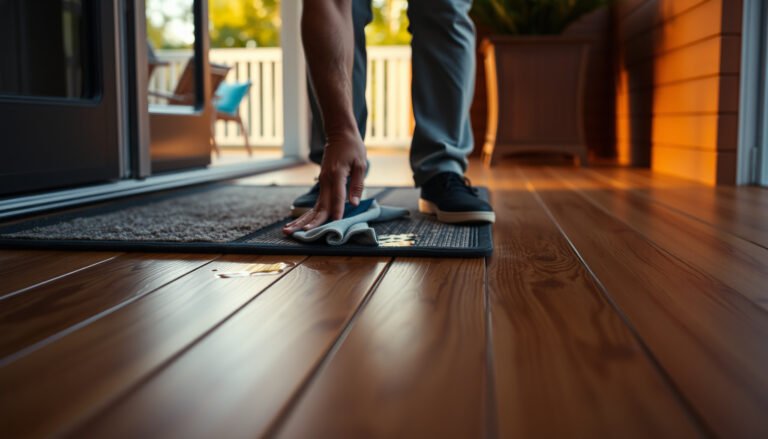
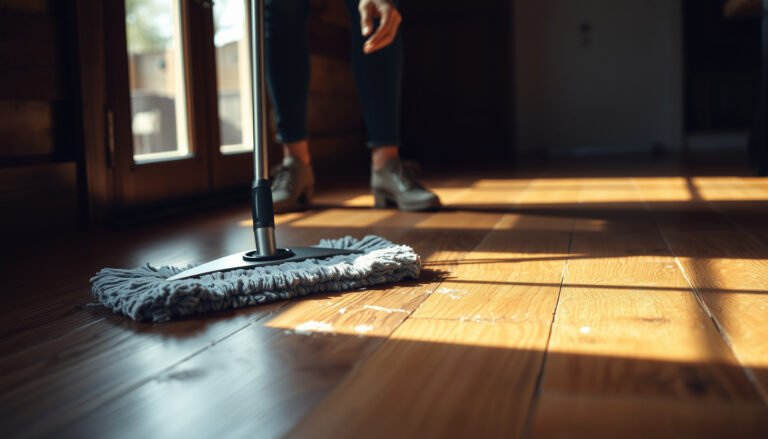
[…] smear clings near the baseboard, refusing to lift. With the right approach—warm water and a pH-neutral cleaner, then a carefully selected masonry remover or vinegar solution on a test spot—you can dissolve […]
[…] sealed hardwood floors rely on polyurethane, aluminum oxide, conversion varnish, or oil-modified urethane coatings. Strong […]