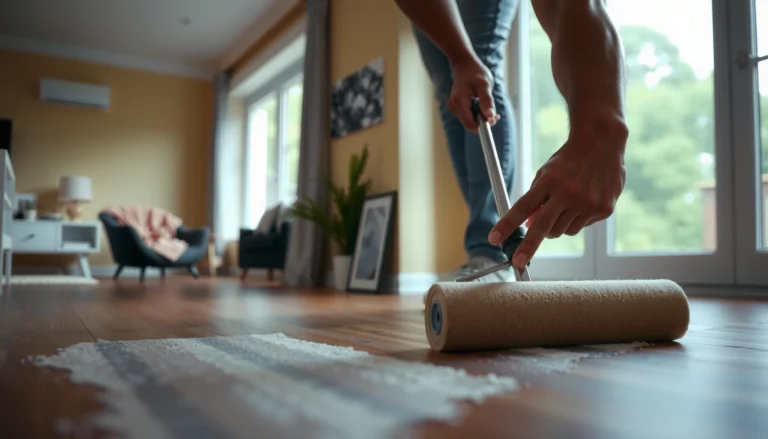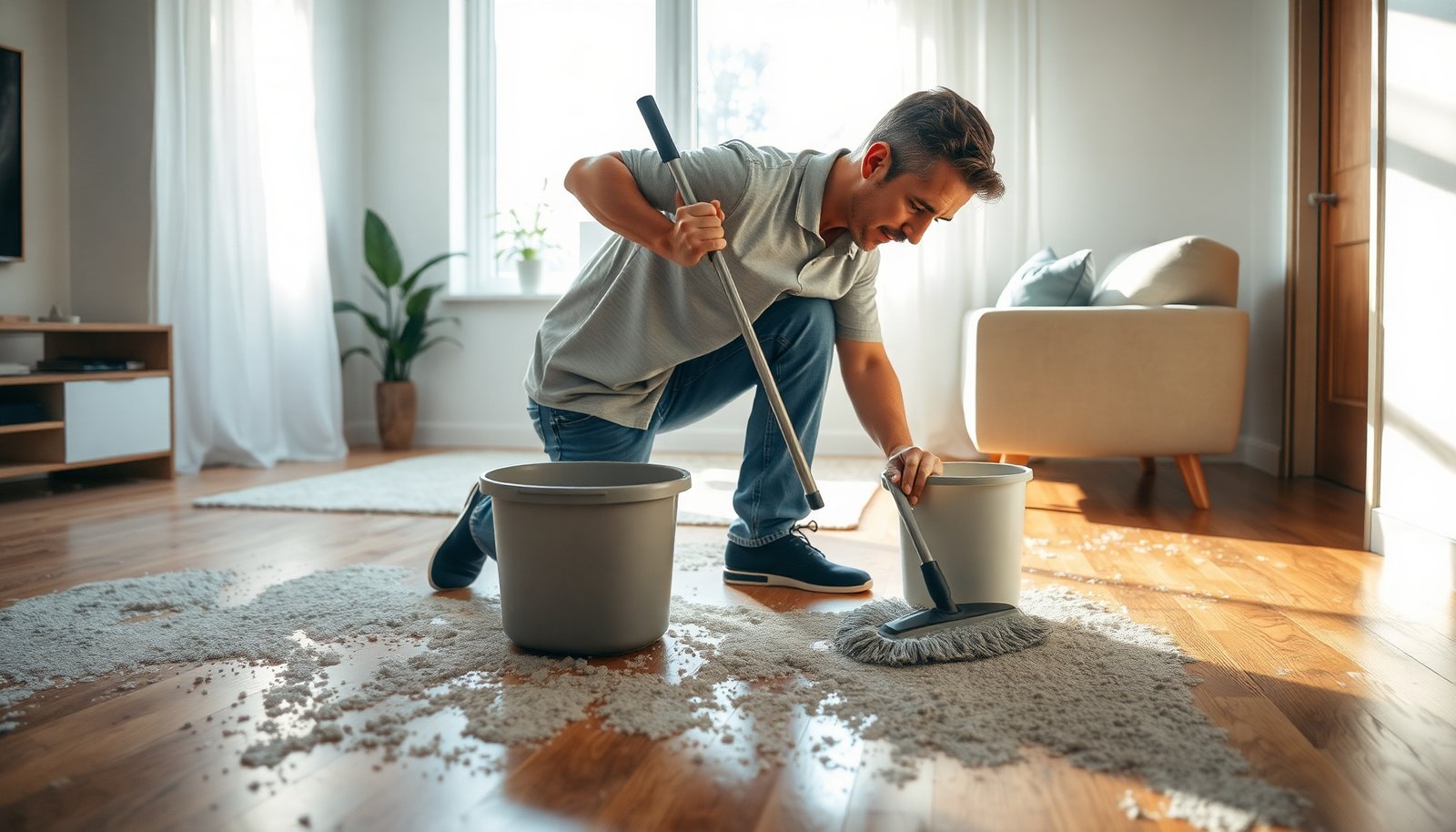

You notice gray cement dust crusted along your hardwood planks, and every damp wipe turns it into a gritty paste. With the right tools—a plastic scraper, microfiber cloths, a pH-neutral wood cleaner, and plenty of clean water—you can loosen the residue without gouging or dulling the finish. Plan for about 1–2 hours of careful work, then finish with thorough drying so the floor is ready for traffic.
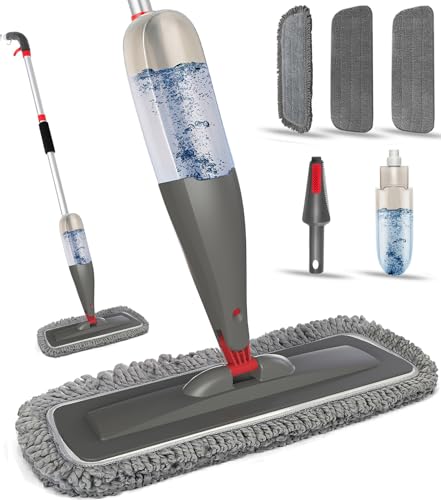


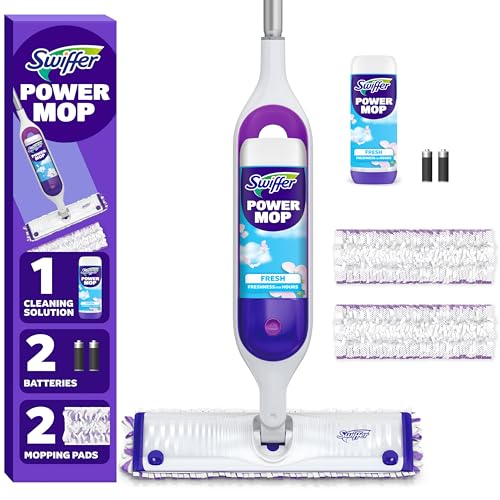
If you act fast and start with gentle, dry removal, you can usually lift cement residue without ruining your hardwood finish. After the loose grit is gone, use a pH-neutral cleaner and plenty of rinsing, then dry thoroughly—avoid strong acids that can etch or dull wood.
This approach fits most sealed hardwood floors (polyurethane/urethane/water-based finishes). If the wood is unfinished, badly damaged, or the residue is deeply embedded, you may need a pro to prevent permanent clouding or surface loss.
Assess the damage and protect the floor
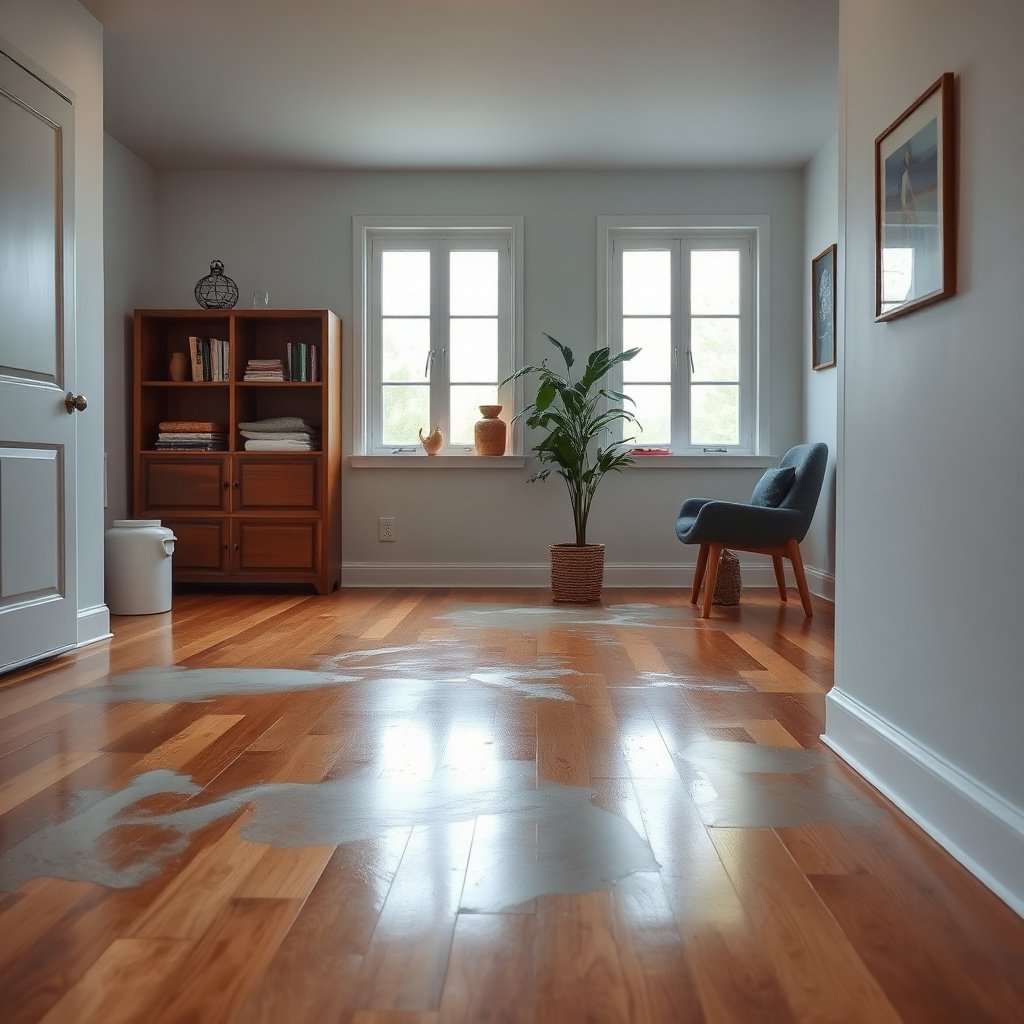
Start by determining how your hardwood is finished and how far the cement residue has penetrated. If the finish is intact, you can often clean safely; if you see pitting or rough texture, you’ll need to slow down or stop.
– Check whether the hardwood is sealed (no bare-wood look) and whether you see pitting, scratches, or discoloration. Cement residue is usually alkaline—according to Portland-cement safety information, fresh cement can have a pH around 12–13—and that chemistry can create haze or dullness if it sits on the surface. Portland cement safety data / hazard guidance (typical SDS ranges)
– Protect surrounding areas with painter’s tape or plastic sheeting so water and cleaners don’t spread residue. Cement and mineral-rich dust can smear when you start wiping, creating bigger “cleaning zones.”
– Test any cleaner on a small hidden spot first to confirm it doesn’t dull the finish. Even pH-neutral cleaners can behave differently depending on your urethane brand, sheen level, and whether the floor has been coated or burnished.
From my experience working through these cleanup scenarios with property managers, the biggest avoidable mistake is skipping the “finish check” and treating unfinished boards like sealed hardwood—cement residue cleaning then becomes a surface-loss problem instead of a residue-removal problem.
Remove cement residue dry (before any liquids)
The safest order is dry first: you remove abrasive material before you introduce moisture. This reduces the chance you’ll grind cement into the finish while wiping.
– Let the debris dry completely, then lift it with a plastic scraper/putty knife (metal tools can gouge finish). Cement is hard and can cut polyurethane if you drag it across the grain.
– Vacuum using a soft-brush attachment, working from edges toward the center to avoid grinding grit in. Vacuuming first also prevents “paste” formation when you later introduce a cleaner.
– Wipe with a dry microfiber to pick up remaining powder so cleaner doesn’t turn it into paste. Cement dust mixed with water can create a thicker slurry that behaves like a mild abrasive.
Tip for 2026 flooring maintenance: if the residue is from recent work (construction splatter, concrete leveling, or tile/grout work), treat it like a mineral contaminant, not just “dirt.” Cement residue cleanup is really a two-stage job: remove the hard particulate, then address the mineral film.
Clean with the gentlest effective method
After the loose cement residue is gone, clean only as much as needed with a pH-neutral product. “Gentlest effective” means you use enough cleaner to dissolve the residue film, but not so much water or agitation that you damage the finish.
– Use a pH-neutral hardwood or floor cleaner and damp (not soaking) microfiber pads. “pH-neutral” typically targets around pH 7 (neutral) rather than strongly acidic or strongly alkaline formulas. EPA basics on pH scale and neutrality
– Work in small sections: wipe, re-wet the pad as needed, and keep the residue from re-depositing. If you notice the microfiber turning gray or chalky, switch to a clean section of the cloth to avoid dragging minerals back into the area.
– If you have a cloudy film, do repeated light passes rather than one aggressive treatment. Cement haze can come from thin mineral deposits left behind after the first wipe—not from a single “deep” reaction—so multiple controlled passes are safer than one heavy application.
Why this works: cement residue (especially lime/mineral components) tends to be water-reactive in the moment, so damp cleaning can lift remaining deposits. But standing moisture can still create new problems—seams, edges, and micro-gaps can swell slightly over time, especially as moisture content climbs. As background, wood begins to swell dramatically as moisture rises above the fiber saturation point (commonly cited near ~30% moisture content), while routine floor cleaning should stay far below that threshold. USDA Forest Products Laboratory / wood moisture basics
Cleaning Chemistry Options for Cement Residue on Sealed Hardwood (Practical 2026 Guidance)
| # | Method / product type | Typical pH (concept) | Finish safety rating | Best for | Finish preservation impact |
|---|---|---|---|---|---|
| 1 | Dry scrape + soft vacuum (no liquids) | N/A | ★★★★★ | Fresh/loose cement particles | +9/10 |
| 2 | pH-neutral hardwood floor cleaner (damp microfiber) | ~7 | ★★★★☆ | Residual mineral film after vacuuming | +7/10 |
| 3 | Clean-water rinse passes (damp wipe only, then dry) | ~7 (water) | ★★★★☆ | Removing cleaner + leftover chalkiness | +6/10 |
| 4 | Approved cement/lime remover for sealed floors (label-followed) | Varies by formulation | ★★★☆☆ | Embedded residue that won’t lift | +2/10 |
| 5 | Generic “descaler” not labeled for wood/urethane | Often acidic | ★☆☆☆☆ | Generally not recommended for wood finishes | -7/10 |
| 6 | Acid-heavy vinegar/bath descaling concentrate | Acidic | ☆☆☆☆☆ | Not a safe default for sealed hardwood | -9/10 |
| 7 | Steam cleaning / heat-assisted extraction | Moisture + heat | ★☆☆☆☆ | Not a recommended option for wood seams/finish | -8/10 |
For stubborn spots: use poultice/approved removers carefully
When cement residue won’t lift with pH-neutral cleaning, you can only escalate in a controlled, manufacturer-safe way. The goal is to dissolve minerals without damaging the urethane film beneath.
– If residue won’t lift, look for a cement/lime remover that’s explicitly labeled safe for sealed flooring finishes; otherwise, stop and get help. Cement residue chemistry is mineral-based, and many cement removers are acidic—so the “safe for sealed hardwood” label matters.
– Apply per the label (often like a paste/poultice), keep it from spreading, and do not let it sit longer than directed. Dwell time is a common reason spot treatments become bigger and more uneven.
– Afterward, rinse/neutralize as instructed (many removers require a specific follow-up), then dry thoroughly. Skipping the rinse/neutralize step can leave a residue film that shows as haze days later—something property staff often notice only after foot traffic starts.
Cement residue escalation: what’s usually safe vs. risky
| Approach | Pros | Cons / failure mode |
|---|---|---|
| Label-approved cement/lime remover for sealed floors | Targets mineral deposits; usually includes required neutralization steps | Can still dull sheen if dwell time/rinsing is off |
| Generic descaler or “DIY acid mix” | May improve lift on stone/tile | High risk of etching/dulling urethane and creating permanent spot haze |
| Abrasive pads or heavy scrubbing | Can mechanically remove residue faster | Scratches the finish; cement grit becomes embedded and keeps grinding |
Restore the surface (and reduce future spotting)
Once the cement residue is clean, you restore the floor by drying fast and managing the finish’s surface look. In 2026, most sealed hardwood warranties still rely on proper drying and using finish-safe cleaners.
– Once the floor is clean, dry immediately with clean microfiber towels—standing moisture can stain edges and seams. Cement residue cleanup often leaves micro-wet zones; those can show up later as darker borders.
– Lightly buff only if your finish shows haze, and follow your floor’s finishing/maintenance guidance. Buffing can even out surface reflection, but it can’t “undo” chemical etching.
– If the finish looks dulled or uneven, plan a finish refresh (spot repair or recoat) rather than continuing harsh cleaning. Cement residue that etched the topcoat usually needs refinishing or spot coating to truly match the sheen.
If you’re working on a managed building schedule, this is where you control risk: we recommend keeping traffic off the cleaned area until it’s fully dry, because early footfall can leave new streaks on a freshly rinsed surface.
What can go wrong (and how to avoid it)
Most cement residue problems are preventable. They happen when the process order changes, the wrong chemistry is used, or water is over-applied.
– Using acids or harsh descalers: cement residue often contains mineral compounds, and strong acids can etch hardwood or strip sheen. Cement residue is already alkaline (often around pH 12–13 initially), Portland cement hazard guidance so “more acid” can be the wrong way to neutralize—especially on urethane.
– Scrubbing with abrasives: scouring pads and gritty cleaners can permanently scratch the finish. If cement grit is still present, even “gentle” scrubbing can become grinding.
– Too much water: mopping-style saturation can seep into seams and edges, causing swelling or long-term dull patches. Seams expand and contract; haze can follow even if the cleaner itself was mild.
– Skip-testing: always test cleaners/removers in a hidden area first—finish reactions aren’t always predictable. In 2026, finish lines are varied: polyurethane sheen and water-based topcoats can react differently to the same chemical.
Verdict: what we’d do first (and who should skip DIY)
Start with dry removal (scrape + vacuum), then move to pH-neutral cleaning with damp microfiber. For stubborn cement residue, only use an approved cement/lime remover that’s specifically safe for your finished/sealed hardwood and strictly follow the label—otherwise, don’t experiment.
Skip DIY and call a flooring pro if the wood is unfinished, the residue caused pitting/rough texture, the floor is extensively covered, or you notice growing discoloration after cleaning attempts. In those cases, the risk isn’t just cosmetic—etched urethane can require refinishing to restore uniform protection.
Quick scan checklist
| Step | What to do | Stop if you see |
|---|---|---|
| 1 | Dry scrape with plastic + vacuum | Fresh gouges in the finish |
| 2 | Wipe with dry microfiber | Residue turning into paste |
| 3 | Clean with pH-neutral cleaner (damp, not wet) | Dulling, hazing spreading beyond spots |
| 4 | Use only label-approved cement/lime remover for sealed floors | Finish stripping or etching |
| 5 | Rinse/neutralize as directed, then dry fast | Water-like staining at edges/seams |
Frequently Asked Questions
What’s the safest way to remove cement residue from hardwood floors without damaging the finish?
Start by dry-scraping any loose cement with a plastic scraper to avoid scratching the hardwood. Then soften remaining residue with a pH-neutral cleaner or manufacturer-recommended hardwood cleaner and damp microfiber mopping—never soaking the floor. If residue persists, use a stone/concrete remover labeled safe for sealed floors and test it in a small hidden area first. Rinse with clean water on a lightly damp mop and dry thoroughly to prevent moisture from penetrating the wood.
How do you clean cement dust or splatter off finished hardwood floors?
Begin with vacuuming and dry sweeping to remove cement dust; avoid abrasive tools that can grind particles into the finish. For splatters, work in stages: dampen with a pH-neutral cleaner, let it dwell briefly, and gently wipe with a microfiber cloth. For stubborn spots, repeat the process rather than using strong acid cleaners that can dull or strip the hardwood’s protective coating. Finish by wiping with a clean damp cloth and drying immediately.
Why should you avoid vinegar or harsh acids when cleaning cement residue on hardwood?
Many cement residues are alkaline, and while vinegar is acidic, using it directly on hardwood can weaken the floor’s finish and increase the chance of dulling or cloudiness. Strong acids and chemical strippers can also penetrate seals and cause uneven discoloration. Instead, choose products designed for removing cement from floors or use pH-neutral cleaners paired with careful mechanical cleaning (soft cloths, gentle agitation). Always follow the product directions and test in a small area first.
What’s the best method to clean dried cement spots from hardwood after construction or renovation?
After construction, dried cement often requires controlled softening: start with plastic scraping, then use a cement residue remover that’s compatible with sealed hardwood surfaces. Apply the product according to label instructions, allow proper dwell time, and gently wipe—don’t scrub hard with stiff brushes. After removal, rinse with a lightly damp mop to eliminate chemical residue and dry thoroughly with clean towels. This helps prevent lingering cement dust from scratching later and reduces the risk of finish damage.
Which cleaners are recommended for cement residue on sealed versus unsealed hardwood floors?
For sealed hardwood, look for commercial “cement, lime, and mortar” removers that specify compatibility with sealed wood or finished floors, and always patch test first. For unsealed or unfinished hardwood, it’s much riskier because moisture and chemicals can penetrate and cause staining—consider using minimal moisture methods and consulting the flooring manufacturer. In most cases, gentle pH-neutral cleaning plus careful spot treatment is safer than aggressive chemical removers on unsealed wood. If staining persists, professional cleaning or refinishing may be the best option to restore the surface.
📅 Last Updated: November 04, 2026 | Topic: How to clean hardwood floors covered in cement residue? | Content verified for accuracy and freshness.
References
- Cement
- Portland cement
- Mortar
- Grout
- Efflorescence
- Hydrochloric acid
- Wood flooring
- https://scholar.google.com/scholar?q=cement+residue+removal+from+wood+floor Google Scholar
- https://scholar.google.com/scholar?q=how+to+remove+cement+haze+and+residue+from+flooring+without+damaging+wood Google Scholar
- https://scholar.google.com/scholar?q=hardwood+floor+cleaning+pH+neutral+avoid+acids+alkalis+stain+removal Google Scholar