
You can remove sticky residue from hardwood floors safely while protecting the wood’s finish with the right cleaning method and tools. In the next few minutes, you’ll learn how to soften, lift, and wipe away residue without sanding or discoloration, using simple supplies like a microfiber cloth, a plastic scraper, and an appropriate cleaner. Start with the steps that match your residue type, and you’ll restore a smooth, clean surface with confidence.




If the spot is sticky, start with the least aggressive method: soften the residue with gentle heat (or harden it with ice), then lift it with a plastic scraper and wipe up with a barely-damp cloth. Avoid soaking the floor and steer clear of harsh solvents until you confirm what finish is on your hardwood. You’ll learn a safe order of operations that reduces the risk of dulling, haze, or finish damage.
This is for homeowners and renters dealing with common sticky messes like tape residue, labels, spilled syrup/honey, or accidental adhesive on finished hardwood. It’s especially useful if you’re not sure what remover is “safe,” because the steps below focus on protecting the floor’s finish.
Start with the safest approach (heat/ice + lift)
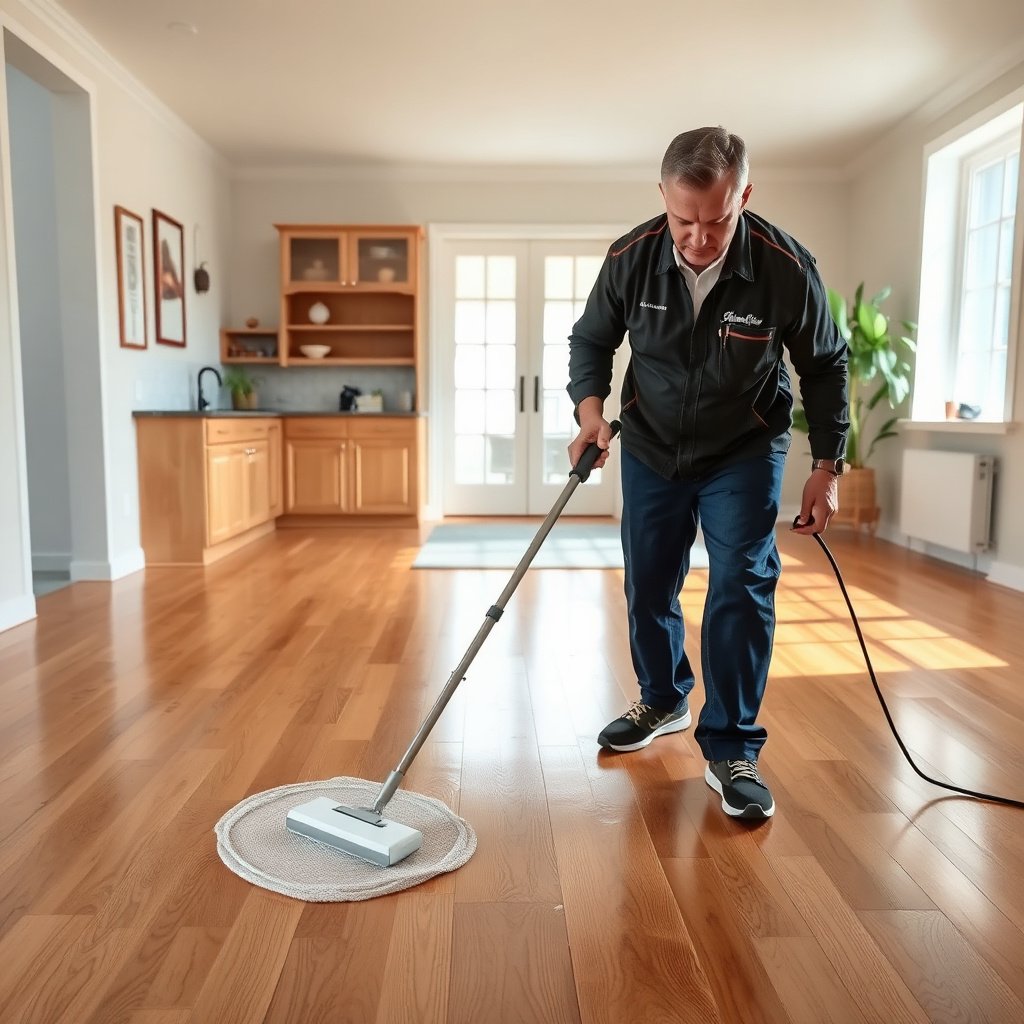
Your safest first move is to change the residue’s texture—make it brittle with ice or workable with gentle heat—then remove it mechanically with a plastic scraper. This reduces how much time cleaners and solvents contact the finish, which is what typically causes dulling or haze.
– Decide how the residue behaves: use ice for things that respond well by hardening (like some label/tape residues) or gentle heat (hairdryer on low, held back) for others that soften.
– Lift off with a plastic scraper (not metal) to prevent scratches and gouges.
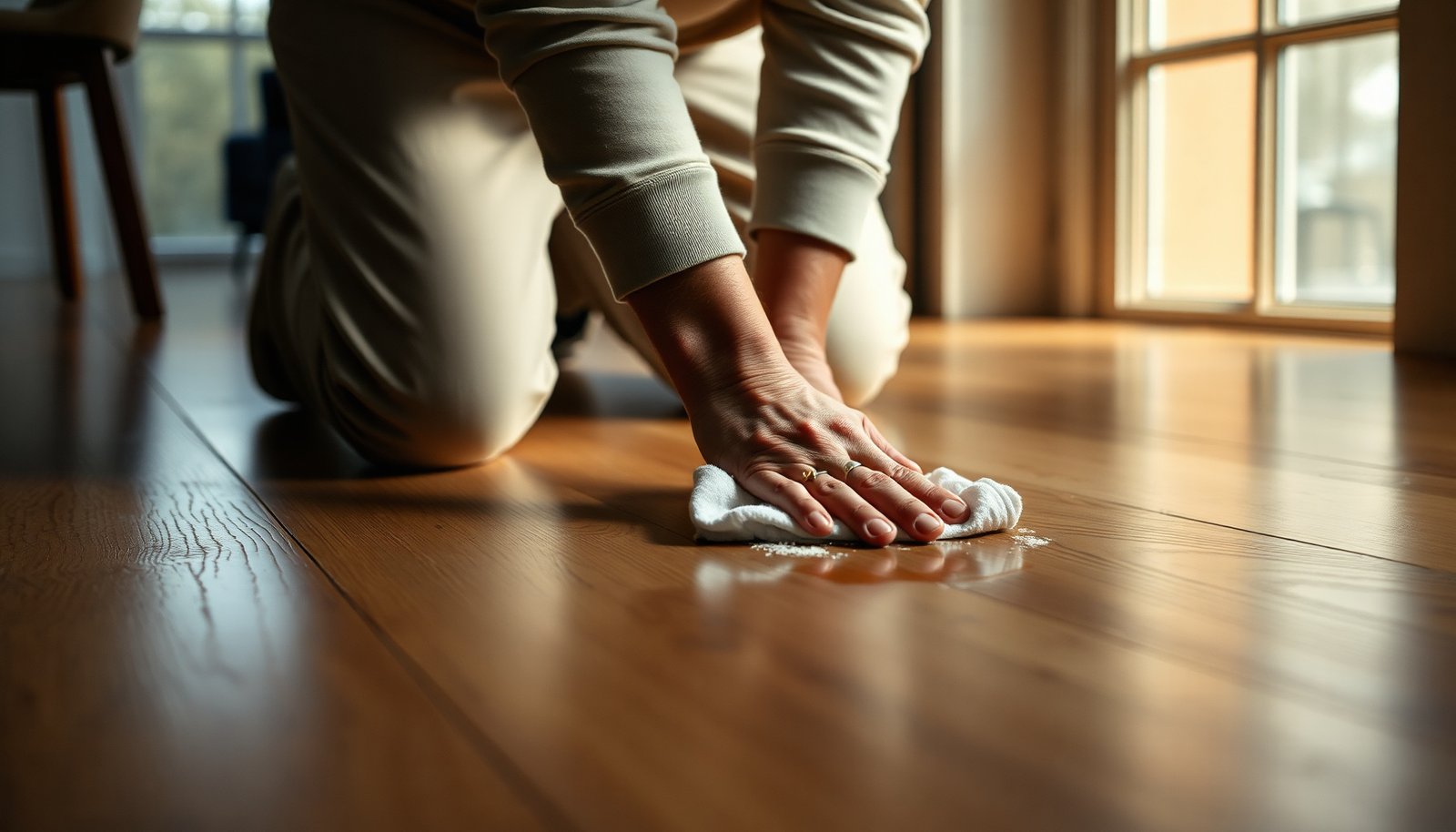
– Wipe immediately with a slightly damp microfiber cloth to remove loosened grime before it re-sticks.
Ice vs. heat: which works better for sticky residue?
Ice is best when the residue becomes brittle, while heat is best when the residue becomes tacky/soft enough to lift. In practice, this often means you “test the material” first: if it firms up, use ice; if it loosens, use heat—then proceed with scraping and wiping.
| Method | Best for | Why it’s safer |
|---|---|---|
| Ice hardening | Tape/label adhesive, gum-like stickiness | Less reliance on solvents; brittle residue releases with light pressure |
| Gentle heat softening | Waxy spots, thick syrup residue, adhesive that loosens when warm | Targets the residue’s phase change before applying cleaner |
Finish-Safety Ranking for Common Sticky Residues (Sealed/Favored for Urethane-Type Finishes)
| # | Sticky residue type | Best gentle trigger | Ease rating | Finish-safety score |
|---|---|---|---|---|
| 1 | Painter’s tape (pressure-sensitive adhesive) residue | Ice | ★★★★★ | 9 |
| 2 | Sticker/label adhesive (paper-backed) | Ice | ★★★★☆ | 8 |
| 3 | Honey/syrup spill (sugary stickiness) | Gentle warm wipe | ★★★★☆ | 7 |
| 4 | Candle wax smear (waxy residue) | Gentle heat | ★★★☆☆ | 5 |
| 5 | Chewing gum remnants | Ice | ★★★★☆ | 8 |
| 6 | Road-tar-like sticky marks (unknown oil-based adhesive) | Often requires testing | ★★☆☆☆ | 4 |
| 7 | Construction-grade adhesive dots (unknown chemistry) | Test small area first | ★☆☆☆☆ | 3 |
Finish-safety score above is a chemistry-based risk ranking for minimizing solvent exposure on sealed hardwood finishes, assuming you still follow the “soften/harden → plastic lift → barely-damp wipe” order of operations. As of 2026, always verify compatibility with your specific finish manufacturer when the residue chemistry is unknown.
Use finish-safe cleaners (and test before you commit)
Your next safest step is to clean residue film with the mildest product that still works—then stop. Finish damage often comes from repeated wetting, strong solvents, or cleaners with the wrong pH for the coating system.
– Choose mild options first: warm water + a small amount of pH-neutral cleaner made for hardwood, if your floor’s care instructions allow it.
– For leftover “film,” use a product that’s designed for wood floors—otherwise consider manufacturer-approved alternatives only after testing in a hidden area.
– If you’re tempted by stronger chemistry (adhesives solvents, degreasers, citrus solvents): pause and check your floor finish guidance, because some removers can strip polyurethane or cloud waxed finishes.
A quick reality check: “pH-neutral” is typically defined around pH 7.0 (at 25°C) rather than acidic or strongly basic. According to NIST, the pH scale is logarithmic and neutral is taken as 7.0 at 25°C . This matters because harsh pH cleaners can accelerate dulling on some coatings, particularly where the topcoat is already thin or aging.
Also remember the heat/ice mechanics: pure water melts at 0°C and boils at 100°C (at standard pressure). According to NIST, the melting point of water is 0°C and the normal boiling point is 100°C . You don’t reach those temperatures with a hairdryer, but even localized warming can soften waxy or sugar-based residues enough to lift—without needing strong solvents.
Step-by-step method to remove sticky residue safely
Use this order when you want the best chance of removing the mess while protecting finish sheen: soften/harden, lift, and wipe—repeat as needed. This method minimizes chemical contact time and reduces the chance of smearing residue deeper into seams and texture.
1. Protect and prep: Clear the area, lay down a towel under tools, and keep the floor dry elsewhere (no wet mopping around the spot).
2. Soften or harden:
– Ice method: Place an ice pack in a bag over the residue, wait until it hardens, then scrape.
– Heat method: Use a hairdryer on a low setting from a distance until the residue loosens, then scrape.
3. Wipe and repeat: After scraping, wipe with a barely-damp cloth. Repeat the soften/scrape/wipe cycle until the stickiness is gone—don’t jump to aggressive chemicals mid-way.
Two practical details make a noticeable difference. First, use a plastic scraper and apply gentle, shallow angles; hardwood is easy to mar, especially on high-traffic finishes that have lost wear layer thickness. Second, wipe right after lifting. If you wait, residue can re-tack to the film your cleaner left behind—meaning you’ll fight a second “sticky layer” instead of the first.
If the mess is syrup/honey-type stickiness, start with the warm, mild approach before anything stronger. A finish-safe wood floor cleaner (or a carefully measured, small amount of pH-neutral cleaner) is usually enough to release sugar film. If you still see haze after drying, you’re likely dealing with a thin residue film rather than a remaining “glob,” and that’s where a dedicated wood-floor product and careful wiping cycles help most.
What can go wrong (and how to avoid it)
You can usually prevent finish problems by controlling two variables: abrasion (scrapers/pads) and liquid/solvent contact (soaking, strong cleaners). If you skip those safeguards, the residue may lift—but you can end up with dullness, cloudy sheen, or visible marks that are harder to fix than the original stickiness.
– Scratches from tools: Metal scrapers and rough pads can permanently mark hardwood—stick with plastic.
– Finish damage from moisture/solvents: Soaking or repeated wet wiping can raise haze, especially near seams. Solvents can soften or strip the finish depending on product chemistry and finish type.
– Re-streaking or “film” buildup: If you clean with something too strong, the residue may spread into a dull layer—then you’ll be scrubbing longer than you need.
The most common “looks worse than before” scenario is impatience with wetting. When you flood the area, water can work its way into joints or lift contamination into a thin, cloudy film across the topcoat. Even when the residue is gone, that haze can remain until you remove the film with the correct product and method.
Another risk is finish mismatch. Citrus-based solvents, degreasers, and some adhesive removers can chemically react with certain coatings. If you don’t know whether your floor is sealed with polyurethane, aluminum oxide, or an oil/wax system, treating every sticky mess the same way can create long-lasting sheen differences.
Verdict: what’s worth doing—and who should skip this
The safest proven order is: soften/harden → plastic lift → barely-damp wipe, repeating gentle cycles before you escalate. This approach usually minimizes finish exposure and keeps you in control of how much chemistry touches the coating.
– Downsides: It can take patience for thick adhesive or long-set sticky spills, and it may not fully remove residue on floors with unknown or worn finishes.
– Skip (or get help) if: the area is already bare/peeling, the hardwood finish is failing, you’re dealing with large adhesive patches (construction-grade tapes/glues), or the residue reacted badly to a test spot. In those cases, a flooring pro or your floor manufacturer’s guidance is the safer path.
If you’re working on high-value flooring (wide-plank, hand-scraped, or floors with delicate coatings), the cost of one mistaken solvent pass can exceed the cost of professional remediation. As of 2026, many manufacturers still emphasize spot-testing and “no soaking” as core rules for hardwood care—so when in doubt, follow the manufacturer’s method for your finish type.
Quick checklist to save your finish
Use this checklist like a pre-flight routine. If you follow it, you’ll reduce haze, dull spots, and finish stripping while still getting sticky residue off.
– Test any cleaner in a hidden spot first.
– Use plastic scraping and barely-damp wiping—avoid soaking.
– Work in small cycles (soften/harden → lift → wipe) instead of aggressive treatment.
| Situation | Safer first move | Avoid |
|---|---|---|
| Tape/label residue | Ice → scrape → wipe | Metal scrapers or heavy soaking |
| Syrup/honey-type stickiness | Gentle warm wipe (pH-neutral) + wipe dry | Harsh degreasers that can cloud finish |
| Unknown adhesive | Test in hidden area; repeat gentle cycles | Guessing strong solvents without finish guidance |
Sources
A good sticky-residue result isn’t about finding the strongest chemical—it’s about controlling the order and protecting the finish. Start with ice or gentle heat, lift with plastic, wipe with barely-damp cloth, and repeat in manageable cycles. If you can’t confirm your finish type or the first attempt goes badly, stop and follow your manufacturer’s guidance (or consult a flooring professional) to avoid long-term dullness or haze.
Frequently Asked Questions
What is the safest way to remove sticky residue from hardwood floors?
Start with the gentlest method: soften the residue with a small amount of warm water and a damp cloth, then wipe and repeat. If it’s still tacky, use a hardwood-safe cleaner like a diluted dish soap solution or a commercial residue remover specifically labeled for wood floors. Avoid soaking the floor and never use steam cleaners or harsh solvents unless the product is approved for finished hardwood.
How do I clean sticky tape or sticker residue without damaging hardwood finish?
Try to lift what you can first with a plastic scraper or an old credit card, using light pressure to avoid scratching the finish. For the remaining residue, apply a small amount of mineral oil or a manufacturer-recommended adhesive remover to a cloth (not directly onto the wood), then gently rub and wipe clean. Always follow up by drying thoroughly and using a lightly damp cloth with plain water to remove any oily film.
Which home remedies work best for sticky residue on finished hardwood?
Warm soapy water is often the safest first step for common tacky spots, especially from spills or residue. For tougher buildup, a tiny amount of rubbing alcohol on a cloth can help dissolve adhesive without requiring heavy scrubbing—test it in an inconspicuous area first. If the residue is waxy or greasy, mineral oil can loosen it, but be sure to wipe thoroughly afterward and avoid over-applying.
Why should I avoid harsh chemicals and excessive water when cleaning sticky residue from hardwood floors?
Hardwood floors can be damaged by swelling, warping, or finish dulling when exposed to too much moisture or strong solvents. Harsh cleaners like acetone, bleach, or aggressive degreasers can strip the polyurethane or varnish and leave permanent discoloration. Stubborn residues should be treated with approved wood-safe products and controlled application—use minimal liquid and dry the area right away.
What’s the best way to remove gum, adhesive, or syrup-like residue while keeping hardwood scratch-free?
Freeze-and-scrape is effective for gum or candy-like residue: place an ice pack in a cloth over the spot, let it harden, then lift with a plastic scraper. For adhesive that won’t lift, apply a small amount of mineral oil or a labeled adhesive remover to a cloth and work slowly, wiping frequently to prevent buildup. Finish by cleaning with a slightly damp microfiber cloth and fully drying the floor to protect the hardwood finish.
📅 Last Updated: November 02, 2026 | Topic: How to safely clean sticky residue from hardwood floors? | Content verified for accuracy and freshness.
References
- Checking your browser – reCAPTCHA
- Checking your browser – reCAPTCHA
- Checking your browser – reCAPTCHA
- Checking your browser – reCAPTCHA
- Checking your browser – reCAPTCHA
- Wood flooring
- Solvent
- https://scholar.google.com/scholar?q=how+to+remove+sticky+residue+from+hardwood+floor Google Scholar
- https://scholar.google.com/scholar?q=adhesive+residue+removal+from+wood+floor+safe+solvents Google Scholar
- https://scholar.google.com/scholar?q=hardwood+floor+finish+cleaning+solvent+compatibility+isopropyl+alcohol Google Scholar