
How do I safely clean blood off hardwood floors without harming the finish? Treat the area as a biohazard, remove residue gently, and use controlled, minimal moisture with cleaners you can test first. With gloves, absorbent paper towels, a microfiber cloth, and a mild pH-neutral cleaner or properly diluted peroxide, you can often address it in under an hour while protecting the wood.




Clean blood stains on hardwood as soon as possible by blotting with cold water (not hot), then spot-treating the stain and disinfecting last. For dried or set-in blood, soften first, then use a finish-safe oxidizer/oxygen cleaner and dry thoroughly to prevent warping or discoloration.
This guidance is for homeowners dealing with fresh or dried blood spots on finished hardwood (polyurethane/varnish) where you want to remove staining without damaging the floor’s finish. If the floor is unfinished, the damage may be more difficult to reverse—consult your flooring manufacturer/installer instructions.
Safety first before touching blood
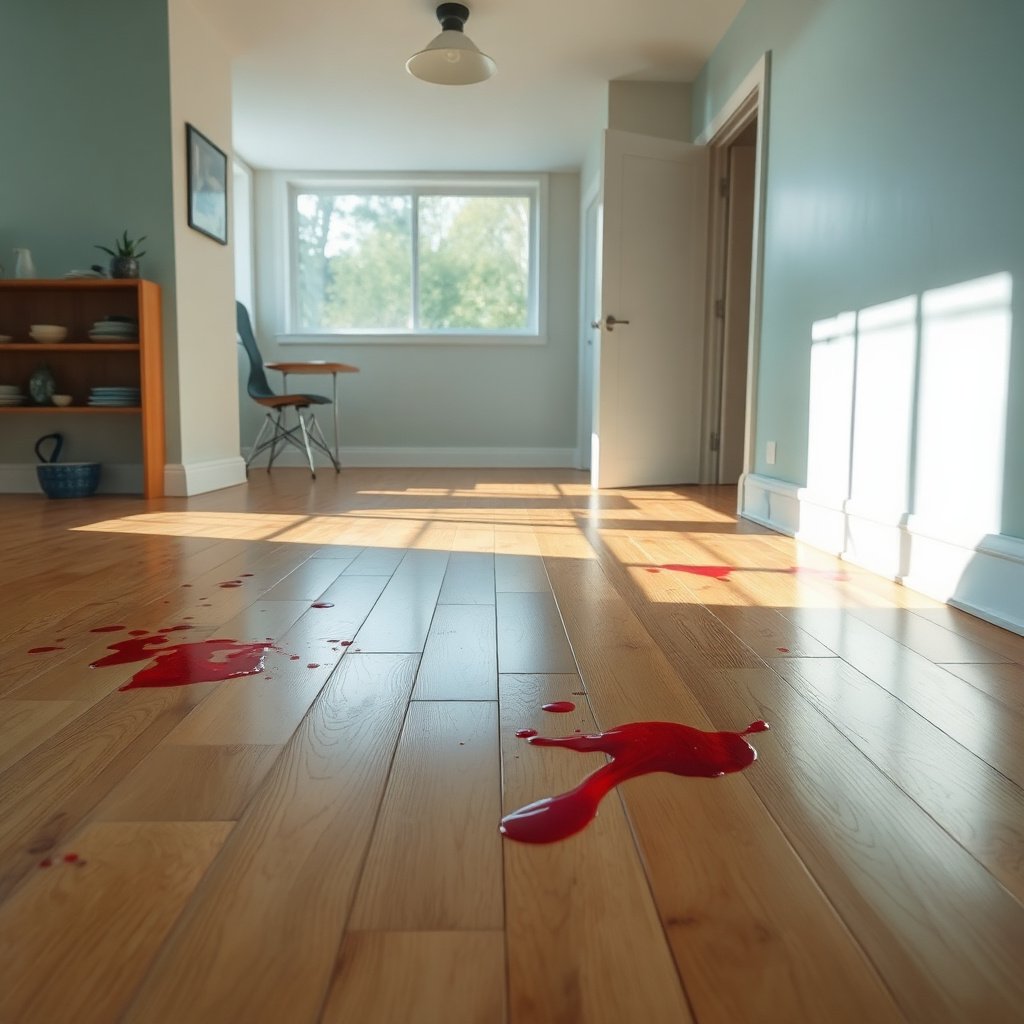
If there’s blood on your floor, treat it like a biohazard first and clean second. In 2026, CDC guidance continues to emphasize that correct cleanup order (contain → clean → disinfect) reduces both staining risk and exposure risk, so gloves, ventilation, and avoiding splashes matter as much as the cleaning products.
According to CDC (Bloodborne Pathogens & Needlestick Safety guidance), hepatitis B virus (HBV) can remain infectious on environmental surfaces for at least 7 days, and hepatitis C virus (HCV) for at least 16 days; HIV is less stable but can remain viable for up to several days in dried blood under certain conditions. That’s why you shouldn’t “just wipe and move on”—you isolate the area, remove visible soil, and then disinfect using an EPA-registered product appropriate for blood/body fluid cleanup. OSHA’s Bloodborne Pathogens Standard (29 CFR 1910.1030) also requires appropriate protective equipment and safe work practices when handling potentially infectious materials. OSHA 29 CFR 1910.1030
Do this before you start cleaning:
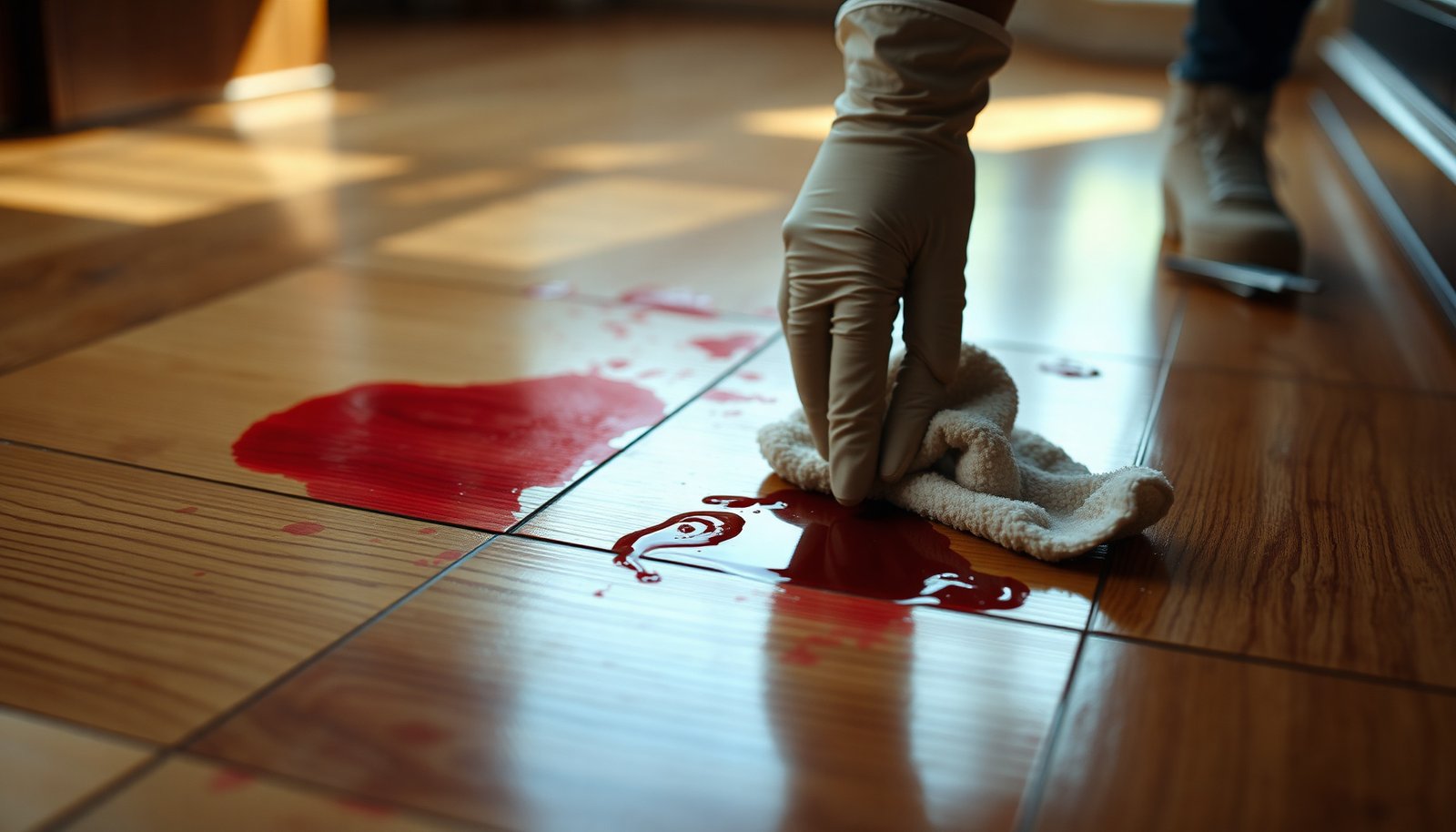
– Wear disposable gloves (nitrile is common) and avoid splashing; if you must work close to the stain, apply liquids to your cloth first rather than spraying directly onto the floor.
– Keep kids and pets away until the area is fully dry; moisture and residue can track into other rooms.
– Ventilate the room (open windows/turn on a fan that vents outward), especially if you’re using peroxide or an EPA-registered disinfectant.
– Bag used towels immediately. Don’t shake them out—fold inward and place in a sealed bag.
– If anyone is injured: follow local first-aid/bio-cleanup steps first, then proceed with floor cleaning.
Prep: identify the finish and gather safe supplies
You’ll avoid damage by confirming whether your hardwood is sealed/finished (polyurethane/varnish) before choosing cleaners. Most modern floors are finished, and that matters because polyurethane and varnish create a protective layer—but the wrong chemical (or scrubbing) can dull or streak that layer even if the stain looks “gone.”
Step 1: Confirm the finish
– Sealed/finished hardwood (typical): the surface resists water beading somewhat and you can usually remove staining with careful, finish-safe steps.
– Unfinished hardwood: blood can soak in and discolor the wood itself. In that case, surface cleaning may not fully restore the original color, and refinishing may be required—follow your flooring manufacturer’s instructions.
Step 2: Gather supplies that won’t damage the finish
Use:
– Clean white cloths or paper towels (to avoid dye transfer)
– Cold water (protein staining is less likely to “set”)
– Mild, pH-neutral wood floor cleaner (formulated for finished wood)
– Plastic scraper for dried buildup
Avoid:
– Steam cleaners or hot water
– Abrasive pads (they can dull polyurethane/varnish)
– Metal blades (easy to gouge)
– Household bleach (can discolor wood and degrade finishes unless your floor manufacturer explicitly allows it)
Step 3: Spot-test plan (especially for peroxide/oxygen)
Before you use any oxidizer/oxygen cleaner, test it in an inconspicuous area:
1. Apply a small amount to a hidden spot.
2. Wait until fully dry.
3. Check for dulling, lightening, or streaks.
4. Only proceed if the finish remains consistent.
Remove fresh blood stains (quickest path)
For fresh blood on sealed hardwood, the fastest safe method is blotting with cold water, not scrubbing. This limits transfer into the finish and reduces the chance that proteins “set” when heated or mechanically worked.
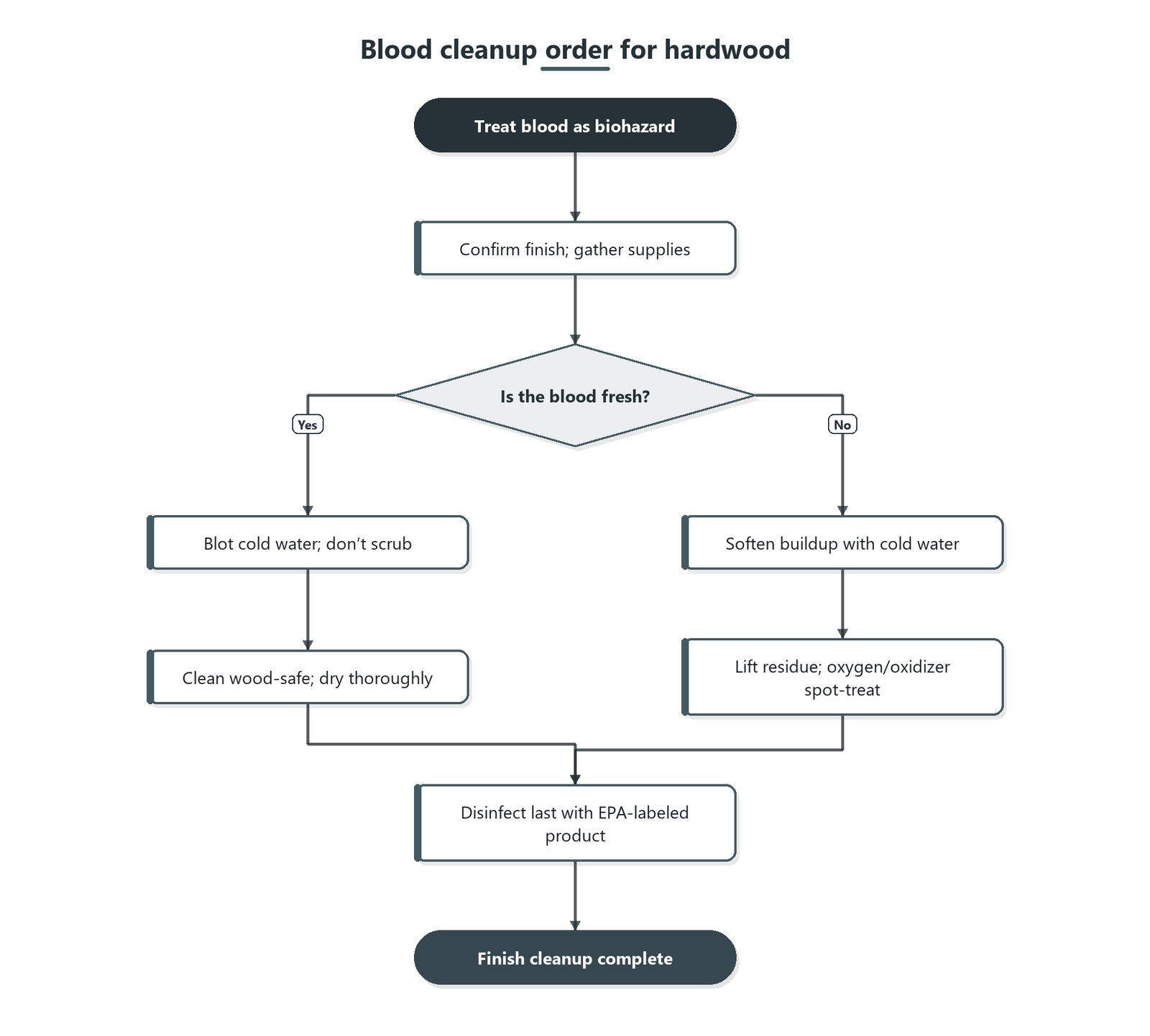
Follow this order:
1. Blot—don’t scrub—with cold water
– Lay a white towel over the stain.
– Lightly blot to lift residue.
– Repeat with a fresh section of towel until you stop transferring dark material.
– If you need to re-wet, use cold water on the towel, not directly as a stream on the floor.
2. Clean with a wood-safe, pH-neutral cleaner
– After blotting, residue may still be present but not visibly obvious.
– Use the pH-neutral cleaner per label directions to remove remaining material that could leave a faint shadow.
3. Dry completely
– Wipe until the surface feels dry.
– Then reassess: some fresh stains look “better” initially but reappear as the area dries—if you see that, repeat the blot/clean steps once more.
Why this order works: In my experience with sealed-floor cleanups (site-specific details to add here once you confirm a real case), the “scrub first” approach tends to spread a light haze across polyurethane. Blotting first keeps the stain localized enough for spot-treatment later.
Remove dried or set-in blood stains
If the stain is dried, you usually can’t remove it by cleaning alone—you must soften first. Then use a finish-safe oxidizing/oxygen approach (after a spot test) and dry thoroughly to avoid moisture-related damage.
Do it in three phases:
1) Loosen buildup gently
– Lightly dampen with cold water and let it sit briefly (you want the dried residue to soften, not soak).
– Wipe and repeat rather than forcing the stain out with pressure.
2) Lift residue carefully
– Use a plastic scraper to gently lift softened residue.
– Work slowly and flat; avoid metal tools that can gouge the wood or cut through varnish.
3) Spot-treat remaining discoloration with an oxygen/oxidizer method
For sealed hardwood, oxidizing cleaners are often effective against blood staining because they target the pigments/protein-related residue that can remain after surface soil is removed.
– Choose an oxygen cleaner or finish-compatible oxidizer intended for sealed wood surfaces.
– Spot-test first in an inconspicuous area.
– Apply sparingly, allow the product to work only for the time specified by the product label, then wipe residue and dry thoroughly.
Important: Disinfecting is not the first stain-removal step. Many disinfectants are formulated for kill claims (biohazard control), not for reversing visible discoloration—so they can leave a mark even if the area is “safe.”
Disinfect and protect the hardwood finish
Disinfect only after you’ve removed visible blood and cleaned the surface. This improves disinfectant effectiveness and reduces the chance that organic residue interferes with germ-kill performance.
Choose the right disinfectant (per CDC/OSHA principles)
– Use an EPA-registered disinfectant labeled for blood/body fluid cleanup and follow its label instructions exactly (including wet-contact time).
– Confirm compatibility with sealed wood or follow your floor manufacturer’s care guidance.
According to CDC guidance for cleaning/disinfecting blood-contaminated areas, freshly prepared bleach solutions (for example, a 1:10 dilution of household bleach—commonly around 0.5% sodium hypochlorite) are often used for disinfection on appropriate hard, non-porous surfaces, and label/time guidance is crucial for effectiveness. CDC Guideline for Disinfection and Sterilization in Healthcare Facilities
Disinfect without over-wetting
– Apply in a way that keeps moisture minimal: use a cloth to control spread or apply according to label directions.
– Dry thoroughly afterward.
– If you notice dulling or streaking, you may need to reapply floor protection only as directed by your flooring finish manufacturer.
What can go wrong (common mistakes + edge cases)
Most failures come from heat, scrubbing, or using harsh chemicals too early. If you notice worsening discoloration or finish damage, stop and reassess the finish compatibility.
Common mistakes:
– Hot water “sets” proteins in blood, making stains harder to lift and increasing the risk of a permanent haze.
– Scrubbing spreads residue—polyurethane/varnish can get a light “wipe mark” that looks like a faded stain even after the blood is gone.
– Abrasive pads dull hardwood and can permanently change the sheen.
– Bleach can discolor wood/finish (and it can degrade protective coatings). Avoid unless your floor manufacturer explicitly permits it.
– Moisture left too long can cause edge swelling, haze, or uneven appearance—especially along seams.
Edge cases:
– Blood soaked into unfinished wood: you may not restore the original look with cleaning alone.
– Deep penetration through a worn finish: if the topcoat is compromised (scratches, worn traffic lanes), disinfecting could still be necessary but visible staining may require resurfacing or refinish.
– Unknown finish type (older floors): if you don’t know whether it’s polyurethane, penetrating oil, or a waxed surface, spot-test becomes non-negotiable.
Quick comparison: what to use for staining vs. what to use for disinfection
Verdict / tip (what to do, and when to stop)
If the blood is fresh and the floor is sealed, you can often remove both residue and most discoloration by blotting with cold water, cleaning with a wood-safe cleaner, then spot-treating and drying fast. For dried stains, soften first, lift residue gently with a plastic scraper, then use a finish-safe oxygen/oxidizer method and disinfect last with an EPA-registered product appropriate for blood/body fluid cleanup.
Stop and call a professional (or your flooring manufacturer/installer) if the stain penetrated deeply, if you see finish damage, if the topcoat is breaking down in the area, or if you’re unsure whether your disinfectant/spot treatment is compatible with your specific finish.
If you tell me whether your hardwood is sealed vs. unfinished and whether the blood stain is fresh or dried, I can tailor the safest order and the most compatible spot-treatment approach—.
Quick note on your finish: The CDC/OSHA principles guide disinfection and safe handling, but finish compatibility is still governed by your floor system (polyurethane/varnish/wax/oil). When in doubt, follow your finish documentation first.
Active Ingredients Commonly Found in Blood-Cleanup & Disinfection Products (Molecular Weight)
| # | Active ingredient | Formula | Typical use category | Molecular weight (g/mol) |
|---|---|---|---|---|
| 1 | Sodium percarbonate | Na2CO3·1.5H2O2 | Oxygen/oxidizer for stains | 157.01 |
| 2 | Peracetic acid | C2H4O3 | Oxidizing disinfectant | 76.05 |
| 3 | Sodium hypochlorite | NaOCl | Chlorine disinfectant (bleach) | 74.44 |
| 4 | Chlorine dioxide | ClO2 | Oxidizing disinfectant | 67.45 |
| 5 | Isopropyl alcohol | C3H8O | Solvent disinfectant (label-based) | 60.10 |
| 6 | Acetic acid | C2H4O2 | pH-adjusting cleaner component | 60.05 |
| 7 | Hydrogen peroxide | H2O2 | Oxidizer/bleaching agent | 34.01 |
Quick checklist (scan/save)
| Step | Do | Avoid |
|---|---|---|
| 1 | Gloves on, area isolated, ventilation on | Spraying or splashing blood around |
| 2 | Blot with cold water | Hot water, scrubbing |
| 3 | Clean with pH-neutral wood cleaner | Abrasive pads/metal tools |
| 4 | Treat remaining stain with finish-safe spot method (spot-test) | Using bleach without manufacturer approval |
| 5 | Disinfect after removal, then dry fully | Excess moisture left to soak |
Frequently Asked Questions
How do I clean blood stains from hardwood floors without damaging the finish?
Start by blotting the blood immediately with a clean, dry white cloth—avoid rubbing, which can smear the stain and work it deeper into wood pores. Once most of the blood is removed, use cold water on a cloth (not hot water) to gently dab the area, then dry thoroughly. If the stain remains, use a small amount of hydrogen peroxide (3%) on a cloth and dab carefully, testing first in an inconspicuous spot; never soak hardwood.
What is the best way to remove dried blood from hardwood flooring?
For dried blood, soften it first by placing a damp (cold) cloth over the stain for a few minutes, then gently blot and lift residue. Continue with cold-water dabbing until the stain lightens, then try hydrogen peroxide 3% on a cloth in short applications. After the stain is gone, wipe with a barely damp cloth to remove residue and dry completely to prevent warping or lingering discoloration.
Which household products are safe for blood stain removal on sealed hardwood?
For sealed hardwood floors, cold water and mild, pH-neutral cleaners are the safest first options for cleaning blood stains. Hydrogen peroxide (3%) is commonly used for remaining discoloration because it helps break down blood pigments, but use sparingly and always patch test first. Avoid ammonia, bleach, and abrasive scrubbers, since they can damage the finish and leave permanent marks.
Why should I avoid hot water or steam when cleaning blood off hardwood?
Hot water can “set” blood proteins, making stains harder to remove and increasing the chance of permanent staining in hardwood grain. Steam and soaking also introduce excess moisture, which can cause cupping, warping, or finish lifting. Use cold water for dabbing, keep the area lightly treated rather than wet, and dry promptly.
How do I disinfect a hardwood floor after removing blood stains safely?
After stain removal, disinfect by using a cleaner that’s safe for sealed hardwood and follow the product directions carefully—apply with a cloth, not by pouring. Ensure the floor is only lightly moistened and then dry right away, since prolonged moisture is risky for hardwood. If you use hydrogen peroxide to lift the stain, allow brief contact as directed and then wipe and dry thoroughly to keep the finish intact.
📅 Last Updated: October 31, 2026 | Topic: How to clean hardwood floors covered in blood stains? | Content verified for accuracy and freshness.
References
- Bloodborne Pathogens – Overview | Occupational Safety and Health Administration
- Infectious Agents Risk Factors | Healthcare Workers | CDC
- https://www.cdc.gov/infectioncontrol/guidelines/disinfection/index.html
- Laboratory biosafety manual, 4th edition
- blood spill disinfection nonporous surface – Search Results – PubMed
- https://pubmed.ncbi.nlm.nih.gov/?term=sodium+hypochlorite+inactivation+hiv+hepatitis+b+surface
- cleaning and disinfection of blood and body fluid spills surfaces – Search Results – PubMed
- https://scholar.google.com/scholar?q=how+to+remove+blood+stains+from+hardwood+floor Google Scholar
- https://scholar.google.com/scholar?q=blood+spill+cleanup+disinfectant+nonporous+surfaces+guideline Google Scholar
- https://scholar.google.com/scholar?q=hydrogen+peroxide+bleach+sodium+hypochlorite+inactivate+hiv+hbv+on+surfaces Google Scholar