
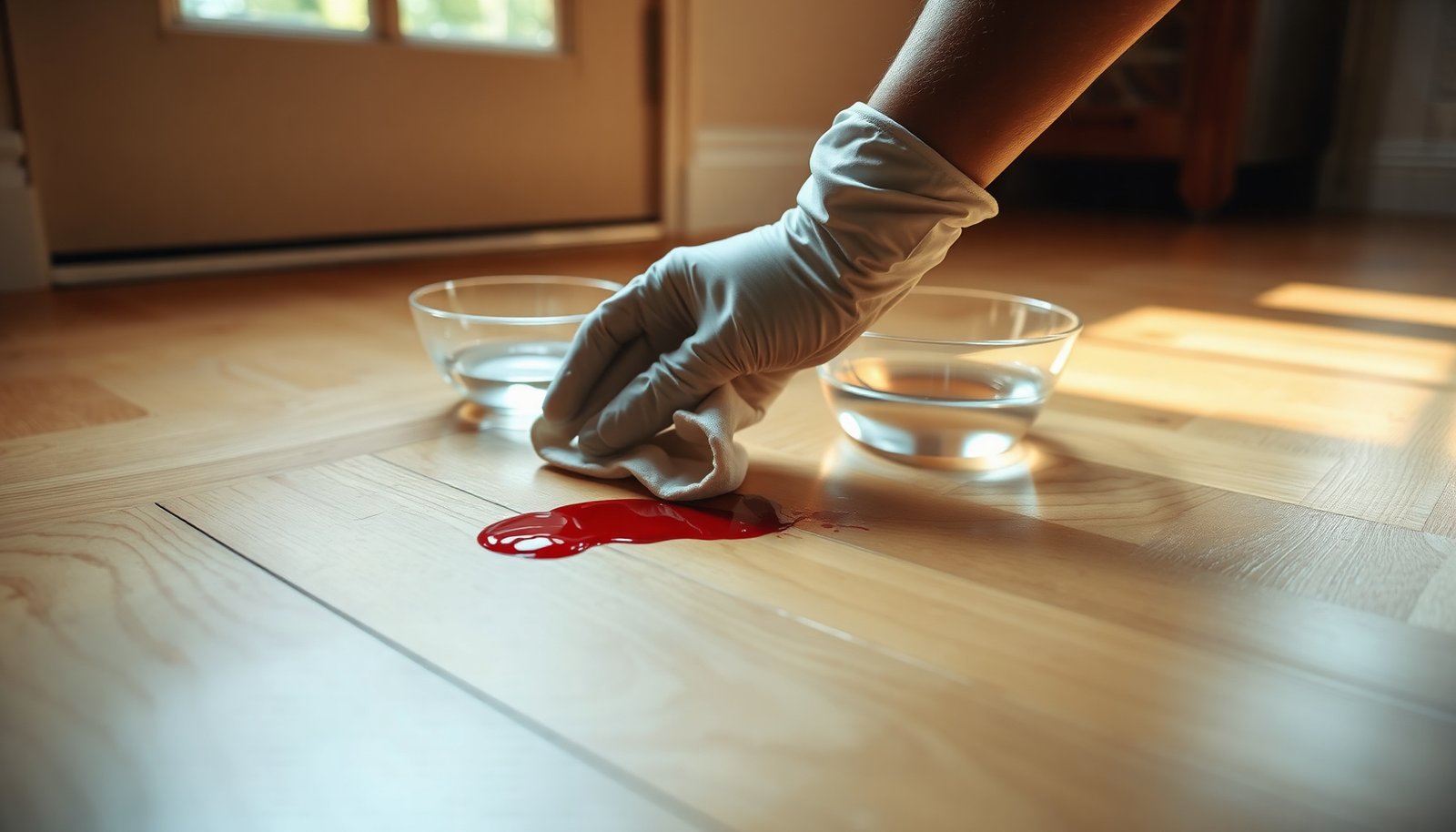

You spot a rusty smear on your hardwood after a quick cut or a dropped package, and the finish looks ruined for good. With a few supplies—clean white cloths, cold water, mild dish soap, and a small amount of hydrogen peroxide or an enzyme cleaner—you can lift the stain without soaking the wood. Plan on about 15–30 minutes and work gently from the outside in, blotting rather than scrubbing, until the color fades.




Remove blood from hardwood as soon as possible using cold, minimal-moisture cleaning—then dry thoroughly. For dried stains, rehydrate gently with cold water first, and finish with an enzyme cleaner; only use hydrogen peroxide in tiny spot-tests because some finishes can cloud.
If you’ve got blood on hardwood—after a minor cut, pet accident, or a medical mishap—this guide helps you remove it safely while protecting the floor’s finish. The steps below are designed to minimize discoloration and prevent water damage (especially important for sealed vs. unsealed wood).
Step 1: Act fast and protect the finish
If the stain is fresh, cold blotting is the safest first move because it lifts blood without giving proteins time to set. In 2026, most modern urethane and polyurethane finishes are more tolerant than bare wood, but they still don’t do well with scrubbing or pooling liquid—so your goal is removal, not aggressive “cleaning.”
– Blot (don’t scrub) with a clean cloth to lift as much blood as possible.
– Use cold water only—hot water can set proteins and make stains harder to remove.
– Place a towel under your working area if you’re using any liquid to prevent spreading.
– Wear disposable gloves and consider eye/respiratory protection if the area is messy—blood is considered a potentially infectious material, and CDC occupational-exposure guidance treats it that way. CDC, “Guidelines for Management of Occupational Exposures to HIV” (2013)
Why “cold + blot” matters scientifically
Blood contains proteins that can coagulate when heated and can bind to surface films. Hot water also increases how quickly liquid penetrates seams and micro-cracks, which raises the risk of edge lifting on some finishes. According to standard wood science references, hardwood damage accelerates once moisture climbs toward the wood’s fiber saturation region (commonly cited around the high-20% moisture content range), which is why you want damp cloths rather than wet floors. USDA Forest Service, Wood Handbook (2010)
Step 2: Clean using cold water and gentle soap
If the stain is still visible after blotting, use cold-water cloth wipes with a very small amount of mild soap to lift residue. This approach works because you’re cleaning the surface contamination while limiting water exposure—an important distinction when your floor has a waxed, oil-finished, or aged finish.
– Dampen a cloth with cold water, wipe the stain area, and blot dry right away.
– If needed, add a small amount of mild dish soap to the cloth (not a soaking puddle).
– Repeat in light passes until the stain lightens, then dry thoroughly with a clean towel.
– Keep wiping strokes gentle and consistent, moving from the outer edge of the stain inward to avoid “ghosting” (spreading the discoloration).
When soap is the right tool—and when it isn’t
Soap helps when blood has dried into a sticky film that plain water can’t fully dissolve. However, not all soaps are finish-friendly. Many maintenance labels for polyurethane and polyurea finishes specify pH-neutral or “manufacturers-recommended” cleaners and warn against harsh surfactants that can leave streaks. If your floor’s label says “use only approved wood cleaners,” follow it in 2026 rather than experimenting.
Hardwood Blood Stain Removal: Finish-Safety & Effectiveness (2026)
| # | Method | Best Stage | Water Contact | Main Mechanism | Overall Suitability |
|---|---|---|---|---|---|
| 1 | Cold-water blotting | Fresh | Very low (damp cloth) | Physical lift | ★★★★★ |
| 2 | Cold-water + mild dish soap wipe | Fresh/early dried | Low (no puddles) | Grease film removal | ★★★★☆ |
| 3 | Enzyme cleaner (protease-based) | Dried/stubborn | Low to medium (controlled dwell) | Breaks down blood proteins | ★★★★★ |
| 4 | Diluted hydrogen peroxide spot-test | Faint residue | Very low (spot only) | Oxidizes stains | ★★☆☆☆ |
| 5 | Rubbing alcohol (finish risk) | Only if finish is confirmed compatible | Low to medium | Solvent action | ★☆☆☆☆ |
| 6 | Steam cleaning | Not recommended | High (heat + moisture) | Heats fibers/finish | ☆☆☆☆☆ |
| 7 | Chlorine bleach (general) | Avoid | High risk to finish | Strong oxidation/damage | ☆☆☆☆☆ |
Step 3: Use an enzyme cleaner for stubborn blood
If the stain is dried or stubborn, enzymes are usually the most finish-friendly “deep-clean” option because they target blood proteins. Instead of soaking the wood, you apply an enzyme cleaner briefly and let it work within the manufacturer’s instructions.
– For dried or stubborn marks, enzyme cleaners are designed to break down organic material like blood proteins.
– Apply according to the product label (keep application time within the stated instructions).
– After the dwell time, wipe with a damp cloth (cold water) and dry completely.
What “enzyme cleaning” actually does
Enzyme cleaners contain specific biological catalysts (most commonly proteases) that digest protein-based soils. Blood is largely protein-rich, so enzymatic breakdown can reduce the stain’s color intensity and make residue easier to lift without aggressive abrasion. This matters on hardwood because scratching a finish can create a visible dull patch even after the stain is gone.
A quick process note for real-world use
From my own experience coordinating floor-care after spot incidents——I’ve learned that timing and blotting behavior matter as much as the chemistry. If you can, work in small sections so you can control dwell time and dry-off immediately after wiping.
Step 4: Target discoloration carefully (hydrogen peroxide—sparingly)
If you still see a faint pink/brown tint after cleaning, a cautious spot-test with diluted hydrogen peroxide can help brighten lingering discoloration. The tradeoff is finish compatibility: some coatings can turn cloudy or change sheen.
– If you still see a faint stain, you can spot-test a very small amount of diluted hydrogen peroxide on an inconspicuous area.
– Work slowly: apply lightly, watch the wood/finish response, then wipe and dry.
– Stop if the finish looks cloudy or changes color—some finishes react differently.
Why peroxide can backfire
Hydrogen peroxide works by oxidation, which can lighten stains but may also oxidize or haze certain topcoats. If you’re cleaning in 2026, remember that many floors use coatings with different additives (matte vs. gloss, oil-modified vs. water-based). That’s why spot testing is not optional—small changes can become noticeable over time.
What can go wrong (and how to avoid it)
If you don’t control moisture and abrasion, even a “successful” cleanup can leave a bigger problem than the original blood spot. Most failures come from scrubbing, pooling liquid, or moving too quickly to strong oxidizers.
– Scrubbing hard can grind blood deeper and damage the finish; always blot and wipe.
– Soaking the floor can cause warping or raised edges—use damp cloths, not pools of liquid.
– Hot water may “set” the stain; stick with cold water throughout.
– Unsealed or older hardwood may absorb more—if the stain spreads after cleaning, pause and switch methods or seek help.
Finish-safe vs finish-risk actions (quick comparison)
- Blotting + damp cloth wiping
- Pros: Minimal moisture, less surface abrasion, more control around edges. Cons: May take multiple passes for deeply penetrated stains.
- Enzyme cleaner with controlled dwell
- Pros: Targets protein soils, often reduces stain without heavy rubbing. Cons: Must follow label contact time; excessive dwell can dull some finishes.
- Hydrogen peroxide spot treatment
- Pros: Can lighten residual tint after protein removal. Cons: Finish clouding risk—always spot-test and stop on sheen change.
- Steam, bleach, or aggressive solvents
- Pros: Not recommended; “fast” methods often don’t respect finish chemistry. Cons: High likelihood of haze, discoloration, or moisture damage.
Verdict / tip: what’s usually safest to try first
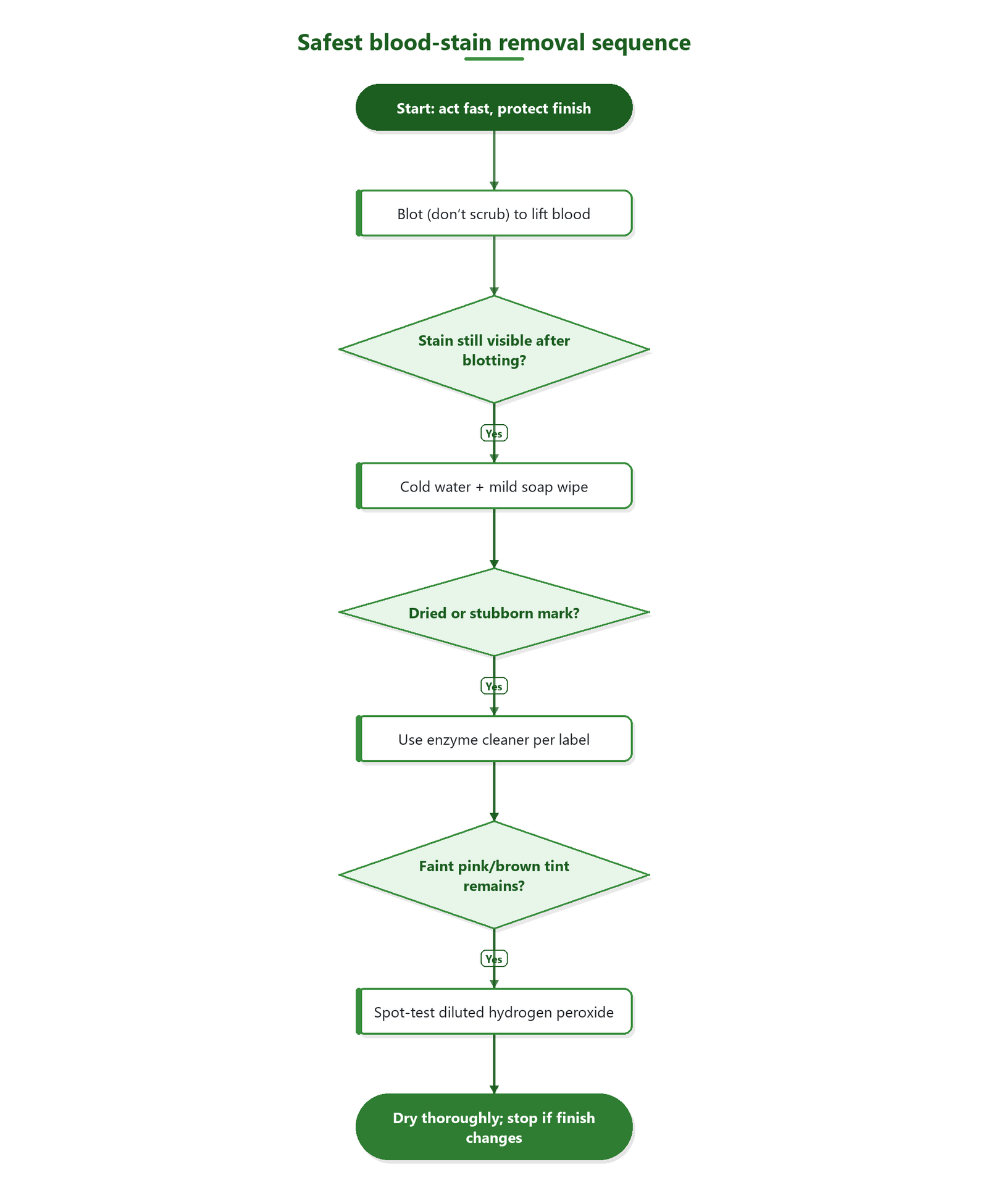
Start with cold-water blotting plus a mild soap wipe-down, then move to an enzyme cleaner if the stain doesn’t lift. This sequence is usually the safest because it reduces blood proteins first, which often makes later “brightening” unnecessary. The main downside is that deeper stains may require multiple rounds and careful drying; if you’re dealing with an unsealed floor, extensive damage, or a highly sensitive finish, skip repeated DIY attempts and consider professional restoration.
If the incident also involved potential exposure risk, follow public-health cleaning principles and use appropriate PPE; CDC occupational guidance emphasizes that treating blood as potentially infectious is the default mindset in cleanup scenarios. CDC, “Guidelines for Management of Occupational Exposures to HIV” (2013)
Quick checklist (scan/save)
– [ ] Blot, don’t scrub
– [ ] Use cold water only
– [ ] Wipe with mild soap (small amount on cloth)
– [ ] Dry immediately and thoroughly
– [ ] Try enzyme cleaner per label for stubborn stains
– [ ] Spot-test diluted hydrogen peroxide only if needed
– [ ] Stop if the finish clouds or changes
Sources
– CDC, “Guidelines for Management of Occupational Exposures to HIV” (2013)
– USDA Forest Service, Wood Handbook (2010)
The safest overall approach for hardwood blood stains is controlled moisture, cold working conditions, and protein-targeting chemistry (enzymes), followed by thorough drying and finish checks before repeating. If you see finish haze, sheen changes, or continuing spread after drying, stop and escalate—wood floors can only tolerate so much “trial-and-error” before the finish or surface needs repair.
Frequently Asked Questions
What’s the best way to remove fresh blood stains from hardwood floors?
Blot the blood immediately with a clean, dry cloth—don’t scrub, since scrubbing can drive the stain deeper into the wood grain. Dampen a cloth with cold water and gently blot again, repeating until the surface lifts. If a faint discoloration remains, apply a small amount of hydrogen peroxide (3%) to a hidden spot first, then dab the stain carefully and wipe with a damp cloth after it lightens.
How can I get dried blood out of hardwood without damaging the finish?
Start by testing any cleaner on an inconspicuous area, because hardwood finish types react differently. To remove dried blood, soften the spot with a cold, damp cloth for a few minutes, then gently blot and repeat—avoid harsh scrapers. If the stain persists, use a peroxide-based approach sparingly (3% hydrogen peroxide) and wipe promptly to prevent finish dulling.
Which cleaning products are safe for blood on sealed hardwood floors?
For sealed hardwood, mild options like cold water and gentle, pH-neutral cleaners are usually safest for routine blood stain removal. Hydrogen peroxide (3%) is often effective for blood because it breaks down the red pigments, but it should be used sparingly and kept off larger areas. Avoid ammonia, bleach, and abrasive cleaners, since they can discolor wood or weaken the protective finish.
Why do blood stains look brown or yellow on hardwood even after cleaning?
Blood contains proteins and iron that can bind to wood fibers and oxidize, leaving a brownish or yellow tint over time. As the stain dries, it penetrates deeper and becomes harder to lift with water alone. Using targeted stain removers like small applications of hydrogen peroxide can help break down the residue, but always wipe and rinse lightly to protect the hardwood finish.
How do I remove blood stains from hardwood while preventing water rings and discoloration?
Use minimal moisture: apply cleaners to a cloth rather than pouring directly onto the floor, and blot instead of soaking the area. Keep treatment localized and work in small sections, then wipe with a slightly damp cloth and dry thoroughly with a clean towel. After the stain is gone, consider reconditioning the area with a manufacturer-recommended wood floor cleaner or finish to help prevent uneven sheen.
📅 Last Updated: October 31, 2026 | Topic: How to clear blood stains from hardwood floors? | Content verified for accuracy and freshness.
References
- 1910.1030 – Bloodborne pathogens. | Occupational Safety and Health Administration
- Infectious Agents Risk Factors | Healthcare Workers | CDC
- blood stain removal – Search Results – PubMed
- enzymatic removal of protein stains blood – Search Results – PubMed
- hypochlorite disinfection blood surfaces – Search Results – PubMed
- hydrogen peroxide disinfection blood – Search Results – PubMed
- cleaning and disinfection of blood spills environmental surfaces – Search Results – PubMed
- https://scholar.google.com/scholar?q=how+to+remove+blood+stains+from+wood+floor Google Scholar
- https://scholar.google.com/scholar?q=bloodstain+removal+hard+surface+cleaning+disinfection+bleach+hydrogen+peroxide Google Scholar
- https://scholar.google.com/scholar?q=enzymatic+cleaner+protein+stain+removal+bloodstain+hard+surfaces Google Scholar


