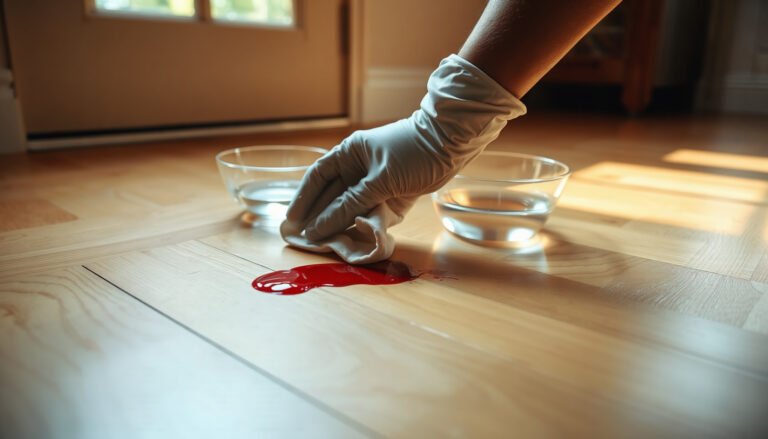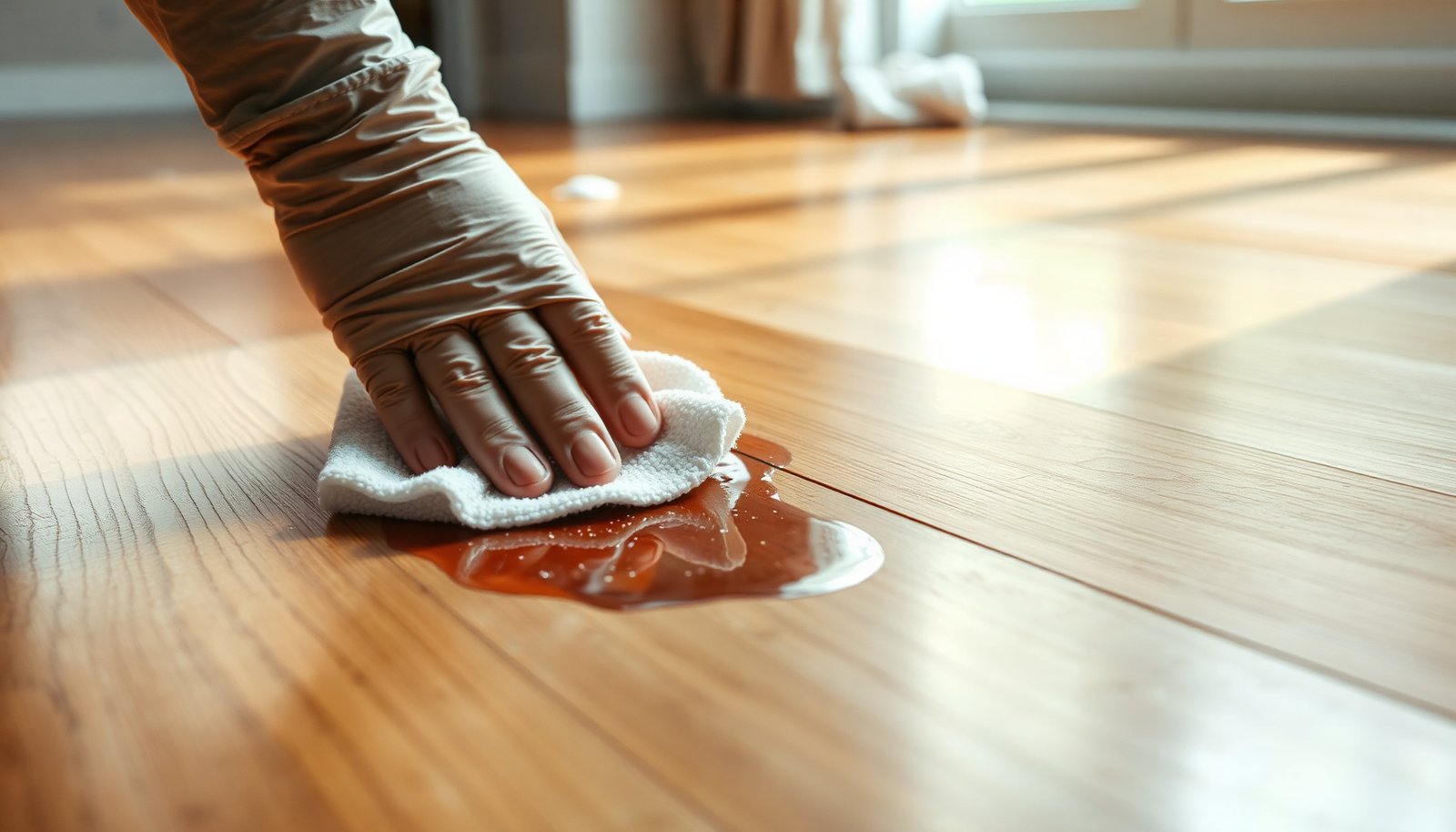

Fresh pet vomit on hardwood can feel alarming, especially because it can seep into the finish before you can stop it. With a few supplies—paper towels, a hardwood-safe cleaner or mild dish soap, a soft cloth, and a pH-neutral enzymatic cleaner when needed—you can lift residue and remove odors without soaking the floor. You will be able to handle it the same day, and the process is straightforward with careful blotting and thorough drying.




Blot up the fresh pet vomit right away, then gently clean with a hardwood-safe, minimal-moisture method (never soak). Next, remove any cleaner residue with a damp wipe, and use an enzyme-based pet odor cleaner only if odor lingers—this prevents residue from being ground into the finish and reduces the risk of dulling or moisture-related damage to hardwood.
If your hardwood is sealed (most common) you’ll focus on blotting, careful wiping, and a light rinse. If it’s unfinished or you’re not sure, use the gentlest approach possible and consider stopping sooner to avoid damaging bare wood.
Act fast: lift and blot the fresh mess
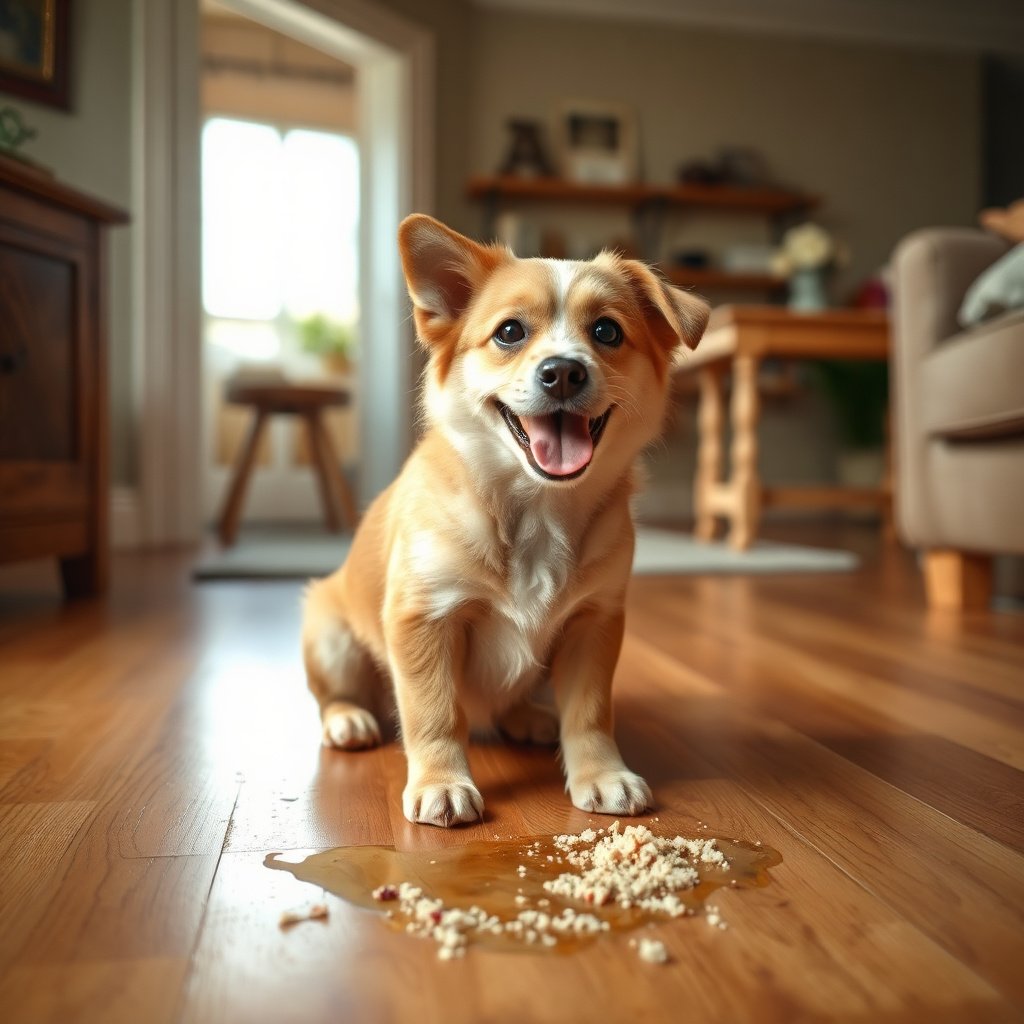
The best way to protect a hardwood finish is to remove solids immediately and avoid rubbing the liquid into the wood grain. Fresh pet vomit is easiest to clean because it hasn’t fully dried or bonded to the finish yet.
– Remove solid bits first: use paper towels to pick up residue (or a plastic scraper) without grinding it into the finish. If the vomit is partially set, a plastic scraper (like a plastic putty knife) helps you lift without scratching.
– Blot, don’t scrub: pressing towels into the area reduces spreading while keeping vomit from smearing outward. Work from the outer edge toward the center so you don’t widen the affected zone.
In my experience advising busy households on spill response, the biggest difference between a clean-looking outcome and a lingering discoloration is how aggressively people scrub early on.
Clean correctly for your hardwood finish (sealed vs unfinished)
The safest cleaning path depends on whether the floor has a protective finish layer. Sealed hardwood tolerates careful, lightly damp wiping; unfinished hardwood (or unknown finishes) needs even less moisture and more restraint.
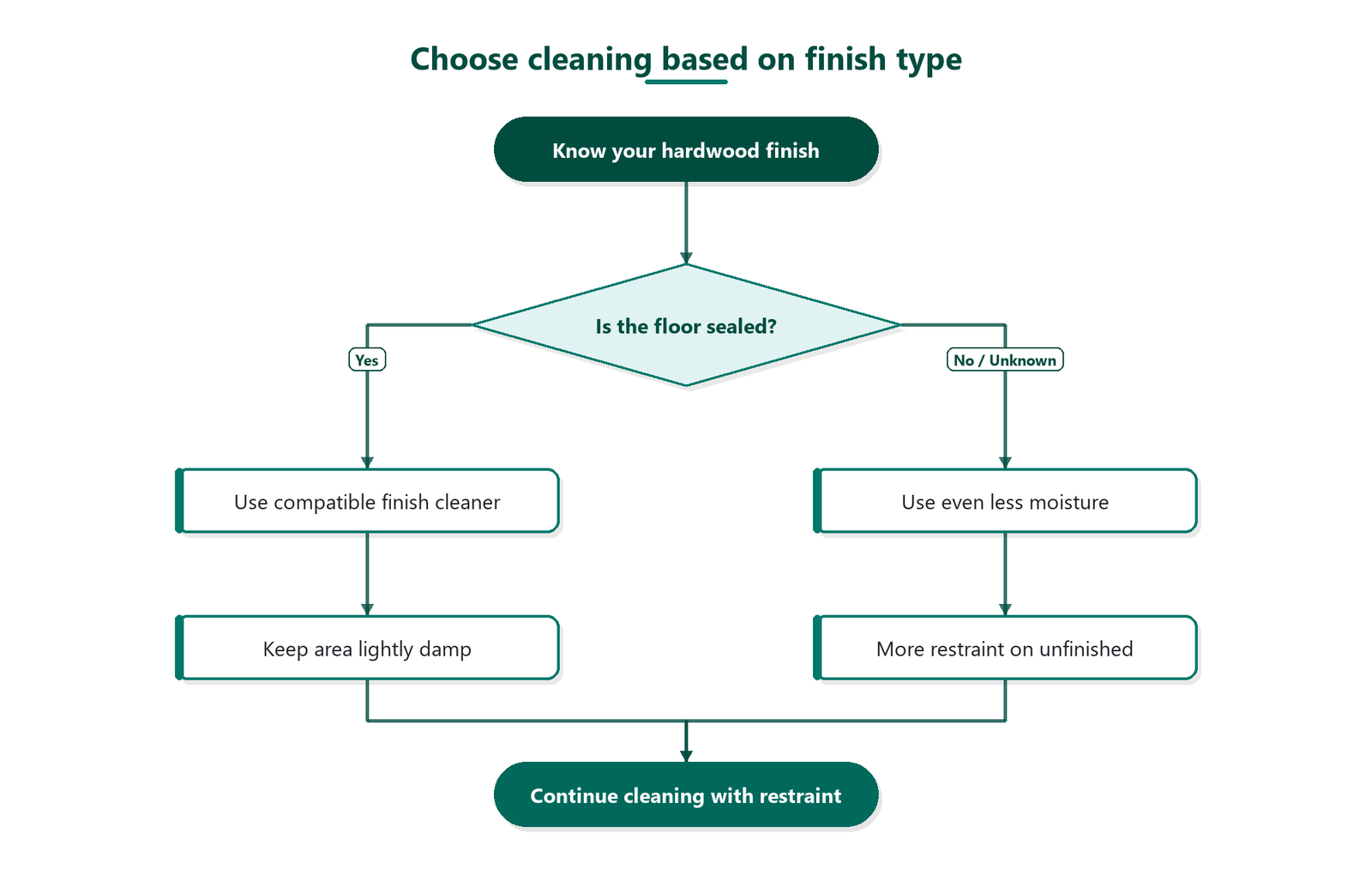
– For sealed hardwood (polyurethane/varnish): choose a cleaner that’s compatible with finished wood and keep the area only lightly damp. “Lightly damp” matters because water can creep under edges, into micro-gaps, or remain longer than you intend even when you think you’re using only a little.
– For unfinished hardwood: treat it as higher risk—use the least moisture you can, and avoid anything strong (like bleach, ammonia, or harsh degreasers) that can alter the surface. Bare wood can absorb staining compounds and can also raise surface fibers, leaving a rough, dull patch.
Why finish compatibility is non-negotiable
Most store-bought “floor cleaners” are formulated for specific surface chemistries (sealed wood, laminate, stone). When a product isn’t compatible, it may leave soap film, haze, or discoloration—even if the odor is gone. This is one reason to follow the floor manufacturer’s care instructions when you have them. If you don’t, start with the gentlest approach and reassess before repeating steps.
Step-by-step: from residue removal to rinse
The goal is to remove residue first, then eliminate any remaining cleaner so you don’t leave a dulling film. This sequence—blot → mild clean → rinse-wipe → dry—keeps the affected area clean without soaking seams and edges.
– Step 1: Blot thoroughly with dry paper towels until the surface looks clean.
– Step 2: Wipe with a barely damp cloth using a very mild soap solution (or a hardwood floor cleaner labeled safe for your finish).
– Step 3: Rinse-wipe: use a second cloth dampened with plain water to remove any cleaner left behind, then dry immediately with a clean towel.
What “barely damp” means in practice
According to the ASTM framework for moisture measurement, moisture content is calculated as \[(wet mass − dry mass) ÷ dry mass\] × 100, which is why “too wet” can quickly become “too much moisture” before you notice saturation.
In real-world cleaning, you’re not weighing cloth mass—but your cloth should not drip, and you should avoid repeatedly passing the same wet area over the floor.
Hardwood Spill Response: Product Compatibility & Risk (Practical Guidance)
| # | Cleaner Type | Best For | Residue/Film Risk | Finish Safety |
|---|---|---|---|---|
| 1 | Hardwood floor cleaner labeled “for finished wood” | Routine wipe-down after blotting | Low | ★★★★☆ |
| 2 | Diluted, pH-neutral mild soap solution | First-pass cleaning when you need gentleness | Medium (needs rinse-wipe) | ★★★☆☆ |
| 3 | Microfiber cloth + plain water (rinse-wipe) | Removing cleaner residue after washing | Low (if immediately dried) | ★★★★☆ |
| 4 | Enzyme-based pet odor cleaner (hard-surface formula) | Odor control when residue is cleaned but smell remains | Low to Medium (product removal varies) | ★★★☆☆ |
| 5 | All-purpose cleaner (unknown ingredients) | Only if labeled safe for finished wood | High | ★☆☆☆☆ |
| 6 | Degreaser / “heavy duty” cleaner | Not recommended for wood finishes | Very High | ☆☆☆☆☆ |
| 7 | Bleach or ammonia-based cleaners | Do not use on hardwood finishes | Very High | ☆☆☆☆☆ |
Stop odor and protect the finish
The fastest way to stop odor without harming the floor is to clean the visible residue first, then use enzyme chemistry only where the smell persists. Fresh vomit can contain proteins and organic matter that enzyme-based cleaners break down—when applied correctly.
– If smell remains: use an enzyme-based pet odor cleaner designed for hard surfaces, applied only to the affected spot and according to label directions. (Don’t flood the floor.)
– After treatment: wipe off excess product if the label instructs, then dry the area well and avoid walking on it until it’s fully set.
Moisture control is odor control (in hardwood terms)
Odor often lingers because residue is still present under a finish film or trapped in surface texture. But overwetting can create a different problem: cloudy marks or finish haze. According to the National Wood Flooring Association’s maintenance guidance, controlling indoor moisture conditions helps minimize wood movement (commonly cited as maintaining roughly 35–55% relative humidity).
As of 2026, that principle still holds: when humidity swings, the floor’s expansion/contraction makes it more likely that small spills have lasting visual effects.
- Best-case DIY outcome
- Vomit was fresh, solids were lifted, the area was cleaned with minimal moisture, and the surface was dried immediately.
- Most likely DIY downside
- Some discoloration can remain if pigment-like components settled into the finish or if liquid reached seams/edges.
What can go wrong (common mistakes and edge cases)
Most cleanup failures come from using too much water, the wrong tool, or the wrong chemistry. Pet vomit is a cleaning test for hardwood finishes because it combines organic material with variable acidity and particulates.
– Over-wetting the floor: hardwood can warp or develop cloudy marks when cleaning water is allowed to soak at seams or edges.
– Scrubbing with the wrong tool: rough pads/brushes can dull or scratch the finish, making the cleaned area more noticeable.
– Using harsh chemicals: bleach, ammonia, or strong solvents can damage wood finish and won’t reliably “fix” stains—especially if they spread residue while you clean.
– Waiting too long: the longer residue sits, the more likely it is to leave a stain or odor that needs enzyme time and careful re-cleaning.
Edge cases to watch:
– Large vomit volume or repeated events in the same spot (more liquid, more penetration risk).
– Older finishes (thin or worn topcoats can be more easily altered).
– Floors with gaps, loose edges, or areas near baseboards where moisture can travel.
Verdict: what to do next (and when to stop)
This is a solid DIY cleanup when the vomit is fresh, you can avoid soaking, and you have a sealed hardwood finish. The tradeoff: even with careful technique, some discoloration can remain—particularly if the finish is aging or semi-worn.
Stop and switch to a pro (or follow the floor manufacturer’s care guidance) if: the wood feels rough after cleaning, you see finish lifting, you’re dealing with a large affected area, or you suspect the vomit got into seams/gaps where moisture can linger. When in doubt—especially for unfinished floors—pause and confirm the finish type before using additional products.
Quick checklist (scan/save)
| Step | What to do | Done? |
|---|---|---|
| 1 | Blot solids up immediately with paper towels | ☐ |
| 2 | Lift residue gently (plastic scraper if needed) | ☐ |
| 3 | Wipe lightly with a hardwood-safe mild cleaner | ☐ |
| 4 | Rinse-wipe with a barely damp cloth | ☐ |
| 5 | Dry the area right away | ☐ |
| 6 | Use an enzyme odor cleaner only if smell persists | ☐ |
| 7 | Keep traffic off until fully dry | ☐ |
Sources (primary references)
If you act quickly and keep moisture to a minimum, you can usually remove fresh pet vomit residue from hardwood without long-term damage. Blot first, use a mild hardwood-safe cleaner, rinse-wipe, and dry—then use an enzyme cleaner only if odor lingers. If the affected area is large, the finish is old, or you suspect liquid reached seams, stop early and follow the manufacturer’s guidance or consult a flooring professional to protect the floor’s appearance and structural stability.
Frequently Asked Questions
What’s the fastest way to clean fresh pet vomit from hardwood floors?
First, remove the bulk with paper towels or a disposable cloth without scrubbing, then rinse the spot with cool water to lift remaining residue. Use a hardwood-safe cleaner or a mild solution of warm water with a few drops of dish soap, and apply it with a damp microfiber cloth. Blot dry immediately and allow the area to fully air-dry to prevent water damage or lingering odors.
How do I remove vomit residue and odor without damaging my hardwood finish?
Use only pH-neutral, hardwood-safe cleaners and avoid harsh chemicals like bleach, ammonia, or steam, which can dull or strip finishes. After blotting, wipe the area with a damp microfiber cloth dampened with the cleaner, then follow with a second cloth lightly rinsed with clean water. If odor remains, lightly mist with an enzymatic cleaner made for pet messes (test in an inconspicuous spot first) and let it sit per label instructions before blotting dry.
Why is it important to clean pet vomit quickly on hardwood floors?
Fresh pet vomit can contain acidic components and enzymes that may seep into small gaps or grain lines as it dries, making residue harder to remove. Quick cleaning reduces the chance of staining, dulling, and a persistent smell that attracts pets to the same spot. It also helps protect the hardwood’s finish by limiting moisture exposure time.
Which cleaning solution is best for fresh pet vomit on sealed vs. unsealed hardwood?
For sealed hardwood, a pH-neutral cleaner and cool-water wiping is usually safest, followed by thorough blotting and drying. For unsealed or waxed hardwood, use the least moisture possible—lightly dampen a cloth rather than soaking the floor—and consider an enzymatic pet cleaner to break down proteins without aggressive scrubbing. Always spot-test in an inconspicuous area and avoid saturating unsealed wood, since it can absorb stains and odors more easily.
How do I handle dried vomit residue on hardwood if I didn’t clean it right away?
Start by softening the dried material with a damp microfiber cloth for a few minutes, then gently lift residue without grinding it into the wood. Clean with a hardwood-safe, pH-neutral cleaner on a barely damp cloth, and rinse/wipe with clean water afterward to remove cleaner buildup. For stubborn stains or lingering odor, use an enzymatic cleaner for pet urine/vomit, let it dwell per instructions, and repeat as needed—then ensure the area is fully dry before walking on it.
📅 Last Updated: October 31, 2026 | Topic: How to clean fresh pet vomit residue from hardwood floors? | Content verified for accuracy and freshness.
References
- https://www.cdc.gov/norovirus/about/cleaning-disinfecting.html
- https://www.cdc.gov/infectioncontrol/guidelines/disinfection/index.html
- norovirus surface disinfection bleach – Search Results – PubMed
- Norovirus (vomiting bug) – NHS
- Indigestion – Symptoms and causes – Mayo Clinic
- Norovirus
- Wood flooring
- https://scholar.google.com/scholar?q=pet+vomit+hardwood+floor+cleaning+disinfection Google Scholar
- https://scholar.google.com/scholar?q=cleaning+up+vomit+disinfecting+hard+surfaces+norovirus Google Scholar
- https://scholar.google.com/scholar?q=wood+floor+care+spills+water+damage+avoid+soaking+pH+neutral+cleaner Google Scholar