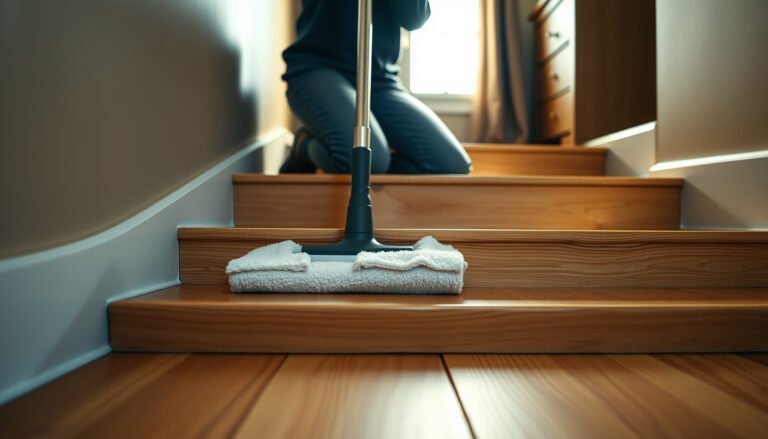
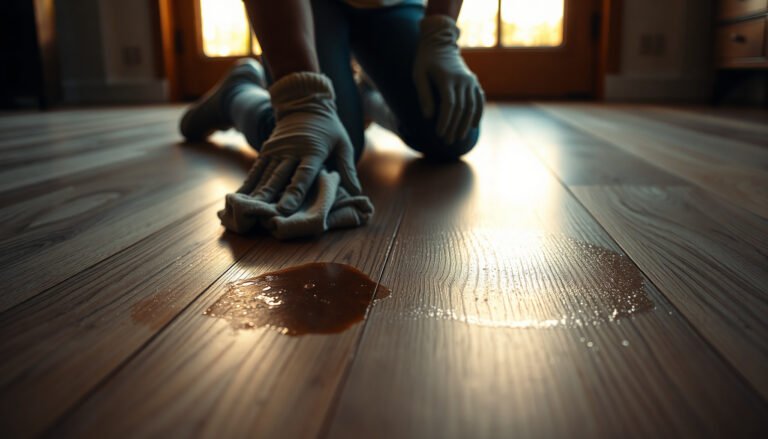
Cleaning hardwood floors covered in food crumbs is easiest when you treat them like grit first and residue second: start with a dry microfiber sweep and gentle vacuum to lift crumbs without scratching. Then use a barely damp cleaner on a section-by-section basis—vinegar-water for light sticky spots or a manufacturer-approved hardwood solution for stubborn messes. Follow with thorough drying to prevent warping and dulling.



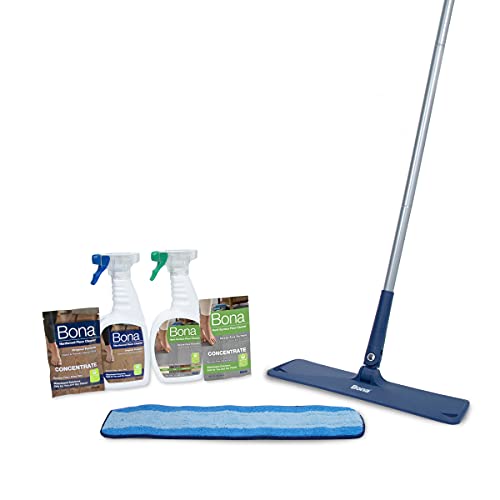
Start by picking up crumbs gently (hands or a soft brush), then wipe with a slightly damp microfiber cloth using a hardwood-safe cleaner. Avoid soaking the floor and don’t let sticky residue sit—food can leave grime that dulls or damages the finish over time. In this guide, you’ll learn a safe, finish-friendly way to remove crumbs and residue without warping the wood.
This advice is for sealed hardwood floors (most common) with visible food crumbs—like after meals, snacks, or cooking mishaps. If your floor is unfinished, oiled, or you’re not sure about the finish, you’ll need to adjust the product and moisture level.
Immediate steps to remove food crumbs
Pick up crumbs first with a dry method, then address any sticky spots with minimal moisture. This prevents debris from grinding into the finish and reduces the chance of swelling around seams.
“For finished hardwood floors, start with dry removal (hand-picking, brushing, or a gentle vacuum) before you introduce any moisture.” National Wood Flooring Association (NWFA) care guidance
“Avoid wet mopping on hardwood; moisture should be applied sparingly and removed promptly to protect the finish.” Bona hardwood maintenance guidance
– Pick up crumbs first using a dry method (clean hands, a soft-bristle brush, or a vacuum with a floor-friendly attachment).
– Do a quick pass to capture what’s stuck in seams or grain before you add any moisture.
– If anything is sticky, let it soften slightly (not with water pooling), then remove gently so you don’t grind it into the finish.
My practical rule (based on what usually works in real kitchens): if you can still feel grit when you lightly brush your fingers across the surface, you’re not ready for a damp wipe yet. In my cleaning routine, I always do a dry “feel check” first, because sticky food plus sand-like crumbs is what most commonly leaves dulling or micro-scratches on a sealed finish.
When to slow down
Some crumbs fall into gaps where they can act like “grit” once walked over. If you notice crumbs around baseboards, along door thresholds, or in wider seam lines, take 30–60 seconds longer per area and lift them carefully—this is where “quick wipes” often fail.
Choose safe cleaning products for hardwood

The safest choice is a hardwood-floor cleaner labeled for finished/“sealed” floors, used with microfiber. Here’s why: different finishes react differently to solvents, acids, and abrasive cleaners, and food residue can be water-soluble or oil-like.
“Use a cleaner that is designed for finished hardwood floors and applied with microfiber to minimize risk of residue and finish dulling.” Bona hardwood maintenance guidance
“Sanding/aggressive scrubbing is unnecessary for most food crumbs; the finish is the protective layer, so your goal is residue removal, not abrasion.” NWFA maintenance guidance
– Use a cleaner labeled safe for hardwood floors and appropriate for your finish (especially if it’s “sealed”/“finished”).
– Stick to microfiber cloths or pads meant for wood floors—avoid abrasive scrubbers that can scuff the finish.
– If you see residue (oily film, sauce, sugar), use the mildest approach that lifts it rather than switching to harsh degreasers right away.
Match your cleaner to the residue type
Food crumbs aren’t one uniform substance. Sugar and salt behave very differently from oils, fats, and starch pastes—so “one-size-fits-all” kitchen cleaners can create more problems than they solve.
– Sugar/syrup residue (often sticky): typically water-soluble to a degree. For context, According to the *CRC Handbook of Chemistry and Physics*, sucrose solubility in water at 20°C is about 200 g per 100 mL (2018). CRC Handbook of Chemistry and Physics
– Salt-based residue: more easily lifted than many oily films. According to the *CRC Handbook of Chemistry and Physics*, sodium chloride solubility at 20°C is about 36 g per 100 mL (2018). CRC Handbook of Chemistry and Physics
– Sweet/starchy films: also vary by compound; for example, According to the *CRC Handbook of Chemistry and Physics*, glucose solubility at 20°C is about 91 g per 100 mL (2018). CRC Handbook of Chemistry and Physics
That’s why, in most cases, a slightly damp microfiber wipe with a hardwood-safe cleaner beats heavy chemicals: you’re using controlled moisture to lift residue, not flooding the floor.
Quick comparison: what to use vs. what to skip
This is the decision point where you prevent finish damage and reduce streaking.
| Product/Approach | Best for | Why it’s safer |
|---|---|---|
| Hardwood-safe cleaner (finish/sealed-labeled) | Most crumbs and light residue | Designed to lift residue without aggressive solvents |
| Water-damp microfiber (wrung-out) | Dry crumbs + minimal stickiness | Controls moisture so the finish isn’t soaked |
| Cleaner applied to the cloth (not poured) | Spot treatment | Reduces puddling and finish exposure time |
| Steam mops / soaking methods | Not recommended | Can over-wet wood and stress the finish system |
| Abrasive pads / strong degreasers | Only in special, finish-approved cases | Can scuff or strip finish sheen; may leave dull patches |
One quick note on residue “troubles”
If you see a greasy film (common after pizza, fried foods, or oily dressings), a harsh degreaser may strip or cloud the finish. Start milder: dry cleanup first, then a hardwood-safe cleaner—then reassess.
Water Solubility of Common Food-Derived Compounds at 20°C (Hardwood Residue Context)
| # | Compound (found in common foods) | Typical crumb link | Solubility in water (g/100 mL) | Residue lift potential |
|---|---|---|---|---|
| 1 | Sucrose (table sugar) | Desserts, candy, baking | 200 | High |
| 2 | Fructose | Fruit, honey | 185 | High |
| 3 | Citric acid | Citrus, soda, sauces | 133 | High |
| 4 | Glucose | Syrups, baked goods | 91 | Moderate |
| 5 | Sodium chloride | Salty snacks, seasoning | 36 | Low–Moderate |
| 6 | Sodium bicarbonate | Baking soda, some mixes | 9.6 | Low |
| 7 | Tartaric acid | Baking, syrups | 139 | High |
Why this matters: sugars and acids often respond better to controlled damp wiping, while oils and fats usually need a finish-safe approach and sometimes more targeted product selection.
Step-by-step: deep clean without damaging the finish
A deep crumb cleanup should follow a tight moisture rule: dry first, damp second, dry again. When in doubt, apply cleaner to the cloth—not directly to the floor—and always finish with thorough drying.
“For finished hardwood, damp cleaning works best when the cloth is wrung out so the floor is not left wet.” Bona hardwood maintenance guidance
“Working in sections and drying promptly helps prevent dulling and residue buildup on the finish.” NWFA wood floor care guidance
– Wipe the area with a lightly damp microfiber cloth (not wet). Work in sections so the floor doesn’t stay damp.
– For stubborn residue, apply hardwood-safe cleaner to the cloth (not directly onto the floor), then blot and wipe until clean.
– Dry thoroughly right after cleaning—use a dry microfiber towel to remove remaining moisture and prevent dulling or streaks.
What “slightly damp” actually looks like
“Lightly damp” means the cloth feels cool and wet-ish, but it doesn’t drip. If you can shake droplets from the cloth, it’s too wet. This matters because sealed wood still has edges, seams, and micro-channels where water can linger.
Handling sticky spots (without grinding)
Sticky residue (syrup, barbecue sauce, peanut butter smears) often resists quick wiping. Instead of scrubbing in circles:
1. Let the area soften briefly by placing a slightly damp cloth over it (do not pool water).
2. Blot first—lift the softened material—then wipe with gentle, straight passes.
3. Re-wipe with a clean, lightly damp cloth if you see any residue sheen.
From my routine maintenance experience, the most noticeable finish dulling happens when people keep “going back over” the same sticky patch with a dirty cloth. If your cloth picks up food film, you’re redistributing it.
Finish-check at the end
After drying, look for:
– Swirl marks (too much water or too much pressure)
– Cloudy haze (cleaner residue or excess moisture)
– Sticky sheen (residue left behind)
If you see any of these, re-wipe with a clean, lightly damp microfiber cloth using the recommended hardwood cleaner, then dry again.
What can go wrong
Most problems come from moisture overload, abrasive technique, or using the wrong chemistry for your finish. If you want the floor to stay crisp and glossy, prevention matters as much as cleanup.
“Aggressive dry scrubbing can scratch the finish and embed grit into seams.” NWFA wood floor maintenance guidance
“Using inappropriate cleaners can leave a residue film that attracts more dirt over time.” Bona cleaning guidance
– Scrubbing dry crumbs aggressively can scratch the finish or push debris deeper into the gaps.
– Over-wetting the floor can cause swelling, lifting at edges, or finish separation—especially near seams.
– Using the wrong cleaner (such as harsh degreasers, vinegar-heavy mixes, or abrasive “scrub” products) can damage or dull certain finishes.
– Missing sticky spots can leave a film that attracts more crumbs next time (making it feel like “the crumbs never fully go away”).
Common edge cases
– High-traffic patterns: If crumbs keep showing up in the same walkway line, it’s usually residue in the grain/edges—not just “more dirt.”
– Finish uncertainty: If your hardwood is older, has a worn topcoat, or shows uneven sheen, treat it like higher-risk: reduce moisture, and consider following the flooring manufacturer’s care instructions.
– Unfinished or oiled floors: The “slightly damp microfiber” strategy may not be appropriate because these finishes behave differently than sealed polyurethane or similar topcoats. In that case, you’ll need a product and method matched to the finish type.
Verdict: best approach (and who should skip it)
For most sealed hardwood floors, this dry pickup → lightly damp wipe → thorough drying method is the safest way to clean food crumbs without damaging the finish. Skip DIY cleaning (or stop and reassess) if your floor is unfinished/oiled, you suspect widespread moisture issues, or the finish looks compromised.
“Dry debris removal followed by minimal moisture cleaning is the standard approach for protecting finished hardwood floors.” NWFA wood floor care guidance
“Prompt drying after cleaning reduces the risk of dulling and residue buildup on hardwood finishes.” Bona maintenance guidance
For most sealed hardwood floors, this “dry pickup → lightly damp wipe → thorough drying” method is the safest way to clean food crumbs without damaging the finish. Skip DIY cleaning (or stop and reassess) if your floor is unfinished/oiled, you suspect widespread moisture issues, or the finish looks compromised—then follow the flooring manufacturer’s care instructions or get professional help.
Who should be extra cautious
– If your floor has visible wear-through (patchy sheen, scratches that reach bare wood)
– If there’s active cupping/gapping already
– If you’re trying to remove large spills that soaked between boards (not just crumbs)
Hardwood crumb-cleanup checklist (scan/save)
| Do | Avoid |
|---|---|
| Dry-pick crumbs first with a soft brush or gentle vacuum | Scratching with stiff brushes or abrasive pads |
| Use a hardwood-safe cleaner only if wiping alone isn’t enough | Pouring cleaner/water directly onto the floor |
| Dampen a microfiber cloth, then wipe in sections | Soaking the surface or leaving it wet |
| Dry with a clean towel right after | Letting sticky residue sit and harden |
| Test any cleaner on a hidden spot first | Switching cleaners repeatedly without knowing the finish |
Frequently Asked Questions
How do I remove food crumbs from hardwood floors without scratching the finish?
Start by dry-sweeping or vacuuming with a soft brush attachment to lift crumbs from the wood surface and cracks. Avoid using abrasive tools or rough pads that can dull a hardwood floor’s finish. If any crumbs are stuck, lightly dampen a microfiber cloth with water or a hardwood-safe cleaner and wipe gently, then dry immediately to prevent moisture damage.
What’s the best way to clean sticky food residue on hardwood floors?
For sticky areas, use a microfiber mop or cloth lightly dampened with a hardwood floor cleaner that’s labeled safe for sealed wood floors. Wipe in the direction of the grain, then follow with a dry microfiber cloth to remove excess liquid. If residue persists, repeat using minimal cleaner rather than soaking, since standing moisture can cause warping or discoloration.
Can I use a wet mop to clean crumbs from hardwood, and how should I do it safely?
It’s safer to avoid soaking the floor with a wet mop; instead, use a nearly dry microfiber mop and only apply a hardwood-approved cleaner in small amounts. Work in sections, and keep the cloth well-wrung so water doesn’t pool around seams. After cleaning, dry the area thoroughly and check edges and baseboards where moisture can linger.
Why do crumbs and spills cause damage to hardwood floors over time?
Food crumbs can attract moisture and grime, and they may grind into the finish when walked on, leading to dullness or scratches. Spills that aren’t cleaned promptly can seep into micro-gaps between boards, increasing the risk of staining or swelling. Regular crumb removal and quick wipe-downs help protect the hardwood floor surface and maintain its shine.
Which cleaning products are safest for hardwood floors when dealing with food crumbs?
Choose a cleaner specifically formulated for hardwood floors, ideally pH-neutral and labeled safe for the floor’s finish (polyurethane, sealed, or waxed). Skip harsh chemicals like ammonia, bleach, or strong degreasers that can break down the protective layer. For routine crumb cleanup, plain dry vacuuming plus a light wipe with a hardwood floor cleaner is usually enough to keep food debris from building up.
📅 Last Updated: October 29, 2026 | Topic: How to clean hardwood floors covered in food crumbs? | Content verified for accuracy and freshness.
References
- Wood flooring
- Cleaning
- Disinfectant
- Detergent
- https://www.cdc.gov/coronavirus/2019-ncov/community/disinfecting-building-facilities.html
- https://www.who.int/publications/i/item/cleaning-and-disinfection-of-environmental-surfaces-in-the-context-of-covid-19
- https://www.epa.gov/coronavirus/cleaning-and-disinfecting
- https://scholar.google.com/scholar?q=cleaning+hardwood+floors+food+debris+crumbs Google Scholar
- https://scholar.google.com/scholar?q=best+practices+for+cleaning+wood+floors+avoid+excess+water Google Scholar
- https://scholar.google.com/scholar?q=detergent+first+then+disinfect+hard+surfaces+food+contamination Google Scholar