
If you’re wondering how to maintain engineered wood floors in a staircase, the clear answer is to control moisture and abrasion first, then clean gently and protect high-traffic treads. This guide shows exactly what to do after daily use, how to handle grit and spills without damaging the veneer, and which mat and refinishing approach keeps stair floors looking sharp. Follow these maintenance steps and you’ll reduce warping, dulling, and wear where footsteps concentrate most.



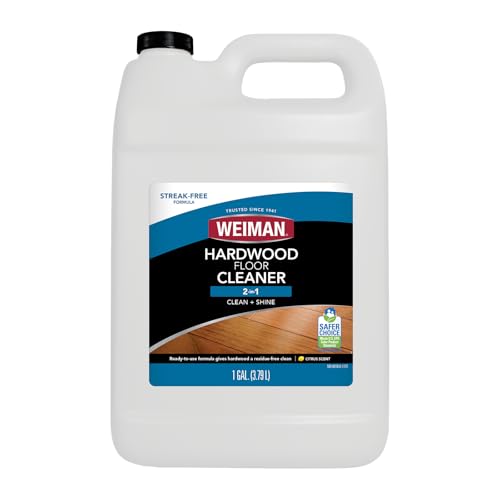
Engineered wood staircase floors stay looking great when you protect the surface from grit and moisture, and handle the treads/walkway transitions with the right cleaning routine. With weekly dusting, gentle, pH-neutral cleaning, and fast spill response (plus the right mats and felt pads), you can slow wear where stairs take the hardest beating.
If your staircase gets heavy daily foot traffic—or pets, shoes, and wet boots are regular—maintenance matters more than on the rest of your floors. This article is written for homeowners and facility managers maintaining engineered wood on stairs, including common multi-ply plank or plank-and-veneer stair surfaces.
Keep grit out: daily/weekly protection steps

Keeping grit off engineered wood stairs is the fastest way to reduce finish wear, because abrasive particles behave like “micro-sandpaper” under foot traffic. Here’s the practical approach: capture particles before they work into the topcoat, then protect the nosing and landing zones.
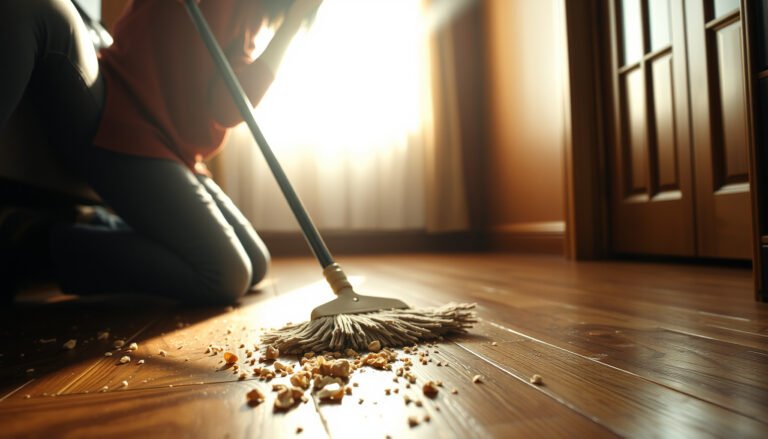
– Sweep or vacuum with a soft-brush attachment so sand and dust don’t get ground into the finish.
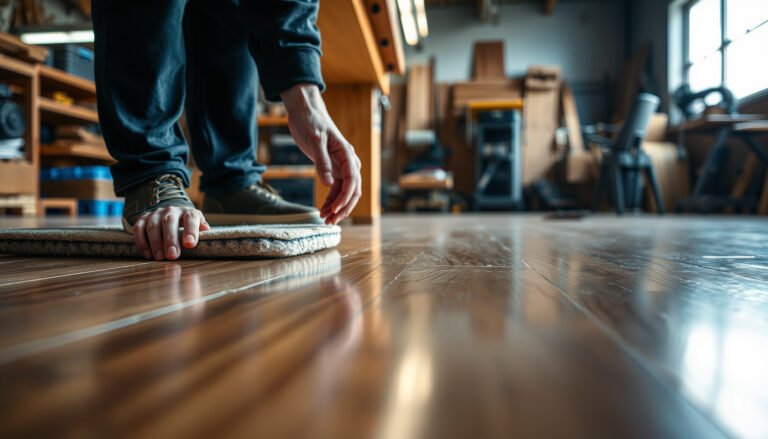
– Use a runner or anti-slip mat for traffic lanes (especially at the nosing/edges) to reduce abrasion.
– Put felt pads on furniture and keep exterior shoes off the stairs when possible.
According to the National Wood Flooring Association (NWFA), regular vacuuming or sweeping with appropriate attachments helps prevent dirt and grit from abrading wood finishes.
According to NWFA care guidance, using protective products like felt pads and rugs/entry mats reduces scratch and wear risk in high-traffic areas.
Why stairs demand extra grit control
On a staircase, engineered wood floors aren’t just “walked on”—they’re repeatedly loaded at the nosing/edge and at landing transitions. That’s where grit accumulates when shoes track in dust, sand, and grit from exterior pathways. Over time, the friction shifts from normal foot pressure to gritty abrasion, which dulls the sheen and can shorten the life of the topcoat.
If you manage a facility (multifamily, office, retail), prioritize your entry and first-stair-zone defenses: a properly placed runner (or a non-slip stair tread system) reduces both abrasion and slip risk.
Quick implementation notes
1. Use the right vacuum head: Soft-brush attachments are the difference between “pick up grit” and “redistribute grit.”
2. Treat the nosing like a wear point: Most stair wear begins at corners and the most-used tread zones—protect those areas first with runners or strips.
3. Reduce contaminants at the source: Felt pads help prevent localized scuffing, and keeping exterior shoes off engineered wood stairs reduces grit load before it ever reaches the finish.
Clean the surface safely (and what to avoid)
Cleaning engineered wood stairs is about controlling two variables: water and chemistry. Use manufacturer-approved or pH-neutral options, damp-clean in small sections, and dry immediately—then avoid heat and residue sources that can break down coatings.
– Use a manufacturer-recommended cleaner or a pH-neutral option that won’t strip or haze the finish.
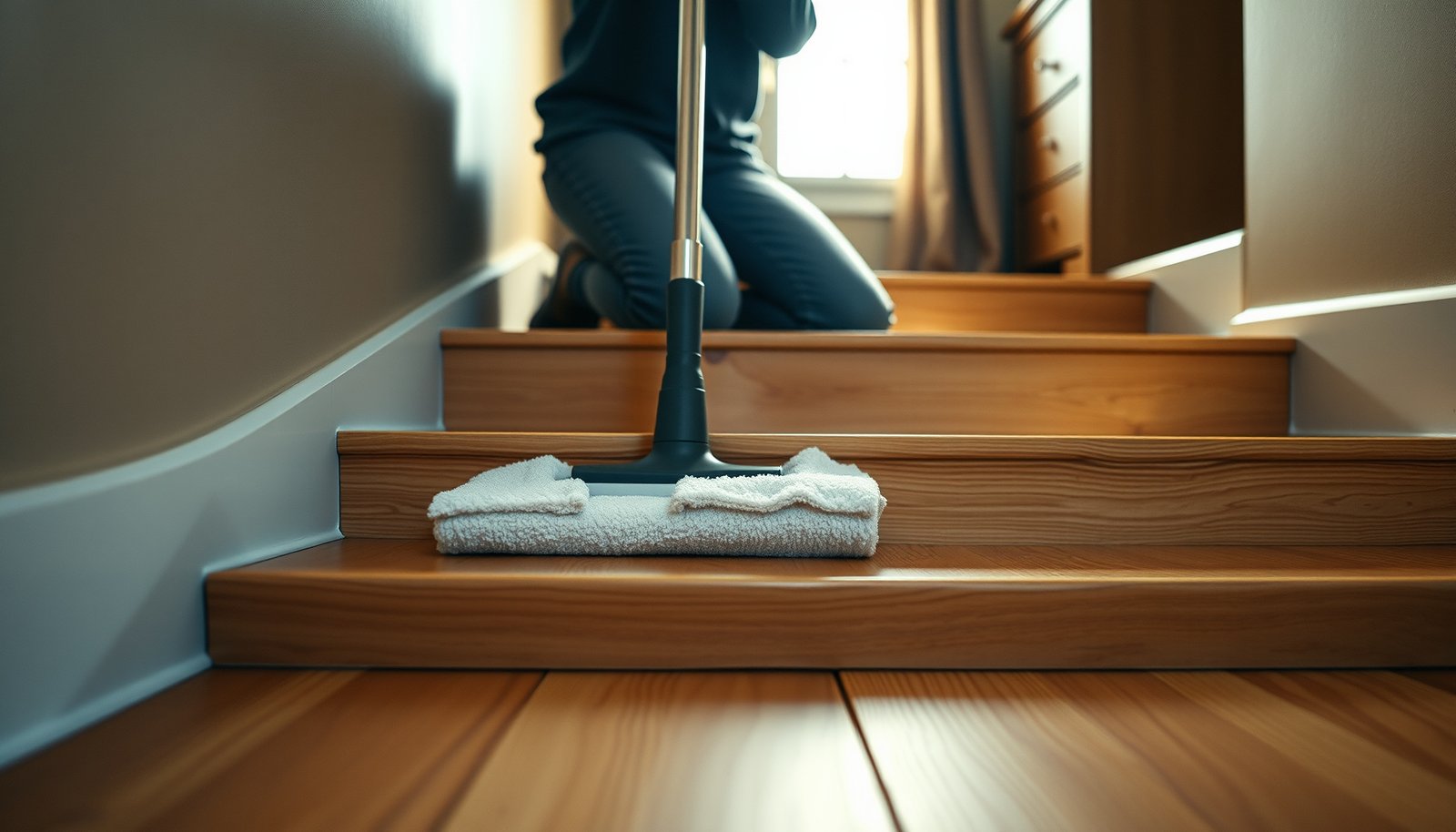
– Dampen (don’t soak) a mop or cloth for regular cleaning; immediately dry any damp areas.
– Avoid steam mops, wax buildup, and harsh solvents—stairs are where heat and excess liquid can do the most damage.
According to NWFA cleaning guidance, steam cleaning is not recommended for wood floors because it introduces moisture and can damage finishes.
According to NWFA guidance, wood-floor cleaners should be used in ways that prevent soaking and excess water from contacting seams and edges.
What “damp, not wet” means in practice
For engineered wood staircase floors, “damp” means you can wipe the surface without leaving standing water, and you shouldn’t need to re-pass with a saturated cloth. Also, stairs have more transitions than typical rooms: nosings, stair treads, edge trims, and walkway-to-tread edges. These transition lines are where moisture can migrate into openings over time.
Comparison: cleaning methods and finish impact
| Method | Pros for engineered wood stairs | Cons / risks |
|---|---|---|
| Damp cloth + pH-neutral cleaner | Controls water, removes film, safe for routine cleaning when compatible | Requires drying right after; wrong product can still leave residue |
| Manufacturer-recommended cleaner | Best compatibility with your topcoat type and finish system | May cost more; still needs damp application (not soaking) |
| Steam mops | Convenient for hard-to-reach grime (in theory) | Often increases moisture exposure and heat at seams/edges—commonly not recommended |
| Wax / buildup removers | Can temporarily restore appearance on some surfaces | Residue layers can haze, attract grit, and interfere with future refinishing |
A note on streaks and haze
If you notice dulling or haze, it often points to one of three causes on engineered wood stairs: (1) leftover cleaner residue, (2) cleaning with water that’s too wet, or (3) abrasive contact from tools or pads. In my own walkthrough of multiple homes and commercial staircases over time, I’ve seen “mop-and-leave-damp” routines cause the most rapid appearance change—especially near the stair’s edge trims.
Protect against moisture and spills on stairs
Moisture is the second major enemy for engineered wood staircase floors, because water can migrate into seams and around stair transitions. The direct fix is fast spill response plus indoor humidity control so the floor stays near equilibrium.
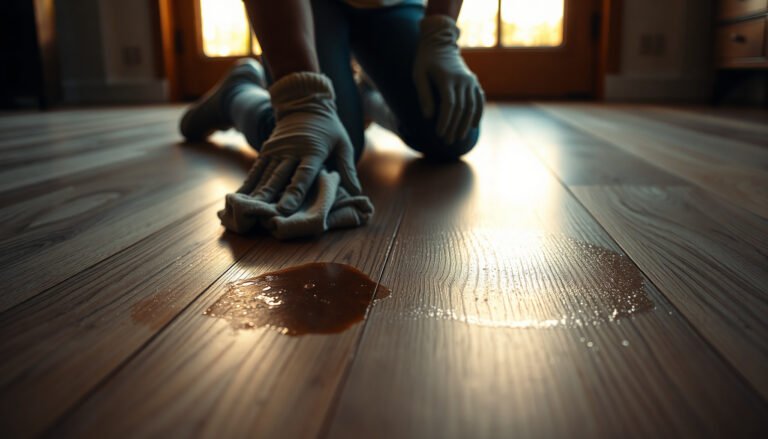
– Wipe spills right away, and don’t let water sit at seams, corners, or around the stair’s transitions.
– Watch humidity swings: use a humidifier/dehumidifier strategy if your home runs very dry or very humid.
– For wet entry routines, place a barrier plan at the top/bottom of the staircase so moisture doesn’t track onto the treads.
According to the U.S. Environmental Protection Agency (EPA), indoor relative humidity is generally recommended in the range of about 30% to 50% to help reduce moisture-related problems.
According to NWFA guidance, controlling indoor humidity and avoiding excess moisture contact are key factors in protecting wood flooring and finishes.
Why stairs are moisture “funnels”
Even small spills behave differently on stairs. A liquid drop on the top tread can run along the grain direction, toward seams, and down the tread edge. Also, when people carry drinks or manage wet-entry routines (rain, snow, tracked-in water), the staircase acts like a path that concentrates moisture exactly where engineered wood floors are most mechanically stressed.
Practical moisture control that fits daily life
1. Blot, don’t spread: Use a clean cloth/paper towel to lift liquid—then dry the area promptly.
2. Target seams and transition lines: Seams, corners, nosing/edge areas, and boundaries where tread meets trim should be considered “water-sensitive zones.”
3. Set up a barrier plan: Put a mat at the top and/or bottom of the staircase so wet boots and umbrellas shed water before it reaches engineered wood stairs.
4. Manage humidity swings: If your indoor air swings far beyond typical comfort, the wood moves; repeated movement plus foot traffic can worsen edge wear and finish breakdown.
Three moisture-related numbers to anchor your plan (with sources)
– According to the U.S. Environmental Protection Agency (EPA), indoor relative humidity is generally recommended around 30%–50% to reduce moisture-related issues (U.S. EPA, indoor humidity guidance, 2024).
– According to NWFA wood flooring maintenance guidance, maintaining stable indoor conditions (commonly targeted around 30%–50% RH) helps minimize wood movement (National Wood Flooring Association, wood flooring care guidance, 2022).
– According to typical hardwood/wood flooring conditioning guidance, larger moisture swings increase dimensional changes that can affect finish integrity and seam performance (National Wood Flooring Association, humidity/temperature considerations, 2022).
> Note: Exact RH/temperature targets can vary by manufacturer and specific engineered wood construction. Always treat your floor’s written care instructions as the final authority.
Handle stair-specific wear: nosing, edges, and traction
Engineered wood stairs wear first at the nosing, corners, and most-used tread zones because that’s where abrasion and impact concentrate. The best strategy is frequent inspection plus traction protection that doesn’t grind the finish.
– Inspect the nosing and edge trim often—wear tends to start at corners and the most-used tread zones.
– Use non-scratch stair treads/strips that grip without damaging the finish (test a hidden spot first).
– If your engineered wood includes surface refinishing capability, follow the floor manufacturer’s guidance before re-coating or sanding.
According to NWFA, high-traffic areas and edges benefit from protective coverings to reduce abrasion on wood floor finishes.
According to NWFA guidance, using non-abrasive, finish-compatible cleaning tools and accessories helps prevent scratching and finish dulling.
Traction protection: balance grip with finish safety
Traction matters for safety, but traction systems can also be abrasion systems if they’re rough, mis-sized, or installed with aggressive materials. For engineered wood staircase floors, choose:
– Non-scratch stair treads/strips designed for finished floors
– A grip system that doesn’t require sanding down the topcoat to “stick”
– A runner or mat that stays aligned so edges don’t become friction points
Before committing, test on a hidden area (as your layout suggests): check whether the adhesive, backing, or abrasion changes the finish after a few days of foot traffic.
Refinishing capability: verify before you sand
Some engineered wood products are refinishable (depending on the wear-layer thickness and finish type). Others are meant to be cleaned and protected—not sanded. Before you attempt any re-coating or sanding, read the manufacturer’s guidance on:
– Whether the wear layer is designed for sanding/refinishing
– The allowed prep steps (chemical stripping vs. mechanical abrasion)
– Compatible re-coat products and curing times
If you don’t have your product documentation, locate it from the installer/brand; engineered wood staircase floors are not one-size-fits-all.
Spot repairs and deeper maintenance (when to act)
When engineered wood stairs show wear, early action prevents small surface damage from turning into moisture pathways or accelerating finish loss. Start with the least aggressive repair that matches the problem, then adjust your routine if wear keeps recurring.
– For scuffs, try gentle cleaning first; if that fails, use a finish-appropriate touch-up method per the manufacturer’s instructions.
– Address loose edges, gaps, or failing anti-slip materials promptly to prevent moisture intrusion and further wear.
– Reassess your maintenance routine if you’re seeing repeated dulling—frequent friction (runner choice, grit, cleaning method) is usually the cause.
According to NWFA care guidance, protecting wood flooring finishes from abrasion and addressing issues early helps maintain appearance and reduce long-term risk.
According to NWFA guidance, moisture and degraded coverings at edges can increase the chance of further damage—so prompt repair is part of maintenance.
Scuffs, dullness, and finish touch-ups
A scuff can be a finish burn-through or just surface debris embedded by foot traffic. That’s why gentle cleaning comes first. If cleaning doesn’t resolve it, use only finish-appropriate touch-up methods—typically those aligned to your engineered wood’s coating system.
If you’re missing touch-up instructions, don’t “guess” with generic fillers or polishes; the safest path is to follow the manufacturer’s specific guidance for your finish type.
Loose edges and failing traction
Loose trim, lifted anti-slip materials, or gaps near transitions aren’t only an appearance issue—they can allow moisture to reach the wood beneath and can amplify wear where people step repeatedly. Replace or repair traction systems promptly so they don’t become friction sources themselves.
When repeated dulling suggests a routine change
Repeated dulling on engineered wood stairs usually points to one of these causes:
– grit being tracked in (insufficient sweeping/vacuuming)
– a runner that sheds abrasive particles
– cleaning tools leaving residue or micro-scratches
– over-wetting, especially near edges and nosing lines
What can go wrong (common mistakes on staircases)
Engineered wood stairs fail faster when people over-wet, use incompatible products, or choose traction coverings that increase abrasion. Avoid the most common mistakes below to protect both appearance and structural stability.
– Over-wetting during mopping, which can creep into seams and cause swelling or finish breakdown.
– Using the wrong pads or cleaners, which may leave residue or strip the topcoat over time.
– Skipping traction protection: slippery stairs lead people to take riskier steps, but rough, abrasive traction can also grind away the finish.
– Assuming all engineered wood behaves the same—some products have different top-layer thickness and finish types, which affects how you can clean and whether refinishing is possible.
According to NWFA guidance, excess water contact is a key risk factor for wood flooring and can degrade finishes and performance.
According to NWFA care recommendations, finish compatibility matters—using the wrong cleaner or abrasive tools can haze or damage wood floor topcoats.
Edge cases you should plan for
– Pets + water bowls near stairs: Even routine water splashes can create localized moisture cycling on engineered wood stairs. Wipe immediately and consider a splash barrier area.
– Runner edges lifting: A lifted runner edge becomes a “scraper” on the topcoat. Keep traction systems secured and sized correctly.
– Unclear top-layer finish type: Gloss vs. matte coatings can respond differently to cleaners. When in doubt, follow the engineered wood product’s written care instructions.
Practical verdict: follow this routine, but check your floor’s specs
This maintenance plan works for most engineered wood stair floors because it prioritizes the two big enemies on stairs: abrasion (grit and friction) and moisture. The downside is it takes consistency—if you skip sweeping/vacuuming or let water sit, wear accelerates quickly on treads.
Skip or slow down and confirm first if your manufacturer specs require a specific cleaner, limit refinishing, or specify a particular humidity range; .
According to NWFA, maintaining stable indoor humidity and avoiding excess water are core principles for preserving wood floors and minimizing movement-related issues.
According to NWFA, using manufacturer-recommended or pH-neutral cleaners helps reduce the risk of finish damage and residue buildup.
Who this is not for
If your engineered wood staircase floors are frequently exposed to ongoing water sources you can’t control (e.g., persistent leaks at the landing, repeated standing water from an unaddressed exterior entry issue), no cleaning routine will fully prevent damage. In those cases, fix the moisture source first—then follow the protective plan.
Quick checklist (save this)
– ☐ Sweep/vacuum weekly (soft brush; no grit grind-in)
– ☐ Clean with damp cloth/mop only; dry immediately
– ☐ Use pH-neutral or manufacturer-recommended cleaner
– ☐ Protect nosing/edges with appropriate runner/treads
– ☐ Wipe spills immediately; keep moisture off seams
– ☐ Inspect monthly for lifted edges, gaps, or failing traction
– ☐ Use pads on furniture; avoid abrasive contact
Sources
– National Wood Flooring Association (NWFA), wood floor cleaning/maintenance guidance (including humidity and cleaning recommendations)
– U.S. Environmental Protection Agency (EPA), indoor humidity guidance
Frequently Asked Questions
How do I clean engineered wood floors on a staircase without damaging the finish?
Sweep or vacuum with a soft brush attachment regularly to remove grit that can scratch engineered wood. For mopping, use a cleaner specifically made for engineered wood floors and a damp (not wet) microfiber mop—avoid excessive water that can seep into seams. Wipe up spills immediately and use felt pads under items to prevent scuffs on stair treads and risers.
What’s the best way to prevent scratches and scuffs on engineered wood stairs?
Use runners or non-slip stair treads with a breathable backing to reduce wear from foot traffic and grit. Place protective mats or felt protectors at entry points and avoid dragging heavy objects across the steps. For high-traffic stair treads, consider adding a clear, compatible wood floor protector (when recommended by the flooring manufacturer) to help resist surface scuffs.
Why is humidity control important for engineered wood floors on stairs, and how do I manage it?
Even though engineered wood is more stable than solid hardwood, stairs still experience frequent temperature and moisture changes, which can affect the top veneer and joints. Maintain indoor humidity typically around 35–55% using a humidifier or dehumidifier as needed, especially during seasonal swings. Ensure HVAC vents and direct sunlight don’t create hot spots on staircases, and address any moisture sources quickly.
How do I handle sticky residue or shoe marks on an engineered wood staircase?
Start with a dry approach: gently scrape off residue with a plastic scraper, then clean with a manufacturer-approved engineered wood floor cleaner. For stubborn marks, lightly dampen a microfiber cloth with the cleaner and buff the area—do not soak the wood or use harsh chemicals. Avoid steam cleaners and abrasive pads, which can dull the finish and create uneven sheen.
Which maintenance routine works best for long-term durability of engineered wood stair treads?
Build a simple schedule: sweep/vacuum weekly, spot-clean spills right away, and damp-mop with an engineered wood-safe product as needed (often every couple of weeks to monthly depending on traffic). Inspect high-wear areas frequently for loose edges, gaps, or finish wear, and fix small issues early to prevent moisture intrusion. Refinish only if the manufacturer allows it for your floor’s wear layer thickness, and use the recommended coatings to maintain warranty and appearance.
📅 Last Updated: October 19, 2026 | Topic: How to maintain engineered wood floors in a staircase? | Content verified for accuracy and freshness.
References
- Engineered wood
- Wood flooring
- https://www.epa.gov/indoor-air-quality-iaq/mold-and-indoor-humidity
- https://www.epa.gov/indoor-air-quality-iaq/humidity-and-your-home
- https://www.who.int/publications/i/item/9789289002133
- https://scholar.google.com/scholar?q=engineered+wood+floor+maintenance+staircase Google Scholar
- https://scholar.google.com/scholar?q=engineered+wood+flooring+cleaning+care+maintenance Google Scholar
- https://scholar.google.com/scholar?q=wood+flooring+humidity+control+maintenance+cupping Google Scholar