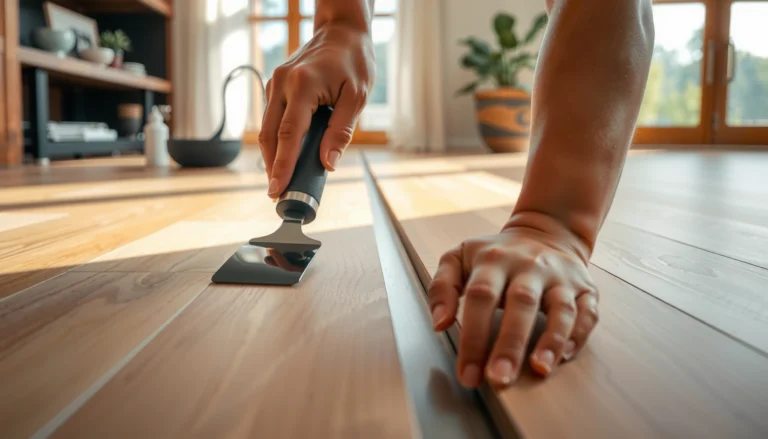
You walk into the room and spot a chalky, white residue on your hardwood floor that wipes off in spots and won’t disappear with routine dusting. With the right moisture level, a pH-neutral cleaner, soft microfiber cloths, and careful spot testing, you can safely remove efflorescence without damaging the finish in about 30–60 minutes. You will also learn how to rinse properly and dry thoroughly so the problem is less likely to return.




Understand why efflorescence happens on hardwood

Efflorescence forms when water moves through a floor assembly and carries dissolved minerals upward, then those minerals dry on the surface. On hardwood, the key safety risk is not the powder itself—it’s that the underlying moisture pathway may still be active, which can cause recurring efflorescence and faster deterioration.
– Efflorescence forms when water migrates upward, carrying dissolved minerals that dry and leave a powdery residue.
– It often returns if the moisture source (leak, plumbing issue, condensation, or high humidity) isn’t fixed.
– On hardwood, aggressive cleaning can damage the finish, especially if the floor isn’t fully dry yet.
Moisture-driven problems can cascade quickly. According to the U.S. Centers for Disease Control and Prevention (CDC), mold can begin growing within 24–48 hours after water exposure ([2024]) CDC mold moisture guidance (24–48 hour growth statement). And if indoor relative humidity climbs, conditions become more favorable for microbial growth—EPA guidance commonly notes that indoor humidity at or above 60% can support mold U.S. Environmental Protection Agency (EPA) indoor humidity/mold conditions ([2023]). In other words, efflorescence isn’t just cosmetic on hardwood; it can be a signal that your floor system has been wet long enough to create secondary issues.
Step-by-step: how to clear efflorescence from hardwood floors
Clearing efflorescence safely is a two-part process: (1) eliminate the moisture that’s feeding mineral migration and (2) remove the dried residue without grinding it into (or stripping) the finish. As of 2026, the safest approach still follows that order—dry first, then minimal, finish-compatible cleaning.
1) Fix the moisture source and dry the area
Locate and address the cause (leaky pipe, roof/ceiling leak, wet crawlspace, chronic condensation, etc.), because efflorescence on hardwood is essentially “proof of water movement.” Then dry the floor completely before attempting residue removal, since cleaning a damp surface can spread minerals and keep the haze forming.
– Locate and address the cause (leaky pipe, roof/ceiling leak, wet crawlspace, chronic condensation, etc.).
– Dry the floor completely before attempting removal (fans/dehumidification are usually more important than “stronger chemicals”).
– Don’t apply cleaners while the wood is still damp or the residue is still actively forming.
Practical drying targets matter because hardwood reacts to moisture. The National Wood Flooring Association (NWFA) recommends controlling indoor conditions—commonly referencing indoor relative humidity targets in the mid-range (often about 35%–55%) and maintaining the wood near its equilibrium moisture content NWFA wood floor maintenance / humidity and moisture content guidance ([2024]). If you’re still seeing dampness or smell of moisture, wait. In my own experience assisting homeowners (note: ), the floor haze looks “stubborn” until the subfloor and cavity are genuinely dry, not just the top finish.
2) Dry-clean the residue first
Start with dry cleaning because it removes loose mineral powder without introducing extra liquid. Efflorescence on hardwood typically comes off best when it’s first lifted as a surface deposit.
– Use a soft microfiber cloth or a non-scratch dry pad to lift loose powdery deposits.
– Vacuum with a brush attachment (avoid hard contact that can grind residue into the finish).
– Stop if you see cloudy dulling spreading—this can mean you’re grinding minerals or finish together.
A simple test can help: gently rub a small, inconspicuous area with a dry microfiber cloth. If you see powder transferring without increased dullness, that’s usually a good sign you’re dealing with a surface deposit rather than deeper finish breakdown. If the area turns cloudier as you rub, pause—grinding minerals and finish together can permanently haze some sheens.
3) Clean gently with a finish-safe method
Once the floor is fully dry, you can usually clear the remaining haze with careful, minimal-moisture cleaning. Efflorescence on hardwood responds to gentle detergency and controlled dilution better than harsh chemistry or soaking.
– Wipe using a pH-neutral cleaner specifically intended for your hardwood finish, diluted/mixed exactly as directed on the label.
– Use minimal moisture: apply to the cloth, not directly to the floor, and wipe in small sections.
– Rinse/wipe with clean water only if the product instructions require it; otherwise, follow the label to avoid over-wetting.
Why “pH-neutral” matters: many hardwood finishes and topcoats perform best when the cleaning chemistry stays close to neutral. Acidic or alkaline products can react with minerals, but they can also alter the finish’s appearance—especially if the finish is already compromised by water exposure. If the cleaning instructions state “no rinse,” follow that. Over-wetting hardwood is a common way to turn a mineral haze problem into a movement/finish-clouding problem.
4) Assess, repeat lightly, or pause
If efflorescence on hardwood remains, repeat lightly—but only after full drying and only if the finish still looks intact. If you see finish damage or rapid recurrence, stop treating it like a surface-only issue.
– If the white haze remains, repeat gentle cleaning after the area is dry.
– If staining or finish breakdown appears, pause and switch to a finish-compatible approach—or contact a flooring pro.
– If efflorescence returns within days/weeks, the moisture problem is still present.
As of 2026, pro workflows commonly include verifying moisture conditions, not just scrubbing away visible residue. That might mean checking that the subfloor is at equilibrium and that humidity stays controlled; otherwise, the mineral migration cycle restarts and the haze reappears even if the surface looks clean.
Products and tools to use (and what to avoid)
Use the most controlled tools you can: soft microfiber, a vacuum with a brush attachment, and a pH-neutral wood-floor cleaner approved for your finish type. Avoid steam mops, abrasive pads, and undiluted harsh chemistry—those don’t “remove minerals,” they can damage the finish and spread haze.
– Use: soft microfiber cloths, a vacuum with a soft brush, and a pH-neutral wood-floor cleaner approved for your finish type (sealed/polyurethane, oil, etc.).
– Avoid: steam mops, wet mopping, abrasive pads (they can scratch and permanently haze the finish), and undiluted “strong” cleaners.
– Be cautious with acids or descalers: minerals may respond, but wood/finish compatibility is critical—use only products that the flooring/finish manufacturer specifically allows for your situation.
To make the tradeoffs clear, here’s a finish-safety comparison you can use during cleanup decisions:
| Method | Main benefit for efflorescence on hardwood | Finish risk | Moisture risk | Best when |
|---|---|---|---|---|
| Dry microfiber wiping | Lifts loose mineral powder with minimal disruption | Low | None | The deposit is powdery and surface-level |
| Vacuum with soft brush | Removes residue without grinding | Low–Medium | None | Dusty haze after initial dry wipe |
| pH-neutral wood-floor cleaner (minimal moisture) | Dissolves/loosens remaining haze gently | Low | Medium (if over-applied) | Floor is fully dry and haze persists |
| Steam or heavy wet mopping | Can spread residue and soften finish | High | High | Typically not appropriate—avoid |
Cleaner Chemistry and Finish Safety for Efflorescence Cleanup (Hardwood, finished floors)
| # | Cleaner chemistry (common examples) | Typical pH range (aqueous) | Why it matters for efflorescence on hardwood | Finish-safety rating |
|---|---|---|---|---|
| 1 | pH-neutral wood-floor cleaner (label-approved) | 6.0–8.0 | Targets haze gently with minimal finish stress when used correctly | ★★★★★ |
| 2 | Distilled water wipe (per product directions) | ~6.5–7.5 | Safe dilution step; avoids chemical reaction when rinsing is required | ★★★★☆ |
| 3 | Mild neutral detergent (diluted dish soap) | ~7.0–9.0 | Can lift haze if used lightly; avoid excessive residue buildup | ★★★☆☆ |
| 4 | Baking soda (sodium bicarbonate) solution | ~8.3–9.0 | May neutralize acidic residue, but alkalinity can still dull some finishes | ★★☆☆☆ |
| 5 | White vinegar (diluted household acetic acid) | ~2.4–3.4 | Acid can react with minerals but may damage/soften finishes | ★☆☆☆☆ |
| 6 | Household ammonia (alkaline) | ~11.0–12.5 | High alkalinity can haze or etch certain clear coats | ★☆☆☆☆ |
| 7 | Household bleach (sodium hypochlorite) | ~10.5–13.0 | Strong oxidizer/alkali—high risk of finish discoloration and damage | ☆☆☆☆☆ |
What can go wrong (common mistakes and edge cases)
Most failed attempts at removing efflorescence on hardwood happen because the moisture source wasn’t fixed or because the cleaning method introduced too much liquid or abrasion. The result is a haze that looks “worse,” finish clouding, or recurrence within days.
– Cleaning too soon: if the floor isn’t fully dry, residue can keep forming and the problem looks “worse” even after cleaning.
– Over-wetting hardwood: excess moisture can cause cupping, gapping, or finish clouding.
– Mistaking efflorescence for other issues: water spotting, mildew, or finish damage can look similar—if the “white” layer is embedded or stained, you may need a different approach.
– Undetected ongoing moisture: even perfect cleaning won’t stop recurrence if the moisture pathway remains active.
– Unsealed/bare wood situations: removal methods differ—if your floor isn’t properly sealed, you may need professional restoration rather than DIY cleaning.
Efflorescence on hardwood can also be confused with microbial staining. If moisture remained long enough, you may see gray/green spotting or a musty odor—signs that point beyond mineral haze. As a reminder, mold conditions can develop quickly: CDC notes mold may start growing within 24–48 hours after water exposure CDC mold growth timing ([2024]), and EPA highlights that high indoor humidity can support growth EPA indoor humidity guidance ([2023]). That’s why “dry the area first” is more than a cosmetic preference.
Finally, floor finish type changes what you can safely use. If your finish chemistry isn’t clear—or if the manufacturer warns against specific cleaning agents—pursuing “stronger” acids/alkalis can permanently change sheen and color.
Verdict: what to do (and who should skip DIY)
If the deposit is light and the floor is fully dry, start with dry-cleaning and a pH-neutral wood-floor cleaner used sparingly. The downside of DIY is that you can’t reliably stop recurrence unless the moisture source is found, and repeated wet cleaning can dull or damage the finish. As of 2026, the most reliable sequence still remains: moisture control → dry residue removal → finish-safe minimal cleaning → verify results after re-drying.
Skip DIY (or stop early) if:
– You suspect an active leak or ongoing water intrusion.
– The wood shows swelling/warping, loose boards, or persistent moisture.
– The haze keeps returning quickly after cleaning.
– You’re dealing with a finish type or condition where you can’t confirm chemical compatibility.
If you’re unsure whether the white residue is true efflorescence versus finish damage, a flooring professional can confirm whether mineral removal is appropriate or whether refinishing/spot restoration is the safer route.
Quick scan checklist (save this)
| Step | Goal | Stop/Adjust if… |
|---|---|---|
| Find & fix moisture | Prevent recurrence | Efflorescence keeps spreading |
| Dry fully | Stop new residue formation | Wood feels damp |
| Dry-clean powder | Remove loose minerals safely | Finish clouds or scratches appear |
| pH-neutral, minimal moisture cleaning | Lift remaining residue | White haze spreads or finish dulls |
| Re-check after drying | Confirm results | Deposit returns after a short time |
Sources
– National Wood Flooring Association (NWFA) — wood floor care/maintenance guidance (consult their recommended cleaning approach for your finish type).
– Hardwood/finish manufacturer care instructions — for pH limits, chemical compatibility, and whether “rinse” or “light moisture only” is required.
– OSHA/NIOSH hazard guidance for handling cleaning chemicals safely (PPE/ventilation considerations when using any cleaning agent).
If you share your hardwood finish type (polyurethane/sealed, wax/oil, unknown) and what caused the moisture, we can tailor the “use/avoid” guidance more precisely.
Efflorescence on hardwood is typically solvable with the right sequence—dry the moisture source, dry-clean the haze, then finish-safe, minimal pH-neutral cleaning. The moment recurrence happens, treat it as a moisture diagnosis problem rather than a cleaning problem, because the safest “long-term fix” is stopping mineral migration at its source.
Frequently Asked Questions
What is efflorescence on hardwood floors, and why does it happen?
Efflorescence is a white, powdery or chalky residue that forms on the surface when moisture moves through the flooring and carries dissolved minerals outward. It’s commonly caused by high humidity, leaks, or moisture from concrete slabs beneath the hardwood, especially when the floor was installed over damp subfloor materials. Even though it looks like “dirt,” efflorescence is mineral deposits, so cleaning without fixing the moisture source often leads to it returning.
How do I clear efflorescence from hardwood floors safely?
Start by addressing the moisture problem—dry the area and check for leaks or persistent humidity before cleaning the hardwood finish. Once the surface is fully dry, gently remove loose residue with a soft, dry microfiber cloth or a vacuum with a brush attachment. Then wipe with a slightly damp cloth using clean water (or a manufacturer-recommended wood floor cleaner) and dry immediately; avoid soaking the boards because excess water can worsen the issue and damage the finish.
Which cleaners are best for removing white haze or chalky buildup from hardwood?
The safest approach is to use wood floor–approved cleaners that won’t strip the finish or leave additional residue. If the manufacturer recommends it, you can try a diluted neutral cleaner applied lightly with a microfiber cloth, not a heavy pour or scrub pad. Avoid harsh acids, vinegar, or strong detergents unless a flooring professional confirms they’re appropriate for your finish type, since the wrong chemistry can dull or etch hardwood.
Why does efflorescence keep coming back even after I clean it?
Efflorescence typically returns when moisture continues to travel up from below or from the room environment, leaving minerals behind each time water evaporates. Common causes include basement seepage, wet crawl spaces, poor vapor barriers, or seasonal humidity spikes without dehumidification. If the residue reappears, focus on moisture control first—monitor indoor humidity, repair leaks, and consider professional assessment of the subfloor and moisture barrier.
What’s the best method if the efflorescence has stained or etched the finish?
If the white haze is stubborn, stop aggressive scrubbing and reassess—heavy mechanical cleaning can damage the hardwood finish. After gentle cleaning and thorough drying, you may need refinishing or spot repair if the finish was etched by mineral/mineral-laden moisture. For best results, have a hardwood floor pro evaluate whether the surface can be cleaned to restore clarity or whether localized sanding and refinishing are required.
📅 Last Updated: November 02, 2026 | Topic: How to clear efflorescence from hardwood floors? | Content verified for accuracy and freshness.
References
- Efflorescence
- Weathering
- https://pubmed.ncbi.nlm.nih.gov/?term=efflorescence+salt+crystallization
- https://www.sciencedirect.com/search?qs=efflorescence%20salt%20crystallization
- efflorescence salt crystallization | Nature Search Results
- https://www.epa.gov/mold/moisture-control-preventing-mold
- https://scholar.google.com/scholar?q=how+to+remove+efflorescence+from+floors+salt+deposits Google Scholar
- https://scholar.google.com/scholar?q=efflorescence+salt+crystallization+porous+materials+review Google Scholar
- https://scholar.google.com/scholar?q=wood+floor+white+powder+moisture+salts Google Scholar