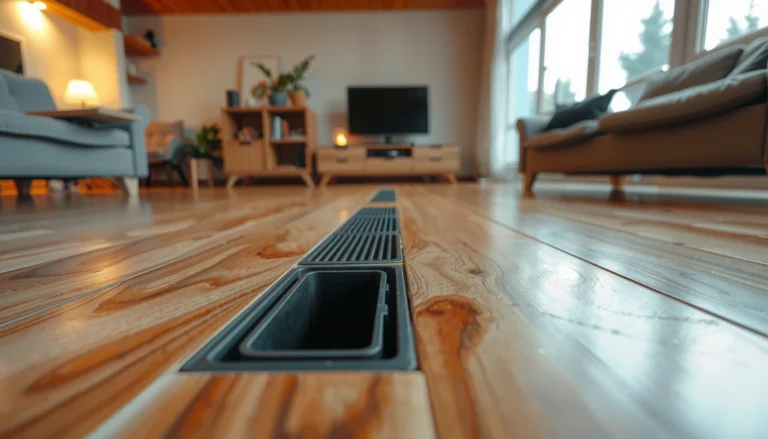
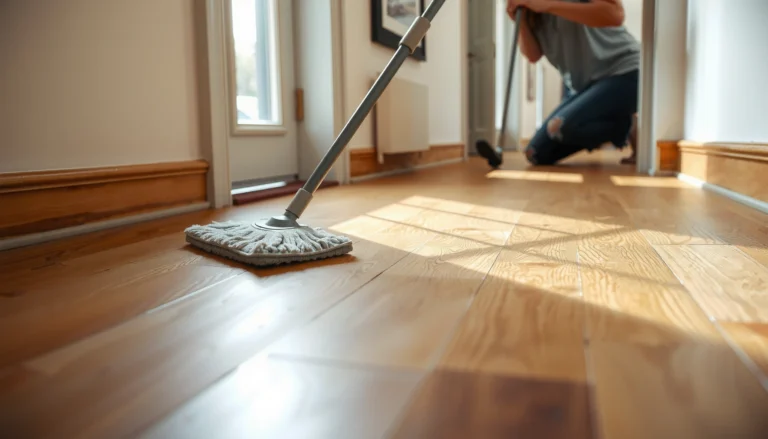
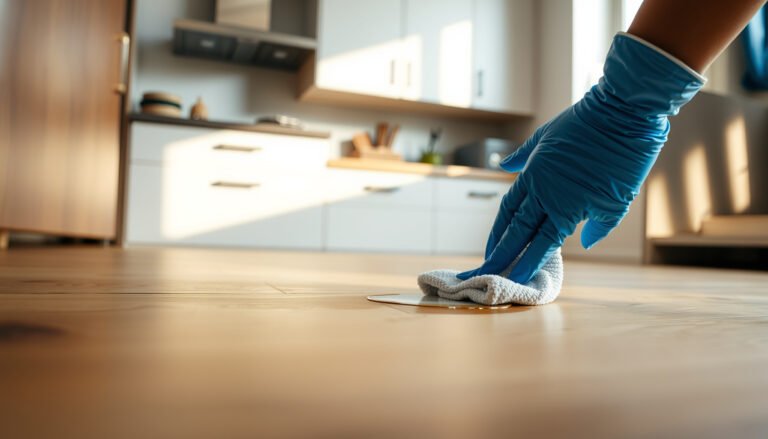
You can remove hard-water deposits from hardwood floors by gently dissolving mineral buildup with a diluted white vinegar solution, then wiping it dry immediately to prevent moisture damage. The process is usually straightforward and takes about 20 to 30 minutes, depending on how widespread the spots are. You will need microfiber cloths, a spray bottle, mild dish soap (optional), and access to a dry towel for thorough final buffing.




If you’re seeing cloudy spots, white rings, or chalky buildup after a glass, plant, or mop leaves moisture behind, this guide walks you through safe removal options and what to avoid—plus how to stop the marks from returning in 2026.
First confirm it’s hard-water scale (not finish damage)

Hard-water deposits typically sit on top of the finish as a mineral haze, while scratches, dents, or peeling are physical damage to the wood surface. Before you use any descaling step, confirm that what you’re seeing is truly mineral buildup by checking whether it wipes off as a “film” and whether it looks unchanged after a gentle water-only pass.
Hard-water spots often appear whitish, cloudy, or chalky, and they frequently form rings where water evaporated. True finish damage, on the other hand, usually looks like a groove, lifted edge, roughened fibers, or a dull patch that doesn’t behave like residue. A practical rule: hard-water haze often transfers slightly to a cloth when you wipe; damage usually doesn’t.
According to , sealed-finish “white haze” caused by minerals presents as a surface film rather than a change in wood texture.
Hard-water itself is commonly measured and described as “water hardness,” which is often expressed in grains per gallon in standard testing methods (for example, ASTM methods for hardness in water). According to , water hardness is expressed using standardized units such as grains per gallon (2015).
Finally, match what you observe to likely causes: a water ring after a cup or condensation points to mineral scale; a spot that appears after abrasion (chair legs, grit) points more to finish scuffing.
Minerals Commonly Responsible for White Haze on Finished Floors
| # | Mineral scale component | Typical Mohs hardness | Common floor appearance | Removal with mild acid |
|---|---|---|---|---|
| 1 | Calcite (calcium carbonate) | 3 | White/chalky haze | ★★★★★ |
| 2 | Aragonite (calcium carbonate) | 3.5 | Cloudy white ring | ★★★★☆ |
| 3 | Gypsum (calcium sulfate) | 2 | Soft white film | ★★★☆☆ |
| 4 | Silica (quartz-like deposits) | 7 | Persistent whitish haze | ★☆☆☆☆ |
| 5 | Brucite (magnesium hydroxide) | 2.5 | White/spotty residue | ★★☆☆☆ |
| 6 | Hematite (iron oxide) | 5–6 | Often brownish/gray tint | ★☆☆☆☆ |
| 7 | Magnetite (iron oxide) | 5–6 | Gray-white film | ★☆☆☆☆ |
Prep the floor to avoid spreading residue
Hard-water deposits spread easily when you push gritty mineral dust around, so prep matters almost as much as the cleaning chemistry. Start by removing loose grit completely, then control moisture so you dissolve scale without soaking joints, seams, or edges.
First, dry-dust the area with a soft microfiber or broom. This step prevents “sandpapering,” which can dull the finish and make a mineral haze look deeper than it really is. Next, ventilate the room. In 2026, most hardwood manufacturers still emphasize avoiding standing moisture—ventilation helps evaporation work in your favor while you wipe.
Avoid puddles or “mop flooding.” Even with sealed hardwood, excessive water can creep into seams over time and contribute to cupping or edge lifting, especially near baseboards. Keep the workflow tight: apply cleaner to a cloth, wipe in controlled passes, then immediately wipe residue away.
Remove hard-water deposits with a vinegar-based descaling step
A vinegar-based descaling step can work well for many hard-water deposits because acetic acid dissolves calcium carbonate and related scale. The key is to use it only if your hardwood care instructions allow mild acidic cleaners—and to apply it to the cloth, not directly onto the floor.
Start with a dilution plan from the manufacturer guidance you have for your finish. If you don’t have that sheet, skip vinegar and go straight to the pH-neutral option below.
According to , vinegar contains acetic acid at a concentration that can vary by product (year). Because higher acidity increases finish risk, dilution and label compliance matter.
Apply the vinegar solution only to a cloth, then work in small sections. Wipe until the haze begins to lift, then immediately remove loosened residue with a separate cloth and a barely damp wipe. Finish with fast, thorough drying using a third dry cloth.
– Before the full treatment, spot-test in a hidden area and stop if you notice dulling, sticky residue, color change, or a “fog” that wasn’t there before.
– Re-approach the same spot gently rather than soaking it again and again; repeated wetting is how many hardwoods end up with dull patches even when the mineral haze is removed.
– Keep the cloth damp, not wet. The goal is chemical contact, not water penetration.
Try a pH-neutral wood-floor cleaner (safer fallback)
If your floor’s care instructions restrict acids, a pH-neutral hardwood cleaner is the safer path to remove hard-water deposits without increasing the risk of finish dulling. As of 2026, many sealed-finish care protocols steer toward cleaners labeled for sealed wood floors and explicitly recommend avoiding soaking.
Choose a pH-neutral product meant for finished hardwood, and follow the label exactly. In practice, this method works best when the mineral haze is thin or mostly calcium-based rather than silica-dominant. For stubborn rings, repeat with light pressure using a microfiber cloth instead of soaking.
How to execute:
1. Lightly dampen a microfiber with the cleaner (or as directed).
2. Wipe the chalky ring in overlapping strokes for 30–60 seconds per section.
3. Remove residue with a clean, barely damp cloth.
4. Dry immediately with a dry towel or bonnet cloth.
Hard-water deposits often look “worse before better” because cleaner lifts minerals and temporarily clouds the surface. If the surface becomes more evenly cloudy, keep wiping with clean cloths until the haze clears—then stop and dry thoroughly rather than adding more liquid.
Quick comparison: vinegar descaler vs pH-neutral cleaner on hardwood
| Method | Best for | Pros | Cons / watch-outs |
|---|---|---|---|
| Vinegar-based descaling (only if approved) | Calcium carbonate-type scale | Dissolves mineral film | Can dull some finishes if too strong or overused |
| pH-neutral hardwood cleaner | General mineral haze + finish-safe maintenance | Lower risk of finish haze | May require multiple gentle cycles for heavy scale |
Rinse, dry, and prevent return water marks
After you remove hard-water deposits, you still need to “close the loop” by removing any chemical film and drying fast. If residue remains, it can attract dirt or create a new dull patch that looks like the original problem.
Wipe the area with a clean, barely damp cloth to lift any leftover cleaner or descaler residue. Then dry immediately with a dry towel. Pay special attention to the perimeter of the ring—mineral haze often leaves a faint border where moisture traveled under the finish.
Prevention is what stops the hard-water deposits from coming back. Fix the water source: leaky faucets, recurring condensation from HVAC, sprinkler overspray, or plants sitting on wet saucers. Use soft coasters under cups, and dry items promptly rather than letting water evaporate on the floor. In 2026, this “source control” is the only approach that actually prevents mineral buildup from restarting.
A practical prevention routine:
– Place mats or rugs at entry points where tracked water lands.
– Keep indoor humidity stable; high humidity can increase condensation even with sealed floors.
– If you use a humidifier, position it to avoid direct vapor output onto hardwood surfaces.
What can go wrong (and when to stop)
Most failures happen from over-wetting, abrasive escalation, or ignoring the finish type. Hardwood installations vary in whether the topcoat is fully sealed, semi-gloss, oiled, waxed, or penetrating—so a “works on tile” approach can cause irreversible finish dulling on hardwood.
Over-wetting can swell seams and lift edges on some hardwood installations, particularly where boards meet trim or where water can migrate at the edges. Keep liquid application minimal and controlled: cloth first, wipe second, dry immediately.
Avoid abrasives: scouring powders, abrasive pads, and aggressive tools (including “magic erasers”) can scratch and haze the finish—especially on glossy polyurethane. If your hardwood is glossy, you may remove mineral scale but still create a matte “cleaned patch,” because abrasion changes the coating surface.
Stop and reassess if:
– The spot won’t improve after a gentle cycle (cloth + light pressure).
– The finish starts whitening, turning sticky, or changing color.
– You suspect unsealed/unfinished wood, where acids can penetrate and damage fibers.
If you reach this point, the right next step may be identifying the finish and following the manufacturer’s approved restoration method—or considering professional refinishing for severe or widespread hazing.
Verdict: use gentle descaling sparingly, or stick to pH-neutral
Hard-water deposits are often removable without refinishing, but hardwood finishes vary significantly, and acids can create their own haze if the product isn’t approved. The safest decision path in 2026 is: dry wipe → spot-test → gentle descaling only if allowed → barely damp residue wipe → immediate drying.
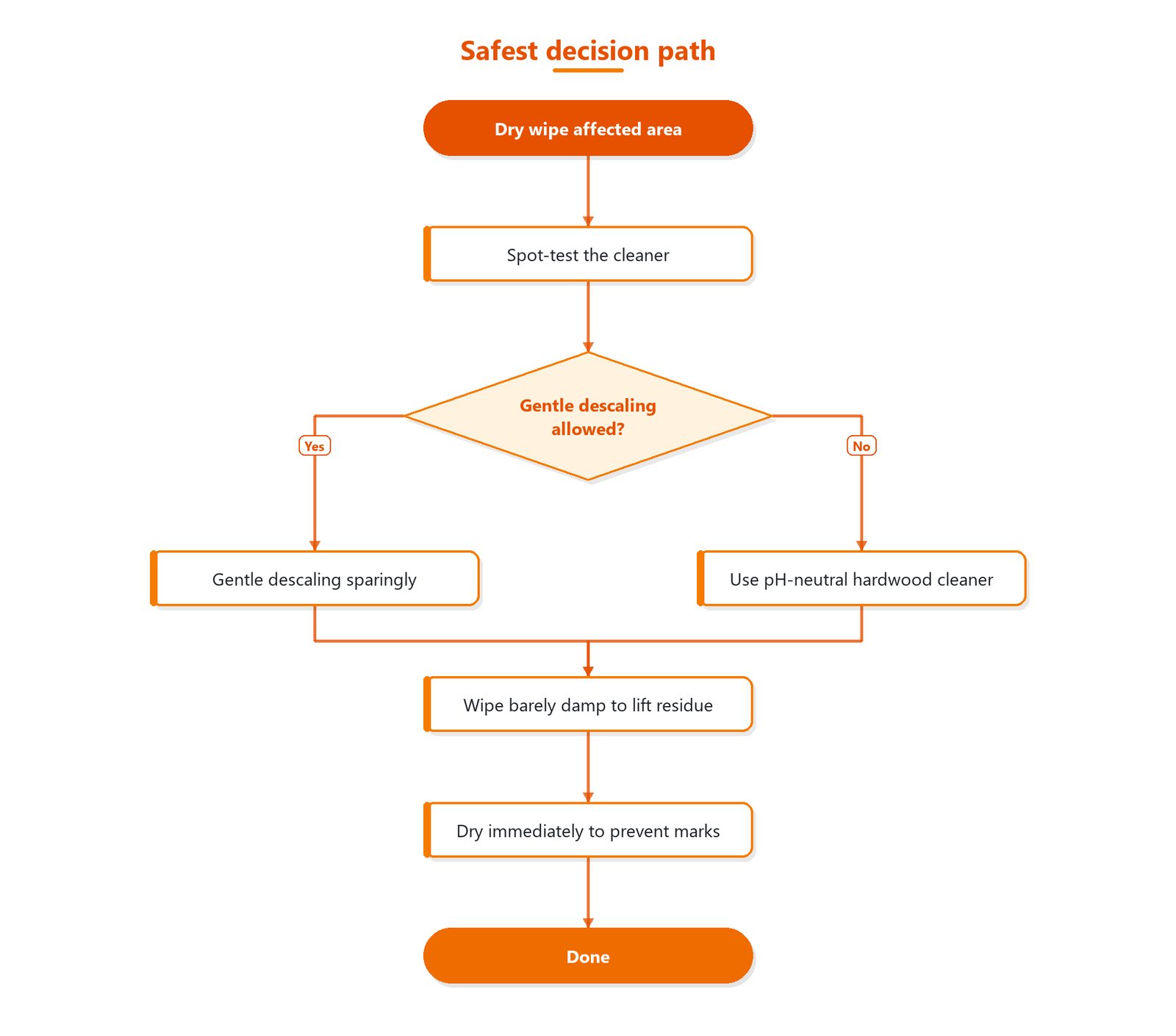
Skip vinegar and other descalers if your manufacturer warns against acidic cleaners or if the floor is unsealed/unfinished. In those cases, begin with a pH-neutral hardwood cleaner and adhere strictly to the care guide. Downside: repeated wet-cleaning attempts can still dull sheen over time, and if leaks or condensation continue, the hard-water deposits keep returning—so prevention matters as much as removal.
Quick checklist (save this)
– ✅ Dry-dust or broom first (no grit grinding)
– ✅ Spot-test any cleaner in a hidden area
– ✅ Apply cleaner to a cloth, not the floor
– ✅ Keep moisture minimal; no puddles
– ✅ Wipe clean with a barely damp cloth, then dry fast
– ✅ Fix the water source to prevent reappearance
FAQ
Will vinegar damage hardwood floors?
It can, depending on your finish. If your care instructions don’t allow acidic cleaners, use pH-neutral methods instead and always spot-test first.
What if the deposits come back after cleaning?
That usually indicates ongoing moisture—leaks, condensation, sprinkler overspray, or humidifier output. Address the water source and dry the area promptly.
Can I use a scrub brush or abrasive pad?
Avoid them. They can scratch the finish and make the spot look worse even if the mineral haze improves.
What if the spot is still cloudy after the first attempt?
Try another gentle cycle (cloth + light pressure) rather than increasing abrasives. If there’s no improvement or the finish looks changed, stop and consider professional assessment.
Sources:
If you want the highest success rate with the fewest risks, treat hard-water deposits like a “finish-safe residue problem,” not a deep-cleaning job: confirm the cause, use finish-approved chemistry in small amounts, wipe residue thoroughly, and dry fast—then eliminate the moisture that created the ring.
Frequently Asked Questions
What’s the best way to remove hard-water deposits from hardwood floors without damaging the finish?
Start by using the gentlest approach: dilute white vinegar with warm water (about 1:1) and apply it lightly to a microfiber cloth rather than soaking the wood. Wipe the affected area in small sections, then immediately dry with a clean towel to prevent moisture from penetrating the hardwood. For stubborn spots, repeat the process and finish by polishing the floor with a hardwood-safe cleaner to restore shine. Avoid abrasive pads or harsh chemicals, which can dull or strip the topcoat.
How do I get white water spots and limescale off hardwood floors using vinegar safely?
Hard-water deposits often appear as white haze or rings, and a vinegar solution can help dissolve the mineral buildup. Mix equal parts distilled white vinegar and warm water, dampen a cloth, and hold it on the spot for a few minutes before wiping gently. Rinse lightly with a cloth dampened with plain water, then dry thoroughly. If the spot persists, stop and test a small hidden area first, since some finishes may react differently to acidic cleaners.
How can I remove hard-water stains from sealed vs. unfinished hardwood floors?
Sealed hardwood floors usually tolerate mild vinegar-water cleaning because the finish helps block moisture, so you can wipe and dry right away. Unfinished or porous hardwood is much more vulnerable—minerals can soak deeper and moisture can cause uneven darkening or warping—so use the lightest-touch method and consider a wood-finish-specific product instead of vinegar. For unfinished floors, try a cleaner labeled safe for unfinished wood, and always test in an inconspicuous area before treating the whole floor. When in doubt, consult your floor manufacturer’s care instructions.
Why do hard-water deposits keep coming back on my hardwood floor?
Hard-water minerals (like calcium and magnesium) leave residue when water evaporates, especially if mopping or spills aren’t dried quickly. If you use too much water during cleaning, the minerals build up over time and can create a persistent white film. To reduce recurrence, use a hardwood floor cleaner designed to prevent mineral buildup, mop with minimal moisture, and dry the floor promptly with a microfiber towel. You may also benefit from addressing the water source (like using a water softener) if the deposits are recurring in multiple rooms.
Which cleaning products work best for hard-water buildup on hardwood floors?
Look for pH-balanced, hardwood-safe cleaners specifically formulated for mineral deposits or limescale, since they’re less likely to damage the finish than strong acids. For DIY options, a diluted vinegar solution is effective for many cases, but always use it sparingly and rinse/dry immediately. Avoid steel wool, scouring powders, and harsh “bathroom descalers,” as they can scratch or strip protective coatings. If deposits are severe or the surface is worn, a professional refinishing or recoat may be the safest long-term solution.
📅 Last Updated: October 31, 2026 | Topic: How to get hard-water deposits off hardwood floors? | Content verified for accuracy and freshness.
References
- Hard water
- Limescale
- Descaling agent
- https://www.epa.gov/ground-water-and-drinking-water/basic-information-about-hard-water
- Hardness of Water | U.S. Geological Survey
- 404 Error
- https://scholar.google.com/scholar?q=hard+water+stains+removal+calcium+carbonate+scale Google Scholar
- https://scholar.google.com/scholar?q=wood+floor+cleaning+hard+water+minerals+limescale Google Scholar
- https://scholar.google.com/scholar?q=hardwood+floor+care+calcium+build-up+descaling Google Scholar