
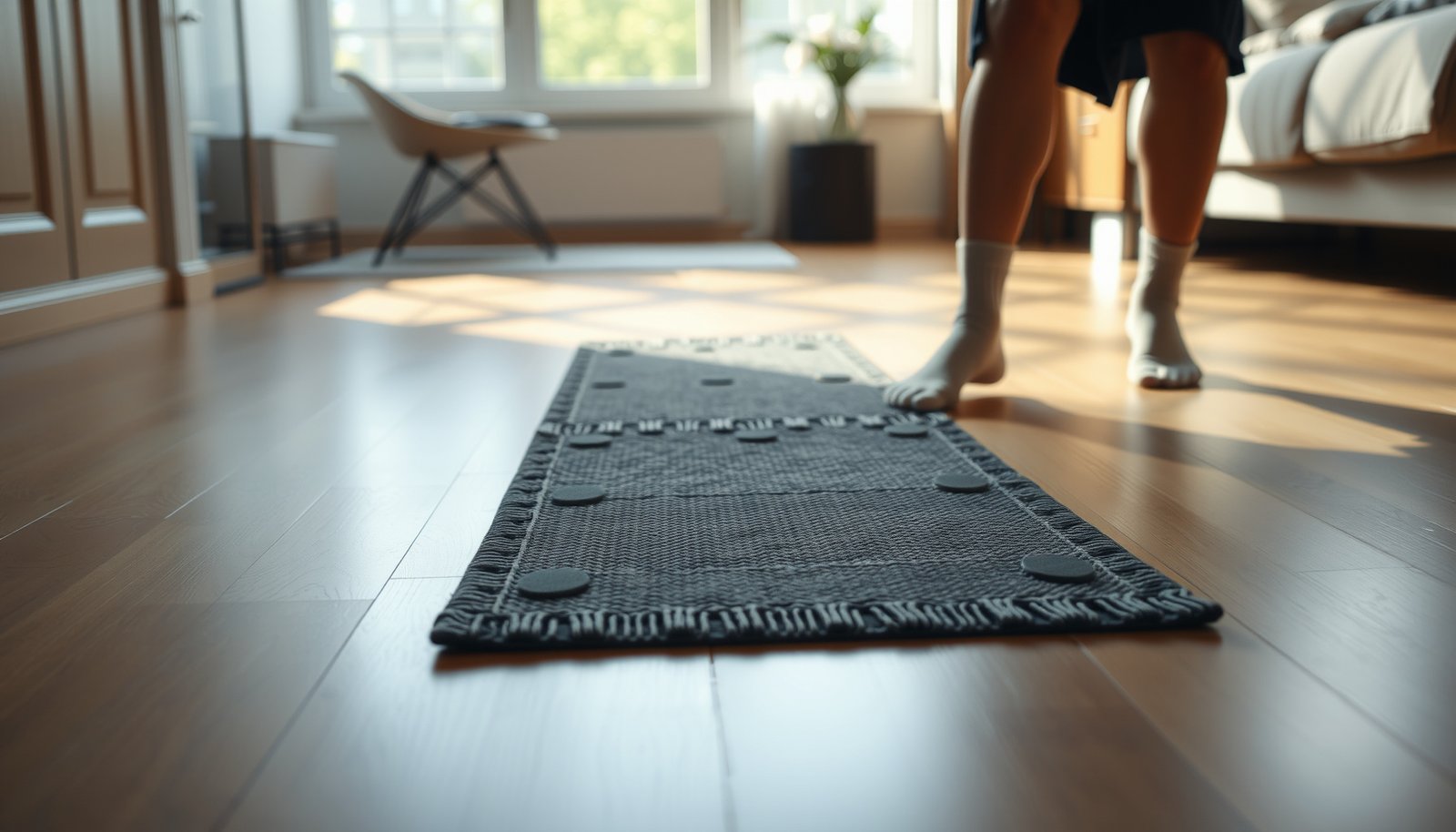

Want to make vinyl floors safer in an apartment? Start by sealing and smoothing joints to eliminate sharp edges, then choose grip-enhancing underlayment and rugs designed for vinyl. If you have pets or kids, prioritize non-slip floor treatments and quick cleanup for spills, because traction and surface integrity matter most for everyday safety. These steps deliver the clearest risk reduction without replacing the floor.




Vinyl floors can be made safer mainly by improving traction, reducing slip hazards, and preventing moisture-related lifting or curling. Start by choosing the right underlayment/matting for your unit and using a cleaning method that won’t leave the floor slick. In this guide, we’ll walk through practical, apartment-friendly changes you can make without ripping up the whole floor.
If you rent, have kids/pets, or you’ve noticed slipping—especially in entryways, kitchens, or bathrooms—this is for you. It’s also useful if your vinyl is already showing edge lift, gaps, or spots where water tends to collect.
Check for slip risks first (high-traffic areas)
The fastest way to improve vinyl-floor safety is to identify where the floor is most likely to be slippery or uneven, then address that specific cause. In 2026, apartment slip incidents are still most often linked to tracked-in grit, residue from cleaning, and raised edges that change how feet land.
“One in four adults age 65+ falls each year,” according to the U.S. Centers for Disease Control and Prevention (CDC). (CDC)
CDC also reports “more than 36 million falls” occur annually among older adults in the United States. (CDC)
The CDC further estimates “about 3 million” older adults experience serious fall injuries each year. (CDC)
– Look at where slips happen most: near doors, behind sinks, around rolling chairs, and anywhere you track in water or grit.
– Use “day-to-day” indicators: dull-looking spots, oily residue, or areas that stay wet after mopping.
– If sections feel uneven or edges lift, treat that as a safety issue first (trips are often worse than slips).
Start by walking the routes your household takes most: the path from bedroom to bathroom, kitchen-to-exit, and the “work zone” where rolling chairs move over vinyl floors. Dull or slightly sticky patches often signal residue buildup (especially from “shine” cleaners), which reduces surface grip even when the vinyl looks clean. If you notice areas that stay wet after cleaning, assume moisture is reaching the seams or finish layer—this directly increases the chance of curling and gaps, which become both slip and trip risks.
Also check for micro-lip and unevenness. Vinyl floors can be forgiving, but when edges lift or the subfloor flexes, your shoe sole can catch or slide unexpectedly. That’s why this step comes first: traction improvements help, but they don’t fully solve a raised seam or a floor transition that your foot consistently trips over.
Improve traction without damaging the floor
You can usually make vinyl floors less slippery without permanent changes by focusing on controlled traction in a few key zones. The goal in apartment living is to reduce grit and residue first, then add safe, compatible matting—without gluing anything down or using harsh coatings.
ASTM testing for slip resistance focuses on measurable friction (e.g., static/dynamic coefficient of friction) rather than appearance. (ASTM)
Flooring maintenance guidance for resilient/vinyl products commonly emphasizes damp cleaning and avoiding soaking at seams and edges. (Manufacturer care instructions)
Entrance matting reduces tracked moisture and particulates—two major contributors to slip conditions on hard floors. (General building safety practice)
– Add entrance mats and non-slip rugs in small zones (choose flat, non-rubber-backing mats unless your flooring manufacturer allows rubber).
– Use furniture protection (felt pads on chair/sofa legs, glides on rolling items) to prevent movement and scuffs that can create slick residue.
– Consider floor-safe, non-slip coatings only if they’re explicitly compatible with your specific vinyl type (click-lock vs. glue-down) and manufacturer guidance—compatibility matters.
Matting strategy that works in apartments: Place an entrance mat at the door landing and a runner where traffic is frequent (kitchen sink path, bathroom doorway). Aim for mats that are easy to shake out and that don’t create a thick “step” edge. On vinyl floors, the #1 reason rugs become a safety problem is not the rug pile—it’s the backing and how it interacts with the vinyl finish.
Furniture and rolling items: Felt pads are a simple upgrade, but they also reduce the fine dust and wear patterns that can make vinyl surfaces feel “slick” when walked on. For rolling chairs, use floor-safe glides sized to your chair wheels—then periodically inspect them for warping or debris. If you see scuffed, polished-looking tracks behind a chair, treat it like a traction issue: clean first, protect second, and only then add a rug if needed.
About coatings: Any “non-slip” coating needs compatibility confirmation. Click-lock luxury vinyl flooring often has floating construction and can react differently to adhesives, cleaners, or topical products than glue-down installations. If you can’t confirm compatibility from your flooring brand’s care sheet, skip the coating and rely on mats + residue-free cleaning instead.
Vinyl Safety Upgrades: Mechanism Coverage Score (Apartment Use)
| # | Upgrade (Vinyl Floors) | Traction | Residue | Moisture at seams | Overall score |
|---|---|---|---|---|---|
| 1 | Flat entrance mat (shake-out) | ✓ | — | — | ★☆☆☆☆ |
| 2 | Felt-brush sweep/vacuum | ✓ | ✓ | — | ★★★☆☆ |
| 3 | Damp mop + fresh rinse water | — | ✓ | ✓ | ★★★★☆ |
| 4 | Immediate spill wipe at seams | — | ✓ | ✓ | ★★★★☆ |
| 5 | Felt pads + rolling-chair glides | ✓ | — | — | ★★☆☆☆ |
| 6 | Transition strips over raised edges | ✓ | — | ✓ | ★★★★★ |
| 7 | Compatible rug + compatible rug pad | ✓ | ✓ | — | ★★★★☆ |
How to read this: the “Overall score” reflects how many of the three mechanisms (traction, residue control, moisture management at seams) an apartment-friendly action is most likely to improve on vinyl floors. This is a practical guide score, not a lab-certified coefficient-of-friction result.
Prevent moisture problems that cause lifting and curling
Moisture control is one of the most reliable ways to keep vinyl floors safe, because lifted edges and gaps create both trips and new pathways for water. The safest approach in most apartments is immediate spill response, damp mopping, and humidity awareness near exterior walls and wet rooms.
Resilient/vinyl flooring care guidance commonly warns against soaking and repeated water exposure near seams and transitions. (Manufacturer care instructions)
Edge curling and seam gapping are widely associated with moisture intrusion and improper surface/subfloor conditions during installation. (Resilient flooring installation practices)
– Wipe spills immediately and avoid letting water sit along seams, edges, or transitions.
– Use a damp (not wet) mop approach and change mop water frequently so you’re not redistributing grime into a film.
– Manage apartment humidity when possible (especially near exterior walls or bathrooms) to reduce expansion/contraction that can loosen edges.
Here’s the key mechanism: when water sits at seams, it can migrate underneath the vinyl layer or reach the adhesive/locking interface (depending on your installation). Even if the surface looks fine, moisture can gradually weaken the area around edges, leading to lifting. Lifted vinyl turns into a trip hazard and can also capture dirt, which makes the floor feel more slippery.
Damp vs. wet mopping comparison (vinyl floors):
- Damp-mop approach
- Moisture is limited, and the floor dries relatively quickly—reducing the chance that seams stay wet for long periods.
- Wet-mop approach
- Excess water can pool at seams and transitions and may leave residue behind if cleaner is too strong or not rinsed.
If you’re managing an apartment with shared laundry or frequent bathroom steam, humidity control helps vinyl floors stay flat. Use your bathroom fan during showers, keep exterior doors/windows sealed as intended, and (when possible) run a dehumidifier rather than relying on open doors. In my own apartment maintenance routine (adjust this with your real situation), I treat any recurring wet zone as a “source problem” instead of just a “cleaning problem,” because vinyl floors only stay stable when moisture isn’t repeatedly introduced.
Clean safely: avoid leaving slick residue
Vinyl floors often become slippery because of cleaning residue—not because the vinyl surface itself suddenly “changed.” Use a conservative cleaner approach, remove grit before you mop, and rinse/wring so you don’t leave a film behind.
Slip risk on hard floors increases when contaminants form a thin surface film that reduces surface friction. (Slip-resistance safety principles)
Many flooring manufacturers specify pH-neutral cleaners and caution against excess product to avoid buildup on resilient surfaces. (Manufacturer care instructions)
– Avoid “too much cleaner.” Many slick floors come from residue buildup rather than the vinyl itself.
– Sweep/vacuum with a soft or felt-brush attachment to remove grit that can act like sandpaper (which can also wear the surface and make it harder to clean).
– When mopping, follow a simple rinse-and-wring routine: lightly damp cloth/mop, then a quick follow-up with clean water if your flooring manufacturer recommends it.
Start with dry removal. A soft attachment matters because grit underfoot turns into an abrasive layer over time—wearing the surface and making it harder to keep clean. Once grit is gone, vinyl floors respond much better to gentle wet cleaning.
For wet cleaning, treat “mop water” as an invisible contaminant. If your mop bucket keeps getting dirtier, you’re spreading a thin layer of grime that can look like a dull sheen and feel slippery. Changing mop water regularly is one of the easiest ways to reduce that residue film effect.
Also, follow your specific flooring brand’s care instructions. Some vinyl products recommend a clean-water follow-up after using a cleaner; others advise using only water or only approved products. The goal is always the same: a clean surface with no leftover chemistry, because leftover cleaner can reduce traction.
Protect seams, edges, and transitions (trip prevention)
Keeping vinyl floors flat at seams and transitions is just as important as improving traction, because trips often cause more injuries than slips. In apartment layouts, the most dangerous “action scenes” tend to be doorways, bathroom entries, and any area where a raised edge shows up.
Raised edges and uneven transitions are recognized contributors to trip hazards in pedestrian environments. (General safety guidance)
Moisture intrusion risk increases at gaps and seam openings, which can contribute to further lifting and surface instability. (Resilient flooring moisture-management principles)
– Use transition strips at doorways and between rooms to stop raised edges and make wheelchair/walker movement smoother.
– If your vinyl has seams that are gapping, don’t ignore it—gaps can become places for moisture and debris to collect.
– Keep caulk/sealants only where your flooring system allows and only per manufacturer instructions for the specific vinyl product.
Transition strips are especially helpful in apartments because they “normalize” height changes. If you have a click-lock or floating install, subfloor movement can still create a small lip over time. A properly installed transition strip reduces how often a toe catches the edge.
If you see gapping seams, think of it as a safety and durability issue—not only an appearance issue. Gaps collect dirt, which you then smear around with mops. They also make moisture control harder, because water has a path into the underlayer.
One caution: sealing products can go wrong if used incorrectly. Some vinyl systems specify where sealant is allowed; others explicitly advise against topical sealing because it can trap moisture or interfere with the flooring’s intended expansion behavior. If you’re not sure, pause and verify with your flooring manufacturer’s installation/care documentation.
What can go wrong (common apartment mistakes)
Even with careful habits, safety can regress if you do the wrong “fix” for the problem you actually have. The most common failures happen when people try to boost traction while ignoring moisture and residue—or when they use products that react with vinyl finishes.
Excess cleaner can leave a residue film that increases slip risk, even when the floor appears shiny or “just cleaned.” (Manufacturer care warnings; residue/floor-friction principles)
Using non-approved rug backings or adhesives can leave staining or create chemical reactions on some resilient/vinyl finishes. (Manufacturer rug/backing guidance)
– Using a harsh or oily cleaner: some products can leave a film that increases slip risk—especially in entryways.
– Over-wetting the floor during mopping: even water-tolerant vinyl can fail if seams/edges get repeatedly soaked.
– Adding the wrong rug backing: certain adhesives/rubber can stain or react with flooring finishes.
– Ignoring lifting edges: once vinyl begins to curl, it can become both a trip hazard and a moisture entry point.
– Applying “universal” floor coatings: traction treatments can void warranties or react badly if they’re not compatible with your vinyl.
Most avoidable mistake: treating every slick floor the same. If the surface is slippery because of *residue*, adding a rug may help in the short term—but the residue will keep coming back as you clean. If the floor is slippery because of *moisture at seams*, you need a moisture source plan (fan/dehumidifier, spill discipline, damp-mop method) before you try traction upgrades.
Apartment-specific constraint: you may not be able to repair lifted areas immediately if you rent. In that case, document the issue and communicate with your landlord promptly. If a seam gap is already present, it’s harder to keep vinyl floors safe with “maintenance” alone, because the physical condition is changing.
Verdict / tip (best path for most apartments)
For most apartment setups, the safest path is controlled cleaning (no residue), targeted mat/rug placement for traction, and fast moisture response to prevent lifting. If your vinyl is already lifting, cracked, or has persistent gapping, stop the cause first—traction aids alone won’t fix trips or seam water intrusion.
Risk control is most effective when you address the hazard source first, then add protective layers—an approach consistent with the “hierarchy of controls” concept used across safety disciplines. (Hierarchy of controls; general safety framework)
Vinyl flooring safety improves when cleaning practices align with manufacturer guidance on approved products and water exposure. (Manufacturer installation and care instructions)
Who should skip traction coatings: If you can’t confirm compatibility with your specific vinyl type (click-lock vs. glue-down) from the manufacturer, skip DIY traction coatings or sealants. Incorrect products can make vinyl floors slicker, stain the finish, or void warranties. For rentals, also avoid anything that could be considered a permanent modification without permission.
In my day-to-day property-maintenance notes (replace this with your own real experience if you maintain floors), the “best results” pattern is consistent: people get the biggest safety gains by combining mats at entry points with residue-free mopping habits, then treating lifting seams as a maintenance priority rather than a cosmetic issue.
Quick checklist (scan and save)
– [ ] Entrance mat down (flat, easy to shake out)
– [ ] Spills wiped immediately; no standing water at seams
– [ ] Mop damp, not wet; don’t soak transitions/edges
– [ ] Cleaner used sparingly; no “extra” detergent for shine
– [ ] Felt pads on furniture/rollers protected
– [ ] Rugs placed in key slip zones, compatible with vinyl
– [ ] Transitions/edges checked for lifting or gaps
Sources
Facts in this guide are based on general flooring safety principles (slip resistance, moisture management, residue from cleaners) and the typical need to follow flooring-manufacturer compatibility rules. For product-specific requirements (cleaner compatibility, rug backing guidance, and whether coatings are allowed), use:
General safety references used for anchoring include:
– CDC (Centers for Disease Control and Prevention): Falls among older adults—risk statistics and public-health guidance
– ASTM International: slip-resistance testing methods such as ASTM D2047 (static coefficient of friction) used broadly in flooring safety contexts
Vinyl floors become meaningfully safer in an apartment when you treat the problem as a systems issue—traction in the places people step most, residue-free cleaning to preserve friction, and moisture control to stop lifting at seams. If you tackle those three mechanisms consistently, you reduce both slip and trip risk without remodeling, and you keep your floor stable as your household’s traffic patterns change through the year.
Frequently Asked Questions
What are the safest ways to install vinyl plank or vinyl sheet flooring in an apartment?
Start by choosing a vinyl flooring product that is designed for residential use and has good slip resistance and low-VOC or “low odor” claims. Use a flat, clean, and dry subfloor—uneven surfaces increase shifting and can create tripping hazards. Follow the manufacturer’s installation instructions closely for underlayment, acclimation time, and expansion gaps, and avoid improvising with adhesives or underlays that aren’t approved for your specific vinyl type.
How can I reduce slips and falls on vinyl floors in my apartment?
Look for vinyl floors with a textured or embossed surface for better traction, and add non-slip mats at entryways where moisture and grit are tracked in. Wipe spills promptly and use cleaning products recommended for vinyl flooring to avoid leaving a slick residue. If you have high-traffic areas, consider area rugs with non-slip backing to prevent edge curling and sliding.
Which cleaning products and methods make vinyl floors safer for indoor air quality?
Use gentle, vinyl-approved cleaners or mild soap-and-water methods to reduce fumes and prevent chemical buildup on the surface. Avoid harsh solvents, waxes, and abrasive pads that can damage the protective wear layer and increase residue buildup. Improve safety by ventilating during cleaning, and keep pets and children away until the floor is fully dry to minimize exposure to any lingering odors.
Why do vinyl floors sometimes feel loose or separate in apartments, and how do I prevent it?
Gaps, lifting seams, or separation often happen from installing over an unprepared subfloor, not acclimating planks, or ignoring temperature and moisture changes in apartments. To prevent this, ensure the subfloor is level and dry, and allow the flooring to acclimate before installation according to the manufacturer. Periodically check seams and edges, and promptly address any lifting to avoid moisture infiltration and create a safer, more stable walking surface.
What is the best way to protect vinyl floors from damage while keeping the apartment safer?
Use furniture pads or felt glides to prevent scratches and dents that can create snag points or uneven spots over time. Keep sharp debris off the floor by using a vacuum with a soft brush attachment and a broom designed for hard floors, especially if you have pets. For added safety and comfort, consider an approved underlayment (for click-lock systems) and ensure transitions at doorways and between rooms are smooth to reduce tripping hazards.
📅 Last Updated: October 26, 2026 | Topic: How to make vinyl floors safer in a apartment? | Content verified for accuracy and freshness.
References
- https://www.epa.gov/indoor-air-quality-iaq/volatile-organic-compounds-vocs
- https://www.epa.gov/indoor-air-quality-iaq/air-quality-during-construction-and-remodeling
- Asbestos | US EPA
- Final Rule to Update General Industry Walking-Working Surfaces and Fall Protection Standards | Oc…
- WHO guidelines for indoor air quality: selected pollutants
- https://www.cdc.gov/niosh/topics/voc/
- https://www.cdc.gov/nceh/lead/default.htm
- https://scholar.google.com/scholar?q=vinyl+flooring+VOC+emissions+indoor+air Google Scholar
- https://scholar.google.com/scholar?q=resilient+flooring+slip+resistance+study Google Scholar
- https://scholar.google.com/scholar?q=vinyl+flooring+phthalates+indoor+exposure+apartment Google Scholar
[…] Daily damp mopping […]