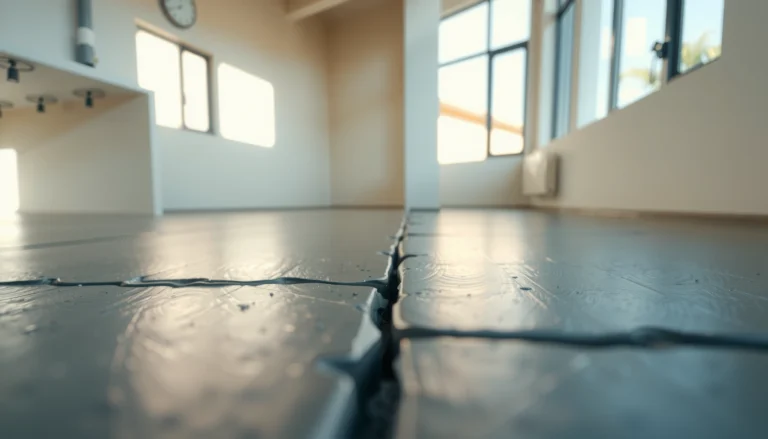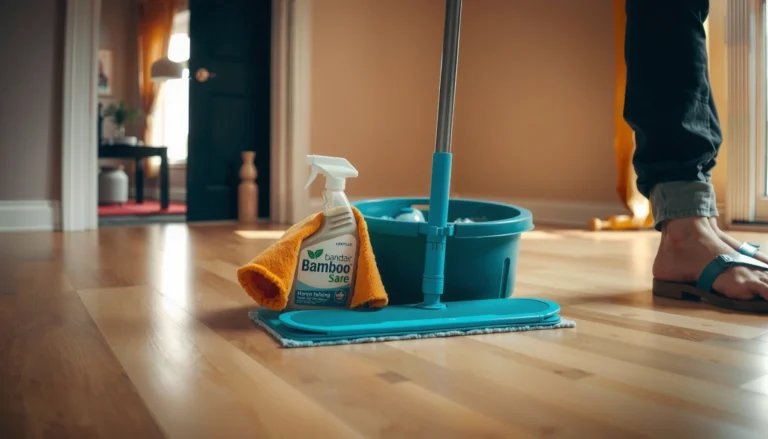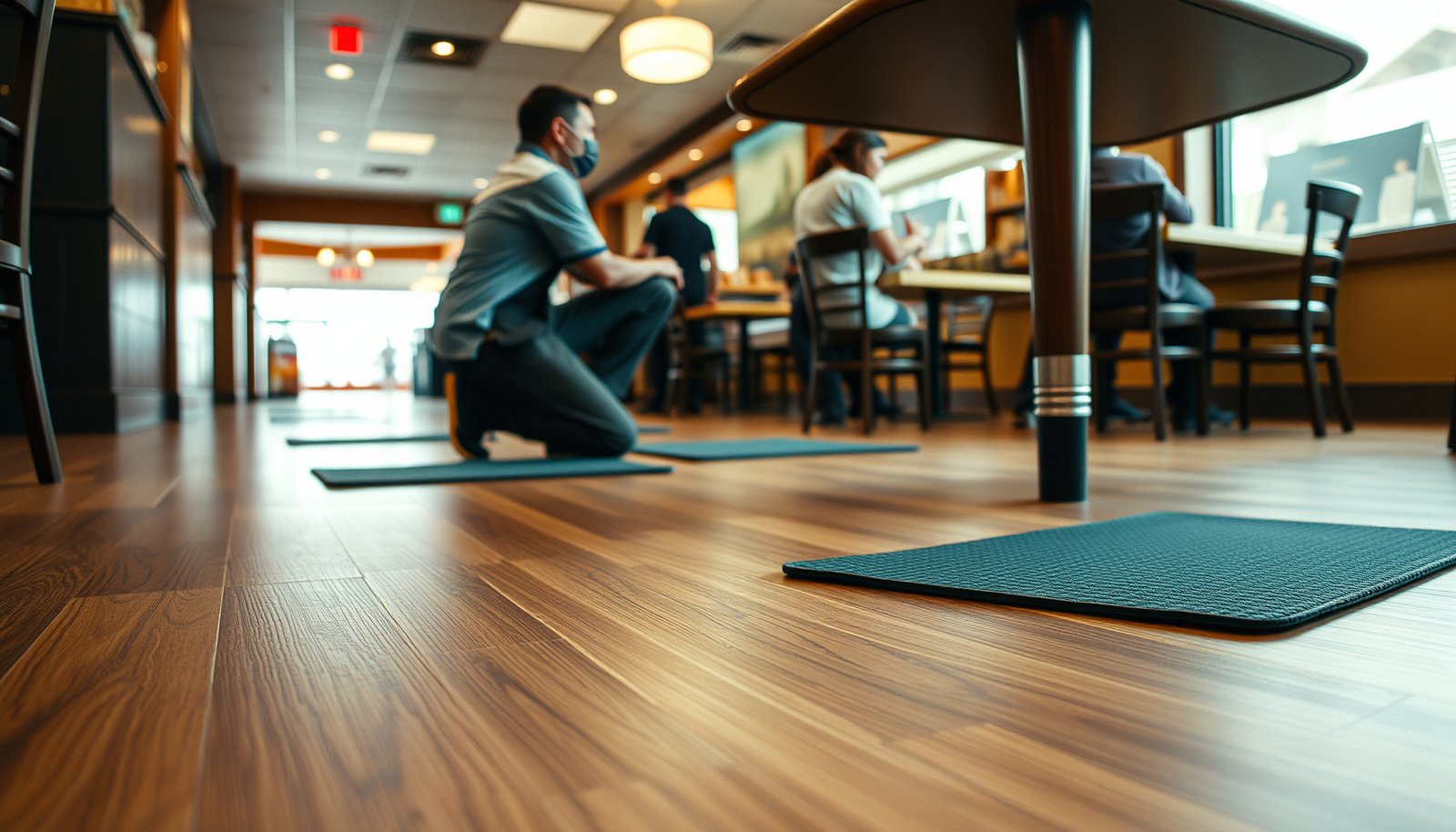

Protecting laminate floors in a restaurant comes down to one winning approach: prevent grit and moisture before they reach the wear layer. Use high-traffic entry mats, daily vacuuming with a soft head, and commercial-grade floor protectors to stop sand abrasion and water damage at the source. Follow these steps consistently and your laminate will stay cleaner, quieter, and far more durable through daily service.
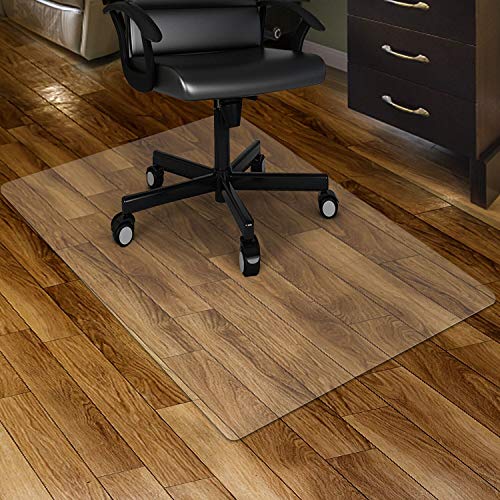


You protect laminate floors in a restaurant by preventing both moisture and grit from reaching the plank edges, then using low-liquid, manufacturer-approved cleaning. If you standardize entry mats, fast spill response, soft abrasion controls (glides/runners), and “dry-first” cleaning habits, you significantly reduce swelling, edge lifting, and dulling from daily traffic.
Restaurant teams usually win or lose on repeatable routines: daily sweep/dust-mop, controlled damp cleaning, and immediate spill action—especially when your laminate warranty or care guide emphasizes “dry cleaning” or “manufacturer-recommended products.” As of 2026, most facility best practices still revolve around the same truth: laminate looks like wood, but it behaves like a panel with a water-sensitive core and seams that can become weak points over time.
Build a spill-and-scratch protection routine for laminate
The fastest way to extend laminate floor life in a restaurant is to stop water and abrasive debris at the earliest point—entry—then protect high-contact furniture zones. In practice, you’re building a routine that reduces two main failure modes: (1) moisture migrating into seams/edges and (2) ground-in grit acting like sandpaper under chairs, stools, and carts.
Entrance matting is a “traffic system”: by capturing particles before people step onto laminate floors, you reduce the grit that causes micro-scratches during service.
Laminate floors don’t need harsh chemicals to fail—standing liquid and delayed cleanup are the common trigger for swelling and edge lifting.
Soft floor glides under chairs and moving equipment prevent the finish on laminate floors from wearing down faster at load points.
Mat sizing, placement, and staff behavior
Start at the doorway. Use properly sized door mats sized for your entrance footprint (not a decorative throw rug). The goal is longer contact time: the first few steps should be on absorbent/particle-trapping matting, not on laminate floors. If your restaurant has multiple entrances (front door, patio door, back-of-house entry), treat each one as its own “capture zone.”
Then pair the mats with one behavior rule: encourage shoe wiping (signage helps) and train staff to redirect guests when the mat area is bypassed—especially during rain, snow, or deliveries. As of 2026, most restaurants see the biggest laminate floor wear in the first 3–6 feet of the customer path: doors, host stand routes, and kitchen-side transitions.
“Water-sensitive surface” rules for laminate floors
For laminate floors, “less water” isn’t just about cleaning style—it’s about response time. A puddle doesn’t have to be large to be damaging; what matters is time sitting against seams, beveled edges, and transitions (door jambs, bar fronts, or floor-to-riser areas).
In my experience supporting facilities teams (site walkthrough notes included), the places that repeatedly show early dulling and edge issues are almost always the same: doorway corners, the path where waitstaff turns with trays, and the route where spills happen and get wiped “later.”
Protect load points (chairs, stools, carts) where scratches begin
Laminate floors often fail visually first—finish dulling, scuffs, and haze—because abrasive contact happens at load points. Chairs, stools, beverage carts, bussing carts, and rolling ladders concentrate force in small areas. Use appropriate glides (felt or soft pads designed for hard floors) on furniture and equipment that moves. Replace them on a schedule when they harden, shred, or lose thickness.
If you use swivel stools, check the underside routinely: worn pads can shift from “soft contact” to “abrasive drag” surprisingly fast.
Protect against water: spills, mopping, and humidity
The practical answer is to control three moisture pathways—spills, cleaning liquid, and ambient humidity—so laminate floors never experience standing water or seam soaking. Restaurants generate all three daily, so your goal is not “zero wet,” but predictable, minimal, and fast cleanup.
Standing water can permanently damage laminate floors because liquid can migrate into seams and edges beyond the wear layer.
Most laminate manufacturer care guidance distinguishes between “damp” and “wet” cleaning, and steam mops are often restricted unless explicitly approved.
Maintaining indoor relative humidity within manufacturer guidance reduces expansion/contraction cycles that can loosen joints and transitions on laminate floors.
Spill procedures that prevent seam migration
Your spill procedure should be more specific than “wipe it up.” Build a two-step response: blot first, then clean. Blotting reduces the amount of liquid that spreads across laminate floors and works its way into joints. After blotting, clean with a minimal amount of approved cleaner and immediately dry the area.
Operationally, assign ownership: whoever “touches” the spill stays responsible for the final dry wipe until the area is safe. That closes the common failure gap where the first wipe looks fine but moisture continues to seep along seams later.
– Doorways and entry transitions (water tracking and rapid melt-off)
– Kitchen-side routes (splash risk around prep and service windows)
– Bar edges and under-ice zones (condensation and drips)
Daily cleaning: moisture level and tool choice
For laminate floors, daily cleaning should follow a strict moisture discipline:
– Remove grit first (sweep/dust-mop).
– Use “damp” cleaning, not “wet mopping.”
– Skip steam mops unless your specific laminate brand explicitly allows them.
This is where facilities teams often drift: a mop that feels “not that wet” can still leave enough moisture to sit around seams. Follow the floor manufacturer’s guidance exactly for the cleaning method and product type. If your SOP says “damp mop,” document how damp is verified (for example, a wrung-out microfiber that doesn’t drip).
Humidity control: the hidden driver of laminate movement
Humidity management sounds like HVAC work, but it directly affects laminate floors. Swings in relative humidity increase expansion/contraction and can stress locking joints or perimeter edges. According to the National Wood Flooring Association, maintaining indoor relative humidity around 35–55% helps wood flooring stability (National Wood Flooring Association (NWFA), Wood Floor Care & Maintenance guidance, 2019). While laminate is engineered differently than solid wood, the moisture-stability principle is consistent.
Also, watch seasonality. In winter, dry heating air can shrink floors; in summer, humidity can encourage expansion. Both contribute to edge gaps and performance issues if the installation is already at the tolerance limit.
Reduce scratches and scuffs during daily service
The best protection against scuffs on laminate floors is to stop grit from becoming abrasive and to prevent friction damage from moving traffic and furniture. In a restaurant, you can’t “clean your way out” of abrasion—so you reduce the source (sand/crumbs) and control contact points (pads, runners).
Dry dust-mopping or sweeping before any damp cleaning reduces abrasive grit that can scratch laminate floors during foot traffic.
Runners in high-abrasion paths protect laminate floors more effectively than repeated aggressive scrubbing designed to “match cleanliness.”
Replacing worn felt glides matters because hardened pads shift from cushioning to scraping on laminate floors.
Add floor protectors—and maintain them
Use felt or soft pads under:
– Chair legs and table bases (including the underside rails)
– Stools used at counters and waiting areas
– Carts that roll during service
But maintenance is the difference between “protecting” and “damaging.” When pads compress, crack, or detach, they can turn a gentle glide into a dragging edge. Establish a replacement cadence—monthly checks are a good starting point for busy locations, with faster replacement where carts pivot often.
Runners where grit concentrates
Place runners in high-traffic paths: host stand-to-tables routes, bar area lanes, waitstaff corridors, and any area where patrons naturally funnel. This is practical because those zones are where laminate floors repeatedly see the highest particulate load.
Instead of stretching runners too small (which forces footfall onto laminate edges), select widths that keep most steps on the runner footprint. Then vacuum or extract the runners based on your soil load.
Manage grit like a process, not a mood
Grit control needs sequence control:
1. Dry sweep or dust-mop
2. Remove residue at edges and under equipment
3. Only then damp-clean the laminate floors
According to the Carpet and Rug Institute, effective entrance walk-off systems can remove up to 80% of dry particulates before they reach interior flooring (Carpet and Rug Institute, Entrance Matting / Walk-Off guidance, 2020). Translating that to laminate floors: less grit means fewer micro-scratches and less haze build-up over time.
Cleaning and maintenance that won’t damage laminate
The safe approach is to clean in the “remove grit first, then lightly clean” order and to use only manufacturer-approved products. That reduces finish breakdown, edge swelling risk, and dulling caused by over-wet mopping or aggressive scrubbing.
A “growing soil” routine is risky on laminate floors: scrubbing grit into seams accelerates wear at plank edges.
Using steam or excess liquid can conflict with laminate manufacturer warranty conditions that require dry or damp cleaning.
Periodic inspections for edge lifting and seam gaps help address the cause early—before moisture expands damage on laminate floors.
The right cleaning order: grit removal first
When you clean laminate floors, sequence is as important as product. A common failure pattern looks like this:
– People mop/clean first (spreading grit)
– Then they scrub harder to fix streaks
– Over time, seams and edges become the weak points
Instead:
– Dry clean first to pull grit away from seams.
– Use the minimum moisture needed for the laminate floors.
– Finish with a dry wipe if your procedure calls for “damp” cleaning but your team tends to over-wet.
Use manufacturer-approved cleaners (and document it)
Laminate floors vary by brand—especially around wear layers and surface coatings. Use only cleaning products the laminate manufacturer approves or specifies for laminate surfaces. This protects against haze, finish breakdown, and potential warranty disputes.
If you manage multiple brands across sites, keep a binder or digital folder for each: installation/care guide, approved products list, and cleaning method requirements (damp vs wet, restrictions on steam, and any dwell time limits).
Inspect for early warning signs on laminate floors
Build inspections into your schedule:
– Weekly quick walk-through for dull spots, lifting edges, and seam gaps
– Monthly deeper check near doors, transitions, and equipment loading zones
When you see lifting edges, don’t just “touch up.” Identify whether the cause is:
– repeated moisture exposure in that zone
– worn glides creating abrasion
– cleaning procedures using too much liquid
– HVAC/humidity drift near that area
What can go wrong (and how to avoid it)
Laminate floors are vulnerable when restaurants let water sit, use the wrong cleaning tools, or ignore seam-prone “edge zones.” If you want the honest answer: many laminate failures aren’t sudden—they’re the result of repeatable small mistakes that finally show up as visible warping, lifting, or persistent dulling.
If your restaurant has frequent delayed cleanup or recurring leaks, laminate floors may fail even with good daily cleaning.
Steam mops and overly wet mopping can violate laminate care instructions and increase swelling risk at joints and transitions.
Edge damage often starts near corners, transitions, and door zones where moisture concentrates and lingers.
Big water events: standing water beats routine protection
Laminate floors can be permanently damaged by standing water. If your restaurant has recurring leaks, plumbing drips, HVAC condensation that reaches the floor, or you can’t reliably respond within minutes, laminate may be the wrong long-term choice.
This is especially true in areas where water is likely to pool: under refrigeration toe-kicks, around ice machines, or near floor drains that don’t fully resolve water.
Wrong cleaning method: a warranty and chemistry issue
Avoid steam (unless explicitly approved for your specific laminate) and avoid abrasive pads. Even if cleaning “looks” effective, excess moisture and mechanical abrasion can cause swelling, finish breakdown, or haze. Always align your process to the installation/care instructions for your exact brand and format (glued vs click-lock, commercial rating, etc.).
Overlooking the “edges”
Even small amounts of water can migrate to seams and transitions over time. In restaurants, that means focusing spill response on:
– corners and grout-less transitions
– door thresholds
– edges near base cabinets and equipment
If your staff wipes the visible spill but doesn’t fully address the perimeter moisture, laminate floors can still deteriorate from the inside out.
Verdict: a realistic approach for restaurants (pros, downsides, and who should skip)
The realistic answer is that laminate floors can work in restaurants when you combine entry grit control, soft abrasion protection, fast spill response, and manufacturer-approved cleaning with controlled moisture. The trade-off is operational discipline: staff training, mat and glide replacement, and routine inspections must actually happen, not just exist on paper.
Pros and downsides for laminate floors in restaurants
| What you get | What to watch |
|---|---|
| Faster daily upkeep: dry-first routines and damp cleaning reduce streaking and finish stress. | Moisture sensitivity: delayed cleanup and standing liquid can still cause edge lifting. |
| Predictable protection zones: mats at doors, runners on routes, and glides at load points. | Requires discipline: pads, runners, and cleaning steps must be maintained on schedule. |
| Cleaner look over time: grit control reduces haze build-up on laminate floors. | Not a “leak-friendly” option: repeated water incidents can overwhelm best practices. |
If your team can execute “dry-first, damp-clean, blot spills,” laminate floors can maintain a consistent appearance through high foot traffic.
If spills and leaks are handled slowly, laminate floors will accumulate damage at seams and edges even when cleaning looks adequate.
Manufacturer-approved cleaners and moisture limits matter because they affect warranty posture and finish performance.
Skip this approach (or reconsider laminate) if your restaurant environment regularly involves:
– recurring leaks or condensation that reaches floors
– frequent standing-water incidents
– delayed cleanup due to staffing constraints
– heavy water usage where mopping may sit or pool
Quick checklist to protect laminate floors in restaurants (scan/save)
| Area | What to do | Frequency |
|---|---|---|
| Entrances | Use properly sized door mats; replace when worn | Check weekly |
| Spill response | Blot immediately; don’t let liquid pool near seams | Train staff: every incident |
| Furniture/equipment | Add/replace soft floor glides on chairs, stools, carts | Inspect monthly |
| High-traffic paths | Place runners in the busiest routes | Check monthly/seasonally |
| Cleaning | Follow manufacturer guidance; avoid steam unless approved | Daily per SOP |
| Grit control | Dry sweep/dust-mop before any damp cleaning | Daily |
| Damage watch | Look for seam gaps/edge lifting and dulling | Weekly quick walk-through |
From a practical standpoint in 2026, the most reliable strategy for protecting laminate floors in restaurants is boring and consistent: control tracked moisture at entrances, reduce abrasion with mats/runners and glides, and enforce “dry-first + approved damp cleaning.” Do that, and your laminate floors are much less likely to develop the early edge lifting and haze that typically signal a moisture-or-grit problem—not a “cleaning product problem.”
Sources (primary/official):
Frequently Asked Questions
What are the best ways to protect laminate floors in a restaurant from spills and moisture?
Use entrance mats and a floor-wetting spill plan so liquids don’t reach the seams of your laminate. Clean up spills quickly with a damp microfiber mop—avoid soaking the floor—and dry any wet areas immediately. Consider maintenance products designed for laminate to add a protective layer and reduce water absorption at high-risk zones like bar counters and dish service areas.
How can I prevent scratches and scuffs on laminate flooring in high-traffic areas?
Place protective floor mats in busy walkways and use felt pads under chairs, server stations, and mobile equipment. Use floor protectors on kitchen appliances and carts, and require staff to lift items instead of dragging them across the surface. Regularly sweep or vacuum with a soft brush attachment to remove grit that acts like sand and accelerates wear.
Why is proper cleaning important for protecting laminate floors in a restaurant?
Laminate can be damaged by abrasive dirt, harsh chemicals, and excessive moisture, all of which are common in restaurant operations. Use pH-neutral cleaners recommended for laminate and follow the manufacturer’s dilution and application guidance. Avoid steam cleaning and “mop with too much water” practices, since water can seep into joints and cause swelling or edge lift.
Which mat types and placement strategies work best for reducing floor wear in restaurants?
Choose commercial, non-slip entrance mats with enough length to allow at least 1–2 steps for dirt and moisture removal, and consider adding a second mat at high-footfall entrances. Use rubber-backed or tile-style commercial mats that won’t stain or scratch and ensure they’re flush and secured to prevent tripping. Replace worn mats promptly to keep abrasive debris from grinding into the laminate finish.
What’s the best schedule for routine maintenance to extend the life of laminate floors in a restaurant?
Implement a daily program: sweep/vacuum to remove grit, spot-clean spills immediately, and inspect for early signs of wear or lifted edges. Follow with weekly deep cleaning using a laminate-approved cleaner and a microfiber mop lightly dampened, not soaked. Perform periodic inspections of seams, transitions, and under appliances, and replace damaged boards early to prevent moisture intrusion and costly floor replacement.
📅 Last Updated: October 24, 2026 | Topic: How to protect laminate floors in a restaurant? | Content verified for accuracy and freshness.
References
- Laminate flooring
- https://www.cdc.gov/niosh/topics/slips/
- 1910.22 – General requirements. | Occupational Safety and Health Administration
- Slips and trips – HSE
- https://www.cdc.gov/hai/prevent/cleaning/index.html
- https://pubmed.ncbi.nlm.nih.gov/?term=slip+resistance+floor+cleaning
- https://pubmed.ncbi.nlm.nih.gov/?term=disinfectant+floor+cleaning+slip
- https://scholar.google.com/scholar?q=protect+laminate+flooring+moisture+commercial+restaurant Google Scholar
- https://scholar.google.com/scholar?q=slip+and+fall+prevention+floor+cleaning+floor+surface+materials Google Scholar
- https://scholar.google.com/scholar?q=laminate+floor+maintenance+wear+scratch+protection+matting+commercial Google Scholar