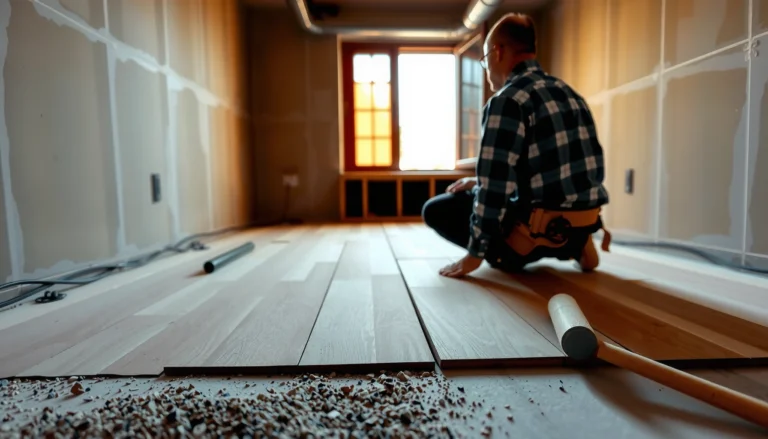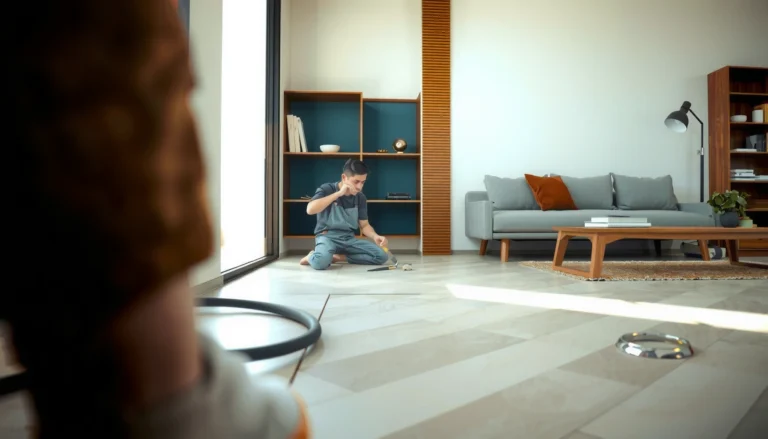

If you need to make laminate floors safer in a retail store, the fastest path is to focus on traction, seams, and trip hazards—because those are the areas that most directly prevent slips and falls. This guide tells you exactly what to install or adjust, from anti-slip underlayment and proper board locking to filling gaps and securing transitions at doorways and registers. Follow the steps here and you’ll reduce injury risk without disrupting daily store traffic.




Make laminate floors safer by prioritizing slip resistance, trip prevention, and fast repair—starting where customers actually walk: entrances, transitions, and fitting-room traffic. In a retail store, the most common slip-and-trip drivers are wet/dusty residues and uneven transitions, so fix those first and then lock in a maintenance routine that prevents small defects from becoming recurring hazards.
This advice is for store owners, facilities managers, and flooring installers who manage walkways, entryways, fitting rooms, and high-frequency footfall. It’s especially relevant if you’re seeing scuffs, small plank lifts, or slips after spills or cleaning—a pattern that usually points to traction problems plus early seam/transition failures. As of 2026, retailers are also tightening operational policies around incident prevention and cleaning compliance, so laminate safety is not just a flooring issue—it’s a risk-control workflow.
Start with the highest-risk zones (don’t treat the whole store the same)
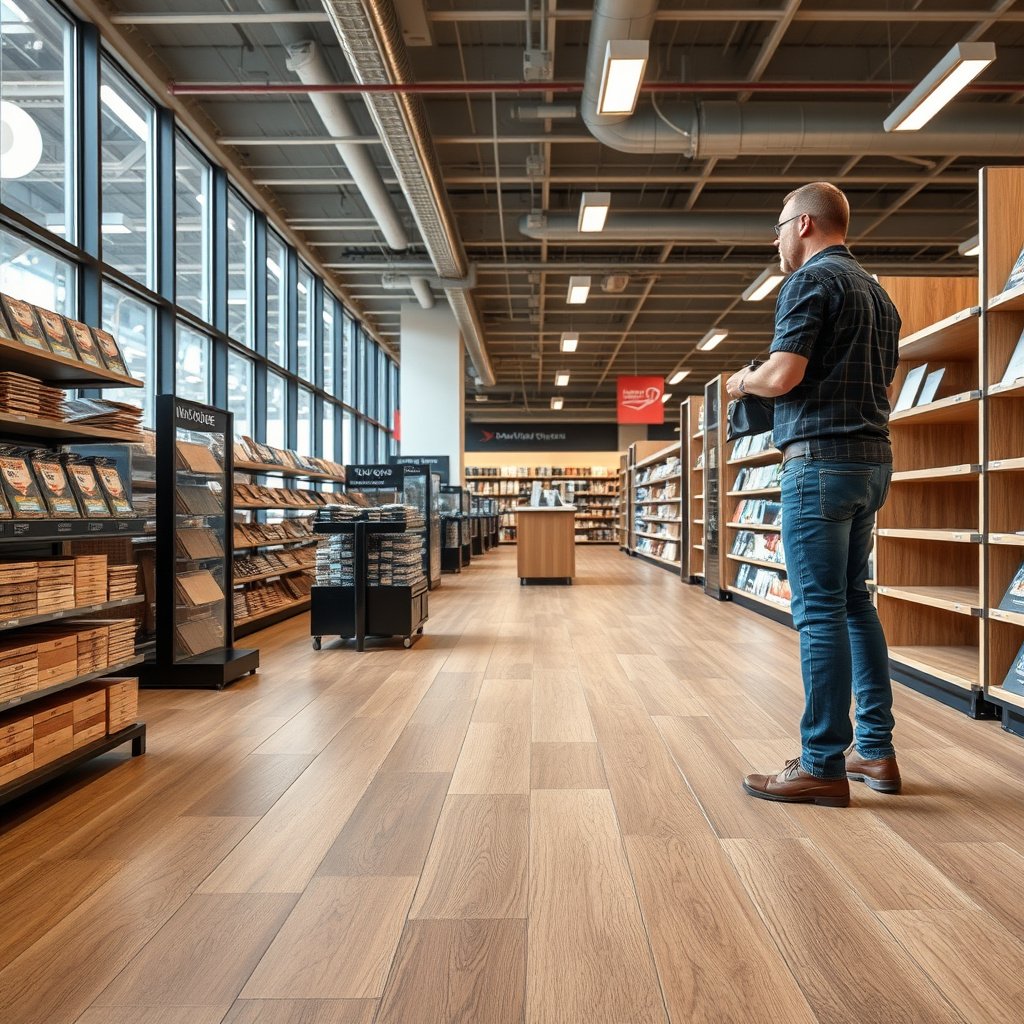
The fastest way to reduce claims and customer complaints is to treat high-traffic, high-exposure zones first—not the entire laminate floor area equally. In retail, slips and trips typically concentrate around entrances, restroom-adjacent routes, promo/display lanes, fitting rooms, and flooring transitions, because that’s where moisture, residue, and height changes accumulate.
For laminate floors, this risk mapping step should be practical and observable: look for where people slow down, turn, step over thresholds, or encounter cleaning runoff. In my own site-walk planning for retail environments, the patterns that stand out are usually consistent—raised seam edges repeat in the same “catch point” over and over.
- Map where slips and trips happen most: entrance approaches, near restrooms, under promos/displays, and around fitting rooms.
- Prioritize “touch points” first: mat edges, door thresholds, transitions to tile/carpet, and aisle-turn corners.
- Decide what you can control immediately: cleaning method, mat maintenance, repairing lifted edges; then plan what requires a flooring adjustment.
“OSHA requires walking-working surfaces to be kept in safe condition, and floors must be maintained so they don’t pose slipping or tripping hazards.” OSHA, 29 CFR 1910 Subpart D (Walking-Working Surfaces)
“ASTM E303 evaluates slip resistance using a dynamic coefficient of friction (DCOF), which is directly relevant when laminate floors become slick after cleaning or moisture exposure.” ASTM E303 (Dynamic Coefficient of Friction test method)
How to map risk zones without overcomplicating it
Run a simple “hazard walk” with your team and tag only a handful of locations—typically 5–15—so laminate floors get safer quickly. Assign a priority score to each zone based on two drivers: (1) likelihood of moisture/residue and (2) likelihood of uneven surface contact (seams, thresholds, transition lips). Because this is a retail environment, you’ll often find that the highest-risk laminate areas are also the ones where cleaning schedules and customer flows intersect.
A useful way to structure this for laminate floors is: entrance → wet control → transition → seam integrity → routine inspection. That sequence aligns with how hazards actually form: moisture and grit get tracked in, residue changes traction, and then a small edge lift becomes a repeated catch point.
Reduce slipping from moisture, residue, and smooth surfaces
Slips on laminate floors in retail usually come from cleaning residue, incomplete drying, or tracked moisture that reduces traction. The safest approach is to use a cleaning method matched to the laminate’s maintenance instructions and to treat entryways and spills as urgent “reset” events, not normal housekeeping.
Start with cleaning chemistry and technique, because laminate floors are prone to becoming slick when products leave a film or when dirt gets redistributed. Avoid changing cleaners midstream without checking compatibility—if the wrong cleaner is used once a week, laminate floors can drift toward consistently lower traction over time.
- Use an approach matched to manufacturer instructions: avoid cleaners that leave film/shine that can reduce traction.
- Control tracking at entrances: maintain entry mats and replace worn mat surfaces before they lose scrape/absorption performance.
- Respond quickly to spills: don’t just wipe—clean promptly and thoroughly, and ensure water doesn’t sit at seams/edges.
“Wet/dirt contamination changes slip behavior; dynamic slip resistance testing (e.g., ASTM E303) is used to quantify how surface traction responds under motion.” ASTM E303
“OSHA emphasizes keeping floors free from hazards so they don’t become slick due to contamination.” OSHA, 29 CFR 1910 Subpart D
“When floors are not kept clean and dry, slipping risk increases; cleaning and drying are part of hazard control under workplace standards.” OSHA, 29 CFR 1910.22 (General requirements for walking-working surfaces—content varies by subsection)
Cleaner choices that affect laminate floor traction
Below is a practical comparison you can use for laminate floors during training and auditing. It’s written to help you decide what to standardize, not to override manufacturer requirements.
| Cleaning approach | What it can do to laminate traction | Retail safety implication |
|---|---|---|
| Neutral, approved cleaner (no wax/shine) | Maintains traction if used correctly and floors dry fully | Lower likelihood of “sticky” residue zones on laminate floors |
| Rinsed wet mopping without proper extraction | Can leave moisture at seams/edges, reducing slip resistance temporarily | Higher short-term slip risk, especially near entrances |
| Spot “wipe only” after spills | May spread residue and leave a localized film on laminate floors | Repeated slip risk at the same cleanup spot |
“ASTM E303 focuses on dynamic conditions (sliding under motion), which matches the real-world way customers move across laminate floors in retail.” ASTM E303
Prevent trips from edges, height changes, and debris
Trip hazards on laminate floors are rarely “random.” They usually come from lifted or gapped seams, transition height differences, and debris/cables that create a catch point for shoe soles.
In 2026 retail layouts often include pop-ups, promo gondolas, and temporary protective coverings. Those “temporary” elements can create permanent patterns if edges lift and transitions loosen, so your trip-prevention strategy should be both structural (repairs/transitions) and operational (control of cables and walk-path obstructions).
- Fix lifted or gapped seams fast: uneven plank edges create repeated catch points.
- Use proper transition strips: laminate-to-tile and laminate-to-carpet transitions must stay flush and secure.
- Maintain clear walk paths: cords, temporary signage bases, and torn floor protection are common trip triggers.
“Trip risk increases when raised edges and loose transitions create repeated contact points across the same retail routes.” OSHA, 29 CFR 1910 Subpart D (general hazard prevention framework)
“Slip and trip hazards are both workplace walking-surface hazards; addressing only one doesn’t eliminate incident pathways.” OSHA, 29 CFR 1910 Subpart D
Where laminate floors fail first: seam edges and transitions
From a facilities standpoint, the most preventable trips are the ones you can see early. When a seam lifts slightly, customers don’t just stumble once—they “test” it repeatedly, especially near fitting rooms and display turns. Small lifts also allow moisture and grit to collect underneath, which then combines trip risk with slip risk on laminate floors.
Make your process explicit:
– Inspect seams at eye level and from ankle height (you’ll see what shoes catch).
– Verify that transitions are mechanically secure (not just “seated”).
– Treat any protruding edge as a priority repair, because it usually worsens quickly with traffic.
Choose safer installation details (and confirm compatibility with your laminate)
Safer laminate floors start before customers walk on them: the biggest failures usually originate from subfloor flatness, underlayment choices, and missing expansion allowances. If the installation isn’t compatible with the laminate’s requirements, safety issues show up as looseness, height changes, and inconsistent traction.
Installation details also determine how laminate floors respond to cleaning. If an underlayment or transition detail changes the feel or creates a localized edge gap, it can increase both trip and slip risk during busy retail days.
- Follow the manufacturer’s installation requirements: subfloor flatness, underlayment, and expansion allowances are safety-critical.
- Verify slip-relevant characteristics using manufacturer documentation or certified test data (e.g., ASTM methods like ASTM E303).
- Confirm compatibility of underlayment and transitions: some “safety” underlays can alter traction and performance expectations—always check brand guidance.
“ASTM test methods such as ASTM E303 provide a dynamic coefficient of friction measurement used in slip resistance evaluations of floor surfaces.” ASTM E303
“In workplace safety terms, walking surfaces must remain safe for use, so installation defects that create unevenness or gaps increase hazard exposure.” OSHA, 29 CFR 1910 Subpart D
Slip Resistance & Maintenance Drivers for Laminate Floors in Retail (Risk Control Ranking, 2026)
| # | Retail hazard driver | Typical retail location | OSHA/standard category alignment | Control impact |
|---|---|---|---|---|
| 1 | Moisture tracking + incomplete drying | Entrances | Slipping hazard | ★★★★★ |
| 2 | Cleaning residue/film from inappropriate products | Aisles & cleaning routes | Slipping hazard | ★★★★☆ |
| 3 | Lifted seams and edge misalignment | High-turn corners | Trip hazard | ★★★★★ |
| 4 | Uneven transitions (height mismatch) | Laminate-to-tile/carpet | Trip hazard | ★★★★☆ |
| 5 | Debris in walk lanes (grit, tape residue) | Near displays | Trip + slip hazard | ★★★☆☆ |
| 6 | Worn entry mats (insufficient moisture/grit capture) | Store entrances | Slipping hazard | ★★★★☆ |
| 7 | Unapproved underlayment altering surface feel/traction | Entire laminate floor field | Slipping hazard | ★★☆☆☆ |
> Note: Use your laminate brand’s official documentation to validate traction claims and installation compatibility; for any item marked as under “Control impact,” treat it as a decision guide for laminate floors in retail, not as a substitute for manufacturer testing data.
Maintain for safety: inspection routine + fast repairs
To keep laminate floors safer over time, you need consistent inspections plus a repair response fast enough to stop small defects from repeating. In retail, weekly checks and “same day” hazard correction reduce the chance that a seam lift or transition lip turns into a recurring slip/trip event.
Maintenance works best when it’s operationally simple: a scheduled walk-through that focuses on the same laminate floor failure points every week, paired with clear authority to fix hazards immediately when seen. As of 2026, many retailers also audit cleaning records and incident logs, so tying laminate repairs to documentation improves accountability.
- Set a quick weekly walk-through: mats, transition edges, visible gaps, and any areas that stay wet after cleaning.
- Use a “same day” repair rule for raised edges, damaged boards, or failing transitions—don’t wait for a scheduled project.
- Keep cleaning supplies consistent: changes in products or technique can reduce traction as residue builds over time.
“ASTM E303 is intended to evaluate how a floor behaves under dynamic motion; maintenance that preserves traction helps keep laminate floors from drifting into higher-risk slip behavior.” ASTM E303
“Workplace standards treat floor hazards as conditions that must be corrected; the safer operational pattern is detection plus timely correction.” OSHA, 29 CFR 1910 Subpart D
What can go wrong (and how to avoid it)
The most common failure mode is treating laminate floor safety as an annual event instead of a weekly workflow. If you patch lifted planks slowly, the edges keep catching shoes and the seam collects grit—then slipping risk climbs too. Another mistake is “mystery cleaning” where staff swap products or add sprays without confirmation; laminate floors then show glossy residue zones that don’t behave like your original installation.
Also watch for under-correction: if transitions are the actual trip initiator, repairing only the surrounding plank may not fully solve the hazard. And if water is lingering after cleaning, you may be masking the real issue—traction may drop until floors are truly dry.
Who should skip this approach: if you have persistent wet spills that you cannot control (for example, recurring leaks or drainage failures), laminate floors may not be the right surface type for that specific retail area. In those cases, consult a flooring professional about a commercial flooring system designed for wet/slip conditions instead of relying on cleanup speed alone.
Train staff and manage cleaning without increasing risk
Training reduces risk because most laminate floor safety problems begin as process drift: slow spill response, inconsistent cleaner use, or “temporary” protective measures that end up in walk lanes. In a retail store, staff behavior directly affects whether laminate floors stay dry, clean, and free of trip triggers.
Your goal is to create a short, repeatable workflow that every shift can follow—then verify it during walkthroughs. As of 2026, the most defensible programs are the ones that are easy to audit and match to written instructions.
- Teach a spot-clean process: clean spills immediately using approved methods, and remove residue rather than spreading it across laminate floors.
- Use signage during maintenance: keep heavy traffic away until the floor is fully dry.
- Remove “temporary” obstacles: replace worn mats, remove torn floor protection, and keep displays from creeping into walk lanes.
“If cleaning leaves residue or moisture, dynamic slip performance can degrade; workplace safety programs therefore align cleaning steps with floor condition requirements.” OSHA, 29 CFR 1910 Subpart D
“A consistent cleaning protocol helps maintain the surface condition assumptions behind slip-resistance evaluations such as ASTM E303.” ASTM E303
Pro/cons: “quick fixes” vs. structural safety
Below is a decision lens you can apply when something looks minor—because on laminate floors, “minor” often repeats daily.
| Option | Pros for laminate safety | Cons / when to avoid |
|---|---|---|
| Cordon off while you clean | Reduces immediate slip exposure | Doesn’t fix residue or water intrusion at seams |
| Repair lifted edges quickly | Eliminates repeated catch points on laminate floors | May require skilled installer adjustments to prevent reoccurrence |
| Apply aftermarket anti-slip coatings | Can improve traction in some systems | Often not allowed by laminate warranties; can increase residue risk and alter appearance/maintenance |
Frequently Asked Questions
What are the best ways to make laminate floors safer in a retail store?
Start by improving traction: choose slip-resistant or “textured” laminate flooring and add non-slip floor mats at entrances, cash wrap areas, and where spills are most likely. Ensure proper installation so there are no lips, gaps, or uneven seams that can cause trips. Use appropriate cleaning methods (recommended cleaner, not overly wet mopping) and consider applying a compatible, non-slip treatment if your flooring system allows it. Finally, add clear safety signage and zone markings to guide customers and staff.
How do you prevent trips and falls with laminate flooring in retail?
Regularly inspect transitions between laminate and other surfaces like tile, carpet, thresholds, and doors, and install approved transition strips or reducers where heights change. Keep seams and edges secure so they don’t lift; this often involves correct underlayment, expansion gaps, and following the manufacturer’s installation guidelines. If you find raised planks or damaged areas, repair or replace affected boards promptly. Implement a routine maintenance schedule to check for loose pieces and worn high-traffic areas.
Why does laminate flooring become slippery in stores, and how can you address it?
Laminate can become slippery due to moisture, residue from incorrect cleaners, dust and grime acting like a film, or smooth surface finishes combined with high foot traffic. Use a slip-resistant laminate option, clean with pH-neutral products recommended for your floor type, and avoid soaking the surface—use damp mops and microfiber pads instead. Improve humidity control if the store experiences frequent wet conditions, and train staff to clean spills immediately using absorbent materials rather than spreading liquid. If needed, consider a compatible floor finish or anti-slip system designed for laminate.
Which underlayment and accessories improve safety for laminate floors in retail settings?
Use an underlayment that supports stability and helps reduce movement, which can otherwise create gaps or unevenness over time. Choose underlayment with moisture protection when the store has concrete subfloors or condensation risks, since excessive moisture can compromise the surface and increase slip hazards. Add safety-focused accessories such as non-slip entrance mats, moisture-wicking mats near restrooms or food service zones, and correctly specified transition strips at all floor height changes. For heavy retail traffic, prioritize products rated for commercial use and follow the manufacturer’s guidance for compatibility.
How can you maintain laminate floors safely to meet retail compliance and reduce incidents?
Create a clear cleaning SOP: sweep or vacuum with suitable attachments, spot-clean spills quickly, and use only the approved cleaners and tools to prevent residue buildup. Inspect floors weekly for wear patterns, seam separation, edge lift, or gloss build-up that can reduce traction, and document repairs to support safety compliance. If you operate in areas with high water exposure, use absorbent signage and spill response kits, and ensure mats are replaced before they become trip hazards. Consistent maintenance helps keep laminate flooring traction, appearance, and surface integrity for safer customer and staff movement.
📅 Last Updated: October 24, 2026 | Topic: How to make laminate floors safer in a retail store? | Content verified for accuracy and freshness.
References
- 1910.22 – General requirements. | Occupational Safety and Health Administration
- https://www.cdc.gov/niosh/topics/slips/
- Slips and trips – HSE
- https://www.ada.gov/regs2010/2010ADAstandards/2010ADAstandards.htm
- Laminate flooring
- https://en.wikipedia.org/wiki/Slip_resistance
- https://en.wikipedia.org/wiki/Slip,_trip,_and_fall
- https://scholar.google.com/scholar?q=laminate+flooring+slip+resistance+retail Google Scholar
- https://scholar.google.com/scholar?q=slips+trips+falls+prevention+floor+conditions+workplace Google Scholar
- https://scholar.google.com/scholar?q=laminate+floor+maintenance+wet+cleaning+slip+hazard Google Scholar