
Maintain laminate floors in a retail store by using a tight routine: daily dry cleaning, prompt spill control, and entryway mats to stop grit before it grinds into the seams. If you follow the best practices below, you’ll prevent warping, scuffing, and dulling—three problems that most often shorten laminate’s life in high-traffic spaces. This guide answers how to keep your laminate looking new while protecting performance under constant customer flow.




Maintain laminate floors in a retail store by enforcing a strict cleaning routine, removing dirt grit before it abrades the wear layer, and addressing spills fast with minimal moisture. If you control walk-in debris, prevent puddles from sitting near seams, and protect high-traffic zones with mats and manufacturer-safe glides, your laminate will stay visually “new” for longer—especially in 2026’s high-volume retail environments.
Retail laminate has to handle constant foot traffic, rolling carts and shopping carts, and frequent spill risk (drinks, dust, packaging residue). For facility managers, store managers, and cleaning staff maintaining commercial flooring day-to-day, the goal is simple: keep grit from grinding into the finish and keep water from lingering at edges or transitions. This guide breaks down what to do daily, weekly, and when something goes wrong.
Daily cleaning routine for retail traffic

A consistent daily routine is the fastest way to prevent laminate damage in a store, because the biggest risk is abrasive grit repeatedly dragged across the surface. The practical approach is “dry first, spot second,” then make sure the entrance mat system is actually catching soil.
According to the Carpet and Rug Institute (CRI) walk-off guidance, a large share of indoor soil is tracked in from outside—often cited as up to 80%—which is why daily grit removal matters for laminate wear.
Laminate flooring is designed with a top wear layer, and grit acts like sandpaper; removing it first reduces micro-scratching that can dull the finish over time.
Dry-clean first (vacuum/sweep with soft attachments)
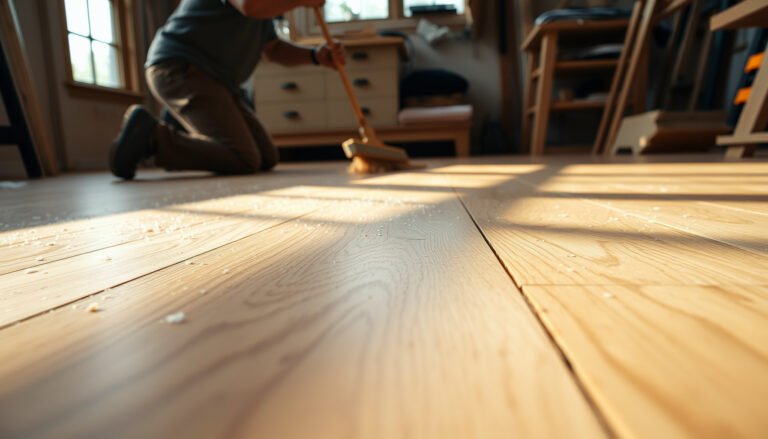
Dry-cleaning is not optional in retail settings—it’s the “damage prevention” step. Use a vacuum (upright or canister) with a soft brush roll setting, or sweep with a soft-bristle broom attachment. Avoid anything that can grind: stiff plastic bristles, metal edges on dusters, or tools that hit plank seams repeatedly.
If your store has areas with visible grit build-up—such as by stockroom doors, loading docks, or under promotional endcaps—create a short “hot zone” route for staff. This keeps abrasive particles from migrating deeper into the store floor.
Spot-clean immediately (scuffs, smudges, spills—same day)
Laminate can tolerate routine cleaning, but residue left to dry often becomes harder to remove and may require stronger chemicals or more aggressive scrubbing later. For best results in 2025–2026, train staff to treat spots the same shift they appear.
Use a microfiber cloth and a laminate-approved cleaner (or the specific product your flooring supplier recommends). Start with the least aggressive method that works, and avoid scrubbing in circles that can change surface gloss.
Keep entries controlled with entrance matting
Entrance matting is your first “line of defense” against grit. In a store, mats should be large enough to capture dirt before it spreads, and they should be maintained so they don’t become a debris source themselves.
Practical mat rules:
– Shake, vacuum, or replace mats on a schedule that matches your foot traffic (especially during wet seasons).
– Ensure mats are flat and secure—curling edges are both a trip hazard and a grit trap.
– Clean the mat backing and surrounding transition area, because dirt can accumulate under mat edges and then transfer back onto laminate when carts pass.
Quick data perspective: what “grit” is doing
Abrasion severity depends heavily on what kind of particles get tracked in. Quartz-based sand, for example, is much more abrasive than many soft dust types.
Abrasive Grit Found in Retail Foot Traffic (Hardness & Wear Priority)
| # | Grit / Particle Type | Typical Retail Source | Mohs Hardness | Abrasive Wear Priority |
|---|---|---|---|---|
| 1 | Quartz (sand) | Mall entrances, outdoor walkways | 7 | ★★★★★ |
| 2 | Feldspar dust | Concrete/stone traffic zones | 6 | ★★★★☆ |
| 3 | Aluminum oxide (industrial grit) | Retail near maintenance / back rooms | 9 | ★★★★★ |
| 4 | Calcite | Dry limestone dust areas | 3 | ★★☆☆☆ |
| 5 | Iron oxide (soil dust) | Parking lot tracking zones | 5–6 | ★★★☆☆ |
| 6 | Gypsum | Construction/yard tracked dust | 2 | ★☆☆☆☆ |
| 7 | Talc (fine dust) | Packaging/processing residues | 1 | ★☆☆☆☆ |
Handle moisture and spills without damaging seams
Preventing moisture from sitting on laminate seams is usually more important than the cleaning product you use. In retail stores, spills are common—but the “hidden damage” happens when water penetrates edges, transitions, or imperfectly protected joints.
According to U.S. geological references, quartz hardness on the Mohs scale is 7, illustrating why tracked grit quickly abrades laminate finishes when it’s repeatedly ground in.
For slip safety on hard floors, ADA guidance commonly references a minimum coefficient of friction (COF) threshold of 0.42 for level interior surfaces, which is why leaving wet residue is a risk.
Wring out mops/rags (lightly damp only)
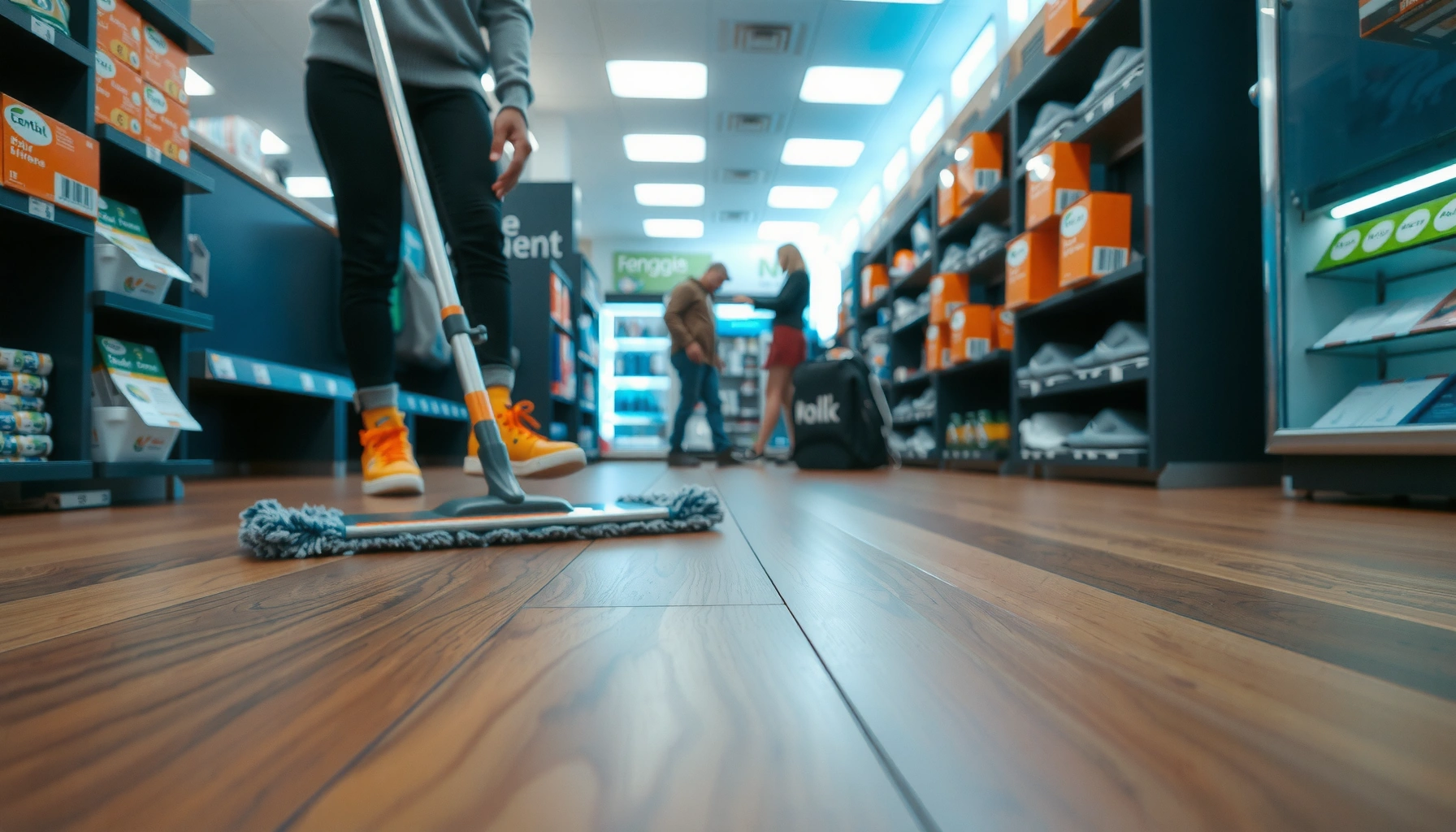
Laminate can be cleaned, but it should not be flooded. Use a microfiber mop or cloth that is just damp enough to pick up residue without leaving a visible wet sheen. A useful training cue is: you should be able to pass a dry fingertip along the surface after mopping—if it’s wet, you’re using too much water.
If your store mops, audit the workflow: too-large zones cleaned at once, repeated wringing “guesswork,” and slow turns all increase the chance of puddling. For moisture-sensitive laminate, speed and controlled moisture are your allies.
Remove spills fast (blot, then wipe with laminate-approved cleaner)
The correct spill workflow in a retail setting is:
1. Blot to lift liquid (paper towels or a clean microfiber cloth).
2. Wipe the area with a laminate-approved cleaner.
3. Dry the surface if any edges or grooves appear damp.
Follow the cleaner’s dwell/contact-time instructions. Leaving chemical residue to “soak” longer than the label requires can create haze and can attract more soil in future cycles—so dwell time control matters.
Don’t steam (unless the manufacturer explicitly allows it)
Steam mops add heat and moisture, and laminate construction/joint systems vary. Unless your laminate manufacturer explicitly permits steam cleaning in writing, treat steam as off-limits for retail floors. Heat can also accelerate wear layer degradation and damage adhesives in some systems.
Protect laminate from scuffs, dents, and wear patterns
You protect laminate in retail by reducing direct impact and abrasion from carts, equipment, and daily movement patterns. If you stop the “contact points” from rubbing or denting, you prevent the dull patches and repeating wear trails that customers notice.
In practical retail maintenance programs, entrance matting and wheel/glide choice are the most controllable variables for preventing laminate wear patterns because they address the contact mechanics directly.
When chair and equipment protectors harden, curl, or lose felt, they shift from cushioning to scraping—so replacement timing becomes part of laminate care.
Use felt or rubber floor protectors (and replace them)
All seating, display stands, and equipment should have felt or manufacturer-approved protectors. The key is not just “having protectors,” but keeping them intact:
– Check felt pads monthly in high-traffic stores.
– Replace protectors when they look thinned, torn, or permanently flattened.
– Keep protectors free of grit—otherwise the pad becomes a delivery system for abrasive particles.
Manage wheels for carts and rolling displays
Wheels are a common laminate problem because they concentrate load and create scuffing when they pick up grit. If your cart wheels are hard plastic, investigate whether your laminate manufacturer allows those wheels. Many manufacturers require specific wheel types (often “soft” wheels or laminate-safe casters). If you’re unsure, request the flooring supplier’s wheel/caster guidance in writing.
Reduce direct abrasion and create “buffer zones”
Where possible, use runners or protective mats during promotions and seasonal events—especially when signage adhesives or high-density traffic zones are present. Avoid runners that trap moisture or shed backing residue. If your store uses temporary floor protection, remove it promptly and clean thoroughly after the event.
Use safe cleaners and the right tools (what to avoid)
Use cleaners that match your laminate flooring system and follow manufacturer guidance on chemical compatibility. In retail, many “common household” cleaners cause surface dulling, haze, or even joint damage because they’re not designed for laminate wear layers.
Cleaner compatibility is a manufacturer-spec requirement for many laminate floors; using non-approved chemicals can create haze and may affect warranty coverage.
Abrasive pads and “scouring” products can damage the wear layer, leaving laminate more vulnerable to future staining and higher soil pickup.
Stick to laminate-approved products (chemical and pH compatibility)
Instead of improvising, align cleaning chemicals with the laminate manufacturer’s care instructions. The manufacturer’s documentation typically addresses:
– pH range or “neutral” cleaner expectations
– solvent limitations
– whether alcohol-based cleaners are allowed for residue
– recommended microfiber types
If your store operates multiple locations with different laminate brands, centralize the approved cleaner list so staff doesn’t switch products based on convenience.
Avoid abrasive pads and harsh “spot tech”
Don’t use steel wool, scouring powders, or abrasives marketed like “erasers” that remove residue by friction. These products can reduce gloss and expose the laminate surface to quicker re-soiling.
Don’t “wax” or recoat
Laminate typically should not be waxed or polished. Over time, polish/wax buildup can haze, turn slippery, and trap soil in a way that normal maintenance can’t remove cleanly.
Approved vs. avoid: the practical comparison
Below is a simple decision framework staff can follow consistently.
| Option | Best use | Why it’s risky (if used wrong) |
|---|---|---|
| Laminate-approved cleaner + microfiber | Routine daily/spot cleaning | Generally controlled for pH/compatibility (follow label dwell time) |
| Steam mop (only if explicitly allowed) | Rare cases where permitted in writing | Heat/moisture can damage joints and wear layers |
| Abrasive pad / “magic eraser” style products | Usually not recommended | Scratches/dulls finish, increasing future staining |
| Wax/polish/recoat layers | Not typically supported for laminate | Haze, slip risk, buildup that traps soil |
What can go wrong (common mistakes and limits)
Most laminate floor failures in retail aren’t caused by “dirty floors,” but by moisture exposure and process drift—especially when staff treat laminate like tile or hardwood. Fixes work best when you address the root cause: wetting seams, using the wrong tools, or escalating to aggressive chemicals.
Laminate damage often shows up first at edges, seams, and transitions—areas where water can travel and stress the joint system.
When cleaners don’t match a laminate’s chemistry (pH/solvents), residues can build up, leaving a surface that attracts more dirt and looks dull faster.
Leaving water to sit
The biggest failure point is standing liquid near edges, seams, and transitions. In a store, “minor” puddles can be repeated multiple times a day. Train staff to treat any damp seam area as an urgent spot: blot, wipe, and dry.
Using the wrong mop
Soaking or repeatedly wet-mopping can cause swelling or edge lifting depending on the laminate product and installation method. If you see board edges separating or lifting, stop aggressive wet cleaning immediately and consult the installer or flooring supplier for next steps.
Ignoring warranty/installation rules
Many laminate warranties include specific requirements for cleaning methods and approved products. Using unapproved chemicals—or steaming when not allowed—can jeopardize coverage. This is especially important if you’re managing multiple store locations with one central maintenance vendor.
Treating discoloration incorrectly
If staining persists, aggressive cleaners can worsen the finish or drive residue deeper. Pause, identify the stain source (food, ink, adhesive, grease), and use the manufacturer’s stain removal guidance before escalating.
Verdict / tip: a practical maintenance plan (and who should skip it)
If you can enforce daily dry cleaning, quick spill response, and “lightly damp microfiber only” mopping, this approach is a reliable baseline for retail laminate floors. The upside is predictable: fewer micro-scratches, less haze, and less moisture-related risk—especially as retail teams cycle through staffing changes in 2025–2026.
The downside is operational: your results depend on staff habits, tool choices, and consistent entrance mat upkeep. If your team can’t follow procedures (or if mat systems aren’t maintained), moisture and grit will still find a path to seams and wear points.
Skip (or adapt) these steps if:
– Your laminate manufacturer explicitly requires different procedures for cleaning or approved products—follow their written documentation first.
– Floors already show active failure (lifting edges, significant swelling, or buckling)—that’s typically a repair or replacement issue, not a cleaning workflow problem.
– You’re dealing with chemical exposure beyond normal spills (e.g., harsh solvents) and need supplier-specific guidance before trying anything.
Quick checklist for laminate care in a retail store
| Task | Frequency | Do this | Avoid |
|---|---|---|---|
| Vacuum/sweep with soft attachment | Daily/each open day | Remove grit from walkways | Hard-bristle scraping |
| Spot-clean spills | Immediately | Blot, then lightly wipe | Letting liquid sit |
| Entrance mat upkeep | Daily/weekly | Shake/clean mats so they work | Torn mats that shed debris |
| Check floor protectors | Monthly/when moved | Replace worn felt/glides | Bare plastic-to-floor contact |
| Safe cleaner use | As needed | Use laminate-approved cleaner | Steam, abrasive pads, wax/polish |
| Inspect seams/edges | Weekly | Watch for lifting or swelling | Ignoring early signs |
Sources
– Carpet and Rug Institute (CRI) — walk-off soil control / entrance matting guidance (including the commonly cited “up to 80% of soil is tracked in” figure).
– U.S. Geological Survey (USGS) — mineral hardness references (Mohs hardness scale; quartz hardness value).
– ADA/ANSI guidance and referenced slip-resistance testing standards (commonly cited minimum COF value for level interior surfaces, e.g., 0.42, depending on the test method).
In summary, strong retail laminate maintenance comes down to three controllable habits: dry-clean daily to remove abrasive grit, wipe spills immediately without flooding seams, and protect wear points with mats plus manufacturer-safe glides/wheels. If you standardize those steps (and align cleaners to the flooring brand’s written care rules), laminate floors typically look better longer—even under the constant pressure of carts, high foot traffic, and frequent messes.
Frequently Asked Questions
How do I clean laminate floors in a retail store without damaging the finish?
Sweep or vacuum daily using a soft brush or dust-free setting to remove grit that can scratch laminate flooring. For mopping, use a damp microfiber mop with a manufacturer-approved laminate floor cleaner or a laminate-safe cleaner—avoid soaking the surface. Immediately wipe up spills and never use steam cleaners, abrasive pads, or harsh chemicals that can dull or strip the wear layer.
What is the best way to prevent water damage and swelling on laminate flooring in a high-traffic business?
Put mats at every entrance and use anti-slip rugs in high-traffic aisles to reduce tracked-in moisture and grit. Wipe spills right away and ensure employees know the proper “spill protocol” to prevent standing water from reaching seams. Keep humidity in a stable range and avoid wet mopping—laminate floors are sensitive to prolonged moisture at joints.
Which cleaning products are safest for laminate floors used in retail environments?
Choose cleaners labeled safe for laminate flooring and follow the dilution instructions exactly to protect the finish. Avoid ammonia-based cleaners, bleach, waxes, and oil soaps, which can leave residue and make floors look cloudy or feel sticky. If you’re unsure, spot-test a small hidden area first to confirm the cleaner won’t dull the wear layer.
How often should I maintain and deep-clean laminate floors in a retail store?
Perform routine cleaning daily (sweep/vacuum) and damp-mop as needed, typically weekly or more often during peak traffic periods. For deeper maintenance, inspect high-wear zones for buildup, then use a laminate-appropriate cleaner and microfiber pads designed for floor finish care. Re-check seams around doors, restrooms, and display fixtures regularly, since damage in these areas often appears first in commercial settings.
Why do laminate floors get scratched or dull in stores, and how can I reduce wear?
Scratches usually come from sand, grit, and debris tracked in by customers, and dulling can occur from abrasive tools or improper cleaning products. Use entry mats, keep walkways clear, and consider felt pads under shelving and display stands to protect against scuffs. Train staff to avoid dragging heavy items across the floor and to use only non-abrasive cleaning methods to keep your laminate flooring looking new.
📅 Last Updated: October 24, 2026 | Topic: How to maintain laminate floors in a retail store? | Content verified for accuracy and freshness.
References
- Laminate flooring
- https://www.armstrongflooring.com/support/care-and-cleaning/laminate-flooring.html
- MohawkFlooring
- https://scholar.google.com/scholar?q=laminate+floor+maintenance+high+traffic+retail Google Scholar
- https://scholar.google.com/scholar?q=laminate+flooring+cleaning+and+care+protocols Google Scholar
- https://scholar.google.com/scholar?q=laminate+flooring+warranty+care+and+maintenance+guidelines Google Scholar