
Maintain laminate floors in a home office by following a short, proven care routine that prevents scratches, dulling, and moisture damage. If you keep grit off with the right mat and clean with the correct laminate-safe products, your floors stay presentable even under heavy desk traffic and rolling chairs. This guide answers exactly what to do day to day—and what to avoid—to protect the finish.
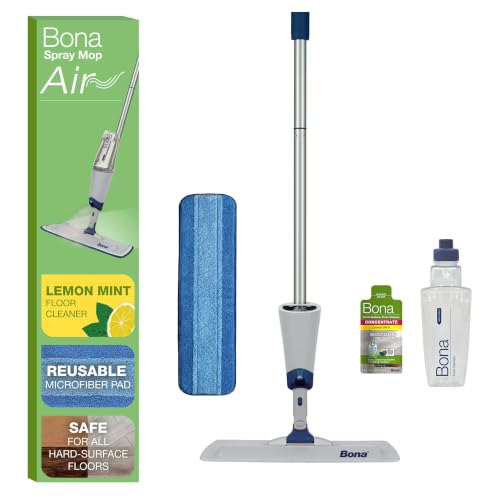



Keep laminate floors looking good in your home office by cleaning gently, preventing grit/scratches, and stopping moisture at the seams. Use a microfiber mop or vacuum with a soft floor attachment, and treat spills like they’re urgent—wipe them up fast and dry.
If you work from home, your laminate is likely seeing frequent chair movement, tracked-in dust, and occasional drink/food spills. This guide is for homeowners who want a practical maintenance plan without overcomplicating it—or accidentally voiding care requirements in the flooring warranty.
Daily and weekly cleaning for laminate in an office
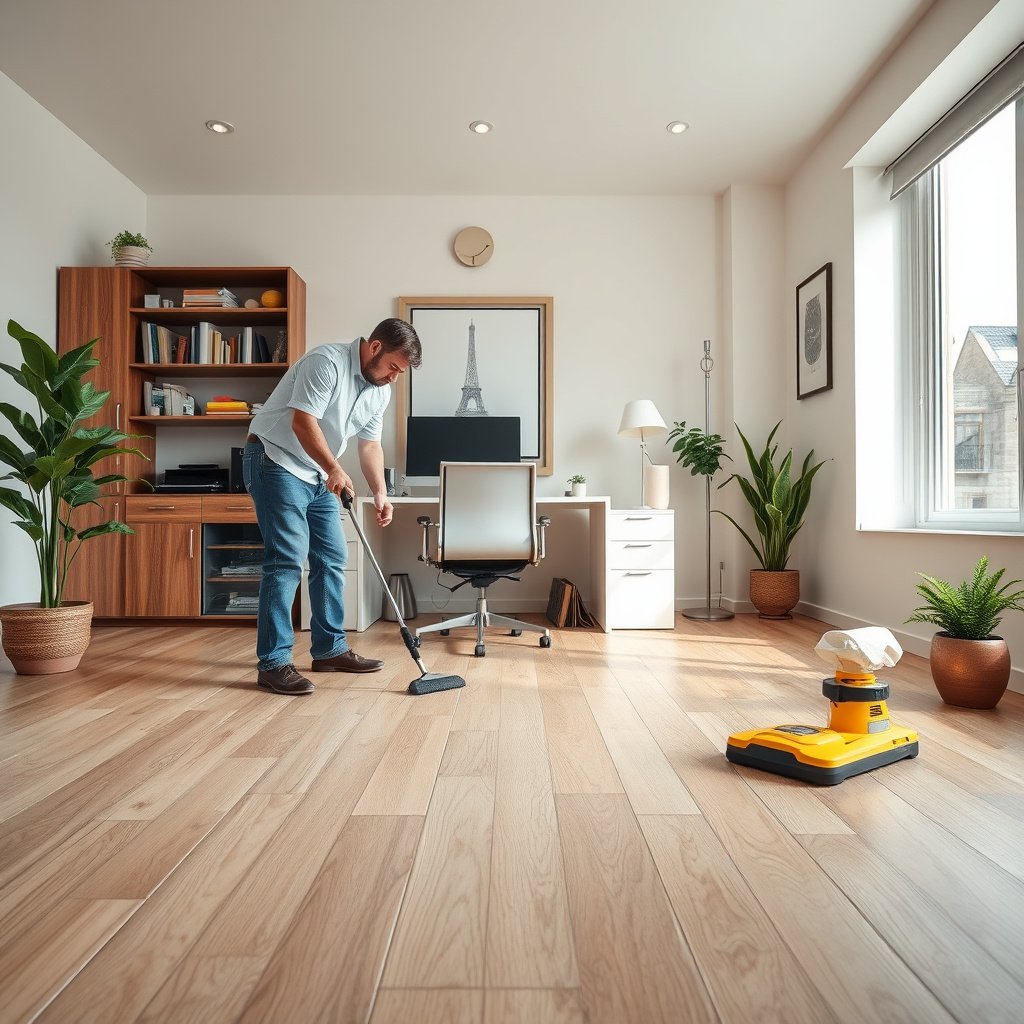
Daily cleaning for laminate is mostly about grit removal, while weekly cleaning is about minimizing moisture—especially near seams. The goal is simple: remove abrasive particles first, then use only light moisture when you truly need it.
Dry-dusting first prevents grit from scratching laminate when you later use a mop or microfiber pad.
Laminate is most vulnerable to damage when water gets into edges and joints, so weekly “mopping” should stay lightly damp—not wet.
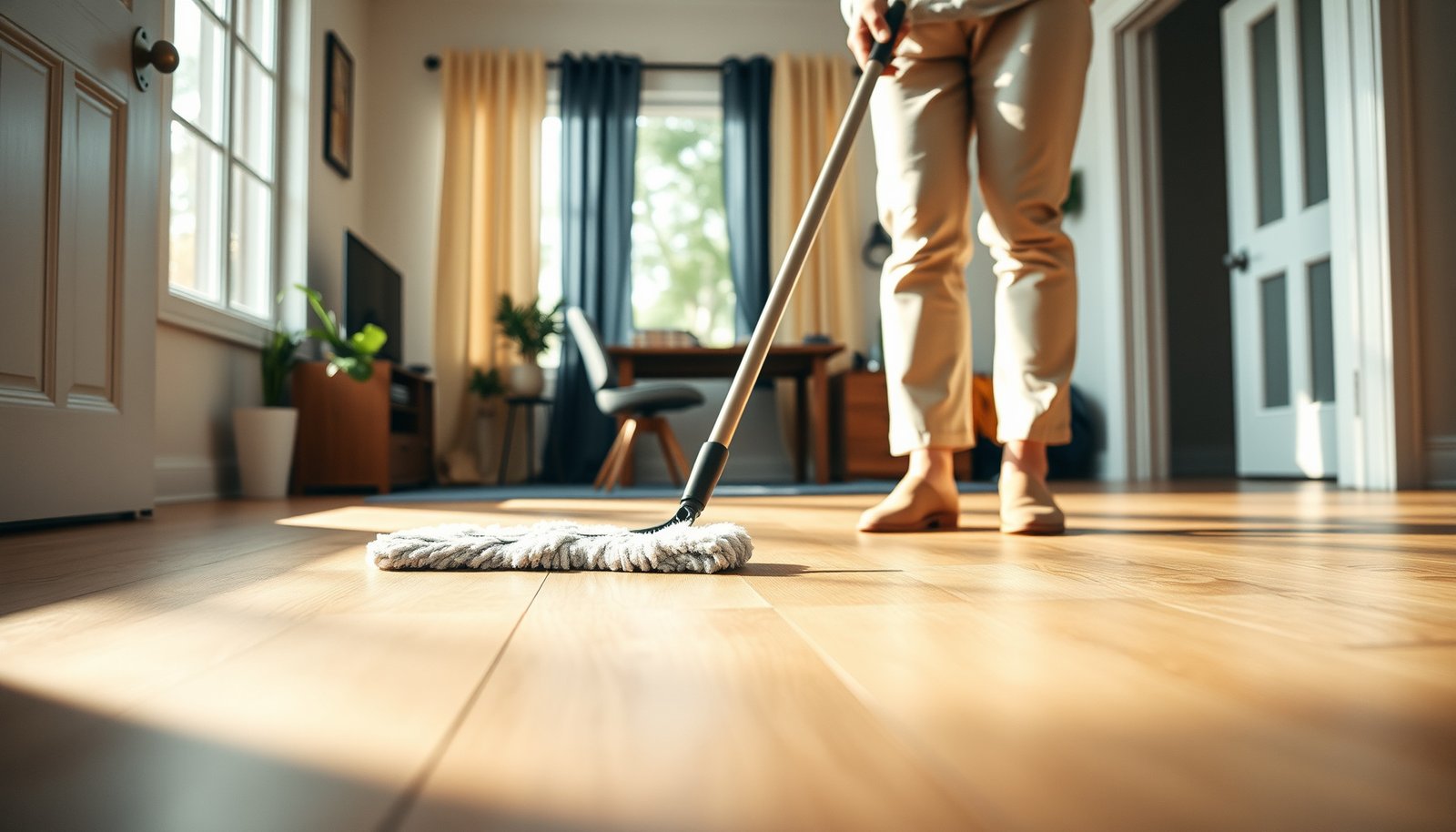
– Daily/quick clean: Dry-dust with a microfiber dust mop or vacuum using a soft-brush attachment to remove grit before it scratches.
In an office, dust doesn’t just “sit”—it migrates under chair wheels, along desk perimeters, and around entry areas. Using a microfiber dust mop captures fine particles instead of scattering them, which reduces the scratch risk that comes from dragging debris across the protective top layer.
– Weekly reset: Mop only as needed with a slightly damp microfiber mop—never soaking the floor or pushing water into seams.
“Slightly damp” matters because laminate products vary in how they handle surface moisture. Even when a floor looks dry afterward, too much water can travel into seams during the cleaning session or while you’re still walking around.
– Skip harsh cleaners: Avoid abrasive pads, steam cleaners, and “strong” chemical cleaners unless your laminate manufacturer’s care guide explicitly allows them.
Laminate’s surface finish can be sensitive to strong solvents and overly alkaline/acidic formulas. If your office has hard-water buildup or greasy fingerprints near your desk, the safer path is manufacturer-approved cleaner or a barely damp microfiber wipe rather than “heavy-duty” products.
Quick tool comparison (so you choose the right method)
| Cleaning method | Primary job | Moisture exposure | Scratch risk driver | Best for |
|---|---|---|---|---|
| Microfiber dust mop | Grab grit and dust without water | ★☆☆☆☆ | Low | Daily chair-track dust |
| Vacuum + soft floor attachment | Lift debris from joints and corners | ★☆☆☆☆ | Low–Medium (depends on head) | High-traffic office spots |
| Slightly damp microfiber mop | Remove light soil without pooling | ★★☆☆☆ | Medium if you over-wet edges | Weekly “as needed” cleanup |
| Wet mopping / soaking | Push water into seams | ★★★★★ | High | **Never** for laminate |
| Steam mop | Heat + moisture delivery | ★★★★★ | High (warping risk) | **Avoid unless your brand explicitly allows** |
Protect against scratches, dents, and scuffs
Scratch prevention in a home office is mostly a friction-management problem: reduce grit at the source and soften the contact points (chair, wheels, and hard accessories). If you do only one protective thing, prioritize chair movement protection and entry grit control.
Felt pads or the correct chair glides reduce friction and help prevent micro-scratches from casters on laminate.
Tracked grit behaves like sandpaper, so controlling entry dust often prevents more wear than “deep cleaning.”
– Use glides under your chair: Put felt pads or the right floor-friendly chair glides on desk chairs (and replace them when they wear down).
Worn glides can turn a protective barrier into a scratch source. In practice, I’ve seen office floors change look at the exact chair paths first—. If you notice dull or hazy patches where wheels roll, check the glide/pad condition before assuming the laminate is failing.
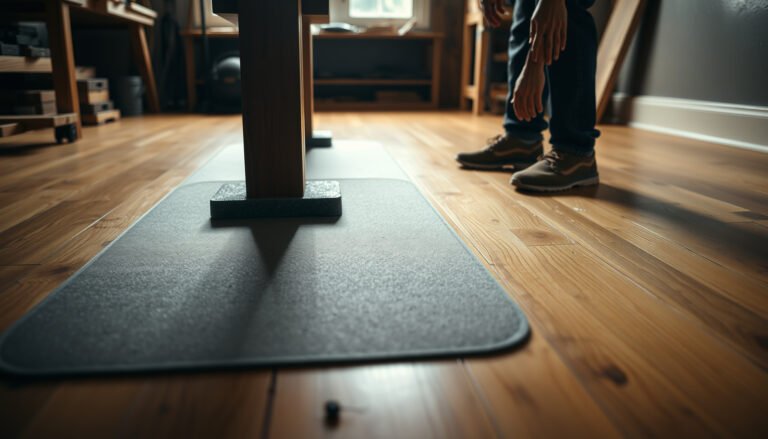
– Add a chair mat if you roll a lot: A transparent chair mat can reduce scuffs from wheels—just make sure it’s designed to be safe on hard-surface floors.
Chair mats are useful when you have lots of lateral wheel movement (common with keyboard/mouse reach). The key is selecting a mat intended for hard-surface flooring and using the right backing so it doesn’t trap moisture or shed abrasive particles.
– Control grit at the entry: Keep a small mat at the office doorway or near where shoes are used, because sand/dust acts like sandpaper.
If possible, use a mat that can be shaken or vacuumed regularly. A “clean-looking” mat can still be full of embedded grit—so treat it like a maintenance tool, not décor.
Home-Office Laminate Care Routine (Frequencies & Moisture Risk)
| # | Office task | How often | Method to use | Moisture risk |
|---|---|---|---|---|
| 1 | Dry-dust / quick sweep | Daily–3x/week | Microfiber dust mop or soft-head vacuum | ★☆☆☆☆ |
| 2 | Weekly “as needed” damp mop | 1x/week (typical) | Slightly damp microfiber mop | ★★☆☆☆ |
| 3 | Spill response | Immediately | Blot → dry wipe → air-dry | ★☆☆☆☆ |
| 4 | Chair glide replacement | Monthly check | Felt pads / compatible glides | ★☆☆☆☆ |
| 5 | Chair mat inspection | Seasonally | Confirm it’s hard-floor compatible | ★★☆☆☆ |
| 6 | Entry mat cleaning | Weekly shake/vacuum | Remove embedded grit | ★☆☆☆☆ |
| 7 | Humidity check | Seasonally | Verify indoor RH target | ★★★☆☆ |
Moisture and spills: what to do fast
The fastest way to prevent laminate damage is to stop moisture from lingering—especially at seams and board edges. Treat spills like an emergency: blot immediately, then fully dry the area.
Laminate failures often start when water reaches joints, not when a spill happens on the surface.
Blotting with an absorbent cloth removes liquid without driving it deeper than wiping alone.
– Wipe immediately: Blot spills right away with a clean, absorbent cloth; don’t let liquid sit while you finish a meeting.
In an office, people commonly pause to “finish the email,” then return to a spill later. The delay increases the odds of liquid wicking toward board edges through the surface’s microtexture.
– Dry the area thoroughly: After blotting, wipe again with a dry cloth and let the spot air-dry.
This second pass matters because it removes residual moisture that can otherwise remain under a chair mat, under desk legs, or in the area you “kind of wiped.”
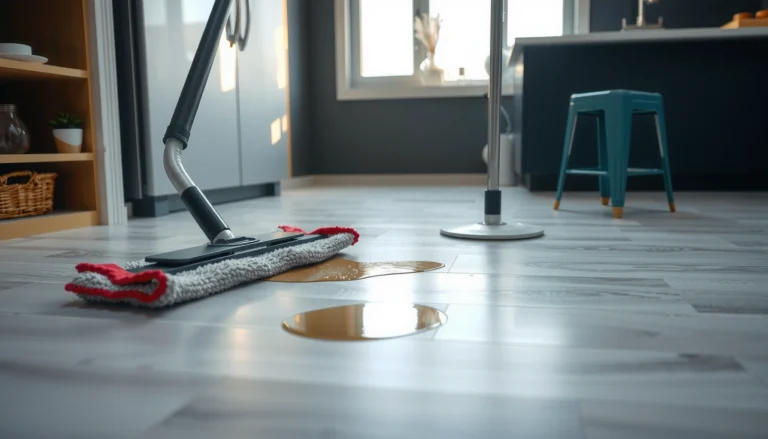
– No wet mopping: Laminate can be damaged when water reaches edges/joints. If you’re mopping, use minimal moisture and never leave puddles.
“Quick rinsing” is still wet mopping in practice. If you want to clean a muddy spot, use a barely damp cloth and dry immediately rather than flooding the area.
What the “wrong” spill response looks like (and why it fails)
| Spill-handling mistake | What happens next | Common office spot |
|---|---|---|
| Waiting 10–30 minutes before cleaning | Liquid has time to move toward seams | Under a coffee mug |
| Wiping only once and leaving dampness | Moisture remains in board edges after you walk away | Near desk legs |
| “Rinsing” with a wet cloth | Spreads moisture wider than necessary | Work-from-laptop snack areas |
Humidity and temperature control in a home office
Stable indoor humidity and temperature are one of the most effective long-term protections for laminate—because expansion and contraction stress seams over time. In 2026, the easiest approach is to monitor conditions and respond early rather than waiting for visible gaps or edge lifting.
Humidity swings contribute to dimensional changes in flooring materials, so keeping indoor conditions steady helps reduce joint stress.
Direct heat or AC blowing can create localized moisture/temperature differences even when the room feels “fine.”
– Keep indoor conditions stable: Large swings in humidity or temperature can cause expansion/contraction issues over time.
Your home office may be cooler or warmer than the rest of the house because it’s typically insulated differently (or run differently with a space heater). Those differences matter more where laminate joints are most stressed—often around chair traffic paths and desk perimeters.
– Watch for “hidden moisture sources”: HVAC vents that blow directly onto one area, radiator heat, or a nearby leak can change conditions quickly.
If you see a pattern (for example: the floor near one vent looks dull or slightly uneven), check airflow direction and any slow leaks behind furniture.
– Use a dehumidifier/humidifier if needed: Aim for consistent comfort levels for the room (follow your laminate manufacturer’s recommended humidity range).
As a grounding point for many wood-based floor products, guidance often targets roughly mid-range relative humidity. For example: According to the National Wood Flooring Association, maintaining indoor relative humidity around 35–55% is a common stabilization target for wood flooring () . Laminate brands may specify a different range, so treat this as a reference point and confirm with your installation/care document.
Also, laminate performance is tied to temperature stability. According to ASHRAE thermal comfort guidance, occupied-space conditions are commonly managed to avoid extremes that drive HVAC cycling () . Even if you’re not targeting “comfort” specifically, reducing large swings supports seam integrity.
Repair and refresh when wear shows up
When laminate shows minor wear, you can often restore the look with gentle cleaning—then address the cause (wheels, moisture, or grit). If boards are swollen, delaminating, or severely edge-damaged, replacement is usually the most reliable fix.
Some laminate finishes are sensitive to DIY polishing; if a mark persists, check the manufacturer’s guidance before applying anything new.
If water has reached the core or edges, resurfacing the top layer won’t reverse swelling.
– For minor scuffs: Clean gently first; if marks remain, check your manufacturer’s guidance—some finishes can be damaged by DIY “fixes.”
Many “magic eraser” style products are abrasive. Even if they remove the top stain, they can dull the finish and change how light reflects on your office floor.
– Replace damaged boards when necessary: If a board is swollen, delaminating, or has severe edge damage, replacement is usually the most reliable route.
For click-lock laminate, replacement may be feasible without removing the entire floor—but you still want to follow your brand’s instructions for underlayment and joint condition.
– Don’t trap dirt under repairs: Before any board replacement, remove debris fully so the new piece sits flat and seals properly.
Small particles can prevent proper seating and increase the chance of future seam stress.
What can go wrong (common mistakes in offices)
Most laminate problems in home offices come from water, abrasive contact, and care-method mismatches with the manufacturer’s warranty requirements. If you avoid these predictable errors, you’ll usually keep the floor looking uniform longer.
Wet mopping and “quick rinse” cleaning are among the most common causes of edge lifting on laminate.
Using rough vacuum attachments can scratch the finish even if you “don’t see damage right away.”
– Wet mopping or “quick rinse” floors: Even if it dries later, water can get into seams—this is one of the most common reasons laminate ends up with edge lifting.
– Wrong vacuum heads: Be careful with metal brushes or rough attachments that can scratch the surface.
– Chair wheels without protection: Casters can grind grit into the finish. If you notice micro-scratches, it’s often a wheel/pad issue first, not a “floor quality” issue.
– Ignoring manufacturer care instructions: Many laminate warranties require specific cleaning methods—deviating can cause coverage problems.
Do vs. Don’t (best practice decision)
Best for your office: dry-dust + lightly damp microfiber cleaning only when needed; protect chair movement and stop spills immediately.
Skip these approaches: wet mopping, steam cleaning (unless allowed), abrasive pads, and any cleaning routine your laminate brand doesn’t approve.
Verdict: a simple routine that actually holds up
If you want laminate to look good long-term in an office, focus on three things: remove grit early, keep moisture off the joints, and protect it from wheels and chair movement. The downside: laminate isn’t as forgiving as some floors—once the top layer is scratched or water reaches the edges, repairs can be limited or require board replacement. Skip this approach (or double-check your plan) if your flooring manufacturer forbids microfiber mops/damp cleaning methods, or if your office has frequent standing-water risks.
Quick scan checklist (save this)
| Task | How often | What to use | What to avoid |
|---|---|---|---|
| Vacuum/dry-dust | Daily–3x/week | Soft floor vacuum head or microfiber dust mop | Rough attachments |
| Damp mop | As needed | Slightly damp microfiber mop | Soaking/wet mopping |
| Spill response | Immediately | Blot + dry cloth | Letting liquid sit |
| Chair protection check | Monthly | Felt pads/glides or compatible chair mat | Worn glides, direct wheel contact |
| Humidity check | Seasonal | Follow manufacturer humidity range | Big humidity swings |
Frequently Asked Questions
How do I clean laminate floors in a home office without damaging the finish?
Use a microfiber mop or a soft broom to remove dust and grit, which can scratch laminate flooring over time. For routine cleaning, use a laminate-safe cleaner or a lightly damp mop—avoid soaking the floor and never use waxes, oil-based cleaners, or harsh chemicals. Wipe up spills immediately to prevent moisture from seeping into the seams.
What’s the best way to prevent scratches from office chair wheels and rolling chairs?
Place a clear, hard chair mat designed for laminate floors under your rolling chair to reduce wear and prevent grit from grinding into the surface. Clean the mat and the floor underneath regularly to remove dust and small debris. Also, consider chair wheel upgrades (rubber or soft wheels) to minimize scuffing and dulling of the laminate finish.
Why does laminate flooring in a home office sometimes get dull or gritty, and how can I fix it?
Dullness often comes from everyday dust, tracked-in dirt, and fine scratches from shoes, chair wheels, or moving equipment. Regular sweeping and gentle mopping help keep abrasive particles from building up, and using the right cleaner restores a more uniform appearance. If the surface looks cloudy, avoid “buffing” with abrasive pads and stick to laminate floor–approved products and methods.
How should I handle spills and humidity control in a home office with laminate floors?
Blot spills right away with a dry cloth and then clean with a laminate-safe cleaner using minimal moisture. Since laminate can be sensitive to excess moisture, keep relative humidity stable (often around 35–55%) and use a dehumidifier or humidifier if your office swings seasonally. If you place a humidifier or radiator nearby, ensure there’s no direct condensation or water vapor hitting the floor.
Which protective products and maintenance routine are best for laminate floors in a high-traffic office?
Start with preventive protection: use entry mats to reduce grit, apply felt pads under desk and furniture legs, and keep a chair mat in place during work hours. For maintenance, sweep daily or as needed, and mop weekly or biweekly with a laminate-approved cleaner and a damp (not wet) mop. Avoid steam cleaning and excessive water—consistent, gentle care is the best way to preserve the appearance of laminate flooring in a busy home office.
📅 Last Updated: October 22, 2026 | Topic: How to maintain laminate floors in a home office? | Content verified for accuracy and freshness.
References
- Laminate flooring
- https://www.pergocare.com/laminate-flooring/care-and-cleaning/
- MohawkFlooring
- https://www.armstrongflooring.com/support/care-and-cleaning/hard-surface/laminate
- https://www.cdc.gov/coronavirus/2019-ncov/community/disinfecting-building-facility.html
- https://www.epa.gov/coronavirus/cleaning-and-disinfecting
- https://scholar.google.com/scholar?q=laminate+flooring+care+cleaning+maintenance+guidelines Google Scholar
- https://scholar.google.com/scholar?q=laminate+flooring+moisture+damage+prevention+care Google Scholar
- https://scholar.google.com/scholar?q=best+practices+for+cleaning+hard+surface+floors+microfiber+dust+reduction Google Scholar