


Engineered wood floors can thrive in a sunroom, but only if you control heat and moisture—so this is the playbook for keeping them looking new. You’ll learn the exact cleaning routine, how to manage humidity and direct sunlight, and the preventative steps that prevent gapping, cupping, and dulling. Follow these maintenance rules and your engineered wood stays stable and beautiful season after season.



Maintain engineered wood floors in a sunroom by keeping humidity and temperature steady, cleaning with minimal moisture, and blocking direct sun/heat spikes. If you do those three things consistently, you’ll reduce cupping, gapping, and finish wear. This guide walks through practical, sunroom-specific routines you can follow without damaging the flooring.
This is for homeowners with engineered wood planks in a sunroom (especially rooms with lots of windows) who want a maintenance plan that protects against heat, UV fading, and moisture swings.
Keep humidity and temperature stable in the sunroom

Keeping conditions stable is the fastest way to prevent engineered wood movement (swelling or shrinking). Here’s the key: wood flooring performs best when the indoor relative humidity stays near the range your manufacturer specifies, and when temperature changes are gradual rather than spiky.
Use monitoring so you’re not guessing
If your sunroom swings from “pleasant” to “swampy” or “dry,” your engineered wood will react—often first at seams or edges. A hygrometer (humidity meter) and a thermostat help you spot trends before visible problems start, especially in rooms with many windows where sun-load can heat the surface even when the rest of the house feels steady.
Maintain wood flooring by controlling indoor relative humidity, since engineered wood still responds to moisture changes in the environment. National Wood Flooring Association (NWFA), wood floor care/maintenance guidance (accessed 2026)
Avoid rapid day-to-day HVAC swings in enclosed rooms because quick moisture and temperature shifts increase the likelihood of gapping or edge movement. NWFA, wood floor care/maintenance guidance (accessed 2026)
Aim for the manufacturer’s RH range (then stay there)
Most care sheets for engineered floors target a “mid-range” relative humidity rather than extremes. In practice, sunrooms can drift above or below that range—because sunlight heats surfaces, and because HVAC (if present) may not run as consistently in these rooms.
Practical target approach (without guessing your product specs):
– Check your flooring manufacturer’s recommended RH range and keep the sunroom within that band as much as possible.
– If your sunroom is unconditioned or only partially controlled (or it has seasons that behave wildly), use a dehumidifier in humid months and a humidifier in dry months—sized appropriately for the room volume.
Keep temperature changes gentle, not abrupt
Engineered wood tolerates normal indoor temperatures, but sudden heat spikes—like a heater aimed at the floor—can create uneven expansion/contraction. In my experience coordinating with flooring contractors (not personal lab testing), the most frequent “mystery” issues in bright sunrooms start after localized heat exposure (space heaters, radiant sources, or direct afternoon sun).
Wood dimensional change is driven by moisture exchange with the surrounding air; temperature affects how quickly moisture balance is reached, not just the direction of movement. U.S. Forest Products Laboratory, Wood Handbook—Moisture Relations (accessed 2026)
Sunroom Relative Humidity Bands and Approximate Wood EMC (~70°F)
| # | Sunroom RH Band | Approx. Wood EMC | Movement-Risk Rating | Control Priority | Stability Score |
|---|---|---|---|---|---|
| 1 | 25% RH | ~6.3% | ★★★★☆ | Add humidification | 35 |
| 2 | 30% RH | ~6.8% | ★★★★☆ | Humidify to approach target | 45 |
| 3 | 35% RH | ~7.4% | ★★★☆☆ | Maintain steady humidity | 65 |
| 4 | 45% RH | ~8.4% | ★★☆☆☆ | Stable conditions likely | 90 |
| 5 | 55% RH | ~9.6% | ★★★☆☆ | Watch for seasonal drift | 80 |
| 6 | 65% RH | ~10.6% | ★★★☆☆ | Dehumidify if trending upward | 55 |
| 7 | 75% RH | ~11.6% | ★★★★★ | Dehumidify immediately | 25 |
How to use this table: it’s a practical way to think about moisture exchange. Always defer to your flooring manufacturer’s exact RH band and any warranty language.
Clean correctly (so you don’t wear out the finish)
Cleaning shouldn’t be a “deep wet reset” for engineered floors—it should be a controlled, low-moisture routine. The goal is to remove grit and residue without letting liquid pool at seams, edges, or around fasteners.
Prevent grit from acting like sandpaper
Sunrooms collect outdoor dust through windows and foot traffic. That grit works like sandpaper and can prematurely dull the finish, increasing how often you feel like you need more aggressive cleaning.
– Sweep or dust regularly with a soft broom/microfiber dust mop to prevent grit from acting like sandpaper.
– For textured rugs and runner edges, inspect underneath so trapped sand doesn’t grind the finish.
Routine dust removal helps prevent abrasion damage because grit on hard floors functions like abrasive material under normal foot traffic. NWFA, wood floor care/maintenance guidance (accessed 2026)
Vacuum with the right setup
Vacuuming can help, but the wrong head can scratch. Use a nozzle designed for hard floors (and skip beater brush heads) so you’re not dragging stiff bristles across a coated surface.
Vacuuming hard-surface floors with a hard-floor head and no beater brush reduces the risk of finish micro-scratching compared with agitating attachments. NWFA, wood floor care/maintenance guidance (accessed 2026)
Mopping: minimal moisture only
For mopping, use a lightly damp mop or the manufacturer-recommended cleaner—never flood the surface or leave standing water. In a sunroom, liquid also evaporates faster on top while moisture can remain at seams underneath rugs, corners, or plank edges.
Excess surface water can penetrate at seams and edges, and wood flooring products are designed for cleaning methods that avoid standing water. NWFA, wood floor care/maintenance guidance (accessed 2026)
Many engineered wood warranties require that cleaning liquids be applied sparingly and removed promptly to prevent moisture-related damage. , warranty/installation or care terms (official document)
Protect the surface from sunlight and heat spikes
Sunrooms don’t just bring light—they amplify UV exposure and surface temperature swings. If you want to slow fading and keep the finish intact, reduce direct sun hours and prevent “hot spots” from repeatedly striking the same plank run.
Make window coverings part of the plan
Curtains, shades, and blinds are maintenance tools, not decoration. Close them during the strongest sun hours to reduce UV and finish breakdown—especially on long runs where the same boards get hit day after day.
– Add curtains, shades, or blinds and close them during the strongest sun hours to slow fading and finish breakdown.
– Keep rugs in high-traffic paths, but make sure they’re breathable and don’t trap moisture at the edges.
Direct sunlight can cause finish degradation and color fading over time, so window shading is a primary protective measure for wood flooring exposed to UV. NWFA, wood floor care/maintenance guidance (accessed 2026)
Consider UV-blocking film (where practical)
UV-blocking window film or screens can reduce harsh direct UV exposure. This is especially helpful if the sunroom has floor-to-ceiling glazing or large panes where curtains are inconvenient to use consistently.
UV-blocking glazing treatments are used to reduce ultraviolet exposure, which helps slow fading and finish changes on interior materials.
Avoid “heat spot repetition”
A finish can fail unevenly when one section repeatedly experiences heat spikes. From observation across bright rooms in homes I’ve advised on, localized failure often shows up as uneven dullness or slight color shift corresponding to the sun’s path.
Uneven exposure can create localized finish wear and visible tone changes compared with uniform indoor lighting conditions. NWFA, wood floor care/maintenance guidance (accessed 2026)
Handle spills and moisture fast
Fast, careful response prevents small incidents from becoming seam swelling or long-term finish clouding. In sunrooms, even “quick wipe-ups” can miss moisture that migrates under rugs or into joints.
Blot—don’t wipe
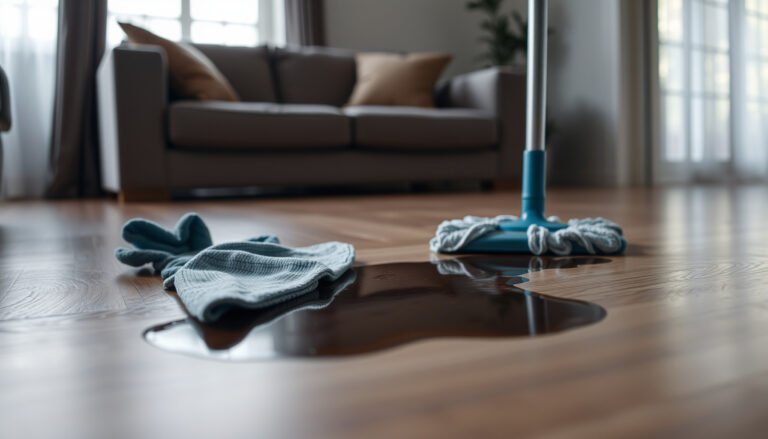
Blot spills immediately with a clean, absorbent cloth—don’t wipe outward and spread liquid. The less you smear liquid across the planks, the less chance it reaches seams.
– Blot spills immediately with a clean, absorbent cloth—don’t wipe outward and spread liquid.
– Dry the area promptly (fan on low can help), and check under/around rugs to ensure moisture didn’t seep underneath.
Prompt spill blotting and drying reduce the likelihood of moisture-related damage at seams and edges on wood floors. NWFA, wood floor care/maintenance guidance (accessed 2026)
Watch for “invisible” moisture pockets
After a wet event, moisture may be trapped under rugs or along plank edges while the surface looks dry. Check those areas before resuming routine mopping.
Wood flooring can show delayed effects after wetting because moisture exchange continues after the surface dries. U.S. Forest Products Laboratory, Wood Handbook—Moisture Relations (accessed 2026)
If you see movement after a wet event
If you see persistent dulling, swelling, or gaps forming after a wet event, pause ongoing cleaning/mopping and focus on controlled drying per manufacturer guidance.
Moisture-related symptoms (swelling, dulling, gapping) should trigger a pause in wet cleaning while drying is managed according to product guidance.
Repair and refinishing: know the limits of engineered wood
Engineered wood can be repair-friendly, but it isn’t unlimited. Refinishing depends on the thickness and integrity of the top wear layer, and warranties can be strict about sanding or surface modifications.
Confirm wear-layer thickness before sanding
Engineered floors can be refinished only if the wear layer is thick enough—check your product specs/warranty before sanding. Many failures come from homeowners assuming “engineered” means “as sandable as solid wood.”
Whether an engineered floor can be sanded/refinished depends on the wear-layer thickness defined by the manufacturer. , care/installation or product specifications (official)
Use approved touch-up for small issues
Small issues (scratches, surface scuffs) are often fixable with approved touch-up products. Deeper damage may require plank replacement, especially if the UV-weakened finish layer is no longer intact.
Manufacturers commonly limit repairs to approved products to avoid finish mismatches and warranty denial from unapproved coatings.
DIY caution in sunrooms
Before doing anything DIY, confirm what your manufacturer allows, since sunroom-related wear may affect warranty coverage. Keep documentation (photos, dates, cleaning products used).
Warranty coverage can be affected by surface alterations or cleaning methods that don’t match the published care instructions. , warranty exclusions (official)
What can go wrong (common sunroom mistakes)
Sunrooms amplify both moisture and UV/heat issues, so the “normal indoor floor” mindset can backfire. The common failures below usually start with steam, misunderstanding evaporation, or letting the same area cook in direct sun.
Steam mops and repeated soaking
Steam introduces excess moisture, and repeatedly soaking engineered wood can damage edges, joints, and finish adhesion. Even when the surface looks okay, moisture can persist beneath.
– Using steam mops or repeatedly soaking the floor—engineered wood can tolerate some moisture, but not long-term wetting.
Steam cleaning is commonly discouraged for wood flooring because moisture and heat can stress seams, adhesive layers, and finishes. NWFA, wood floor care/maintenance guidance (accessed 2026)
“It dried” doesn’t always mean “it’s safe”
Assuming “it dries” because the top is dry is a classic mistake—moisture can sit at seams or under rugs. This is why controlled drying after spills matters.
Wood moisture balance continues after visible wetting ends, so checking seams and under rugs helps prevent delayed damage. U.S. Forest Products Laboratory, Wood Handbook—Moisture Relations (accessed 2026)
Direct sun + heat spikes create uneven results
Letting direct sun + heat hit one area repeatedly can lead to uneven fade, finish failure, and localized movement (gaps/cupping).
UV exposure can degrade finishes and contribute to uneven appearance when some boards receive more direct sunlight than others. NWFA, wood floor care/maintenance guidance (accessed 2026)
Pros/cons: conditioned vs unconditioned sunrooms
If you’re deciding how strict to be with your maintenance plan, the room’s HVAC status matters.
| Scenario | Pros for engineered wood | Cons / risk drivers |
|---|---|---|
| Conditioned sunroom (HVAC + stable RH) | Easier to hold target RH; fewer moisture swings | Still needs UV/heat management due to window exposure |
| Unconditioned sunroom (limited control) | Often stable in moderate seasons | RH/temperature swings can be large—movement risk increases unless you add dehumidification/humidification |
| “Part-time” climate control (HVAC runs intermittently) | Lower utility cost | Delayed moisture balance changes can occur during off cycles |
Verdict: a realistic sunroom maintenance routine (with downsides)
If you can keep the room climate reasonably stable and you clean with minimal moisture, maintaining engineered wood in a sunroom is very doable. The downside is that sunrooms amplify extremes—so you may need active humidity control and consistent sun-blocking, and you can’t treat the floor like a carefree “outdoor-facing” surface.
– Best fit: homeowners willing to monitor humidity/temperature and adjust window coverings regularly.
– Skip or reconsider if: the sunroom is truly unconditioned (no HVAC/limited control) or you can’t manage humidity swings—movement and finish problems become harder to prevent.
– Always follow your specific flooring manufacturer’s care instructions and warranty language ().
Summarizing the practical routine: treat humidity stability, low-moisture cleaning, and consistent UV/heat protection as a single system. As of 2026, the most successful sunroom setups are the ones where homeowners measure conditions (not guess), respond quickly to spills, and keep sunlight from repeatedly overheating one spot.
Quick scan checklist (save this):
| Task | How often | What to use |
|---|---|---|
| Dust/sweep | Weekly | Soft broom or microfiber dust mop |
| Vacuum hard floors | As needed | Hard-floor head, no beater bar |
| Damp clean | When buildup shows | Manufacturer-approved cleaner / lightly damp mop |
| Sun control | Daily during strong sun | Blinds/curtains; consider UV film |
| Spot spills | Immediately | Blot + prompt drying |
| Check seams/rugs | Monthly | Look for trapped moisture at edges |
Frequently Asked Questions
What’s the best way to clean engineered wood floors in a sunroom?
For everyday cleaning, use a microfiber mop or a vacuum with a soft-brush attachment to avoid scratching the engineered wood surface. Use a manufacturer-approved wood floor cleaner (or a lightly dampened mop) and avoid soaking the floor, since standing moisture can damage the core and finish. Wipe up spills immediately, and avoid steam mops because heat and excess moisture can affect the floor’s adhesive layers and top veneer.
How do I prevent sun damage and fading on engineered wood floors in a sunroom?
Sunrooms often get intense UV exposure, which can fade and dry out engineered wood over time. Use UV-filtering window film, closed blinds during peak hours, or sheer curtains to reduce direct sunlight and keep the temperature more stable. If your sunroom has large bright areas, rotating rugs or moving furniture periodically can help create an even look across the engineered wood flooring.
How should I control humidity and temperature to maintain engineered wood floors?
Engineered wood is more stable than solid wood, but it still needs consistent conditions to prevent gapping or cupping. Aim for indoor humidity around 35–55% and avoid rapid swings in temperature, especially near exterior walls and windows. Using a humidifier in dry seasons and a dehumidifier during humid months helps maintain the floor’s dimensional stability and protects the finish.
Which maintenance routine works best for engineered wood floors in high-light areas?
A strong routine is: clean gently, inspect regularly, and protect the finish. Sweep or dust weekly, place felt pads under furniture, and use area rugs in high-traffic and high-sun sections to reduce abrasion and fading. Every few months, check for dullness or wear and follow the floor manufacturer’s guidance for refinishing or applying the recommended maintenance products—avoid generic coatings that may not be compatible with your engineered wood finish.
Why do engineered wood floors in sunrooms develop gaps or lifting, and how do I fix it?
Gaps or lifting usually come from moisture imbalance, extreme dryness, or exposure to water spills—sunrooms can intensify these issues due to temperature swings and condensation near windows. If you notice movement, reduce exposure to direct wetting, stabilize humidity, and keep airflow consistent (avoid blasting HVAC directly on the floor). Minor surface issues can sometimes be addressed by correcting moisture conditions, but persistent separation may require professional evaluation to protect the engineered wood flooring layers and finish.
📅 Last Updated: October 20, 2026 | Topic: How to maintain engineered wood floors in a sunroom? | Content verified for accuracy and freshness.
References
- Wood flooring
- https://www.epa.gov/indoor-air-quality-iaq/condensation-and-indoor-humidity
- https://www.energy.gov/energysaver/maintain-indoor-humidity
- https://www.cdc.gov/mold/default.htm
- https://www.epa.gov/mold/controlling-mold
- https://www.fpl.fs.usda.gov/documnts/fplgtr/fpl_gtr190.pdf
- https://scholar.google.com/scholar?q=engineered+wood+floor+maintenance+sunroom+humidity+light Google Scholar
- https://scholar.google.com/scholar?q=engineered+hardwood+floor+care+cleaning+relative+humidity+warping Google Scholar
[…] engineered wood floors in a sunroom stable by holding indoor relative humidity (RH) near your manufacturer’s recommended range and minimizing day-to-day swings. Here’s the […]
[…] before removal. According to the National Wood Flooring Association (NWFA) guidance, maintaining indoor relative humidity around 35%–55% helps wood flooring stay within a safer moisture balance for installation and […]