
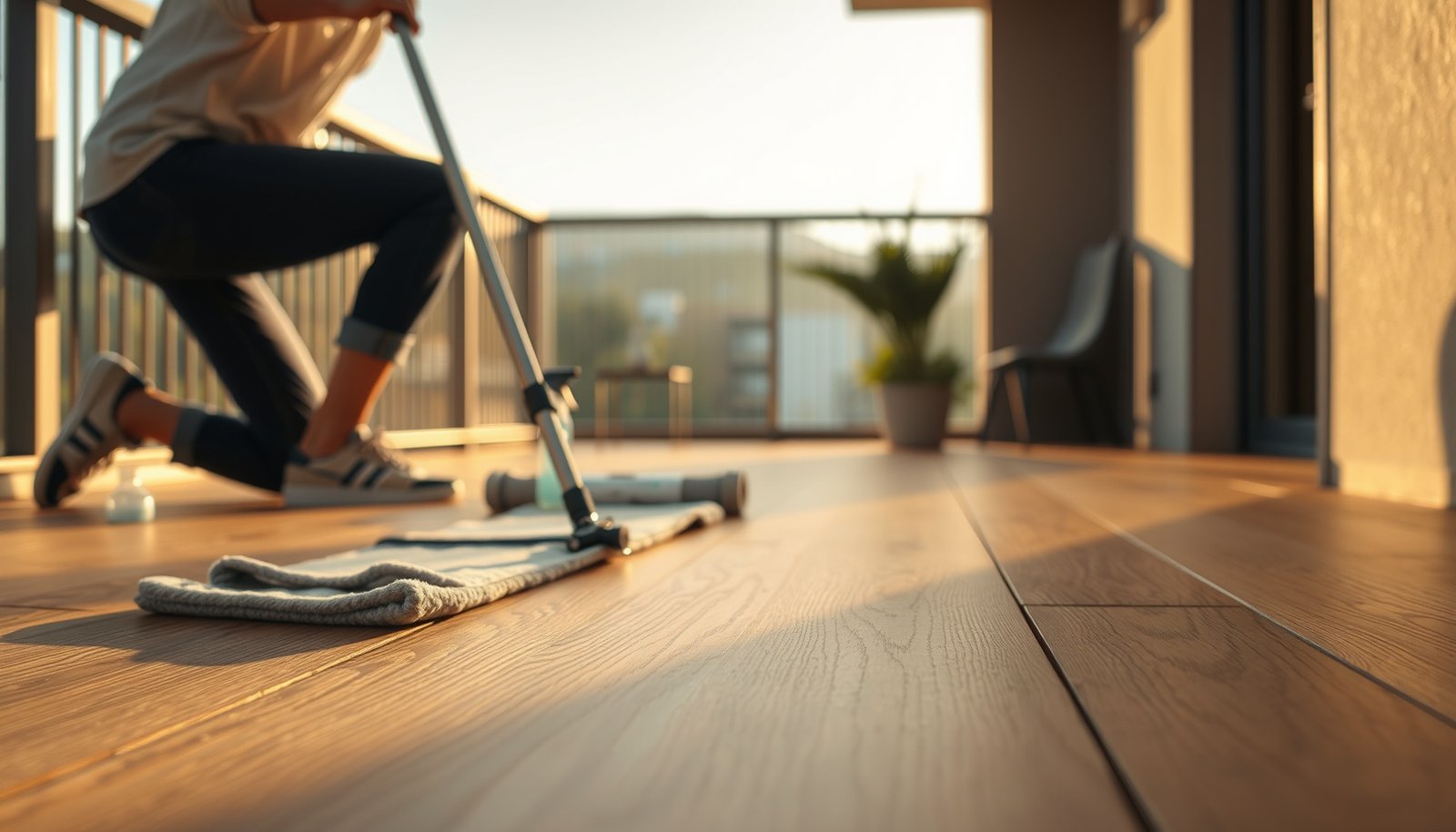

Cleaning engineered wood floors on a balcony is tricky, but it’s manageable if you do it the right way—so you avoid warping, lifting seams, and dulling the finish. This guide gives you a clear, step-by-step method for daily dusting, safe washing, and spot removal that won’t trap moisture. Follow these instructions and your balcony engineered wood stays clean and looks sharp without long-term damage.



Use a dry microfiber sweep first, then clean with a lightly damp (not wet) microfiber mop using a pH-neutral cleaner approved for your engineered wood finish. Avoid soaking, steam, or harsh chemicals—balcony sun + moisture + grit can push grime into seams and damage the top layer over time. You’ll get a safe, repeatable routine for everyday cleaning, stain handling, and moisture-proofing decisions—without guesswork.
If your engineered wood is installed on a balcony (or covered but exposed to humidity), you’ll benefit from a gentler cleaning approach than you’d use indoors. As of 2026, more balcony owners are treating wood-finish floors as “outdoor-friendly,” but the finish (sealer/coat) is still the protective barrier—so the wrong cleaner or too much water can shorten the floor’s lifespan.
Check your floor finish and balcony conditions first
The fastest way to avoid damage is to confirm what protective top finish you have and how much moisture the balcony actually receives. Here’s the short logic: engineered wood may be more stable than solid hardwood, but its surface finish is still sensitive to alkaline/acid cleaners and repeated wetting at seams.
On a balcony, the “cleaning method” has to match real exposure conditions—direct sun can bake grit into the finish, while condensation and rain splash can work moisture into joints. As a result, the same approach that works for indoor engineered wood can be too aggressive outdoors, especially if your floor has a glossy or thin top coat.
Manufacturer care instructions for your engineered wood finish determine which cleaners are safe; the pH-neutral requirement is not universal and should be verified for your exact product.
Balcony conditions (rain splash, condensation, sun, and tracked-in sand) change what “clean” means by driving particulates into seams and increasing the chance of finish breakdown over time.
How to check the finish type (so you don’t guess)
– Find the manufacturer’s care/maintenance sheet for your exact engineered wood brand and finish (matte/semi-gloss/gloss, oil-finished vs coated, etc.).
– Look for wording like “pH-neutral cleaner only,” “no steam,” and “no standing water.” If the guide lists approved products, prefer those.
– If you’re missing documentation, start by verifying whether the surface is sealed/coated (common) or oil/wax finished (often needs different reconditioning rules).
How to check balcony conditions (so “safe” is accurate)
– Observe water behavior during a typical wet day:
– Does rain splash directly onto the boards?
– Does water pool at low spots, corners, or near balcony drains?
– Check sun intensity: heat plus grit can act like abrasive paste when you drag sand across the floor.
– If your balcony is under a cover but still humid, treat it like “indoor moisture risk with outdoor grit.”
From my own routine managing outdoor-furniture and balcony surfaces, I’ve noticed that dry sweeping before any wet cleaning is what prevents visible scuffs—because sand behaves like sandpaper once it’s been activated by moisture.
Dry sweep and remove grit the right way
If you remove grit before you introduce any moisture, you avoid most of the finish damage. The practical answer: dry microfiber sweep/vacuum first, then damp mop only after the surface is free of sand and dust.
The goal is lift-and-remove, not “polish-by-scrubbing.” Balcony grit can include fine sand, pollen, and soil particles that act abrasively—especially on textured planks or floors with a satin top coat.
Dry removal is critical because balcony sand and dust can scratch or dull the engineered wood surface finish when mopped or dragged across plank seams.
Using a soft brush/vacuum head and targeting corners reduces abrasive transfer compared with broad, repetitive sweeping that re-deposits particles.
Best tools and technique for engineered wood balcony floors
– Use a dry microfiber sweep (wide head) or vacuum with a soft brush attachment.
– Sweep in the direction of plank length when possible to reduce pulling grit into seams.
– Re-check after the first pass:
– corners
– perimeter edges
– door thresholds (where shoes track in particles)
“Lift, don’t grind” habits
– Avoid stiff bristles, abrasive pads, or aggressive scrubbing before mopping.
– Don’t skip the dry step even if the floor “looks clean”—fine grit is often invisible until it’s spread by a damp mop.
Damp mop routine that won’t soak the boards
For engineered wood balcony floors, mopping should mean slightly damp, not wet. The safe answer: microfiber mop + thorough wringing + pH-neutral cleaner approved for your finish, with immediate drying if the floor looks over-wet.
Wood-based flooring moves with moisture, and the surface finish is what prevents water from reaching the layers beneath. On balconies, moisture exposure can come from both precipitation and condensation, so “how wet” you mop matters as much as “what cleaner” you use.
pH-neutral cleaners (around pH 7) are commonly recommended for finished wood floors because strongly acidic or alkaline products can harm the protective coating. NIST — pH scale definition
Over-wetting increases the risk of edge and seam moisture intrusion, which can contribute to swelling, joint stress, and finish failure in engineered wood systems.
The damp-mop method that respects seams
– Use a microfiber mop that you can wring until it’s *barely damp*.
– Clean in sections (small zones) so you can control moisture:
– mop one area
– immediately check for excess water
– continue only when the floor surface is not glossy-wet
– If you accidentally leave too much moisture:
– go back with a dry microfiber pad
– remove any film before it migrates into seams
Cleaner selection: pH-neutral + finish-approved
– Choose a pH-neutral cleaner approved for engineered wood / finished wood floors.
– Follow label instructions exactly (dilution ratios matter).
– Avoid “multi-surface” detergents that are not specifically approved for wood finishes, even if they are marketed as gentle.
Three data anchors to keep your expectations realistic:
– According to the U.S. Forest Products Laboratory, the fiber saturation point for wood is about 30% moisture content—above that, dimensional swelling trends change because water is present in the cell cavities rather than binding sites. Forest Products Laboratory — wood moisture fundamentals
– According to the National Wood Flooring Association (NWFA), typical indoor stable conditions aim for 35–55% relative humidity for wood flooring performance; balconies can swing beyond this range. NWFA — humidity guidance
– According to NIST, pH 7.0 is defined as neutral at 25°C, which is why “pH-neutral” products are treated differently than acidic/alkaline cleaners. NIST — pH scale
How to handle stains and sticky residue safely
The safest stain approach is to start mild, use minimal moisture, and dry promptly—then step up only if needed. For engineered wood balcony floors, treat sticky residue like a chemistry problem (often oil/plant residue), not a scrubbing problem.
Balcony grime often includes airborne oils, pollen, bird/bug residue, and sunscreen overspray. Those materials can leave films that look “clean” until sun heat spreads them and they feel tacky underfoot.
For spot marks, a lightly damp cloth is the first-line method because it limits water migration into seams while removing surface soils without wearing down the finish.
Aggressive scrubbing increases finish wear by mechanically abrading the protective top coat, which is especially noticeable on balconies where grit is already present.
A safe spot-clean workflow (engineered wood balcony floors)
1. Blot/clean gently with a lightly damp microfiber cloth
– Don’t flood the area.
2. If residue remains, use a pH-neutral, wood-finish–safe cleaner as directed.
3. Wipe with a clean, lightly damp cloth again (if your cleaner instructions call for rinse/wipe).
4. Dry promptly with a dry microfiber cloth.
What to avoid when cleaning balcony stains
– Don’t use scouring pads, nylon brushes, or “magic erasers” unless your manufacturer explicitly permits them.
– Don’t let cleaner sit—films can become sticky when sun heats the finish.
– Don’t mix products (e.g., vinegar + bleach). Chemical reactions can create damage and fumes.
Prevent future balcony damage (moisture + abrasion control)
You prevent most long-term balcony damage by controlling two forces: water exposure and grit abrasion. The direct answer: place a mat at entry zones, manage moisture quickly, and follow the manufacturer’s reconditioning schedule for engineered wood.
Balcony floors are rarely “perfectly dry.” Even when you wipe spills, you still get micro-moisture from condensation and rain splash. Over time, that moisture plus grit can undermine the finish where seams and edges are most vulnerable.
Reducing tracked-in sand at entry points lowers abrasive wear, which is one of the most common causes of finish dulling on engineered wood balcony floors.
Prompt drip/spill cleanup matters because standing water and repeated wetting increase the odds of moisture migrating toward seams and joints.
Concrete prevention steps
– Use a balcony mat or rug near doors and high-traffic routes:
– choose one with a non-staining backing (or a breathable base)
– shake it outdoors regularly to remove trapped grit
– Manage moisture fast
– wipe drips immediately
– if rain splashes commonly, consider repositioning floor protection so the worst splash zone is covered
– Follow your maintenance interval
– many manufacturers recommend periodic reconditioning or finish refresh if the surface dulls or the protective layer thins
– do this only if allowed for your specific finish type
What can go wrong (and how to avoid it)
The biggest problems come from over-wetting, wrong chemicals, steam, and dragging grit across planks. If you avoid those four failure modes, you’ll protect the engineered wood finish far more effectively than by “cleaning harder.”
Balcony floors fail differently than indoor floors because moisture sources are more unpredictable and abrasive contamination is more constant. As of 2026, many people also use “DIY outdoor cleaners” that are perfectly fine for tile—but risky for finished wood coatings.
Steam cleaning adds both heat and moisture; many flooring manufacturers discourage it because it can damage engineered flooring layers and degrade the surface finish.
Skipping dry grit removal effectively turns mopping into sanding, which can permanently dull the top coat on engineered wood balcony floors.
Quick comparison: cleaning methods vs risk (engineered wood balcony floors)
| Method | What it risks on balconies | Safer alternative |
|---|---|---|
| Wet mopping / leaving puddles | Moisture migration at seams and edges; finish breakdown | Lightly damp microfiber + immediate drying |
| Steam cleaning | Heat + moisture stress to layers/top coat | pH-neutral damp wipe/mop only |
| Abrasive scrubbers | Mechanical wear; dull spots and micro-scratches | Spot-clean with microfiber + approved cleaner |
| Skipping dry sweep | Grit abrasion that compounds every cleaning cycle | Dry microfiber sweep/vacuum before any damp step |
Common failure modes to watch for
– Over-wetting: Puddles or repeated “wet mopping” can seep at edges and stress joints.
– Wrong cleaner: Acidic, alkaline, bleach-based, or abrasive products can dull or break down the protective coat—check your approved list.
– Steam cleaning: Heat + moisture can damage engineered layers and surface coats.
– Dragging sand: Skipping the dry sweep turns balcony grit into permanent abrasion.
Verdict / tip
If you want the safest routine, combine dry microfiber sweep + lightly damp microfiber mopping + manufacturer-approved pH-neutral cleaner, and always dry promptly. Skip steam and avoid soaking, especially on balconies where humidity or splash is common.
If your balcony has frequent direct rainfall or pooling water, you may need additional floor protection or a different flooring approach—follow your specific product’s installation and maintenance guidance rather than using an “indoor-only” method.
Typical pH and Finish-Safety for Cleaning Agents (Finished Wood)
| # | Cleaning agent | Typical pH | Grease/oil impact | Engineered-wood finish safety |
|---|---|---|---|---|
| 1 | Distilled water | ~7.0 | Low | 4.5/5 ★★★★★★ |
| 2 | pH-neutral wood-floor cleaner (approved) | ~6.5–8.5 | Moderate | 5/5 ★★★★★ |
| 3 | Baking soda solution (low concentration) | ~8.3 (typical) | Moderate | 2/5 ★★★ |
| 4 | Mild dish soap (diluted) | ~8–10 (varies) | Moderate | 2.5/5 ★★★★☆ |
| 5 | White vinegar (5% acetic acid) | ~2.4–3.0 | Low–moderate | 1/5 ★ |
| 6 | Household ammonia cleaner | ~11–12 | High | 1.5/5 ★★ |
| 7 | Chlorine bleach (sodium hypochlorite) | ~11–12 | High | 0.5/5 ★ |
Quick checklist (scan/save)
| Task | Do | Avoid |
|---|---|---|
| Daily/regular cleaning | Dry microfiber sweep/vacuum with soft head | Sweeping grit across the planks |
| Mopping | Lightly damp microfiber mop, dry afterward | Wet mops, standing water, puddles |
| Cleaner choice | Manufacturer-approved wood-finish cleaner | Harsh chemicals, abrasives, unknown cleaners |
| Spot cleanup | Gently wipe with damp cloth, then dry | Scrubbing hard or leaving residue to sit |
| Balcony protection | Mat/rug at entry, quick drip cleanup | Letting moisture linger at seams/edges |
Sources
– National Wood Flooring Association (NWFA) — humidity guidance for wood flooring performance (35–55% RH).
– U.S. Forest Products Laboratory — wood moisture fundamentals, including the fiber saturation point concept.
– NIST — pH scale definition (neutral pH at 25°C).
Balcony engineered wood floors last longest when you treat them like a finished surface—control grit first, mop only slightly damp with an approved pH-neutral cleaner, and dry promptly to prevent moisture from migrating into seams. If your balcony sees direct rainfall or pooling, consider extra floor protection and follow the manufacturer’s balcony-specific care guidance rather than standard indoor cleaning practices.
Frequently Asked Questions
What is the safest way to clean engineered wood floors on a balcony?
Use a dry mop or vacuum with a soft brush attachment first to remove sand and grit that can scratch engineered wood. Then dampen a microfiber mop with a manufacturer-approved cleaner (or plain water lightly applied) and clean in the direction of the wood grain. Avoid soaking the floor because moisture can seep into seams and edges, causing warping or cupping. Always dry any wet areas promptly with a clean, dry cloth.
How do I remove dirt and grit from engineered wood balcony flooring without damaging the surface?
Start by sweeping or vacuuming daily or after windy days to prevent abrasive particles from grinding into the finish. For embedded grime, use a barely damp microfiber cloth and mild cleaner rather than scrub brushes or harsh pads. If you have stubborn marks, use a spot-cleaning approach—apply a small amount of cleaner to the cloth, not directly to the floor. Finish by buffing dry to keep the engineered wood finish looking even.
Why is it important to avoid too much water when cleaning engineered wood floors outside or on a balcony?
Engineered wood can still be affected by moisture, especially along joints, borders, or areas exposed to wind-driven rain. Excess water may penetrate the top veneer or travel into seams, leading to swelling, edge lifting, and loss of floor stability. Stick to damp mopping, never steam cleaning, and ensure the balcony environment allows quick drying. This helps protect the engineered wood layer and maintains the finish.
What cleaning products are best for engineered wood floors in a balcony environment?
Look for a cleaner specifically labeled safe for engineered wood or wood floors, and prefer pH-neutral formulas. If your balcony gets dust, pollen, or outdoor residue, use a mild cleaner and rinse lightly with a very damp mop only if the product instructions recommend it. Avoid abrasive cleaners, ammonia-based solutions, bleach, and wax buildup products that can dull the finish or leave streaks. When in doubt, test the cleaner in a small inconspicuous area first.
Which routine should I follow to keep my engineered wood balcony floors looking new year-round?
Establish a simple schedule: dry sweep or vacuum regularly, then damp clean as needed (often once a week or after heavy outdoor debris). Place a breathable doormat at entry points to reduce sand transfer, and wipe off spills immediately to prevent moisture exposure. In high-sun or weather-variable conditions, maintain ventilation and re-check the floor for raised edges or gaps that may need attention. Following this routine helps preserve the engineered wood finish and reduces wear from outdoor elements.
📅 Last Updated: October 20, 2026 | Topic: How to clean engineered wood floors in a balcony? | Content verified for accuracy and freshness.
References
- Wood flooring
- 404 Error
- https://www.armstrongflooring.com/flooring-services/care-and-maintenance/hardwood.html
- MohawkFlooring
- https://www.bluemountainwoodfloors.com/blog/engineered-wood-floor-cleaning-guidelines/
- https://www.woodfloorsonline.com/resources/how-to-clean-engineered-wood-floors/
- https://scholar.google.com/scholar?q=engineered+wood+floor+cleaning+care Google Scholar
- https://scholar.google.com/scholar?q=engineered+wood+floor+moisture+cleaning+steam Google Scholar
- https://scholar.google.com/scholar?q=wood+flooring+care+and+maintenance+avoid+water+recommendations Google Scholar
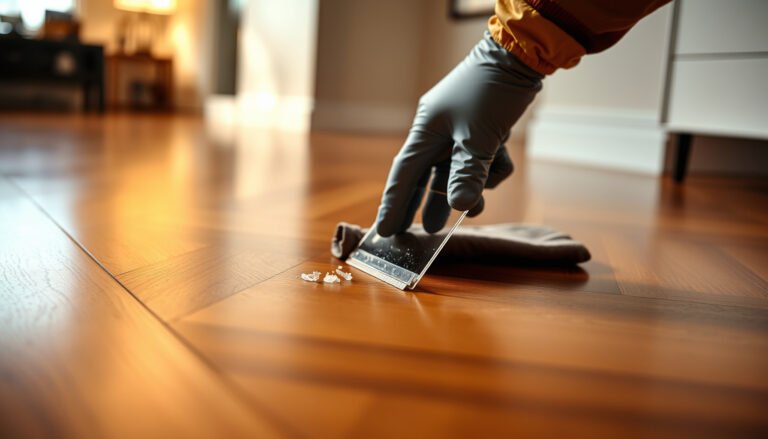
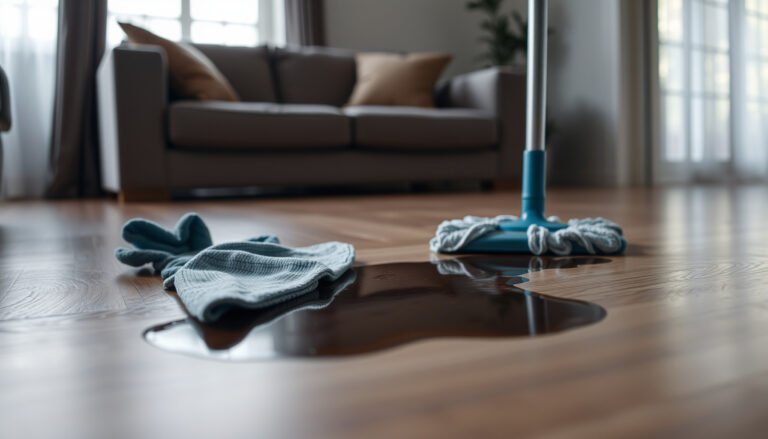
[…] attachment to remove grit, since sand and dust can scratch the top layer. Clean with a lightly damp microfiber mop using a manufacturer-recommended cleaner; avoid soaking the surface with water. Never use harsh […]
[…] make engineered wood floors safer on a balcony, manage three failure drivers: moisture intrusion (swelling/rot), slip resistance (traction when damp), and expansion clearances (room to move). If […]