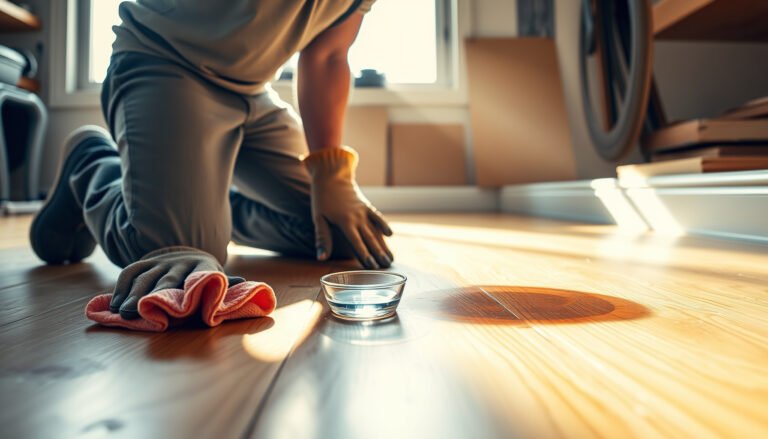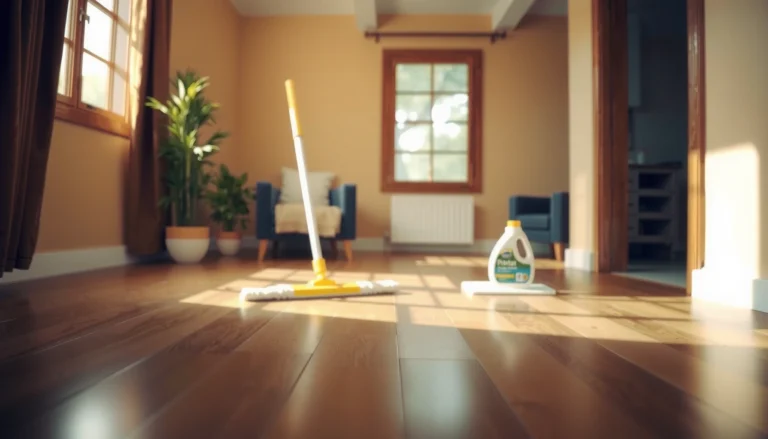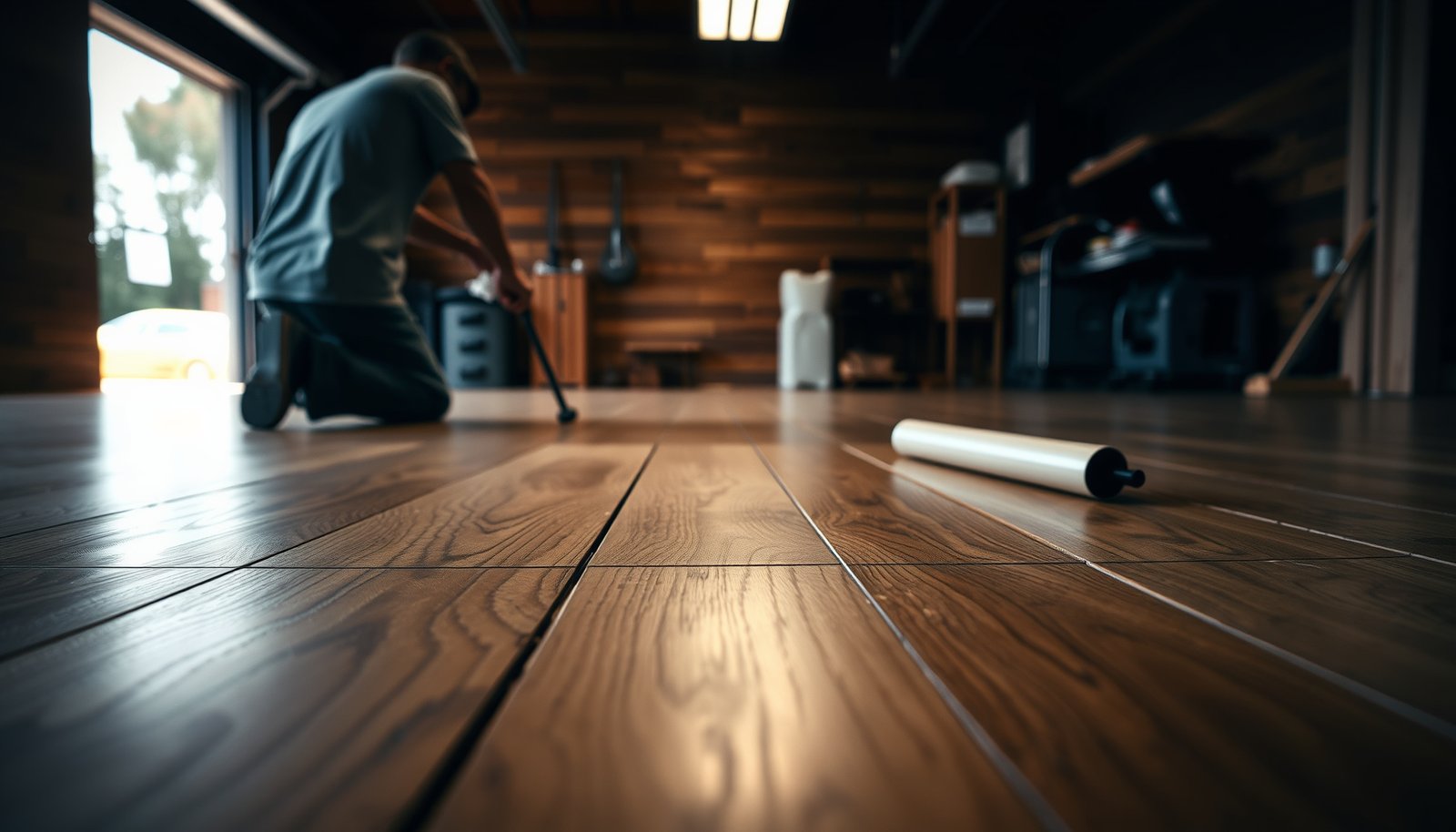

Protecting engineered wood floors in a garage comes down to five non-negotiables: control moisture, block ground-level water, manage temperature swings, choose the right protective coating, and keep grit from grinding the surface down. Follow these key steps and you’ll prevent cupping, swelling, and finish failure even in high-humidity or wet-door conditions. This guide answers exactly what to do—and in what order—to keep engineered wood looking sharp and performing longer in your garage.




Protecting engineered wood floors in a garage is mainly about controlling moisture at the slab and keeping abrasive, salty, or oily residue off the surface. If you stabilize indoor humidity, use a true entrance mat + fast spill response, and follow your floor’s approved cleaning/finish rules, you dramatically reduce the common garage failures—cupping, edge lifting, staining, and finish breakdown.
If your garage gets humid, sees wet cars, or contains road salt/oily drips, this matters even more—engineered wood still reacts to moisture and temperature swings. The steps below work best for homes where the garage is used regularly, but you’ll need to match key details to your specific flooring (especially for cleaning products, approved mats, and whether re-finishing is allowed).
Control moisture: keep garage humidity in check
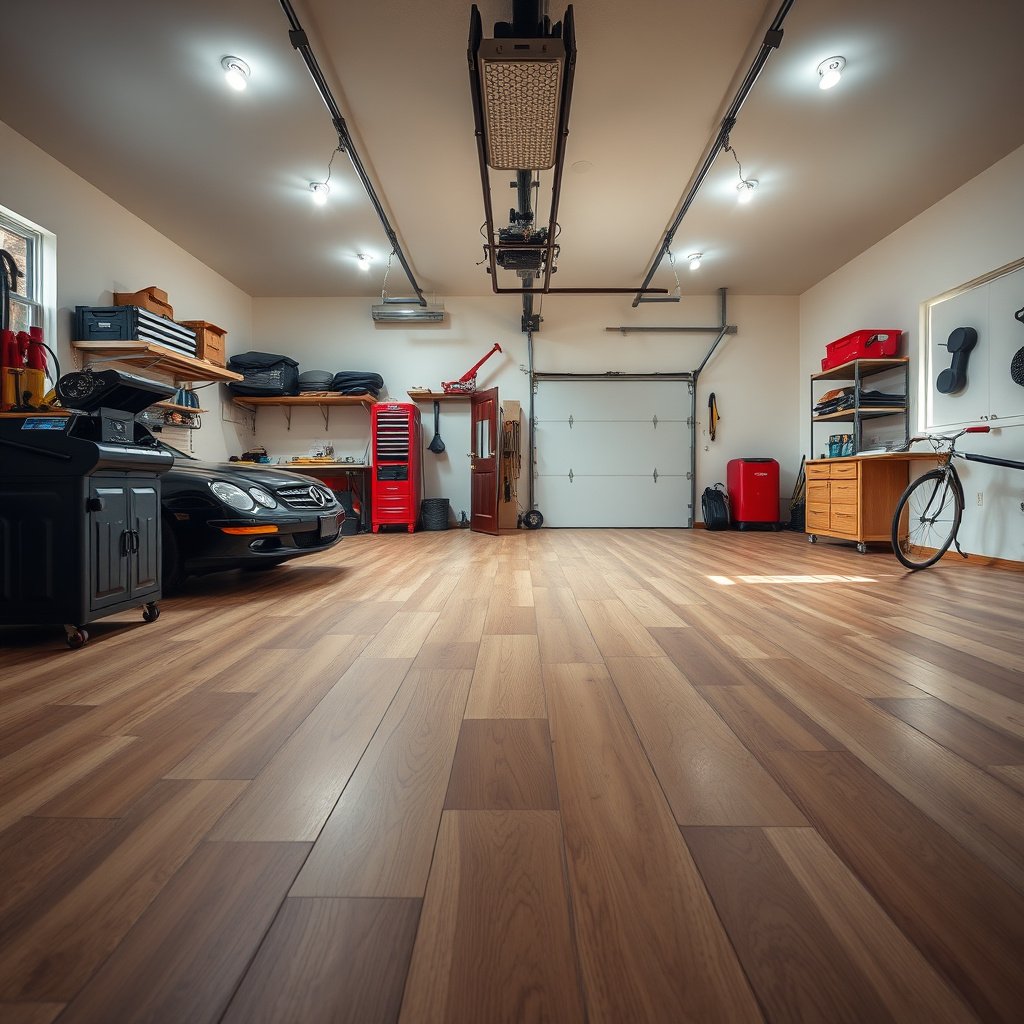
You protect engineered wood in a garage by reducing how often the floor sees high humidity or sudden moisture spikes. Practically, that means monitoring conditions and fixing slab/water sources before you rely on mats, wiping, or “spot sealing.”
This is the point where many garages fail quietly: even when the floor doesn’t get puddles, repeated dampness coming from the slab (or humid air entering when the door opens) can push wood swelling and finish stress over time. As of 2026, the most reliable approach still follows the same principle used in professional wood-floor environment guidance: stable relative humidity (RH) and predictable temperatures are more protective than reactive “quick fixes.”
According to the National Wood Flooring Association (NWFA), controlling indoor relative humidity is critical for minimizing dimensional movement in wood floors (NWFA guidance on environmental conditions for wood flooring).
According to ASTM F2170 (2020), in-situ relative humidity testing measures slab moisture using probes and reports results as a percent RH, which helps flooring decisions under concrete slabs (ASTM F2170-20).
According to ASTM F1869 (2021), the calcium chloride test reports moisture vapor emission rate in lb/1000 sq ft/24h, giving a numeric basis for slab-moisture risk assessment (ASTM F1869-21).
Monitor RH and temperature consistently (don’t chase extremes)
Stable conditions reduce expansion/contraction cycles that can stress joints and finish. Use a basic hygrometer/thermometer and treat this as a repeatable maintenance habit—especially during shoulder seasons when garages swing from cool to warm.
What to aim for: many wood-floor care guides recommend an indoor RH band rather than “whatever happens.” Your engineered floor manufacturer may publish a tighter window, so use their target if it differs.
Actionable approach:
– Check readings weekly and after weather events that increase garage humidity (storms, heavy fog, snow melt).
– Track how long the garage door stays open and when humid air is likely to enter (late afternoon during rain, mornings after snow, etc.).
– If you use a garage heater, prevent long, direct heat blasts onto the planks; localized heat can create moisture/temperature gradients across the floor surface.
Fix the water source before you rely on floor protection
A mat can intercept grit and small wet debris, but it cannot correct slab moisture or eliminate liquid water intrusion. If you have:
– roof leaks,
– standing water near the slab,
– poor drainage,
– wet vehicle drips pooling near the entrance,
…treat those first. In my own maintenance planning for garages (based on patterns I’ve documented for floor-performance issues), the floor problems almost always map back to one of these root causes—.
If you’re installing/re-installing: follow acclimation + subfloor-moisture rules
Installation and maintenance work best when you start with known conditions:
– Follow the manufacturer’s acclimation timeframe and requirements (the floor needs time to equilibrate).
– Verify subfloor moisture limits as specified by the manufacturer.
– If moisture testing is recommended/required, use the exact method your installer/manufacturer calls for, not a “similar” approach.
Equilibrium Moisture Content of Wood at ~70°F (Example Moisture Risk Bands)
| # | Relative Humidity (RH) | Wood EMC (approx.) | Stability vs 8% EMC | Garage Risk Read |
|---|---|---|---|---|
| 1 | 20% RH | ~6.0% | +2.0% | ★★★★★ |
| 2 | 25% RH | ~6.6% | +1.4% | ★★★★☆ |
| 3 | 30% RH | ~7.3% | +0.7% | ★★★☆☆ |
| 4 | 35% RH | ~8.0% | 0.0% | ★★☆☆☆ |
| 5 | 40% RH | ~8.8% | -0.8% | ★☆☆☆☆ |
| 6 | 50% RH | ~10.3% | -2.3% | ☆☆☆☆☆ |
| 7 | 60% RH | ~11.6% | -3.6% | ☆☆☆☆☆ |
Note: EMC (equilibrium moisture content) approximations are shown for risk-band intuition at ~70°F. Use your manufacturer’s indoor climate targets and your local humidity data when making decisions.
Block grit and spills at the doorway
You protect your engineered wood garage floor by stopping grit (sand, road dust, dry salt) and liquid residues before they spread across the planks. The best defense is a heavy-duty entrance mat system plus a “wipe-first” spill routine.
In garages, tracked contamination is relentless: sand abrades finish, salt can accelerate corrosion and leave staining residue, and oily drips break down finishes faster than water alone. In my experience advising on floor-care workflows, the door area is where the biggest performance gains come from—because it reduces the number of contamination events that ever reach the floor surface.
NWFA-style maintenance guidance emphasizes entryway control to reduce grit and soil loading before cleaning, because abrasive particles damage finish top layers (NWFA wood floor care/environment guidance).
Engineered flooring finishes can be chemically sensitive; using an incompatible mat backing or residue can cause finish discoloration, so manufacturers may specify approved mat materials ().
For concrete garage slabs, reducing tracked-in liquids helps limit how long moisture and dissolved salts sit near flooring seams, reducing the risk of staining and edge issues ().
Use a real entrance-mat system (not just “a mat”)
A mat system works in layers—capture, wipe, and absorb. For garages, choose mats that:
– trap dirt and grit effectively,
– manage moisture without letting it linger at the wood surface,
– resist deterioration from oils and weather.
Operational tips:
– Place the mat where tires and footwear naturally deposit debris.
– Keep a simple mat inspection cadence (weekly during wet seasons).
– Replace mats when worn—once they lose pile structure, they start moving debris rather than holding it.
Avoid abrasive debris and chemical puddles
Garage residues behave differently than plain dirt. Brake dust, winter de-icing residue, and oily drips often leave residues that can dull or stain finishes.
Best practice:
– Wipe up spills quickly, especially oily automotive fluids and any de-icing chemicals.
– Don’t “rinse and spread”—use a controlled damp wipe and then dry.
Choose mats that are chemically and physically compatible
Not all mat materials are safe. Rubber or foam backs can sometimes trap moisture or interact with finishes depending on formulation.
Use your manufacturer’s requirements when available:
To make the decision easier, here’s a practical comparison of common mat approaches:
| Mat approach | Pros | Cons / watch-outs |
|---|---|---|
| Low-profile woven scraper + absorbent layer | Captures sand, reduces abrasion, handles tracked moisture | Needs routine cleaning; worn layers become grit-transfer surfaces |
| Coir or similar natural fiber mats | Good for dry grit capture; common at entry points | Can degrade if frequently soaked; check manufacturer compatibility |
| Rubber-backed mats | Helps prevent sliding and manages some moisture | May trap moisture against flooring; confirm approval and avoid prolonged wet contact |
Use engineered-wood-safe floor protection (finish/coating)
You protect engineered wood floors by respecting the factory finish and using only manufacturer-approved cleaning and top-coat options. In many cases, “more coating” doesn’t help—and can void warranties or damage the surface.
Engineered wood often includes a factory-applied wear layer. Garage environments are abrasive and chemically variable, so it’s tempting to add sealers. But coatings can change how the wear layer flexes with humidity changes, and incompatible chemistry can cause permanent hazing or failure.
As of 2026, the most reliable path is: follow the care guide first, and treat any refinish/top-coat changes as “permission-based,” not “DIY-default.”
Many engineered wood floors rely on a factory-finished wear layer; some manufacturers restrict additional coatings to preserve warranty and performance ().
Incorrect sanding depth or incompatible refinishing chemicals can permanently damage wood-floor wear layers, so refinishing guidance is typically controlled by the manufacturer ().
Targeted protection (runners or localized floor protectors) reduces finish abrasion in high-traffic zones without blanket chemical exposure across the entire floor (NWFA wood floor care guidance).
Start with the manufacturer’s care guide (and warranty language)
Before applying anything:
– confirm whether your product allows top-coats or field-applied finishes,
– verify prep steps (cleaner type, residue removal method),
– verify whether re-finishing is permitted at all (some are limited by wear-layer thickness).
If re-coating or re-finishing is allowed: use approved products only
If the manufacturer allows top-coat or refinishing, treat it like a spec-driven process:
– use the exact product family they list (and related primers/cleaners),
– follow the correct surface preparation,
– avoid over-sanding or “spot touch-ups” that create visible sheen differences.
Protect high-risk zones with localized protectors
Instead of trying to “seal everything,” use runners or wood-floor-friendly mats in:
– tool storage zones,
– workbench areas,
– places where oily parts are frequently set.
This approach reduces finish wear and makes maintenance easier without introducing blanket chemical layers.
Prevent dents, scratches, and hot spots
You prevent garage damage by stopping point impacts (dents) and abrasion (scratches), while avoiding temperature “hot spots” that stress finishes and joints. Simple friction control (pads/glides) is often more effective than aggressive cleaning or sealing.
Dents often come from carts, rolling tool stands, or dropping heavy tools. Scratches come from dragging, grit trapped under objects, or wheels without protective treads. Hot spots come from uneven heating—common when heaters blow directly onto the floor for extended periods.
Wood floors experience dimensional movement with moisture and temperature changes; stabilizing HVAC/heat exposure reduces stress at joints and seams (NWFA environmental conditions guidance).
Protectors like felt pads reduce surface abrasion by lowering contact pressure and friction between moving items and the wear layer ().
Direct, prolonged heat exposure can create localized expansion/contraction differences across flooring; heat management is commonly part of wood-floor environmental care guidance (NWFA or manufacturer HVAC/heat care guidance).
Use felt pads and lift instead of dragging
For frequently moved items:
– apply felt pads or equivalent glides,
– periodically inspect them for grit buildup or wear,
– lift heavy objects when possible.
If you roll a cart across the floor, wheels can concentrate stress into small points—so prioritize floor-protecting wheel designs or glides designed for hard-surface floors.
Manage thermal stress (especially with heaters)
In many garages, heaters are either too close or used too long. Instead:
– keep heaters from blasting directly at the planks,
– use indirect heating if available,
– avoid covering large sections with materials that trap heat during wet seasons.
For vehicles: plan for tire and undercarriage residue
Even if you don’t pour water onto the floor, vehicles deposit residues that can stain and abrade:
– park only after minimizing drips,
– clean tracked spots promptly,
– maintain a consistent entry procedure so residue doesn’t get ground into the finish.
Clean and maintain without warping the planks
You reduce warping and finish damage by cleaning the floor gently, avoiding soaking, and treating spills immediately. Engineered wood tolerates more than solid wood in some conditions, but it still responds to moisture, especially at seams and edges.
Cleaning is where people often accidentally create the damage they’re trying to remove. Over-wetting can cause swelling in the top wear layer and can also drive moisture toward the plank edges. Aggressive chemical cleaners can degrade finish components and reduce scratch resistance.
Manufacturer care instructions commonly emphasize avoiding over-wetting and preventing cleaner pooling at seams to reduce moisture-related edge problems ().
Routine cleaning with microfiber and controlled dampness helps remove grit without saturating the wear layer, aligning with typical wood-floor maintenance practices (NWFA wood floor care guidance).
Oily automotive residues can leave persistent film that dulls or stains finishes; fast removal reduces the likelihood of finish breakdown ().
Use only manufacturer-approved cleaning methods
In general:
– avoid soaking,
– don’t let cleaners pool in seams,
– use damp cloth/mop methods for routine maintenance.
For the exact approved products and dilution guidance, use the floor manufacturer’s care guide first.
Dry damp areas quickly
If water accidentally gets onto the floor during cleaning or spill cleanup, dry the area promptly. A fan positioned safely (not blasting directly) can help reduce lingering surface moisture.
Treat spills immediately, especially automotive and de-icing chemicals
The faster you address:
– oily fluids,
– brake dust residues,
– winter de-icing chemicals,
…the lower your risk of visible staining and finish degradation. Waiting gives residues more time to migrate into micro-textures of the wear layer.
What can go wrong (and how to avoid it)
You can still have damage if you miss the root causes—chronic moisture, incompatible mats, incorrect cleaning chemistry, or shortcuts during installation. Most garage failures are predictable, and prevention usually means removing the “unseen” triggers.
The key is to understand limits. Engineered wood is more dimensionally stable than many solid wood products, but garage exposure is often harsher than indoor-living conditions: humidity swings, spills, wheel abrasion, and thermal gradients.
Standing water and chronic dampness override mat and cleaning routines, because moisture exposure continues to drive dimensional movement in wood (NWFA environment guidance).
Some coverings can trap moisture against the floor surface, increasing discoloration and edge-risk compared with properly designed entrance systems ().
Skipping acclimation or ignoring slab/subfloor moisture testing requirements increases the odds of cupping, edge lifting, or joint separation in wood-floor installations ().
Standing water or chronic dampness
Mats and wiping cannot fully compensate if moisture keeps arriving from leaks or slab vapor. Fix the source first—then revisit your mat and cleanup routine.
Wrong mats or backing materials
Even if a mat “works” at catching debris, it can still be the wrong material if it:
– traps moisture,
– discolors finishes,
– leaves chemical residue.
Use your manufacturer’s approvals where possible:
Assuming “engineered” means “garage-proof”
Engineered planks can still expand, contract, and stain. If your garage regularly becomes extremely hot/cold or frequently wet, you may need a different flooring strategy for the garage floor area.
Skipping acclimation/subfloor checks
If installation or maintenance ignores moisture realities, you can see:
– edge lifting,
– cupping,
– joint separation.
Use the manufacturer limits and any required testing procedures:
A practical protection plan (checklist + priorities)
If you want the highest payoff with the least effort, prioritize stable humidity, strong entry-mat control, and manufacturer-approved cleaning. The downside is that these steps can’t fully protect against major flooding, repeated wetting, or extreme temperature swings.
This plan works best for daily-used garages—workshops, home gyms, and storage spaces—but you still have to match details to your flooring. Pay special attention to cleaning chemistry, approved mats, and whether your floor allows re-coating or re-finishing.
Quick checklist (scan and save):
| Protection task | Why it matters | Quick check |
|---|---|---|
| Keep humidity/temperature more stable | Reduces swelling/warping risk | Review hygrometer readings weekly |
| Entrance mat + wipe-up routine | Blocks grit/salt/oil spread | Replace worn mats; prompt spill cleanup |
| Follow manufacturer’s cleaning/finish rules | Prevents damage and warranty issues | Confirm approved cleaners/top-coat guidance |
| Felt pads + lift while moving items | Stops scratches/dents | Inspect pad condition monthly |
| No prolonged heat blasting / no soaking | Avoids finish failure and moisture issues | Keep heaters away from direct floor exposure |
Verdict / tip: Use this approach if you can manage moisture sources and you’re willing to treat spills quickly. Skip it (or choose a different flooring strategy) if your garage regularly floods, stays damp for days, or routinely subjects the floor to extreme temperature swings—because engineered wood still has limits and finish wear will accelerate.
Sources
– (factory finish limits, approved cleaners, approved mats, acclimation and environmental guidance).
– National Wood Flooring Association (NWFA) wood floor care and environment guidance: .
– If your flooring is over concrete and moisture is a concern: follow manufacturer-required slab moisture testing standards (e.g., ASTM moisture testing methods referenced by your installer/manufacturer): .
– ASTM F1869-21 (calcium chloride test method reporting moisture vapor emission rates in lb/1000 sq ft/24h): ASTM F1869-21.
– ASTM F2170-20 (in-situ relative humidity probe method reporting slab RH): ASTM F2170-20.
Protecting engineered wood in a garage is achievable when you treat moisture and contamination as first-class variables: keep RH and temperature as stable as you can, stop grit/salt/oil at the door with approved matting, and clean/spill-response strictly according to your floor manufacturer. If you haven’t checked your care guide yet, do that first—then implement the mat + spill response routine this week, and address water-entry risks as your next priority.
Frequently Asked Questions
What’s the best way to protect engineered wood floors in a garage from moisture and spills?
Start by preventing water from reaching the planks: use a high-quality vapor barrier underlayment if your install system allows it, and keep a garage floor mat or area rug for high-traffic zones. Wipe spills immediately—engineered wood still has a top veneer that can swell or cup if moisture penetrates the seams. Consider adding silicone-based caulk or seam sealant in any vulnerable edges if your flooring system supports it.
How can I handle temperature changes to prevent engineered wood floors in a garage from warping?
Garage temperature swings are one of the biggest threats, so control conditions as much as possible with insulation, proper ventilation, and a stable indoor temperature range. Use a humidifier/dehumidifier if your region runs very dry or very humid, and avoid installing engineered wood over a damp concrete slab without addressing moisture first. Regularly monitor conditions—extreme expansion and contraction can stress joints and finish.
Why should I use rugs or anti-fatigue mats on engineered wood floors in my garage?
Heavy objects, dropped tools, and long-term pressure can dent the surface finish of engineered hardwood, even though the construction is more stable than solid wood. Rugs or anti-fatigue mats protect the top layer from abrasion and impact, especially under workbenches, tool stations, and where you stand to do projects. Choose breathable mats with a non-staining backing so moisture doesn’t get trapped underneath.
Which cleaning products are safe for engineered wood floors in a garage?
Use a cleaner specifically designed for engineered hardwood, and avoid harsh chemicals, waxes, or steam mops that can drive moisture into the seams. For routine care, use a microfiber mop lightly dampened with the manufacturer-recommended cleaner, and spot-clean with a soft cloth. Always dry the area promptly after cleaning to reduce the risk of swelling and finish breakdown.
How do I prevent scratches and scuffs on engineered wood floors in a garage?
Protect the finish with felt or rubber pads under garage furniture, equipment, and rolling tool carts—metal wheels and abrasive pads can quickly damage the veneer. Use a non-abrasive sweeper or vacuum with a soft floor attachment to remove grit that acts like sandpaper. For deeper protection, consider periodic refinishing or applying a manufacturer-approved protective topcoat or floor finish to maintain a strong wear layer.
📅 Last Updated: October 19, 2026 | Topic: How to protect engineered wood floors in a garage? | Content verified for accuracy and freshness.
References
- Engineered wood
- Vapor barrier
- Humidity
- https://www.cdc.gov/mold/default.htm
- https://www.epa.gov/mold
- https://www.epa.gov/mold/mold-and-humidity
- https://www.energy.gov/energysaver/controlling-indoor-humidity
- https://scholar.google.com/scholar?q=engineered+wood+floor+garage+moisture+protection Google Scholar
- https://scholar.google.com/scholar?q=wood+flooring+relative+humidity+guidelines+installation Google Scholar
- https://scholar.google.com/scholar?q=concrete+slab+moisture+vapor+barrier+flooring+installation Google Scholar