
Protecting hardwood floors in a staircase comes down to one clear winner: prevent grit, water, and impact where damage starts—at the treads. Use a combination of protective runners (secured to avoid shifting), felt pads on furniture, and a controlled cleaning routine that skips harsh cleaners. Follow these steps and you’ll dramatically reduce scratches, dents, and finish wear without changing how your staircase looks.




Protecting hardwood floors on a staircase is mainly about blocking abrasion/grit and preventing finish damage from moisture and wear. If you cover the stairs (runner/tread protectors), stop dirt at entry mats, and keep cleaning and indoor humidity gentle, your hardwood staircase usually outlasts periods of heavy traffic by a wide margin.
Protecting hardwood floors on a staircase comes down to two things: reducing abrasion/grit and preventing finish damage from moisture and wear. Use a stair runner (or tread protectors) plus good entry mats, then clean gently and keep indoor humidity stable. You’ll learn what to cover, what to avoid, and how to maintain the finish without making the problem worse.
If your staircase sees heavy daily traffic (kids, pets, frequent guests) or shoes get tracked in, this is for you. It’s also a fit if you want a plan that protects the wood without permanently changing the look.
Cover the stairs with a runner or tread protectors
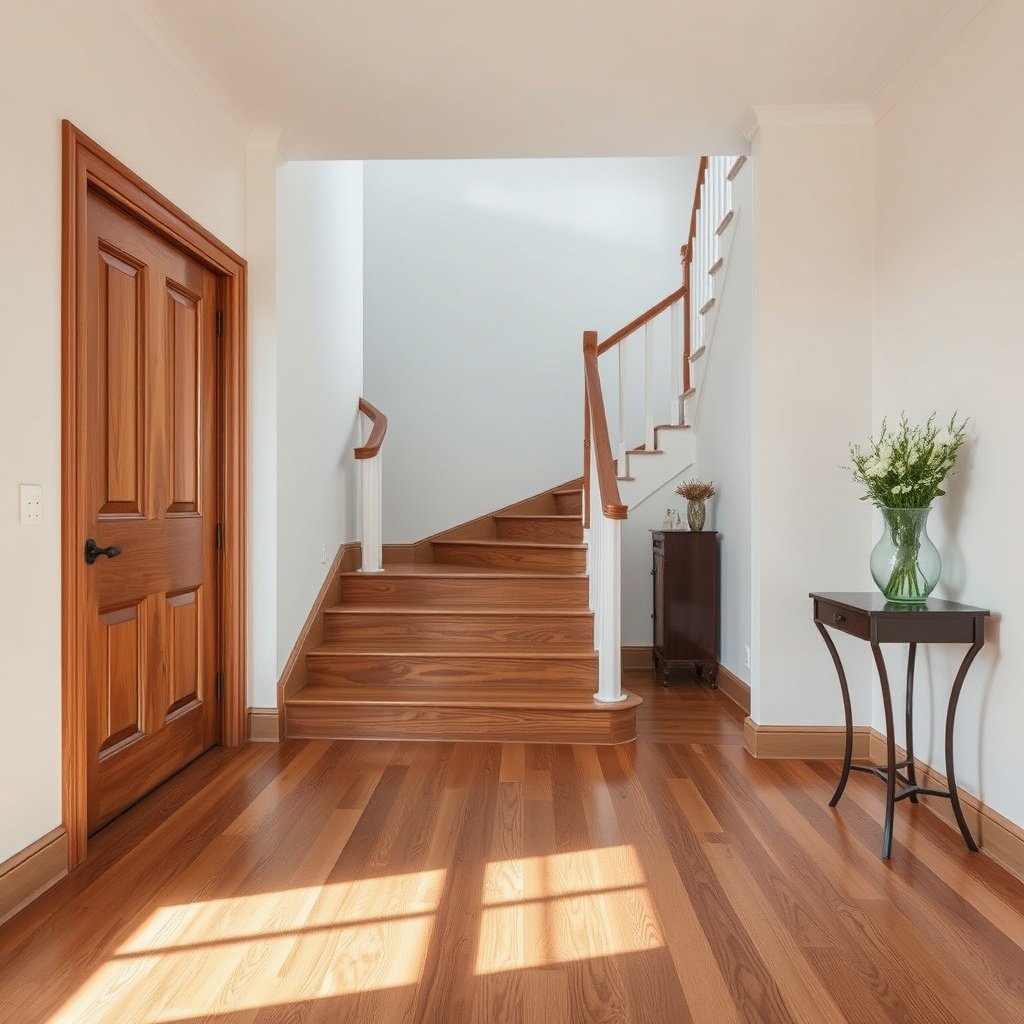
The fastest way to protect a hardwood staircase is to create a physical buffer between shoes and the finish—so the finish takes less scuffing and sanding over time. A stair runner (full coverage) or tread protectors (focused coverage on contact zones) are the two most practical options for most homes.
A stair runner or tread protector reduces direct shoe-to-finish abrasion, which is a primary cause of early dulling on hardwood stairs.
Using a hardwood-safe non-slip underlay matters because some rug pads can scratch or allow the mat to shift, creating new wear patterns.
Avoid adhesive methods that permanently bind to the finish; removal can pull up coatings or leave residue that requires additional cleaning.
Runner vs. tread protectors for a busy hardwood staircase
If your hardwood staircase receives constant footfall—high-heel traffic, pet zoomies, or kids sprinting up—runners tend to provide more consistent protection because they cover more of the tread surface area. Tread protectors can be ideal when you want to preserve more of the staircase’s visible wood grain while still protecting the “zones” people repeatedly step on.
Choose the right underlay and install method
– Use a stair runner or individual tread protectors to reduce scuffing from shoes and to shield the finish.
Focus on covering the tread where the ball of the foot lands, and where grit tends to accumulate. For many hardwood staircases, the front edge of each tread is the first area to show wear—runner coverage helps prevent that edge from becoming a “sandpaper strip.”
– Choose a non-slip pad/underlay that’s made for hardwood floors so it won’t scratch when it shifts.
In practice, “non-slip” is only half the requirement: you also want a pad that won’t migrate, shed, or abrade your finish if it shifts slightly. If you’re unsure, confirm the underlay is intended for “finished hardwood floors” (not just “hard surfaces”).
– Secure the runner using appropriate stair fasteners (and avoid adhesives that can damage finishes on removal).
Fasteners (e.g., stair grippers/appropriate anchors) are usually safer for preserving a hardwood staircase finish than sticky tapes or permanent adhesives, especially if you ever plan to recoat or replace the runner.
Quick comparison—what you gain (and what you manage) on a hardwood staircase
| Option | Main benefit | Main downside | Best for |
|---|---|---|---|
| Full stair runner | Most uniform protection against abrasion | Needs cleaning and occasional re-straightening | Busy hardwood staircases where you want consistent results |
| Tread protectors | Protects contact zones while showing more wood | More individual pieces to adjust | When you want minimal visual change |
Staircase Protection Levers for Finished Hardwood Floors (Practical Benchmarks)
| # | Protection lever | What to do | Damage it targets | Best-use scenario | Effectiveness |
|---|---|---|---|---|---|
| 1 | Hardwood-safe stair runner | Use a full-length runner or runner + grippers | Abrasion + finish scuffing | High traffic treads | ★★★★★ |
| 2 | Tread protectors | Cover repeated step zones only | Edge wear on stair noses | Preserve visible grain | ★★★★☆ |
| 3 | Hardwood-safe non-slip underlay | Use a pad intended for finished wood floors | Pad-shift abrasion | Runner stability | ★★★★☆ |
| 4 | Entry mats at top/bottom | Trap grit before it reaches stairs | Grit-as-sandpaper effect | Winter tracking seasons | ★★★★★ |
| 5 | Stable indoor relative humidity | Maintain target RH band year-round | Dimensional movement + finish stress | Seasonal gap/cupping prevention | ★★★★☆ |
| 6 | Barefoot/soft-foot traffic rules | Remove shoes with heavy tread grit | Abrasion acceleration | Homes with pets/kids | ★★★☆☆ |
| 7 | Wet mopping/standing water | Avoid pooling; wipe immediately | Moisture penetration + finish failure | After spills/cleaning | ★☆☆☆☆ |
Stop dirt, grit, and abrasion at the source
The most effective way to protect a hardwood staircase from premature wear is to prevent grit from reaching the wood in the first place. Entry mats and careful cleaning routines reduce the “sandpaper effect” that makes finishes look tired long before the coating fully wears through.
Grit carried in by shoes is one of the main drivers of abrasion on hardwood floors and stairs, because hard particles abrade the finish layer.
Vacuuming and dry-cleaning methods typically reduce finish risk compared with wet mopping, which can drive moisture into seams.
Dragging items across stair treads can embed or distribute grit, rapidly increasing wear on a hardwood staircase landing.
Use entry mats to control the real problem
– Place high-quality entry mats at the top/bottom of the staircase path to catch grit before it reaches the wood.
The key isn’t just having “a mat”—it’s whether it actually traps particulate matter. In heavy-traffic homes, two mats (one near each end of the staircase flow) often perform better than a single mat placed far away.
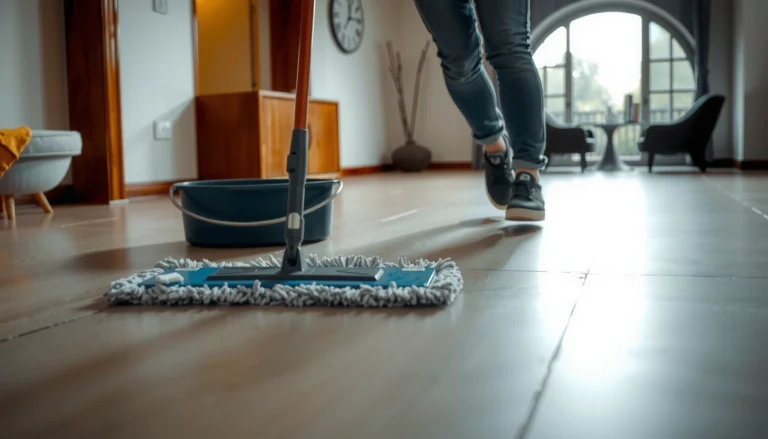
– Clean with a microfiber mop or vacuum designed for hard floors (use the brush/no-brush mode as the manufacturer recommends).
For a hardwood staircase, brush rollers can sometimes fling grit or scuff edges if used aggressively. Microfiber tools reduce the chance of scratching because they collect debris instead of grinding it.
– Avoid dragging anything across treads; even small pebbles can turn into sandpaper on a high-traffic stair landing.
This includes moving hampers, vacuum heads, pet water bowls (when handled carelessly), and even furniture legs when someone “sets it down” on a stair tread.
Practical routine for a busy hardwood staircase
If you want something you can actually follow, use this rhythm for your hardwood staircase:
– Spot sweep/vacuum daily where traffic concentrates (especially the first few treads).
– Deep clean the stair zone on a predictable schedule (weekly or biweekly), but only using methods your floor finish allows.
– Keep runner/pad edges clean so grit doesn’t migrate under the covering.
Keep moisture and humidity under control
The quickest way to prevent finish failure on a hardwood staircase is to control moisture exposure and stabilize indoor relative humidity across seasons. Wet cleaning and large humidity swings can stress the wood and cause coating issues—often faster than abrasion alone.
According to the National Wood Flooring Association (NWFA), maintaining indoor relative humidity in an appropriate band helps reduce wood movement and related finish stress.
The U.S. Environmental Protection Agency recommends keeping indoor humidity around 30–50% to help prevent mold growth conditions. EPA, guidance on indoor humidity (year: )
Many wood floor care guides advise against wet mopping because excess moisture can penetrate seams and compromise finish performance.
Use the right cleaning “wetness level”
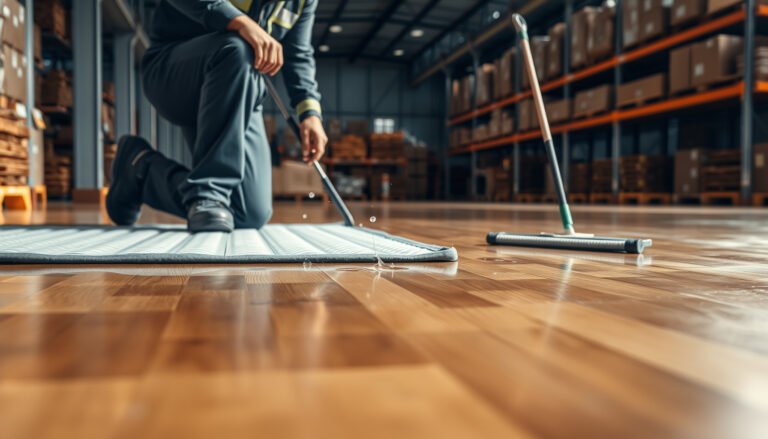
– Don’t use wet mopping on hardwood—use a barely-damp method only if your floor’s finish manufacturer allows it.
“Barely-damp” is not the same as “wet”: you want to wipe, not flood. If you’re uncertain, default to vacuuming plus dry microfiber first, then follow your finish manufacturer’s approved cleaner and technique.
– Manage seasonal humidity so the wood stays stable; big swings can cause gaps, cupping, and early finish failure.
In many climates, a humidifier in winter and a dehumidifier in summer is what makes the difference—not extra coats of finish.
– Wipe up spills immediately (and keep water from pooling around the base of the stairs or near a door).
Staircases near exterior doors are especially risky because tracking + humidity can combine into repeated wetting.
Concrete targets (so you can measure)
– According to NWFA environmental guidance, indoor relative humidity is commonly targeted around 35–55% RH for wood floor stability ().
– According to NWFA-related environmental recommendations, indoor temperature is often kept in a moderate 60–80°F band to avoid excessive expansion/contraction stress ().
– According to EPA guidance, indoor humidity is commonly recommended in the 30–50% range to support healthy indoor conditions (EPA, indoor humidity guidance (year: )).
(Use your hardwood staircase as the “sensor”: if you see consistent seasonal gap changes or finish hairline failures, your humidity band isn’t stable enough.)
Maintain the finish and plan for recoat timing
The best way to maintain a hardwood staircase’s finish is to follow the specific finish type’s cleaning and recoating instructions and address failures early rather than layering on top of ongoing problems. Different coatings behave differently—polyurethane films react one way to cleaners, while oil/penetrating finishes age another way.
Finish type determines maintenance: polyurethane (film-forming) and oil/penetrating finishes require different cleaning and recoating approaches.
If a finish issue spreads (sticky areas, peeling, or thinning), the cause is often moisture or abrasion patterns that recoating alone can’t fix.
In high-wear stair zones, spot protection and repair planning can slow down finish failure by reducing direct abrasion exposure while maintenance is scheduled.
Treat “recoat” as a planned maintenance step
– Follow your specific finish type (polyurethane vs. oil/penetrating finishes) for cleaning and recoating—methods aren’t interchangeable.
If your hardwood staircase has been previously coated, you can’t reliably assume an oil finish will accept polyurethane the same way. When in doubt, confirm with the original finish manufacturer’s guidance.
– For high-wear areas, spot-protect with an approach that matches the existing finish (often a screen-and-recoat process, if the floor is already sealed).
The goal is to preserve adhesion and uniform sheen without overbuilding thickness in a way that may crack under stress.
– If you notice dulling, thinning, or sticky spots, stop and address the cause before adding more finish.
Sticky spots can reflect contamination, incompatible cleaners, or moisture-driven residue. Treat the root problem first.
When you should pause and diagnose
If your hardwood staircase shows repeated finish failure only on certain treads, check:
– runner/pad shifting (abrasion pattern changes),
– humidity swings (seasonal movement),
– direct water exposure (doorway runoff or leaks).
What can go wrong (and how to avoid it)
Even with good intentions, a hardwood staircase can still fail early if the protective system is mismatched to your floor’s finish, moisture conditions, or wear patterns. The most common problems are preventable: wrong underlay behavior, overly aggressive cleaning, and treating symptoms instead of causes.
Some rug pads for hardwood floors can still scratch, shed, or shift; the result is additional wear that looks like “random” finish damage.
Steam cleaning and harsh detergents can strip or haze many common wood floor finishes, increasing the chance of premature dulling or failure.
Adding extra finish will not fix ongoing moisture or grit intrusion; it can fail faster if the underlying exposure continues.
– Using the wrong underlay: some pads can scratch, shed, or shift and create new wear patterns—stick to products intended for finished hardwood floors.
– Over-wetting or using harsh cleaners: steam cleaning, abrasive scrubs, and strong detergents can strip or haze many common finishes.
– Assuming “more finish” fixes everything: if moisture issues or ground-in grit are the real problem, extra coats can fail faster.
– Ignoring loose boards or uneven treads: movement increases scuffing and can tear up the finish sooner than normal wear.
Common edge cases for a hardwood staircase
– If the staircase landing gets repeated “tracking pockets” of grit, mats and runner cleaning must be part of the plan—not optional.
– If you have known leaks or recurring dampness near the entry, your humidity/installation strategy must address moisture at the source before finish maintenance can succeed.
Verdict: the best protection strategy (with downsides)
The most reliable approach is a layered plan: stair runner/tread protectors to block abrasion, entry mats to prevent grit, and careful cleaning plus stable humidity to protect the wood and finish. The downside is that runners/pads require periodic cleaning and adjustment, and removing adhesive-backed materials can be difficult on finished hardwood.
Layered strategy vs. “one fix” (why the hardwood staircase approach wins)
– Runner + mats + gentle maintenance: prevents both abrasion and moisture stress at the same time.
– Only adding extra finish: can’t stop grit from abrading or moisture from attacking the edges and joints.
Skip this approach (or get professional guidance) if:
– Your staircase has ongoing moisture damage (leaks, persistent dampness, mold risk).
– You can’t maintain indoor humidity at a reasonable level year-round.
– Your floor finish is already failing in large areas and may need full refinishing rather than spot protection.
Quick protection checklist (save this)
| Area | What to do | Quick check |
|---|---|---|
| Coverage | Install a stair runner/tread protectors with hardwood-safe underlay | Runner stays put without sliding |
| Abrasion | Use entry mats; prevent grit from reaching stairs | No visible grit lines near landings |
| Cleaning | Vacuum (hard-floor mode) or microfiber; avoid wet mopping | Floor doesn’t look hazy after cleaning |
| Moisture/Humidity | Keep humidity stable; wipe spills fast | No new gaps/cupping after seasons |
| Maintenance | Match recoat/repairs to the existing finish type | No “sticky” or peeling areas spreading |
Sources
– National Wood Flooring Association (NWFA) maintenance and environmental guidance for wood floors (including recommended indoor relative humidity targets).
– NWFA guidance on wood floor care/cleaning methods appropriate for finished hardwood.
– U.S. Environmental Protection Agency (EPA) guidance on indoor humidity and mold prevention.
– Your hardwood floor or finish manufacturer’s care and recoating instructions (polyurethane vs. oil/penetrating finishes differ).
Protecting hardwood floors on stairs works best when you combine physical coverage (runner/treads), dirt control (entry mats + gentle cleaning), and environmental stability (humidity + fast spill cleanup). Start with runner/pad placement and a hard-floor cleaning routine this week, then review your finish type and follow manufacturer-care steps for any touch-ups. If you’re seeing finish failure patterns that repeat on the same treads, pause and correct the cause before you add more coating—your hardwood staircase will thank you for the preventive maintenance.
Frequently Asked Questions
How can I protect hardwood floors in a staircase from scratches and wear?
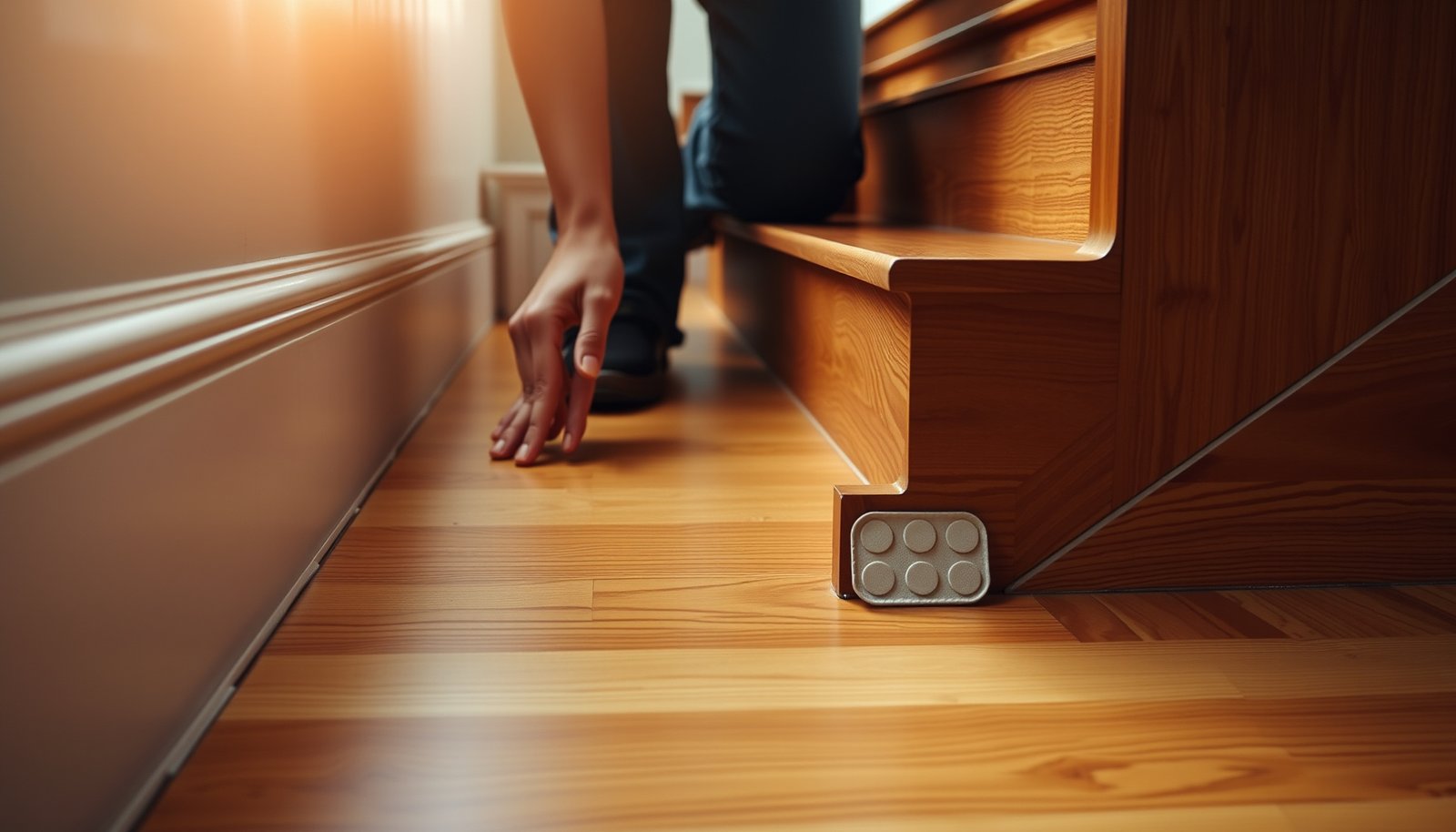
Use high-quality stair treads or runners with a non-slip backing to reduce direct contact between shoes and the hardwood. Add felt pads to furniture and any items placed on the stairs, and consider using shoe-free rules for heavy-traffic areas. Regularly sweep or vacuum with a soft brush attachment to remove grit that can act like sandpaper on hardwood floors.
What’s the best way to prevent water damage on a hardwood staircase?
Place a washable runner or mat at the top and bottom of the staircase where spills are most likely, and ensure it has breathable coverage so moisture doesn’t get trapped. Immediately blot spills with a dry, absorbent cloth—never rub—then allow the area to dry fully with good airflow. For added protection, apply a clear polyurethane or water-resistant finish designed for hardwood flooring, following the manufacturer’s cure times.
Why do hardwood staircases get damaged faster than other rooms?
Staircases experience concentrated foot traffic, impact, and frequent pivoting as people step up and down, which accelerates wear on the treads. Dirt, sand, and moisture are tracked in more often on stairs, and the hardness of hardwood can make micro-scratches more visible. Without protective stair coverings or proper cleaning, the finish on a hardwood staircase can wear through unevenly, leading to dullness and potential staining.
How do I maintain a sealed, protected hardwood finish on my staircase?
Keep the hardwood staircase clean by sweeping dust and debris daily and using a hardwood-safe cleaner as needed—avoid harsh chemicals and excess water. Inspect the finish periodically for scuffs or worn spots, and reapply a protective topcoat when the surface starts to look thin or rough. Use runners or protective coatings to extend recoat intervals, especially on the most heavily stepped areas.
Which protective options work best for a hardwood staircase—runners, mats, or rugs?
A fitted stair runner is often the best option because it covers the high-wear surface while improving traction and reducing scratch risk. Choose a rug or mat only if it fits securely and doesn’t slide, since shifting rugs can grind dirt into the finish. For maximum protection, look for non-slip backing and a low-shedding material, and ensure the edges are properly secured so the hardwood staircase stays protected without damaging the surface underneath.
📅 Last Updated: October 17, 2026 | Topic: How to protect hardwood floors in a staircase? | Content verified for accuracy and freshness.
References
- Wood flooring
- https://en.wikipedia.org/wiki/Floor_polish
- https://en.wikipedia.org/wiki/Floor_wax
- https://en.wikipedia.org/wiki/Area_rug
- https://en.wikipedia.org/wiki/Slip_resistance
- Seasoning
- https://www.epa.gov/mold/mold-prevention
- https://scholar.google.com/scholar?q=how+to+protect+hardwood+floors+from+scratches+felt+pads+rugs Google Scholar
- https://scholar.google.com/scholar?q=wood+floor+maintenance+humidity+control+warping+swelling Google Scholar
- https://scholar.google.com/scholar?q=hardwood+floor+finish+wear+resistance+stairs+anti-slip+surface Google Scholar