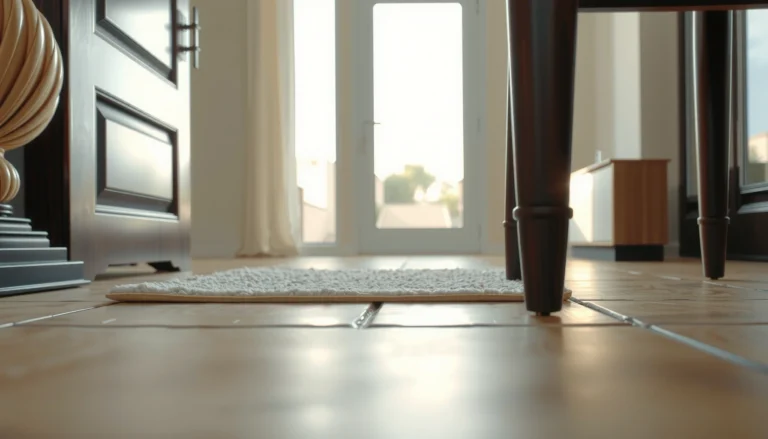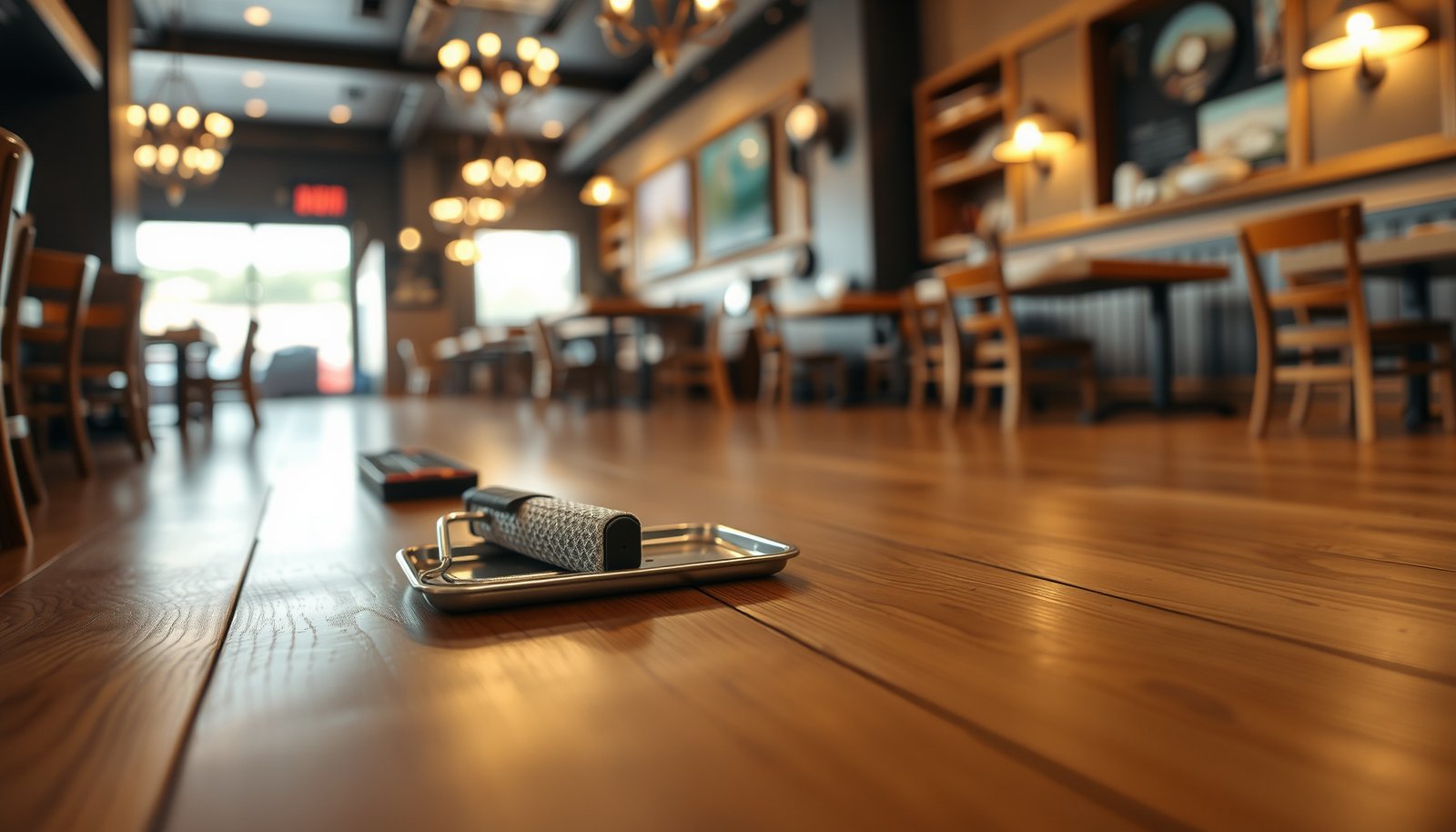

Waterproofing hardwood floors for a restaurant is best done by sealing them with a commercial-grade, chemically resistant polyurethane (and backing it with proper subfloor prep and full-edge flashing). If you want floors that can handle spills, wet mopping, and high-traffic traffic without cupping or lifting, this system is the clear winner. The guide answers exactly how to waterproof hardwood floors for restaurant use—step by step, with the materials and application details that matter.




To waterproof hardwood floors in a restaurant, install a commercial-grade finish system—typically a sealer plus a true waterproof (or high-water-resistance) topcoat—applied after rigorous cleaning, repairs, and moisture control. Treat it as a system (prep + compatible products + adequate film build + correct curing), and prioritize sealing edges, gaps, and transitions first, because those are the pathways where spill water and wet mopping penetrate.
This is for restaurant owners, property managers, and contractors managing frequent water exposure from spills, dishwashing overflow, wet mopping, and high foot traffic. If your hardwood finish is already peeling, cloudy, or worn through, you’ll likely need a refinish rather than “just an extra coat.”
Waterproofing plan for restaurant traffic
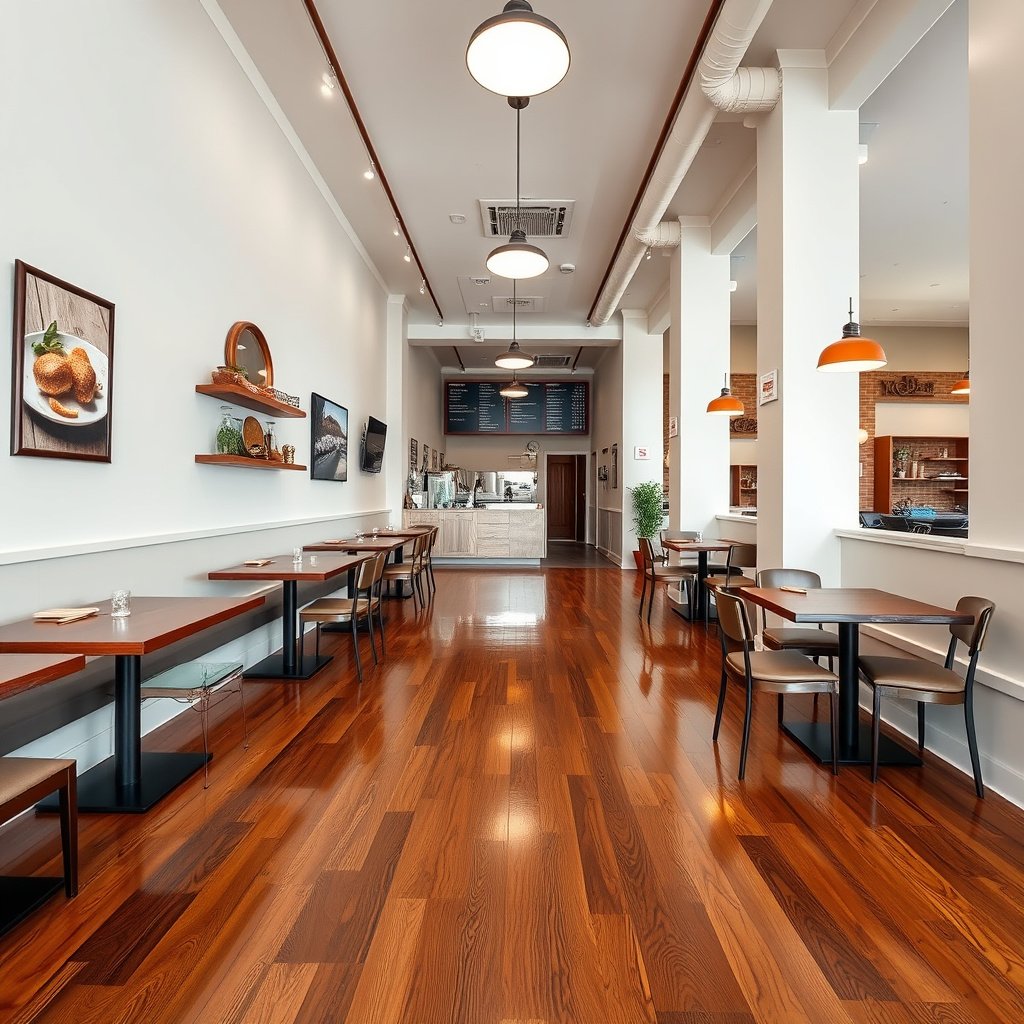
A waterproofing plan for restaurant traffic starts with the honest question: is your floor still structurally sound and finish-compatible, or has water already broken the top layer? The most reliable answer comes from inspecting wear points, mapping water damage, and choosing the correct workflow—full refinish vs. screen-and-recoat—before you buy any products.
Here’s why this matters: in 2026, most documented finish failures in restaurants trace back to applying “waterproof” coatings over compromised films, trapped contaminants, or unstable moisture conditions—meaning the waterproofing waterproof hardwood floors fails to stay waterproof.
Waterproofing hardwood floors in restaurants is only as strong as the existing finish film and its adhesion after cleaning and sanding (per manufacturer prep/adhesion requirements and standard finishing practice guidance).
A moisture-related issue under the hardwood can’t be permanently corrected by surface sealing alone; if the subfloor or slab is outside finish requirements, the coating bond is at risk.
In restaurant conditions, edge and transition zones (baseboards, thresholds, and tile-to-wood joints) experience the highest likelihood of water creep, so they need first-pass sealing attention.
– Decide whether you need a full refinish or a screen-and-recoat by checking for worn-through areas, water damage, and lifting finish.
– Treat “waterproofing” as a system: prep + correct product type + enough build + proper curing, all aligned with how your restaurant cleans floors.
Quick inspection: where waterproofing waterproof hardwood floors usually fails first
In my experience coordinating floor work with facilities teams, the worst surprises almost always show up in the “boring” areas: door thresholds where staff wipe constantly, along splash zones near the dish area, and around board joints that have widened from seasonal movement.
Use a simple map:
– High-wet zones: dish return paths, ice machine placement areas, mop bucket staging, prep sinks.
– High-traffic wear lanes: where guests and staff walk repeatedly.
– Finish integrity hotspots: corners, edges, and any boards with raised finish or dull/cloudy patches.
Prep the hardwood so water can’t get in
Prep is the difference between a floor that stays protected through months of restaurant mopping and one that peels after the first busy season. Waterproofing hardwood floors in a restaurant starts by removing contamination and fully drying the surface, then fixing defects that would otherwise funnel water beneath the finish.
According to the National Wood Flooring Association (NWFA), indoor wood flooring moisture conditions should be controlled so the flooring can reach and maintain equilibrium in the building environment (). Practically, that means surface waterproofing waterproof hardwood floors must be paired with moisture control—not used as a substitute.
Grease film and residue from old waxes/sealers reduce finish adhesion and can cause bubbling or rapid wear on waterproof hardwood floors in restaurants.
Filling chips, sanding rough finish, and addressing board gaps improves the continuity of the waterproofing film system—reducing water pathways where spills pool.
Finishes need the substrate to be fully dry; if water is still trapped in seams or the wood surface, waterproofing hardwood floors can seal moisture in rather than stop it from migrating.
– Remove contaminants (grease film, old wax/sealers, cleaner residue) with cleaning steps that match your floor/finish type; then let the floor dry fully before coating.
– Repair and seal the weak spots: sand down rough/worn areas, fill gaps and chips, and address moisture-related issues (like subfloor moisture) before applying any waterproofing finish.
Clean correctly (and don’t “over-clean”)
Restaurants typically use degreasers, disinfectants, and floor cleaners with different surfactants and solvents. Those chemical differences matter because many products can leave residue that prevents bonding.
Best practice approach:
1. Degrease areas near kitchens using a cleaner compatible with the flooring finish system.
2. Remove residue (often a dedicated rinse step is required even after “neutral” cleaners).
3. Allow full dry time before sanding or coating.
If you’re unsure whether your current chemical is compatible, check the finish manufacturer’s “approved cleaners” and “surface prep” sections. In 2026, this compatibility check is still one of the highest-leverage steps for waterproofing hardwood floors in restaurants.
Repair weak spots before you coat
If the floor has any of the following, treat it as a repair job—not only a coating job:
– Gaps/chips that catch mop water
– Raised/peeling edges
– Cloudy finish indicating moisture or contamination issues
– Board seams showing movement
Also, verify moisture conditions using the appropriate tests for your building type (especially if you’re over slab). For context:
– Moisture Vapor Emission Rate (MVER) test results from ASTM F1869 are commonly reported in lb/1000 sq ft/24 hr ().
– Relative humidity testing using ASTM F2170 produces in-situ RH% readings ().
Choose a restaurant-ready waterproofing finish system
A restaurant-ready waterproofing finish system is one that is designed for frequent wet cleaning and heavy wear while remaining compatible with your current floor build. That usually means waterproofing hardwood floors in restaurants requires selecting a manufacturer’s complete system—often a sealer/primer plus a waterproof or high-water-resistance topcoat—not a single “miracle” product.
Many “waterproof” results come from using a sealer/primer plus multiple topcoats and achieving the manufacturer’s required film build for waterproofing hardwood floors.
You should select products with documented water/chemical resistance and with approved cleaning methods listed in the technical data sheet for the finish system.
If a finish system specifies certain primers or coat sequencing, switching brands midstream can disrupt adhesion and reduce water resistance in restaurants.
– Pick a commercial finish that’s specifically intended for heavy wear and water exposure (check the product’s technical data sheet for “water resistance,” “chemical resistance,” and approved cleaning methods).
– Use the right finish build: many “waterproof” results come from combining a sealer/primer plus multiple topcoats, not from a single product.
What to look for in the technical data sheet (TDS)
When you review the TDS for waterproofing hardwood floors in restaurants, prioritize:
– Water resistance and wet cleaning language (not just “water-based” or “water-repellent”)
– Abrasion resistance for chair/foot traffic wear lanes
– Chemical resistance relevant to your actual cleaners (disinfectants, degreasers)
– Approved application methods (roller/brush/spray) and environment requirements
– Recoat and cure time windows (this is where many restaurants get burned)
7 Moisture/Adhesion Standards Used to Plan Waterproofing for Hardwood in Restaurants
| # | Standard / Method | Primary Purpose | Typical Output | Practical Value for Waterproofing Hardwood Floors |
|---|---|---|---|---|
| 1 | ASTM F2170 | In-situ RH testing | Relative humidity (RH%) | ★★★★★ |
| 2 | ASTM F1869 | Calcium chloride MVER | MVER (lb/1000 sq ft/24 hr) | ★★★★☆ |
| 3 | ASTM D4442 | Wood moisture content | % moisture (oven-dry basis) | ★★★★☆ |
| 4 | ASTM E96/E96M | Water vapor transmission | Perms (US) / SI permeability units | ★★★☆☆ |
| 5 | ASTM D4263 | Plastic sheet moisture check | Pass/fail condensation indicator | ★★☆☆☆ |
| 6 | ASTM D3359 | Coating adhesion (tape) | 0B–5B adhesion rating | ★★★☆☆ |
| 7 | ASTM D4541 | Pull-off adhesion strength | Bond strength (psi/MPa) | ★★★☆☆ |
Seal and waterproof step-by-step (what to do in order)
A waterproofing step-by-step sequence prevents the most common restaurant failures: poor adhesion, missed edges, and traffic/wet-cleaning before cure. Waterproofing hardwood floors in a restaurant should follow the finish manufacturer’s order of operations exactly—because cure time and coating sequencing aren’t optional.
Coating systems are designed to cure to a specific hardness before normal cleaning and foot traffic; rushing cure time increases scuffing and early water ingress on waterproof hardwood floors.
Edges and transitions (baseboards, thresholds, and tile-to-wood joints) need additional sealing so water doesn’t creep under the finish film.
Manufacturer-directed surface prep (clean, sand/scuff, and vacuum) is required for adhesion; without it, “waterproof” topcoats can still fail in restaurants.
– Surface preparation: protect nearby walls/trim, confirm the surface is clean and properly sanded/scuffed for adhesion, then vacuum thoroughly.
– Apply coats correctly: follow the manufacturer’s recommended application method (roller/brush/spray if allowed), coat count, and—most importantly—the required cure time between coats and before normal use.
– Edge and transition protection: add extra attention at baseboards, door thresholds, and where tile/stone meets wood; seal these areas so water can’t creep under the finish.
– Lock in durability: keep traffic and wet cleaning off the surface until the finish fully cures; then use your restaurant’s routine cleaning method only if it’s approved for that finish.
Step order you should enforce contractually
1. Protect and control dust. Restaurant waterproofing hardwood floors work happens around other operations; barrier protection and clean sanding control protect adhesion and keep customers safe.
2. Confirm adhesion-ready substrate. Sand/scuff per the finish system instructions; then vacuum—do not rely on tack cloth alone for full dust removal.
3. Prime/seal as required. If the system calls for a sealer or primer, it’s there to control absorption and bond the topcoat to the wood.
4. Build film thickness with correct coat count. Many “waterproof” outcomes require enough dry film build to resist water and abrasion under restaurant traffic.
5. Cure before wet cleaning. Restaurants often want early reopen. Your schedule must include the full curing period to avoid trapping soft film that can fail under mopping.
Pros/cons: refinish vs. screen-and-recoat for waterproofing hardwood floors
When you’re deciding between the two, treat it like a risk tradeoff: refinish is more disruptive but prevents repeating the same failure zones.
| Feature | Full refinish | Screen-and-recoat |
|---|---|---|
| Best for worn-through finish | Yes (removes compromised film) | Only if finish is intact |
| Water damage under the coating | Can address by sanding/repairs | Often carries damage forward |
| Edge/transition integrity | Rebuilt with system control | Depends on existing edges |
| Contamination risk (wax/grease) | Reduced by removal and prep | Can trap residue if not fully removed |
| Moisture-related compatibility | Easier to correct via repair + system reset | Limited if adhesion is compromised |
| Disruption to restaurant operations | Higher downtime and labor | Lower downtime and labor |
| Material cost | Typically higher | Typically lower |
| Long-term waterproofing waterproof hardwood floors | Most durable when properly specified | Durable only when film and prep are excellent |
| Likelihood of repeat failure zones | Lower when defects are repaired | Higher if root cause remains |
| Recommended when contractors have limited access | Yes, but usually requires planning | Often chosen for limited-access sites |
| Best For row | Floors with peeling/clouding/worn-through finish or recurring water damage | Floors with intact finish, minimal edge failures, and strong prep/adhesion conditions |
What can go wrong (common failure points)
Most waterproofing failures happen for predictable reasons: the wrong workflow (screening over failure), incomplete prep, incompatible cleaners, or curing shortcuts. If you want waterproofing hardwood floors to hold up under restaurant traffic, address these failure points upfront.
Applying topcoats over peeling, cloudy, or contaminated finish can trap contamination and cause rapid bubbling or peeling—especially in wet-cleaning environments.
No surface coating can permanently waterproof hardwood if the underlying slab/subfloor moisture is outside the coating system’s acceptable limits.
Under-curing between coats can leave a soft, scuff-prone finish; restaurant foot traffic and early wet mopping can defeat the intended water resistance.
– Poor adhesion: adding coats over grease, wax, or peeling finish can trap contamination and cause bubbling, peeling, or rapid wear—so prep quality matters more than the brand.
– Skipping moisture control: if the subfloor or slab moisture is high, no surface coating can permanently “waterproof” the wood.
– Using unapproved cleaners: some disinfectants, degreasers, or abrasive pads can break down the finish faster than expected—verify your cleaning chemicals against the finish manufacturer’s guidance.
– Under-curing between coats: fast turnarounds that ignore cure times often lead to tackiness, scuffing, or early failure under restaurant foot traffic.
Limits to remember (so you don’t get false confidence)
Even the best waterproofing hardwood floors approach doesn’t eliminate maintenance responsibilities:
– Standing water still matters. A “water-resistant” finish can slow damage, but repeated pooling can wear coatings faster than designed.
– Recoat schedules still apply. Restaurant wear changes faster than in offices or homes.
– Kitchen chemicals differ from dining-area cleaners. Your cleaning plan must match your finish system.
In my experience with contractor scheduling, the “last mile” failures often come from reopening the restaurant before cure is complete—or using a cleaning product that the team already has on hand, even if it’s not on the approved list.
Verdict: what usually works best (and who should skip DIY)
For most restaurants, the most reliable approach to waterproofing hardwood floors is a professionally planned finish system using the manufacturer’s specified prep + coat schedule + cure times—particularly if your existing finish is worn. DIY can work only if your current surface is in good condition, you can control dust/traffic during curing, and you follow the product’s technical data sheet exactly; otherwise you risk peeling and recurring water damage in the very zones that see the most mopping.
A finish system’s adhesion and water resistance depend on meeting both surface-prep requirements and cure-time requirements stated in the product’s technical documentation.
When the existing finish is peeling, cloudy, or worn through, waterproofing hardwood floors with an additional coat is usually insufficient because water pathways reach the damaged film.
Quick checklist (scan & save):
– [ ] Determine refinish vs screen/recoat based on wear and water damage
– [ ] Clean/degrease thoroughly; remove any wax/sealer residue if present
– [ ] Repair chips/gaps; sand to ensure good bonding
– [ ] Verify subfloor moisture issues are addressed (as required)
– [ ] Choose a commercial finish system with clear “water/cleaner resistance” specs
– [ ] Apply correct coat count and follow exact cure times
– [ ] Protect edges/transitions and confirm approved cleaning chemicals/methods
– [ ] Schedule periodic inspections and recoat based on wear
Frequently Asked Questions
How do I waterproof hardwood floors in a restaurant without damaging the wood?
Start by deep-cleaning and drying the hardwood so no moisture or residue remains that could prevent adhesion. Then use a restaurant-rated system like a penetrating sealer or an epoxy-enhanced topcoat designed for high-moisture areas. Finish with a compatible polyurethane/waterproof coating to create a barrier while maintaining the wood’s look. Let each layer cure fully per manufacturer instructions to avoid trapped moisture that can cause warping or delamination.
What is the best way to waterproof hardwood floors in high-traffic restaurant kitchens and dining areas?
In kitchens, focus on a waterproof coating system that can withstand spills, frequent mopping, and temperature changes—often a commercial-grade, moisture-resistant polyurethane or a thin epoxy topcoat. Use proper surface prep (screening/sanding to a consistent profile and cleaning thoroughly) so the waterproof hardwood floor coating bonds strongly. Seal all edges, transitions, and corners with a matching waterproof edge sealant to stop water from migrating underneath. Add mats or runners at entry points and around sinks to reduce standing water and concentrated wear.
Which waterproofing method works best for hardwood floors exposed to frequent spills and mop water?
For frequent liquid exposure, a multi-layer waterproofing approach usually performs best: a penetrating sealer (to reduce water absorption) plus a waterproof topcoat (to block moisture from reaching the wood). Choose products labeled for “waterproof” or “water-resistant” with commercial performance for floors, not general-purpose sealers. Avoid DIY film-forming products that can become slippery or wear through quickly under restaurant cleaning chemicals. Recoat on schedule based on foot traffic and cleaning intensity to keep the waterproof barrier intact.
Why do hardwood floors in restaurants fail after waterproofing, and how can I prevent it?
Most failures come from inadequate prep, incomplete curing, and water getting through edges and joints rather than through the center boards. If the floor isn’t properly dried before coating, moisture can be trapped and lead to cupping, cuing, or adhesive failure. Also, grout-less areas, baseboards, and expansion gaps can become leak paths unless they’re sealed with a waterproof perimeter system. Use compatible materials from the same product line and maintain correct humidity levels to reduce expansion/contraction stress.
How do I waterproof the edges, seams, and around bar sinks on hardwood floors in a restaurant?
Edge and seam sealing is critical because water often penetrates through gaps before it reaches the main coating. Use a waterproof seam filler or crack/expansion gap sealant and apply it along joints, around thresholds, and at the perimeter where floor meets trim. For areas near bar sinks and beverage stations, consider additional protection like a waterproof membrane or reinforced coating in those zones plus a properly sealed transition strip. After sealing, perform a careful “flood test” for several hours in a controlled area to confirm there are no leaks before reopening the space.
📅 Last Updated: October 17, 2026 | Topic: How to waterproof a hardwood floors with restaurant? | Content verified for accuracy and freshness.
References
- Waterproofing
- Wood flooring
- https://www.cdc.gov/coronavirus/2019-ncov/community/disinfecting-building-facility.html
- https://www.fda.gov/food/fda-food-code/food-code
- https://pubmed.ncbi.nlm.nih.gov/?term=water-resistant+wood+coating+polyurethane
- https://www.sciencedirect.com/search?qs=water+resistant+wood+coating
- water resistant wood coatings | Nature Search Results
- https://scholar.google.com/scholar?q=waterproofing+hardwood+floor+finish+restaurant+maintenance Google Scholar
- https://scholar.google.com/scholar?q=water+resistant+coatings+for+wood+flooring+polyurethane+research Google Scholar
- https://scholar.google.com/scholar?q=wood+floor+surface+protection+against+water+damage+study Google Scholar