


To safely clean soda stains from hardwood floors, you must act quickly, then use pH-neutral cleaner and minimal moisture to avoid warping or discoloration. With the right supplies—soft cloths, a gentle hardwood-safe cleaner, and clean water—you can usually lift the sticky residue and lighten the stain in about 30 to 60 minutes. Follow the steps carefully, and you will protect the finish while restoring the surface to a clean, even look.




Blot up the soda fast, then clean the area with a lightly damp, pH-neutral cleaner—never flood the wood. Dry thoroughly right away to prevent sticky residue and lingering discoloration, because sugar and acids can both remain after the visible spill is gone. You’ll learn how to remove sticky residue first, then address any discoloration you can still see without damaging the hardwood finish.
If your hardwood is sealed (most are), you can usually correct soda staining with controlled moisture and finish-safe cleaners. If the floor is unfinished/poorly sealed or the soda sat long enough to soak in, you may need a deeper, finish-aware approach—or potentially refinishing.
Start With Quick Cleanup and Surface Check
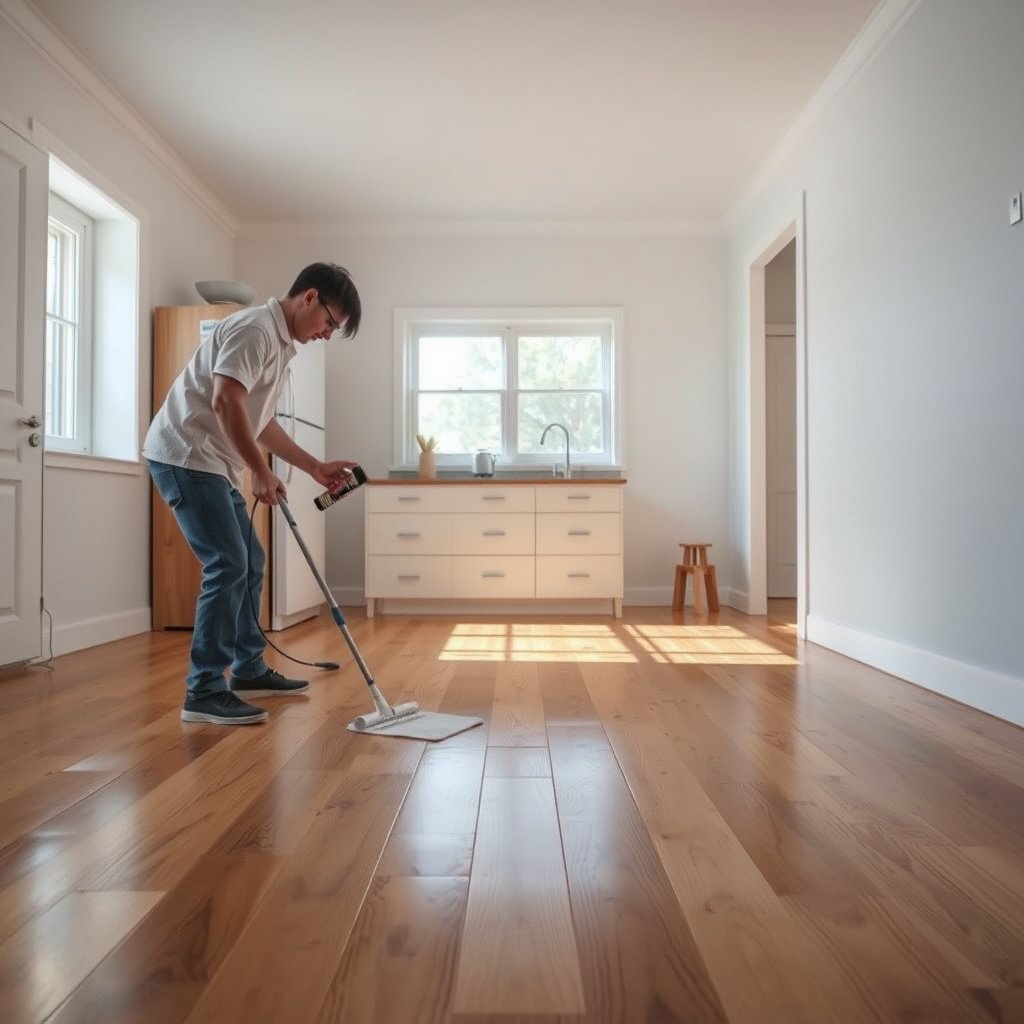
You can prevent most soda staining on hardwood by acting immediately and confirming whether the finish is likely sealed. Here’s the key: the first minutes determine whether you remove residue from the surface or allow sticky sugar/acid to work into the finish and, possibly, the wood.
– Blot (don’t wipe) using a clean, absorbent cloth or paper towels until no more liquid transfers.
– Check whether the floor looks sealed and intact; if you see bare/unfinished spots, treat it as a higher-risk situation.
– Before using any cleaner, do a small spot test in a hidden area to confirm it won’t dull or discolor the finish.
Typical Acidity of Common Soda-Like Spills (Guidance by pH)
| # | Spill type | Often driven by | Finish-etch risk (★/5) | Typical pH (higher = safer) |
|---|---|---|---|---|
| 1 | Cola (regular) | Phosphoric or similar acids | ★★★☆☆ | 2.3–2.7 |
| 2 | Cola (diet) | Same acidulants, less sugar | ★★★☆☆ | 2.3–2.7 |
| 3 | Lemon-lime soda | Citric/malic-type acids | ★★★☆☆ | 2.9–3.4 |
| 4 | Sports drink (acidified) | Citric acid + salts | ★★☆☆☆ | 2.8–3.5 |
| 5 | Ginger ale | Citric or similar acids | ★★☆☆☆ | 3.2–3.6 |
| 6 | Root beer | Acidulants (often milder) | ★☆☆☆☆ | 3.3–3.8 |
| 7 | Plain water (reference) | Neutral | ☆☆☆☆☆ | ~7.0 |
Remove Soda Residue Without Soaking the Wood
You remove the stain safely by targeting residue first—because sticky sugar is what keeps drawing soil and darkening the spot. The goal is to clean with controlled moisture on a cloth, then dry immediately, rather than letting liquid sit in seams or between planks.
– Mix a mild, pH-neutral cleaner according to the label, then apply it to a cloth (not directly to the floor).
– Wipe gently, working from the outside of the stain toward the center to avoid spreading stickiness.
– If there’s still tackiness, repeat with a fresh cloth dampened with clean water, then immediately dry with a dry towel.
Why “pH-neutral” matters: many hardwood floor care guides recommend cleaners near neutral pH to help protect finish chemistry. For example, the National Wood Flooring Association (NWFA) recommends using pH-neutral cleaners and avoiding excess water . Also, many product makers define “pH-neutral” as roughly neutral/low-sensitivity toward finishes (commonly around pH 7–8.5 on the label) (see ).
A quick moisture reality check: wood movement is driven by moisture cycling. In Forest Products Laboratory—Wood Handbook, the “fiber saturation point” occurs at roughly 25–30% moisture content, and swelling behavior changes significantly beyond that point; pooled liquid increases the chance you push local wood moisture higher and damage finish/appearance. That’s why your cleaning step stays lightly damp, never flooded.
Lift Remaining Staining Carefully (Finish-First Approach)
You handle visible discoloration by separating “sticky residue” from “finish/wood discoloration.” If the area feels tacky, residue removal is the priority; if it only looks different (no stickiness), you can shift to finish-aware lightening.
– If the stain is just discoloration with no stickiness, use minimal moisture and keep contact time short; re-check after each pass.
– For set-in discoloration, only try an oxidation/“lightening” approach that’s explicitly recommended for your wood finish type, and stop if the sheen changes.
– If the stain is deep, raised, or seems to have penetrated (common after long contact time), DIY cleaning may not fully fix it—refinishing is often the real solution for wood that’s absorbed sugar and acids.
Finish-first matters because “hardwood” is not one material. Sealed floors (urethane/polyurethane topcoats) behave differently than unfinished or oil-finished surfaces. Oxidation-based approaches can lighten tannin-like discoloration, but the wrong chemical or too much dwell time can change sheen, whiten the wrong layer, or damage the coating.
Also, soda spills can darken by two pathways: (1) residual syrup that attracts dirt and (2) acid + sugars affecting the finish layer or the top surface. That’s why you do controlled cleaning first, fully dry, then reassess before attempting anything more aggressive.
Dry, Restore, and Prevent Re-Soiling
You prevent lingering rings by drying immediately and keeping the area stable until the floor returns to normal. Once the sticky sugars are removed, thorough drying is what keeps the finish from looking spotty or dull.
– Dry immediately using towels, then place a fan to move air across the area (avoid harsh heat that can warp wood).
– After the floor is fully dry, assess the sheen; if your floor uses a compatible polish/wax, apply only if recommended for that finish.
– Keep the area traffic-free until it’s completely dry to prevent residue from re-dragging into the grain.
A simple workflow that works for most sealed hardwoods:
1) absorb → 2) pH-neutral cloth cleaning → 3) rinse-damp cloth (if needed) → 4) towel dry → 5) fan dry.
Then reassess sheen and color match after drying—because some discoloration looks worse while the wood is wet.
If you’re managing an office, rental property, or busy home entryway, drying time affects results. As of 2026, most care guidance still emphasizes “no wetting/pooling” and drying quickly—especially around seams.
What Can Go Wrong (Common Mistakes and Edge Cases)
You usually cause the worst outcomes when you add extra moisture, use the wrong chemistry, or ignore unknown floor type. Soda is sticky and acidic, so “more scrubbing” often spreads the problem rather than fixing it.
– Over-wetting: letting cleaner or water pool can cause swelling and uneven coloration, especially at seams and edges.
– Using the wrong chemicals: ammonia-based cleaners, harsh solvents, and bleach can dull or damage finishes and can worsen discoloration.
– Steam mops or very wet mopping: heat + moisture can drive stain deeper and can separate finish layers.
– Unclear floor type: if you can’t tell whether it’s sealed, coated, or unfinished, assume higher risk and spot-test everything.
Below is a quick “DIY vs. pro escalation” comparison you can use as a decision aid.
| Situation | DIY attempt is reasonable when… | Professional help is recommended when… |
|---|---|---|
| Tackiness persists after cleaning | You can still remove residue and the finish sheen isn’t changing | Tackiness returns after drying, suggesting deeper syrup absorption or finish breakdown |
| Deep or uneven discoloration | It’s light surface discoloration with minimal color contrast | The spot looks “shadowed,” raised, or continues to darken after residue removal |
| Unknown finish or unfinished wood | You can confidently confirm the finish type and test products safely | You can’t identify the finish and the stain appears to have penetrated |
Verdict: Safe Method to Follow (and Who Should Skip DIY)
Use the “blot → pH-neutral damp clean → immediate dry” method first—it’s the safest path for most sealed hardwood floors. The downside: if soda sat for a long time or the floor is unsealed, you may still see lingering discoloration even after thorough cleaning.
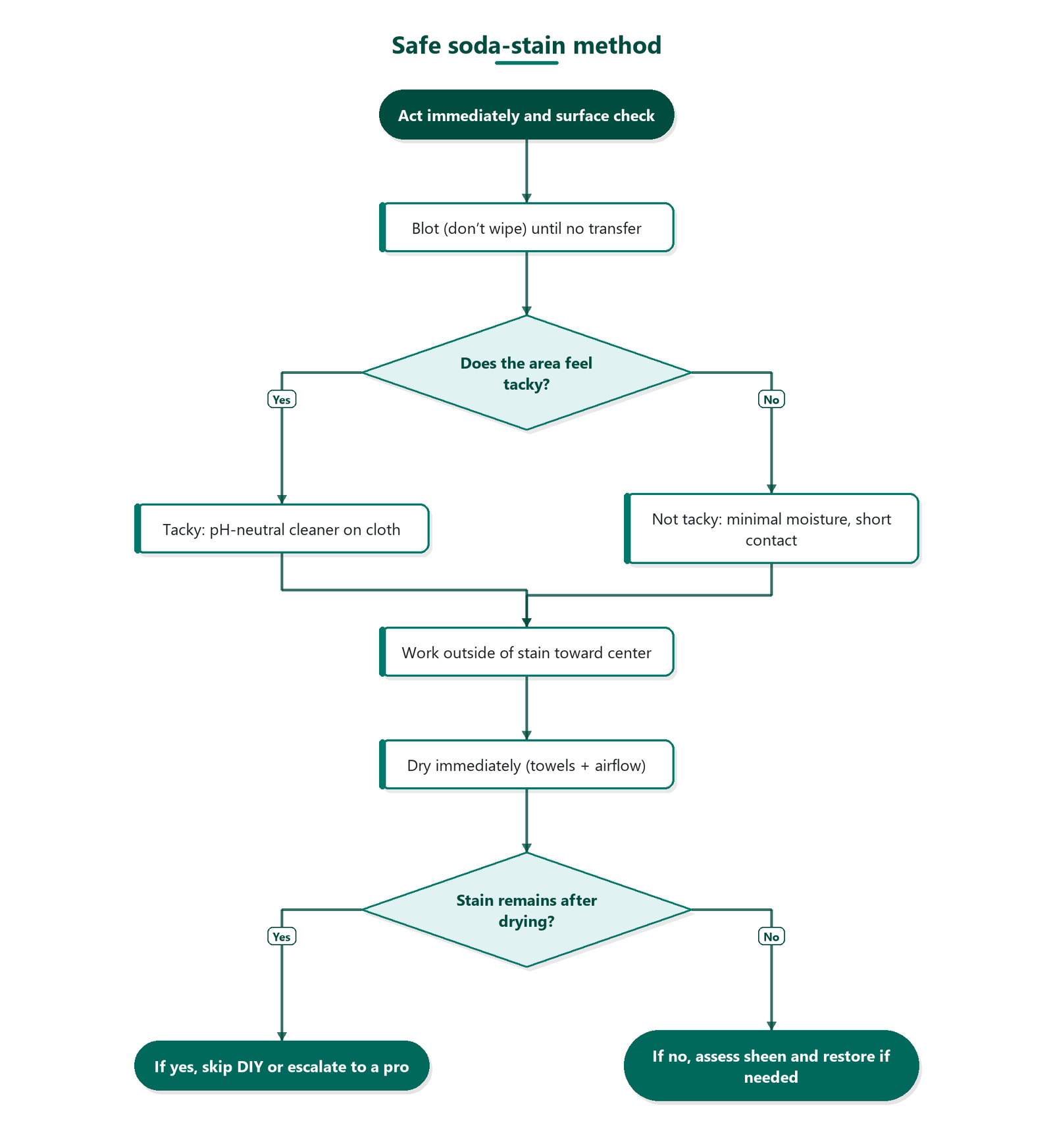
Skip DIY or escalate to a pro if:
– The stain remains after you’ve removed residue and fully dried the area.
– The wood is unfinished/antique/specialty finished and you can’t confidently test products.
– The soda was left for an extended period (time you’re unsure about) or the spill spread under trim.
A practical rule: when cleaning stops improving the spot without increasing dullness or sheen mismatch, further DIY chemistry becomes a guess—not a solution. In 2026, this “stop when the finish changes” mindset aligns with how most manufacturers frame finish-safe maintenance: protect the topcoat, remove residue with minimal moisture, and don’t improvise with strong acids/alkalis.
Scan-Save Checklist (Do/Don’t)
| Do this | Don’t do |
|---|---|
| Blot immediately with absorbent towels | Wipe aggressively while soda is still wet |
| Use a pH-neutral cleaner *on a cloth* | Pour cleaner/water directly onto the floor |
| Clean gently from edges toward center | Leave the area damp or let liquid pool |
| Dry right away (towels + airflow) | Use steam or excessive heat |
| Spot-test any stain-lifting method | Use bleach/ammonia or unverified “miracle” chemicals |
Frequently Asked Questions
What’s the safest way to clean soda stains from hardwood floors without damaging the finish?
Start by blotting the spill with a clean, dry microfiber cloth—don’t rub, since rubbing can spread the sugar and damage the finish. Mix a few drops of mild dish soap in warm water, wring the cloth well, and gently wipe the stained area. Use a second cloth dampened with plain water to remove any soap residue, then dry immediately with a towel. If the stain persists, switch to a small amount of white vinegar diluted with water (about 1:3), followed by thorough drying.
How do I remove sticky sugar residue from soda spills on hardwood floors?
Soda often leaves a sticky film that can attract dirt and dull the surface, so focus on lifting residue rather than just whitening the stain. Clean the area with a mild soap-and-water solution, then rinse by wiping with a lightly damp cloth so no detergent remains. Dry completely with a microfiber towel to prevent haze. For stubborn stickiness, repeat the process once, then consider a specialty hardwood floor cleaner designed for your finish type.
Why can soda stains cause discoloration or haze on sealed hardwood, and how can I prevent it?
Soda is acidic and sugary, and it can break down protective layers or leave residues that turn cloudy over time. If it sits, it may seep into seams or pores and cause permanent discoloration. The best prevention is to address the spill quickly: blot immediately, avoid wet mopping, and always dry the area afterward. Using coasters, mats, and prompt spot-cleaning reduces the risk of recurring hardwood floor stains.
Best method: should I use vinegar or a commercial cleaner for soda stains on hardwood?
For most sealed hardwood floors, a diluted vinegar solution can help lift light stains and sticky residue without harsh chemicals. However, always test in an inconspicuous spot first to ensure the finish isn’t affected, especially for pre-finished or older floors. If you prefer convenience, use a commercial hardwood floor cleaner labeled safe for your finish, following the product instructions closely. Avoid steam cleaners and strong degreasers, which can damage topcoats and strip sealants.
Which cleaning approach works best for water-based soda stains versus dark cola stains on hardwood?
Water-based sodas (like clear soda) usually leave less pigment, so gentle soap-and-water cleaning plus prompt drying often removes the issue. Dark cola stains contain stronger dyes, so you may need diluted vinegar or a slightly more targeted approach with a soft cloth, repeating until the stain fades. Never soak the floor; instead, apply cleaner to the cloth and work in small sections. After removing the stain, dry fully and, if the finish looks uneven, consider refinishing or applying a matching floor polish for that area.
📅 Last Updated: October 31, 2026 | Topic: How to safely clean soda stains from hardwood floors? | Content verified for accuracy and freshness.
References
- https://hgic.clemson.edu/factsheet/cleaning-and-care-of-hardwood-floors/
- https://extension.umn.edu/household-hazards-and-safety/cleaning-hardwood-floors
- https://extension.oregonstate.edu/cnre/cleaning-and-care-hardwood-floors
- 404 Error
- https://www.nps.gov/articles/wood-preservation.htm
- https://scholar.google.com/scholar?q=hardwood+floor+cleaning+soft+drink+spill Google Scholar
- https://scholar.google.com/scholar?q=wood+floor+water+stain+removal+methods+finish+spotting Google Scholar
- https://scholar.google.com/scholar?q=sugar+residue+removal+from+wood+floor+safe+cleaning Google Scholar

[…] floor or using harsh cleaners that strip the finish. With the right supplies—like a soft cloth, pH-neutral cleaner, and a careful step-by-step treatment—you can get the stain and stickiness out and help the floor […]