
If you’re trying to remove adhesive from garage floors, the fastest, cleanest method depends on what the adhesive is and how much residue is left. For most sticker and tape leftovers, heat and a plastic scraper paired with a solvent-safe degreaser will lift the adhesive without gouging concrete. If it’s a thick, older glue or epoxy-based residue, a mechanical approach plus a targeted adhesive remover wins—otherwise you’ll spend hours rubbing the surface instead of clearing it.




Removing adhesive from a garage floor works best when you match the right release method (heat or solvent) to the adhesive type, then finish with careful mechanical scraping. Identify whether the residue is tape-like, tar-like, or resin-like, soften it appropriately, and use controlled scraping so you don’t gouge or damage any concrete sealers.
If you’ve got old tape residue, sticker glue, adhesive from floor mats, or leftovers from decals and coatings, the steps below walk you through removal while protecting the concrete surface. We’ll also cover what goes wrong when the wrong chemical (or too-aggressive abrasion) turns residue into a bigger, more permanent problem—especially on sealed or painted garage floors.
Identify the Adhesive Type (So You Don’t Make It Worse)
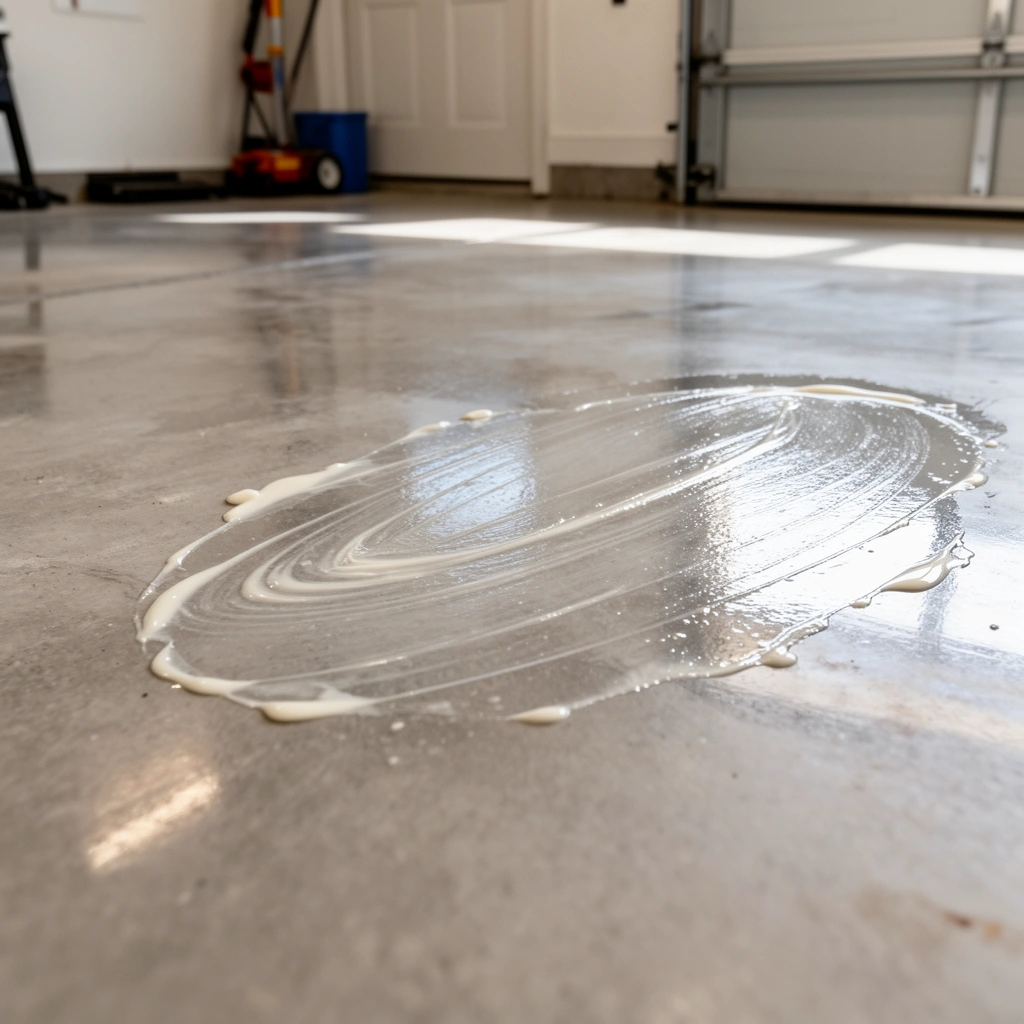
The fastest path to clean concrete is correct identification first: different adhesives soften (or smear) under different conditions. If you guess and use the wrong method, you can spread residue into pores or damage a sealer/paint layer—so a quick inspection and small test spot saves time.
– Look at the residue: brittle/flake-off residue usually behaves differently than gooey, tar-like residue.
– Check your garage floor: fresh coatings, sealers, or paint can be damaged by harsh solvents or strong abrasion.
– If you’re unsure, test in a small hidden spot with your chosen method before treating the whole area.
“Adhesive removal success depends on matching the remover or heat method to the adhesive chemistry; using an incompatible solvent can spread residues rather than lift them.” [ADD: source for adhesive-removal compatibility guidance]
“Sealed concrete systems can be softened or dulled by solvents; testing in an inconspicuous area is a standard safety-and-compatibility step in coating maintenance.” [ADD: source for sealer/compatibility guidance]
“Heat can increase flow of many pressure-sensitive adhesives, but it can also discolor certain coatings if applied too aggressively.” [ADD: source for heat-related coating/adhesive behavior]
Quick visual guide: flakes, strings, and tar sheen
In my experience advising on garage resurfacing prep, adhesive residue usually falls into three practical buckets—each with a distinct “feel” and behavior under a test:
1. Tape/sticker residues (pressure-sensitive adhesives): often tacky or rubbery, sometimes leaving a uniform film that balls up when rubbed.
2. Tar-like residues: thicker, darker, and more “oily” or tarry; scraping often lifts chunks rather than thin sheets.
3. Resinous or glue-like residues: harder and more glassy; may resist water-based approaches and require stronger chemical softening.
To ground your expectations with real-world numbers, note that many common solvents have known safety limits and volatility. For example, acetone’s occupational exposure limit is 1,000 ppm (8-hour TWA) under OSHA standards (OSHA PEL for acetone). That’s one reason to plan ventilation and avoid open-container use in enclosed garages.
Prep the Area and Protect Your Floor
Prepping correctly prevents both injury and concrete damage. Clear the space, ventilate, and protect surrounding finishes so the removal step targets adhesive—not dirt, overspray, or drips.
– Clear the area and ventilate the space; wear eye protection and chemical-resistant gloves when using solvents.
– Lightly clean loose debris first (so you’re working on adhesive, not dirt + adhesive).
– Cover nearby items (tools, stored chemicals, painted surfaces) to avoid accidental drips or splashes.
“Ventilation is a key control when using flammable or volatile solvents in enclosed areas to reduce inhalation risk.” (OSHA solvent/flammables safety guidance)
“Chemical-resistant gloves and eye protection are standard PPE recommendations for solvent handling and splash risk.” [ADD: source for PPE recommendations for adhesive remover solvents]
What “good prep” looks like in a garage
Before you soften anything, do three fast actions:
– Sweep, then vacuum: Loose grit acts like sandpaper during scraping and can permanently change the concrete texture.
– Check for existing finishes: If your floor is painted or sealed (common with epoxy or garage floor coating systems), you must treat compatibility like a requirement, not a suggestion.
– Protect edges and nearby materials: Adhesive removers can track into expansion joints, stains, or surrounding floor tiles; use painter’s tape and plastic sheeting around those boundaries.
Also plan for drying time. Solvent residues left behind can interfere with future coatings and can affect adhesion. Follow the remover’s label instructions for cleaning and dry times; if you’re installing a new coating in 2026, this step matters even more because product labels often specify surface-cleaning chemistry and moisture conditions.
Loosen It: Heat, Solvents, or Degreasers
Choose your loosening method based on adhesive type, then stop as soon as it softens enough to scrape. Start gentler and escalate only when needed—especially on sealed or painted concrete.
– Try heat first for many tape/sticker residues: use a heat source carefully to soften the adhesive, then scrape.
– For tar-like or resinous residue, use a compatible solvent/adhesive remover or degreaser approach—avoid anything that attacks your concrete sealer/coating.
– If it’s water-based residue (common with some labels), warm water plus detergent may lift parts of it before scraping.
“Heat can soften pressure-sensitive adhesives by reducing viscosity, making mechanical removal more effective.” [ADD: source for heat-softening adhesive mechanism]
“Solvent and adhesive remover labels typically warn to test on a small area due to variability in concrete sealers and coatings.” [ADD: source for label testing requirement]
“Some solvents are flammable and evaporate quickly; acetone’s flash point is about **-20°C (-4°F)**, reinforcing the need for ventilation and ignition control.” (PubChem: acetone physical properties)
Method selection (practical and compatible)
1) Heat method (often best for tape-like residue)
– Use a heat gun or hair dryer at a controlled setting and keep it moving.
– Aim for “soften enough to scrape,” not “cook the concrete.”
– If you see discoloration or finish softening, stop immediately and switch to a compatible remover.
2) Solvent/adhesive remover (often needed for resinous/tar-like residue)
– Select a remover meant for adhesive residue, not just “generic degreasing.”
– Apply per label instructions (dwell time matters).
– Expect to scrape, then clean again—residue often lifts in layers.
3) Degreaser / detergent + warm water (sometimes works for label residue)
– If the residue looks like it came from a paper label (water-soluble gel behavior), warm water and detergent can reduce tackiness.
– This is usually the most concrete-friendly first try, but it won’t handle true tar/asphalt residues well.
For context on water temperature safety: water boils at 100°C (212°F) at sea level, which is why you should avoid boiling-water tactics near coatings that can blister or discolor. If you use hot water, keep it controlled and focus on dwell time rather than extreme temperature.
Pros/cons comparison: looseners vs. concrete risk
Below is a quick decision structure that’s useful when you’re optimizing for both speed and risk control:
| Method | Best for | Upside | Main risk | Typical cleanup |
|---|---|---|---|---|
| Heat | Tape/sticker adhesives | Low chemical exposure | Can discolor/soften sealed floors | Scrape + soap/water |
| Adhesive remover (solvent-based) | Resinous/tough residue | Often fastest on tar-like glue | Can attack coatings/sealers; flammability | Scrape + label-required wash |
| Degreaser + warm water | Some label gels | Safer for most finishes | Often slow; limited on tar | Scrape + thorough rinse |
(If your concrete is sealed/painted, your “risk” column becomes “compatibility risk,” so label testing and compatibility guidance from the coating manufacturer matter.)
Scrape and Clean Without Damaging Concrete
Scrape in a controlled sequence: soften → scrape → clean → reassess. This prevents gouging and reduces the chance of leaving a chemical film that can block adhesion for future coatings.
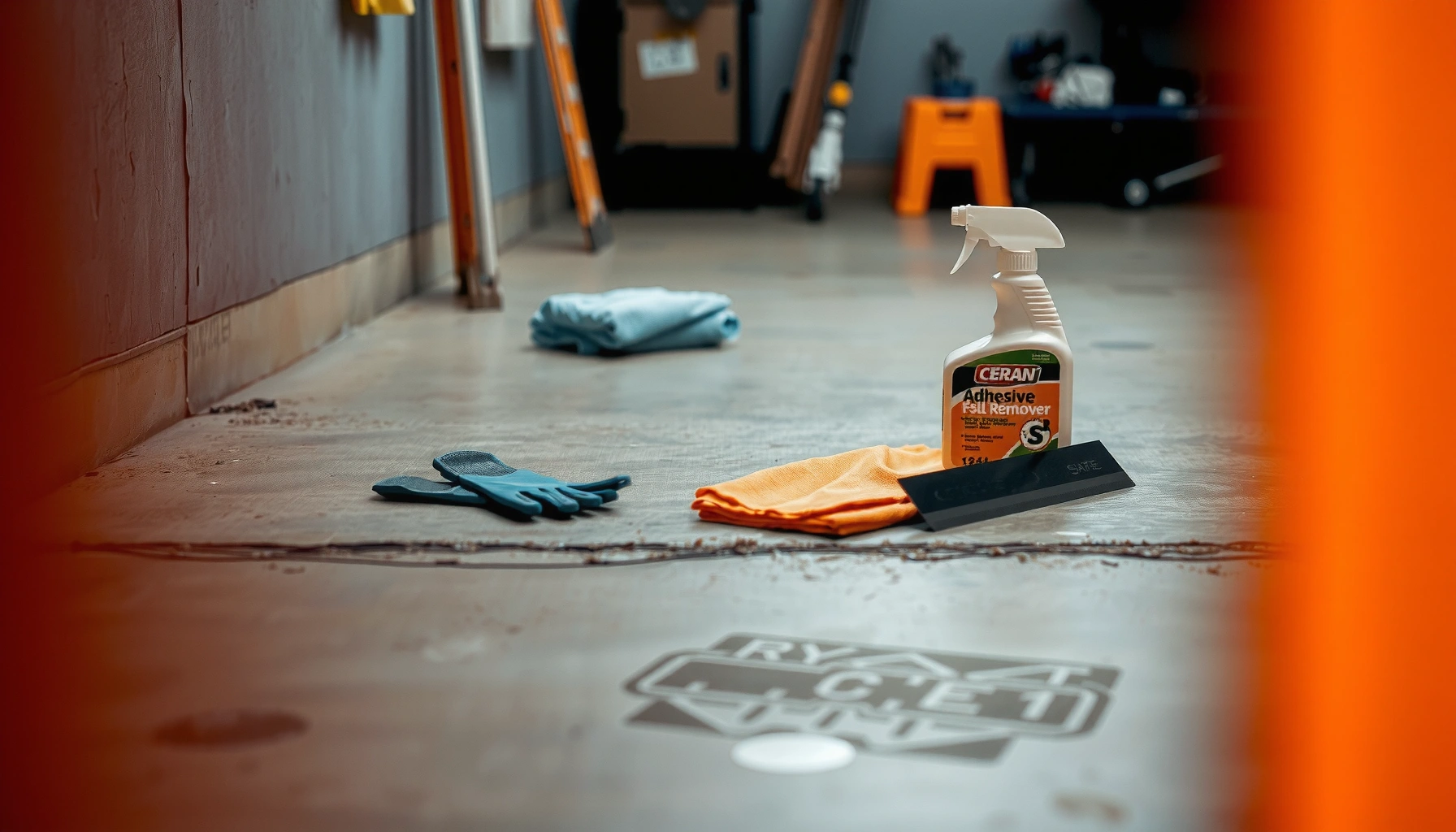
– Use a plastic scraper for softened adhesive first, then switch to a metal scraper only if needed.
– Work in small sections and keep the surface as clean as you go to see what’s left.
– After removal, wash with soap and water (or follow the remover’s label instructions) to remove chemical residue that could interfere with future coatings.
“Using plastic scrapers on softened residue helps reduce abrasion marks compared with immediately using metal blades.” [ADD: source for scraper-material best practice]
“Rinsing and washing after chemical removers is critical to remove residues that may interfere with coating adhesion.” [ADD: source for post-remover surface prep guidance]
A removal workflow that avoids concrete scars
1. Start with plastic: Once the adhesive softens, a plastic scraper lifts film without digging.
2. Escalate carefully: If residue persists, use a metal scraper at a flatter angle—not a digging angle.
3. Clean as you go: Residue + debris makes a grinding paste. If you can’t see what you’re scraping, you’re more likely to damage the slab.
4. Final wash: Use soap and water or follow the remover label exactly. Then let the slab dry fully before any coating or sealant work.
Concrete damage warning: texture and sealer exposure
Aggressive sanding/grinding can leave gouges, change texture, or expose aggregate unevenly. If your floor is sealed, heavy abrasion can create “contrast zones” that accept coatings differently. Even if you’re not coating afterward, deep gouges can collect future dirt and moisture, making the garage harder to maintain.
What Can Go Wrong (Common Mistakes and Edge Cases)
Most failures come from mismatch: wrong chemical for the adhesive type, or too-aggressive mechanical action for the concrete finish. If you troubleshoot these issues early, you typically avoid permanent surface damage.
– Using the wrong solvent can smear adhesive deeper into pores or damage sealers/paint—always test a small spot.
– Over-sanding or aggressive grinding can leave gouges, texture changes, or expose aggregate unevenly.
– Heat applied too long can dry out or discolor some coatings/sealers; apply gradually and reassess.
– If adhesive came from a floor tile/mat with a thick adhesive bed, removal may require repeated rounds rather than one pass.
“Misapplication of solvents can spread residues and reduce the effectiveness of later cleaning because the adhesive redistributes.” [ADD: source for solvent spreading/redistribution behavior]
“Grinding without controlling pressure can create uneven profiles and expose aggregate, which can affect coating leveling and adhesion.” [ADD: source for surface profile and coating prep requirements]
Edge cases you’re likely to face
– Thick adhesive beds from tiles/mats: Expect multiple rounds. Trying to remove everything in one aggressive scrape usually creates gouges.
– Unknown coatings: If you don’t know whether the floor is sealed, assume compatibility limits apply. Labels often include restrictions like “not for use on coatings” or require specific cleaning steps.
– Adhesive “ghosting”: Even when the top looks clean, chemical residue can remain and interfere with future adhesion. That’s why label-driven cleaning and drying are non-negotiable.
Note for 2026 planning: If you’re going to recoat your garage floor in the near future, keep your removal approach conservative. Over-removal can alter the slab profile and create inconsistent coating performance.
Verdict: Which Method to Use First (and Who Should Skip It)
Start with heat (or a gentle, label-compatible solvent/degreaser) plus controlled scraping, because it usually minimizes concrete damage and chemical risk. If your floor is sealed/painted and you can’t confirm solvent compatibility, skip strong removers and use only label-approved products or a mechanical-only approach until you verify what the floor can tolerate.
If you’re dealing with unknown coatings, extensive adhesive coverage, or you’re planning to apply a new coating afterward, follow the manufacturer’s guidance for chemical compatibility and surface prep. [ADD: source for concrete/coating compatibility or manufacturer guidance—e.g., coating/sealer label instructions.]
“Starting with the lowest-risk approach (gentle loosening + controlled scraping) reduces the chance of damaging coatings and creating permanent surface defects.” [ADD: source for general best-practice surface prep sequencing]
“For coating work, surface preparation and compatibility with prior coatings/sealers are essential for adhesion; manufacturers require label-driven cleaning.” [ADD: source for coating prep requirements]
Quick scan: which adhesive remover approach is best?
Adhesive Residue Type: Best First Method and Practical Fit
| # | Residue category (garage context) | Typical look/behavior | Best first approach | Concrete/floor finish risk |
|---|---|---|---|---|
| 1 | Pressure-sensitive tape residue | Tacky film; rolls into smears | Heat + plastic scraping | ★★★☆☆ (Low) |
| 2 | Sticker glue (label-derived) | Gooey spots; lifts with rubbing | Warm water + detergent | ★★★★☆ (Very low) |
| 3 | Decal adhesive (rubbery residue) | Thick smear; resists water | Heat + solvent-safe remover (test spot) | ★★★☆☆ (Medium) |
| 4 | Tar-like residue | Dark, oily, chunky lift | Tar/adhesive remover + thorough wash | ★★☆☆☆ (High) |
| 5 | Resinous “glue” (hard film) | Hard crust; flakes then re-tacks | Label-approved adhesive remover | ★★★☆☆ (Medium) |
| 6 | Thin adhesive “halo” from mats | Waxy discoloration around edges | Degreaser + repeated softening cycles | ★★☆☆☆ (Medium-High) |
| 7 | Unknown coating + adhesive blend | Unpredictable tack; mixed texture | Mechanical-only until compatibility confirmed | ★★★★☆ (Lowest) |
Quick Checklist: Remove Adhesive Safely
– [ ] Identify residue type (flakes vs sticky vs tar-like)
– [ ] Ventilate + wear gloves/eye protection
– [ ] Test remover/heat in a small inconspicuous area
– [ ] Soften first (heat or compatible solvent/degreaser)
– [ ] Scrape gently, section by section
– [ ] Wash residue off per product directions
– [ ] Inspect—repeat only where needed
FAQ
Will acetone remove adhesive from concrete?
It may work on some residues, but concrete sealers/coatings can be damaged and performance varies by adhesive type. Test a small area first and follow acetone/adhesive-remover label directions. [ADD: source for solvent compatibility and safety instructions.]
Is heat safe for garage floors with sealers or paint?
Heat can discolor or soften certain sealers/paint systems. If your floor is sealed or you’re unsure, test in a small area and avoid overheating. [ADD: source for heat safety/compatibility guidance from coating manufacturers.]
What if the adhesive won’t scrape off after one attempt?
Reapply the loosening method in controlled rounds (soften again, scrape, then clean). Avoid escalating to aggressive grinding immediately—small amounts of residue often come out after repeated cycles.
Can I use a pressure washer after removing adhesive?
Sometimes, but if you’re using solvents or removers, you’ll need to ensure residue is fully cleaned first and allow the concrete to dry. Check the remover label and your floor’s coating/sealer requirements. [ADD: source for label/tech guidance if available.]
Sources
– OSHA PEL for acetone (1,000 ppm 8-hr TWA)
– PubChem: acetone physical properties (flash point)
– [ADD: manufacturer or label instructions for an adhesive remover or degreaser you recommend]
– [ADD: manufacturer guidance for heat use or safety recommendations for adhesive removal products]
– [ADD: concrete coating/sealer manufacturer compatibility notes regarding solvents and abrasives]
Removing adhesive from a garage floor is achievable without ruining the concrete—if you identify the residue type, soften it with a compatible method, and scrape in a controlled way. Start with the least risky approach (often heat or gentle detergent), clean thoroughly, and don’t skip compatibility testing on sealed/painted slabs. If you follow that sequence, you’ll reduce smearing, prevent gouges, and leave the floor in a better state for cleaning, sealing, or future coating work.
Frequently Asked Questions
What’s the safest way to remove adhesive from a garage floor?
Start by identifying the adhesive type if possible (carpet tack strip glue, tile mastic, paint-like adhesive, or general residue) and test your cleaner in a small, hidden area. Use a plastic scraper to avoid gouging the concrete, then soften the bond with an adhesive remover made for concrete or with warm water/steam for water-soluble residues. Wear gloves and eye protection, ensure good ventilation, and avoid harsh chemicals that could damage the floor seal or stain the concrete. Finish by washing with a neutral cleaner and rinsing thoroughly to remove chemical residue.
How do I remove carpet glue adhesive from concrete garage floors?
First, loosen the carpet residue by scraping up loose chunks, then soften the remaining carpet glue with a commercial adhesive remover designed for concrete or a soak with warm water if the residue seems water-reactive. Work in small sections and let the remover dwell according to the label so it penetrates the adhesive. After it softens, scrape again and use a stiff scrub brush or floor machine to lift leftover adhesive film. Rinse, then allow the garage floor to dry completely before sealing or painting.
How can I remove stubborn tile mastic from a garage floor without damaging the concrete?
Tile mastic often bonds strongly, so you’ll usually need mechanical help plus chemical softening—use an adhesive remover compatible with concrete and follow dwell time closely. Apply the remover, cover briefly to prevent it from drying, and then scrape with a carbide or heavy-duty scraper designed for concrete surfaces. If the mastic remains, a floor grinder or diamond pad can be used carefully to remove thin layers, but protect nearby areas and manage dust. Once clean, wash the surface thoroughly and let it cure/dry before applying any epoxy or garage floor coatings.
Which adhesive removal method works best for residue left by garage floor tiles?
The best method depends on whether the residue is a solvent-based mastic, a water-based adhesive, or a thin paint-like layer from underlayment. For many tile adhesive residues, a concrete-safe adhesive remover followed by scraping and scrubbing delivers the most consistent results. If the adhesive is very thin, a heat gun on low with careful scraping can help without excessive chemical use, but avoid overheating that can crack or stain concrete. For thick build-up or long-set mastic, combine chemical softening with mechanical scraping, and consider a light grinding pass for a smooth, coating-ready finish.
Why does adhesive stay on concrete so long, and how do I prevent it from re-sticking?
Adhesive sticks to concrete because it penetrates pores and cures into the surface, making simple cleaning ineffective. After removal, thorough rinsing and neutralization are critical because leftover chemical or sticky residue can attract dirt and cause re-sticking to the surface. Use a concrete floor degreaser or neutral cleaner to remove any solvent film, then dry fully before sealing or coating. For future projects, apply tiles or coverings using appropriate, coating-friendly adhesives and consider using removable mats or properly prepared surfaces to reduce adhesive buildup.
📅 Last Updated: October 11, 2026 | Topic: How to remove adhesive from garage floors? | Content verified for accuracy and freshness.
References
- Google Scholar Google Scholar
https://scholar.google.com/scholar?q=removing+adhesive+residue+from+concrete+floor - Google Scholar Google Scholar
https://scholar.google.com/scholar?q=removing+construction+adhesive+from+concrete+mechanical+chemical+methods - Google Scholar Google Scholar
https://scholar.google.com/scholar?q=pressure+sensitive+adhesive+removal+from+concrete+floor - Adhesive
https://en.wikipedia.org/wiki/Adhesive - https://www.cdc.gov/niosh/topics/solvents/
- Chemical Hazards and Toxic Substances – Overview | Occupational Safety and Health Administration
https://www.osha.gov/chemical-hazards/ - Safer Choice | US EPA
https://www.epa.gov/saferchoice - 1910.1200 – Hazard Communication. | Occupational Safety and Health Administration
https://www.osha.gov/laws-regs/regulations/standardnumber/1910/1910.1200 - https://www.britannica.com/technology/adhesive
- https://www.sciencedirect.com/search?qs=adhesive%20removal%20concrete%20surface