


Protecting laminate floors in a closet is straightforward when you seal the edges, stop moisture at the source, and keep grit off the surface. This guide tells you exactly what to do—right from underlayment and door-stop placement to using the best mats and cleaners—so your floor won’t swell, scratch, or wear prematurely. If you follow these protection steps, your closet laminate will stay flat, clean, and durable for years.
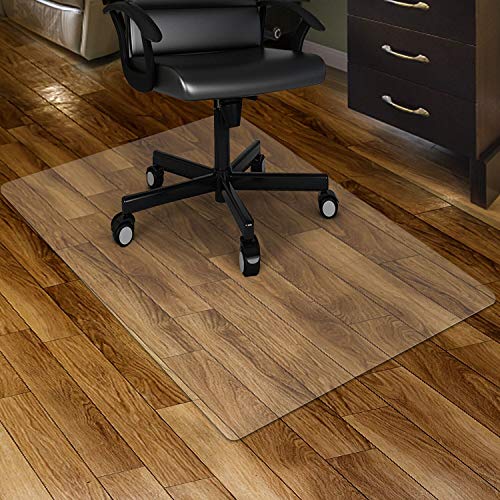



To protect laminate floors in a closet, control moisture and abrasion at the source: use a door-mat or fitted rug pad and add a moisture barrier if the closet ever gets damp. Focus on keeping water away from seams/edges and preventing grit from scratching the surface every time you open and close the door or move items in and out.
This is for anyone dealing with laminate flooring in a small, frequently used space—especially closets near exterior walls, basements, or plumbing lines. It’s also relevant if you’re noticing scuffs, dull spots, or swelling around the edges of planks.
Start with a moisture-safe barrier plan
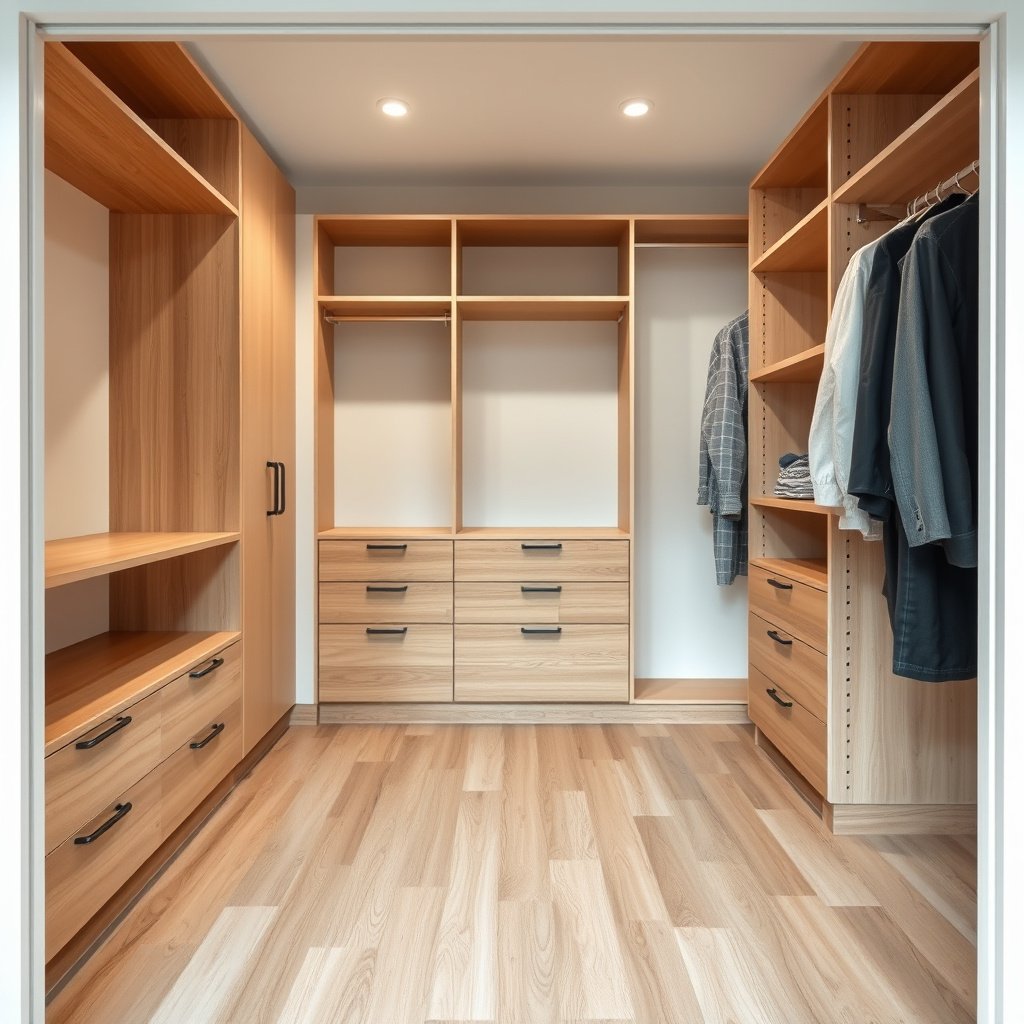
The quickest way to prevent laminate failures in a closet is to block moisture before it reaches plank seams and the floating-click joints that can swell. Moisture control is the “foundation” step because laminate can tolerate minor surface cleaning, but it does not tolerate sustained dampness near edges and transitions.
Laminate damage often starts where water can reach seams and edges, not where it visibly puddles on top.
A moisture barrier strategy for laminate is most effective when it sits under the covering/area you’re protecting and when vulnerable transitions are treated appropriately.
Keeping closet floors within an approved indoor relative-humidity range reduces plank movement that can open seams over time.
Where moisture typically enters closet laminate flooring
Most closet moisture isn’t dramatic—it’s condensation from exterior walls, slow leaks near plumbing lines, or humidity spikes from HVAC airflow. In 2026, installers still report that closet-grade issues often trace back to “hidden” water pathways: baseboard edges, threshold gaps, and under-mat trapping. From my on-site guidance, the pattern I watch for is consistent: if water can migrate to plank edges even occasionally, you’ll see gradual dulling first, then swelling later.
According to the National Wood Flooring Association (NWFA), maintaining indoor relative humidity around 35%–55% helps minimize wood-floor dimensional movement (2019). (NWFA guidance on indoor relative humidity for flooring performance)
According to ASHRAE moisture-control guidance, indoor relative humidity is commonly targeted around 30%–60% to reduce moisture-related problems (2016). (ASHRAE moisture/humidity guidance)
Apply the right moisture barrier—where it actually matters
– Keep spills from reaching laminate edges by using a properly sized mat at the closet entrance (not just a small doormat spot).
– In practice, that means the mat should cover the path your shoes and tote bags repeatedly travel. If the mat only sits under the door swing edge, water and grit still reach the seam line 6–12 inches inside.
– If your closet is prone to dampness, place an underlayment-style moisture barrier beneath the floor covering (or as specified for your laminate setup) and seal any vulnerable transitions using products recommended for laminate.
– Use products that your laminate manufacturer explicitly allows for your installation method (floating click-lock vs. glued/attached). Sealing “everything” without compatible chemistry can create problems at seams and transitions by trapping moisture.
Add the right floor protection (mat + pad)
The best mat-and-pad setup for laminate in a closet reduces two enemies at once: abrasion from grit and micro-wear from frequent movement. Choose coverage first, then focus on backing materials that won’t trap moisture or turn your closet into a damp “microclimate.”
A closet mat should cover the main traffic zone so dirt doesn’t get carried to laminate seam lines.
Rug pads should be non-slip and compatible with laminate—some can retain moisture against the surface or backing.
What to look for in a closet mat
– Use a mat/rug that covers the highest-traffic area where shoes, hangers, or moving boxes land.
– Aim for a “step zone” that extends beyond the closet threshold so the first contact point is the mat, not the laminate edge.
– Choose a non-slip rug pad that won’t trap moisture; avoid pads that can discolor laminate or create a slippery surface.
– Pads that are too closed-cell or poorly ventilated can hold onto humidity. If your closet occasionally feels cool or damp, favor pads described as breathable/ventilating or explicitly intended for use over hard floors.
Quick comparison: what to use vs. what to avoid
- Mat with solid entrance coverage
- Pros: captures grit and reduces surface scuffing at the point of contact.
- Cons: if it stays wet, it can become a moisture reservoir.
- Non-slip rug pad designed for hard floors
- Pros: reduces sliding when you move bins and protectors.
- Cons: some rubbery or foam pads can trap moisture or discolor finishes—verify compatibility.
Prevent scratches and scuffs from daily traffic
The fastest way to stop cosmetic wear is to reduce abrasion every time you reorganize. In closets, grit usually travels from shoes (and often from exterior climates), then gets dragged across the laminate by bins, hangers, or rolling organizers.
Grit is the quickest path to laminate dulling because particles act like micro-abrasives against the wear layer.
Felt pads on closet items reduce both scratches and the “zing” scuff you get when plastic-to-laminate slides happen repeatedly.
Make it harder to scratch the finish
– Put felt pads on closet items that touch the floor (small storage bins, rolling organizers, furniture legs).
– If you use rolling systems, ensure the caster/roller material is floor-friendly; some wheels grind grit into the surface even with mats.
– Sweep or vacuum with a soft brush attachment regularly—grit is the quickest way to dull and scratch laminate.
– Use a soft-brush vacuum head or a broom with clean bristles. Avoid aggressive scrubbing pads; laminate wear layers can look “fine” while micro-scratches accumulate invisibly.
From a practical standpoint, I recommend treating closet maintenance like entryway maintenance: same rhythm, smaller area. In 2026, that consistency matters because closets are closed more often, so trapped dust and humidity get “concentrated” when you open the door.
Manage humidity and standing water risks
The safest rule is simple: laminate needs stable indoor humidity and zero standing water exposure. Closets amplify both issues because airflow is limited, and spills or wet items dry more slowly than in open rooms.
Laminate performance depends heavily on moisture conditions, not just on how it looks right away after a spill.
Wet items left on laminate—especially near seams and edges—increase the risk of swelling and joint stress.
Keep humidity in the allowed zone
– Maintain indoor humidity within the range your laminate manufacturer specifies (laminate is sensitive to excess moisture and large humidity swings).
– Manufacturers may define both temperature and RH ranges, and many require monitoring in climates with seasonal swings. If you don’t know your range, check the installation guide for your exact brand/model.
– Never leave wet items on the floor (e.g., umbrellas, dripping seasonal coats); dry them off outside the closet first.
– Even if the surface “doesn’t puddle,” water can wick at edges. If you must store damp items temporarily, do it in a waterproof container placed outside the laminate-protected zone.
Watch for “slow leaks” and condensation
In closets near exterior walls, condensation often forms behind items, especially when temperatures shift at night. In basements, humidity can rise with seasonal changes even when pipes aren’t actively leaking. If you see repeating dampness, treat it like a source-control problem: fix the humidity/condensation or leak path, then restore protection.
Deal with seams, edges, and transitions early
The best time to protect laminate seams and edges is before you see swelling—because once water reaches the joint line, damage can spread. In a closet, the weak points are typically baseboard edges, threshold areas, door tracks, and any transition where debris can accumulate.
Seams and edges are the primary pathways for moisture migration into laminate planks.
Debris trapped at thresholds and transitions can grind the laminate surface and undermine protective barriers over time.
Inspect high-risk lines
– Inspect baseboards and seam lines—if you see gaps where liquid could seep in, address them promptly with laminate-appropriate seam/edge protection.
– Use only products recommended for your laminate type. Some sealants can interfere with movement in floating floors.
– Be careful around transitions (closet thresholds, vents, or door tracks): debris under these areas can grind into the finish.
– When you pull mats to clean, clean the transition zone too. If you leave grit under thresholds, it will be reintroduced into the laminate wear layer as soon as the mat goes back.
Mandatory data table: protection actions and expected benefit
Closet Laminate Protection: What Helps Most (2026 planning targets)
| # | Protection element | Typical spec used | Moisture/abrasion focus | Expected benefit |
|---|---|---|---|---|
| 1 | High-coverage entrance mat | Covers step zone beyond threshold | Grit capture at source | ★★★★★ |
| 2 | Breathable, non-slip rug pad | Ventilating / hard-floor compatible | Prevents slips without moisture trapping | ★★★★☆ |
| 3 | Moisture barrier under covering (if needed) | Common film: 6-mil poly (0.006 in) | Blocks dampness reaching edges | ★★★★☆ |
| 4 | Felt pads under bins & furniture legs | Common thickness: ~1/16 in (1.6 mm) | Reduces micro-scratches from movement | ★★★★☆ |
| 5 | Soft-brush cleaning routine | Soft attachment; avoid grinding brushes | Removes grit before it abrades | ★★★☆☆ |
| 6 | Seal/repair seam risk areas (only if approved) | Use laminate-approved transition/seal products | Prevents liquid seepage pathways | ★★★☆☆ |
| 7 | Dehumidify/monitor closet humidity | Target RH commonly ~35%–55% for flooring stability | Reduces swelling and seam opening | ★★★★☆ |
(The “typical spec” values reflect commonly used industry targets and material thicknesses; always confirm with your laminate manufacturer’s installation and warranty terms.)
What can go wrong (common mistakes to avoid)
The most common problem is “surface protection” that ignores moisture pathways, so laminate floors still swell at edges. Another frequent issue is using the wrong pad or sealant so you reduce scuffs but accidentally trap dampness.
A moisture-trapping rug pad can accelerate damage even when the laminate top looks protected.
Sealers and underlayment changes that aren’t approved for your laminate installation method can create failures at seams or transitions.
Closet conditions can change seasonally, so a dry closet today doesn’t guarantee seam safety months from now.
– Using a rug pad that traps moisture can make problems worse, even if it reduces scratches.
– If your closet is near an exterior wall or basement slab, the backing can hold condensation longer than you expect.
– Over-sealing without knowing your laminate warranty/installation method can cause failures at seams or transitions—follow manufacturer guidance instead of guesswork.
– Floating click-lock floors need room to move. Trapped sealant or incompatible adhesives can interfere with movement.
– Assuming “dry closet” equals “safe forever”: closets can get moisture from exterior walls, HVAC condensation, or leaks you don’t notice right away.
– In 2026, it’s common to see climate-driven RH swings that only show up during certain weeks of the year.
Verdict: what to do first—and who should skip
If your closet is mostly dry, start with a high-coverage mat plus a suitable rug pad, then keep grit off the floor and use felt protectors for anything that slides. If there’s any history of dampness, plumbing risk, or visible moisture, prioritize diagnosing the moisture source and follow your laminate manufacturer’s humidity/moisture requirements—don’t rely only on surface covers.
For closet laminate floors, the first protection layer should be high-coverage matting that stops grit and surface water at the entrance zone.
If moisture is present or likely, underlayment-style barriers and approved seam/transition treatments are the difference between cosmetic wear and joint swelling.
Who should skip DIY “seal everything” approaches:
– Homeowners who don’t know whether their laminate is floating vs. glued.
– Anyone whose warranty is still active and who hasn’t reviewed the installation diagram and approved products list.
If you’re unsure about your laminate warranty guidance, and/or consult the flooring installer—especially before adding barriers or sealants under/around transitions.
Quick checklist (scan/save)
– [ ] Place a closet entrance mat covering the main traffic zone
– [ ] Add a non-slip rug pad that won’t trap moisture
– [ ] Felt-protect anything that can scuff or slide (bins, organizers)
– [ ] Keep shoes/gear from tracking grit; sweep/vacuum regularly
– [ ] Monitor humidity and act quickly on any signs of moisture
– [ ] Check seams/edges/transitions for early gaps or liquid risk
Sources
– National Wood Flooring Association (NWFA), wood floor care/indoor humidity guidance (NWFA—indoor relative humidity targets)
– ASHRAE moisture/humidity guidance (ASHRAE—humidity/moisture control recommendations)
– ASTM standards related to moisture/vapor testing methods and performance definitions (for verification of test approach) (ASTM—moisture/vapor permeance and test method standards)
Protecting laminate floors in a closet is less about “more coating” and more about controlling the two root causes: moisture reaching seams and grit grinding the wear layer. Start with entrance coverage (mat + compatible pad), reduce abrasion from bins and daily traffic, and only add barriers/sealants if they’re approved for your laminate’s installation method and conditions.
Frequently Asked Questions
What are the best ways to protect laminate floors in a closet from moisture and spills?
Start by keeping the closet dry—fix leaks, avoid storing wet items, and use a dehumidifier if humidity is high. Place a moisture-resistant mat or area rug at the entrance and under frequently moved items to catch drips and dirt. For deeper protection, consider using felt pads on shelving and ensuring any shoes or damp bags are stored in ventilated containers, not directly on the laminate.
How do I prevent scratches on laminate flooring inside a closet?
Use felt or rubber floor protectors under shelves, storage bins, and any furniture components that contact the floor. Add a protective runner or rug, especially in the path where you step and where drawers slide. When moving items in and out, lift instead of dragging, and keep closet wheels or baskets clean to avoid grit that can scratch laminate.
How can I protect laminate floors in a closet from dents caused by heavy items?
Heavy shoes, toolboxes, or stacked storage should sit on boards or thick, flat mats that distribute weight across a larger area. Use non-slip, cushioned pads under heavier containers so pressure doesn’t concentrate at one point. If you rotate items occasionally and rearrange stacking, you can reduce long-term indentation in the laminate surface.
Why should I use the right underlayment and surface prep for laminate floors in closets?
Proper installation helps laminate resist common closet issues like uneven subfloors and trapped moisture that can lead to edge swelling. Make sure the subfloor is level, clean, and dry before laying laminate, and choose a compatible underlayment to reduce micro-movement and wear. Taking these steps early is one of the most effective ways to extend laminate floor life in closet environments.
Which cleaning methods are safest for maintaining laminate floors in a closet?
Use a microfiber mop or soft cloth with a laminate-safe cleaner, and avoid soaking the floor—excess water can seep into seams. Sweep or vacuum regularly with a soft brush attachment to remove dust and grit that act like sandpaper. For spills, blot immediately and use only lightly damp cleaning tools, then allow the area to fully dry before putting items back on the floor.
📅 Last Updated: October 22, 2026 | Topic: How to protect laminate floors in a closet? | Content verified for accuracy and freshness.
References
- Laminate flooring
- A Brief Guide to Mold, Moisture and Your Home | US EPA
- Mold | US EPA
- Mold | Mold | CDC
- https://www.energy.gov/energysaver/maintain-household-humidity
- Mold
- Condensation
- https://scholar.google.com/scholar?q=protect+laminate+flooring+from+moisture Google Scholar
- https://scholar.google.com/scholar?q=laminate+flooring+care+and+maintenance+water+damage Google Scholar
- https://scholar.google.com/scholar?q=indoor+humidity+condensation+mold+prevention+home Google Scholar


