


Learn how to clean laminate floors in a balcony the right way, without streaks or damage. This step-by-step method shows the exact tools and cleaning process to remove dust, grit, and spills while protecting the laminate’s finish. Follow these instructions to get a balcony floor that looks freshly cleaned and stays safe and dry.




Clean laminate balcony floors by sweeping first, then mopping with a lightly damp microfiber cloth using a pH-neutral cleaner—never soaking the planks. Because balconies deal with wind-blown grit and occasional moisture, drying quickly and avoiding harsh chemicals is what keeps laminate from swelling or dulling, especially in 2026 when outdoor conditions are more variable than most people expect.
If your balcony laminate gets dusty, tracks in sand, or has sticky spots from outdoor mess (grit + rain + spills), this guide walks you through a safe routine and what to do when things go wrong.
Prep laminate balcony floors (before any wet cleaning)
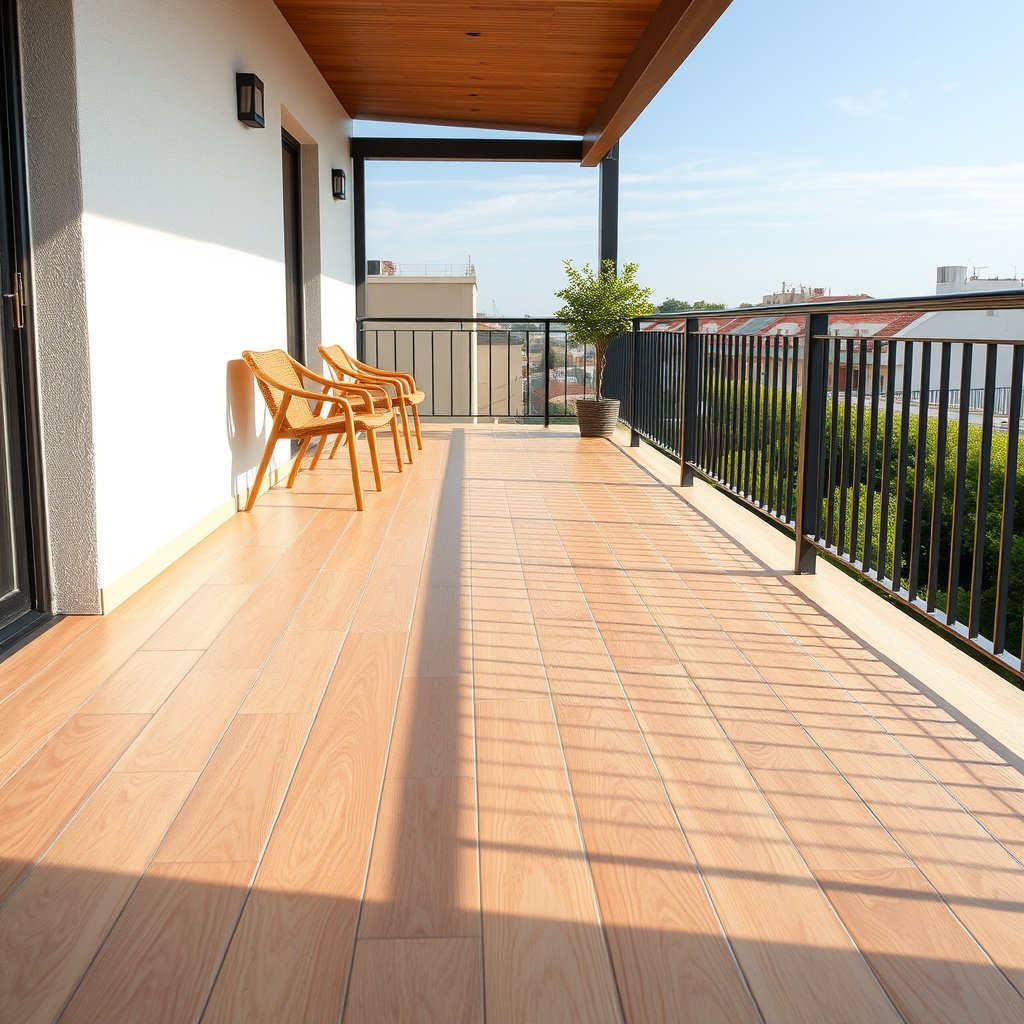
Start by removing all loose grit before you introduce any moisture, because sand is the fastest way to scratch laminate. Once the surface is clean and the edges are checked, you can damp-clean without forcing debris into seams—an approach that matters even more for laminate balcony floors in 2026.
According to manufacturer care guidance for laminate flooring, dry removal of grit (sweeping/vacuuming) is a prerequisite before any damp cleaning to prevent abrasion damage.
Laminate flooring is sensitive to standing water; pre-checking seams and edges helps you catch existing moisture entry points before cleaning spreads the problem.
– Sweep or vacuum using a soft brush attachment so sand/grit can’t scratch the surface. Pay attention to corners, plank ends, and the edges where dust accumulates.
– Move furniture off the floor (or at least away from the work zone) to avoid repeated drags over the same gritty areas—dragging is how balcony grit turns into micro-scratches on laminate balcony floors.
– Check seams/edges for lift or gaps first—if water has already gotten in, cleaning alone won’t fix the root problem. Look for:
– slight edge curling,
– visible separation at plank joints,
– a “soft” or slightly raised feel near transitions.
Quick rule: if you see lifted edges, treat cleaning as secondary—stop moisture entry first (door sweeps, flashing, slope/drainage issues) because repeated damp cleaning can’t reverse structural water damage.
Choose the right cleaner and tools
Use a laminate-approved, pH-neutral cleaner and microfiber tools kept barely damp—this is the combination that reduces residue, dulling, and swelling risk for laminate balcony floors. Avoid steam and harsh chemicals because they increase moisture exposure or can degrade the laminate’s surface finish.
A “pH-neutral” cleaner means the product is close to neutral (commonly around pH 7), which is less likely to stress laminate finishes than strongly acidic or alkaline cleaners.
Microfiber cleaning relies on controlled surface wetting; wringing cloths to remove excess water is a practical way to avoid standing moisture on laminate flooring.
– Use a cleaner labeled safe for laminate flooring, ideally pH-neutral; dilute exactly per the label directions. Over-concentrated cleaner is a common cause of sticky residue and film buildup on laminate balcony floors.
– Use microfiber (cloth or flat mop pad) and keep it only damp—excess water is the #1 laminate risk. If your mop pad looks wet or glistens, you’re past “damp” and into “soak.”
– Avoid steam mops and harsh chemicals (bleach, abrasive pads, strong degreasers) unless your floor manufacturer explicitly allows them. Steam introduces high moisture plus heat, and laminate often lacks the water tolerance of tile or sealed wood.
Cleaner quick comparison (what works vs. what usually harms)
| Cleaner choice | What it’s good for | Main risk to laminate balcony floors | Practical guidance |
|---|---|---|---|
| pH-neutral, laminate-safe cleaner | Daily film removal and light grime | Residue only if overused | Dilute exactly; damp-clean only |
| Mild dish soap (sparingly) | Grease-light fingerprints | Can leave a slippery film if too strong | Test in a hidden area; wipe-dry afterward |
| Acidic cleaners (vinegar-type) | Lime scale on hard surfaces | Finish dulling / long-term stress | Usually skip for laminate unless manufacturer allows |
| Bleach / strong degreasers | Heavy bio or chemical contamination | Surface damage and staining; increased moisture risk | Avoid unless your laminate manufacturer explicitly approves |
Cleaner pH Compatibility for Laminate Balcony Floors (Typical Ranges)
| # | Cleaner type | Typical pH range* | Laminate balcony fit | Recommendation |
|---|---|---|---|---|
| 1 | pH-neutral laminate cleaner | 6.5–8.0 | ★★★★★ | Best for routine cleaning |
| 2 | Mild dish soap (heavily diluted) | 7.0–9.0 | ★★★☆☆ | Use sparingly + wipe-dry |
| 3 | Baking soda solution (light) | 8.3–9.2 | ★★☆☆☆ | Usually avoid for floors |
| 4 | Ammonia-based cleaner | 11–12.5 | ★☆☆☆☆ | Avoid unless approved |
| 5 | Chlorine bleach (sodium hypochlorite) | 11–13 | ☆☆☆☆☆ | Avoid—finish damage risk |
| 6 | White vinegar (5% acetic acid) | 2.2–2.8 | ★☆☆☆☆ | Avoid unless manufacturer allows |
| 7 | Acid-based rust/limescale remover | 1–3 | ★☆☆☆☆ | Avoid for laminate balcony floors |
Typical pH ranges vary by brand and dilution—always follow your specific cleaner label and your laminate manufacturer’s care instructions.
Step-by-step: safe routine for everyday cleaning
Use a two-stage approach—dry removal first, then lightly damp wipe—because it prevents grit abrasion and avoids excess moisture. If you repeat this routine regularly on laminate balcony floors, you remove the grime that would otherwise become “baked in” after sun and wind.
Routine laminate floor care typically prioritizes vacuuming/sweeping followed by controlled damp cleaning rather than soaking, because laminate core materials can be affected by sustained moisture.
In practical cleaning systems, microfiber is effective because it captures fine particles mechanically; the key risk is using too much liquid rather than the fiber itself.
– Dry clean: sweep, then vacuum loose dirt from corners and along plank edges. Wind-driven grit collects at plank seams, and that’s where scratches start.
– Damp clean: wring the microfiber until it’s barely damp, then wipe in the direction of the planks. A “direction of the grain” mindset matters on laminate balcony floors because wiping cross-grain can dislodge tiny particles that then abrade the surface.
– Finish: go over with a clean, slightly damp cloth if residue builds up, then dry with a fresh microfiber towel. Drying isn’t optional for balconies—curbs, door thresholds, and seam lines can retain moisture even after the floor “looks” dry.
A realistic weekly rhythm (works in 2026)
– After windy days: quick sweep (2–5 minutes).
– When you notice dulling or a film: damp wipe (10–20 minutes), then dry thoroughly.
– After rain: spot-dry immediately rather than waiting for the balcony to “air out.”
What to avoid during mopping
– Don’t “rinse” by flooding with clean water.
– Don’t leave damp pads on the floor while you deal with other chores.
– Don’t use abrasive microfiber scrubbers—use only soft microfiber intended for floors.
Tackling balcony grime, stains, and sticky spots
Treat stains as controlled spot cleaning first, then move back to gentle damp wiping—this prevents finish damage while you address the real cause. On laminate balcony floors, sticky spots usually come from outdoor residue (food, sunscreen, tape adhesive) plus moisture, so the cure is correct wetting control and a compatible cleaner.
For laminated surfaces, gentle spot-cleaning with laminate-approved cleaner on a cloth (not directly saturated onto the floor) reduces the chance of liquid migrating into seams.
Avoid aggressive scrubbing on laminate because it can dull the top wear layer and increase visibility of outdoor scratches under sunlight.
– Mud and caked-on debris: let it soften slightly with a lightly damp cloth, then lift with gentle wiping—don’t scrub aggressively. If mud is thick, remove the bulk dry first, then do a brief damp-soften and immediate wipe-dry.
– Sticky residue (food, tape bits, spills): use the laminate-approved cleaner on a cloth first; test a small hidden spot if the surface is heavily stained. Apply with minimal moisture, then wipe once, and dry right after.
– Moisture-related marks: if discoloration is from wet weather, remove surface moisture quickly and ensure the balcony area can dry; don’t flood seams trying to “rinse it out.” If the discoloration spreads or edges lift, you may be dealing with moisture entry rather than dirt alone.
Specific examples (what this looks like in real life)
– Bird droppings: wipe carefully after softening with a barely damp cloth; don’t grind—use a laminate-safe cleaner and dry immediately.
– Sunscreen/grease: damp wipe first to remove film; if still tacky, apply the approved cleaner to a cloth and blot-dry after.
– Tape residue: soften the adhesive with a barely damp cloth and gentle cleaner application; avoid solvents unless the manufacturer permits them.
What can go wrong (and why laminate is picky outdoors)
Laminate balcony floors fail most often due to moisture management mistakes—especially over-wetting and leaving residue behind. If you understand the “why,” you can fix symptoms (cleaning) without accidentally worsening the underlying risks (swelling, seam lift, finish dulling).
Over-wetting and standing water are consistently cited as risks in laminate care instructions because moisture can travel to the edges where the core material is more vulnerable.
Harsh chemicals can alter laminate surface finishes, increasing dullness and making outdoor dirt more noticeable after the cleaning film attracts grime.
– Over-wetting: soaking or leaving pooling water can cause swelling at seams and edge lift. On balconies, wind and partial coverage can also create “wet rings” that remain longer than you think.
– Residue buildup: using the wrong cleaner (or too much) can leave a film that attracts more dirt—so the floor looks dirtier faster even after cleaning.
– Damaging the finish: abrasive brushes/pads and gritty cleaning towels can dull the top layer. Once the wear layer is dulled, sunlight and traffic will highlight every micro-scratch.
– Warranty/manufacturer limits: many laminate warranties depend on following the manufacturer’s care instructions—outside conditions (temperature swings, standing water) can matter. In 2026, more balconies are semi-enclosed and see frequent moisture cycling, which increases the need to follow the exact approved care routine.
Verdict: what to do (and who should skip DIY)
For most balcony laminate floors, the safest approach is dry clean + lightly damp microfiber with a laminate-approved, pH-neutral cleaner, followed by thorough drying. If planks are already cupped/raised or seams are opening, skip DIY cleaning as a “fix” and focus on moisture entry correction or professional assessment—because ongoing moisture problems need addressing, not just surface cleaning.
A “dry clean then damp microfiber” workflow aligns with typical laminate care principles: remove grit first, use minimal moisture, and avoid harsh chemicals unless explicitly approved.
If seam lift or repeated moisture penetration is present, cleaning can’t reverse structural damage; moisture-source remediation is required to protect laminate balcony floors.
Downsides to acknowledge
– Even with the correct routine, laminate balcony floors can still dull faster than indoor floors due to UV exposure and grit cycles.
– Spot-cleaning may leave slight visual differences until fully cleaned consistently—especially on sunlit balconies.
– If your balcony regularly experiences pooling water, cleaning is only maintenance, not prevention.
Who should skip DIY
– You see recurring edge lift or joint separation after rainy/windy periods.
– You suspect standing-water entry (poor drainage, threshold gaps, missing sealant).
– You can’t reliably stop wind-blown grit (e.g., no mat/track system), because abrasion risk never fully drops.
Quick scan checklist (save this)
| Task | Do | Don’t |
|---|---|---|
| Loose dirt | Sweep + vacuum soft-brush | Use stiff brooms or scratchy tools |
| Cleaner | Use laminate-approved, pH-neutral cleaner per label | Use bleach/abrasives/strong degreasers unless approved |
| Mopping | Microfiber lightly damp; wring well | Soak the floor or let puddles sit |
| Drying | Dry along seams and edges with a towel | Leave it wet to “air dry” on a damp balcony |
| Stains | Spot-clean gently with approved cleaner | Scrub hard or grind with pads |
The highest-impact habit for laminate balcony floors is removing grit before any damp cleaning, because sand scratches happen even during “quick mops.”
The second highest-impact habit is drying—especially along seams and edges—because moisture migration is the common pathway to swelling.
Sources
– If you’re unsure of the product guidance, use the exact cleaning/warranty documents that came with your laminate installation or purchase.
A balcony is a harsher environment than most rooms—wind-blown grit plus periodic moisture makes laminate balcony floors unforgiving of soaking, harsh chemicals, and abrasive cleaning. Stick to the sequence: sweep/vacuum first, damp-clean only with a laminate-approved pH-neutral cleaner on microfiber, then dry thoroughly along seams and edges. If you ever see ongoing edge lift or moisture-related separation, treat it as a moisture-source problem first, and use cleaning as support—not the main solution.
Frequently Asked Questions
What’s the best way to clean laminate floors on a balcony without damaging them?
Start by sweeping or vacuuming with a soft brush to remove grit and sand that can scratch laminate. Use a microfiber mop lightly dampened with a laminate-safe cleaner (or a mix of warm water and a small amount of pH-neutral soap). Avoid soaking the floor or letting water pool near seams and edges, which can cause swelling over time.
How do I remove stubborn stains and marks from laminate balcony floors?
For scuffs and light stains, try rubbing gently with a damp microfiber cloth and a little pH-neutral cleaner. For sticky spots, use a small amount of cleaner on the cloth (not directly on the floor) and wipe, then dry immediately. If you have grease or tar-like marks, a laminate-safe spot cleaner is best—avoid harsh solvents that can dull the finish.
Why is it important to dry laminate balcony floors after cleaning?
Laminate flooring is sensitive to moisture, and balcony areas often get higher humidity or occasional rain tracking indoors. Leaving water on the surface can seep into joints, leading to warping, edge lifting, or bubbling. After mopping, make sure you dry with a clean microfiber towel or a dry mop pad, especially around seams.
Which cleaning products are safe for laminate floors in outdoor or semi-outdoor balcony spaces?
Look for cleaners labeled “safe for laminate” and choose pH-neutral, non-abrasive formulas. Avoid steam cleaners, ammonia, bleach, and wax-based products, as they can damage the top layer or leave residue. If you’re unsure, test the cleaner in a small hidden area first to confirm it won’t affect shine or finish.
How can I clean laminate balcony floors after rain or muddy footprints?
Sweep up dirt first, then mop with a barely damp microfiber mop to prevent water from penetrating the laminate seams. Use a diluted laminate floor cleaner to lift grime, and work in small sections for better control. Finish by drying thoroughly—particularly in corners, near door thresholds, and along plank edges—to reduce the risk of moisture-related damage.
📅 Last Updated: October 24, 2026 | Topic: How to clean laminate floors in a balcony? | Content verified for accuracy and freshness.
References
- https://www.cdc.gov/coronavirus/2019-ncov/community/clean-disinfect.html
- https://www.epa.gov/coronavirus/cleaning-and-disinfecting-your-facility
- https://www.who.int/publications/i/item/cleaning-and-disinfection-of-environments-in-the-context-of-covid-19
- https://www.armstrongflooring.com/care-and-maintenance/laminate-floor-care.html
- https://scholar.google.com/scholar?q=how+to+clean+laminate+floors+without+water Google Scholar
- https://scholar.google.com/scholar?q=laminate+flooring+care+maintenance+moisture+damage Google Scholar
- https://scholar.google.com/scholar?q=balcony+flooring+care+laminate+maintenance+outdoor+humidity Google Scholar


