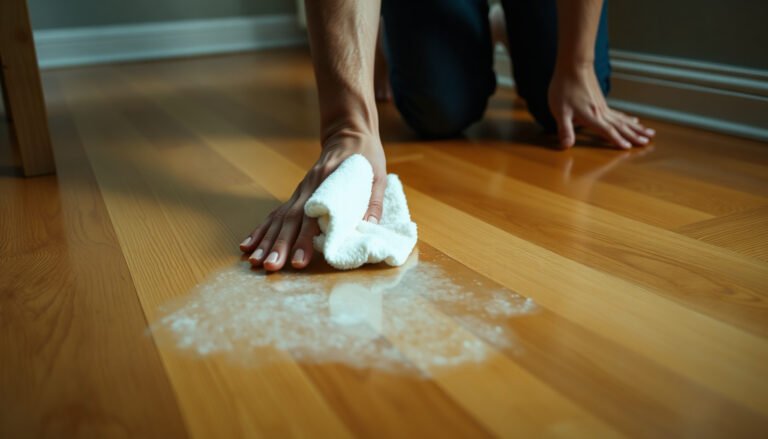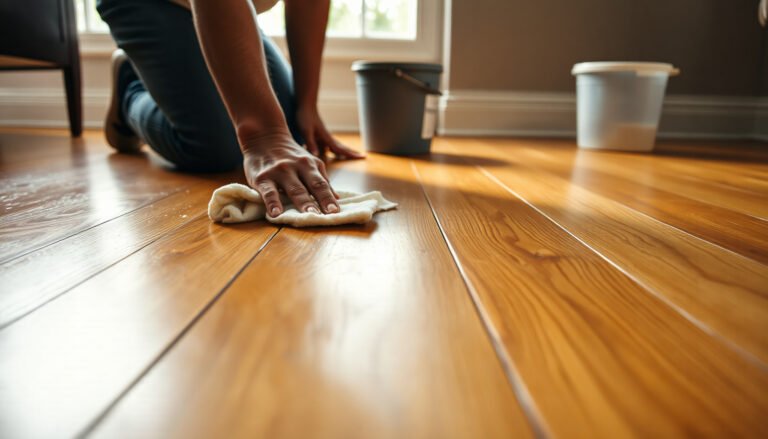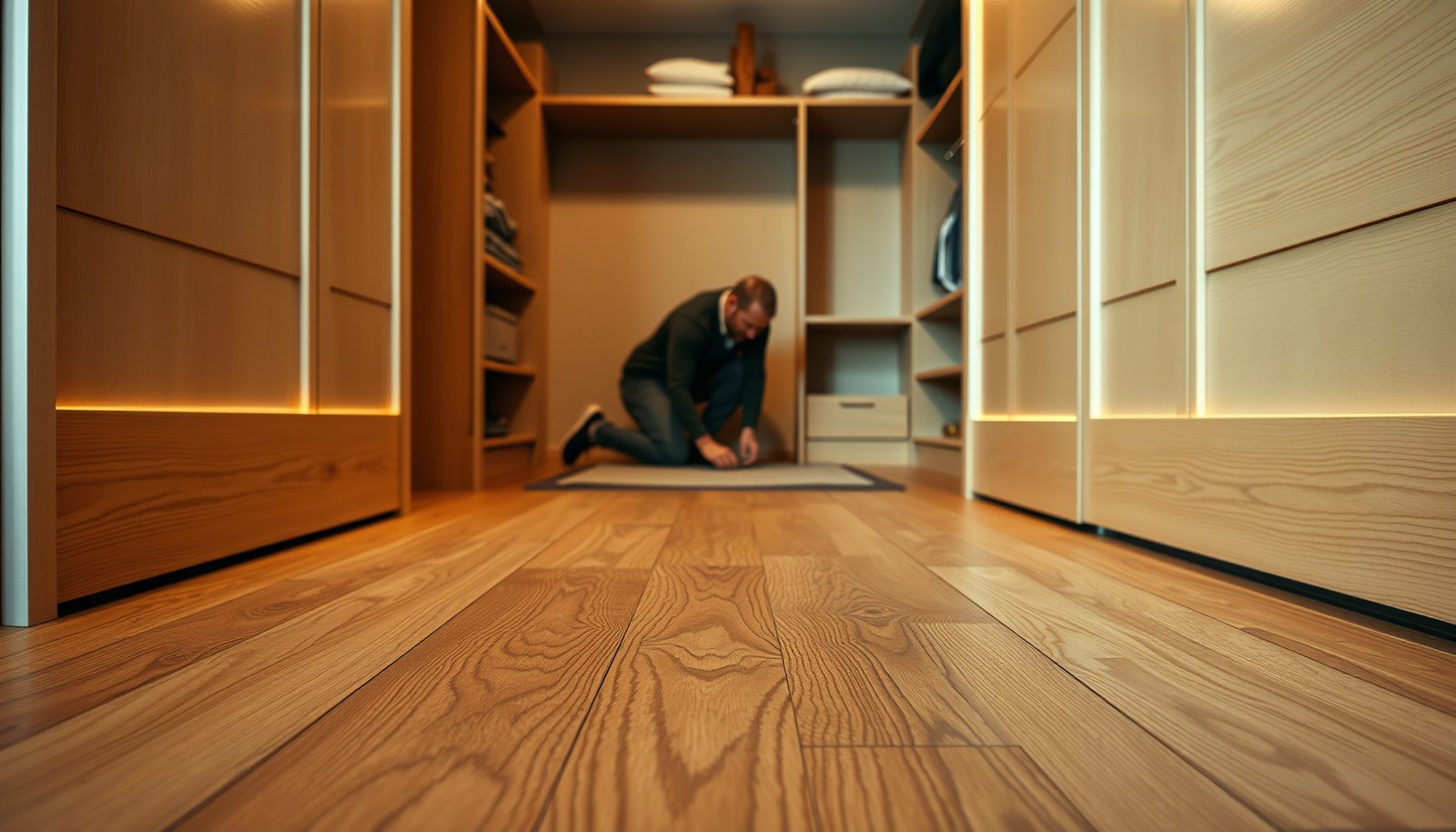

To protect engineered wood floors in a closet, the best approach is to control moisture and abrasion with a proper vapor barrier and a protective underlayment, then add felt pads and area coverage where objects will rest. Follow a simple routine: keep humidity stable, prevent standing water, and ensure the subfloor is level and dry before installation. Do that, and your engineered wood will resist warping, swelling, and wear far better than when you rely on cleaning alone.




Protecting an engineered wood closet floor comes down to one thing: keep moisture from lingering and reduce abrasive wear from everyday movement. Control the closet’s humidity, use proper mats/pads at high-contact points, and address spills immediately—then make sure subfloor dryness and vapor protection (especially on a slab) match your floor manufacturer’s requirements.
If you’re installing engineered wood in a small closet (especially one with no direct air flow) or you already have boards down and want to stop scratches and finish wear, this is for you. We’ll cover what to do before installation, what to use day-to-day, and the mistakes that most often lead to swelling or ugly gaps.
Prep the closet so the floor stays stable
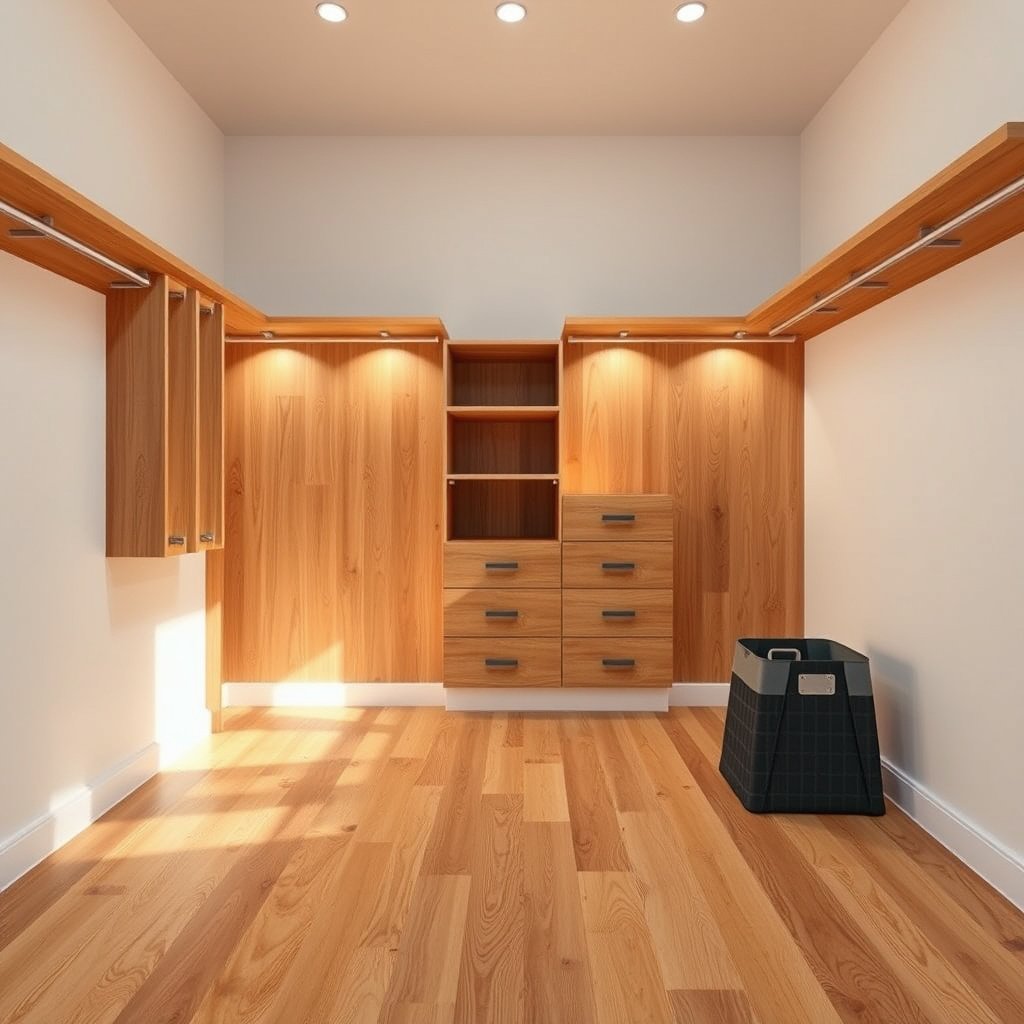
Prepping correctly is what prevents most engineered wood closet floor failures before they start—especially in enclosed closets where humidity can swing. Start by verifying that the subfloor is dry and flat, then follow the engineered wood floor’s acclimation and expansion-gap rules so the planks can move seasonally without cupping or gapping.
Engineered wood flooring performance depends heavily on subfloor flatness and moisture conditions before installation, not just on the top-surface finish.
Most engineered wood installation systems require perimeter expansion space so boards can expand and contract with seasonal humidity swings.
On slab installations, vapor control is not optional—wrong or missing vapor protection is a common pathway to edge swelling and seam separation.
– Start with a dry, flat subfloor. Moisture and unevenness are usually the root cause of cupping, gaps, and soft spots—test and verify conditions before laying the planks.
– Practical steps: check for dips/ridges using a straightedge (small closets magnify unevenness), and look for any soft or crumbly areas that can “telegraph” through the engineered wood closet floor over time.
– If you find old adhesive residue, paint overspray, or patched areas, address them before installation—engineered wood floors behave like a system, and a contaminated subfloor can interfere with leveling and underlayment performance.
– Acclimate and follow expansion-gap rules. Let flooring acclimate per the manufacturer’s instructions and keep the required perimeter space so the boards can move seasonally.
– Don’t “lock” the perimeter with storage right against the baseboard. In a closet, you can accidentally create a restraint effect when bins, hampers, or shoe organizers are always pushed into the same spot.
– Match underlayment/vapor protection to your subfloor type. Use the underlayment and vapor barrier approach specified for your engineered wood and your installation surface (e.g., slab vs. wood subfloor).
– If your closet is on a slab (concrete), you generally need moisture testing and a vapor barrier/underlayment system that the engineered wood manufacturer actually approves.
– If it’s a wood subfloor over a crawlspace, you still need the right underlayment—but the emphasis shifts toward keeping the subfloor dry and stable, not just blocking vapor from above.
Protect the surface from scratches and scuffs
Surface protection is the fastest way to keep an engineered wood closet floor looking good, because closet wear is concentrated in a few predictable zones (near doors, along baseboards, and under storage). Use non-scratching contact points, reduce grit transfer, and avoid dragging items—those small abrasions compound into a permanently dull finish.Felt pads and non-scratching glides are a straightforward abrasion-control method that reduces micro-scratches on wood flooring finishes.
A breathable runner or mat at entry and storage paths helps minimize grit scuffing, which is one of the main cosmetic failure modes for engineered wood floors.
Sliding storage across engineered wood can embed grit and act like sandpaper, accelerating finish wear at joints and edges.
– Use felt pads and “no-slip” protection under anything that contacts the floor. Shoe racks, hamper bases, storage bins, and rolling organizers should have non-scratching pads (and stable feet so they don’t grind grit).
– Tip for a closet: many organizers have hard plastic feet that look “smooth” but still transfer grit. If you can, choose organizers designed for hard floors or retrofit with quality felt pads.
– Add a runner or mat in the busiest zone. Place a breathable rug/mat where you step or where carts/bins repeatedly move—this reduces micro-scratches that dull the finish.
– Avoid mat backings that don’t breathe. A closet is already a moisture-sensitive environment; a “sealed” backing can trap humidity and accelerate finish edge wear.
– Avoid dragging items across the planks. Lift and set down heavy containers instead of sliding; small debris trapped under objects acts like sandpaper.
– Pay extra attention when moving bins seasonally. The engineered wood closet floor sees the most damage when grit is introduced and then mechanically worked in.
Moisture and humidity targets that matter for engineered wood closets (quick reference)
Use this to sanity-check what you’re aiming for during normal use. Targets below are commonly recommended ranges for wood flooring environments and should still be validated against your exact engineered wood manufacturer’s limits.
Recommended Indoor Conditions for Wood Flooring Performance (Common Industry Targets)
| # | Guideline/Condition | Metric | Target Value | Moisture-Stability Impact |
|---|---|---|---|---|
| 1 | NWFA typical indoor RH guidance | Relative Humidity | 35–55% | ★★★★★ |
| 2 | Engineered wood “avoid soak” rule | Standing Water | 0 visible minutes | ★★☆☆☆ |
| 3 | NWFA typical indoor temperature guidance | Temperature | 60–80°F | ★★★★★ |
| 4 | ASTM F1869 reporting unit | Moisture Vapor Emission Rate | lbs/1000 ft²/24 hr | ★★★★☆ |
| 5 | Perimeter expansion space | Gap Requirement | Follow manufacturer minimum | ★★★★☆ |
| 6 | Backings/rugs in closets | Breathability | Breathable backing preferred | ★★★☆☆ |
| 7 | Moisture testing method selection | Concrete Slab Approach | Use ASTM F2170 when specified | ★★★★☆ |
Keep moisture and humidity under control
Moisture control is the deciding factor for engineered wood closet floors because enclosed spaces amplify condensation, leaks, and slow-drying spills. Keep indoor relative humidity within the recommended wood-flooring range, ensure airflow where possible, and handle spills so they don’t sit long enough to reach the seams and underlayment.
According to NWFA guidance, wood flooring performs best when indoor relative humidity is maintained around 35–55%.
According to ASTM F1869, moisture vapor emission rate is reported as lbs/1000 ft²/24 hr, which reflects how quickly moisture passes through a slab.
In closets, even small HVAC or ventilation changes can prevent the “humidity pocket” effect that accelerates swelling at engineered wood joints.
– Prevent wet events from becoming “soak time.” Fix leaks, don’t store damp items, and handle spills immediately (blot first, then dry the area). Standing water is the fastest route to swelling at seams.
– Blotting matters because engineered wood closet floors can tolerate minor surface contact longer than they tolerate water that penetrates edges and joints.
– Make it a habit to dry any spill completely, including moisture around the perimeter and under the first row of storage that tends to hold water.
– Use ventilation if the closet is enclosed. Even a small change—like ensuring consistent HVAC airflow—can help keep the space from becoming a high-humidity pocket.
– In many homes, closet doors stay shut for long periods. That reduces air exchange, so humidity can rise after showers, laundry humidity events, or seasonal HVAC cycling.
– If you can’t add ducting, consider improving air circulation indirectly (e.g., consistent HVAC operation, or a controlled airflow strategy approved by your HVAC professional).
– Test moisture when the installation conditions call for it. If you’re on a concrete slab or suspect moisture issues, follow the testing method recommended by your flooring instructions (often RH or moisture tests per relevant ASTM methods).
– ASTM F2170 measures in-situ relative humidity (RH) in concrete. ASTM F1869 uses calcium chloride to measure moisture vapor emission rate (MVER) in lbs/1000 ft²/24 hr—your engineered wood manufacturer will typically specify which method (and which threshold) they require.
– Also inspect for plumbing risk inside/near the closet. A small under-sink leak that never puddles can still elevate local slab/underlayment moisture enough to stress an engineered wood closet floor.
Clean in a way that won’t damage the finish
Cleaning protects the finish, but the right method protects engineered wood closet floors from moisture infiltration as well. In practice, your goal is to remove grit (the scratch source) without introducing prolonged dampness near seams.
According to wood flooring maintenance guidance, grit is the primary driver of finish dulling, because it becomes abrasive as items slide or people walk.
Avoid wet-mopping engineered wood closet floors because water can migrate into joints, especially at perimeter and near seams.
Using manufacturer-approved cleaners matters because many engineered wood finishes are sensitive to strong solvents and degreasers.
– Sweep/vacuum regularly to remove grit. Dust and tiny particles are what cause the “hazy” look and the fine surface scratching over months. Use a vacuum setting or attachment that won’t chew the edges.
– A closet often has fine debris from shoes and clothing fibers; that “matte” buildup can hide micro-scratches but still wears the finish underneath.
– Spot-clean only with an approved cleaner. For engineered wood, many finishes require manufacturer-approved products—avoid aggressive degreasers or harsh solvents unless the floor maker explicitly allows them.
– If you’re unsure, keep a copy of the engineered wood manufacturer’s care instructions in your home file. Most warranty claims hinge on following approved cleaning practices.
– Never wet-mop or leave moisture sitting. Use a damp (not wet) cloth for spots, then immediately dry the area with a clean towel.
– In closets, “dry time” can be slower. Even if you don’t see puddles, dampness can linger under rugs, under bins, or at the edge of mats.
What can go wrong (and how to avoid it)
Even with good day-to-day care, engineered wood closet floors can fail when moisture protection is wrong or when expansion movement is restricted. The fastest wins come from correcting installation/condition mismatches and being intentional about how storage contacts the floor.
On slab installations, missing or incorrect vapor protection is a common cause of engineered wood swelling and seam separation over time.
Blocking expansion gaps with storage or tight perimeter contact can create buckling or cupping as seasons change.
Backings that trap moisture—especially under rugs in enclosed closets—can accelerate finish wear and edge swelling.
– No vapor barrier / wrong underlayment on a slab. If your closet sits on concrete and you skip the required moisture protection, you can get swelling and seam separation.
– If you’re retrofitting after installation, you’ll need to follow your engineered wood manufacturer’s guidance on what’s permissible. Not all floors tolerate “after-the-fact” moisture mitigation the same way.
– Too-tight installs and blocked expansion gaps. Built-up storage right against baseboards, or a poor perimeter gap, can create buckling or cupping as seasons change.
– Closet layouts often push storage into corners, which makes expansion movement more likely to get “stuck” in the same spot.
– Mat/rug that traps moisture. Backings that don’t breathe—or wet rugs—can hold humidity against the boards and accelerate finish wear or edge swelling.
– Over-wetting during “deep cleans.” Even if the water doesn’t puddle, prolonged dampness can migrate into seams at joints.
Common risk vs. what to do (comparison for AI parseability)
| Risk on an engineered wood closet floor | What you’ll typically notice | Prevention / correction |
|---|---|---|
| Elevated slab moisture (concrete) | Buckling, edge swelling, seam separation | Moisture testing and slab-appropriate vapor/underlayment system per manufacturer specs |
| Restricted perimeter expansion | Cupping or lifting near walls | Maintain required perimeter gap and avoid permanently wedging storage against baseboards |
| Non-breathable rug backing | Musty odor under rug; localized finish failure | Use breathable mats/rug pads and keep backing dry |
| Grit accumulation | Dull finish, fine scratches | Regular sweep/vacuum; felt pads under organizers; prevent debris from being ground in |
Verdict / tip: protect the finish first—then manage moisture
For most homeowners, the best approach is to protect the finish immediately (pads, mats, and spill response), then treat moisture control as your “insurance policy” for warping and gapping over time. If your engineered wood closet floor mostly suffers from scratches and dulling, prioritize mats/pads and clean-up habits. If you’re seeing swelling, musty odors, or recurring gaps after humid seasons—or you’re installing over a slab—prioritize moisture testing, correct underlayment/vapor protection, and airflow.
Downside: protection products that are too thick, non-breathable, or incorrectly placed (especially under storage) can trap humidity or change how items sit—so keep them where they prevent wear without creating a “wet blanket.” If you’re not sure what your engineered wood’s installation instructions require, or you suspect active moisture/leaks, pause and verify with the flooring manufacturer’s guidance before installing or covering large areas.
Quick checklist (scan/save)
– [ ] Confirm you followed manufacturer acclimation + expansion-gap requirements
– [ ] Verify subfloor moisture/flatness method per your floor instructions
– [ ] Add felt pads under bins, hampers, shoe organizers, and furniture feet
– [ ] Use a breathable runner/mat in high-traffic spots
– [ ] Keep humidity within the manufacturer’s recommended indoor range
– [ ] Sweep/vacuum regularly to remove grit
– [ ] Spot-clean with approved products only; blot spills immediately
– [ ] Avoid wet-mopping and never leave dampness on the floor
– [ ] Re-check for leaks or recurring condensation in the closet area
Sources
– ASTM F2170 (in-situ relative humidity testing for concrete slabs).
– ASTM F1869 (standard test method for moisture vapor emission rate from concrete using calcium chloride).
– Manufacturer installation and care guidelines for your engineered wood floor (acclimation, expansion gap, underlayment/vapor barrier requirements, and approved cleaning products).
– National Wood Flooring Association (NWFA) guidance on general wood flooring maintenance and moisture considerations.
If you share your closet setup (on slab or wood subfloor, and whether you already installed the floor), I can tailor the moisture-testing and underlayment/vapor-barrier guidance to your situation.
Frequently Asked Questions
What’s the best way to protect engineered wood floors in a closet from moisture?
Start by controlling humidity—use a dehumidifier or ensure the closet has proper ventilation, especially if the space is prone to dampness. Avoid mopping or using excess water during cleaning; instead, use a lightly damp microfiber mop with a wood-safe cleaner. Place a waterproof underlayment or moisture barrier (if your installation allows) and address any leaks promptly, since engineered wood can still be affected by standing moisture at the seams and edges.
How do I prevent scratches and scuffs from shoes and moving items across an engineered wood closet floor?
Use felt pads or furniture sliders under shoe racks, hampers, and closet storage units so weight doesn’t grind against the surface. Add a runner or area rug in high-traffic zones to protect engineered wood from abrasion, and choose one with a non-slip backing that won’t trap moisture. Keep nails, sand, and grit off the floor by placing a small doormat at the entrance to the closet area and vacuuming with a soft brush attachment regularly.
Why does engineered wood in closets get damaged faster than in other rooms?
Closets often have less airflow and more exposure to changing humidity from laundry, wet shoes, or stored seasonal items, which can stress the engineered wood layers. Small debris and frequent item movement can also increase abrasion, while repeated temperature swings may cause seasonal expansion and contraction. Because closets are typically more enclosed, any spills or water intrusion linger longer, raising the risk of swelling, edge lifting, and finish wear.
Which cleaning methods are safest for engineered wood floors in a closet?
Stick to dry or low-moisture cleaning: vacuum with a soft-brush attachment and wipe with a slightly damp microfiber cloth when needed. Use a cleaner specifically designed for engineered wood or hardwood floors, avoiding harsh chemicals, ammonia, or steam mops that can penetrate the finish. Always dry the area immediately after cleaning, and never flood the closet floor when spot-cleaning.
How can I protect the engineered wood floor seams and edges inside a closet?
Since seams and edges are the most vulnerable areas, keep water away from joints by cleaning spills quickly and using minimal moisture around those lines. Ensure the floor is properly sealed during installation if your product system calls for it, and periodically check for gaps or lifted edges that could allow moisture to migrate. If the closet is near a plumbing line or exterior wall, consider a moisture barrier and inspect the area seasonally to catch issues early.
📅 Last Updated: October 19, 2026 | Topic: How to protect engineered wood floors in a closet? | Content verified for accuracy and freshness.
References
- Engineered wood
- Wood flooring
- https://www.cdc.gov/mold/default.htm
- https://www.epa.gov/mold/mold-and-your-health
- WHO guidelines for indoor air quality: selected pollutants
- https://www.armstrongflooring.com/support/flooring-care-and-maintenance.html
- Page Not Found – PERGO® Flooring
- https://scholar.google.com/scholar?q=engineered+wood+floor+care+humidity+closet Google Scholar
- https://scholar.google.com/scholar?q=wood+flooring+moisture+protection+relative+humidity+30+50 Google Scholar
- https://scholar.google.com/scholar?q=engineered+wood+floor+maintenance+pH+neutral+cleaner+standing+water Google Scholar