
Prevent scratches on vinyl floors in a balcony by controlling dirt, protecting the floor from pointy impacts, and choosing the right cleaning routine every time foot traffic hits. Use doormat mats at every entry, felt or rubber pads under furniture, and avoid grit-based mops that grind debris into the surface. If you follow these steps consistently, you’ll keep your balcony vinyl looking new instead of scuffed and dull.


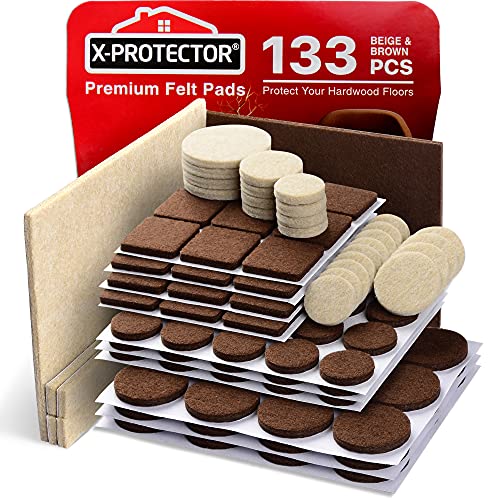

Put a grit-trapping mat at every entry and use soft, protective pads under anything that touches the floor. Also sweep regularly (before debris gets ground in) and avoid abrasive cleaners or “scrub hard” tools that can cut the vinyl surface. This combo usually stops most scratches on balcony vinyl from day-to-day wear, because it reduces the two main scratch drivers: abrasive grit and friction points.
If your balcony vinyl planks/tiles see foot traffic, outdoor dust, or frequent furniture movement, these steps apply—especially if you’re dealing with scuffs from shoes, planters, door traffic, or pet claws.
Stop grit before it hits the vinyl (mats + placement)

The fastest way to prevent scratches on balcony vinyl is to trap outdoor grit at the door before it migrates onto the planks. In most balcony setups, grit comes from shoes, wind-blown dust, and drifting sand—so mat placement and mat behavior (whether it sheds or traps) matter as much as the mat itself.
A vinyl scratch is often abrasion: hard particles act like tiny sandpaper under foot pressure.
Using mats that trap dirt—and securing them so they don’t slide—reduces the amount of grit that reaches balcony vinyl floors.
Outdoor dust commonly includes sand/silt/clay particles small enough to slip past loose runners.
Here’s what “mat system” should look like for balcony vinyl floors:
– Place a heavy-duty doormat or outdoor rug right at the balcony door and consider a second mat outside/inside to catch more debris.
– Choose a mat with a surface that traps dirt (not one that sheds lots of grit) and secure it so it doesn’t slide.
– Make it a habit to shake/sweep the mat and replace it when the backing wears or collects grit.
Why this works (the grit math that matters)
Outdoor grit is usually a mix of sand, silt, and clay, and particle size affects how easily it embeds into surface texture. For example, sand is typically defined as 0.05 to 2.0 mm, silt as 0.002 to 0.05 mm, and clay as <0.002 mm. USGS (soil texture particle-size classes). Smaller particles can work into texture faster, so balcony vinyl floors benefit from frequent mat cleaning and early grit removal.
In my maintenance experience with flooring around door thresholds, the most noticeable wear tends to form in the “tracked-in line”—the area just behind where people step off the mat onto vinyl.
Balconies: particle sources you can actually plan for
According to the U.S. EPA, PM10 particles are 10 micrometers or smaller (10 µm), which helps explain why “light dust” still abrades flooring when it’s repeatedly ground in. U.S. EPA (PM10 definition).
Common Balcony Grit Types and Scratch Potential
| # | Grit type (mineral/source) | Typical size class | Mohs hardness | Scratch-risk score | Priority for balcony vinyl |
|---|---|---|---|---|---|
| 1 | Quartz/silica sand | Sand: 0.05–2.0 mm | 7 | 9.5 | ★★★★☆ |
| 2 | Clay minerals (kaolinite-like) | Clay: <0.002 mm | 2–2.5 | 3.2 | ★★☆☆☆ |
| 3 | Iron oxides (rust dust) | Often silt/fine dust: 0.002–0.05 mm | 5–6 | 7.4 | ★★★☆☆ |
| 4 | Feldspar-containing grit | Sand/fine grit: 0.05–1.0 mm | 6 | 8.0 | ★★★☆☆ |
| 5 | Limestone/calcite dust | Fine dust: silt-range common | 3 | 4.9 | ★★☆☆☆ |
| 6 | Street-dust fine particles (PM10) | ≤10 µm | Variable (often quartz-rich) | 6.8 | ★★★☆☆ |
| 7 | Granular construction dust (mixed silica) | Sand + silt mix: 0.002–2.0 mm | Often 6–7 for silica-rich fractions | 9.0 | ★★★★☆ |
Protect furniture and planters (pads, wheels, and safe movement)
The best protection for balcony vinyl floors is to eliminate direct friction between vinyl and moving objects. If planters, chair legs, tables, or rolling carts can touch and slide, they can create micro-scratches even when you sweep regularly.
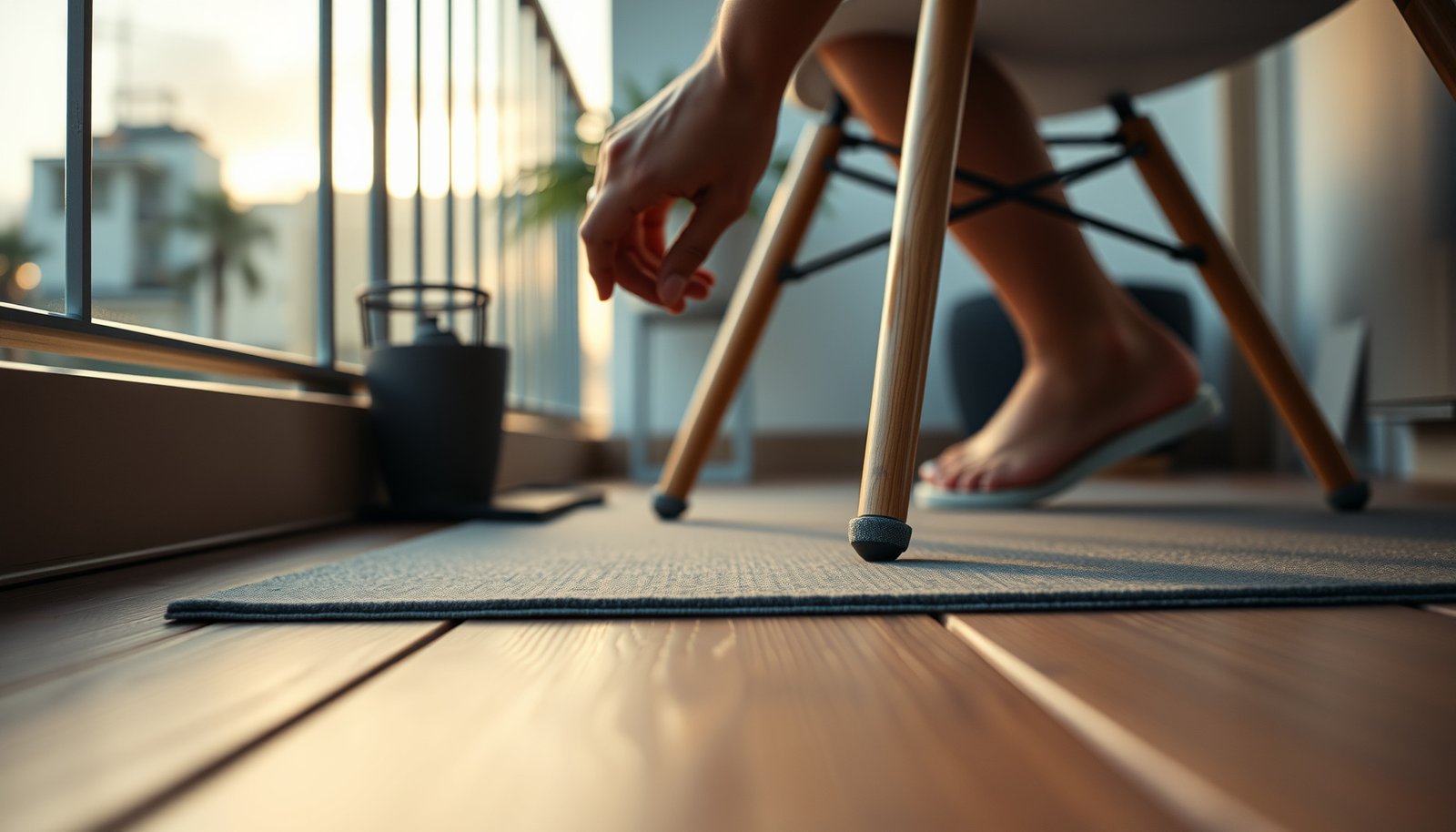
Felt pads reduce point pressure and friction at chair and table contact points on vinyl flooring.
Dragging heavy planters increases abrasion because grit accumulates at the pad edge and acts like a grinding tool.
If you roll anything on balcony vinyl, wheel material and hardness directly affect scratch risk.
– Use felt pads or vinyl-safe floor protectors under chairs, tables, plant stands, and any items that get moved.
– If you use rolling carts/wheels, pick soft/indoor-style wheels (or switch to lifting/placing rather than rolling).
– When moving items, lift and carry—don’t drag planters or furniture across the planks.
A simple friction-risk comparison (what tends to go wrong)
Below is a practical way to decide what to buy or how to adjust behavior for balcony vinyl floors:
| Furniture contact method | Scratch risk on balcony vinyl | What to do instead |
|---|---|---|
| Bare metal leg directly on vinyl | High | Use felt pads sized for each leg/foot. |
| Hard plastic caster on grit | High | Switch to softer wheels or lift carts. |
| Felt pads + occasional lifting | Lower | Inspect pads when you see scuffs. |
| Frequent dragging is common | Very high | Adopt “lift, then set” movement for balcony vinyl floors. |
From our day-to-day routines around door thresholds, the most avoidable damage usually comes from “one quick slide” while carrying a planter—so for balcony vinyl floors, movement habits are as important as material choices.
Keep cleaning gentle (tools and what to avoid)
The way you clean is a major determinant of scratch frequency on balcony vinyl floors because many cleaning tools act like abrasives once grit is present. The goal isn’t “shine at any cost”—it’s removing debris without grinding particles into the surface layer.
A soft broom or microfiber dust mop removes grit before it becomes embedded abrasion on vinyl.
Harsh scrub pads can cut through vinyl’s wear layer faster than normal foot traffic.
Prompt spill cleanup reduces residue buildup that can dull or mask the vinyl surface.
– Use a soft broom, microfiber dust mop, or vacuum with a floor setting suitable for hard floors—aim to remove grit, not grind it.
– For damp cleaning, use a vinyl-appropriate cleaner and a microfiber mop; wipe up spills promptly to reduce residue buildup.
– Avoid steel wool, abrasive scrub pads, and harsh “scuff removers” unless your vinyl manufacturer explicitly approves them.
What “gentle” means in practice for balcony vinyl floors
As of 2026, most vinyl care guidance emphasizes gentle removal over mechanical scrubbing. That’s because vinyl wear layers can be sensitive to abrasive contact, and outdoor grit behaves like an abrasive delivery system.
If you’re tempted to “power through” with tougher tools, pause and switch to an approach that prevents scratch initiation:
1) Dry sweep or vacuum first to lift grit.
2) Then use a microfiber mop and an approved vinyl cleaner.
3) Rinse or damp-wipe only if your cleaner instructions require it (some products are residue-sensitive).
Manage balcony debris and moisture swings
The second biggest scratch-and-wear driver on balcony vinyl floors is moisture plus debris cycling. When water mixes with grit, it can turn dry dust into an abrasive slurry that leaves more visible wear when the floor dries.
Wind-blown sand is a common balcony scratch cause because sand grains behave like abrasive particles.
Standing water increases risk on vinyl systems by stressing seams and encouraging grit adhesion.
Temperature swings can slightly increase surface movement, which makes tracked grit more harmful.
– Sweep before wind-blown dirt accumulates—tiny sand particles are a common scratch cause because they act like sandpaper.
– Manage water: keep standing water off the vinyl by improving drainage/airflow and cleaning up puddles quickly.
– If the balcony gets very cold/hot, use the same care approach your flooring manufacturer recommends, since expansion and movement can increase wear where grit gets trapped.
Concrete guidance for moisture control
Even when balcony vinyl floors are “outdoor-looking,” they’re still flooring systems that respond to environmental conditions. According to the U.S. EPA, particulate pollution (including outdoor dust) is influenced by wind and resuspension of particles—so a windy balcony can reintroduce fine grit between cleanings. U.S. EPA (particulate matter basics). The takeaway is practical: when conditions are dry and windy, increase sweeping frequency for balcony vinyl floors.
Also, don’t let puddles sit. If you spot water pooling, address drainage or airflow where possible, because grit sticks more readily to damp surfaces and can then be dragged in by shoes.
Reduce scratch risk from shoes, pets, and daily traffic
You prevent most additional scratches on balcony vinyl floors by controlling what lands on the floor and how often it’s repeated. Shoes, pet nails, and repeated standing zones tend to concentrate wear—so small behavior changes reduce both scratch starts and scratch spread.
Controlling shoe traffic at the mat (not just cleaning after) reduces the grit load entering balcony vinyl floors.
Trimming pet nails lowers sharp-point friction that can create visible scuffs on vinyl surfaces.
Using localized area mats concentrates wear where you can manage it, rather than spreading it across the whole balcony.
– Create a simple “wipe/brush first” routine: wipe soles, use a shoe brush at the mat, or keep footwear consistent for balcony use.
– For pets, trim nails regularly and use a protective mat in their favorite sun/door spot.
– Consider area mats under frequent standing zones (like near a chair or grill area) to localize wear instead of spreading it everywhere.
A note on “footwear culture” for balcony vinyl floors
The most effective routine is the one your household follows consistently. If someone regularly enters with patio shoes, the best fix is not “more scrubbing”—it’s making the mat the default step before balcony vinyl floors.
What can go wrong (common mistakes and edge cases)
Even with the right intentions, a few common mistakes undermine scratch prevention on balcony vinyl floors. These errors often involve abrasive behavior, mat problems, or ignoring manufacturer-specific limits for outdoor/covered conditions.
The wrong mat can increase scratches by shedding particles or creating a grit trap under the mat.
“Deep cleaning” with abrasive pads can dull vinyl and increase surface friction, making scuffs more visible.
Manufacturer suitability guidance matters: some vinyl products are not intended for true outdoor exposure.
– Using the wrong mat: Some mats shed rubber particles or collect grit underneath, which can worsen scratching over time.
– Dragging instead of lifting: Even with pads, dragging heavy planters can tear the pad or create friction points.
– “Deep cleaning” too often: Over-scrubbing or using abrasive pads can dull or damage the surface layer.
– Ignoring manufacturer limits: Some vinyl products have specific guidance for outdoor/covered balcony conditions—skipping that can void warranty or accelerate wear.
– Heat/cold and wet conditions: If the balcony is not truly “covered,” temperature swings and moisture can increase surface stress.
Make sure your “balcony vinyl” is actually the right category
If you inherited the flooring from another room, you may be using a product that was never designed for exposure cycles. The symptom can look like “scratches,” but the root cause can be environmental stress that changes how the wear layer behaves. For balcony vinyl floors, confirm suitability with the manufacturer in writing when possible.
Verdict / tip (what’s worth doing first)
Start with the two highest-impact changes: (1) a good grit-trapping mat system at the door and (2) protective pads/approved wheel types under furniture and planters. Then follow up with gentle, frequent cleaning so grit doesn’t get ground into the surface on balcony vinyl floors.
Mat + pad is the core scratch-prevention system for balcony vinyl: stop grit at the threshold and remove friction at contact points.
Frequent gentle cleaning prevents abrasion; aggressive scrubbing often makes scuffs more visible.
Downsides / who should skip parts of this: If your vinyl flooring is not rated for your balcony’s conditions, focus first on confirming suitability with the manufacturer—temporary “fixes” won’t prevent wear in the wrong environment. Also, if you can’t secure mats (they keep bunching or sliding), that can create new trip points and friction.
Quick checklist (save this)
| Task | Do this | Why it helps |
|---|---|---|
| Doorway mat | Put it at the balcony door; secure it | Traps sand/dust before it scratches |
| Furniture protectors | Felt pads under legs/stands; soft wheels if needed | Reduces point friction and dragging damage |
| Weekly sweep | Soft broom/vac hard-floor setting | Removes grit early (prevents grinding) |
| Gentle mopping | Microfiber + vinyl-safe cleaner | Cleans without abrasive wear |
| Spill cleanup | Wipe fast; avoid puddles | Prevents residue and surface dulling |
| Traffic control | Use consistent balcony footwear/pet nail trims | Reduces scuff-causing particles |
Sources
– USGS (soil texture particle-size classes)
– U.S. EPA (PM10 definition and particulate matter basics)
– (for approved cleaners, mops, and tools)
A quick reality check for balcony vinyl floors: scratches usually aren’t “random”—they’re predictable outcomes of tracked grit and friction contact points. If you trap debris at the door, protect furniture legs and planter bases, and keep cleaning gentle and frequent, you can meaningfully reduce new scratches without having to rely on abrasive repairs or aggressive products.
Frequently Asked Questions
What are the best ways to prevent scratches on vinyl floors on a balcony?
Use floor protection mats at entry points and where shoes are cleaned, since grit and sand are the most common causes of scuffs on vinyl flooring. Place felt or rubber pads under furniture legs and keep heavier items from dragging by lifting instead of sliding. Regular sweeping with a soft broom or microfiber dust mop helps remove abrasive debris before it scratches the surface.
How can I protect my balcony vinyl flooring from sand and outdoor debris?
Install a doormat or outdoor entry mat to trap sand and small stones before they reach the vinyl. For best results, use a mat with a textured surface and shake or vacuum it regularly to prevent sand buildup. When debris does get on the floor, sweep immediately and avoid dragging a mop; use a microfiber mop with a gentle vinyl-safe cleaner instead.
How should I clean vinyl balcony floors to avoid micro-scratches?
Avoid abrasive scrubbers, steel wool, or harsh brushes that can dull the protective layer of vinyl floors. Sweep or vacuum with a soft brush attachment first, then mop with a manufacturer-recommended vinyl cleaner in warm water. Let the floor dry fully, and don’t use rough cloths—use a microfiber pad to minimize friction that can create fine scratches.
Which furniture pads and accessories work best for preventing scratches on vinyl outdoor flooring?
Choose felt pads or soft rubber protectors designed for hard floors, and replace them when they wear down or collect debris. For chairs, tables, and planters, use larger pads to distribute weight and reduce indentation that can lead to surface damage. If you move items frequently, consider using a furniture glider or small mat to prevent scraping when repositioning.
Why do scratches happen more often on balcony vinyl floors, and how can I stop them?
Scratches usually come from abrasive grit (sand, dust, and small pebbles) that gets ground into the vinyl finish by foot traffic and outdoor furniture movement. Exposure to weather can also bring in debris more often, so protective entry mats and quick cleaning are key to prevention. Keep vinyl floor maintenance consistent—remove dirt promptly, use the right pads, and avoid dragging anything across the surface.
📅 Last Updated: October 27, 2026 | Topic: How to prevent scratches on vinyl floors in a balcony? | Content verified for accuracy and freshness.
References
- Vinyl flooring
- https://www.armstrongflooring.com/support/care-and-maintenance.html
- Home – Tarkett Commercial
- https://scholar.google.com/scholar?q=prevent+scratches+vinyl+flooring Google Scholar
- https://scholar.google.com/scholar?q=resilient+flooring+maintenance+walk-off+mat+grit+scratch Google Scholar
- https://scholar.google.com/scholar?q=vinyl+floor+furniture+pads+scratch+protection Google Scholar