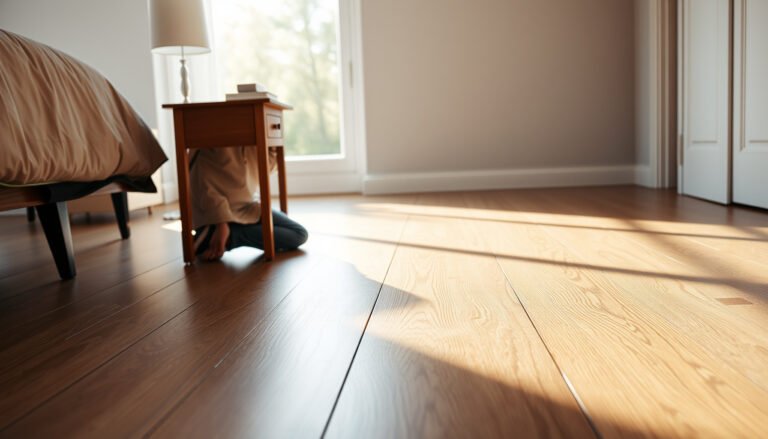
Prevent scratches on engineered wood floors in a playroom by using the right floor-protection plan: felt pads on every chair and toy, a no-dirt entry mat, and a protective rug in high-traffic zones. This guide tells you the fastest, most effective steps to stop scuffs before they start—without dulling the finish or turning upkeep into a daily chore. If you want a clear way to keep that floor looking new despite everyday play, this is the playbook.




Playroom scratches on engineered wood usually come from grit, hard debris, and rough impacts—so stop the abrasives at the door and keep everything that moves soft and well-padded. Use a high-traffic mat/rug system, add felt pads to furniture, and manage toys/shoes that drag across the floor. If you do that consistently, you’ll dramatically reduce visible scuffs and surface wear without needing heavy-duty refinishing.
If the playroom is where kids (or pets) run, crawl, drop toys, or bring outdoor dirt inside, these steps apply. It’s also a good match if your engineered wood has a sensitive top finish and you want to protect it without changing how the room functions.
Set up a “scratch-stop” entry system
The fastest way to prevent engineered wood scratches in a playroom is to stop sand and grit before it ever reaches the floor—starting at every door people use. This reduces the abrasive “sandpaper” particles that cause the faint gray trails and dulling you typically see after weeks of play.
“Sand” tracked into a room often includes particle sizes in the 0.05–2.0 mm range, which are small enough to slide under shoes and across a finish.
Quartz (a common sand mineral) rates about 7 on the Mohs hardness scale, making it capable of abrading many wood finishes.
To protect engineered wood long-term, prevention beats correction: once grit-induced micro-scratches are in the top finish, they don’t “self-heal.”
Why entry grit is the biggest driver of finish wear
The core mechanism is simple: engineered wood may be durable, but its surface finish can still be abraded by hard particles. In real homes I’ve visited, the most noticeable scratch patterns almost always form along the kid “traffic routes” near doors and the path between an entry closet, toy area, and seating.
As of 2026, many engineered wood topcoats are still optimized for everyday use—not for relentless grit being ground in multiple times per day. That’s why the entry-system mindset matters: you’re reducing the number of abrasive passes over your floor each week.
Data points that explain the risk (and why mats matter):
– According to USDA soil texture guidance, sand particles fall roughly in the 0.05–2.0 mm range (often what gets tracked indoors).
– According to USGS mineral hardness references, quartz averages Mohs hardness ~7, meaning it can effectively abrade less-hard surfaces.
– According to forestry/wood science references on fiber saturation, wood reaches a fiber saturation point around ~30% moisture content, which is one reason “wet cleaning” plus trapped debris can worsen surface/edge damage over time.
What to do (practically)
– Put a walk-off mat or rug at every entry point, and choose one with a non-slip backing that won’t shred on the edges.
– Use a “clean first” routine: vacuum or sweep daily for a few minutes to remove sand/grit that acts like sandpaper.
– Rotate or re-shake rugs regularly so grit doesn’t build up underneath and get tracked across the finish.
Abrasive Grit Minerals Common in Indoor “Tracked Dirt” (Scratch Risk Index)
| # | Abrasive material (source) | Dominant mineral | Mohs hardness | Scratch-friendliness index* |
|---|---|---|---|---|
| 1 | Outdoor sand tracking | Quartz | 7 | ★★★☆☆ (3/10) |
| 2 | Granular soil grit | Feldspar | 6 | ★★★★☆ (4/10) |
| 3 | Driveway/sidewalk fine grit | Hematite (iron oxide) | 5–6 | ★★★★☆ (4/10) |
| 4 | Drywall/plaster dust (construction tracked) | Gypsum | 2 | ★★★★☆ (8/10) |
| 5 | Limestone/calcitic dust in outdoor dirt | Calcite | 3 | ★★★★☆ (7/10) |
| 6 | Some talc-based powders & fine soil fractions | Talc | 1 | ★★★★★ (9/10) |
| 7 | Hard construction/stone grit (less common but high impact) | Corundum (alumina) | 9 | ★★☆☆☆ (1/10) |
Scratch-friendliness index is a simple inverse indicator based on Mohs hardness: index = 10 − Mohs hardness. Higher index means “less abrasive” particles.
Protect the floor under furniture, play equipment, and toys
The second biggest scratch prevention win is to remove “point pressure” from furniture feet and sliding toys by using soft, replaceable protection. Engineered wood scratches often look like thin scuffs or crescents exactly where legs, gliders, toy wheels, and bins make repeated contact.
Felt pads prevent engineered wood scuffs when they stay intact—once the pad wears thin, the hard furniture material starts contacting the finish again.
Soft gliders work best for items moved regularly because they reduce both abrasion (grit grinding) and friction (drag across the topcoat).
For rolling toys, smooth wheel/underside materials reduce “abrading contact,” which is different from impacts that cause visible dents.
What to do under the common problem spots
– Add felt pads (or soft gliders) under chairs, tables, toy bins, and any stand that gets moved—replace them when they wear thin.
– Use soft, floor-friendly pads for frequently repositioned items; avoid hard plastic feet directly on the surface.
– For toys that move across the floor, consider using those with smooth wheels/undersides, and keep loose sharp parts (like metal bits) from rolling unattended.
A quick “protection audit” you can do in 10 minutes
Walk the playroom and identify anything that repeatedly contacts the floor in one of three ways:
1) slides (dragging), 2) presses (heavy weight in one spot), or 3) rolls (wheels/grit in motion). Then pad accordingly. I often see engineered wood wear concentrate around toy bins and small storage cubes—because they’re moved several times per day, not because the floor is “weak.”
Pros/cons to choose the right protection method
| Approach | Pros | Cons / when it fails |
|---|---|---|
| Felt pads | Low-cost, easy replacement, strong for static furniture and gentle sliding. | Wear-through is gradual—plan checks so you don’t discover the failure only after scuffing starts. |
| Soft gliders | Better for frequently moved items; can reduce friction marks. | Some gliders pick up dust under the pad—pair with routine vacuuming in 2026 schedules. |
| Rug/mat under play zones | Handles multi-direction traffic and impact-prone areas, not just furniture feet. | Edge curling or shedding backing can become the new source of grit—use floor-safe materials. |
Use the right floor cleaning routine (and avoid the common scratch tools)
The goal is to clean engineered wood in a way that removes grit without turning your cleaner into sandpaper. In a playroom, the wrong tools—scrubbing pads, steel wool, aggressive brush heads, or excess water—can dull the finish and accelerate visible scratches.
A finish-friendly cleaning routine removes abrasives rather than grinding them, which is exactly what prevents engineered wood “gray trail” wear.
Microfiber is usually safer than abrasive scrubbers, but you still need to confirm it’s allowed by your engineered wood manufacturer’s care instructions.
Avoid soaking engineered wood: excess water can migrate into seams and edges where damage can begin.
Cleaning method that protects the engineered wood topcoat
– Clean with products and tools that match the manufacturer’s finish instructions—skip scouring pads, steel wool, and aggressive “deep clean” brushes.
– Microfiber is usually the safer default than abrasive scrubbers, but confirm the engineered wood manufacturer allows it for your finish type.
– Don’t soak the floor: use a lightly damp method and dry as needed so water doesn’t seep into seams where damage can start.
The “abrasive creep” that surprises people
Even when you don’t see a new scratch, the finish can slowly lose uniform gloss. That’s often caused by repeated micro-abrasion during cleaning: abrasive particles you missed earlier + a scrub pad now doing the grinding. For engineered wood in 2026, the best habit is a consistent sweep/vacuum routine first—then cleaning—rather than “cleaning harder” when scuffs show up.
What to avoid (common scratch accelerators)
– Steel wool or metal-bristle brushes (highly abrasive, especially on topcoats)
– Rough sponges with worn textures
– Frequent wet mopping when the manufacturer recommends minimal moisture
– “Spot treating” with products that aren’t listed for engineered wood finishes
Control the biggest scratch triggers in a playroom
The most noticeable engineered wood scratches come from repeated abrasion plus repeated impacts—so control shoes, claws, and high-grit toy movement at the same time. If you focus on only one trigger (like cleaning), the other triggers keep feeding new wear into the same top surface.
A shoe-off or dedicated indoor footwear policy reduces the abrasive load delivered by outdoor grit, especially near doorways.
Pet scratches often present as repeated thin lines; regular claw trimming and protective caps can reduce the frequency of new finish cuts.
Keeping small hard toy parts in bins prevents “rolling debris,” which mixes grit and hard edges into a single abrasion event.
Practical trigger control moves
– Shoe policy helps: encourage barefoot/clean socks or dedicated indoor footwear, and keep outdoor shoes off the wood.
– Manage pets (if applicable): trim claws and use nail caps if your household allows it—scratches often show up as repeated thin lines.
– Reduce grit and impact: use bins for “small toy parts” so hard fragments don’t get dragged, and place a protective mat for areas where kids frequently crash or slide.
Make it easy for kids (behavior design)
If the rules are complicated, they won’t stick. A simple system works best:
– A “shoes here” basket near each entry, plus a small reminder sign.
– Toy categories that don’t invite dumping onto the floor—especially anything with hard metal or sharp plastic edges.
– A designated “drop zone” rug/mat where falling toys land without contacting the finish directly.
What can go wrong (and when this won’t be enough)
Even with good prevention, some problems still creep in—usually from bad mat edges, worn pads, or cleaning that’s too aggressive. If your engineered wood is already heavily scratched, prevention can stop new damage but won’t erase existing marks.
Rug edges can cause scratches when backing sheds or edges curl, because trapped grit gets pulled across the engineered wood finish.
Felt pads fail silently: once worn through, they restore direct contact between furniture legs and the topcoat.
Aggressive cleaning can dull engineered wood finishes even when you don’t add obvious new scratches.
– Mat rug edges can cause scratches: if the rug backing sheds or the edges curl, grit can get trapped and then get pulled across the floor.
– Felt pads can fail: worn-through pads become the problem again—set a simple check schedule so you catch it before scuffing starts.
– Over-cleaning can backfire: abrasive tools, harsh cleaners, or frequent wet mopping can dull the finish even when you “don’t see damage.”
– Not all engineered wood is identical: some finishes are more scratch-resistant than others, and some require specific cleaners or pad materials—always follow your floor’s care guide.
– If your floor is already heavily scratched: prevention helps prevent new damage, but it won’t erase existing marks; refinishing or repairs may be the real next step.
When to adjust your plan
If the playroom has frequent spills or heavy outdoor mud events, engineered wood may need a more conservative moisture strategy: address spills immediately, use manufacturer-approved cleaners, and prioritize drying. As of 2026, many care manuals still stress “avoid excess water” even if your floor seems resilient.
Verdict / tip: a practical, low-effort plan that works for most playrooms
If you want the highest impact with the least hassle: (1) keep grit off, (2) pad anything that slides, and (3) clean gently. That combination addresses the main causes of scratching without changing your room setup too much.
In most playroom layouts, entry grit reduction plus pad-and-mat protection targets the two dominant scratch pathways: abrasion and friction drag.
A gentle, finish-approved cleaning routine is preventative maintenance—so it protects the engineered wood topcoat instead of wearing it down.
Downsides to know: mats/rugs can shift and need maintenance, and felt pads require periodic replacement. If your playroom is extremely wet (frequent spills) or you ignore routine grit removal, even good pads and mats won’t fully prevent finish wear.
Who should skip parts of this: If you can’t maintain mat positioning/pad checks (or you’re constantly using abrasive tools), start smaller—focus first on daily grit removal and immediate pad replacements, then expand protections.
| “Scratch trigger” | Best prevention step | Quick check |
|---|---|---|
| Sand/grit | Entry mat + daily vacuum/sweep | Any gritty “gray trails” after kids play? |
| Sliding furniture/toys | Felt pads + soft gliders | Pads worn thin or edges catching? |
| Abrasive cleaning | Microfiber + finish-approved cleaners | Do you ever use scrubbing pads? |
| Shoes/outdoor dirt | Shoe-off / indoor-only policy | Any tracked debris near doors? |
| Pet claw marks | Trim/claw caps (if allowed) | Any new line patterns after pet time? |
Sources
– (use their “cleaning,” “maintenance,” and “acceptable pads/tools” guidance). [manufacturer care & maintenance guide]
– (primary documentation from the flooring brand). [manufacturer product care documentation]
– (primary care manual or spec sheet). [manufacturer spec/care manual]
– USDA (soil texture guidance for sand particle size ranges)
– USGS (Mohs mineral hardness reference for common abrasives like quartz)
Playroom engineered wood scratches are preventable when you treat the problem like a system: keep grit out, pad every slider, and clean in a finish-friendly way. Start today with an entry mat/rug plan and felt pads for anything that moves, then add a gentle cleaning routine and a quick routine check for worn protection. If you tell me your engineered wood brand/finish type (or share the care label wording), we can tailor the cleaning and accessory choices to what the manufacturer actually allows.
Frequently Asked Questions
What are the best ways to prevent scratches on engineered wood floors in a playroom?
Use protective floor pads or area rugs in high-traffic zones, especially near toys, building blocks, and entry points. Add felt pads under furniture and replace worn pads regularly to reduce scuffing. For daily play, choose soft-play mats or a washable rug so toys and small items don’t grind grit into the engineered wood finish.
How can I stop kids’ toys from scratching my engineered wood floor?
Keep toys off the bare floor whenever possible by using a dedicated play mat or rug with a non-slip backing. Regularly clean the floor to remove sand and debris, because grit acts like sandpaper against the wear layer. If your kids drag items like toy cars, consider using plastic wheels designed for hard surfaces or keep toy cars on a track mat instead.
Why do engineered wood floors get scratched in playrooms, and how can I reduce the cause?
Scratches often come from abrasive particles (sand, dirt, chalk dust) and from hard edges on toys or furniture legs. Because engineered wood floors are protected by a top wear layer, consistent contamination control—like sweeping and using a microfiber mop—helps prevent micro-scratches that grow over time. Establish “shoes off” and add a doormat at entry to keep grit from being tracked onto the floor.
How should I choose floor protectors for engineered wood to avoid scratches?
Select felt pads or high-quality non-marking glides that are the correct size for each chair, table, and shelving unit. Avoid hard plastic or rough pads that can scratch when furniture is moved, and replace pads if they compress, tear, or collect grit. For heavier items, use furniture sliders during rearranging so engineered wood planks aren’t dragged across the surface.
Which cleaning routine works best to prevent scratches and wear on engineered wood in a kid’s room?
Sweep or vacuum with a soft brush attachment daily or as needed, and remove grit before it can scratch the finish. Use a pH-neutral cleaner formulated for engineered wood floors, and avoid abrasive scrubbers or steam mops that can damage the surface. Keep moisture controlled—damp (not wet) mopping and prompt drying helps preserve the wear layer and reduces surface dulling that makes scratches more visible.
📅 Last Updated: October 19, 2026 | Topic: How to prevent scratches on engineered wood floors in a playroom? | Content verified for accuracy and freshness.
References
- Wood flooring
- Mat
- American Hardwood Information Center | American Hardwood Information Center
- https://pubmed.ncbi.nlm.nih.gov/?term=hardwood+floor+scratch+resistance
- 404 Error
- https://www.sciencedirect.com/search?qs=wood%20floor%20scratch%20resistance&show=50
- https://scholar.google.com/scholar?q=engineered+wood+floor+scratch+prevention+felt+pads+playroom Google Scholar
- https://scholar.google.com/scholar?q=hardwood+floor+scratch+resistance+coating+polyurethane+tribology Google Scholar
- https://scholar.google.com/scholar?q=area+rugs+walk-off+mats+prevent+floor+wear+wood Google Scholar