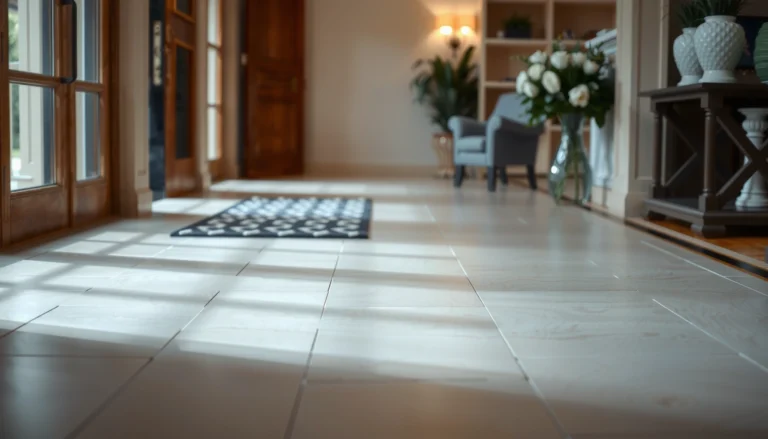

Wondering how to maintain wood-look tile floors so they stay as scratch-free and stain-resistant as the day they were installed? Follow the right care and cleaning routine—use the correct cleaners, avoid common damage triggers like harsh abrasives and standing water, and handle spills the moment they happen. This guide lays out the most effective, low-effort steps that keep your wood-look tile looking new.



Use pH-neutral cleaners, wipe spills quickly, and avoid abrasive/acidic products that can dull the glaze. With consistent daily care plus manufacturer-approved grout cleaning, wood-look porcelain or ceramic tile can stay crisp, warm-looking, and stain-resistant for years—even in wet entryways.
If your home has wood-look porcelain or ceramic tile (with grout, and possibly a sealed surface), these tips apply to daily messes, regular maintenance, and common problem areas like wet entryways. If you’re unsure what finish your tile has or whether your grout is sealed, you’ll also find guidance on how to confirm before you apply anything.
Daily cleaning that prevents dulling
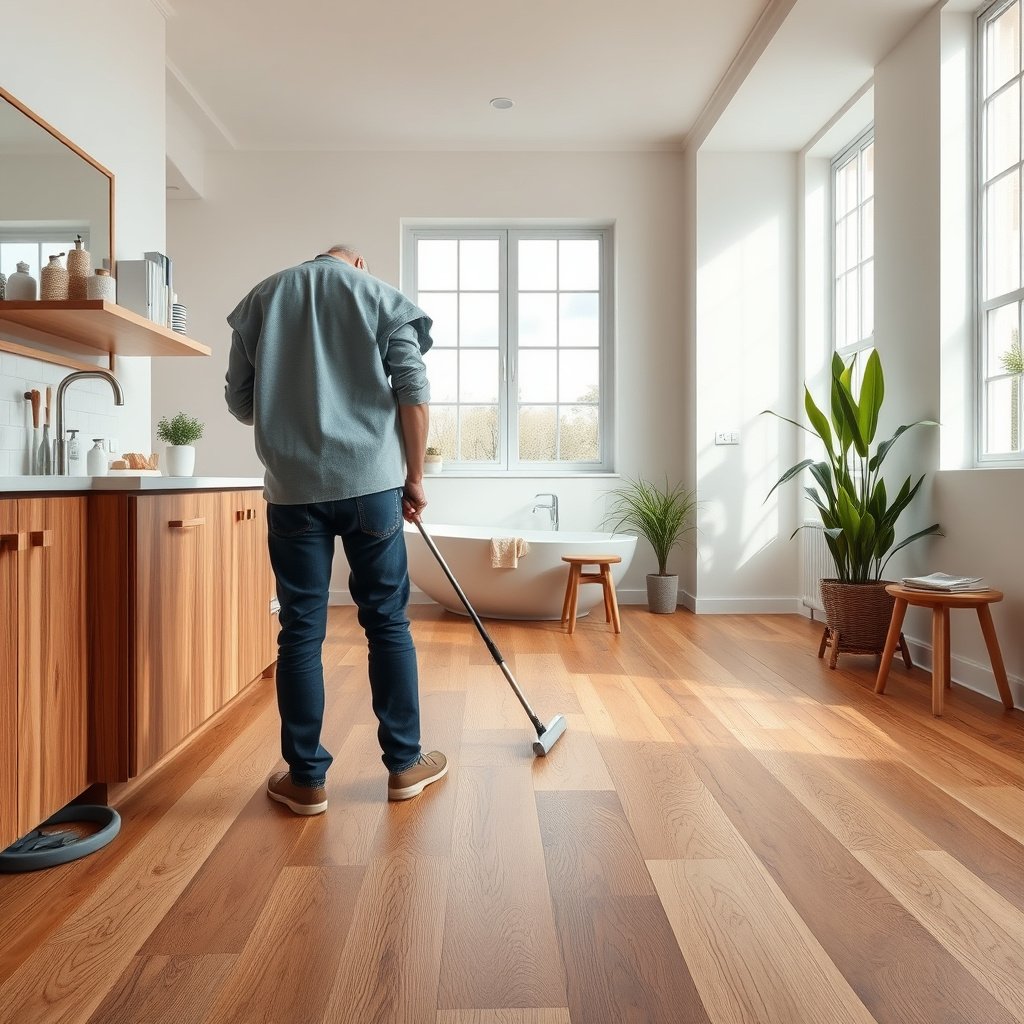
To keep wood-look tile floors looking like new, focus on removing grit before it scratches the surface and using pH-neutral cleaning for haze-free results. The simplest daily routine protects the tile’s glaze and helps grout lines resist darkening.
Using the wrong cleaner can leave residue that causes haze; rinsing and pH-neutral products reduce the likelihood of this buildup.
Porcelain tile is defined by very low water absorption (≤0.5%) under ASTM C373, which is why the glaze typically resists everyday moisture better than grout does.
What “dulling” usually means on wood-look tile
When people describe “dullness” on wood-look tile, they’re often seeing one of three things: (1) micro-scratches from tracked grit, (2) a thin film left by improper cleaners, or (3) glaze damage from acidic/abrasive chemistry. With wood-look porcelain or ceramic tile, the glaze is the primary protection layer—so protecting it from grit and residue matters more than aggressive scrubbing.
From a maintenance standpoint, we treat wood-look tile floors like a hard-surface finish: remove particles first, then clean with chemistry designed for glazed ceramic/porcelain.
Your day-to-day routine (simple, effective)
– Sweep or vacuum regularly using a soft bristle attachment to avoid grit that scratches the surface.
– Mop with a pH-neutral cleaner and clean water—skip harsh chemicals that can affect the tile’s finish and haze the surface.
– Wipe up water, muddy footprints, and spills soon after they happen to limit staining and mineral marks.
Quick practical details that matter
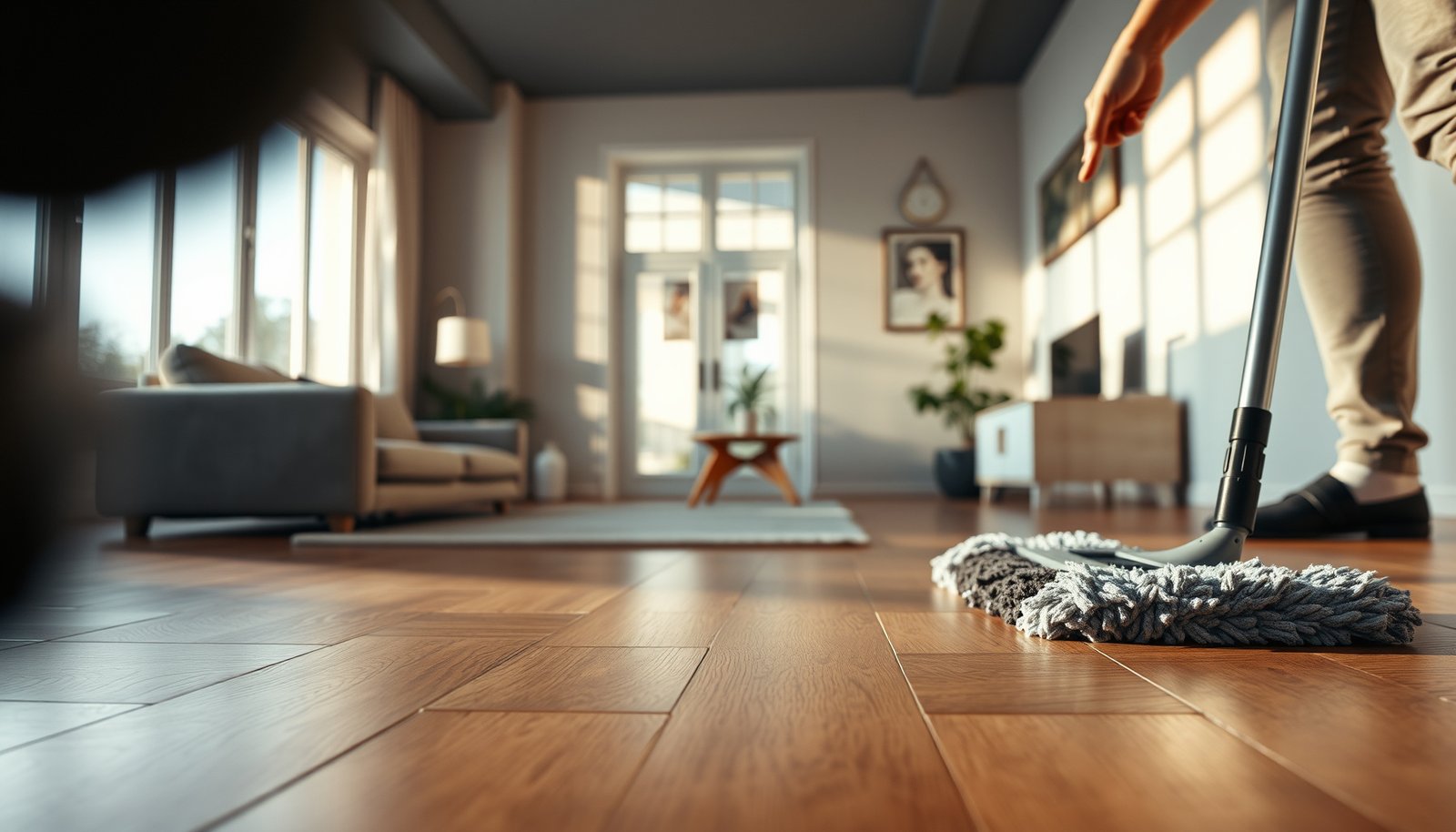
– Use microfiber or a well-wrung mop: you want damp contact, not puddles that creep into grout joints.
– Change mop water when it starts to look cloudy—dirty water becomes a spreading agent for residue and soil.
– Pay attention to corners and edges where wood-look tile transitions to baseboards or thresholds; those areas dry slower and can encourage spot marks.
As of 2026, many manufacturers still emphasize “clean with non-abrasive, pH-neutral solutions” for glazed tile—because glaze performance depends on that protective chemistry and the finish you already have.
Weekly mopping and spot-cleaning rules
Weekly mopping keeps wood-look tile floors even in tone and free from film, but the method is as important as the cleaner. The right routine uses light moisture, blotting for spots, and manufacturer-safe tools to avoid dulling.
Leaving standing water can increase moisture migration into grout lines and edges, which contributes to persistent discoloration over time.
A steam cleaner may still be inappropriate for some grout sealers or tile systems; heat and moisture compatibility must be confirmed in the care instructions.
Weekly mopping (keep it light)
– Use a lightly damp mop; don’t leave standing water, especially around seams and grout.
– For spots, blot first, then use a gentle cleaner appropriate for tile—test any spot cleaner in an inconspicuous area first.
– Avoid magic erasers/abrasive pads unless your tile manufacturer specifically says they’re safe for your surface.
The “blot, don’t scrub” logic for wood-look tile floors
With wood-look tile floors, scrubbing a spot often spreads pigments across grout and microtexture in the glaze. Blotting first reduces how much stain material you drive into porous areas (especially grout). After that, use a gentle cleaner and plenty of clean-water rinsing so you don’t leave behind film that later reads as haze.
Spot-cleaning examples for common situations
– Mud and shoe tracks in wet seasons: let the mud dry slightly, remove loose grit, then clean with a gentle tile-safe solution and rinse well.
– Food drips (sauces, oils): blot and absorb; then clean without high-alkali degreasers unless the tile and grout system explicitly tolerates them.
– Pet messes: remove solids quickly, blot, then follow the cleaner category recommended for your grout type (sealed vs. unsealed makes a big difference).
Deep cleaning (when buildup shows up)
When wood-look tile floors start to look cloudy or tacky, you usually need controlled deep cleaning—more rinse, the right tile-safe chemistry, and careful grout attention. The goal is to lift residue and grime without stripping the finish or damaging grout.
Cloudiness after cleaning is commonly linked to cleaner residue that wasn’t fully rinsed or was chemically incompatible with the glaze.
Grout joints are the most moisture-sensitive component of wood-look tile floors, so deep cleaning must target grout without flooding surrounding areas.
Deep cleaning approach for wood-look tile floors
– If your floor looks cloudy or tacky, start with a thorough rinse of clean water and then use a tile-safe cleaner recommended by the tile manufacturer.
– For stubborn grime in grout lines, use a grout brush and the least aggressive method that works; don’t automatically “strip” grout unless directed by specs.
– Let the floor dry completely after deep cleaning to prevent lingering moisture in grout.
How to decide whether you need “chemical” or “mechanical”
– If haze is uniform (almost like a veil): residue and filming are likely—start with rinsing and a tile-approved pH-neutral or neutralizer product.
– If discoloration is in grout lines only: grime embedded in grout joints and moisture history are the drivers—use a grout brush and the least aggressive chemistry specified for that grout.
– If the texture feels rough: stop and reassess tools used earlier—abrasive pads can leave micro-scratches that cleaning won’t reverse.
Step-by-step deep clean you can repeat (and not overdo)
1. Dry removal: vacuum/sweep first to keep grit from turning into paste.
2. Clean-water rinse: reduce the chance you’re working residue deeper into grout.
3. Tile-safe cleaner: apply only as directed; avoid “extra strength” unless the manufacturer explicitly allows it.
4. Target grout carefully: brush grout lines gently and rinse thoroughly.
5. Dry fully: keep air moving; don’t put area rugs down until the floor is completely dry.
Protect the finish from scratches and moisture
Protection is what prevents wood-look tile floors from drifting from “great” to “dull,” especially in high-traffic zones. With the right entryway habits and furniture protection, you cut the two biggest threats: abrasion from grit and discoloration from moisture.
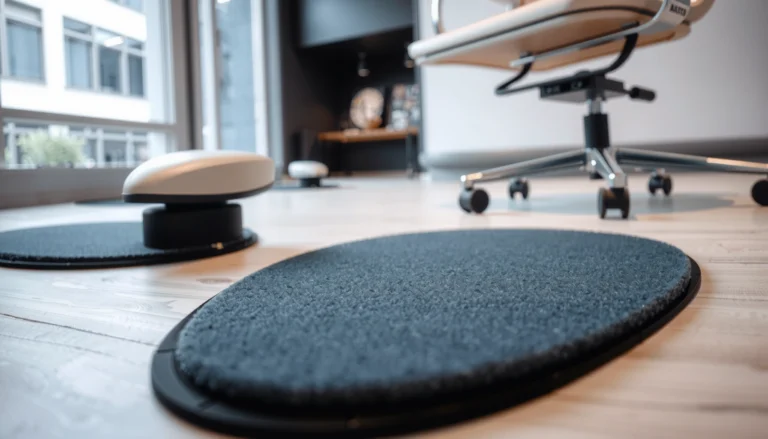
Felt pads under furniture reduce micro-scratching risk on hard floors by limiting direct abrasive contact.
If grout is unsealed (or sealing was never applied as specified), moisture exposure can more easily translate into darker grout lines over time.
Scratch control (wood-look tile floors)
– Place felt pads under furniture and use entry mats (inside and outside) to reduce sand and grit tracking onto the floor.
– Keep water exposure controlled: wipe spills and avoid flooding during mopping or cleaning.
– If your grout is unsealed or was never sealed, consider grout sealing—but only if your grout type and manufacturer instructions indicate sealer compatibility.
Entryways: the real “test lab” for wood-look tile floors
In wet entryways, you’re balancing tracked grit, salts (from winter roads), and water. The best strategy is capture dirt before it hits grout, then prevent “wet sitting.” That usually means:
– An inside mat to catch what remains after shoes come off
– An outside mat to reduce the amount of sand/salt that enters
– Quick spill response when water spills or boots unload snowmelt
Confirming your tile and grout compatibility (before you apply anything)
Wood-look tile floors may include a sealed surface coating, an unsealed grout plan, or a grout system that requires specific sealers. Before sealing or using chemical cleaners, locate:
– the tile manufacturer’s care guide (glaze compatibility, tool restrictions)
– the grout manufacturer’s installation/care sheet (whether sealing is required and with what products)
If you can’t find documentation, check the installer paperwork—then follow the most conservative option until you confirm compatibility.
What can go wrong (and how to avoid it)
Wood-look tile floors usually fail maintenance expectations due to incompatible chemicals, too much water, or skipping manufacturer care limits. Avoid those three issues and you’ll prevent most dulling, haze, and recurring grout discoloration.
Acidic cleaning solutions can etch or alter certain tile surfaces, especially when used repeatedly or at incorrect concentrations.
Even when tile is low-absorption (e.g., porcelain ≤0.5% under ASTM C373), grout remains the moisture pathway that can discolor if kept wet.
Common mistakes with wood-look tile floors
– Using the wrong cleaner: acidic cleaners, strong degreasers, or abrasive scrubbing can dull the glaze or worsen grout discoloration.
– Too much water: even “tile-proof” floors can trap moisture at grout lines and edges, leading to persistent spots.
– Skipping the manufacturer’s care guidance: wood-look tile varies by glaze, coating, and grout type—some surfaces tolerate certain tools and chemicals, others don’t.
Cleaner chemistry matters (pH is a useful shortcut)
The pH scale runs from 0 to 14, with 7 neutral. In practice, wood-look tile floors generally perform best when you use pH-neutral products intended for glazed ceramic/porcelain. When you move into acidic or highly alkaline chemistry, you increase the risk of surface dulling or film.
Expected Suitability by Cleaner Type for Wood-Look Glazed Tile (2026)
| # | Cleaner / Material | Typical pH | Common Use Case | Tile-Safe Rating |
|---|---|---|---|---|
| 1 | Clean water rinse | ~7 (neutral) | Post-mopping rinse to remove residue | ★★★★★ |
| 2 | pH-neutral tile cleaner | ~7 (formulated neutral) | Routine mopping on glazed ceramic/porcelain | ★★★★★ |
| 3 | Mild alkaline detergent (general soap) | ~8–9 | Grease-light spots (verify grout compatibility) | ★★★☆☆ |
| 4 | Baking soda solution (typical) | ~8.1–8.6 | Mild deodorizing/spot lift on non-coated areas | ★★☆☆☆ |
| 5 | White vinegar (diluted) | ~2.4–3.4 | Hard-water scaling (avoid on tile unless approved) | ★☆☆☆☆ |
| 6 | Household bleach solutions | ~11–13 | Disinfection (only if grout/tile system permits) | ★☆☆☆☆ |
| 7 | Abrasive pads (scouring) | N/A (mechanical abrasion) | Heavy scrubbing (not for glazed finishes) | ★☆☆☆☆ |
Pros/cons framing for wood-look tile floor cleaning
- Use pH-neutral tile cleaners
- Pros: lower residue risk, glaze-safe approach for many glazed ceramic/porcelain systems. Cons: may not remove deep grout staining without a grout-specific method.
- Use acidic/abrasive products
- Pros: can temporarily lift certain deposits. Cons: higher likelihood of glaze dulling and unpredictable grout discoloration.
Verdict / tip: what we’d do first
Start with the simplest approach: regular sweeping + pH-neutral mopping + fast spill cleanup. That combination prevents most dullness and staining without risking the finish.
Downsides: If you have heavy grout staining, smoke/grease residues, or a long-neglected haze, “light” cleaning may not fully restore the surface—at that point you’ll need a method that matches your tile and grout specs.
Skip this approach if: you don’t know whether your tile or grout has special coatings/sealers, or if you’re planning to use an aggressive chemical without checking the manufacturer’s care instructions. When in doubt, use the manufacturer guidance first.
For wood-look tile floors, the safest first step is pH-neutral cleaning plus fast spill removal because it protects the glaze while minimizing grout moisture exposure.
Porcelain tile’s low absorption (≤0.5% per ASTM C373) helps explain why grout and edges—not the tile body—are where cleaning errors most often show up.
Quick maintenance checklist (scan/save)
| Task | How often | Notes |
|---|---|---|
| Sweep/vacuum | Weekly (or more) | Use a soft/no-scratch attachment to remove grit |
| Mop with pH-neutral cleaner | As needed / weekly | Avoid leaving water sitting on seams |
| Spot-clean spills | Immediately | Blot, don’t scrub; test cleaners in a hidden spot |
| Check entry mats | Weekly | Replace/refresh when they stop trapping dirt |
| Inspect grout discoloration | Monthly | Decide if grout cleaning/sealing is actually needed |
| Deep clean grout lines | As needed | Only use methods approved for your tile/grout system |
Sources
– Tile manufacturer care and maintenance documentation for your specific wood-look tile (for approved cleaners, tools, and steam limits).
– Grout manufacturer installation/care instructions (for whether sealing is required and which sealers/cleaners are compatible).
Wood-look tile floors stay attractive when you protect the glaze (remove grit, avoid harsh chemistry) and manage grout moisture (controlled mopping, targeted grout cleaning, and sealing only when your grout system calls for it). If you follow the daily and weekly rules and escalate only with manufacturer-approved deep cleaning, you’ll usually prevent dulling, haze, and recurring grout discoloration—without damaging the finish.
Frequently Asked Questions
How do you clean wood-look tile floors without damaging the finish?
Sweep or vacuum regularly to remove grit that can scratch wood-look tile. Use a pH-neutral cleaner recommended for tile and grout, and mop with warm water; avoid harsh acidic or abrasive cleaners that can dull the finish. For sticky spills, use a damp microfiber cloth and a gentle, tile-safe cleaner, then rinse with clean water to prevent residue buildup.
What’s the best way to prevent water damage and stains on wood-look tile?
Wood-look porcelain or ceramic tile is water-resistant, but grout joints can absorb moisture and stains over time. Wipe up spills quickly and avoid soaking the floor for extended periods, especially around grout lines and edges. Consider sealing the grout (and any grout that’s been newly installed) according to the manufacturer’s directions to enhance stain resistance.
How often should you deep clean and maintain grout on wood-look tile floors?
For routine upkeep, clean weekly or as needed with a pH-neutral cleaner to keep dirt from settling into grout. Deep clean grout every few months using a grout brush and a grout-safe cleaner, and address any discoloration promptly to prevent permanent staining. If the grout looks worn or porous, re-seal grout after cleaning and drying fully.
Which cleaning products are safe for wood-look tile floors and which should you avoid?
Safe options include pH-neutral tile cleaners, mild dish soap diluted in water (for occasional spot cleaning), and cleaning solutions specifically labeled for porcelain/ceramic tile and grout. Avoid acidic cleaners (like vinegar or lime removers), ammonia-based products, and abrasive scrubbers or powders that can damage grout, etch surfaces, or leave haze on the tile finish.
Why do wood-look tile floors look dull over time, and how can you restore their shine?
Dullness often comes from soap scum, hard-water deposits, or residue from improper cleaners, which can create a film on the tile surface. Switch to a pH-neutral cleaner and use microfiber mops to minimize streaking, then rinse thoroughly with clean water. For light haze, try a tile-safe deep cleaner or a grout-and-tile restoration product, and always test in an inconspicuous area first.
📅 Last Updated: October 16, 2026 | Topic: How to maintain wood-look tile floors? | Content verified for accuracy and freshness.