
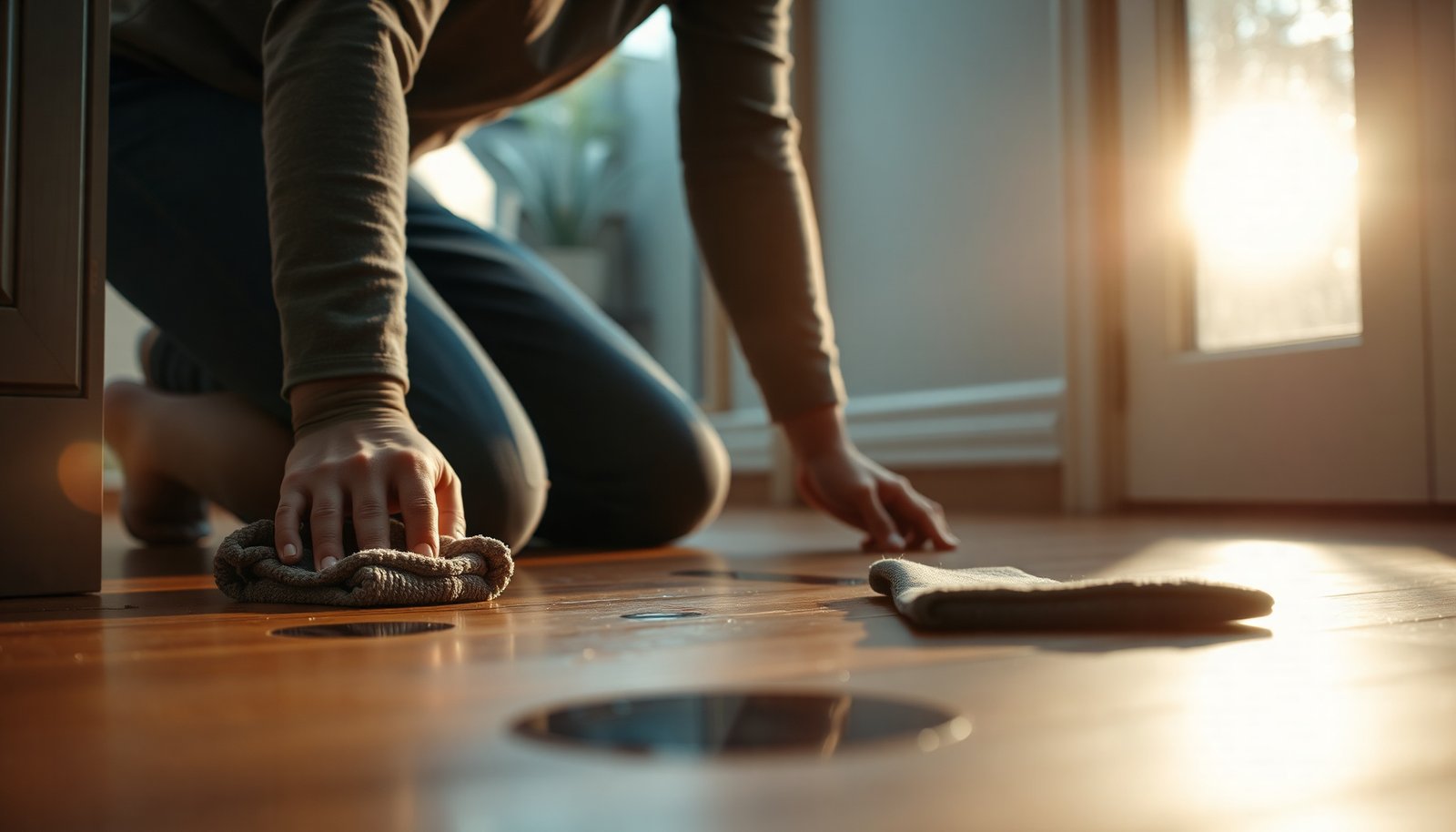

Seeing tire scuffs on your hardwood floor can feel frustrating, especially when the marks catch the light. The good news is you can usually lift them safely with the right mild cleaner and a gentle approach in under an hour. You’ll need soft microfiber cloths, a pH-neutral hardwood cleaner, and a small amount of fine steel wool or a magic eraser—used carefully—to avoid dulling the finish.




Getting tire marks off hardwood floors usually comes down to lifting the rubber residue first (without scraping the finish), then cleaning the leftover discoloration with a finish-safe method. Start by loosening the rubber carefully, then switch to gentle, pH-neutral cleaning and test any stronger cleaner on a hidden spot first.
This is for you if the tire scuff/rubber spot is on sealed hardwood (common in most homes) or a recently finished floor—and you want to avoid dulling, streaking, or stripping the finish. If the floor is unfinished or heavily waxed, you’ll need to be even more cautious.
Before you start: identify the finish and gather safe tools

The fastest way to remove tire marks from hardwood floors is to match your cleaning method to the floor’s finish so you don’t dull or haze it. Sealed/finished hardwood responds well to gentle, pH-neutral cleaning after rubber removal, while unfinished wood can absorb staining and require additional repair steps.
– Do a quick finish check: sealed floors generally tolerate mild cleaners; unfinished floors need gentler handling and can absorb stains more easily. If you know the finish type (polyurethane/wax/oil), follow that manufacturer’s care guidance.
As a chemistry reality check, “pH-neutral” means around pH 7.0, which helps reduce the chance of damaging common wood finishes. According to IUPAC guidance on the pH scale, pH is defined as the negative log of hydrogen ion activity, with neutral at pH 7 (IUPAC pH definition, latest available).
– Grab non-damaging supplies: plastic scraper (or an old gift card), microfiber cloths, soft nylon pad, bucket of warm water, and a pH-neutral wood-floor cleaner (or a cleaner your floor’s finish manufacturer approves).
– Test in an inconspicuous spot first: any solvent or stronger cleaner can dull or discolor hardwood even when it “works.”
Why the finish matters (and why “scrubbing harder” is risky)
When tire rubber transfers to hardwood floors, the dark mark is often two layers: (1) rubber residue and (2) dye/oil components left behind in the finish. On sealed hardwood floors, the finish acts like a barrier; on unfinished wood, those compounds can soak in. Wood damage can become irreversible because swelling effects increase dramatically once the wood’s moisture approaches key thresholds; the fiber saturation point is ~30% moisture content, beyond which swelling can’t be reduced by simply drying the surface (Forest Products Laboratory / Wood Handbook, fiber saturation point ~30%). That’s why gentle handling and finish compatibility are so important for hardwood floors.
Remove tire marks safely (rubber first, then residue)
The safest way to get tire marks off hardwood floors is to remove the physical rubber first, then clean the remaining discoloration with minimal moisture and light agitation. This reduces the chance of scratching the finish and prevents dark pigments from spreading.
– Lift the rubber: If there’s actual rubber transfer, try chilling it (ice in a bag against the mark) until it hardens, then remove with a plastic edge—stop if you see the finish scratching.
From a temperature standpoint, pure water freezes at 0°C (32°F) at 1 atm, which is the basic principle behind ice-chilling for stuck-on rubber (NIST / standard freezing point of water).
– Wipe with minimal moisture: Dampen a microfiber cloth with your pH-neutral cleaner and wipe the area lightly, then dry immediately with a clean cloth. On hardwood floors, “damp” means the cloth won’t drip—over-wetting is how streaking and swelling start.
– Repeat, don’t rush: Tire marks often take multiple gentle passes; scrubbing harder tends to spread the stain and can damage the finish.
Cleaner pH Levels People Commonly Consider for Hardwood Tire Scuffs (What to Avoid)
| # | Household option | Typical pH* | Chemistry role | Finish-safe score |
|---|---|---|---|---|
| 1 | Distilled water | 7.0 | Neutral rinse/wipe | 10/10 ★★★★★★★★★★ |
| 2 | pH-neutral wood-floor cleaner | 7.0–8.0 | Finish-friendly detergent | 9/10 ★★★★★★★★★ |
| 3 | Baking soda solution (lightly mixed) | ~8.3 | Mild base scrub | 6/10 ★★★★★█ |
| 4 | Dish soap (typical) | ~8–10 | Surfactant cleaner | 4/10 ★★★★ |
| 5 | White vinegar (5% acetic acid) | ~2.4 | Acid rinse | 1/10 ★ |
| 6 | Household ammonia (typical) | ~11.5–12.0 | Strong base | 0/10 ☆ |
| 7 | Chlorine bleach solutions (typical) | ~11–13 | Oxidizer + base | 0/10 ☆ |
Typical pH values vary by brand and concentration; always spot-test on hardwood floors first. Use pH-neutral wood-floor cleaners when possible.
Pick the right cleaning approach for your floor type
The right approach for tire marks on hardwood floors is determined by whether the wood is sealed (most common) or exposed (unfinished/penetrating-oil). If you treat an unfinished wood floor like a sealed one, the dark mark can spread deeper and become harder to reverse.
– Sealed/finished hardwood: Use pH-neutral cleaner first. If residue remains, use only a *small* amount of a finish-safe solvent only after a spot test (common options include small amounts of isopropyl alcohol on a cloth—but test first because some finishes can haze).
If you don’t know the finish, choose the most conservative route: rubber removal + pH-neutral cleaner + careful drying.
– Waxed or high-maintenance surfaces: Avoid harsh solvents unless your wax/finish maker specifically allows them. Start with warm water + pH-neutral cleaner and light agitation with a soft pad.
– Unfinished or penetrating-oil floors: Don’t rely on aggressive cleaning to “lift” the mark—unsealed wood can absorb staining. You may need a finish-specific repair or refinishing step.
A quick pros/cons comparison (what to do first)
For most sealed hardwood floors, a two-stage plan (rubber lift → gentle cleaner) outperforms aggressive scrubbing.
| Method | Pros for tire marks on hardwood floors | Cons / risks | Best for |
|---|---|---|---|
| Ice + plastic scraper | Keeps finish safer than abrasive tools; targets rubber transfer | Won’t remove pigment that’s already embedded in the finish | Fresh scuffs with rubber residue |
| pH-neutral cleaner + damp microfiber | Reduces haze; minimizes finish stripping | May take several gentle passes | Sealed hardwood and recent finishes |
| Soft nylon pad with minimal cleaner | Helps with stubborn leftover residue | Can dull high-gloss finishes if overused | Light-to-moderate staining |
| Strong solvents (spot-tested) | Can dissolve residue that water won’t touch | Haze risk; finish softening risk | Only after a hidden-spot test |
| Magic eraser (abrasive) | Sometimes lifts discoloration quickly | Can remove finish if used repeatedly | Last resort after spot testing |
What can go wrong (and how to avoid it)
The most common failures when removing tire marks from hardwood floors are scratching the topcoat and spreading pigments with too much moisture or the wrong chemical. The goal is to stop processes that permanently alter sheen.
– Dull spots, hazing, or stripped sheen: This often happens when people use abrasive pads, steel wool, or leave solvent residue too long. If the floor finish looks “muted” after cleaning, you likely altered the surface chemistry or removed a thin top layer.
– Scratches from the “scrape” stage: A metal blade can permanently damage the coating; use plastic only and work gently.
– Streaks and darker patches: Over-wetting or using the wrong cleaner can spread discoloration. Always dry quickly and test cleaners first.
Where tire marks tend to be stubborn
Older tire marks on hardwood floors often have more time to oxidize and bind to the finish. That doesn’t mean your cleaning plan won’t work—it usually means you’ll need additional gentle repetitions or a finish spot repair.
Verdict / tip: the safest method is “rubber-lift + gentle cleaner”
If you want the best chance of removing tire marks without harming the finish, follow the order: chill/remove rubber → gentle pH-neutral wipe → careful repeat. Avoid jumping straight to strong solvents or abrasives; those can “solve” the mark but permanently alter the floor’s look. If your floor is unfinished, unknown-finish, or already showing worn/shiny-through spots, consider getting guidance from the finish manufacturer or a local refinishing professional before experimenting.
From a practical standpoint for hardwood floors, the safest “fast” approach is still controlled: short contact time, minimal liquid, and no aggressive mechanical force on the finish.
Quick checklist (scan before you start)
| Step | What to do | Safety note |
|---|---|---|
| 1 | Test a small spot | Prevent finish haze or discoloration |
| 2 | Chill rubber (ice in bag) | Don’t soak wood; stop if scratching starts |
| 3 | Lift with plastic scraper | Avoid metal/abrasive tools |
| 4 | Wipe with pH-neutral cleaner | Use lightly damp cloths only |
| 5 | Dry completely | Prevent streaking and potential swelling |
| 6 | Repeat gently as needed | More pressure = more damage risk |
Frequently Asked Questions
How do I get tire marks off hardwood floors without damaging the finish?
Start by blotting any dirt or grit with a dry microfiber cloth so you don’t grind debris into the wood. Mix a few drops of dish soap in warm water, lightly dampen a cloth, and gently rub the tire marks in small sections. If the marks remain, use a specialty hardwood floor cleaner or diluted isopropyl alcohol (test in an inconspicuous area first) and wipe immediately with a clean, damp cloth. Avoid soaking the floor and never use harsh abrasives that can dull or strip the finish.
What is the best method to remove black rubber tire marks from sealed hardwood?
For sealed hardwood, begin with a “degrease then lift” approach: wipe the area with a mild soap solution, then try a small amount of isopropyl alcohol on a white cloth to break down rubber residue. Work gently and keep the cloth moving to prevent over-saturation and finish wear. After the stain lifts, rinse lightly with clean water (or a damp cloth), then dry thoroughly. If you still see a ghost mark, use a commercial floor spot remover formulated for wood finishes.
Why do tire marks stay on hardwood floors even after regular cleaning?
Tire rubber can smear into the finish and, depending on the floor’s topcoat, it may partially bond or oxidize, making the marks look permanent. Dust and grit from the tire can also act like an abrasive, embedding the black residue into micro-scratches. That’s why standard mopping with water alone often won’t fully remove black streaks from hardwood. Using a targeted cleaner and gentle solvents (safely and sparingly) helps lift the rubber without damaging the surface.
Which household products can remove tire scuffs from hardwood floors safely?
In many cases, dish soap mixed with warm water is the safest first step for scuffs and light tire smears. For more stubborn black lines, try isopropyl alcohol on a cloth, followed by immediate wiping with a damp cloth to remove residue. Some people also use a small amount of baking soda paste (baking soda + water) very lightly, but avoid it if your hardwood finish is delicate because it can scratch if overworked. Always spot-test in a hidden area and stop if the finish dulls or changes color.
How can I prevent future tire marks on hardwood floors?
Place protective mats or furniture pads under items that can scuff, including rolling carts, strollers, and vehicles brought indoors. Use rubber-free or non-marking wheels when possible, and avoid dragging objects across hardwood—lift and set instead. For garages or entries, add a durable floor mat to catch rubber contact before it reaches the wood finish. Regularly cleaning grit and dust also reduces how deeply tire residue can embed into the finish.
📅 Last Updated: November 02, 2026 | Topic: How to get tire marks off hardwood floors? | Content verified for accuracy and freshness.
References
- 404 Error
- 404 Error
- https://www.armstrongflooring.com/residential/en-us/maintain/scuff-and-stain-removal.html
- https://www.bruce.com/flooring-care/cleaning-and-maintenance/
- https://www.hardwoodfloors.org/flooring-advice/cleaning-and-maintenance/
- https://www.epa.gov/indoor-air-quality-iaq/cleaning-and-disinfecting-your-facility
- https://scholar.google.com/scholar?q=how+to+remove+tire+marks+from+hardwood+floor Google Scholar
- https://scholar.google.com/scholar?q=remove+rubber+transfer+marks+from+wood+flooring Google Scholar
- https://scholar.google.com/scholar?q=scuff+mark+removal+hardwood+floor+cleaning+methods Google Scholar
[…] do you lift stubborn tire marks off hardwood floors without dulling or damaging the finish? Use a careful, finish-safe approach: start with a damp […]
[…] Use a plastic scraper or an old gift card to lift as much dried rubber residue as possible without gouging the […]