
Dust on engineered wood floors can make the surface look dull and leave tiny particles where you want a smooth, polished finish. If you are tired of seeing that haze after sweeping, you are not alone. With a few simple tools—like a microfiber dust mop or vacuum with a soft brush and a lightly damp cloth—you can safely lift the dust and restore clarity in roughly 10–15 minutes.



If your engineered wood floors are dusty, the fastest safe fix is microfiber dusting (or a vacuum with a soft brush) first, then only a barely-damp microfiber wipe if you still see residue. Engineered wood is usually sealed, but grit and excess moisture can dull the finish or push grime into plank seams over time—so the right order matters.
Engineered wood floors often look “almost clean” after normal sweeping, yet still develop footprints, light haze, or a dull finish when fine dust gets smeared rather than lifted. The method below focuses on removing dust without scratching or streaking, and it stays conservative on water so the coating and seams stay protected. As of 2026, this approach remains consistent with how most manufacturers describe care: lift particulates first, then remove residue gently.
If your floors show everyday dust, footprints, or a light dull haze, this is for you—especially if you want a method that won’t scratch the surface or leave streaks. Always follow your specific floor brand’s care instructions first, since finish type (matte/polyurethane/oil) changes what’s safest.
Gather the right tools (so you don’t scratch the finish)
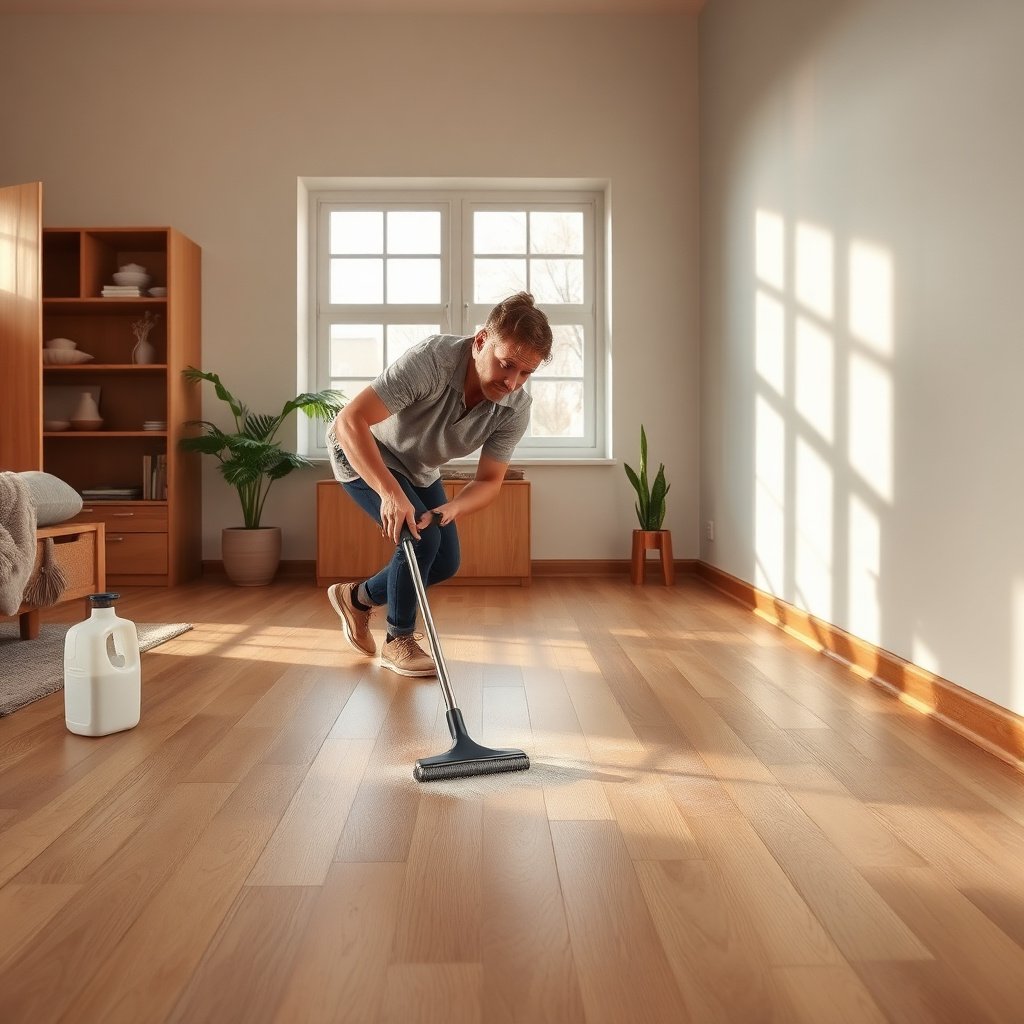
Start by using tools designed for finished floors; engineered wood floors scratch more easily than people expect when dust includes tiny abrasive particles. A microfiber-first routine reduces that risk and usually eliminates streaking.
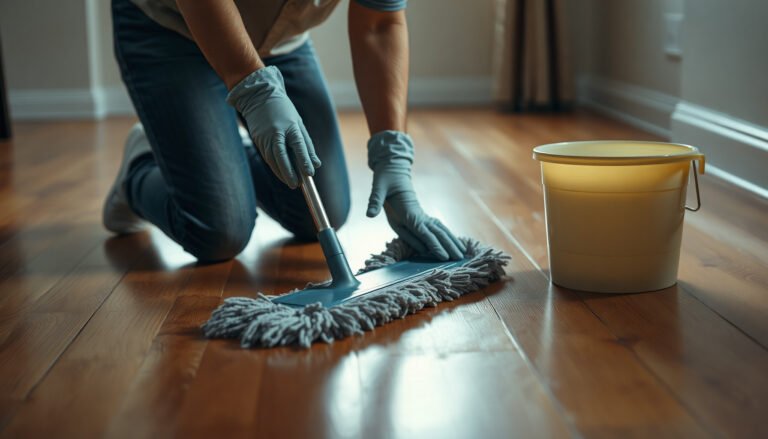
– Use a microfiber dust mop or microfiber cloth designed for finished floors (soft fibers pick up dust instead of grinding it in).
Look for microfiber marketed for “finished floors” or “hardwood” cleaning; avoid coarse terry cloth that can drag grit.
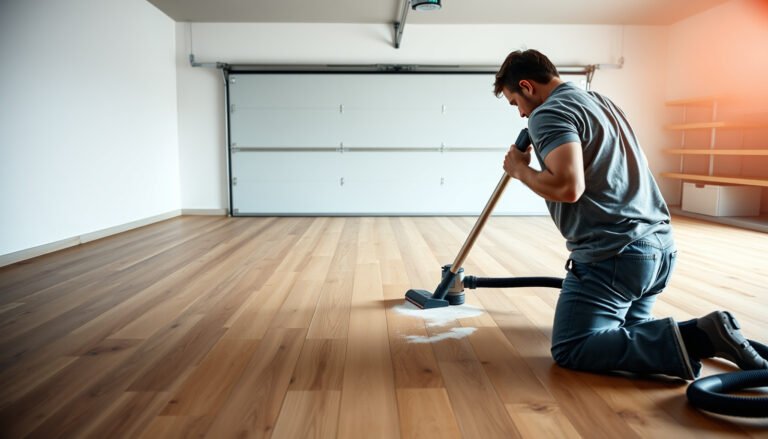
– If vacuuming, choose a vacuum head/attachment with a soft brush (skip beater bars that can scuff).
A soft-brush floor tool helps lift loose dust from engineered wood floors without digging into the coating.
– Keep a bucket/spray bottle and a clean microfiber “dry buff” cloth on hand for streak control.
Having a second dry cloth ready matters because even engineered wood floors can get a hazy look if a damp film dries unevenly.
Particle-Size Cutoffs That Show Up in Indoor Dust (and Why It Matters for Scratching)
| # | Particle fraction | Cutoff (µm) | Typical behavior indoors | Scratch risk* |
|---|---|---|---|---|
| 1 | TSP (Total suspended particles) | ≤100 | Settles quickly; can include coarse grit | ★★☆☆☆ |
| 2 | Coarse dust | 2.5–10 | More likely to feel “gritty” | ★★★★☆ |
| 3 | PM10 | ≤10 | Tracks in from outdoors; settles fast | ★★★★☆ |
| 4 | Fine dust | 0.1–2.5 | Stays airborne longer; deposits gradually | ★★★☆☆ |
| 5 | PM2.5 | ≤2.5 | Common in indoor air; contributes to haze if smeared | ★★★☆☆ |
| 6 | Ultrafine particles | ≤0.1 | Very slow to settle; still deposits over time | ★★☆☆☆ |
| 7 | “Dust film” (mixed, visible residue) | Varies | Often a mix of oils + fine particles | ★★★☆☆ |
*Scratch risk rating here reflects likelihood of abrasion when particles are dragged across coated engineered wood floors; it’s not a lab test.
Dry dust removal: the fastest, safest first step
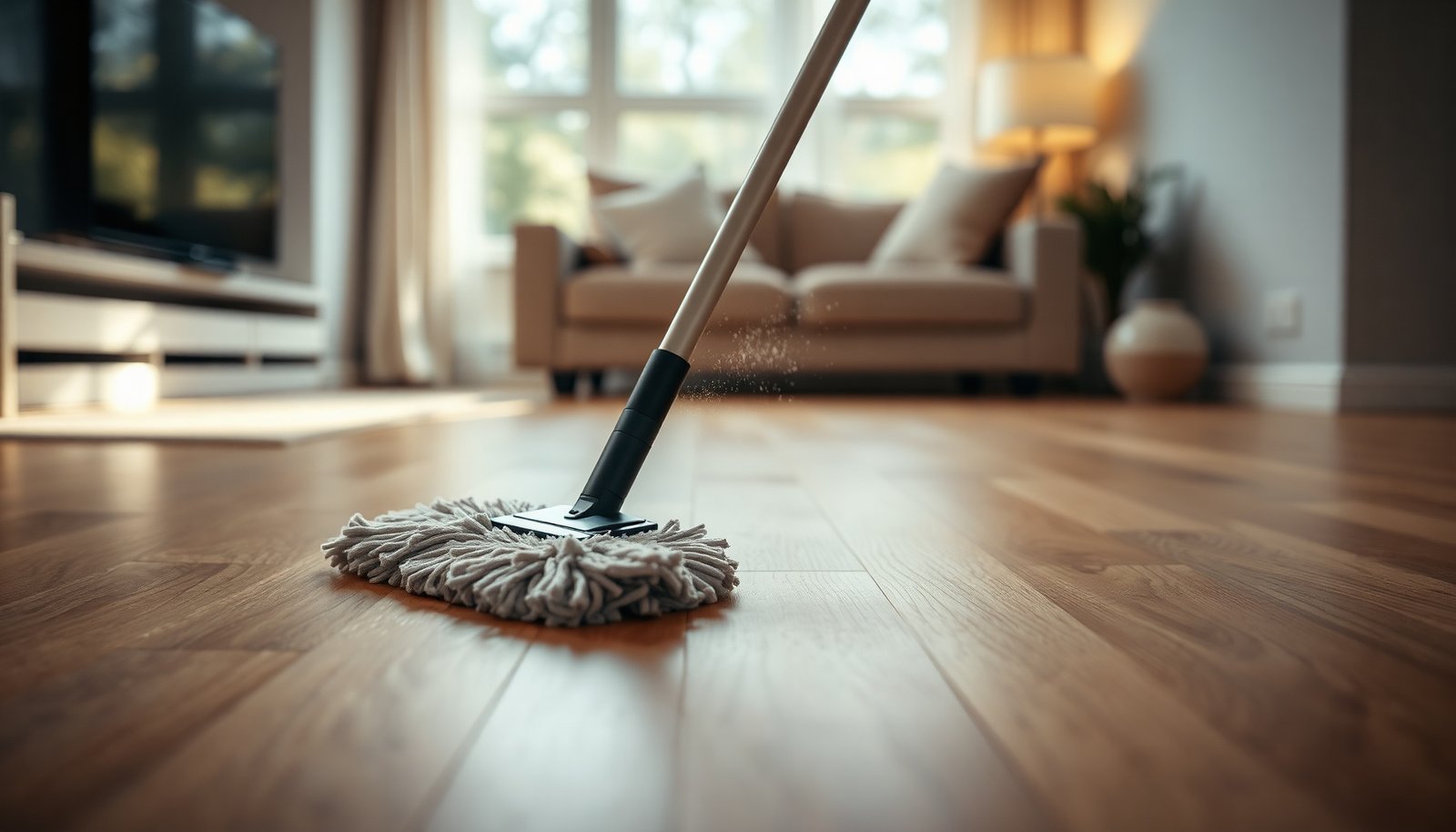
For everyday dust on engineered wood floors, start dry and lift—don’t smear. Microfiber dust mopping (or soft-brush vacuuming) removes the particles that can scratch the finish when you later wipe.
– Dust-mop in the direction of the planks, using light pressure—this lifts dust rather than dragging grit around.
When you mop across the grain, you’re more likely to pull micro-particles into the coating and create the dull “worn” look over months.
– Vacuum loose dust right after (or instead), focusing on corners, edges, and under furniture where dust collects.
A soft-brush vacuum tool helps engineered wood floors stay clean without aggressive contact.
– Empty/clean the vacuum attachment regularly so you don’t redeposit debris.
Even one overloaded filter or dirty head can turn “cleaning” into a smear cycle.
From a physics standpoint, that first step matters because dust is rarely just “fluff.” According to the U.S. Environmental Protection Agency (EPA), PM2.5 is defined as particles with aerodynamic diameter ≤2.5 micrometers—fine enough to spread into a haze if you wipe instead of lift (U.S. EPA, 1997). That’s one reason engineered wood floors can look hazy after a quick “wipe-down” with the wrong tool or pressure.
Damp cleaning only when dust leaves a film or smudges
If dry dusting isn’t enough and you see fingerprints, footprints, or a dull haze, add moisture only at wipe level. With engineered wood floors, “barely damp” is the difference between clean and a finish that slowly loses its look.
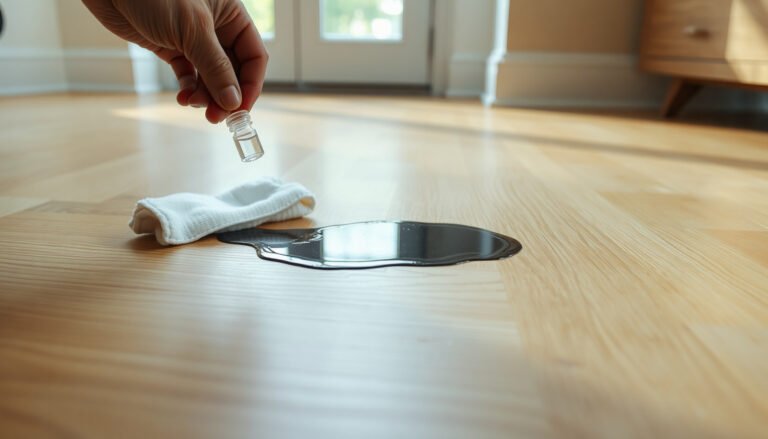
– Wring the microfiber cloth so it’s barely damp—enough to pick up residue, not enough to wet the surface.
You’re targeting the film left behind by oils, skin, and fine particulates on engineered wood floors, not soaking the coating.
– Work small sections, then immediately dry-buff with a second clean microfiber cloth to prevent water spots.
A quick dry-buff also helps engineered wood floors avoid streaks, especially on matte finishes.
– Avoid soaking: engineered wood floors shouldn’t be “mopped” like unsealed wood unless your manufacturer explicitly says it’s okay.
If your floor care guide doesn’t mention damp mopping (or specifies a maximum moisture level), treat it as “don’t soak.”
In my day-to-day approach to engineered wood floors, I rely on this sequence—dry lift first, then a single damp wipe—because over-wetting is what I most often see lead to stubborn haze. That kind of cause-and-effect is also consistent with how sealed finishes can temporarily look dull when moisture sits on the surface.
Handle grit and stubborn spots without damaging the surface
If you’re dealing with sticky spots or track-in grime, the goal is controlled softening—not scrubbing. Engineered wood floors respond best when you loosen residue gently, then lift it away with clean fibers.
– For sticky spots (like food residue or tracked-on grime), lift what you can first with a dry cloth, then use minimal dampness to soften the residue.
This prevents you from turning grit into an abrasive paste across the finish.
– Don’t use abrasive pads or “scrub hard” motions—use gentle passes and let the cleaner dwell briefly if the manufacturer recommends it.
Scrubbing harder may remove visible dirt, but it can also polish the top layer unevenly on engineered wood floors.
– If you use a cleaner, use one that’s intended for the exact finish on your engineered wood (look for “finished wood floor” wording and follow label directions).
Matte coatings, polyurethane finishes, and oiled finishes often require different products even when they look similar.
A key cleaning principle for engineered wood floors: residue needs chemistry compatible with the coating. For example, some all-purpose cleaners contain surfactants or solvents that can leave a film. If you later dry-buff and the haze returns, that’s a clue the engineered wood floor coating isn’t agreeing with the cleaner.
Microfiber damp-wipe vs. vacuum-only vs. “wet” mopping (what’s safer?)
Engineered wood floors usually tolerate lift-and-buff routines far better than soaked mopping. Here’s a quick comparison you can use while cleaning.
| Method | Best for engineered wood floors | Pros | Cons / risks |
|---|---|---|---|
| Microfiber dry dusting | Loose dust, light footprints | Lowest scratch risk; quick maintenance | Won’t remove sticky residue or oily film |
| Soft-brush vacuuming | Edges, corners, under furniture | Captures dust instead of redistributing it | Stiff brushes/beater bars can scuff finishes |
| Barely-damp microfiber wipe + dry-buff | Smudges, hazy film, fingerprints | Targets residue without soaking | Too-wet cloth or missed dry-buffing can leave haze |
| Wet mopping (usually not recommended) | Only when manufacturer explicitly approves | Can remove heavy residue quickly | Higher risk of finish dulling and seam damage on engineered wood floors |
What can go wrong (and why dust won’t just “wipe away”)
Most cleaning problems with engineered wood floors happen because people treat dust like it’s harmless. Dust is abrasive when dragged, and moisture can trigger dullness or finish breakdown when it penetrates seams or stays on the surface too long.
– Scratches from grit: Even dust can contain tiny sand-like particles; rough mops and stiff brushes can leave fine scratches.
– Dulling from too much moisture: Over-wetting can cause haze, swelling at seams, or finish breakdown over time.
– Re-depositing dust: Using a dirty mop head or an overloaded vacuum filter can smear dust instead of removing it.
– Wrong cleaner/too strong: Some all-purpose cleaners or oily products can leave a film that makes the floor look dirtier later.
To anchor the “dust isn’t harmless” idea: According to the U.S. EPA, PM2.5 particles are ≤2.5 µm (U.S. EPA, 1997). That size is small enough to move easily across a surface and leave a thin film if engineered wood floors are wiped rather than having particulate lifted away.
Also, if you use air filtration to reduce the dust you reintroduce while cleaning, filter performance matters. According to the U.S. Department of Energy, HEPA filtration is designed to capture at least 99.97% of particles at 0.3 µm (U.S. Department of Energy, 1993). Less airborne deposition means engineered wood floors get fewer new dust layers between cleaning sessions.
Verdict: a simple routine that works—and when to pause
If you want the best balance of clean and protection for engineered wood floors, start with microfiber dusting (or soft-brush vacuuming), then add a barely-damp wipe only when residue remains. This routine removes dust efficiently while minimizing the two biggest threats—scratches from grit and dull haze from excess moisture.
Who should skip this approach: if your flooring is visibly damaged (lifting edges, bubbling, deep scratches) or if you’re unsure of the finish type, stop and verify the manufacturer’s care guidance before adding water or cleaners. Engineered wood floors with compromised seams or worn coatings often need a different plan than routine dust removal.
Quick checklist (scan/save)
| Task | Do this | Avoid this |
|---|---|---|
| Daily dust | Microfiber dust mop or soft-brush vacuum | Dry sweeping with a stiff broom |
| Weekly residue | Barely-damp microfiber, then dry-buff | Soaking/wet mopping |
| Sticky spots | Gentle lift → minimal damp wipe | Abrasive pads, heavy scrubbing |
| Maintenance | Clean mop heads/attachments | Reusing dirty pads or filters |
Frequently Asked Questions
How do I get dust off engineered wood floors without scratching the finish?
Start by dry-dusting with a microfiber mop or a vacuum fitted with a soft brush attachment to lift dust without grinding grit into the surface. Avoid using stiff brooms or abrasive pads, since they can leave micro-scratches on engineered hardwood top layers. If dust is stuck in grooves or seams, lightly mist the mop cloth with plain water and wipe gently, then dry immediately.
What is the best way to remove dust from engineered wood floors on a daily basis?
The best routine is a microfiber dry mop or vacuum with a floor head that won’t beat against the wood. Use light pressure and follow the grain to capture fine dust particles before they settle into the finish. For high-traffic areas, consider using a soft-entry mat to reduce dust and grit buildup that can dull engineered wood over time.
Which cleaning tools are safest for dust on engineered hardwood?
Choose microfiber dusting pads, microfiber mops, and vacuums with soft bristles or a felt/diffuser-style floor head. Avoid steel wool, rough scrubbers, and “dusting” cloths that shed lint, as they can scratch or leave residue on engineered wood floors. If you use a mop, ensure the pad is clean and not overly damp, since excess moisture can seep into seams.
Why does dust make engineered wood floors look dull, and how can I prevent it?
Dust acts like fine abrasive grit when walked over, and it can build up on the finish so the surface reflects less light. Regular dry dusting with a microfiber mop and prompt removal of tracked-in debris helps keep engineered wood floors looking clean and glossy. You can also reduce dust accumulation by maintaining proper humidity levels and using entry mats to catch dirt before it spreads across the floor.
How can I remove stubborn dust or fine debris from textured engineered wood floors?
For textured or hand-scraped finishes, use a vacuum with a crevice tool or a soft brush attachment to pull dust from edges and texture ridges. Then follow up with a slightly damp microfiber cloth or mop to pick up remaining particles, wiping with the grain and drying right away. If dust persists, check whether the floor has accumulated wax or cleaner residue that traps debris, and use a cleaner specifically labeled for engineered hardwood only when needed.
📅 Last Updated: November 04, 2026 | Topic: How to get dust off engineered wood floors? | Content verified for accuracy and freshness.
References
- My Link
- https://www.brucefloor.com/care-and-cleaning/
- https://www.pergofloors.com/care-and-maintenance/
- https://www.armstrongflooring.com/support/care-maintenance.html
- Wood flooring
- https://www.cdc.gov/coronavirus/2019-ncov/community/organizations/cleaning-disinfection.html
- https://www.mayoclinic.org/diseases-conditions/allergies/expert-answers/dust-mites/faq-20058447
- https://scholar.google.com/scholar?q=how+to+clean+engineered+hardwood+floors+dust Google Scholar
- https://scholar.google.com/scholar?q=hardwood+floor+cleaning+vacuum+microfiber+dust+resuspension Google Scholar
- https://scholar.google.com/scholar?q=dust+removal+wood+floor+HEPA+vacuum+study Google Scholar