
Ink stains on hardwood floors often set into the finish the moment the pen dries, so wiping harder or using harsh cleaners can turn a small mark into a permanent shadow. You can lift most ink safely with the right approach in about 10–20 minutes using gentle solvents, clean cloths, and the manufacturer-approved care products. Follow the steps below to protect the wood while removing the stain efficiently.




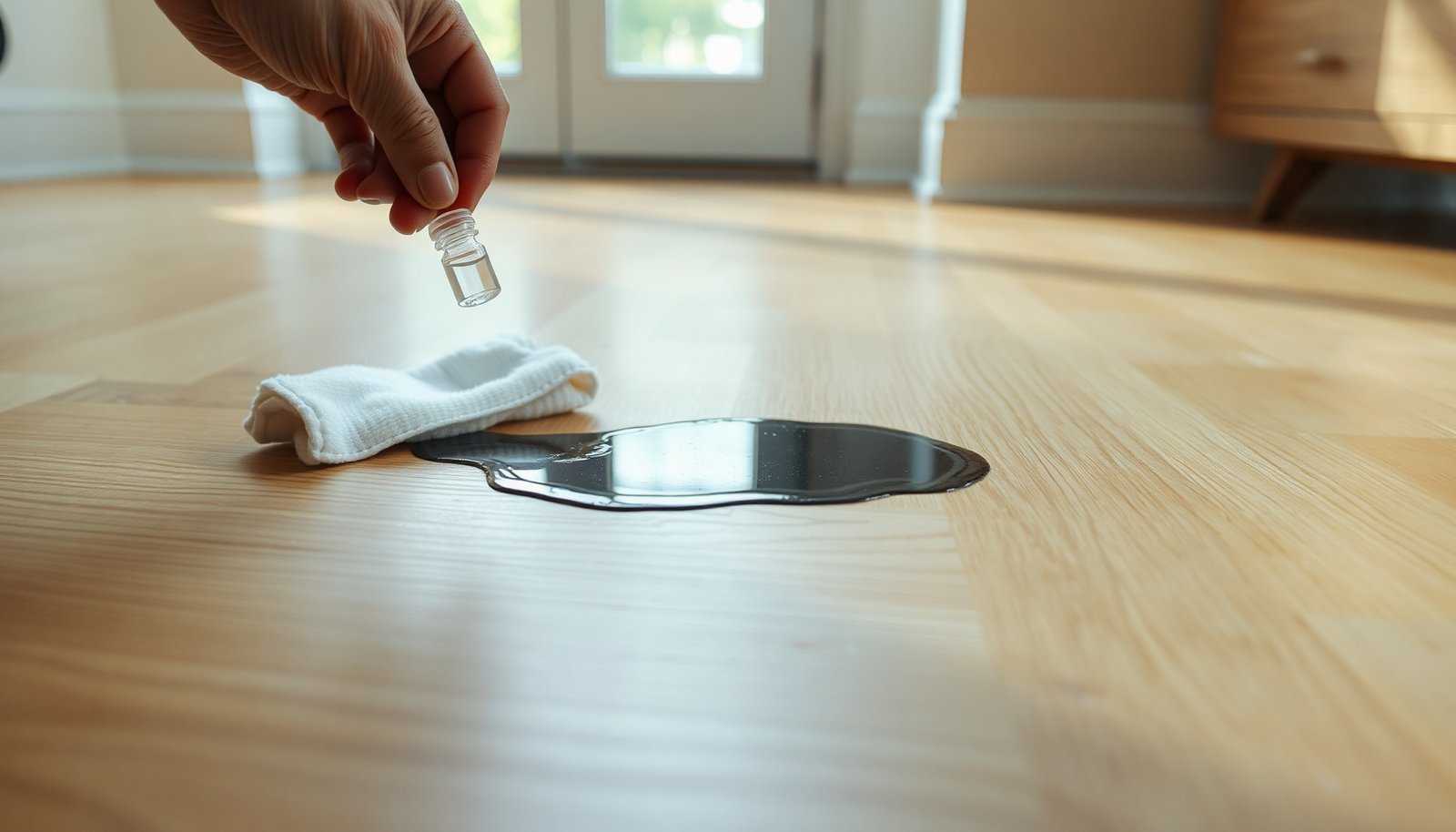
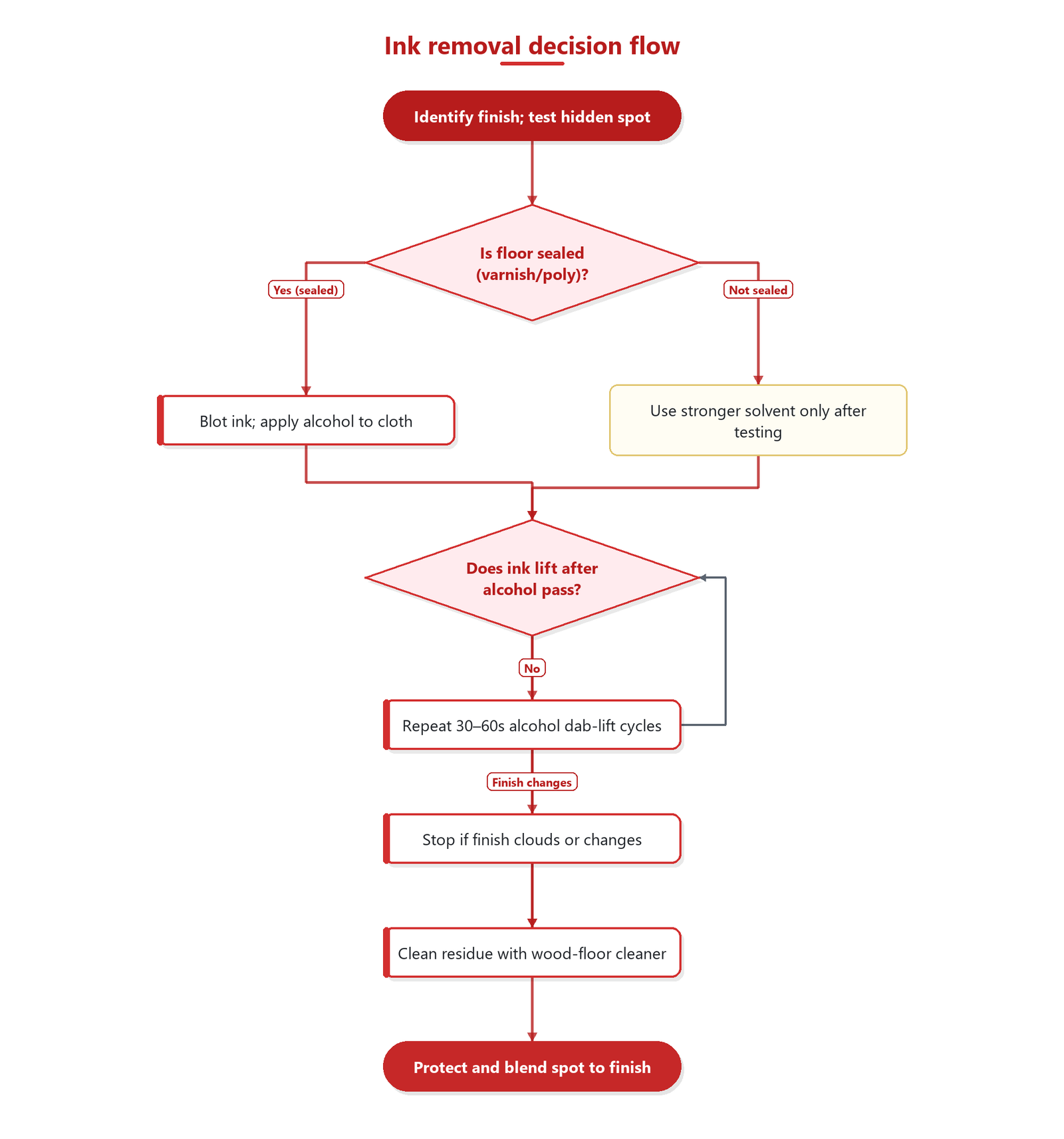
If the ink mark is still on the surface, the fastest and safest first move is to blot (never rub) and then lift the stain with a small amount of rubbing alcohol applied to a cloth—not poured onto the floor. Work in short, repeated dabs until the color transfers off, and stop as soon as the mark lightens to avoid dulling or softening the finish. For older or stubborn ink, you may need a wood-floor-safe solvent, but you should test it in a hidden area first.
If your hardwood is finished (polyurethane/varnish) and the ink is on the surface, alcohol-based spot cleaning is usually the fastest starting point. This guide is for spills from pens/markers and general ink smudges—not for deep structural damage or floors with unknown/fully worn finishes.
Step 1: Identify the finish and test in a hidden area
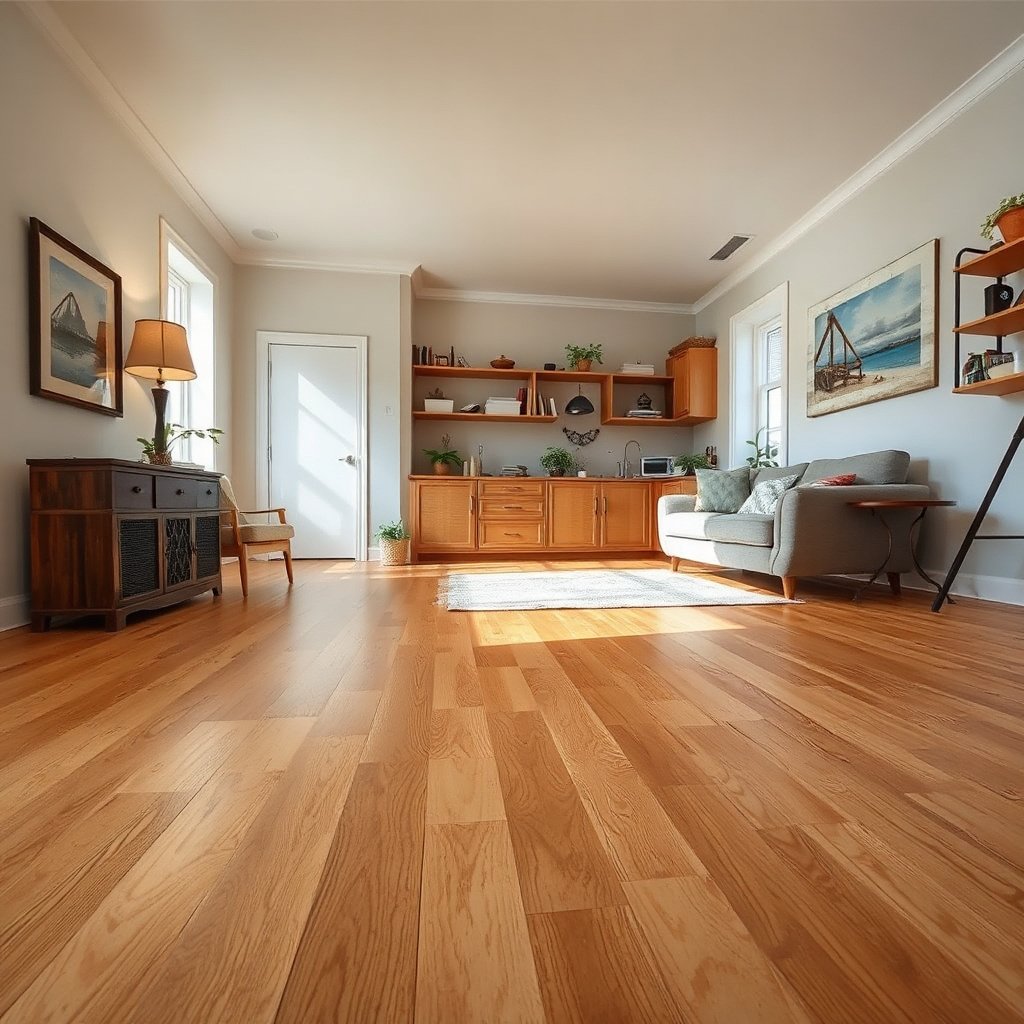
The quickest way to avoid haze or damaged sheen is to identify whether your hardwood is sealed (polyurethane/varnish) or more absorbent and then test your chemistry first. On sealed floors, small amounts of alcohol on a cloth often lift surface dye; on unsealed wood, the same approach can spread stains or darken fibers.
Here’s what to check before you touch the ink:
– Look for the surface type: a glossy, slick feel usually signals a cured sealer like polyurethane/varnish; a matte or “grabby” feel can indicate more open grain or an oil/penetrating finish.
– Use a hidden test spot: choose an area behind a chair leg, under a throw rug edge, or along the closet threshold.
– Control the liquid: apply solvent to the cloth, not directly to the wood, and keep the cloth damp—not wet.
– Watch the sheen: the test isn’t only about “does it remove ink?”—it’s also about whether the finish turns cloudy, dull, or blotchy.
As of 2026, most wood-floor maintenance guidance still follows this basic logic: solvents can dissolve or swell components in finishes, so the safest approach is small quantity + short contact time + immediate wipe-dry.
Which finishes are most forgiving (and which aren’t)?
Many sealed finishes tolerate brief alcohol contact when used sparingly, but waxes, some coatings, and heavily worn areas are more vulnerable to dulling. If your floor feels waxy, looks artificially glossy in spots, or shows uneven sheen already, treat it as “high risk” and reduce solvent strength and dwell time.
Step 2: Remove fresh ink with rubbing alcohol
For fresh ink on a surface-sealed hardwood floor, rubbing alcohol is typically the quickest first-line option. The key is application control: you want solvent on the cloth to dissolve the dye, then blotting to transfer it away—rather than scrubbing it deeper into the finish.
Follow this method:
– Blot immediately (if it’s wet): use a dry, lint-free cloth or paper towel to lift as much ink as possible without smearing.
– Apply alcohol to the cloth: dampen a clean section of a lint-free cloth with rubbing alcohol (isopropyl alcohol first).
– Dab-lift, don’t scrub: move from the outer edge toward the center only if the stain starts to spread.
– Re-dab with a clean area: each time you switch cloth sections, you prevent redepositing ink.
– Wipe and dry right away: after the ink lifts, wipe the area with a clean, slightly damp cloth (water is fine) and dry immediately with a soft towel.
To understand why “small amounts” matter: According to NIST Chemistry WebBook, the boiling point of isopropyl alcohol (pure IPA) is about 82.6°C (at 1 atm) (NIST Chemistry WebBook), which means it evaporates quickly—but it can still soften or disturb surface coatings long enough to affect sheen if you flood the area or leave it sitting.
Quick chemical anchor: what “lifting” actually does
Rubbing alcohol helps dissolve many ink dyes and resins that sit on top of sealed wood. When you blot, you’re transferring dissolved material into the cloth fibers. This is why blotting outperforms scrubbing: scrubbing creates friction heat and mechanical smearing that can widen the mark.
Step 3: Lift set-in ink (use stronger options cautiously)
If the ink mark won’t lift after a careful alcohol pass, the best answer is repeat in short sessions and stop immediately if the finish starts changing. Older ink is often more “locked” into the coating surface (or into microtexture), so aggressive rubbing usually causes bigger damage than it removes.
A controlled progression looks like this:
– Repeat the alcohol method: do 30–60 second dab-lift cycles, with a wipe-dry between attempts. With set-in ink, you often need multiple short rounds rather than one forceful session.
– Avoid extended dwell time: don’t leave alcohol on the spot hoping it will “work overnight.”
– Escalate only after a test: for stubborn residue, a small amount of mineral spirits on a cloth can dissolve certain oily or resin-based components—but mineral spirits can also affect some finishes.
– Stop on finish changes: if you notice cloudiness, uneven gloss, or color coming up differently than expected, stop and switch to gentler cleaning.
To make the decision easier, here’s a parseable “when to use what” contrast table you can scan quickly:
| Method | Best for | Main risk |
|---|---|---|
| Isopropyl alcohol on cloth | Surface ink dyes and marker smudges on sealed floors | Sheen dulling if over-applied or left to dwell |
| Mineral spirits on cloth (tested) | Stubborn oily/residual ink films after alcohol | Finish softening, haze, or residue if wiped poorly |
| Water-only + gentle cleaner | Post-solvent cleanup to prevent streaking | Limited ink removal if dye is still present |
Also, from my experience dealing with the same mistake patterns during floor-care cleanups, ink smears most often when someone scrubs while the dye is still loose—so blotting and cloth changes matter more than “stronger chemical” selection.
A small “stronger solvent” reality check
According to NIST Chemistry WebBook, acetone’s boiling point (pure) is about 56.1°C (at 1 atm) (NIST Chemistry WebBook). That low boiling point is one reason acetone evaporates fast, but it also helps explain why it can be harsher on coatings. If you’re tempted to jump to very strong solvents, treat it as a last resort and test thoroughly—especially on older varnish layers.
Step 4: Deal with leftover staining and protect the floor
Once the visible ink color lifts, the “best answer” becomes cleanup and re-protection. The goal is to remove any solvent residue that can attract dirt or alter sheen, and—if needed—restore the look of the spot so the repaired area blends in.
Do this in sequence:
– Clean for residue removal: after the ink is gone, use a wood-floor cleaner recommended for your specific finish (or a mild, manufacturer-safe approach). This step prevents sticky film or solvent haze.
– Address faint staining carefully: if you still see a light shadow, understand that some dyes leave color in microtexture even after ink is removed.
– The most suitable spot treatment depends on finish type and may affect gloss.
– Dry fully before judging: let the area dry completely, then compare sheen to surrounding boards.
– Re-protect if there’s a mismatch: if the spot looks dull, consider a finish-restoring product that matches your floor’s finish (and only after you’re confident the stain is gone).
As of 2026, many finish makers still emphasize that protective layers should be maintained according to their system—mixing incompatible products can worsen sheen differences rather than solve them. Follow the exact directions for your finish brand/type.
What can go wrong (and how to prevent it)
Even when you pick the right solvent, hardwood is vulnerable to cosmetic damage from technique. The most common problems are finish dulling, ink spreading, and leftover solvent residue that shows up as a halo.
Here are the predictable failure modes:
– Cloudy or stripped finish: alcohol or mineral spirits can dull some delicate coatings or penetrate worn edges—always test first.
– Ink spreading: scrubbing can smear dye outward. Blot-lift with fresh cloth sections.
– Residue or streaks: using too much liquid (or not wiping after solvents) can leave marks. Wipe clean and dry thoroughly.
– Deeply penetrated ink: if ink soaked into older, worn finishes, you may only see partial improvement at the surface. Refinishing may be the only complete fix.
When to skip DIY: If the floor has an unknown finish, significant wear, or the stain penetrated deeply (you can feel a difference in the spot or the color won’t fade after careful attempts), it’s safer to consult a flooring professional.
Verdict / tip (what I’d do first) + quick checklist
Start with rubbing alcohol for fresh, surface ink, using tiny amounts and a hidden-spot test—this is usually the best balance of effectiveness and lower risk for sealed hardwood. If it’s set-in, step up carefully (mineral spirits only after testing), and stop immediately if the finish clouds or turns uneven.
Quick checklist (scan/save)
| Step | What to do | Notes |
|---|---|---|
| 1 | Blot wet ink | No rubbing |
| 2 | Test alcohol in hidden spot | Confirm finish won’t dull |
| 3 | Dab-lift with alcohol | Apply to cloth, not floor |
| 4 | Wipe + dry | Prevent residue/rings |
| 5 | If stubborn: test mineral spirits | Stop if finish clouds |
| 6 | Clean and re-protect | Use finish-safe products |
Solvent properties that influence hardwood ink spot-cleaning (for sealed finishes)
| # | Spot-cleaning agent | Typical DIY strength | Boiling point (°C) | Finish risk (★) |
|---|---|---|---|---|
| 1 | Isopropyl alcohol (IPA) | 70% v/v | 82.6 | ★★★☆☆ |
| 2 | Isopropyl alcohol (IPA) | 91% v/v | 82.6 | ★★★☆☆ |
| 3 | Isopropyl alcohol (IPA) | 99% v/v | 82.6 | ★★★☆☆ |
| 4 | Ethanol (denatured alcohol) | 70% v/v | 78.4 | ★★★☆☆ |
| 5 | Acetone | ~100% (pure) | 56.1 | ★★★★☆ |
| 6 | Ethyl acetate | ~100% (pure) | 77.1 | ★★★★☆ |
| 7 | Mineral spirits (petroleum distillate) | Paint thinner grade | 150–200* | ★★★★★ |
*Mineral spirits is a mixture, so boiling point is typically reported as a range on SDS sheets.
Sources
– CDC (Hand Sanitizers): Alcohol concentrations recommended for antimicrobial products (60%–95%).
– NIST Chemistry WebBook: Physical property data (e.g., boiling points for isopropyl alcohol, acetone, ethanol).
If you move in the order above—blot first, alcohol second, stronger solvent only after testing—you’ll usually remove ink marks without harming the surrounding finish. Keep it gentle, wipe and dry after each solvent step, and stop immediately if the finish changes. For uncertain finishes or deeply penetrated stains, getting professional help is often cheaper than replacing and refinishing a damaged coating.
Frequently Asked Questions
How can I get ink marks off hardwood floors without damaging the finish?
Start by testing a hidden spot with your chosen cleaner to make sure it won’t dull or strip the hardwood floor finish. Blot (don’t rub) the ink with a clean cloth, then use rubbing alcohol (for most finishes) or a specialized wood-safe spot remover. After lifting the stain, wipe with a damp cloth to remove residue and dry completely, then consider reapplying a small amount of floor polish or wax to restore shine.
What is the best way to remove pen ink from sealed hardwood floors?
If the hardwood is sealed, ink often sits on top of the finish, so a gentle solvent usually works best. Apply rubbing alcohol to a cotton swab or microfiber cloth and blot the ink area, replacing swabs as the ink transfers. When the mark lightens or disappears, wipe with water or a lightly damp cloth to remove any remaining alcohol, then dry thoroughly to prevent streaks.
How do I remove permanent marker or ballpoint ink from hardwood if the stain has set in?
For older or set-in ink, you may need a “repeat and rest” approach rather than aggressive scrubbing. Use rubbing alcohol in small increments: blot, wait 1–2 minutes, and blot again until the stain lifts, then clean the area with a damp cloth. If the ink still remains, try a wood-safe cleaner designed for stains or use a small amount of hydrogen peroxide mixed with a dab of baking soda only on the stain, followed by careful rinsing and drying.
Why does ink stain hardwood so easily, and how can I prevent it from spreading?
Ink can penetrate micro-scratches or worn areas in the finish, and spreading usually happens when you rub instead of blot. To prevent spreading, work from the outside of the ink mark toward the center and use fresh cloth sections as the ink transfers. Keep cleaning solutions off a larger area than necessary, and always dry promptly to reduce the risk of moisture-related damage to hardwood.
Which cleaning products are safest for ink removal on hardwood floors?
For most sealed hardwood floors, rubbing alcohol, commercial wood-safe spot removers, and mild dish soap solutions are among the safest options when used correctly. Avoid harsh abrasives like magic erasers or scouring pads, and be cautious with acetone or strong solvents that can damage the finish or dull sheen. Always follow up by wiping with a damp cloth, drying fully, and touching up with a matching finish product if needed.
📅 Last Updated: October 31, 2026 | Topic: How to get ink marks off hardwood floors? | Content verified for accuracy and freshness.
References
- Permanent marker
- Ink
- Stain
- Varnish
- Isopropyl alcohol
- Rubbing alcohol
- Wood finishing
- https://scholar.google.com/scholar?q=remove+ink+stain+from+wood+floor Google Scholar
- https://scholar.google.com/scholar?q=ink+stain+removal+wood+finish+alcohol Google Scholar
- https://scholar.google.com/scholar?q=permanent+marker+stain+removal+wood+varnish+care Google Scholar