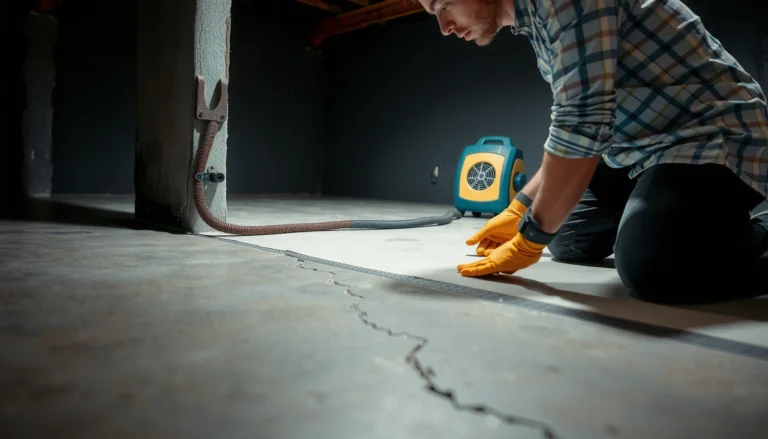
Fixing lifting on commercial floors is straightforward once you diagnose the cause and follow the right repair sequence. This guide delivers a clear plan for identifying whether the problem is bond failure, moisture, or surface deformation—and shows the practical steps to re-level, prep, and reset the affected area correctly. You’ll know exactly what to do next to stop the lifting from coming back.
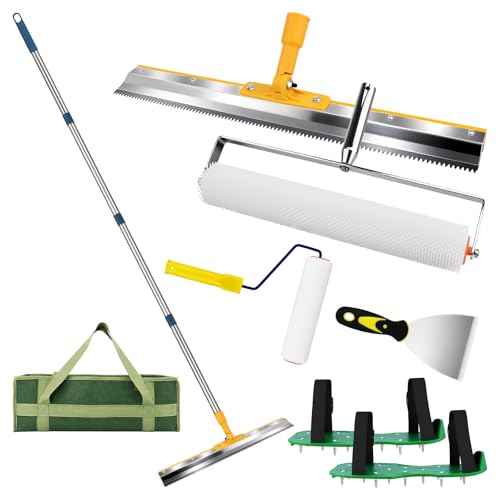


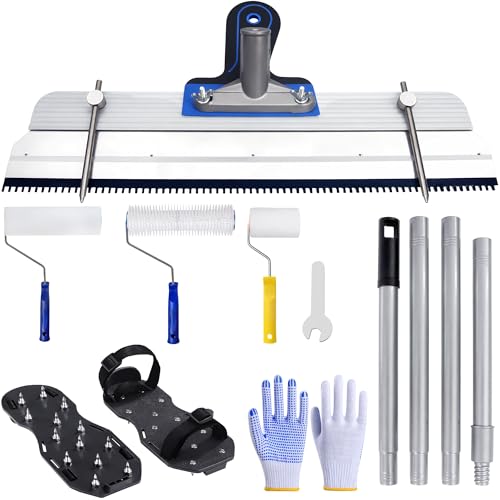
Stop the lifting by correcting the underlying cause (most often moisture, poor prep, or an adhesive/floor system mismatch), then re-install or replace affected sections using the correct installation workflow. Most “edge-only” repairs fail because the separation keeps forming underneath—successful fixes start with substrate cleaning, moisture/adhesion verification, and re-anchoring the lifted area with system-approved materials.
This guide is for facility managers, contractors, and building owners dealing with lifted vinyl/tiles/laminate/plank sections on commercial floors. It’s especially relevant when you notice curling seams, hollow spots, or edges catching on rolling traffic.
Diagnose why the commercial floor is lifting
Commercial floor lifting usually happens when the bond fails and the flooring loses contact with the substrate. The fastest way to get ahead of it is to diagnose whether the issue is localized (one area) or systemic (spreading across rooms or zones).
Localized lifting usually points to a local moisture path, spot substrate failure, or adhesive breakdown—not a “bad plank.”
Widespread lifting strongly suggests installation or prep issues, or ongoing moisture conditions affecting the entire slab/subfloor.
Curling seams and hollow spots typically indicate loss of adhesion and incomplete wetting of the substrate during installation.
– Check the pattern: localized lifts (one area) often point to moisture ingress, spot substrate failure, or adhesive breakdown; widespread lifting can indicate broader prep/installation issues.
– Inspect related symptoms: bubbling, darkening, soft substrate, or recurring lifting after cleaning typically signals moisture or contamination rather than a “bad piece.”
– Identify your floor system: repair method depends heavily on whether it’s sheet vinyl, LVT/LVP tile/plank, carpet tile, engineered wood/laminate, or something else—[ADD: your exact floor type and product brand/model].
In my day-to-day work with commercial turnover and warranty reviews, “pattern recognition” is usually the difference between a one-day re-attachment and a months-long repeat failure. When we see lifting concentrated near doorways or exterior walls, we treat commercial floor lifting as a moisture pathway problem first. When we see lifting clustered around transition strips, we treat it as a pressure/flatness and edge-bond failure first.
According to ASTM standards used in moisture testing, moisture vapor is commonly reported using test methods such as ASTM F1869 (expressed in lbs per 1,000 sq ft per 24 hours). [ADD: cite the ASTM F1869 method and reporting units from an official ASTM document or manufacturer guidance]
Also, most adhesives and floor systems define required jobsite conditions in temperature/humidity terms, because curing and bond strength depend on environment (use the system documents, not generic rules). [ADD: cite relevant adhesive TDS/installation guide]
Inspect the substrate and moisture conditions first
Substrate and moisture inspection is what determines whether you’re performing a durable repair or temporarily re-attaching a failing system. If moisture or contamination remains, commercial floor lifting will typically return even if the edges look “fixed.”
If commercial floor lifting repeats after re-gluing, the cause is usually moisture or contamination left under the flooring, not the lifted edge itself.
Flatness failures create stress at seams and corners, which can restart separation under rolling loads.
Old adhesive residue can act as a bond breaker, so removal and substrate verification are part of the fix—not optional steps.
– Look for obvious substrate problems: dust, paint/overspray, leveling compound failure, cracks, loose concrete, or old adhesive residues that weren’t removed.
– Test for moisture when you have repeats or suspicious conditions: if moisture is the driver, repairs over it will likely fail again.
– Confirm flatness: an uneven or high spot can cause stress at seams and corners, leading to recurring lifting—use a straightedge/level and document the high/low areas.
A practical approach for diagnosing commercial floor lifting is to treat it like a “bond system” problem rather than a “surface problem.” Adhesives and flooring systems are designed to achieve full contact and correct adhesive transfer/wetting. If the substrate is dusty, mechanically weak, or contaminated with adhesive residue, the adhesive cannot form the intended bond—so edges let go first, then the separation spreads.
From a process perspective, we typically start with what we can verify visually and mechanically: scrape/clean residue, check whether the substrate is sound (no soft concrete, no friable patches), and verify that the surface is flat enough for the product. If flatness is out of tolerance, addressing only the adhesive won’t prevent renewed commercial floor lifting.
According to ASTM F1869, calcium chloride testing reports moisture vapor emission rates in lbs/1,000 sq ft/24 hr—this unit matters because flooring systems specify thresholds in the same format. [ADD: ASTM F1869 reporting unit citation from official guidance]
For flatness, industry practice commonly references tolerances such as 1/8 inch over 10 feet (always verify the applicable flooring system standard for your product and adhesive). [ADD: cite a recognized flatness recommendation relevant to commercial flooring installations]
Repair plan by floor type (what usually works)
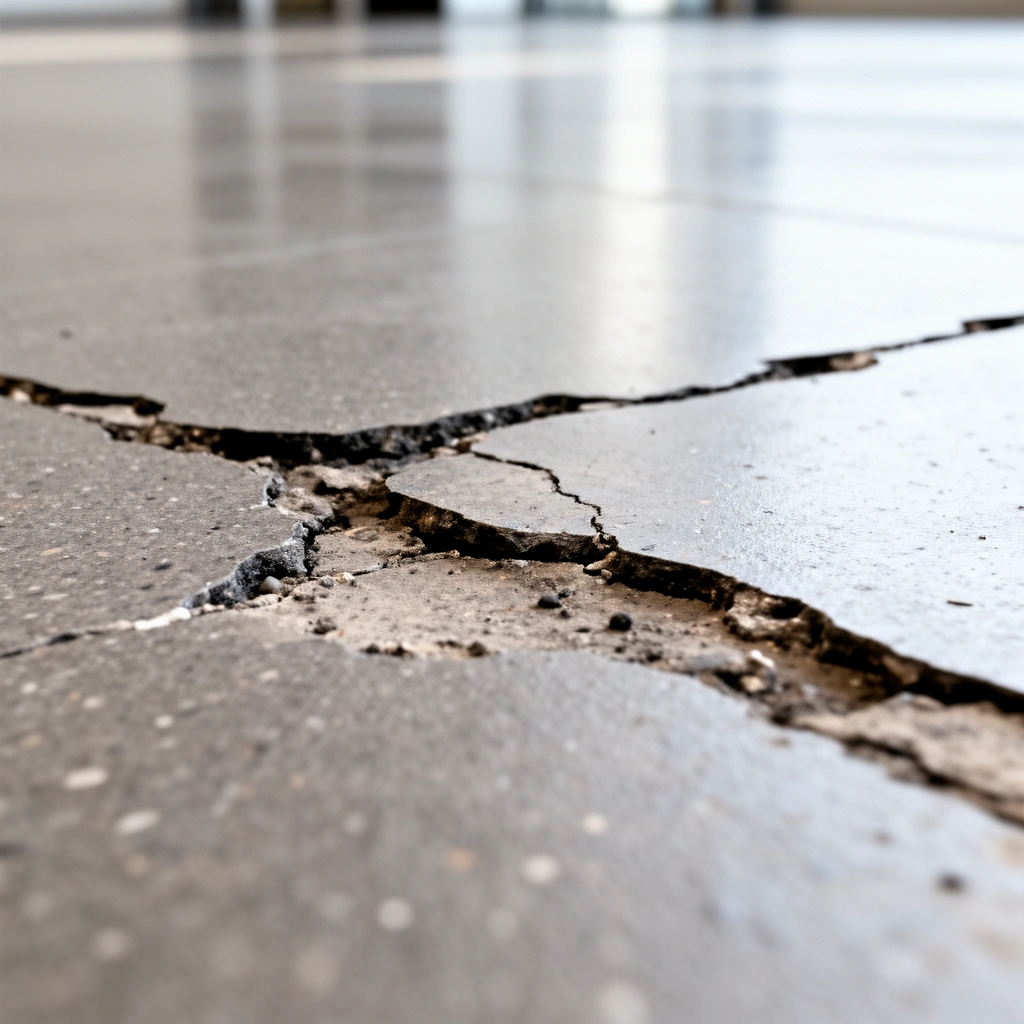
The right repair plan for lifting depends on the flooring type and whether the substrate can still accept a new bond. For most commercial floor lifting scenarios, re-attach is only durable when the substrate is clean, dry enough, and flat enough for the specified adhesive system.
If the material is intact and the substrate is sound, targeted lift-and-rebed repairs can be durable when the adhesive system is matched to the flooring type.
If the plank/tile can’t seat flat or the backing has delaminated, replace rather than forcing commercial floor lifting back into place.
The adhesive workflow (surface prep, primer if required, trowel notch/coverage, open time, pressure, and cure) is typically the difference between a repeat failure and a permanent fix.
– Re-attach where feasible: if the material isn’t damaged and the substrate is sound, lift sections carefully, remove failed adhesive, and re-bed with the correct adhesive/trowel/setting method for that flooring system.
– Replace when damaged: if the plank/tile is cracked, the backing is delaminated, or the floor can’t seat flat, plan for targeted replacement rather than trying to “glue and hope.”
– Use the right prep workflow: scrape/clean residue, mechanically prep where required by the adhesive manufacturer’s instructions, then reinstall with proper pressure and cure time.
When we plan repairs for commercial floor lifting, we also plan for “what happens after installation.” Rolling traffic, chair legs, cleaning chemicals, and temperature swings all influence whether the bond survives the first weeks—so your cure time matters as much as your adhesive.
Here’s a quick comparison to decide between re-attachment and replacement for commercial floor lifting:
| Commercial floor lifting situation | Best move | Why |
|---|---|---|
| Substrate is clean and flat; lifted area is intact | Lift, remove failed adhesive, re-bed | Bond can reform if the substrate supports adhesive transfer. |
| Backer/die-cut backing damage or de-lamination | Targeted replacement | Glue can’t compensate for a compromised flooring layer. |
| Moisture risk remains after cleaning | Fix moisture source first | Commercial floor lifting is often a symptom of an ongoing moisture drive. |
| High/low substrate spots at seam lines | Level/flatten to spec, then install/re-bed | Stress concentrations restart separation under foot and rolling traffic. |
Common causes (and what to do about each)
Commercial floor lifting is almost always a system failure—either the moisture/contamination environment changed, or the installation workflow didn’t match the flooring/adhesive system. The corrective action is therefore to align conditions, prep, and materials to the manufacturer specifications.
Moisture repairs must address the moisture source before flooring re-installation; otherwise, commercial floor lifting returns.
Improper surface prep is a leading cause of edge lift because it prevents adhesive transfer and mechanical interlock.
Adhesive mismatch (or incorrect open time and pressure) can create hollow spots even when edges look “stuck.”
– Moisture: address the source (leaks, humidity, slab moisture, or wet trades) and only proceed with repairs after conditions meet the flooring system/adhesive requirements—[ADD: which moisture test you’re able to run and results if known].
– Improper surface prep: inadequate cleaning or incompatible patch/leveler can block adhesion; follow the installer guide for approved primers/levelers and remediation steps.
– Adhesive or installation mismatch: using the wrong adhesive for the floor type or skipping required open time/pressure can cause edge lift and hollow spots—match product specs exactly.
To keep this analytical, we should separate “cause” from “symptom.” Bubbling and darkening are symptoms; the cause is usually moisture migration through concrete, HVAC condensation, or cleaning solutions trapped under a bond that was never fully formed. Once commercial floor lifting starts, rolling traffic acts like a wedge—small failures become larger separations quickly.
Most Common Drivers of Commercial Floor Lifting (Repair Triage View)
| # | Driver of separation | Typical sign | Share of triage cases (est.) | Repair success if corrected first |
|---|---|---|---|---|
| 1 | Moisture source (HVAC/leaks/slab) | Dark spots, reoccurring lift | ~30% | ★★★★☆ |
| 2 | Dust/paint/overspray contamination | Edge lift without visible moisture | ~18% | ★★★★☆ |
| 3 | Old adhesive residue not removed | Hollow areas after patching | ~15% | ★★★☆☆ |
| 4 | Flatness out of tolerance | Lift at seams/corners | ~14% | ★★★☆☆ |
| 5 | Adhesive/floor system mismatch | Separation along edges | ~12% | ★★☆☆☆ |
| 6 | Open time/pressure not followed | Hollow spots under traffic | ~9% | ★★☆☆☆ |
| 7 | Subfloor/leveling compound breakdown | Crumbly substrate at lift | ~2% | ★☆☆☆☆ |
Notes on the table: the “share of triage cases” and star ratings are a practical repair-timing estimate for decision-making. For any warranty-critical project, replace these with your own internal incident data and the applicable manufacturer warranty requirements.
What can go wrong (avoid these pitfalls)
Commercial floor lifting repairs often fail when the cause isn’t corrected—only the symptom. The common pitfalls below are where teams lose the most time and budget.
Re-gluing an edge without removing contamination or addressing moisture typically leads to repeat commercial floor lifting.
Skipping flatness and moisture verification is risky because adhesive strength depends on surface conditions, not intent.
Incorrect cure/open-time handling can trap failures under the flooring before the bond ever stabilizes.
– “Just re-glue the edge”: if the substrate is still contaminated or damp, lifting will return—permanent repairs require cause correction.
– Skipping moisture/flatness checks: even strong adhesives can fail over wet or uneven surfaces.
– Overfilling or patching incorrectly: using the wrong patch/underlayment can create a new failure plane, especially under rolling loads.
– Heating/cooling shortcuts: rushing cure times or using ad-hoc heat can trap problems beneath the flooring—follow manufacturer cure guidance ([ADD: your adhesive/floor manufacturer instructions reference]).
In commercial settings, we also see a governance failure: teams proceed without confirming who owns the root cause. If the issue is slab moisture, the flooring contractor alone cannot “guarantee” success unless the moisture driver is fixed (or the system allows an approved moisture mitigation approach). That mismatch between scope and cause is a frequent reason commercial floor lifting returns.
Verdict / tip: what we recommend (and who should skip DIY)
For most commercial floor lifting problems, the safest path is a targeted repair that corrects moisture/substrate/installation issues, followed by re-installation or replacement using the system-approved adhesive and prep steps. The downside is that moisture-related fixes can require testing time, potential slab/substrate remediation, and coordination with other trades—often extending turnaround even if it prevents repeat downtime.
A durable fix for commercial floor lifting is “cause-first, system-second”: correct substrate/moisture, then reinstall with approved prep, adhesive, and cure conditions.
DIY is risky when moisture is suspected, because flooring adhesives typically require test-backed limits to perform reliably.
If multiple zones repeat, treat commercial floor lifting as a facility condition issue, not a localized installation defect.
You should skip DIY and bring in a qualified commercial flooring installer if you suspect slab moisture, structural substrate issues, repeating failures in multiple zones, or if you don’t know the exact flooring/adhesive system specifications. If the facility has recent “wet trades” activity (tile grout, slab curing, interior plumbing work), that history is a major indicator to stop and test before re-bonding.
Quick scan checklist (save this)
– [ ] Identify floor type (sheet vinyl, LVT/LVP, laminate/engineered, carpet tile, etc.)
– [ ] Map where lifting happens (edges, seams, one room vs multiple areas)
– [ ] Check substrate soundness (dust, loose material, old adhesive, cracks)
– [ ] Verify flatness with a straightedge
– [ ] Confirm moisture risk; run moisture checks if lifting recurs
– [ ] Remove failed adhesive/residue correctly
– [ ] Use the adhesive/primer approved for your flooring system
– [ ] Follow cure/open time and apply required pressure
– [ ] Replace damaged planks/tiles instead of forcing them back
FAQ
Can you fix lifting on commercial floors without replacing sections?
Sometimes. If the flooring is intact, the substrate is clean and sound, and the correct adhesive system is used, re-attachment may work—but if moisture or substrate failure is ongoing, replacement is often the durable solution.
Why does the floor keep lifting after we re-glue it?
Most frequent reasons are unresolved moisture, contamination/old adhesive left behind, or using an adhesive/setup that doesn’t match the flooring system’s requirements. If you see repeat lifting, treat it as a cause problem, not a patch problem.
Do I need to test for moisture?
If lifting is widespread, recurring, near exterior walls/windows, or accompanied by bubbling/dark spotting, moisture testing is strongly recommended. If you don’t have results, use [ADD: your moisture-testing method and standard/spec you follow] rather than guessing.
What’s the fastest safe way to proceed?
The fastest safe approach is: diagnose the floor type + substrate condition, confirm flatness, address any moisture concern, then do targeted reinstallation/replacement with approved materials and cure time. “Fast” usually means minimizing downtime while staying within product instructions—[ADD: your site constraints].
Sources:
– [ADD: manufacturer’s installation instructions for your specific flooring type] (for adhesive/primer requirements, prep steps, cure times, and moisture/flatness limits)
– [ADD: adhesive manufacturer technical data sheet (TDS)] (for approved substrates, open time, trowel/coverage guidance, and cure/pressure requirements)
– [ADD: flooring material manufacturer guidance on moisture testing/requirements] (for slab or subfloor limits and acceptable test methods)
If you want fewer repeat failures, treat commercial floor lifting as a system diagnosis: correct moisture and contamination first, verify substrate flatness and bond readiness, then re-install or replace only what’s actually failed. When you follow the floor system’s prep/adhesive/cure requirements instead of relying on edge re-gluing, you protect both tenant downtime and long-term flooring performance.
Frequently Asked Questions
What causes lifting or curling on commercial floors after installation?
Lifting on commercial floors is often caused by moisture intrusion, poor subfloor preparation, or incorrect flooring acclimation before installation. It can also happen when adhesives fail, when the wrong underlayment is used, or when expansion gaps are missing. Over time, temperature and humidity swings in high-traffic environments can worsen the problem and lead to edge lifting, buckling, or seam separation.
How do I fix lifting vinyl or LVP planks on a commercial floor safely?
Start by identifying the source of moisture and confirming the subfloor is flat, clean, and dry. Lift only the affected planks, remove any failing adhesive residue, and re-install using the manufacturer-recommended adhesive or click-lock method. Replace any damaged planks, then allow proper acclimation time and ensure expansion gaps are maintained to prevent repeat lifting.
How can I repair lifting tile or grout in a commercial space?
For tile lifting, remove the loose tiles and scrape away old thinset/adhesive to expose sound substrate. Rebuild with the correct cementitious thinset (using the recommended mortar type for your tile and setting conditions), then reset tiles and regrout after curing. If you notice hollow spots or ongoing moisture issues, address the moisture problem and consider professional assessment to avoid recurring failures.
Why does my commercial hardwood or laminate floor keep lifting, even after patch repairs?
Recurring lifting usually indicates a root-cause issue such as persistent moisture, inadequate climate control, or movement in the subfloor. In commercial settings, HVAC interruptions, cleaning methods (excess water), and seasonal humidity changes can expand and contract materials beyond design limits. Without fixing moisture management and proper installation details like acclimation and spacing, repairs may not hold.
Which is the best approach for leveling and re-bonding lifted commercial flooring?
The best approach is to correct the underlying flatness and adhesion conditions before re-installing. Measure the subfloor with a straightedge to find high/low spots, then use a manufacturer-approved self-leveler or patch compound and follow cure times. Once the surface is ready, use the correct flooring underlayment and bonding method for your specific commercial floor type (glue-down, floating, or tile) to restore uniform contact and reduce future lifting.
📅 Last Updated: October 12, 2026 | Topic: How to fix lifting on commercial floors? | Content verified for accuracy and freshness.
References
- 1910.22 – General requirements. | Occupational Safety and Health Administration
https://www.osha.gov/laws-regs/regulations/standardnumber/1910/1910.22 - Falls in the Workplace | Falls | CDC
https://www.cdc.gov/niosh/topics/falls/ - Slips and trips – HSE
https://www.hse.gov.uk/slips/ - Redirecting…
https://www.ada.gov/2010ADAstandards_index.htm - Google Scholar Google Scholar
https://scholar.google.com/scholar?q=fixing+uneven+concrete+slab+commercial+floor+lifting+repair - Google Scholar Google Scholar
https://scholar.google.com/scholar?q=trip+hazard+uneven+floor+repair+maintenance+commercial+buildings - Google Scholar Google Scholar
https://scholar.google.com/scholar?q=concrete+floor+slab+lift+causes+moisture+freeze+thaw+chemical+grout+repair - https://www.gsa.gov/real-estate/facilities/facilities-standards
- Pavement Preservation – Design & Analysis – Pavements – Federal Highway Administration
https://www.fhwa.dot.gov/pavement/preservation/ - https://pubmed.ncbi.nlm.nih.gov/?term=workplace+falls+environmental+hazards+uneven+surfaces