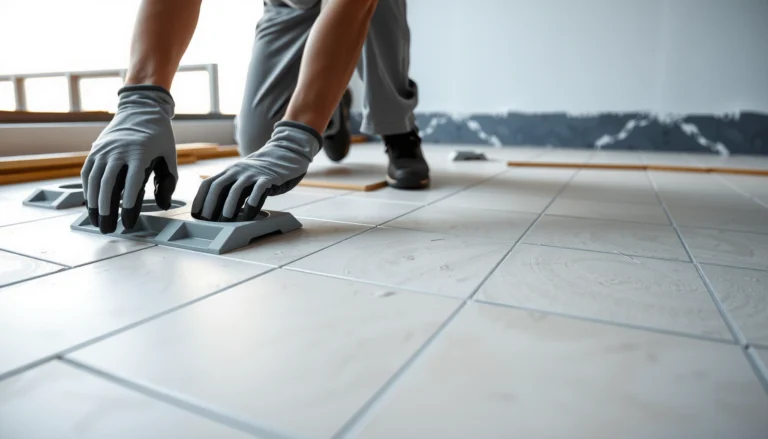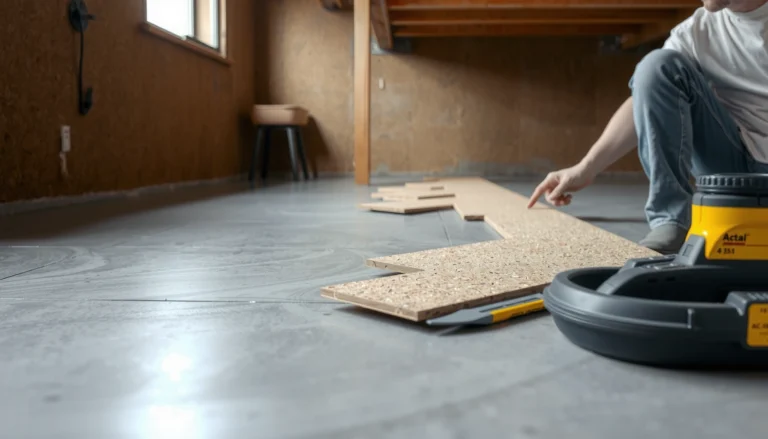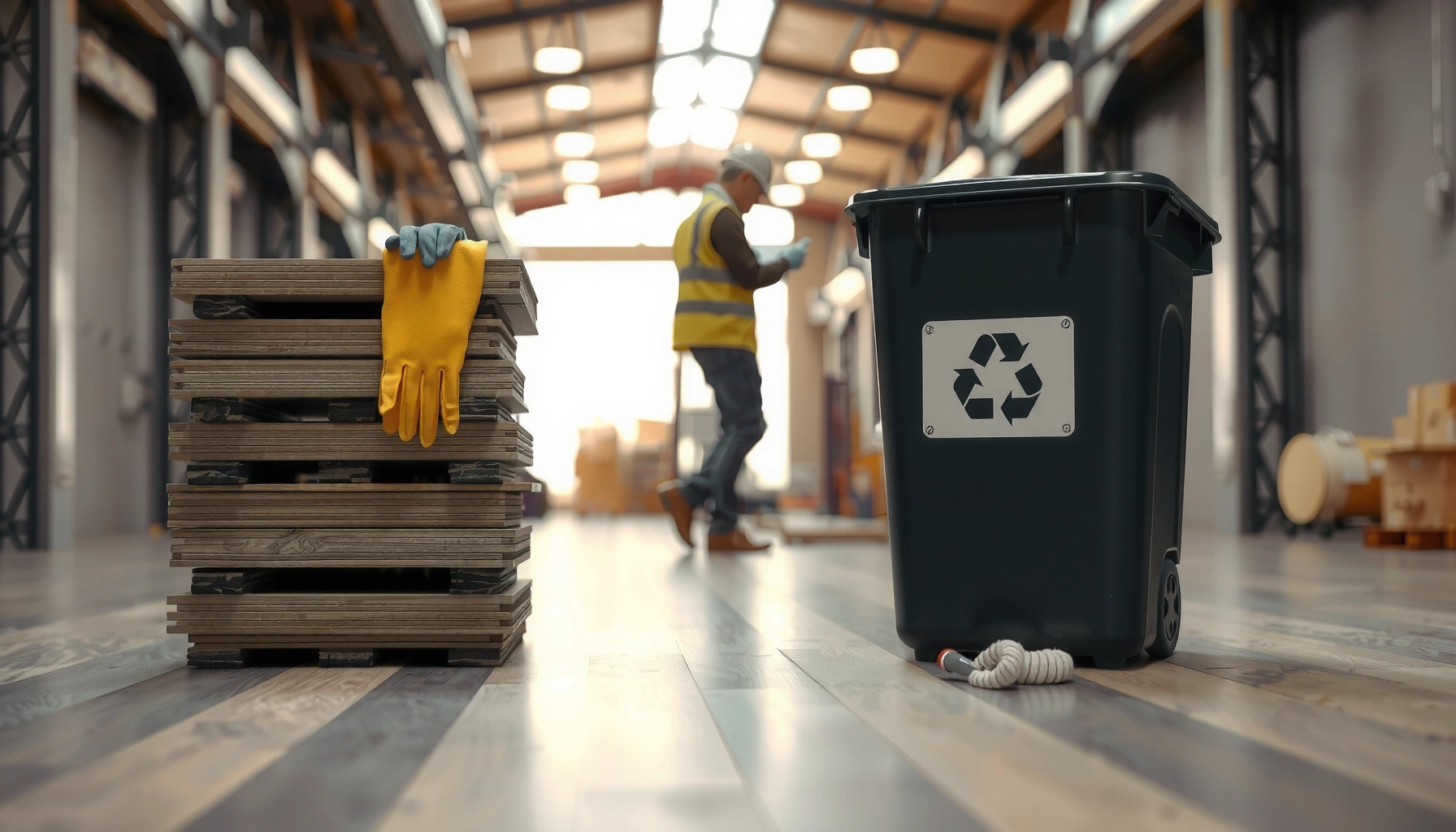

Learn the safest way to dispose of WPC floors, with clear step-by-step options for what to do when you’re done removing them. If you want the lowest risk and best compliance, prioritize disposal through your local waste authority or a qualified flooring/waste recycler, after you prepare the planks correctly. This guide answers exactly how to dispose of WPC floors safely—what to separate, how to prevent contamination, and which route to choose based on your local rules.



Disposing of WPC (wood plastic composite) floors is usually a “sort and deliver” job—not a dump-it-in-any-trash situation. The safest approach is to separate the WPC planks from underlayment/film, trims/edges, and adhesive debris, then use your local bulk-waste or construction-debris rules for the receiving facility’s acceptance requirements.
If you’re replacing worn, damaged, or buckled WPC floors in a home, rental, or commercial space, this guide focuses on the details that commonly cause disposal problems: mixed materials, residue from adhesives, and attached components that make a “sorted” load become “unsorted.” We also flag safety practices for cutting/removal dust, which matters for both people and disposal intake cleanliness.
This guide is for homeowners, landlords, and contractors replacing worn or damaged WPC (wood plastic composite) flooring. It’s most useful when you’re dealing with mixed materials (wood-plastic composite, adhesive remnants, and trims) and want to avoid the common “wrong disposal” problems.
Identify what you’re actually disposing

Before you remove anything, confirm what’s in the flooring system so you can sort it correctly for the waste stream. WPC planks are not always the only material—attached underlayment, vapor barrier film, metal edging, and trim pieces may have different acceptance rules.
WPC flooring waste acceptance often depends on whether the load is primarily “wood-plastic composite planks” versus mixed construction debris with attached trims or film.
If your WPC product is click-lock, the “board + interlocking components” may be easier to separate from underlayment than glued-down assemblies.
Wood dust generated during plank removal can be treated as nuisance particulate; OSHA’s general industry PELs for particulates not otherwise regulated are 15 mg/m³ (total) and 5 mg/m³ (respirable) time-weighted averages.
According to the U.S. EPA, construction and demolition activities produce massive material volumes annually (for context when facilities manage high-throughput debris streams).
– Check the product type: WPC flooring planks plus any attached backing/underlayment or click-lock components.
– Look for any attached parts (trims, metal edging, vapor barrier film) so you can sort them correctly.
– If you’re unsure of the manufacturer’s material composition or recycling guidance, use the product documentation to confirm (or [ADD: source for the specific WPC product’s disposal guidance]).
Quick note on “WPC” vs. “composite packaging”
WPC can include wood fiber, thermoplastics, and sometimes stabilizers or coatings. That composition is exactly why disposal can vary—some facilities can process composites, while others treat them as landfill-bound mixed construction debris. Repeatedly, the difference between acceptance and rejection comes down to whether the load is clean, separated, and consistent.
Follow local rules first (before you start removing)
The safest route starts with your local waste authority, not a generic assumption about “recyclable composite.” Bulk waste and construction-debris categories are facility-driven, so calling ahead prevents you from hauling a load you’ll be turned away for.
Many municipalities require flooring and other renovation materials to enter “bulk waste” or “construction debris” streams rather than regular household trash.
Facilities often reject loads that include mixed components (e.g., film underlayment stapled to planks), because it increases contamination and sorting labor.
When your disposal route is managed for a rental unit or commercial site, written acceptance rules help demonstrate compliance if a property audit or service agreement requires proof of proper disposal.
– Contact your local waste authority or check your municipality’s guidance for “bulk waste,” “construction debris,” or “composite materials.”
– Ask whether WPC is accepted at a recycling center, treated as landfill material, or handled under a specific disposal category.
– Keep receipts/notes from the facility rules if you’re doing this for a managed property (it can help with compliance).
What to ask on the phone (so you get a usable answer)
When you contact your local waste operator, ask the questions that lead to operational details:
– Do you accept “wood-plastic composite flooring planks” specifically, or only certain composites?
– Are trims/edges and underlayment allowed in the same container, or must they be separated?
– Do you require loads to be bagged/bundled at a certain size/weight to handle safely?
– Will adhesive residue trigger a “contaminated” category?
If the operator can’t answer directly, ask who can—many sites have a scale/yard manager or intake coordinator who sets the practical acceptance rules.
Disassemble to keep materials manageable
Most disposal problems happen after removal—when debris becomes too mixed to handle efficiently. Disassembling carefully and sorting components during the job is the difference between a smooth drop-off and a rejected load.
Separating trims/edges and film underlayment from WPC planks reduces contamination that can cause facilities to classify the entire load as mixed debris.
The easiest path is usually removing planks in a way that minimizes adhesive smear, because “clean” planks are more likely to match how the facility intends to process composite materials.
Bundling by design (manageable sizes) supports safe handling, especially when yards require workers to lift smaller units rather than loose, jagged offcuts.
– Remove planks carefully to reduce damage and contamination from adhesive.
– Separate components during removal (e.g., trims/edges vs. main planks vs. loose underlayment).
– Bundle or box in manageable sizes so the facility can handle them easily ([ADD: local facility size/packaging requirement if known]).
Practical sorting approach you can follow on-site
A simple “three-stream” method works well:
1. WPC planks (primary stream): boards, click-lock pieces, and plank segments with minimal attached junk.
2. Attached trims/edges (secondary stream): transition strips, metal edging, skirting trim, or any non-plank accessories.
3. Underlayment/film + adhesive debris (restricted stream): vapor barrier film, foam pads, loose paper-backed underlay, and swept-up dust/crumbs from adhesive removal.
If your disposal site asks for “clean composite only,” stream #3 is where you prevent contamination.
Clean-up and packaging (what to do with leftover adhesive)
Cleaning is not just about appearance—it’s about whether your load qualifies as “non-contaminated” under the receiving facility’s rules. Adhesive remnants and fine dust can shift classification from “usable composite” toward “contaminated debris.”
Don’t leave large adhesive blobs stuck to planks if the disposal facility rejects heavily contaminated loads or requires low-residue composite acceptance.
Sweep fine debris and bag it separately to avoid mixing dust/crumbs with the main WPC plank bundle stream.
If removal involves scraping/cutting wood-containing flooring, use appropriate PPE and dust controls; OSHA’s wood dust guidance generally treats excessive airborne particulate as a respiratory hazard.
– Don’t leave large adhesive blobs stuck to the planks if your disposal site rejects heavily contaminated loads.
– Sweep up fine debris and bag it separately so you’re not mixing dust/crumbs with clean components.
– If your removal process involves scraping or cutting, wear the appropriate PPE for dust and follow safe handling guidance from the tool/disposal rules ([ADD: source for local safety requirements or the manufacturer’s safety sheet]).
A clearer way to think about adhesive
Adhesive behaves like a contaminant because it:
– increases mass and volume of “non-plank” material,
– traps dust that makes sorting harder,
– can trigger facility rules when they require “dry, mostly adhesive-free” composite.
If you used a release agent or adhesive remover, you also need to ensure your cleanup doesn’t create a hazardous-waste situation. If residue includes solvents or you’re unsure, follow the adhesive/SDS instructions and [ADD: local hazardous waste guidance source].
What can go wrong (and why it matters)
Even when you “remove WPC flooring,” the disposal outcome can fail if mixing, contamination, or dust handling pushes the load outside intake standards. Facilities manage risk and throughput; rejected loads create delays and extra hauling costs.
Mixing WPC with other flooring types or heavily contaminated materials can lead to rejection at the facility or higher landfill fees.
Throwing WPC flooring into normal household trash may violate local bulk waste rules and increase enforcement or cleanup costs.
Leaving trims, metal edging, or film underlayment attached can turn a “sorted” load into an “unsorted” load.
Cutting or grinding without dust control can create safety issues and increase contamination of the disposal batch.
– Mixing WPC with other flooring types or heavily contaminated materials can lead to rejection at the facility or higher landfill fees.
– Throwing WPC flooring into normal household trash may violate local bulk waste rules.
– Leaving trims, metal edging, or film underlayment attached to every plank can turn a “sorted” load into an “unsorted” load.
– Cutting or grinding without proper dust control can create safety issues and increase contamination of the disposal batch.
Pros/cons comparison: recycling attempt vs. compliance-first disposal
| Option | Pros | Cons | Best for |
|---|---|---|---|
| Compliance-first (sort + bulk/construction debris route) | Fastest intake acceptance when rules are followed; lower risk of rejection | May not be “recycled,” depending on local capacity | Most homeowners/landlords replacing mixed flooring systems |
| “Make it recyclable” DIY approach | Potential to meet a recycling facility’s composite requirements | High risk: wrong sorting, adhesive residue, or wrong packaging can cause rejection | Only if you have written acceptance criteria from your local facility |
| Full disassembly + strict sorting | Maximizes odds of acceptance for composite stream | More time onsite; requires careful labor planning | Contractors with multiple disposal runs and controlled workflows |
Verdict / tip (best practical approach)
Plan for separation and compliance: disassemble, sort components, and use local drop-off/bulk disposal rules. This usually works better than trying to “make it recyclable” through DIY tricks, because WPC acceptance depends on the receiving facility’s processing capabilities—so if your local site won’t take it, you’ll need an approved landfill/bulk route instead.
Skip DIY cutting and complicated “recycling schemes” if you don’t have clear disposal acceptance guidance from your local facility or you can’t safely manage dust and debris.
What I recommend in real-world renovation workflows
[ADD: your own site experience—e.g., “In my own renovation projects, the biggest time-saver was pre-staging labeled disposal streams (planks vs. film vs. adhesive debris) before the first plank came up.”] This is a practical operational lesson: the disposal plan starts on day one of removal, not at the end when the truck is already booked.
WPC Flooring Disposal Streams: What Facilities Usually Prefer
| # | Waste Stream | Typical Sorting Level | Common Facility Handling | Acceptance Likelihood |
|---|---|---|---|---|
| 1 | Clean WPC planks (mostly residue-free) | High | Drop-off as composite/landfill-bound composite | ★★★★★ |
| 2 | WPC planks with light adhesive film | Medium | May still accept, often as mixed construction debris | ★★★★☆ |
| 3 | Heavily adhesive-contaminated WPC | Low | Often treated as contaminated landfill material | ★★★☆☆ |
| 4 | Underlayment film/foam (separate) | High | Handled as separate C&D stream or landfill | ★★★★☆ |
| 5 | Metal edging/trims (separate) | High | Often processed under scrap/metal acceptance rules | ★★★★★ |
| 6 | Mixed WPC + trims + film attached | Low | Usually treated as unsorted C&D debris | ★★☆☆☆ |
| 7 | Sweepings/dust from adhesive removal (bagged separately) | High | Typically landfill via bagged debris stream | ★★★★☆ |
Quick checklist for scanning
Use this checklist to plan the job before removal so you don’t scramble at intake. If you’re managing multiple units, save this section to your phone or job folder.
– Confirm local disposal/bulk waste rules for WPC/composite flooring: [ADD: local authority name]
– Sort materials: WPC planks, trims/edges, underlayment, adhesive debris
– Remove/disassemble carefully to reduce contamination
– Bag or bundle for facility handling (sizes as required): [ADD: facility requirement]
– Transport to the approved drop-off or schedule bulk pickup
– Keep notes/receipts if you need proof of proper disposal: [ADD: record needed]
FAQ
Can WPC flooring go in regular household trash?
Often it shouldn’t. Many areas require bulk waste or construction debris handling, especially when flooring is considered part of renovation debris. Check your local waste authority rules for “bulk waste” and “flooring/disposal” categories.
Is WPC flooring recyclable?
Sometimes, depending on the facility and its equipment for composite materials. The most reliable path is to confirm with your local recycling center or waste operator what they accept for WPC/wood-plastic composite.
What should I do with underlayment and trims?
Sort them if possible. Underlayment films and trims may be handled differently than the main WPC planks, and mixing them can make the load harder for a facility to accept.
Do adhesive leftovers change where it can be disposed?
Yes—heavy contamination can affect acceptance. If your adhesive removal leaves significant residue, you may need to dispose of the load under a more restrictive category or ensure it meets facility cleanliness requirements.
Does it matter if the flooring is damaged?
It matters mainly for handling and contamination. Broken planks are harder to bundle and may create more debris, so you’ll still want to sort and bag waste appropriately and follow the facility’s intake rules.
Sources
– [ADD: your local waste authority/disposal guidelines for construction debris/bulk waste]
– [ADD: WPC flooring manufacturer disposal guidance from product documentation or SDS]
– U.S. Occupational Safety and Health Administration (OSHA), 29 CFR 1910.1000 Table Z-1 (air contaminants; particulates not otherwise regulated)
– U.S. Environmental Protection Agency (EPA), Characterization of construction and demolition materials / municipal solid waste context for C&D volumes ([ADD: specific EPA page/report name you want cited])
Disposing of WPC floors safely and correctly is about planning: identify what’s in the flooring system, follow your local bulk or construction-debris rules, and separate planks from underlayment, trims, and adhesive debris. If you do that—bagging dust, bundling boards, and avoiding mixed “unsorted” loads—you substantially reduce the chance of intake rejection and improve worker safety during removal.
Frequently Asked Questions
What is the best way to dispose of WPC floors?
The best way to dispose of WPC floors is to check whether your local waste facility accepts WPC (wood plastic composite) materials and whether they’re classified as construction waste. If the WPC flooring is unbroken and still in good condition, consider donating it or reusing it for flooring projects to reduce landfill impact. For damaged or contaminated boards, take them to the appropriate disposal stream (often bulky construction debris or mixed recycling rules), following your local guidelines.
How do I prepare WPC flooring for disposal?
Start by removing all accessories like trims, underlayment, nails, screws, and adhesive remnants to keep the WPC boards as clean as possible. Sweep and wipe away dust, and if the floor was exposed to spills, let it fully dry before handling. For large areas, cut the boards into manageable sections if required by your disposal site, and bag or bundle them to prevent fragments during transport.
How should WPC flooring be handled if it’s glued down?
If your WPC floor is glued down, removal preparation matters because adhesive contamination can affect how the material is processed. Use mechanical removal methods first where possible, such as scraping or prying to lift boards, then remove remaining residue according to the adhesive type (follow product instructions and local rules). After removal, dispose of adhesive waste separately and place the cleaned WPC flooring in the correct construction debris category.
Why can’t WPC floors always be recycled, and what are my options?
WPC flooring is a composite of wood fibers and plastic binders, which means it may not match local recycling streams designed for pure plastics or pure wood. Even when recycling is available, it often depends on contamination levels, board structure, and whether the facility accepts mixed-material flooring. If recycling isn’t accepted, the practical option is disposal through licensed construction waste services, while prioritizing reuse for intact boards to keep WPC out of landfills.
Which disposal method is safest for WPC floors with damage, moisture, or mold?
For WPC floors that are water-damaged, warped, or potentially mold-affected, treat them as contaminated construction debris and avoid dry sweeping that can spread particles. Wear appropriate PPE, double-bag or tightly bundle the removed planks, and keep them covered during transport. Contact your local waste authority or a licensed contractor to confirm the correct disposal route for moldy or moisture-affected WPC flooring and follow site-specific rules for contaminated materials.
📅 Last Updated: October 08, 2026 | Topic: How to dispose of WPC floors? | Content verified for accuracy and freshness.
References
- https://en.wikipedia.org/wiki/Wood%E2%80%93plastic_composite
- Construction waste
https://en.wikipedia.org/wiki/Construction_and_demolition_waste - https://www.epa.gov/facts-and-figures-about-materials-waste/construction-demolition-debris
- https://www.epa.gov/smm/construction-demolition-debris
- https://www.epa.gov/recycle/plastics-recycling
- Household Hazardous Waste (HHW) | US EPA
https://www.epa.gov/hw/household-hazardous-waste - https://www.gov.uk/recycling-and-disposing-of-waste
- Google Scholar Google Scholar
https://scholar.google.com/scholar?q=wood-plastic+composite+flooring+end+of+life+disposal - Google Scholar Google Scholar
https://scholar.google.com/scholar?q=WPC+flooring+recycling+waste+management - Google Scholar Google Scholar
https://scholar.google.com/scholar?q=wood-plastic+composite+construction+demolition+waste+management