
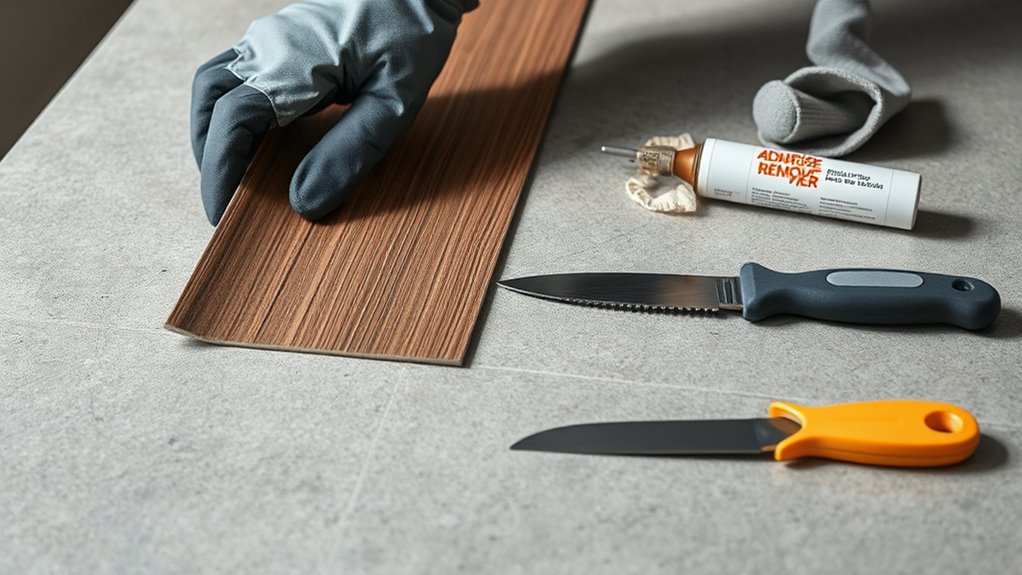

To remove vinyl flooring from concrete in three easy steps, start by gathering tools like a utility knife, scraper, and adhesive remover, and prepping your area by clearing furniture and removing baseboards. Next, loosen an edge with a putty knife and gently peel back the vinyl, using heat if needed to soften the adhesive. Finally, apply adhesive remover to wipe away residue and clean the concrete surface. Follow these basics, and you’ll be ready to tackle the project efficiently while exploring helpful tips for a smooth finish.


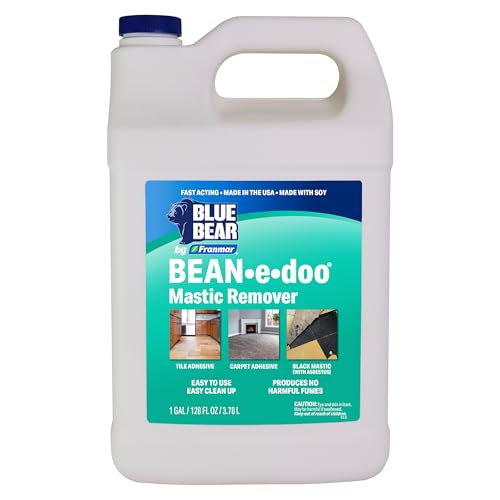

Gather Your Tools and Prepare the Area
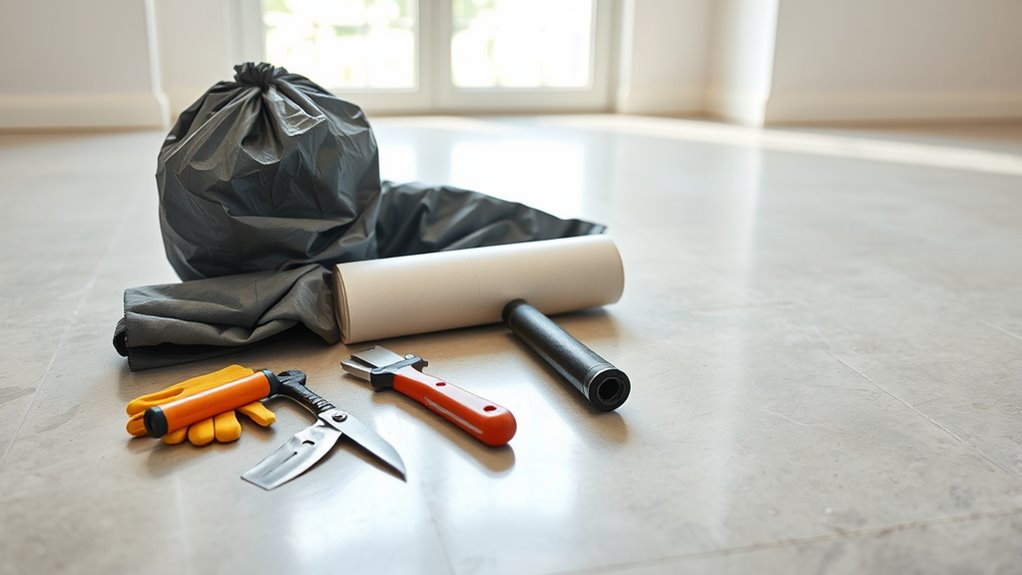
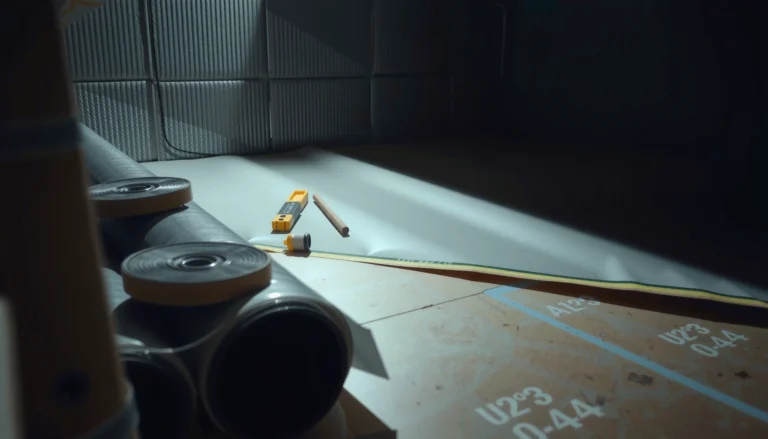
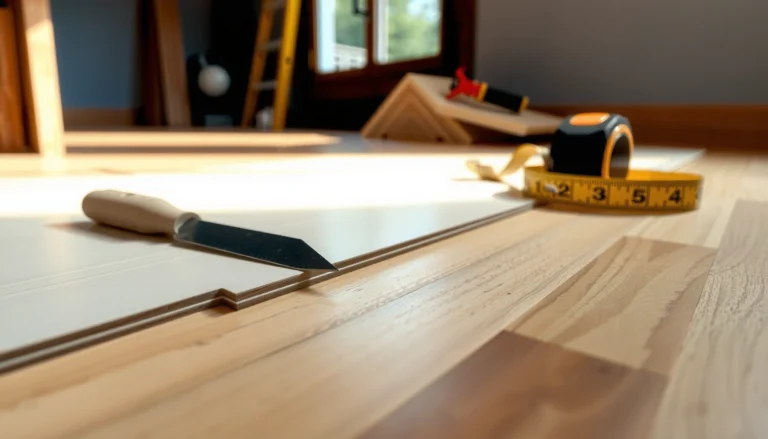
Before you start removing vinyl flooring from concrete, you’ll need to gather a few essential tools and prepare the area properly. Tool selection is vital for efficiency and safety. Grab a utility knife, a floor scraper, a heat gun or hairdryer, heavy-duty gloves, safety goggles, and a knee pad for comfort. For stubborn adhesive, a chemical adhesive remover might be necessary. Next, focus on area preparation. Clear the room of furniture and objects, and remove any baseboards or trim carefully. Sweep and vacuum the floor to eliminate dust and debris. Open windows or use fans for ventilation, especially if you’ll use chemicals. Proper tool selection and thorough area preparation set you up for a smoother, faster vinyl removal process, giving you the freedom to work confidently and effectively.
Peel and Lift the Vinyl Flooring
Once your tools are ready and the area is prepped, you can start peeling and lifting the vinyl flooring. Begin by using a putty knife or scraper to loosen a corner or edge of the vinyl. Employ careful peeling techniques, pulling slowly to avoid tearing the material. If the vinyl resists, apply heat with a heat gun to soften the adhesive, making lifting easier. Use steady lifting methods to pull the flooring away from the concrete without damaging the surface. Work in manageable sections, peeling and lifting as you go to keep control. Patience here is key; rushing may cause frustration or damage. By mastering these peeling techniques and lifting methods, you free yourself from stubborn vinyl and pave the way for a clean, bare concrete floor ready for its next chapter.
Remove Adhesive Residue and Clean the Concrete
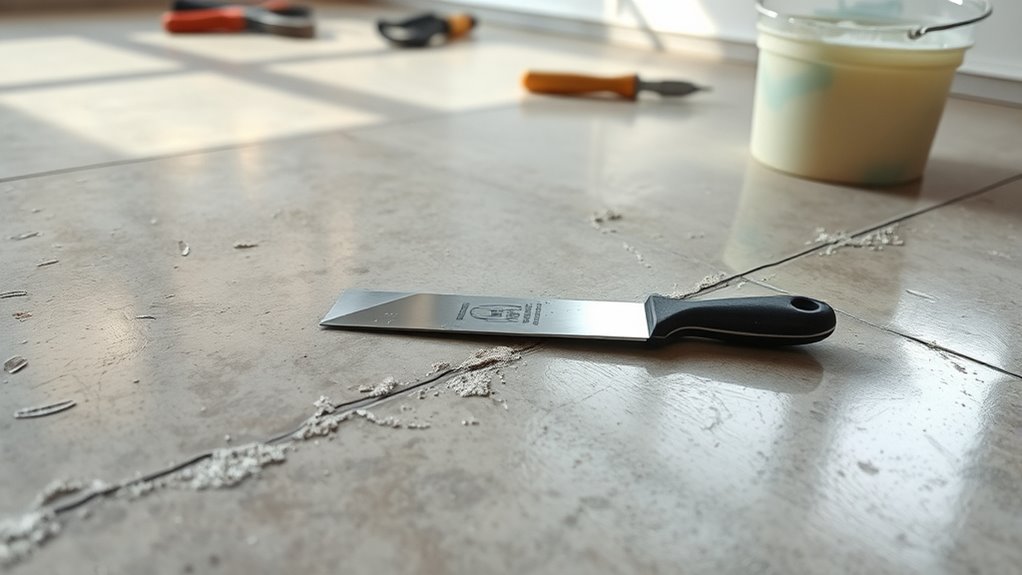
Although you’ve removed the vinyl flooring, sticky adhesive residue will likely remain on the concrete. To fully free your floor, start with adhesive removal by applying a commercial adhesive remover or a mixture of warm water and detergent. Let it sit for a few minutes to soften the residue. Then, use a scraper to gently lift the adhesive without damaging the concrete. For stubborn spots, repeat the process as needed. Afterward, focus on concrete cleaning by sweeping away debris and wiping the surface with a damp mop or cloth. This step guarantees the floor is smooth and ready for any new flooring or treatment you choose. Proper adhesive removal and concrete cleaning give you a clean slate and the freedom to transform your space however you want.

[…] usually requires more cutting and scraping than nail-down removal. Use a heat gun or flooring adhesive remover if appropriate for your adhesive type, but often you’ll get faster results with a floor scraper […]
[…] seam or starting edge to avoid gouging the subfloor. If the laminate is glued down, use the proper adhesive remover and a floor scraper rather than forcing sections up, which can tear plywood or […]
[…] adhesive is still holding your sheet vinyl down, the safest approach is to soften it first (heat or adhesive remover) and then scrape slowly using non-damaging tools. Avoid soaking the vinyl backing or flooding […]
[…] for sheet vinyl (if glue-down), a notched trowel if required, and a smooth putty knife or floor scraper for prep. Have a caulking gun and matching trim/transition pieces available for finishing edges, […]
[…] to remove adhesive from SPC floors? The safest, fastest method is to use the right floor-safe adhesive remover (or heat-assisted scraping where appropriate) while preventing gouges and finish damage. Follow the […]
[…] to fix them cleanly and restore a durable surface. You’ll learn exactly how to assess the dent, prepare the area, fill it, and finish so the repaired spot blends with the surrounding tiles. Follow these […]
[…] If you’re removing tiles from a tiled-on-tiled surface, a carbide blade and heat gun or chemical adhesive remover may be necessary depending on the old […]
[…] In most cases, you’ll use a grout saw/oscillating tool for the grout lines and a flat pry bar (or floor scraper) to break tiles loose—then you’ll spend most of your time on thinset/mortar cleanup […]
[…] from mosaic tile floors, soften the glue first (heat when mastic responds to warmth, or a tile-safe adhesive remover for residue), then remove it gently with scraping that won’t cut tile faces or weaken grout. Work […]
[…] concrete floors fast and for real? Start with a targeted cleaning and deodorizing routine: deep-clean the concrete to remove the source, then use the right odor neutralizer to stop smells from coming back. This […]