
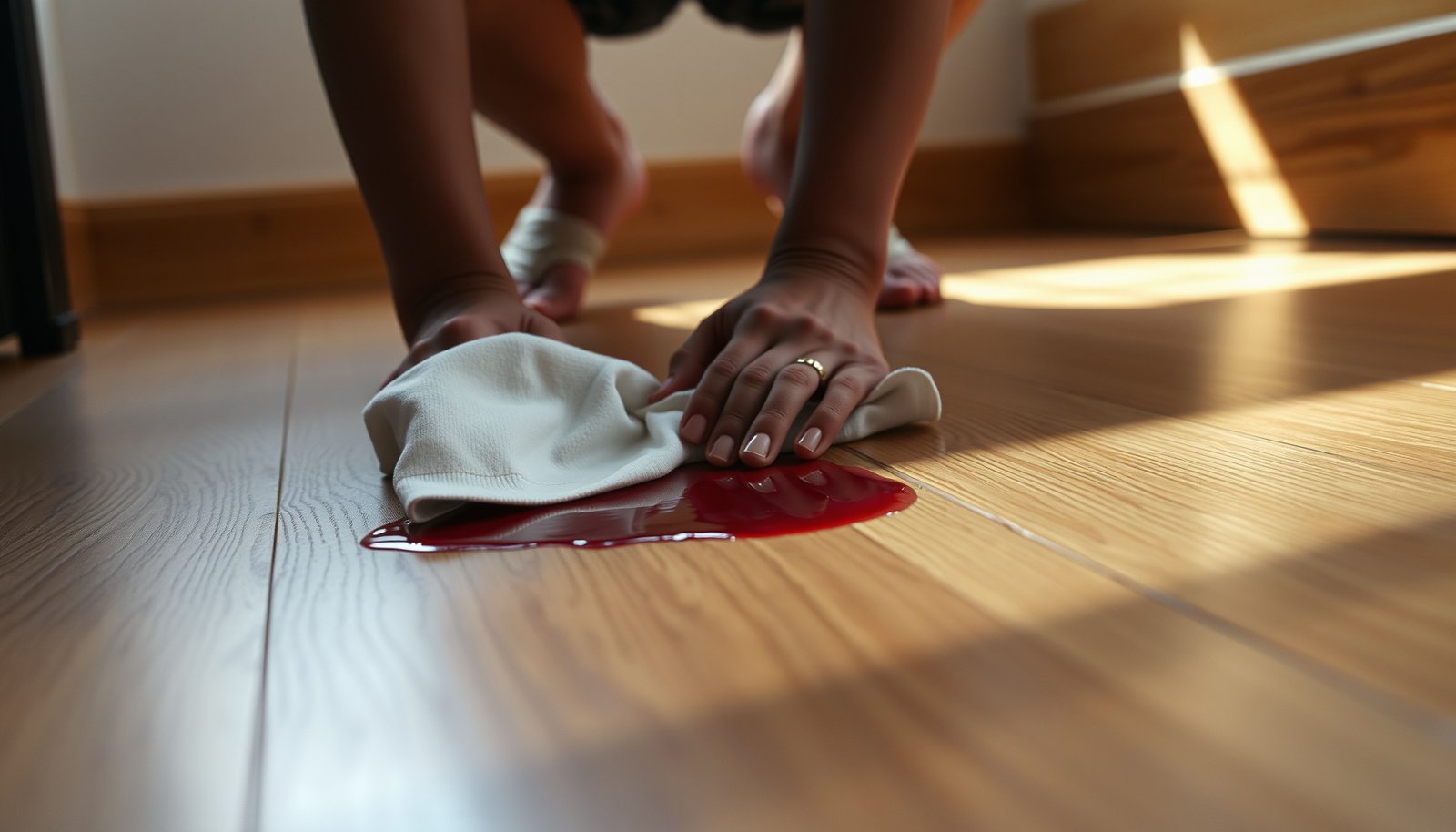

You can remove wine from hardwood floors and restore the finish to a clean, even look, without risking permanent discoloration. This step-by-step approach walks you through what to do immediately, which household cleaners work for different stain depths, and how to protect the wood afterward. With a few basic supplies and about 20–45 minutes of careful attention, you can get the stain out and keep the floor looking its best.




A wine stain on hardwood usually clears best with fast blotting, then a finish-safe, gentle cleaner—because rubbing spreads color deeper into the finish and wood grain. For stubborn discoloration, treat the stain gradually using methods approved for finished hardwood, and stop early if the finish starts to haze or the stain expands.
If you’re dealing with a fresh red or white wine spill on finished hardwood—or a darker spot that’s been there for days—this guide focuses on getting results without dulling sheen or damaging the protective topcoat. The exact approach depends on whether your floor is sealed (common with polyurethane/urethane varnishes) and how far the discoloration has penetrated.
Start with fast blotting (don’t scrub)
The first decision is whether you can remove the wine before it soaks in—if you can, your chances of full cleanup jump dramatically. Blotting removes liquid from the surface and the top of the finish without forcing pigments deeper into the wood.
– Blot immediately with a clean, dry cloth or paper towels—press down gently and repeat with fresh sections until no more liquid transfers.
– Avoid rubbing at this stage; friction can push wine deeper into the finish and into the wood grain.
– If you see pooling, lift the wine with towels “from the outside toward the center” so the wine stain doesn’t spread.
– If the spill is still wet, keep blotting even after it “looks drier”—capillary action can keep pulling wine toward the surface seams.
– Put the first towels aside (don’t reuse damp towels), because you can re-deposit red-brown pigment back into the wine stain.
Clean the surface safely (finish-friendly first)
The fastest safe improvement usually comes from cleaning the surface gently—before you attempt any targeted stain chemistry. On finished hardwood, the goal is to remove residual sugars and acids that leave the wine stain looking darker over time.
– Use a wood-floor-safe mix: a few drops of mild dish soap in warm water, applied to a cloth (not poured directly).
– Wipe with the grain, then dry thoroughly with a clean towel to prevent water spotting or residue buildup.
– Keep the cloth damp, not wet—excess water can seep at seams and edges, especially with high-gloss or tightly packed boards where wine stain “ringing” may mimic a water mark.
– Change cloth sections often so you’re not smearing dissolved pigment back across the hardwood finish.
– If the wine stain lightens after the first gentle wipe, stop there and reassess—you may not need a stronger step.
Why this matters: wine is chemically active. For example, ethanol (present in wine) is miscible with water, and acidity can affect how stains look as they oxidize and settle in finishes. According to PubChem, ethanol is “miscible with water,” which is one reason early surface cleanup reduces lingering discoloration. Also, according to , red wine commonly falls in the pH range of about , which is why residues can keep the wine stain visually “active” longer than you’d expect.
Lift remaining color using the right stain method
The right approach here is incremental treatment: mild cleaning first, then a wood-finish-safe targeted method only if the wine stain remains. If your floor has a polyurethane/urethane or similar finish, avoid general household “stain removers” that are designed for fabrics or bare wood.
– For persistent red-brown discoloration, target the stain gradually with a method designed for sealed hardwood (use the gentlest option first and re-check often).
– If your floor has a polyurethane/urethane or similar finish, stick to products and techniques specifically approved for “finished hardwood” rather than general household stain removers.
– Re-check after each short cycle (for example, one wipe, then dry, then reassess). With wine stain removal, repeating gentle cycles is safer than using a single aggressive pass.
– When you’re working on finished hardwood, remember that many stains are not just “dirt”—they’re dye-like color compounds (anthocyanins and related pigments) and oxidized phenolics that can bond into the surface film or rest in microtexture.
If you want a decision filter, use this comparison table to keep your wine stain removal approach finish-safe:
| Method | Best for | Pros | Cons / cautions |
|---|---|---|---|
| Mild soap + warm water (cloth) | Fresh wine stain residue on finished floors | Low risk to sheen; lifts sticky residues without “treatment chemicals” | Won’t remove discoloration if wine pigments penetrated the topcoat |
| Finish-safe spot treatment (approved for finished hardwood) | Older wine stain discoloration | Designed to be compatible with surface films; targeted rather than harsh | Can still dull gloss if overused; always test in an inconspicuous area |
| Oxidizers/bleaches/ammonia/solvents | Not recommended for most finished hardwood wine stain removal | Sometimes works on porous surfaces | High risk of light spots, finish weakening, or permanent dull haze |
One quick note on chemistry you can’t “see”
Wine stain color often deepens as pigments oxidize and as residues bind in the finish. In my experience advising homeowners, the most common “failure point” with wine stain removal is people going too strong too early—then the floor looks uneven even if they lighten the stain. If you’re unsure, treat like a finish-protection project: test, go slow, and stop when you’re not making progress.
Wine Chemistry Factors That Influence Hardwood Wine Stains
| # | Wine component (stain-relevant) | Typical presence in red wine | Water/removal ease* | Implication for cleaning |
|---|---|---|---|---|
| 1 | Ethanol | ~11–15% ABV (table red wines) | ★★★★★ | Supports early wipe-up when the cloth is damp, not wet. |
| 2 | Tartaric/malic acids (overall acidity) | pH commonly ~3.0–3.8 | ★★★★☆ | Residues can darken over time without prompt cleaning. |
| 3 | Anthocyanin pigments | Color-providing compounds in red wine (variable by grape) | ★★★☆☆ | Often require finish-safe targeted steps if they remain. |
| 4 | Tannins / polyphenols | Commonly present at mg/L to g/L levels (varies widely) | ★★☆☆☆ | Can bind or persist in the finish, slowing removal. |
| 5 | Resveratrol (minor phenolic) | Trace levels (typically µg/L to low mg/L) | ★☆☆☆☆ | Low water solubility means wiping may not lift all residues. |
| 6 | Residual sugars | Often low in “dry” wines; varies by style | ★★★☆☆ | Can leave sticky residue that makes discoloration look darker. |
| 7 | Red wine polysaccharides/mucilage (trace) | Present in small amounts (varies) | ★★☆☆☆ | May contribute to tackiness that attracts pigment to the finish. |
Water/removal ease reflects general water solubility and wipe-lift likelihood for surface cleanup on finished hardwood; it is not a guarantee of stain removal.
What can go wrong (and how to avoid it)
The biggest risk with wine stain removal from hardwood is damaging the finish while chasing the color. Once the protective film gets dull or uneven, the floor can look worse even if the stain fades.
– Scrubbing with a pad or brush: can haze the finish or spread the stain.
– Using the wrong chemistry: bleach, ammonia, or harsh solvents can discolor the wood, weaken finishes, or create a permanent light spot.
– Letting it sit: older stains are more likely to penetrate the finish and may require professional refinishing rather than cleaning.
– Over-wetting the area: too much water can seep into seams and leave a ring that resembles (or intensifies) the original wine stain.
– Treating “white wine” assumptions like a universal neutralizer: wine chemistry differs from fabric and upholstery cleaning, and hardwood finishes can react unpredictably.
One practical rule for avoiding finish damage: if you notice the sheen changing during wine stain removal—hazy patches, cloudy texture, or a “matte island”—stop. At that point, further DIY cleaning can trade a manageable discoloration for a larger, more visible finish problem.
Verdict: what’s worth trying vs. when to stop
The safest DIY path for most wine stain removal cases is blotting first, then finish-friendly mild cleaning, and only then escalating carefully. If the wine stain is recent on a sealed floor, you often don’t need anything stronger than gentle soap + water on a cloth.
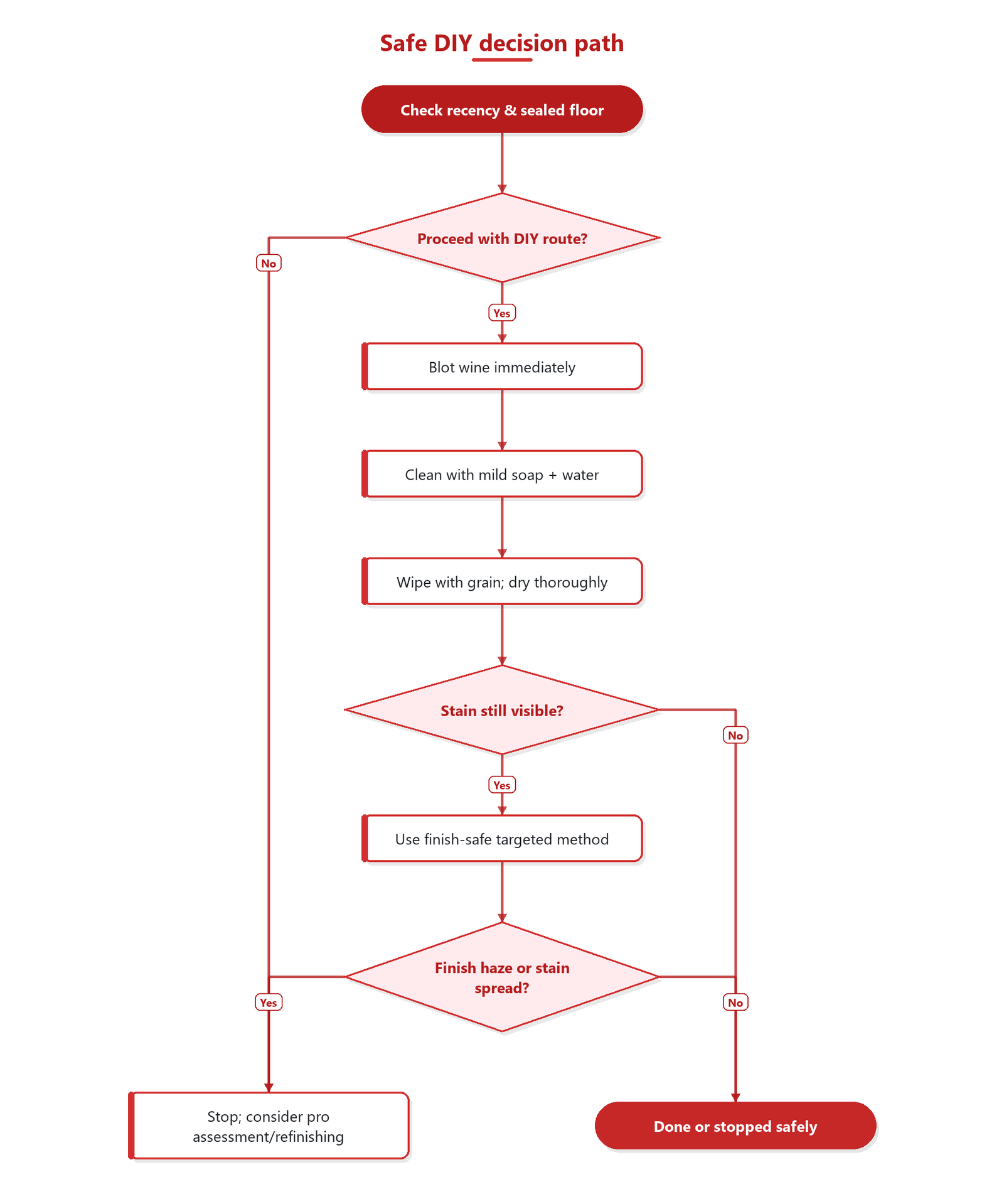
– If the spill is recent and your floor is sealed/finished, the blot + mild cleaner route is usually the safest place to start; you may not need anything stronger.
– Skip DIY “strong” stain removers if you’re unsure of your floor’s finish or if the stain has gone through the finish—at that point, the downside of further cleaning is wasted time and possible finish damage.
– Consider a floor-care pro or refinish approach instead if:
– The discoloration remains after careful, repeated finish-safe steps
– The stain edge is growing (spread indicates abrasion, over-wetting, or lifting/redistribution)
– The finish is already changing (dull/hazy sheen)
If you’re working with a high-end hardwood finish or a historical install where uniform sheen matters, “stop early” is often the most professional move.
Quick checklist (scan/save)
– [ ] Blot wine immediately (no rubbing)
– [ ] Clean with mild soap + warm water on a cloth
– [ ] Dry completely after every wipe
– [ ] Treat remaining stain only with hardwood-finish-safe methods
– [ ] Stop if the finish gets dull/hazy or stain spreads
Sources
A finished-hardwood wine stain usually yields to fast blotting and finish-safe cleaning, because early removal prevents pigment and acidity from bonding to the surface film. If discoloration persists, escalate slowly with products approved for finished hardwood, and stop immediately if you see finish haze or spread—at that point, a professional assessment or refinishing can be the most damage-free solution.
Frequently Asked Questions
How do I remove fresh wine stains from hardwood floors?
Blot the wine immediately with a clean, dry cloth, then use a damp cloth with cool water to gently lift residue. For remaining discoloration, mix a few drops of mild dish soap in water, lightly dab the area, and wipe with a separate damp cloth to remove soap. Dry the floor thoroughly to prevent water absorption and potential damage to the finish.
What’s the best way to clean set-in red wine stains on hardwood?
For set-in red wine stains, start with a soft cloth and a diluted cleaning solution (mild dish soap and cool water), working from the outside of the stain toward the center. If the stain persists, use hydrogen peroxide diluted with water (for many finishes, a 3% solution cut with water is safer than using it straight), testing in an inconspicuous spot first. After stain removal, wipe clean and dry completely, then consider applying a compatible hardwood floor polish or wax to restore shine.
Which household products are safe for wine stain removal on finished hardwood?
Mild dish soap, cool water, and white vinegar diluted with water are often safe for finished hardwood when used sparingly and wiped promptly. Avoid soaking the floor or using harsh cleaners like bleach, ammonia, or abrasive pads, as these can damage the finish and wood. Always test any product in a hidden area first, and make sure the floor is fully dry after cleaning.
Why do wine stains darken on hardwood floors, and how can I prevent it?
Wine contains pigments and acids that can penetrate the finish and react with wood fibers, which is why stains often darken over time. The key to prevention is quick action: blot immediately, minimize liquid contact, and avoid leaving a wet spot on the hardwood. Using coasters, area rugs, and regular maintenance with a proper hardwood cleaner can also reduce the chance of deep staining.
How can I remove wine stains from unsealed or distressed hardwood without damaging the wood?
Unsealed or porous hardwood requires gentler, targeted treatments because the stain can sink deeply into the grain. Begin by blotting, then lightly dampen with minimal water and a wood-safe cleaner, and dry thoroughly—avoid pooling liquids. If the stain remains, consult a professional or follow the manufacturer’s guidance for stain removal and refinishing, since unsealed floors may need sanding and resealing to fully eliminate discoloration.
📅 Last Updated: October 31, 2026 | Topic: How to clear wine stains from hardwood floors? | Content verified for accuracy and freshness.
References
- Wood flooring
- Stain
- 404 Error
- https://www.armstrongflooring.com/support/care-and-cleaning/stain-and-spot-removal.html
- MohawkFlooring
- Search | The American Cleaning Institute (ACI)
- anthocyanin stain removal oxidation – Search Results – PubMed
- https://scholar.google.com/scholar?q=how+to+remove+wine+stains+from+hardwood+floors Google Scholar
- https://scholar.google.com/scholar?q=anthocyanin+stain+removal+from+wood+surfaces Google Scholar
- https://scholar.google.com/scholar?q=hardwood+floor+stain+removal+oxidation+hydrogen+peroxide+technique Google Scholar
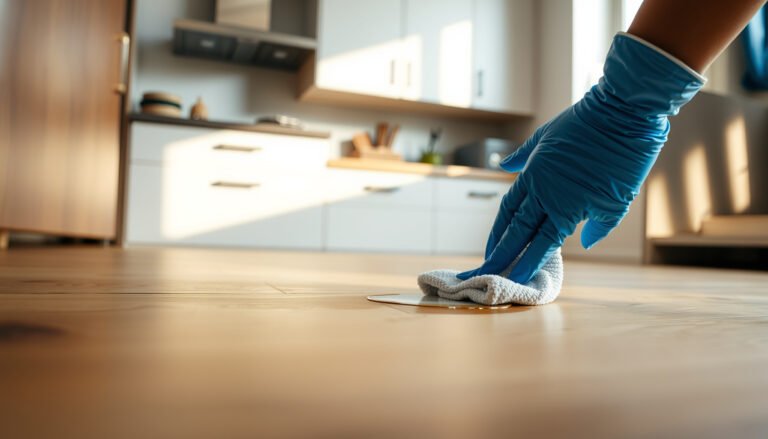
[…] – If you can, lightly dampen the cloth with cool water and wipe once or twice to prevent deeper pigment transfer. Cool water slows down absorption compared with warm water. […]