
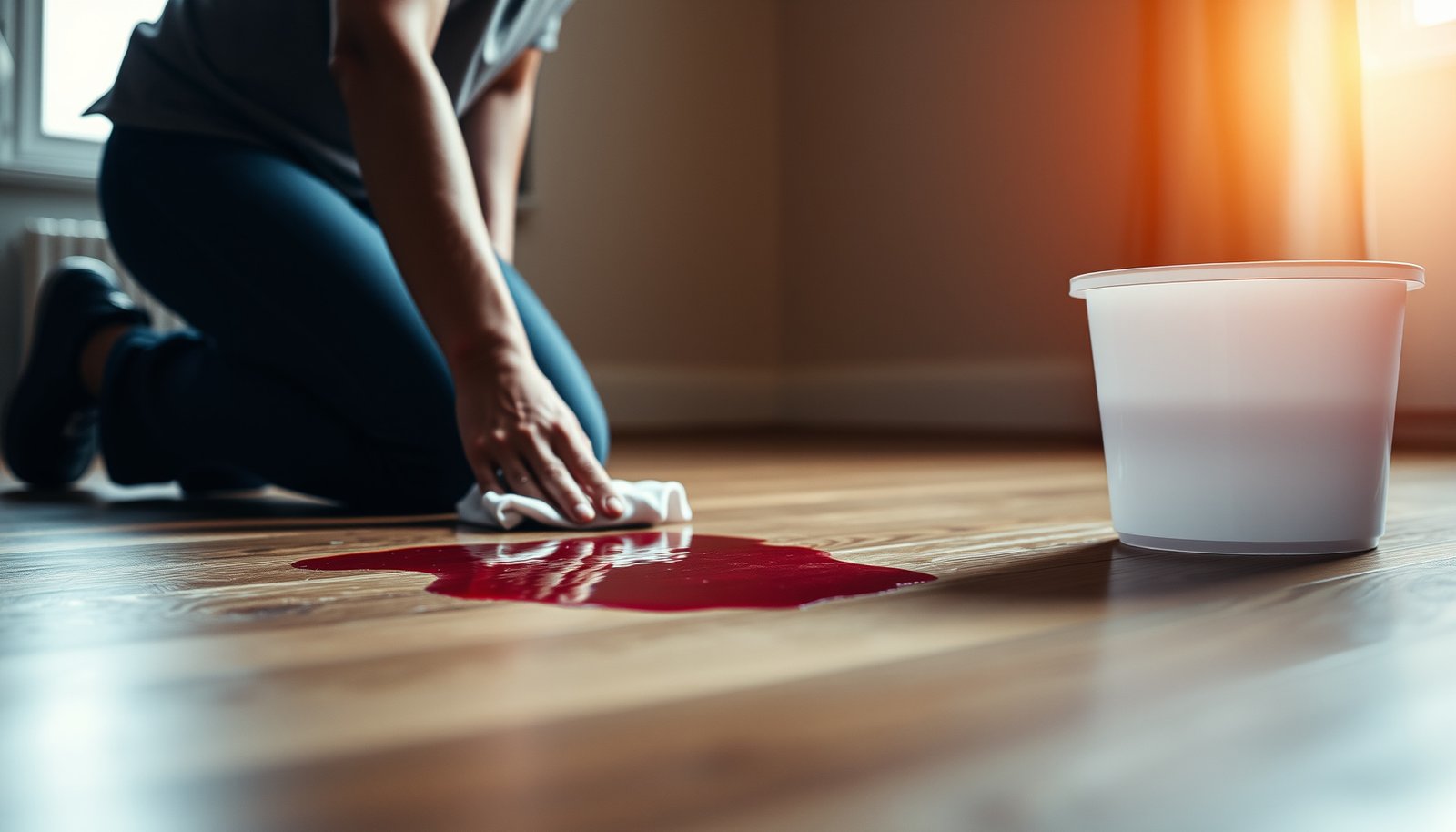

To clean hardwood floors after wine spills, act fast to blot, rinse the stain area with a damp cloth, and then use a wood-safe cleaner that will not cloud or damage the finish. This process usually takes 20 to 40 minutes and requires only clean microfiber cloths, cool water, mild dish soap or a manufacturer-approved hardwood cleaner, and a soft towel for drying. Follow these steps carefully and you can often lift fresh wine discoloration without harming the wood.




Blot wine immediately, then clean with a wood-floor-safe, pH-neutral cleaner using very minimal water. If the discoloration remains, use a finish-safe spot treatment after testing in a hidden area—avoid soaking or scrubbing, which can damage the finish and warp the wood.
If you’re dealing with wine on hardwood floors in your home (especially after dinner parties, holidays, or spills that sat for a while), the right approach depends heavily on whether your floor has a sealed finish. Modern hardwood floors are usually sealed; older, waxed, or unsealed floors need gentler handling because wine can penetrate deeper than the surface finish.
Who this is for / when it applies
This is for homeowners and facility managers who want a practical, low-risk method for cleaning wine stains from sealed hardwood floors without dulling, clouding, or loosening the finish. If you don’t know your floor’s finish type, use the “sealed vs. unsealed” guidance below before choosing any cleaner.
Act fast: reduce spread and protect the finish
If you treat the spill right away, you can often prevent the wine from changing color beyond the finish layer. The goal is to remove liquid fast while keeping moisture exposure as low as possible—hardwood floors react to excess water even when the surface looks “sealed.”
– Blot (don’t wipe) right away with a clean, dry cloth or paper towels to pull up liquid. Wiping spreads wine sideways and can push pigments deeper into the finish.
– Keep water to a minimum—wetting hardwood floors too much increases the risk of discoloration and finish damage, especially at seams and edges.
– Identify what you can: sealed vs. unsealed/waxed floors changes what cleaners and spot treatments are safe.
| Finish type on hardwood floors | What to do immediately | What to avoid |
|---|---|---|
| Sealed (common on modern hardwood) | Blot fast, then use a pH-neutral hardwood cleaner with a barely damp cloth. | Soaking, steam mops, and scrubbing that abrades the finish. |
| Unsealed / waxed | Blot fast, then proceed more slowly and conservatively; plan for possible refinishing. | Stronger oxidizers or chemicals that can stain, lighten, or break down wax. |
Gentle cleaning steps for most sealed hardwood floors
If your wine stain is fresh (or only lightly set), the safest first pass is minimal-water, pH-neutral cleaning. This approach helps lift discoloration without warping the wood or stripping the finish layer on hardwood floors.
– Mix a small amount of pH-neutral cleaner (or manufacturer-recommended hardwood cleaner) with water, then wring the cloth until it’s barely damp. If the cloth drips, it’s too wet.
– Wipe with the grain using light pressure, then wipe again with a second cloth dampened with plain water (only if your cleaner’s label or manufacturer guidance allows rinsing).
– Dry immediately with a dry towel and let air-circulate; don’t use heat or steam.
Why pH-neutral matters: Hardwood floors and many finishes can be affected by acidic or alkaline cleaners. Neutral pH is defined as pH 7 (with “near-neutral” commonly described as roughly pH 6–8) and helps reduce the chance of finish dulling or accelerated wear. According to general pH references, neutral is pH 7 (), and many floor-care instructions emphasize “pH-neutral” to protect finishes ().
Why water volume matters: Wood is hygroscopic, meaning it absorbs moisture. In wood science, swelling is tied to moisture content up to the fiber saturation point, often cited around ~30% moisture content (). While your floor won’t reach that from a spill, excess wetting raises local moisture enough to risk raised grain, dullness, or finish lifting—especially at joints.
Remove stubborn wine discoloration (test first)
If the stain remains after gentle cleaning, treat it like a finish-compatibility problem—not a “scrub until gone” problem. For hardwood floors, the safer technique is targeted spot treatment after testing in an inconspicuous area, because wine pigments can bond to (or partially penetrate) the finish.
– Try a targeted spot approach only after the general cleaning: apply your chosen treatment to a cloth (not directly onto the floor) and work in small areas.
– For many sealed floors, some floor-care guides recommend carefully using a small amount of 3% hydrogen peroxide as a spot treatment, but you must test compatibility first because finishes can change color or gloss.
– If the stain is still visible, stop and reassess—aggressive chemistry or scrubbing can spread the stain or damage the finish layer on hardwood floors.
To keep the risk low, think in “layers”:
1. First layer: wine on top of the finish (often removable by blotting + pH-neutral cleaning).
2. Second layer: stain trapped in or slightly under the finish (may require a carefully tested spot method).
3. Third layer: pigment that reached deeper than the finish (often needs professional refinishing).
Measurement anchor: Household hydrogen peroxide is commonly sold at 3% concentration for general cleaning uses (). Even at that level, finish compatibility varies by coating system, so you still must do the hidden-area test.
Common DIY Chemicals for Wine Stain Attempts on Hardwood Floors: Typical Strengths & Finish Risk Tier
| # | Method / Product type | Typical household strength | Best fit for wine on sealed hardwood | Finish risk rating |
|---|---|---|---|---|
| 1 | pH-neutral wood-floor cleaner (label-based use) | Near-neutral (often pH 6–8) | Fresh spill removal | ★★★★★ |
| 2 | Distilled water (for a quick wipe/rinse if allowed) | 0% additives | Residual cleaner removal | ★★★★☆ |
| 3 | Hydrogen peroxide spot treatment (3%) | 3% H₂O₂ | Targeted set-in discoloration (test first) | ★★★☆☆ |
| 4 | White vinegar (acetic acid) | Typically ~5% acetic acid | Generally not recommended without approval | ★☆☆☆☆ |
| 5 | Household bleach (sodium hypochlorite) | Typically ~5–6% sodium hypochlorite | Do not use on unfinished/unknown finishes | ★☆☆☆☆ |
| 6 | Ammonia-based cleaners | Often ~5–10% ammonia (varies) | Usually avoid on hardwood finishes | ★☆☆☆☆ |
| 7 | Steam cleaning / steam mop | High moisture + heat | Not recommended | ★☆☆☆☆ |
Dry thoroughly and restore a uniform look
After you spot-treat, your priority is controlled drying so the finish settles consistently. If the hardwood floors look uneven, the fix is usually a finish-aware repair approach—not more cleaner or random oils.
– After stain treatment, dry fully and let the area cure before walking on it or applying anything else.
– If the finish looks uneven, use the method the floor manufacturer recommends for sheen/spot repair rather than random oils or polishes.
– If the stain has created a “halo” area, that often means it penetrated the finish—replacement or refinishing may be the realistic fix.
In practice, a “halo” often reflects uneven pigment uptake or finish disruption on hardwood floors. Once the coating system is compromised, additional DIY cleaners can make the difference more noticeable by brightening some zones and leaving others darker.
What can go wrong (and how to avoid it)
Many wine-stain problems get worse because hardwood floors are treated like tile: scrubbed, soaked, or hit with harsh chemicals. The fastest way to avoid permanent damage is to respect the finish layer and moisture sensitivity.
– Scrubbing hard can push stain deeper into pores or scratch the finish, especially on high-gloss or soft finishes.
– Soaking or leaving cleaner wet can cause cupping, raised grain, or additional discoloration even when the spill was only wine.
– Using the wrong products (bleach, ammonia, abrasive cleaners) can permanently alter color and finish.
– If you don’t know your floor’s finish (especially waxed or unsealed), “strong” spot treatments can do more harm than the original wine stain.
From the field: . If you’ve ever seen a stain “grow” after wiping, that’s usually pigment redistribution plus finish disturbance—both are avoidable when hardwood floors are handled with minimal water and gentle wiping.
Verdict / tip: best practice and who should skip DIY
For most sealed hardwood floors, the safest path is: blot → minimal-water pH-neutral cleaning → dry → spot-treat only if needed (after a hidden-area test). This reduces spread and limits finish damage compared with soaking or aggressive scrubbing.
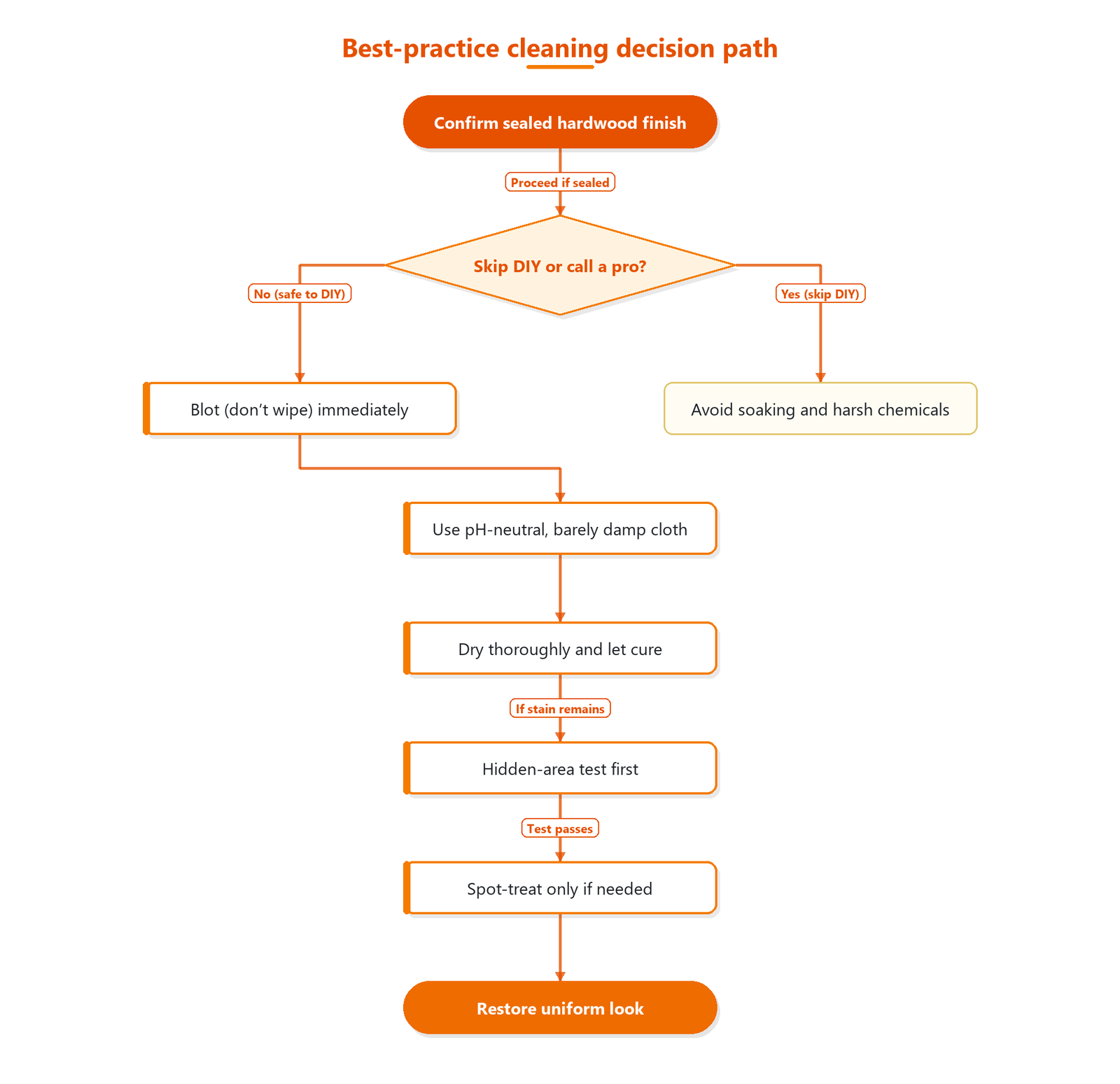
Skip DIY (or call a pro) if:
– The floor is unsealed/waxed or you can’t confirm the finish type.
– The stain is very old, widespread, or has a visible “bleached”/raised area suggesting deep penetration.
– You’ve already tried harsh chemicals and the surface looks cloudy, tacky, or dull.
Why “skip” matters: when wine pigments reach beyond the finish layer, chemical spot work can’t always restore uniform color on hardwood floors. At that point, professional refinishing or localized board/finish repair is often the only way to match sheen and tone.
Save-and-scan checklist
| Step | What to do | What to avoid |
|---|---|---|
| 1 | Blot immediately with a dry cloth | Wiping/rubbing while wine is wet |
| 2 | Use a pH-neutral, wood-floor-safe cleaner with a barely damp cloth | Soaking the floor; excess water |
| 3 | Dry right away | Heat/steam directly on the spot |
| 4 | If still stained: spot-treat only after a hidden-area test | Strong chemicals/bleach without finish confirmation |
| 5 | Let it cure fully before walking on it | Applying polish until you’re sure it’s clean |
Sources
Bottom line: cleaned fast and handled with minimal water, wine stains on sealed hardwood floors are often removable without drama. When discoloration persists, stay finish-aware—spot-treat only after testing, and recognize when penetration is deep enough that refinishing (or professional help) is the honest path.
Frequently Asked Questions
What’s the safest way to clean wine stains from hardwood floors without damaging the finish?
Start by blotting the spill immediately with a clean, dry cloth to remove as much red wine as possible—don’t wipe, since that can drive the stain deeper. If the stain has set, mix a few drops of mild dish soap into warm water, lightly dampen a microfiber cloth, and gently blot the area. Dry thoroughly with a separate cloth and avoid soaking the wood, since excess moisture can damage hardwood and lift the finish.
How can I remove an old red wine stain from hardwood when blotting didn’t work?
For set-in stains, use a mixture of equal parts white vinegar and water on a well-wrung cloth, then gently dab the stain and keep the surface only slightly damp. After a few passes, rinse with a cloth dampened with clean water (again, wrung out), then dry completely. If the stain persists, you may need hydrogen peroxide on a cloth for very short contact—test in an inconspicuous spot first to confirm the finish won’t discolor.
How do I clean hardwood floors after wine spills to prevent staining from spreading?
After blotting, clean the area promptly so alcohol and pigments don’t seep into the finish. Use minimal moisture: apply cleaner to the cloth instead of directly to the floor, and always blot rather than rub. Finish by drying the area completely, then keep traffic off the spot until it’s fully dry to prevent abrasive movement from making the wine stain worse.
Which household products work best for wine stain removal on sealed vs. unsealed hardwood?
For sealed hardwood floors, mild soap-and-water and vinegar solutions are usually effective because the finish helps keep liquid out of the wood. For unsealed hardwood, the same methods may not fully work because wine can penetrate, so you may need a targeted approach like hydrogen peroxide cautiously (spot-test) and follow with thorough drying. If you’re unsure whether your hardwood is sealed, check for water beading—water that beads typically indicates a sealed surface.
Why does red wine leave marks on hardwood, and how can I prevent it from happening again?
Red wine contains pigments (like anthocyanins) that can stain the wood surface or work through micro-scratches in the finish, especially if left to sit. Prompt blotting, gentle cleaning with hardwood-safe methods, and fast drying reduce the chance of deep discoloration. To prevent future wine stains, use coasters, area rugs in high-risk zones, and maintain the floor finish regularly with a recommended hardwood floor cleaner and polish.
📅 Last Updated: October 31, 2026 | Topic: How to clean hardwood floors after wine stains gets on it? | Content verified for accuracy and freshness.
References
- Oxalic acid
- Wood flooring
- Tannin
- wine stain | NWFA
- Bring out the beauty in floors
- Armstrong Flooring®
- Home
- https://scholar.google.com/scholar?q=red+wine+stain+removal+hardwood+floor Google Scholar
- https://scholar.google.com/scholar?q=oxalic+acid+wine+stain+wood+removal Google Scholar
- https://scholar.google.com/scholar?q=hardwood+floor+stain+removal+polyurethane+finish+tannins Google Scholar
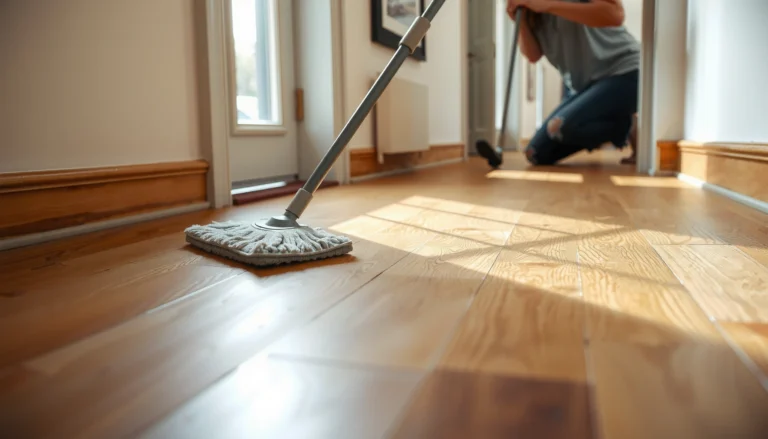
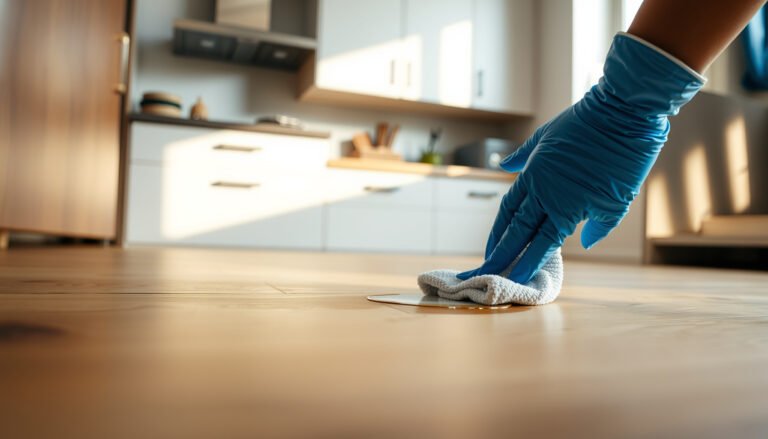
[…] Clean next: apply the pH-neutral cleaner to a cloth (or follow the label instructions) and work the stain gently in the direction of the […]