


How do you clean fresh polish residue off hardwood floors without leaving a dull, sticky film? Use a gentle cleaner first: warm water with a few drops of pH-neutral dish soap, a microfiber cloth or soft pad, and a clean rinse cloth to pick up what releases. Work in small sections until the residue stops transferring, usually taking about 10–20 minutes, then dry thoroughly to protect the finish and prevent streaking.




If you’re dealing with sticky, dull, or hazy polish residue on hardwood, the fastest low-risk move is to loosen it with warm water plus a pH-neutral hardwood floor cleaner, then rinse with clean water and dry immediately. If the residue is older (cloudy film, tackiness, grime that reattaches quickly), escalate to a hardwood-formulated polish/wax remover and still finish with thorough rinsing and drying to prevent re-depositing.
This advice fits when polish residue won’t come up with normal mopping—especially if the floor looks cloudy, feels tacky, or turns grimey quickly. As of 2026, manufacturers and flooring associations continue to emphasize controlled moisture and finish-safe chemistry because “polish buildup” often isn’t just dirt—it’s a film that can be reactivated by improper cleaners.
If you’re seeing sticky, dull, or hazy film from polish, start by loosening it with warm water and a pH-neutral hardwood floor cleaner, then rinse with clean water and dry fast. For older residue, you’ll usually need a polish/wax remover formulated for hardwood (or a very gentle solvent only after a test spot), followed by thorough rinsing and drying to prevent re-depositing.
This advice fits when polish residue won’t come up with normal mopping—especially if the floor looks cloudy, feels tacky, or turns grimey quickly.
If you’re wondering whether this is a “simple clean” or a “film removal” job, the answer depends on how the hardwood floor looks and feels after drying. Fresh residue behaves more like soluble residue that lifts; older residue behaves more like wax/film that needs chemical breakdown.
Check what kind of “polish residue” you have
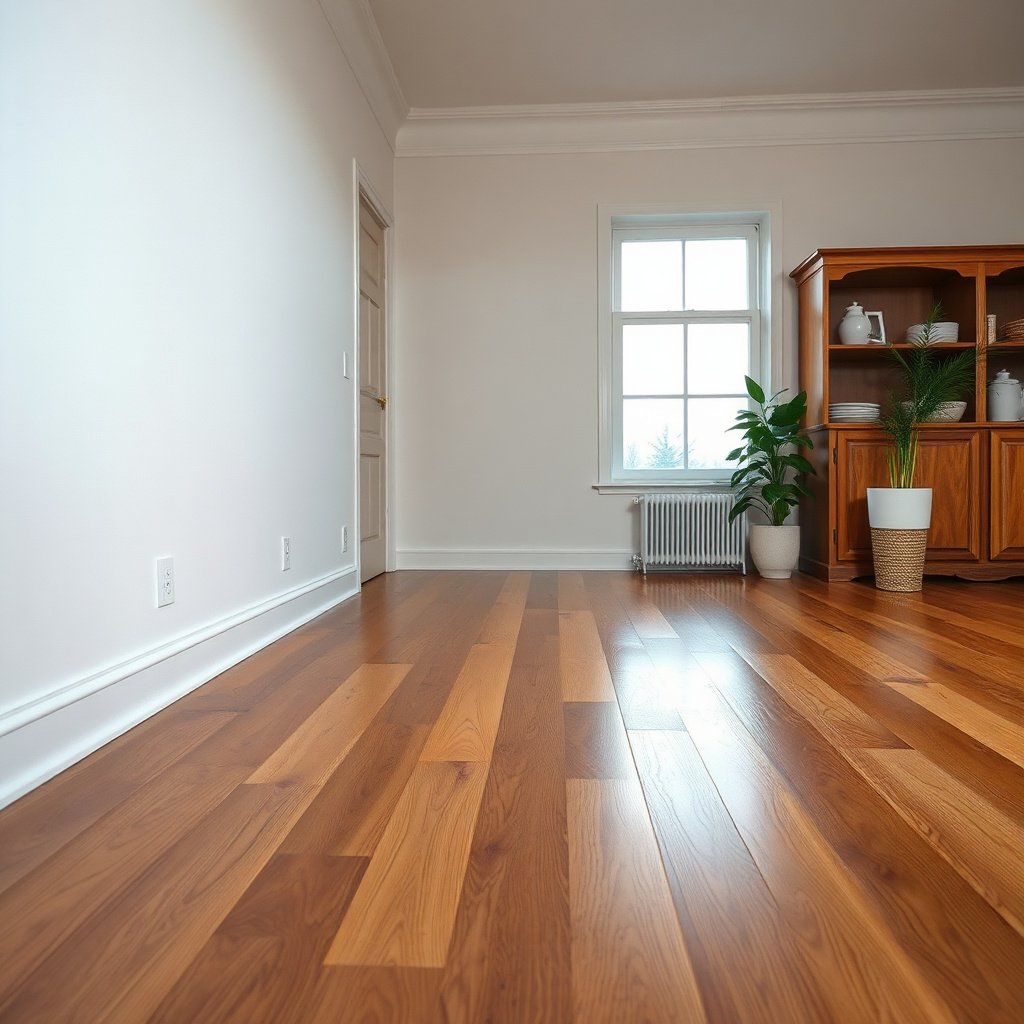
The best first step is to identify whether the residue is fresh and water-soluble or older and wax-like, because that determines whether you can use a pH-neutral cleaner or you need a dedicated remover. In practice, polish residue cleanup on hardwood is mostly a chemistry-and-finish problem: different layers respond very differently to water, detergents, and solvents.
– Fresh residue often lifts with pH-neutral cleaner and warm water, but may smear if you don’t rinse.
– Older buildup can behave more like wax/film (stickier or shinier in patches) and may require a dedicated remover instead of repeated mopping.
– Finish matters: water-based cleaners are generally safer than strong solvents, but always start with a test spot if you don’t know the floor finish (polyurethane, wax, oil, etc.).
To make this distinction clearer, here’s a practical “chemistry-to-result” reference you can use while you decide how aggressively to clean. The goal is to match the approach to the residue type rather than repeatedly mopping the same film until it smears.
How Cleaner Chemistry Affects Polish Buildup on Sealed Hardwood (Guidance Summary)
| # | Residue-Cleanup Approach | Typical Chemistry / pH | Best Fit for | Finish Safety Rating |
|---|---|---|---|---|
| 1 | pH-neutral hardwood floor cleaner | ≈ pH 7 (neutral target) | Fresh residue / light haze | ★★★★★ |
| 2 | Warm water + microfiber (no additive) | ≈ neutral (water varies; not a “film solvent”) | Surface dust-film mix | ★★★★☆ |
| 3 | Hardwood-formulated wax/polish remover | Designed to break wax/film layers (labeled for hardwood) | Older residue / tacky buildup | ★★★☆☆ |
| 4 | Oil/solvent spot-cleaning (only after test spot) | Non-water solvent chemistry (product-dependent) | Hard-to-lift patches | ★★☆☆☆ |
| 5 | Vinegar (typical household acidity) | Often acidic (commonly pH ~2–3) | Not recommended for unknown finishes | ★☆☆☆☆ |
| 6 | Ammonia-based cleaners | Often alkaline (commonly pH ~11+) | Not recommended for routine polish removal | ★☆☆☆☆ |
| 7 | Steam mops on finished hardwood | Heat + moisture (temperature/steam output varies) | Often risky for finish + seams | ★☆☆☆☆ |
Prep safely: protect your hardwood finish
You get cleaner results and fewer finish problems when you prep correctly before you touch the polish residue. The direct answer: ventilate, avoid soaking, and test in a hidden area first so you don’t strip or haze the hardwood finish while trying to remove it.
– Ventilate and avoid soaking: use damp (not wet) microfiber pads and wring mops well.
– Pick non-abrasive tools: microfiber, soft cloths, and a plastic scraper only if needed (no steel wool).
– Test before you commit: try your cleaner/remover in a hidden area and check for dulling, color changes, or tackiness after it dries.
A key reason prep matters is that hardwood floors aren’t “all the same.” Even “finished hardwood” can have different topcoats—polyurethane, sprayed finishes, waxes, oils—each with different sensitivities to water, surfactants (cleaning agents), and solvents. If you’re cleaning polish residue, the goal is film breakdown without finish damage, and finish damage usually shows up as dullness or uneven sheen after the floor dries.
Also, keep moisture controlled because wood is hygroscopic (it absorbs and releases moisture). If you flood seams or let pooled liquid sit, you can worsen the very conditions that make old polish residue feel tackier and look hazier afterward.
Remove fresh polish residue (quick, low-risk steps)
For fresh polish residue, your best move is a controlled, rinse-based cleaning—loosen with pH-neutral cleaner, then remove all residue with clean water and fast drying. This approach works because fresh smears are typically easier to lift than wax-like buildup, and rinsing prevents re-depositing film.
– Dust first: sweep or vacuum with a soft brush attachment to prevent grit from scratching.
– Clean with a pH-neutral solution: mop with warm water plus a cleaner labeled safe for finished hardwood, then rinse with clean water.
– Dry immediately: use clean towels or a dry microfiber to prevent leftover cleaner film from attracting more dirt.
Why the rinse is non-negotiable: even when a cleaner is “finish safe,” leftover surfactants and dissolved film can dry into a haze that looks like you made the polish residue problem worse. In other words, you’re not just removing polish residue—you’re also removing what dissolves it.
From a practical standpoint, work methodically:
1) Microfiber pad stays damp, not dripping.
2) Change the rinse water often if the floor is large.
3) Dry the section you just cleaned before moving on if you notice faster drying spots.
If you’re troubleshooting polish residue right now, watch the floor as it dries. A pass that “looks better while wet” but turns dull or tacky after drying usually means you need a stronger polish/wax remover (for older film) or a more thorough rinse (for leftover cleaner film).
Strip older buildup safely (when simple cleaning won’t work)
When polish residue is older and wax-like, the best answer is to use a hardwood-formulated polish/wax remover and follow it with thorough rinsing and drying. Simple mopping keeps redistributing the film layer instead of fully breaking it down.
– Use the right remover: choose a product specifically meant to remove wax/polish buildup on hardwood and follow the label exactly.
– Work in small sections: apply, dwell for the time stated on the product, then wipe/scrub gently with microfiber.
– Rinse and dry thoroughly: this is the part many people skip—proper rinsing helps prevent the “sticky” feel from coming back.
Here’s how to execute this section without damaging your hardwood finish:
– Dwell time matters. If you don’t let the remover sit long enough, polish residue stays partially intact and will smear. If you over-dwell, you increase the chance of dulling or softening the finish layer.
– Scrub gently. Microfiber agitation is usually enough for film breakdown. Avoid abrasive pads that can “burnish” the finish and create permanent sheen differences.
– Rinse in two stages. First rinse removes bulk dissolved film; second rinse helps clear remaining chemistry that can re-harden as a tacky residue.
If you don’t know whether the floor has polyurethane versus a wax/oil system, don’t assume one product fits all. In 2026, most manufacturers still recommend finish-specific cleaners and removers because polish residue behavior changes with the topcoat.
What can go wrong (common mistakes and edge cases)
Most cleanup failures happen because the rinse step is skipped, harsh chemistry is used, or heat/moisture is introduced in a way the finish can’t tolerate. If you’ve already tried mopping and the polish residue keeps returning, the problem usually isn’t “more scrubbing”—it’s residue re-deposit or finish incompatibility.
– Skipping the rinse: leftover residue from cleaner or remover can leave haze or tackiness that looks like the original problem.
– Using vinegar/ammonia/harsh degreasers: these can damage some finishes or cause dull spots—especially if the floor has wax or an unknown topcoat.
– Over-scrubbing or abrasive pads: can wear through the finish layer and make future polish removal harder.
– Steam mops: heat and moisture can loosen finishes and swell wood at seams.
– Reapplying polish too soon: once residue is fully removed and the floor is completely dry, only recoat with a product that matches the floor’s finish type (when applicable).
To help you decide what to avoid, here’s a quick comparison of common “do it yourself” options versus a finish-safe approach.
| Choice | Likely effect on polish residue | Common downside | Better alternative |
|---|---|---|---|
| Repeat mopping with cleaner only | Can smear haze/film layer | Tackiness returns faster; grit spreads | Add a rinse step; escalate to wax/polish remover if residue is old |
| Vinegar/ammonia on unknown finish | Can react with or dull topcoat | Uneven sheen, dull patches | Use products labeled for finished hardwood; test spot first |
| Steam mopping | Temporarily softens film | Finish lifting risk near seams | Use damp microfiber and finish-safe chemistry |
| Abrasive pads | Physically disturbs residue | Scuffed finish + long-term sheen problems | Use microfiber only; scrape only if needed |
Because polish residue can be layered—sometimes multiple DIY coats—expect that you may need more than one round for older buildup. That’s normal. What isn’t normal is seeing persistent tackiness after multiple rinsed cleaning passes, which often signals trapped chemistry or a finish reaction.
Three quick facts that explain why this happens
– pH neutrality is a specific target: pH 7.0 is neutral at 25°C. NIST Chemistry WebBook / pH reference
– pH is logarithmic and bounded: the pH scale is typically described from 0 to 14, and small numeric shifts reflect larger changes in acidity/alkalinity. NIST Chemistry WebBook / pH scale description
– Indoor humidity matters for hardwood stability: NWFA guidance commonly recommends maintaining indoor relative humidity roughly in the 35–55% range to reduce movement and dimensional stress. National Wood Flooring Association (NWFA) guidance on recommended indoor conditions
Even though these facts don’t “remove polish residue” directly, they explain why moisture-heavy methods (steam, soaking) and finish-incompatible chemistry can create recurring haze and tackiness on hardwood.
Verdict: best approach, downsides, and who should skip
The best approach is to start finish-safe: clean fresh polish residue with pH-neutral cleaner + warm water, then rinse and dry. If residue is older and behaves like wax/film, switch to a hardwood-safe polish/wax remover and don’t skip rinsing/drying.
– Best overall path: start with pH-neutral cleaning + rinse for fresh residue, then escalate to a hardwood-safe polish/wax remover if the film persists.
– Downside: removing older buildup can take multiple rounds and extra drying time; impatience is what usually leads to haze or stickiness.
– Skip or get help if: you have an unsealed/unfinished floor, extensive water damage, bubbling, deep scratches, or you can’t identify the finish—stronger removers can make repairs more expensive.
In my experience, the “sticky again overnight” scenario is almost always either (1) cleaner/remover chemistry left behind because rinsing was incomplete, or (2) older wax/polish layers that need a dedicated remover rather than repeated mopping. This is why the rinse-and-dry stage is treated as part of the removal process, not a final afterthought.
If you’re working on a business floor with daily traffic, plan for the time needed to fully dry before footfall. Polish residue cleanup isn’t a quick wipe-and-go task when you’re dealing with older film.
Quick residue-removal checklist (save this)
| Step | What to do | Why it matters |
|---|---|---|
| 1 | Sweep/vacuum first | Prevents grit from grinding into finish |
| 2 | Use pH-neutral hardwood cleaner (fresh residue) | Loosens film without harsh chemistry |
| 3 | Rinse with clean water | Avoids cleaner re-deposit/haze |
| 4 | Dry fully | Prevents lingering tackiness |
| 5 | For old buildup, use a hardwood-safe polish/wax remover | Breaks down older film layers |
| 6 | Rinse/dry again | Confirms residue is truly gone |
Sources
– National Wood Flooring Association (NWFA) guidance on cleaning/maintenance of finished wood floors:
– Bona (or other manufacturer) recommendations for cleaning finished hardwood floors with pH-neutral products:
– Minwax (or equivalent finish manufacturer) care/cleaning instructions for polyurethane/finished wood floors:
– Manufacturer label instructions for any polish/wax remover used for hardwood:
– NIST (pH and pH scale reference for acidity/alkalinity background):
– NWFA indoor humidity guidance (for hardwood stability while cleaning):
Fresh polish residue usually clears with warm water, a pH-neutral hardwood cleaner, a proper rinse, and fast drying. If it’s older buildup, switch to a hardwood-safe polish/wax remover and don’t skip rinsing/drying. Start with a test spot, follow label dwell times, and if the finish is unknown or compromised, consider a flooring professional before using stronger solvents or repeat applications.
Frequently Asked Questions
How do I remove fresh old polish residue from hardwood floors without damaging the finish?
Start by gently testing your cleaning method in a hidden spot with a soft cloth and a small amount of your chosen cleaner. For fresh polish residue, wipe with warm water first, then use a hardwood floor cleaner that’s specifically formulated for the finish (water-based or oil-based). Avoid soaking the floor or using abrasive pads, since old polish can trap grime and lift the sheen if you scrub too aggressively.
What’s the best way to clean dried polish buildup on hardwood floors?
Loosen the residue by applying a hardwood floor cleaner and letting it sit briefly (about 1–3 minutes) to soften the old polish film. Then wipe with a microfiber mop or cloth, working in small sections, and rinse with clean water if the cleaner manufacturer recommends it. If buildup remains, repeat rather than using harsh chemicals at full strength, which can dull or haze hardwood finish.
Which household products are safe for removing old polish residue from finished hardwood?
In many cases, a mix of warm water and a mild, pH-neutral cleaner is safest for removing old polish film. Avoid vinegar, ammonia, and strong degreasers unless the product is specifically labeled safe for hardwood floors, because those can react with certain finishes and cause etching or discoloration. For stubborn residue, use a dedicated “polish remover” or residue remover intended for wood floors, and always follow label directions.
Why does old floor polish leave a sticky or hazy film on hardwood, and how can I fix it?
Old polish residue can build up over time as layers of wax and cleaning chemicals accumulate, trapping dust and turning glossy areas sticky or cloudy. To fix it, you’ll need a stripping step that targets the residue rather than just surface cleaning—typically a hardwood-safe floor stripper or residue remover. After removal, rinse thoroughly (or follow the product’s neutralizing steps) and let the floor dry completely before applying a suitable maintenance finish.
How can I tell whether I need light spot cleaning or a full strip for old polish residue?
If the residue is localized (small sticky spots or cloudy streaks), spot cleaning with a microfiber cloth and a hardwood floor residue remover is usually enough. If the haziness or sticky feel is widespread across large areas, the polish buildup is likely layered, and a full-strip approach may be required for an even, clean surface. After cleaning, check for tackiness and sheen uniformity—if the floor still feels slippery or looks uneven, consider repeating the process or using a professional-grade hardwood floor stripper.
📅 Last Updated: November 02, 2026 | Topic: How to clean fresh old polish residue from hardwood floors? | Content verified for accuracy and freshness.
References
- Wood flooring
- https://en.wikipedia.org/wiki/Floor_finish
- https://en.wikipedia.org/wiki/Floor_wax
- Wood finishing
- White spirit
- Polyurethane
- https://www.britannica.com/topic/furniture-polish
- https://scholar.google.com/scholar?q=hardwood+floor+wax+residue+removal+mineral+spirits Google Scholar
- https://scholar.google.com/scholar?q=remove+floor+polish+buildup+from+wood+flooring Google Scholar
- https://scholar.google.com/scholar?q=wood+floor+finish+stripping+residue+cleaning+polyurethane+varnish Google Scholar


