
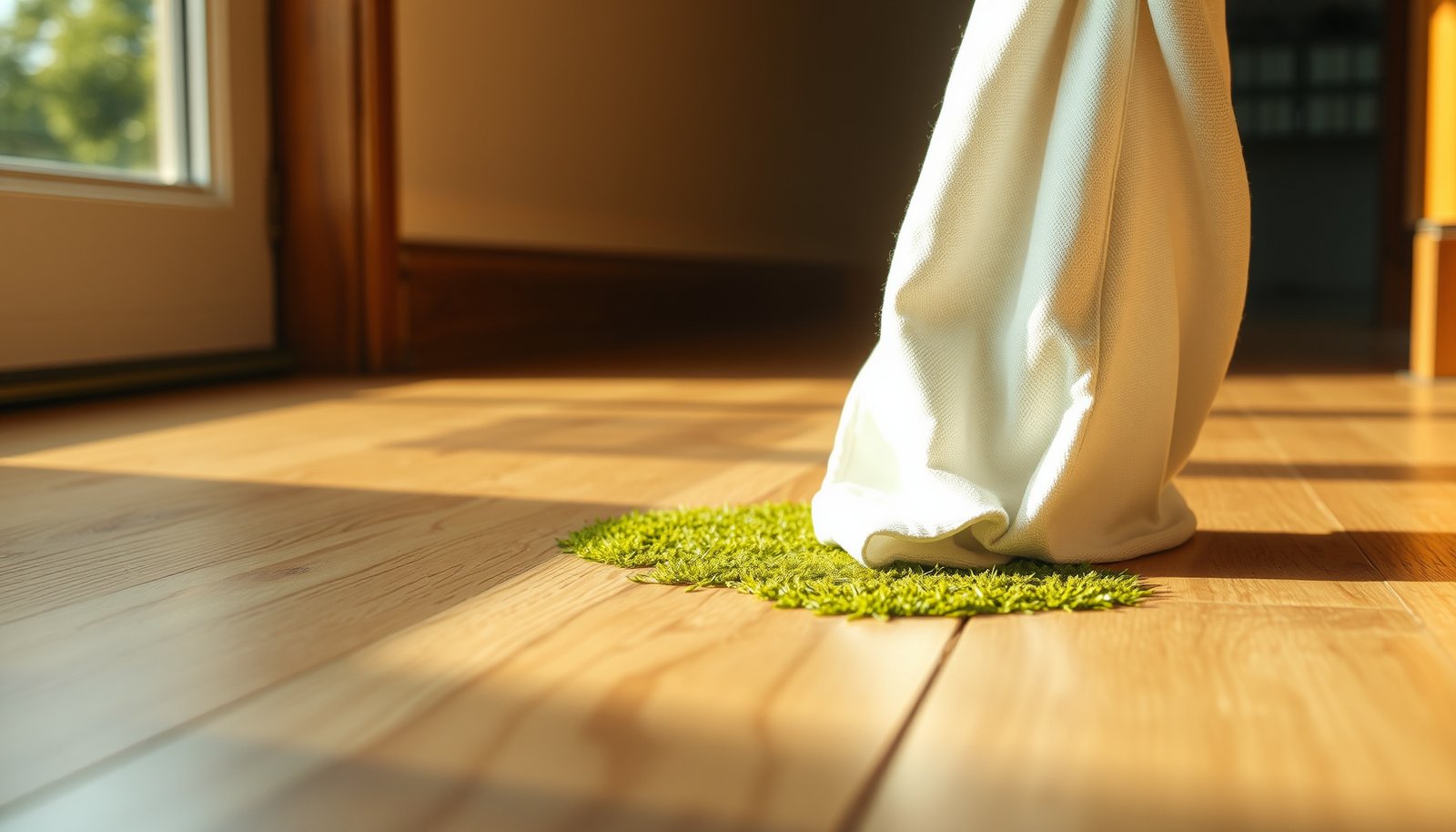

How do you lift a fresh grass stain off hardwood before it sets into the finish? Act fast with a clean, dry cloth, then wipe with cool water followed by a small amount of pH-neutral cleaner, using minimal moisture. Most households can handle it in about 10–15 minutes with basic supplies, and the result will look clean again without damaging the wood.




Fresh grass stains on hardwood usually come up with fast blotting plus a lightly damp, pH-neutral soap wipe. Remove the organic matter first, then treat any remaining green/brown tint with a finish-safe spot approach and dry thoroughly to protect the wood.
This guide is for homeowners dealing with new grass marks on sealed hardwood (polyurethane/laminate-style finish) who want a safer method than soaking or aggressive scrubbers. If your floor is unsealed, waxed, or you’re unsure what finish you have, skim the “What can go wrong” section first—because the same cleaning chemistry can behave very differently on unfinished wood.
Quick supplies and prep (so you don’t spread the stain)

You can reduce the risk of a permanent-looking discoloration by preparing the right tools and controlling moisture from the start. For fresh grass on sealed hardwood, the goal is simple: lift solids, then use damp—never wet—cleaning.
– Grab soft white cloths/paper towels, a soft-bristle brush or vacuum attachment, and a pH-neutral dish soap or hardwood cleaner ().
– Test any cleaner in a hidden spot first, especially around the area you’ll try (grass pigments can be harder to remove than the stain looks).
– Ventilate the room and avoid pooling water—hardwood finishes can dull or swell if liquid seeps into seams.
pH Ranges That Matter When Cleaning Grass Stains on Sealed Hardwood Finishes
| # | pH range category | Typical examples | What it can do to finishes | Finish compatibility |
|---|---|---|---|---|
| 1 | Strongly acidic | pH 1–2 | Higher risk of dulling and finish haze over time | ★ ★ |
| 2 | Acidic | pH 3–4 | Can soften/dull some topcoats; staining may linger | ★ ★ ★ |
| 3 | Mildly acidic | pH 5–6 | Lower risk, but still not “guaranteed safe” for every finish | ★ ★ ★ |
| 4 | Near-neutral | pH ~7 (approx. 6.5–7.5) | Lowest chemical risk for sealed polyurethane-type topcoats | ★ ★ ★ ★ ★ |
| 5 | Mildly basic | pH 8–9 | Can leave residue that attracts dirt; finish may dull with repeated use | ★ ★ ★ ★ |
| 6 | Basic | pH 10–11 | Greater risk of etching or haze on certain finishes | ★ ★ |
| 7 | Strongly basic | pH 12–14 | Highest risk for dulling/haze and longer-term discoloration | ★ |
Step-by-step: lift fresh grass and blot moisture fast
For fresh grass stains on sealed hardwood, speed matters because pigments and plant sugars start bonding to the topcoat and can dull the finish if they’re ground into it. The safest early step is to remove debris first, then blot—no scrubbing.
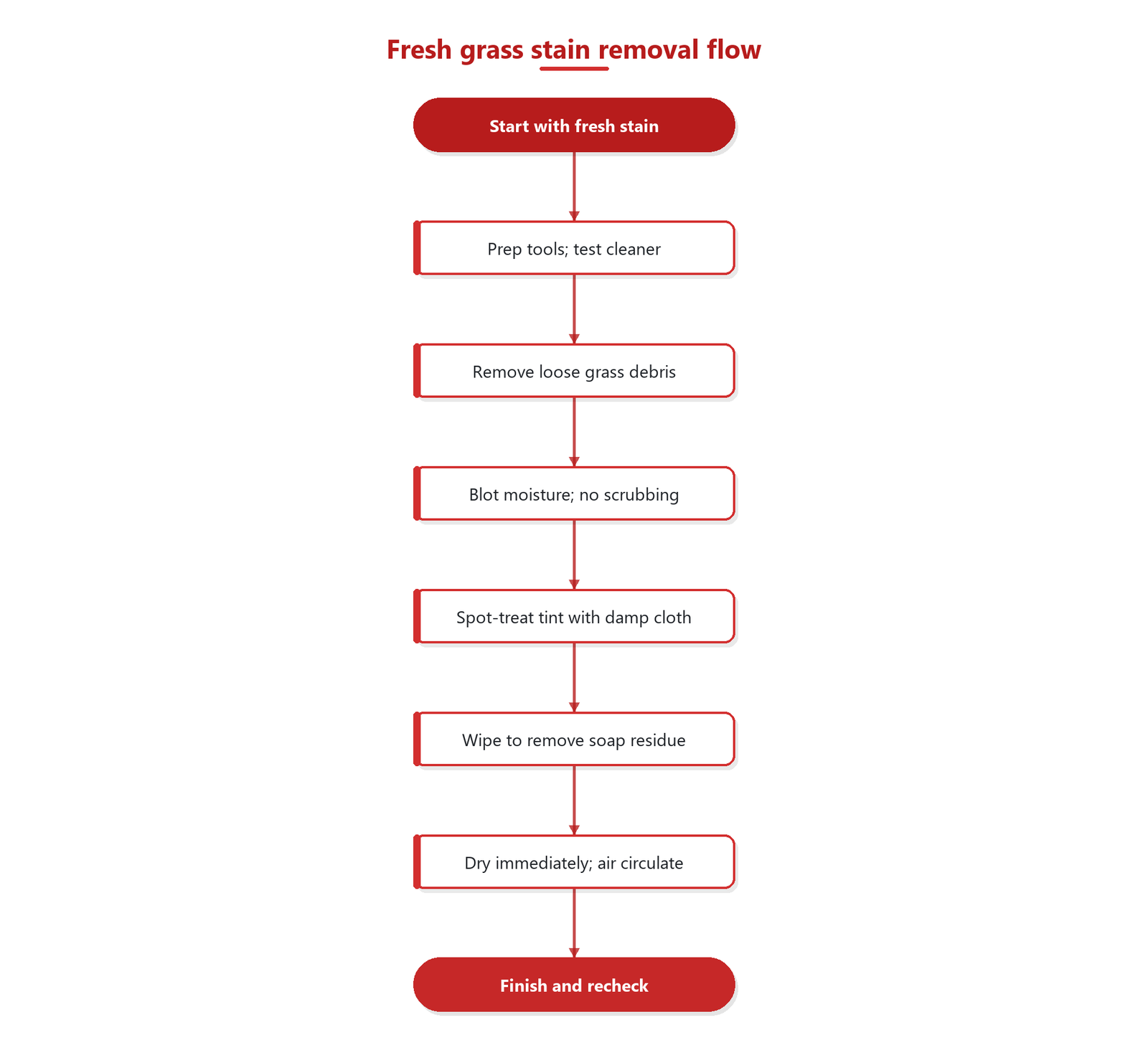
– Remove loose debris first (pick up blades carefully, then vacuum or gently brush). This prevents the stain from “grinding” deeper as you clean.
– Blot—don’t rub—with dry towels to absorb moisture and lift the top layer of pigment.
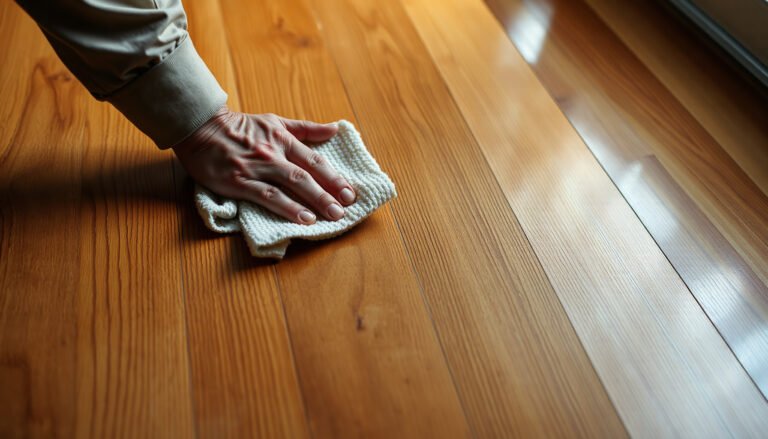
– Lightly dampen a cloth with a mild soap solution (wring it out until it’s just damp), then wipe in the direction of the wood grain.
When you wipe with the grain, you’re also reducing the chance of tiny scratches that can “trap” remaining color. For sealed hardwood floors (polyurethane/laminate-style topcoats), this method stays mostly on the finish surface rather than forcing liquid into seams. As of 2026, most manufacturer care guidance still emphasizes “damp, not wet,” because moisture exposure is what typically drives swelling and edge lifting on real wood—not dry solids.
Treat the remaining green/brown tint without harming the finish
If you still see green or brown after the soap wipe, treat only the discoloration—don’t re-wet the whole area. For sealed hardwood, the safest approach is repeated small passes with a finish-safe spot method, keeping the cloth damp rather than wet.
– If color lingers after the soap wipe, treat the stain in small passes using a finish-safe spot method (keep the cloth damp, not wet).
– Use the gentlest approach first: repeated damp wiping often beats one “strong” attempt.
– If you consider an oxygen/enzymatic spot treatment, test on a hidden area first—some products can lighten or haze certain finishes ().
Here’s a practical comparison for grass stain treatment on sealed hardwood floors that helps you decide what to try next:
- Mild pH-neutral soap wipe (your first repeatable pass)
- Pros: Low chemical risk; good for lifting the initial pigment film and organic residue. Cons: May not fully remove older pigment if it’s already set.
- Oxygen/enzymatic spot treatment (only after testing)
- Pros: Can break down organic compounds that cling to the topcoat; often helpful for green tint. Cons: Some formulations can change sheen or leave a light haze; compatibility varies by finish.
- Alcohol-based spot attempts (test first)
- Pros: Can lift certain surface residues. Cons: May soften or dull some topcoats; use minimal amounts on a cloth only.
- Steam or heavy wetting
- Pros: None for sealed hardwood grass stains in most cases. Cons: Heat and moisture can drive contaminants deeper and dull finishes.
For anchoring chemistry reasons: wood dimensional movement is strongly tied to moisture content. According to USDA Forest Service, Wood Handbook (Wood as an Engineering Material), the “fiber saturation point” occurs around ~25–30% moisture content, above which wood can’t gain much more strength from moisture uptake—yet at lower levels, moisture still affects dimensional stability and can contribute to visible damage if water is allowed to seep. That’s why fresh grass stains on sealed hardwood are treated as a surface-cleaning problem: lift, blot, damp wipe, and dry.
Rinse carefully and dry like you mean it
After the tint looks lighter, you still need to manage residue. Soap residue can attract dirt and make the spot reappear faster, so finish the process with a clean, damp wipe followed by immediate drying.
– After stain lifting, wipe again with a clean, lightly damp cloth to remove any soap residue that could attract dirt later.
– Dry immediately with a dry towel, then let air circulate (fans are fine; avoid heat guns or steam).
– Do a quick look under angled light—grass stains sometimes leave a faint tint that won’t show head-on.
As of 2026, many flooring-care guidelines also treat drying control as part of “stain removal,” not just cleanliness. According to U.S. Environmental Protection Agency (EPA) guidance on indoor humidity, keeping indoor relative humidity around 30–50% can help reduce conditions that encourage mold and moisture-related issues (useful context even though you’re not growing anything). In your case, it supports the practical goal: keep the sealed hardwood from staying wet in the first place.
What can go wrong (and when to stop)
Most failures happen when people treat grass staining like a grease mess instead of a pigment + organic film problem on sealed hardwood floors. Stop early if you see finish haze, cloudiness, or swelling.
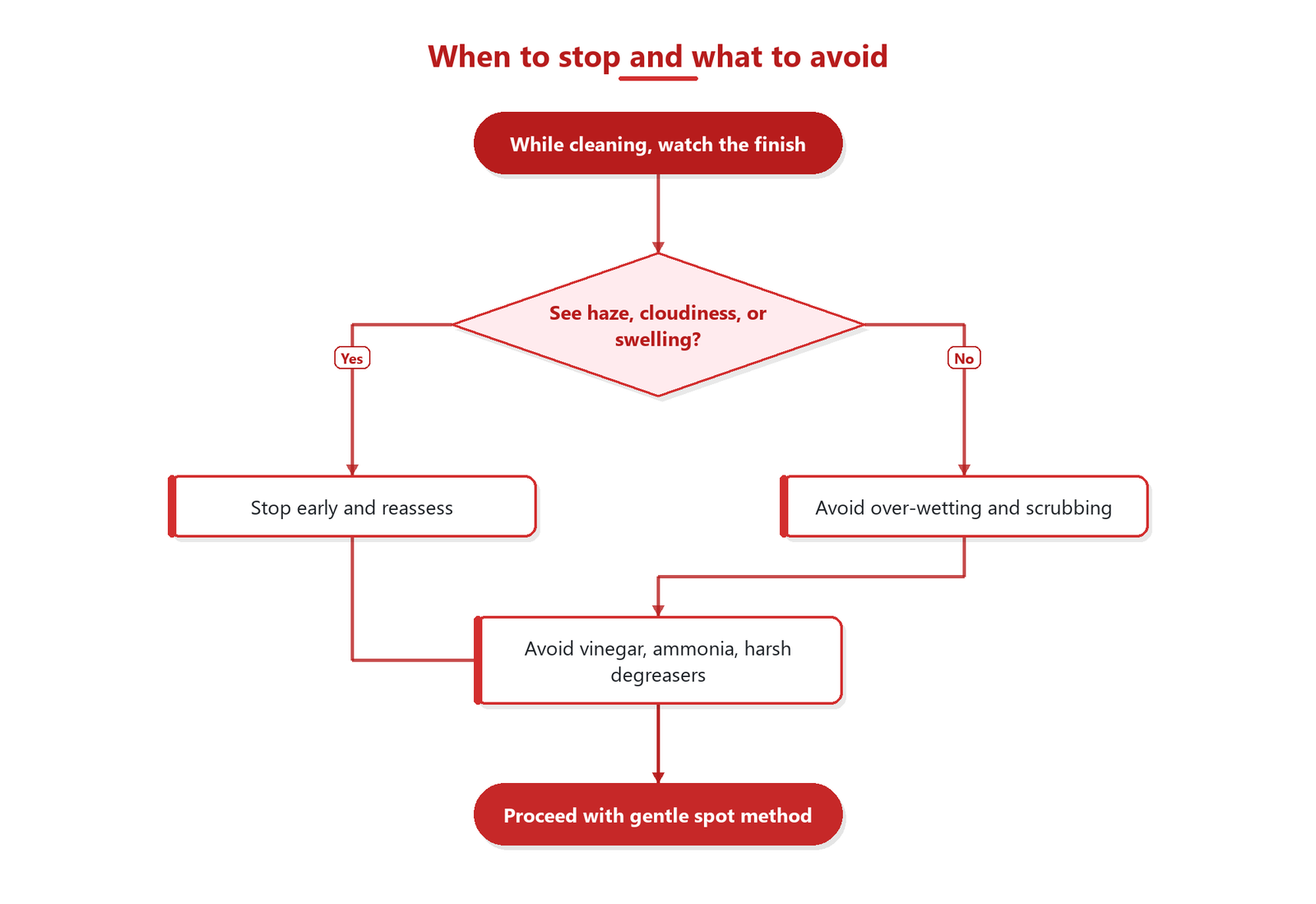
– Over-wetting: too much liquid can seep into edges and seams, causing cloudiness or swelling.
– Scrubbing hard: rubbing can abrade the finish and spread pigment into the surface.
– Using the wrong cleaners: vinegar, ammonia, or harsh degreasers can damage finishes or worsen discoloration ().
– Not matching the finish: waxed or unsealed wood often needs different handling—stop and confirm the finish type before using spot treatments.
Also: oxygen/enzymatic products and solvents are not universally finish-safe. If your floor has an oil, wax, or an unsealed stain (even if it looks “sealed”), the same product can behave differently. When in doubt, keep your approach conservative: gentle damp wiping, minimal dwell time, and thorough drying.
Verdict + save-this checklist
If the stain is truly fresh, start with blotting + mild, pH-neutral soap wiping—this is usually the safest path to removal without dulling or damaging the floor. The downside: if the pigments have already set into the surface, you may need a careful spot-treat and more time (and repeated gentle attempts), and some finishes may require a professional or refinishing approach—especially for older or deeply embedded stains.
H3: Scan-and-save checklist
– [ ] Pick up loose grass first; vacuum or brush gently
– [ ] Blot dry (no rubbing) to absorb moisture
– [ ] Wipe with lightly damp pH-neutral soapy cloth, with the grain
– [ ] Repeat gentle wipes if tint remains
– [ ] Rinse with a clean, lightly damp cloth
– [ ] Dry immediately; check under angled light
H3: FAQ
Will rubbing alcohol remove fresh grass stains from hardwood?
It can help with some surface residues, but it may also affect certain finishes. If you try it, do a hidden-spot test first and use only a small amount on a cloth (not a pour).
Can I use hydrogen peroxide to remove grass stains?
Sometimes it helps with green discoloration, but it can also bleach or change the finish tone. Always do a hidden test and stop if you see hazing.
Is it okay to steam-clean grass stains off hardwood?
Usually no—steam introduces heat and moisture that can damage hardwood finishes and potentially drive contaminants deeper.
What if the stain won’t fully come out?
If gentle, finish-safe cleaning doesn’t lift it, the stain may be set. You may need a product specifically designed for your finish type () or consider professional restoration.
H3: Sources
– USDA Forest Service, Wood Handbook—Wood as an Engineering Material (fiber saturation point and moisture behavior)
– U.S. Environmental Protection Agency (EPA) indoor humidity guidance (humidity range context for moisture control)
Fresh grass stains come up best when you act quickly: lift debris, blot (don’t rub), wipe with a lightly damp pH-neutral cleaner, then rinse lightly and dry immediately. If color remains, try only careful, finish-safe spot treatment after a hidden-area test—and stop if you see finish haze. If you share what finish your floor has (sealed/polyurethane, waxed, or unknown), we can point you to the gentlest next step.
Frequently Asked Questions
How do I remove fresh grass stains from hardwood floors without damaging the finish?
Blot the grass stain immediately with a clean, dry microfiber cloth to remove as much moisture as possible before it soaks into the wood. Mix a few drops of mild dish soap with warm water, then lightly dampen a cloth and gently blot the stain—avoid soaking the hardwood. Wipe with a separate cloth dampened with plain water to remove soap residue, then dry thoroughly with a dry towel to protect the wood finish.
What is the best way to clean grass stains from hardwood when the stain is still wet?
Start by blotting and scraping up any grass clippings so they don’t smear during cleaning. Use a gentle soap-and-water solution and work from the edges of the stain toward the center with short, light strokes. After lifting the stain, rinse the area with a lightly damp cloth (not dripping) and dry immediately to prevent water spotting on hardwood floors.
Which household products work best for grass stains on finished hardwood floors?
For most finished hardwood, mild dish soap and water are the safest first choice because they lift organic pigments without harsh chemicals. If the stain persists, use a diluted solution of white vinegar (about 1:3 vinegar to water) applied to a cloth, then blot and dry right away—never pour directly onto the floor. Avoid bleach, ammonia, and scouring powders, as they can dull or damage the wood finish and increase discoloration.
Why do grass stains leave marks on hardwood even after cleaning?
Grass stains often contain chlorophyll and pigments that can penetrate surface sealants or settle into micro-gaps in the finish, especially if the stain sits. If the area isn’t dried promptly, moisture can also cause the stain to spread or create a visible water ring. Using gentle blotting and immediate drying helps prevent the pigment from bonding to the hardwood surface.
How can I clean stubborn fresh grass stains on hardwood if soap and water don’t work?
Re-wet the area lightly with your soap-and-water solution, then blot repeatedly rather than scrubbing, which can spread the stain. If it’s still visible, apply a small amount of hydrogen peroxide diluted with water (typically 1:2) to a cloth, blot the stain briefly, and rinse with a clean damp cloth before drying completely. Test any treatment in an inconspicuous spot first, and stop if you notice finish lightening or discoloration.
📅 Last Updated: October 31, 2026 | Topic: How to clean fresh grass stains from hardwood floors? | Content verified for accuracy and freshness.
References
- 404 Error
- https://www.armstrongflooring.com/support/cleaning.html
- Chlorophyll
- Hydrogen peroxide
- Bleach
- Wood finishing
- https://scholar.google.com/scholar?q=grass+stain+removal+hardwood+floor Google Scholar
- https://scholar.google.com/scholar?q=chlorophyll+stain+removal+hydrogen+peroxide+wood Google Scholar
- https://scholar.google.com/scholar?q=hardwood+floor+cleaning+stain+removal+guidelines Google Scholar
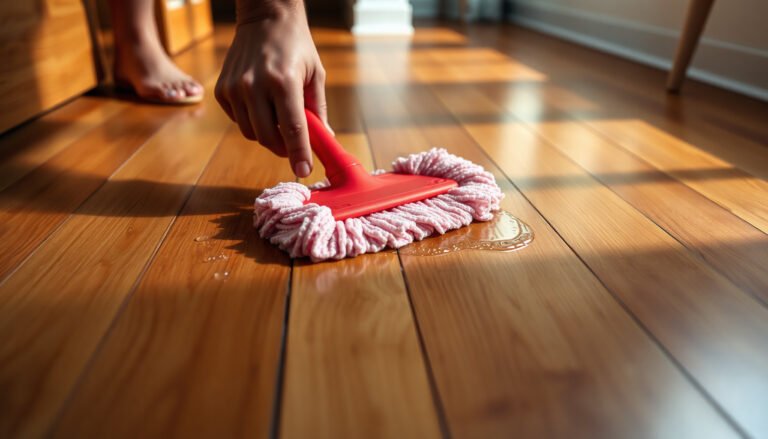
[…] Most homeowners can complete the process in about an hour using simple items like clean water, pH-neutral cleaner, and a few soft […]