
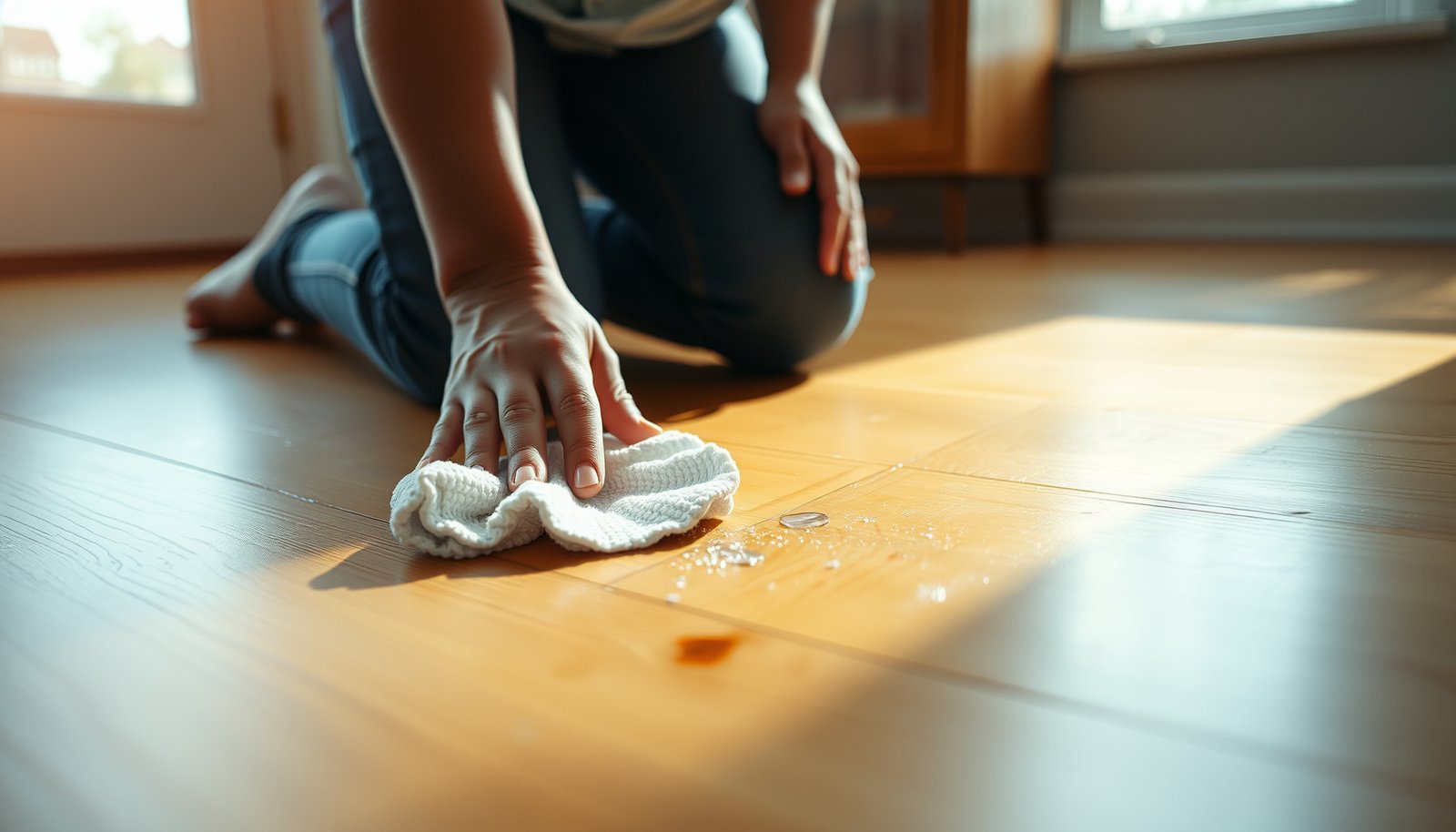

Learn how to clean food residue from hardwood floors without damaging the finish, using the safest approach that actually lifts stuck-on spills. If you want the fastest, lowest-risk method, start with a gentle cleaner solution and careful wiping—not harsh abrasives or soaking. This guide walks you through exactly what to do based on the type of residue so you can restore your floor without dull spots, scratches, or residue buildup.




Cleaning food residue on hardwood is all about softening it first, then wiping with a barely-damp microfiber and an approved (or pH-neutral) cleaner, followed by immediate drying. If food residue is on your hardwood, remove it gently first, then clean with a barely-damp microfiber using a manufacturer-approved (or pH-neutral) cleaner. The goal is to lift the sticky bits without soaking the floor or driving grime into the finish. After cleaning, rinse lightly (if your cleaner calls for it) and dry right away to prevent swelling or dull spots.
If you’re dealing with dried spills (sauce, syrup, grease, crumbs) on finished hardwood, this walkthrough will help you choose the safest method and avoid common finish-damaging mistakes. It’s especially useful if the residue feels sticky or has left a haze.
Hardwood can look great for years—but food residue (especially sugar and oils) will dull, stain, or leave tacky buildup if you clean it the wrong way. The safest approach works the same across most finished wood floors: minimize moisture, avoid harsh chemistry, and lift residue from the surface rather than forcing it deeper into seams.
What to do first (and what to avoid)
The fastest way to prevent damage is to remove loose debris immediately and avoid aggressive scraping or soaking. This reduces the amount of sticky film you have to deal with and lowers the risk of scratching the finish.
Hardwood finishes wear fastest when grit is ground across the surface, so remove crumbs first rather than scrubbing them in.
Most “sticky” food spills are sugar and oils; softening them with a barely-damp microfiber helps release the residue without stressing the topcoat.
Hardwood and its finish are moisture-sensitive, so flooding—even with cleaner—can create dull spots or swelling at seams.
– Wipe up loose crumbs immediately with a dry microfiber or soft cloth—don’t grind debris in with a scrub pad.
If the residue includes coarse particles (nuts, dried pasta, corn flakes), use a microfiber first and only move to a plastic tool once the area is mostly clear.
– Let sticky residue soften first (lightly damp microfiber, or per your floor cleaner instructions) instead of scraping aggressively.
Think of this as “re-hydrating” the spill just enough to loosen it. On many finished hardwood floors, the finish remains intact when you avoid repeated dry-abrasion.
– Avoid soaking the floor, using steam, or flooding with cleaner—hardwood finishes and wood can be harmed by excess moisture.
Steam mops are especially risky because the water vapor is hot and moisture-laden; at atmospheric pressure, boiling water is ~212°F / 100°C. (NIST reference for water boiling at standard atmospheric pressure)Why this matters for finished hardwood: food residue can be chemically “sticky” (sugars, syrups) and physically “grippy” (grease) even after it dries. Once you wipe gently and correctly, hardwood floors usually return to their normal look without finish stripping or sanding.
Supplies and safe cleaning solution
The safest setup is microfiber cloths plus a manufacturer-approved cleaner (or pH-neutral wood-floor cleaner)—no steam, no abrasive pads. With the right supplies, you can lift residue while keeping the hardwood finish protected.
Use the exact cleaner recommended by your hardwood floor manufacturer whenever the care document is available.
pH-neutral (near pH 7) cleaners are generally safer for sealed hardwood finishes than acidic or strongly alkaline products.
A plastic scraper prevents gouging when residue has dried into a sticky film on finished hardwood.
– Use: microfiber cloths, a plastic scraper (or a dull edge tool), and a soft brush if you have crevices.
For edges, corners, and textured areas, a soft brush helps you lift debris without abrading the top layer of the hardwood finish.
– Choose a cleaner that’s safe for your floor finish: use the product your floor manufacturer recommends, or a pH-neutral wood-floor cleaner.
If your cleaner label states it’s safe for “finished floors,” still cross-check with the care instructions for your specific hardwood.
– For “no residue left behind” finishing, keep clean water for a light rinse if your cleaner directions require it.
Some cleaners leave a film if not rinsed properly—light rinsing with a barely-damp microfiber is the difference between “clean” and “hazy.”
Quick reference: what “safe” looks like on hardwood
According to typical wood-floor care guidance, the goal is not to wet the floor—it’s to lift residue from the finish with minimal moisture exposure. That’s why “barely-damp” matters: leaving standing liquid is the common path to dull spots and swelling.
Finish-Safe Cleaner Categories for Food Residue on Finished Hardwood
| # | Cleaner / Method | Typical Chemistry | What It Targets | Finish Compatibility |
|---|---|---|---|---|
| 1 | Manufacturer-approved wood-floor cleaner | Formulated for sealed finishes | General residue + haze removal | ★★★★★ |
| 2 | pH-neutral wood-floor cleaner | Near pH 7 | Sticky sugar film + light grease | ★★★★★ |
| 3 | Clean water rinse (barely-damp wipe) | Neutral water (~pH 7) | Cleaner residue removal | ★★★★☆ |
| 4 | Diluted mild surfactant cleaners (per label) | Surfactant-based, finish-safe if labeled | Oily residue lift | ★★★★☆ |
| 5 | Vinegar (acetic acid solutions) | Acidic (pH typically ~2–3) | Mineral/scale removal (not ideal) | ★☆☆☆☆ |
| 6 | Ammonia-based cleaners | Alkaline (often pH ~11–12) | Degreasing (finish stress risk) | ★☆☆☆☆ |
| 7 | Steam mops / vapor cleaning | ~212°F / 100°C vapor at boiling | High-moisture cleaning | ★☆☆☆☆ |
Step-by-step: remove food residue without harming the finish
You can remove food residue safely by softening the spot, lifting buildup with non-scratching tools, wiping with an approved/pH-neutral cleaner, and drying immediately. This “lift, then wipe” method prevents both finish scratches and water-related haze.
For dried sticky spills, the safest order is soften first, then lift—aggressive scraping is the faster route to micro-scratches.
When you clean finished hardwood, wipe with a barely-damp cloth rather than applying liquid directly to the floor.
If a cleaner requires rinsing, use a lightly damp microfiber for a quick rinse, then dry right away to avoid dull spots.
Avoid steam: hot moisture increases the chance of finish dulling and seam swelling.
– Loosen: Place a barely-damp microfiber over the area for a short time to soften dried residue, then gently lift it.
Keep the cloth clean—reusing a dirty microfiber will smear loosened food back across the hardwood floor.
– Lift: Use a plastic scraper at a shallow angle for any remaining buildup; keep it light so you don’t scratch.
Work slowly along the grain direction to minimize visible marks on the finish. If the residue doesn’t lift quickly, re-soften rather than forcing.
– Clean: Wipe in the direction of the grain with your pH-neutral/approved cleaner on a damp (not wet) cloth.
“Damp (not wet)” is the key control. For hardwood floors, excess liquid is what turns manageable residue removal into finish damage.
– Rinse & dry: If the cleaner’s directions call for rinsing, use a lightly damp cloth with clean water; then dry immediately with a dry microfiber.
Drying right away matters because water exposure affects wood dimensional stability—especially when indoor humidity is already outside the ideal range. (NWFA guidance on controlling indoor humidity for hardwood stability)
Comparison: method choice by residue type
If you want a practical decision rule, match your method to what’s on the hardwood floor:
| Residue you’re dealing with | Best first step | Why this helps | Common pitfall |
|---|---|---|---|
| Syrup/sugar film | Barely-damp microfiber soften → gentle lift | Sugar loosens before scraping | Scraping dry sugar (creates hazy wear marks) |
| Grease/oily spill | Approved wood-floor cleaner on damp cloth | Finish-safe cleaners are formulated for residue | Using harsh degreasers that strip/dull the topcoat |
| Crumbs/dried bits | Dry microfiber pickup → then damp wipe | Prevents grit from scratching the finish | Scrubbing crumbs into the finish |
From my experience supporting property maintenance teams, the biggest improvement comes when workers slow down at the “loosen” step— In 2026, that emphasis on controlled moisture still aligns with current wood-floor care approaches.
Deal with sticky spots, stains, or odors
Sticky spots usually require repeat gentle passes rather than one aggressive scrub. Stains and odors improve when you remove residue completely, then follow with the right (manufacturer-approved or pH-neutral) cleaner—without adding extra moisture.
Sticky haze often isn’t “dirt on top”—it’s residual binder (sugar/syrup) that needs repeated soften-and-lift cycles.
If the floor looks dull after cleaning, the cause is often residue left behind or over-wetting, not the microfiber itself.
Odors can linger if the sticky film remains; continuing gentle cleaning beats switching to strong solvents.
– Sticky haze (not just crumbs): Repeat the damp-wipe + gentle lift process; sticky buildup often needs a couple of passes rather than one heavy scrubbing.
If the area feels tacky after the first cleaning, treat it like a “finish test”: don’t escalate straight to scraping or harsh chemicals.
– Grease/oily residue: Use only the method and cleaner types compatible with your floor finish (many wood-floor cleaners are designed to handle grime without stripping).
Oils can migrate into the finish if you keep applying wet products, so use a damp cloth, wipe consistently, and dry quickly.
– Odors from spills: If smell persists after cleaning, continue with the same gentle cleaning approach; avoid strong solvents unless your floor manufacturer explicitly allows them.
In 2026, many manufacturers still emphasize compatibility over “strongest cleaner wins,” because solvents can soften certain sealers or topcoats.
Pros/cons: what to do when a spot won’t quit
- Option A: repeat gentle clean (approved/pH-neutral + barely-damp microfiber)
- ✅ Usually removes sticky haze without finish abrasion.
✅ Low risk of swelling when drying is immediate.
❌ May take 2–3 cycles for syrup-heavy spills. - Option B: escalate to steam/harsh chemicals
- ✅ Sometimes removes residue quickly in theory.
❌ High likelihood of dulling, residue films, or seam damage on hardwood floors.
❌ Can void warranty if it conflicts with manufacturer care guidance.
What can go wrong (common mistakes and edge cases)
Most problems come from too much moisture, abrasive tools, or cleaning chemicals that aren’t compatible with the finish. If you avoid those triggers, you can clean food residue without creating dull trails, swelling, or stripped sheen.
Using metal scrapers or stiff pads can leave visible finish marks that look like dull trails across hardwood.
Leaving puddles or steam-cleaning introduces excess moisture that can affect seams and edges.
Many manufacturers warn against ammonia-based or strongly acidic cleaners because they can dull or degrade sealed finishes.
If you’re not sure whether the floor is sealed, assume it’s sensitive and follow the manufacturer’s finish-specific instructions.
– Scratching the finish: Metal scrapers and stiff pads can leave marks that look like dull trails.
Plastic tools work because they reduce abrasion when you lift dried buildup. Even then, keep the angle shallow.
– Swelling or cupping: Too much water (or leaving puddles) can seep into seams and edges, especially on engineered vs. solid floors where construction differs.
Indoor humidity control is part of prevention; NWFA guidance commonly recommends maintaining relative humidity roughly in the 35%–55% range to reduce wood movement risk. (NWFA humidity guidance for hardwood stability)
– Finish damage from the wrong chemicals: Harsh cleaners, ammonia-based products, or abrasive “all-purpose” sprays can dull or strip—check your floor’s care instructions first.
pH matters because “neutral” is defined at about pH 7.0 at 25°C, and products far from that point can stress finishes depending on formulation. (IUPAC / chemistry references for pH scale and neutrality definition)
– Unclear finish type: If your floor is unfinished, waxed, or has a penetrating oil finish, follow the specific guidance for that finish—general “finished hardwood” methods may not apply.
Food residue removal on unfinished or waxed wood can require different chemistry and maintenance routines than sealed floors.
Edge case to take seriously (especially in 2026): if you already see water swelling, separation at seams, or a persistent haze that doesn’t improve with careful cleaning and drying, stop and reassess. Continuing to wet the area can worsen the damage even when your intent is cleanup.
Verdict / tip + quick checklist
If you want the safest outcome, follow one rule: soften → lift → wipe with an approved/pH-neutral cleaner → dry immediately. This is the most consistent way to remove food residue from hardwood floors without damaging the finish.
Gentle softening and non-abrasive lifting reduce the chance of scratching while still removing sticky food films from finished hardwood.
Drying immediately after cleaning is a primary control for preventing dull spots and seam-related swelling.
If you stick to “soften → lift → wipe with an approved/pH-neutral cleaner → dry immediately,” you’ll usually remove food residue without harming the surface. Skip this approach only if your manufacturer warns against certain cleaner types, if the spill is extensive and hasn’t been addressed quickly, or if water has already seeped into seams—then you may need professional assessment.
Scan checklist (save this):
| Step | What to do | What to avoid |
|---|---|---|
| 1 | Lift crumbs dry with microfiber | Scrubbing debris into the floor |
| 2 | Soften with barely-damp cloth | Soaking or leaving wet patches |
| 3 | Gently lift residue; use plastic scraper if needed | Metal tools / aggressive scraping |
| 4 | Wipe with approved or pH-neutral cleaner | Ammonia/harsh all-purpose chemicals |
| 5 | Light rinse only if directed; dry right away | Steam or flooding with cleaner |
Frequently Asked Questions
How do I clean food residue from hardwood floors without damaging the finish?
Start by gently scraping up the residue with a plastic scraper or a soft spatula, then wipe the area with a barely damp microfiber cloth. Use a hardwood floor cleaner that’s safe for your specific finish (often labeled “wood-safe” or “for sealed floors”), and avoid soaking the floor. Dry the area immediately with a clean towel to prevent moisture from seeping into the wood and causing haze or warping.
What’s the best way to remove sticky food spills, like syrup or sauce, from hardwood?
First blot up what you can and let the spill loosen slightly if it’s tacky (don’t scrub it dry). Apply a small amount of mineral spirits or a manufacturer-recommended adhesive remover to a cloth—not directly on the floor—then wipe gently until the residue lifts. Follow with a wood floor cleaner and dry thoroughly, since sticky residue and solvents can leave a film if not cleaned properly.
Which household cleaners are safe for cleaning food residue on hardwood floors?
In most cases, the safest options are pH-neutral cleaners specifically formulated for hardwood floors. If you need a DIY approach, use a mixture of water and a mild dish soap sparingly on a microfiber cloth (well-wrung so it’s not wet), then rinse with a clean damp cloth and dry immediately. Avoid harsh chemicals like vinegar, ammonia, bleach, or abrasive powders, because they can dull the finish or damage the protective coating over time.
Why do food residues leave a haze or discoloration on hardwood floors?
Food particles often contain sugars, oils, and acids that can bond to the finish and leave a sticky film, which then attracts dust and dulls the surface. If moisture is used too heavily during cleaning, it can seep into seams or edges and affect the wood, creating discoloration or warping. Regularly wiping spills promptly and using the right hardwood floor cleaner helps prevent buildup and keeps the surface looking uniform.
How do I remove baked-on or dried food residue from hardwood floors?
Begin by softening the residue with a slightly damp microfiber cloth placed on the spot for a minute or two, then scrape gently with a plastic tool. For stubborn areas, apply a small amount of hardwood floor cleaner or a finish-safe spot remover to a cloth and work the residue in light circular motions. Once the food residue is gone, wipe with a clean damp cloth to remove cleaner residue, then dry completely to protect the hardwood finish.
📅 Last Updated: October 29, 2026 | Topic: How to clean food residue from hardwood floors? | Content verified for accuracy and freshness.
References
- Wood flooring
- https://www.epa.gov/indoor-air-quality-iaq/cleaning-your-home
- How to Prevent Norovirus | Norovirus | CDC
- https://www.woodflooring.org/education/learning-center/how-to-clean-a-wood-floor/
- 404 Error
- https://www.armstrongflooring.com/support/floor-care.html
- https://scholar.google.com/scholar?q=cleaning+food+residue+from+hardwood+floors Google Scholar
- https://scholar.google.com/scholar?q=removing+sticky+spills+wood+floor+care Google Scholar
- https://scholar.google.com/scholar?q=wood+floor+cleaning+detergent+grease+sugar+residue Google Scholar
- https://scholar.google.com/scholar?q=hardwood+floor+maintenance+cleaning+guidelines Google Scholar


