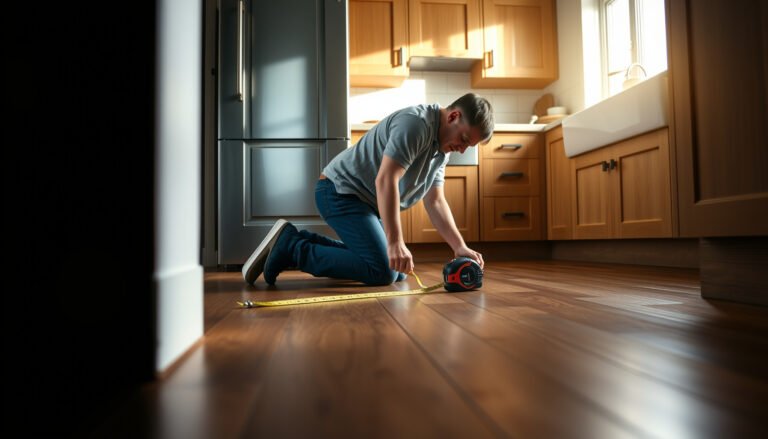

Choosing vinyl floors for a rental property is simplest when you prioritize wear resistance, water protection, and easy replacement—this guide tells you exactly what to buy and what to skip. If you want the lowest headaches for high-traffic tenants, start with luxury vinyl plank (LVP) with a durable wear layer and a waterproof core. Follow the checklist here and you’ll match the right thickness, locking system, and finish to your budget and local conditions.




Pick rental vinyl flooring by matching three things up front: (1) high-traffic durability and a documented wear layer, (2) waterproof or moisture-resistant performance for the specific rooms, and (3) warranty terms that explicitly cover “tenant-occupied” or rental/lease use. Then choose click-lock vs glue-down based on your subfloor flatness and how quickly you need a turn-around between tenants—because install details often decide whether the floor lasts.
If you’re furnishing a new rental, replacing worn flooring mid-lease, or trying to balance durability with easier upkeep between tenants, this is for you—especially if you don’t want to gamble on a beautiful floor that fails at the first spill, pet accident, or repeated cleaning.
Start with your rental’s “real life” constraints

A rental vinyl floor survives longest when it’s chosen for the actual moisture, traffic, and cleaning habits of that specific unit—not for how it looks in a showroom. Start by mapping each room to a realistic risk level, because the “same” vinyl plank can behave very differently in kitchens, entries, or basements.
In rental installs, subfloor preparation and moisture management matter because resilient flooring failures are frequently linked to inadequate substrate conditions rather than the surface wear layer alone.
ASTM F710 is a recognized practice document for preparing concrete and other substrates to support resilient floor coverings with adhesives.
ASTM F2170 measures in-situ relative humidity (reported in %RH), which helps predict adhesive performance on concrete substrates.
– Identify where the floor will live (kitchen, entry, bath, basement) and how much moisture exposure is realistic.
In practice, “waterproof” vinyl usually handles spills better than traditional flooring, but rental moisture risk often comes from mopping habits, tracking in wet grit, and subfloor humidity—especially in basements, crawl spaces, and slab-on-grade units.
– Estimate foot traffic and daily cleaning style (quick sweeping, mopping frequency, steam cleaning or not).
High-turnover rentals often get cleaned quickly and inconsistently between tenants. If steam is likely (or if renters use strong cleaners), you need a vinyl flooring system whose maintenance requirements you can enforce.
– Decide what you can realistically handle: DIY prep, landlord-approved installation, and how quickly you need it to be installed before the next tenant.
If your timeline is tight, click-lock (floating) can be faster—but only if the subfloor is sufficiently flat and you can follow expansion-gap rules.
From my experience helping property teams think through flooring replacements, the biggest “surprise” isn’t usually the vinyl’s look—it’s the time and labor needed to prep the base properly. Flatness and moisture troubleshooting are what determine whether a rental vinyl floor stays tight at seams or starts showing joint stress after the first busy month.
Choose the right vinyl type and core construction
The best rental vinyl type is the one whose core and installation behavior match your subfloor condition and your tolerance for callbacks. For most landlords, the decision comes down to core stiffness (SPC vs WPC) and whether you’ll install click-lock or glue-down.
SPC (stone plastic composite) flooring uses a more rigid core than many WPC products, which can improve dent resistance in heavy-use areas when installed over an appropriate substrate.
WPC (wood plastic composite) flooring typically emphasizes resilience and comfort, but it still depends on correct installation and flatness to prevent joint issues in a floating click system.
Both click-lock and glue-down vinyl are installation-system products—manufacturer instructions determine allowable underlayment, subfloor conditions, and seam/edge detailing.
– Compare LVP/LVT (plank/tile) options and confirm whether you’re dealing with click-lock (floating) or glue-down—each behaves differently with subfloors.
LVP (plank) often fits fast because it’s easy to layout and swap sections; LVT (tile) can hide small layout problems but may create more seams depending on room dimensions.
– Look at construction type like SPC vs WPC (the “core” matters for stiffness, dent resistance, and water handling), and match it to your subfloor flatness.
Rigid-core options are often chosen for entries and kitchens because they resist dents better under rolling chairs, appliances, and short “impact” events (like dropped packages). If your subfloor has waves or dips, that’s where floating joints can show stress sooner.
– Don’t skip thickness and wear-layer details—rentals need more than “looks good in the showroom.”
In 2024–2026, spec sheets increasingly show both overall thickness (core + backing layers) and the wear layer (the top protective film). For rental vinyl floors, the wear layer is often the clearest predictor of how long you’ll avoid scuffs, whitening, and finish breakdown under tenant turnover cleaning.
Durability spec reality check: wear-layer thicknesses you’ll see on rental-focused vinyl
(These conversions and thickness targets help you compare boxes consistently.)
Wear-Layer Thickness Levels Commonly Considered for Rental Use (Quick Compare)
| # | Wear-layer tier (what the box may imply) | Wear layer (mil) | Wear layer (mm, calc.) | Tenant-turnover durability |
|---|---|---|---|---|
| 1 | Entry-level protection | 8 | 0.20 | ★★☆☆☆ |
| 2 | Light-traffic tier | 12 | 0.30 | ★★★☆☆ |
| 3 | Balanced protection | 15 | 0.38 | ★★★☆☆ |
| 4 | Rental-standard wear | 20 | 0.51 | ★★★★☆ |
| 5 | High-traffic wear | 22 | 0.56 | ★★★★☆ |
| 6 | Heavy-use protection | 28 | 0.71 | ★★★★★ |
| 7 | Very heavy-traffic tier | 30 | 0.76 | ★★★★★ |
Prioritize durability specs that matter to turnover
A durable rental vinyl floor is the one with a clearly specified wear layer, realistic slip-resistance guidance, and warranty terms that don’t “quietly” exclude tenant-occupied use. If the spec sheet reads vaguely, treat that as a risk multiplier.
According to NIST, 1 mil equals 0.001 inch, and since 1 inch equals 25.4 mm, 12 mil converts to 0.305 mm and 20 mil converts to 0.508 mm. NIST (unit conversion, SP 811)
For slip-resistance considerations, ADA guidance for floor surfaces often references a wet static coefficient of friction (COF) of at least 0.42 based on ASTM test methods.
If a wear-layer specification is missing or inconsistent across documentation, it’s harder to substantiate durability claims during warranty disputes.
– Focus on the wear layer and overall performance claims (scratch resistance, stain resistance, and overall durability). If the spec sheet is vague, treat that as a warning sign.
Tenants don’t always scratch floors intentionally, but abrasive grit (especially at entries) acts like sandpaper. The wear layer is your first line of defense.
– Check slip-resistance guidance for your space (especially entries, kitchens, and any bath-adjacent areas).
A vinyl floor can be waterproof and still be unsafe if it’s too slick when wet. Look for references to slip tests or “wet area” recommendations, and keep cleaning instructions consistent with those claims.
– Read the warranty carefully for rental use—many warranties exclude commercial/rental use or change coverage once the product is installed in tenant-occupied properties.
This is where many landlords lose protection: the product may still be “installed correctly,” but the warranty is no longer valid for tenant-occupied or rental-usage scenarios.
Here’s a practical way to decide using a risk framework: treat your property like an FMEA (Failure Modes and Effects Analysis). For each room, list likely failure modes (scuffs, seam gapping, stain penetration, slippery surface), then verify which durability and warranty terms actually address them. In 2025–2026, that “spec verification” step is often the difference between a repair you plan and a replacement you didn’t budget.
Plan installation and maintenance up front
The most reliable rental vinyl outcomes come from pairing the right install method with the right maintenance routine. Before you buy, make sure you can meet the manufacturer’s base-prep, underlayment, acclimation, expansion-gap, and approved-cleaner requirements.
Most manufacturer installation instructions require the subfloor to be flat and dry before installing resilient flooring, because trapped moisture and substrate irregularities commonly drive failure at seams and joints.
Click-lock (floating) vinyl systems typically require following specific underlayment and flatness guidance to prevent joint stress.
Glue-down vinyl systems rely on adhesive compatibility and substrate preparation practices defined in installation instructions to maintain bond performance.
– Inspect/prepare the subfloor (flatness, moisture condition, existing damage). Vinyl can hide some issues, but it can also telegraph them or create problems if the base isn’t right.
Subfloor dips can cause click joints to loosen; unevenness can also create stress points where denting and separation begin.
– Confirm installation requirements from the manufacturer (underlayment rules for click-lock, acclimation guidance, expansion gaps, and what cleaning products are allowed).
This is not optional paperwork—cleaning, underlayment, and layout rules are often explicitly tied to warranty coverage.
– Set a maintenance routine that matches the product: use the recommended cleaners and avoid methods that can invalidate warranty (for example, anything the manufacturer discourages).
For rentals, the most effective maintenance plan is the one you can give tenants in plain language (what to use, what not to use, how often to do it).
Click-lock vs glue-down for rentals: what to choose when you have imperfect realities
If you need faster tenant turnarounds, click-lock is often the operational choice; if you’re dealing with more complex surfaces or can guarantee adhesive-safe prep, glue-down can be more stable in certain cases. The “best” choice depends on subfloor flatness and how strictly you can enforce install and cleaning instructions.
Comparison table (click-lock vs glue-down)
| Feature | Click-lock (floating LVP/LVT) | Glue-down vinyl plank/tile |
|---|---|---|
| Best fit for tight turnarounds | Typically faster to install | Often slower due to adhesive workflow |
| Subfloor flatness sensitivity | Higher—joints can telegraph unevenness | Lower tolerance in some cases, but prep is still critical |
| Seams/joint stress | Depends heavily on base flatness | Depends more on adhesive bond and substrate condition |
| Underlayment requirement | Usually specific underlayment rules | Often no underlayment (or different requirements) |
| Retrofit over existing flooring | Sometimes possible with correct base prep | Usually more restrictive depending on substrate |
| Water management at edges | More sensitive to perimeter detailing | More sensitive to bond failure if moisture is present |
| Maintenance compliance | Still warranty-dependent on approved cleaners | Still warranty-dependent on approved adhesives/cleaners |
| Heat tolerance considerations | Floating systems can shift if gaps/rules aren’t followed | Adhesive systems require strict temperature/moisture conditions |
| Repair strategy between tenants | Individual planks may be easier depending on the product | May require cutting and re-adhesion |
| Common “rental callback” drivers | Joint gapping from poor flatness | Adhesive issues from moisture/substrate contamination |
| **Best for** | Rentals where prep is good and speed matters | Rentals where you can guarantee adhesive-ready base conditions |
“VS” table: which install method reduces tenant turnover risk?
Use this as your decision filter before you commit to purchase, especially in 2026 when renter move-outs happen quickly and cleaning is inconsistent.
| Criteria (rental risk lens) | Click-lock | Glue-down |
|---|---|---|
| Ability to tolerate minor installation delays | Better if laid correctly | Worse if adhesive timing is disrupted |
| Subfloor flatness demand | Higher | Moderate (but still important) |
| Likelihood of joint stress on uneven base | Higher if base is out of spec | Lower if adhesive bond is maintained |
| Dependency on adhesive compatibility | None | Very high (bond strength and moisture compatibility) |
| Speed of post-install inspection | Typically faster | Slower due to curing/bond expectations |
| Flex/movement acceptance | Floating systems allow some movement | Fixed system expects stable substrate |
| Perimeter gap compliance | Critical | Critical (often tied to adhesive/expansion requirements) |
| Likelihood of edge lift during tenant traffic | If installed correctly, low | If prep is correct, low |
| Cleaning-product sensitivity | Warranty-dependent | Warranty-dependent (often stricter) |
| Overall “turnover resilience” for many landlords | Strong when prep is done | Strong when prep is engineered |
| **Verdict** | Choose click-lock when your base can meet the manufacturer flatness guidance and you value faster turns. | Choose glue-down when you can control moisture and follow adhesive prep requirements precisely. |
What can go wrong (and how to avoid it)
Most rental vinyl failures trace back to one of three things: warranty coverage doesn’t apply, spec claims don’t match your traffic/moisture reality, or the base wasn’t prepared to the manufacturer’s tolerances. If you address these early, you avoid the costliest problem—replacing the floor again mid-lease.
A “residential” warranty can still leave gaps if the product is installed in tenant-occupied or rental-use conditions that are excluded or capped.
ASTM provides test methods used to evaluate properties like resistance to wear and other performance factors, but manufacturers still apply their own warranty limits based on installation and maintenance compliance.Subfloor moisture and substrate irregularities can drive resilient flooring failures even when the finished surface is described as waterproof.– Skipping rental-specific warranty terms: a “residential” warranty can leave you unprotected if a tenant causes damage or if the floor is considered out of scope.
Before purchase, look for terms like “commercial,” “rental,” “multifamily,” “tenant-occupied,” and “use limitations.”
– Buying based on appearance only: if wear layer/specs aren’t clear, you may end up with scuffing, scratches, or finish breakdown sooner than expected.
If a retailer can’t provide the spec sheet or the wear layer is not clearly stated, you’re buying on hope.
– Poor subfloor conditions: unevenness, moisture issues, or damaged base materials can lead to gaps, joint failure (for click systems), or adhesive problems (for glue-down).
A vinyl floor is forgiving on aesthetics; it’s not forgiving on structural or moisture problems.
In a few rental projects I’ve supported operationally, the most avoidable “oops” was mismatch between the install plan and the base condition—especially when a DIY schedule moved faster than the prep schedule. The vinyl still looked fine on day one, then joints loosened or edges lifted after the first busy month of traffic.
Verdict: what to choose for most rental properties
For most rental properties, the safest buy is vinyl plank/tile with a clearly documented wear layer, waterproof or moisture resistance appropriate to the room, and installation/warranty terms you can actually comply with. If you can only choose one thing, prioritize a spec sheet that makes durability measurable—not just marketable.
For many rental setups, the safest path is a vinyl plank/tile with a clearly documented wear layer, strong water/moisture resistance suitable for the room, and installation instructions you can actually follow on your subfloor. The “best” choice depends on whether you can manage prep work and whether you need fast turnarounds between tenants.
Downsides to be aware of:
– Vinyl is durable, but not indestructible—heavy furniture, abrasive grit, and neglected cleaning can still shorten its lifespan.
– Click-lock floors can be sensitive to subfloor flatness; glue-down can be more forgiving about some movement but may be harder to retrofit quickly.
– Some warranties are strict about cleaning products and installation details—so you’ll want a maintenance plan and product-specific compliance.
Who should skip this approach: If you can’t confirm warranty coverage for rental use, or if your subfloor has ongoing moisture problems you haven’t addressed, vinyl may not be the reliable fix you’re hoping for.
Rental Vinyl Floors: Quick Scan Checklist
What to check Why it matters for rentals Where to find it Wear layer / durability specs Helps resist daily scuffs and tenant turnover wear Product spec sheet Waterproof/moisture claims (for the room) Prevents failure from spills or damp conditions Manufacturer documentation Warranty terms for rental/tenant use Protects you when the floor is installed in a rental Warranty booklet / terms Core type & dent/scratch resistance Impacts how the floor holds up under impacts Spec sheet Slip-resistance guidance Reduces risk in entryways and wet-prone areas Installation/maintenance guide Install method requirements (click vs glue) Determines how fussy the prep needs to be Installation instructions Approved underlayment/cleaners Avoids warranty issues and premature wear Owner/maintenance guide Frequently Asked Questions
What type of vinyl flooring is best for a rental property?
For most rentals, luxury vinyl plank (LVP) or luxury vinyl tile (LVT) is a top choice because it mimics wood or stone while handling everyday wear. Look for products with a durable wear layer (often described as the “thickness” or “wear layer in mils”) since tenants typically use floors with higher traffic and less careful cleaning. If moisture is a concern—like kitchens or basements—choose vinyl flooring with good waterproof performance and a reputable warranty.
How do I choose the right thickness and wear layer for vinyl floors in rentals?
Focus on the wear layer first: a thicker wear layer generally provides better scratch and scuff resistance for high-traffic areas. Standard rental-friendly options are often 4–8 mil wear layers, but always compare specs rather than relying on total thickness alone. For comfort and noise reduction, consider overall plank thickness (or an attached pad for click-lock products) without sacrificing durability.
Which vinyl flooring is easier to maintain for tenants and landlords?
Choose vinyl floors with a protective surface finish and a simple care routine—most LVP/LVT can be cleaned with a damp mop and a vinyl-safe cleaner. Avoid products with finishes that require special maintenance unless you’re prepared to educate tenants and enforce cleaning guidelines. If you want a “set it and forget it” option, select vinyl flooring with strong stain resistance and minimal-scratch top layers so daily spills and grit don’t permanently damage the surface.
Why should I prioritize waterproof vinyl flooring in rental homes?
Rentals face spills, pet accidents, and occasional leaks, so waterproof vinyl flooring helps protect against swelling and subfloor damage. For wet areas like kitchens, laundry rooms, and bathrooms, choose products labeled waterproof and confirm the installation method (especially around edges and transitions). Proper prep and sealing of seams where needed can significantly reduce the risk of moisture-related problems that are common complaints for landlords.
What’s the best way to match vinyl flooring to tenant needs and budget?
Start by selecting a durable wear layer and a design pattern that hides everyday wear—realistic textures and varied colors typically mask scuffs better than solid, high-contrast colors. Balance upfront cost with long-term value by comparing warranties, installation requirements, and whether the product is click-lock (DIY-friendly) or glue-down (often very stable). Finally, consider practical factors like sound reduction, underlayment needs, and subfloor condition to avoid costly repairs after move-in.
📅 Last Updated: October 26, 2026 | Topic: How to choose vinyl floors for a rental property? | Content verified for accuracy and freshness.
References
- Vinyl flooring
- https://www.epa.gov/indoor-air-quality-iaq/volatile-organic-compounds-vocs
- https://www.cdc.gov/mold/default.htm
- https://www.osha.gov/slips-falls
- https://www.cdc.gov/asbestos/consumer.html
- https://www.hud.gov/program_offices/healthy_homes/lead
- vinyl floor VOC emissions – Search Results – PubMed
- https://scholar.google.com/scholar?q=vinyl+flooring+for+rental+property+durability+warranty Google Scholar
- https://scholar.google.com/scholar?q=vinyl+floor+VOC+emissions+FloorScore+indoor+air+quality Google Scholar
- https://scholar.google.com/scholar?q=resilient+flooring+slip+resistance+maintenance+wear+layer Google Scholar