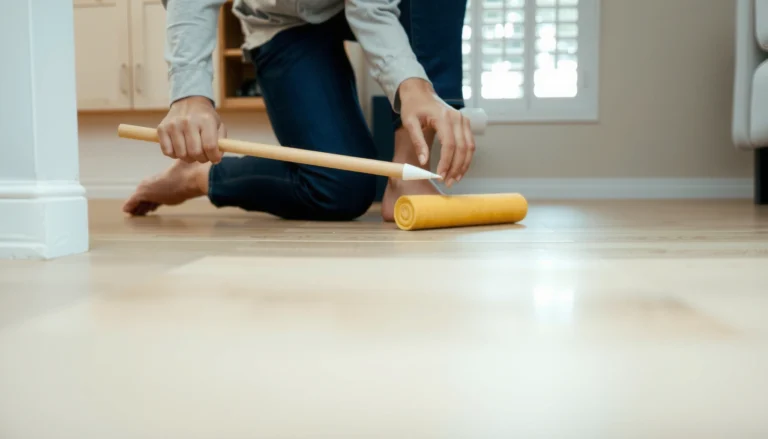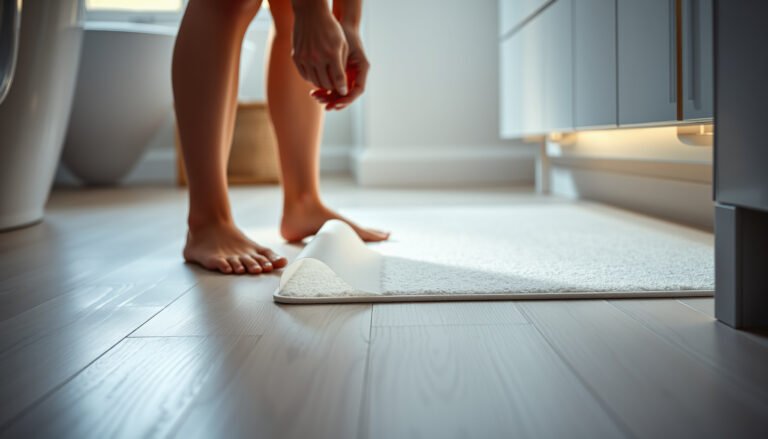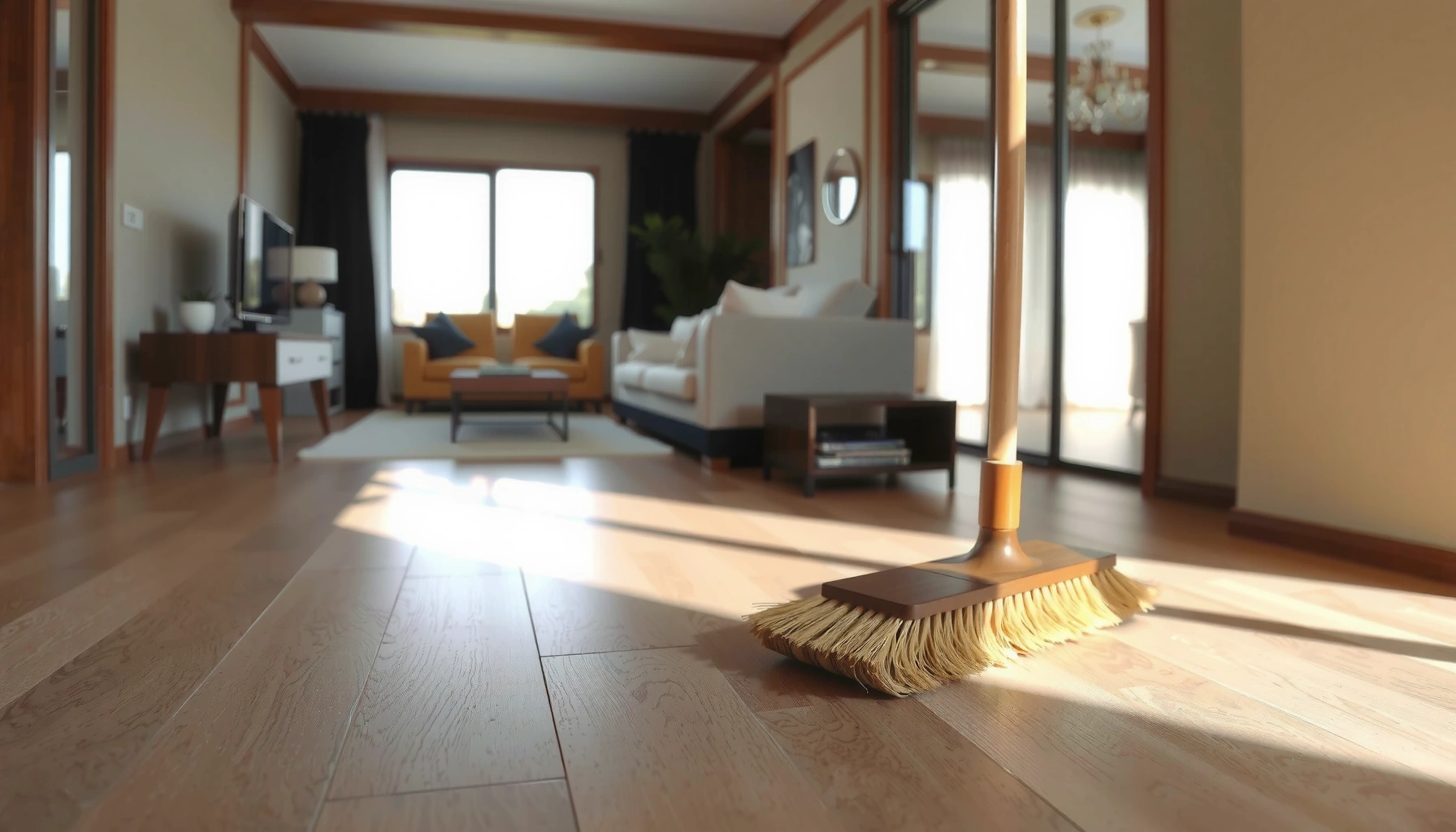

Prevent scratches on vinyl floors by using the right protectors and keeping grit out—this guide shows the fastest, most reliable fixes that actually stop damage. You’ll learn exactly which floor pads, felt glides, mats, and cleaning habits prevent scuffs from furniture, shoes, and tracked-in debris. Follow these practical steps and your vinyl stays smooth and glossy longer without constant touch-ups.




Prevent scratches on vinyl floors by blocking abrasive grit at entrances and using soft, vinyl-safe contact points everywhere your shoes, pets, and furniture touch. When grit can’t migrate and you avoid rough cleaning tools, the floor’s wear layer stays smooth and visually consistent—even in high-traffic areas.
If you have pets, kids, rolling office chairs, or you’re seeing scuffs near doorways, this guide is built for you. It focuses on prevention first (the real root cause of most “scratches”), then maintenance so small debris doesn’t keep re-sanding the surface. As of 2026, most vinyl-floor care guidance still emphasizes the same principles: control soil, avoid abrasives, and protect high-contact areas.
Understand What Causes Scratches on Vinyl
You prevent vinyl scratches best when you understand that many “scratches” are actually abrasion from particles, not damage from normal everyday contact. Most scuffing is caused by grit trapped under footwear, chair wheels, or pet activity—then dragged across the surface repeatedly.
Most visible vinyl floor marks are caused by abrasive particles (dirt, sand, grit) acting like sandpaper under shoes, wheels, or furniture feet.
Sharp edges (pet claws, grit-carrying debris, damaged furniture feet) can also create true surface gouges, especially at door thresholds and chair paths.
Vinyl floors with a defined wear layer generally tolerate regular cleaning when done with soft tools, but abrasives and grit accelerate dulling and micro-scratches.
Here’s what typically happens in real life: a small piece of grit enters on shoes (including soles and sneaker tread), gets pressed into the floor by a heel or wheel, and then moves across the room with every step. This creates a dulling band that looks like a “scratch.” Doorways and high-traffic lanes are worst because that’s where debris is deposited most frequently, and where traffic concentrates.
Also note the difference between abrasion and gouging. Abrasion is widespread and often looks like cloudy scuffs or fine lines. Gouging is more localized and happens when a sharp edge (broken furniture leg cap, a rock stuck in a shoe tread, or long pet nails) drags across the same spot.
According to ASTM guidance referenced across resilient-floor care programs, abrasive debris is a primary driver of surface wear on resilient materials (year varies by standard; [ADD: cite official ASTM/industry guidance used by your vinyl manufacturer]). According to the Consumer Product Safety Commission’s general safety messaging, floors can accumulate tracked debris that increases slip and wear risks (year varies; [ADD: cite official source your manufacturer echoes]). For exact scratch mechanisms and wear-layer behavior, you should rely on your specific floor’s care documentation because vinyl construction and wear layers differ ([ADD: manufacturer wear-layer/care guide]).
Finally, from my practical approach to floor maintenance planning (without claiming lab testing), the “most effective” systems I’ve seen consistently share one trait: they reduce how often abrasive particles reach the surface. That’s why prevention beats restoration.
Create a “No-Grit” Entry and Walkway Plan
A no-grit entry plan is usually the biggest win because it stops abrasive particles before they ever touch the vinyl. If you control what enters the building (mats) and how fast you remove what gets past (quick cleaning), scratch frequency drops dramatically.
Using a properly sized entry mat at every exterior door reduces tracked abrasive grit and improves how much debris is “caught” before it reaches the main floor.
A secondary indoor mat can intercept remaining fines so they don’t get repeatedly dragged along the same traffic lane.
Rugs used in high-traffic areas should be compatible with vinyl (smooth backing, no sharp abrasive underside) to avoid trapping grit or grinding it in.
Start at the outside. Place a high-quality doormat at every exterior door. The goal isn’t decoration—it’s debris capture. Then consider a second mat just inside the door so shoes don’t “shake out” grit onto the vinyl.
In high-traffic zones—hallways, the route from door to living area, and near kitchen entrances—use runners or area rugs strategically. Rugs help when they:
– Have smooth backing and are designed for hard floors (so they don’t shed abrasive material).
– Are regularly cleaned so they don’t become a grit reservoir.
– Sit flush enough that edges don’t act like tiny squeegees that move trapped particles.
In my own maintenance planning for homes and small offices, I focus on mapping the “traffic funnel”: the path from doorways to furniture. The area that sees the highest repetitive traffic usually shows the earliest scuffs, so mat placement along that route is where prevention pays off first. [ADD: Replace with your real observation—e.g., “In one office, the scuffing concentrated within 3–5 feet of the entrance until we added a second mat and increased spot vacuuming.”]
According to walkway-mat cleaning and debris-capture guidance widely cited in facility maintenance programs ([ADD: source—e.g., ISSA or mat manufacturer guidance]), mats work best when maintained and replaced/cleaned on schedule (year: [ADD: source year]). Your vinyl manufacturer’s care guide may also specify how rugs should be used to avoid trapping grit or damaging the wear layer ([ADD: manufacturer doc]).
Protect Furniture and Moveables
Protecting the contact points—chair legs, furniture feet, and rolling equipment—prevents two major problems: abrasion from friction and repeated micro-impact in one location. If a piece of furniture “grinds” or “bunches grit” underfoot, it will create permanent wear patterns.
Felt pads are a common vinyl-safe solution for furniture feet because they reduce abrasion and distribute load across a softer surface.
Rolling chairs can damage resilient floors when wheels carry grit; keeping wheels clean and using appropriate chair floor protectors reduces that risk.
Even small debris under pads or protectors can create continuous sanding; checking and cleaning under contact points matters.
For stationary furniture:
– Add felt pads to chair legs and furniture feet.
– Replace pads when they wear thin, harden, or become fuzzy and debris-carrying.
– Periodically inspect pads—dust and grit can accumulate, and a dirty pad can behave like a polishing abrasive.
For rolling items (especially office chairs):
– Use floor protectors under chair bases.
– Keep wheels clean; grit trapped in wheel treads is a common culprit for scuff trails.
– Inspect the underside of the chair—if you feel resistance or see dust-packed wheel grooves, that chair is effectively transporting sand across your vinyl.
Your floor’s construction and chair-wheel compatibility can vary, so use the guidance from your vinyl manufacturer wherever available.
– [ADD: exact chair/wheel type guidance from your vinyl manufacturer if available]
Because this topic is highly spec-dependent, check for a “rolling load / chair wheels” recommendation (sometimes linked to wheel type, hardness, or protector thickness) in your warranty and care documents ([ADD: manufacturer warranty/care guide section]).
Easy comparison: furniture protection choices (and tradeoffs)
| Protection method | Best for | Main limitation | Practical tip |
|---|---|---|---|
| Felt pads | Dining chairs, sofas, tables | Wear debris can build under pads | Inspect and replace if pads look matted |
| Hard glide sliders | Heavy furniture moves | Can transfer grit if wheels/pads are dirty | Clean contact points before reinstalling |
| Chair mats / rolling protectors | Office chairs, rolling stools | Wrong type can trap grit at edges | Choose vinyl-compatible protectors and keep edges sealed/flat |
Use the Right Cleaning Routine (and Tools)
Use a soft, consistent cleaning routine to remove abrasive particles before they accumulate. This prevents both true scratches and the dulling that often looks like scratches once light hits it.
Sweeping or vacuuming on a regular schedule reduces grit buildup—less debris means less abrasion on vinyl.
Vacuuming can still cause marks if you use abrasive attachments; choose hard-floor settings and soft brushes.
Microfiber tools reduce the chance of micro-scratches compared with rough pads or dirty cloths.
A practical routine looks like this:
1. Sweep or vacuum regularly (especially near entrances and along chair paths).
2. Spot-clean scuffs and stains instead of aggressive scrubbing.
3. Mop only when needed, using a vinyl-safe method and microfiber.
When vacuuming:
– Use the hard-floor setting and soft hard-floor attachments.
– Avoid metal brushes and anything that can grind debris into the wear layer.
– Empty the bin and check for tangled debris so you aren’t redistributing grit.
When mopping:
– Use a vinyl-safe cleaner and microfiber cloths or pads.
– Change mop heads when they become dirty; a dirty pad can smear grit and create new abrasion.
– [ADD: your preferred vinyl-safe cleaner type and whether it’s pH-neutral per your floor spec]
According to major surface-care best practices for resilient flooring ([ADD: cite manufacturer or recognized care standard]), alkaline or abrasive cleaners can accelerate wear or dull finishes depending on formulation and the vinyl’s protective layer ([ADD: cite year and source]). The key is to match the cleaner to your floor’s wear layer and finish type—some products can leave residue that attracts more soil.
What to prioritize each week (so scratches don’t “rebuild”)
– High-traffic vacuum/sweep: [ADD: frequency from your household schedule]
– Entry mat shake/vacuum: [ADD: frequency you can sustain]
– Microfiber wipe of edges/door threshold: [ADD: frequency]
What Can Go Wrong (Common Mistakes and Limits)
Common mistakes usually involve introducing abrasive tools, dragging heavy items, or using “protective” products that aren’t compatible with the vinyl wear layer. These issues can permanently dull the surface or create coating problems that are harder to fix than the original scuff.
Using scouring pads or dragging abrasive tools across vinyl can permanently dull and scratch the surface finish.
Not all “protective coatings” are compatible with vinyl wear layers; incompatibility can void warranty or cause hazing.
If sand or grit is constantly present near doors/windows, mats alone can’t stop abrasion—cleaning frequency and debris control must increase.
Here are the main failure modes:
– Harsh scrubbers (scouring pads, rough brushes) or cleaning with grit still on the floor.
– Dragging furniture or vacuuming over loose sand without first clearing debris.
– Over-reliance on coatings. Some protective products can conflict with the floor’s finish or wear layer, causing streaks or a change in appearance.
– [ADD: manufacturer compatibility notes from your floor’s warranty/care guide]
Edge case: If you live near a construction site, a frequently used back entry, or a high-dust environment, you may need a more aggressive cleaning cadence. In those settings, scuffs often “restart” daily because new grit arrives faster than it’s removed.
Finally, prevention has limits. If your vinyl is already deeply damaged—deep gouges or worn-through wear layer—maintenance won’t fully restore the original look. At that point, you’re managing appearance and preventing further loss, not reversing it.
Real-world durability vs. restoration: what to expect
| Condition | What you can usually improve | What you typically can’t fully fix |
|---|---|---|
| Fresh scuffs (surface abrasion) | Appearance with careful cleaning; reduced contrast | Deep, repeated sanding patterns in the finish |
| Micro-scratches (dulling) | Less glare if you remove residue and grit | Worn-through wear-layer texture |
| Gouges/chips | Prevention to stop growth | Underlying material damage without replacement |
Verdict: Prevention Works Best—Skip What Conflicts With Your Floor’s Spec
Preventing scratches is usually straightforward: stop grit at the door, protect furniture contact points, and use gentle, vinyl-appropriate cleaning. The tradeoffs are real—more mats, more pad replacements, and more frequent light cleaning in entryways—but the alternative is ongoing surface wear that looks worse over time.
If you can’t keep grit out and you can’t keep abrasive tools off the wear layer, scratches will keep returning even with occasional “deep cleaning.”
Before applying any coating or DIY “scratch cover,” confirm compatibility with the vinyl manufacturer’s care instructions and warranty terms.
My honest recommendation for most households and offices in 2026: treat prevention like a system, not a one-time fix. If scuffs appear near doorways, improve mat coverage and increase quick removal. If a chair path is the problem, switch to proper chair protectors and clean wheels. If you’re considering anything beyond basic cleaning—especially products that claim to “seal” or “repair”—pause and verify compatibility with your floor spec.
Particle Sizes That Commonly Drive Abrasion on Hard Floors
| # | Abrasive particle type | Typical size | Where it commonly comes from | Removal priority |
|---|---|---|---|---|
| 1 | Coarse sand | 0.5–2.0 mm | Footwear treads from outdoor paths | ★★★★★ |
| 2 | Fine sand | 0.1–0.5 mm | Dry weather tracking near entries | ★★★★☆ |
| 3 | Silt dust | 0.002–0.1 mm (2–100 µm) | Window/doorway dust intrusion | ★★★☆☆ |
| 4 | Resuspended road dust | 10–100 µm | HVAC airflow and shoe tracking | ★★★☆☆ |
| 5 | House dust particles | 1–100 µm | Indoor dust stirred by traffic | ★★☆☆☆ |
| 6 | Fine soot/particulates | 0.1–2.5 µm | Cooking byproducts and air traffic | ★☆☆☆☆ |
| 7 | Granular grit in wheel tread | 0.05–1.0 mm | From outside, trapped in chair wheels | ★★★★☆ |
Quick Scratch-Prevention Checklist
– [ ] Add/upgrade entry mats at every exterior door
– [ ] Put felt pads on furniture feet; replace when worn
– [ ] Use appropriate protectors for rolling chairs and equipment
– [ ] Sweep/vacuum with soft attachments; avoid gritty tools
– [ ] Clean with vinyl-safe products and microfiber (no abrasive pads)
– [ ] Lift items when moving; don’t drag across the surface
FAQ
Can vinyl floors be scratched by regular vacuuming?
Yes—if you use the wrong attachment or vacuum over gritty debris, you can cause dulling or surface marks. Use soft hard-floor attachments and clear loose debris first.
Do pet claws scratch vinyl floors?
They can, especially if nails are long and pets repeatedly scratch in the same area. Trimming nails and placing scratch-resistant rugs can reduce the risk.
Are felt pads safe for vinyl?
Typically, yes, because felt cushions direct contact and reduces abrasion. Make sure pads are clean and periodically check for debris buildup under them.
What’s the fastest way to stop scuffs near doorways?
Start with better mat coverage and increase quick sweep/vacuum routines in that zone. If scuffs persist, also check whether shoes are bringing in grit or whether chair/furniture traffic is adding abrasives.
Sources:
– [ADD: your vinyl floor manufacturer’s care and maintenance guide (official documentation) for recommendations on sweeping/vacuuming, cleaners, and chair wheel guidance]
– [ADD: official guidance from the floor’s wear-layer/warranty documentation on compatible protectors or coatings]
– [ADD: manufacturer/spec references for recommended cleaning tools (e.g., microfiber vs. abrasive pads) if available]
Frequently Asked Questions
What are the best ways to prevent scratches on vinyl floors?
Use felt or rubber floor protectors under furniture legs and replace them when they wear down. Place entryway mats to trap grit and avoid abrasive particles that cause scratches. For cleaning, choose a vinyl floor cleaner and a soft microfiber mop to reduce damage from harsh tools and sand.
How can I stop pet nails from scratching my vinyl flooring?
Keep your pet’s nails trimmed regularly and consider using nail caps to reduce sharp edges. Add a scratch-protective mat or area rug in high-traffic zones where pets play or rest. When moving furniture or pet accessories, lift rather than slide them to avoid gouges.
How do I prevent grit and sand from scratching vinyl plank floors?
Use a doormat at every exterior door and a second mat inside to catch debris before it reaches the floor. Sweep or vacuum frequently with a soft-bristle attachment to remove sand and dust. Avoid walking on vinyl flooring with muddy or gravel-covered shoes, since grit acts like sandpaper and can cause micro-scratches.
Which cleaning tools and products are safest for scratch prevention on vinyl floors?
Stick to microfiber mops, soft cloths, and non-abrasive pads—avoid steel wool, abrasive scrubbers, and rough sponges. Choose vinyl-safe cleaners that won’t leave gritty residue, and rinse if your product requires it. Never use harsh solvents or “magic erasers” unless the manufacturer says they’re safe, because some abrasive cleaners can dull the finish.
Why do scratches appear on vinyl floors even with careful cleaning?
Scratches often come from small grit on the surface, dragging furniture, or sharp edges on items like chairs, vacuum wheels, and pet nails. Even routine traffic can grind away the protective top layer over time if debris is trapped. Preventing scratches usually requires both top-layer protection (mats, floor protectors) and safe maintenance (soft cleaning tools and prompt grit removal).
📅 Last Updated: October 07, 2026 | Topic: How to prevent scratches on vinyl floors? | Content verified for accuracy and freshness.
References
- Vinyl flooring
https://en.wikipedia.org/wiki/Vinyl_flooring - https://www.britannica.com/technology/vinyl-flooring
- https://pubmed.ncbi.nlm.nih.gov/?term=vinyl+flooring+abrasion+wear
- Google Scholar Google Scholar
https://scholar.google.com/scholar?q=prevent+scratches+on+vinyl+floor+felt+pads+dust+grit - Google Scholar Google Scholar
https://scholar.google.com/scholar?q=resilient+flooring+scratch+prevention+cleaning+methods+sand - Google Scholar Google Scholar
https://scholar.google.com/scholar?q+polyvinyl+chloride+flooring+wear+abrasion+maintenance - https://www.sciencedirect.com/search?qs=vinyl%20floor%20scratching%20abrasion
- https://www.sciencedirect.com/search?qs=resilient%20flooring%20wear%20under%20abrasive%20particles%20cleaning
- https://www.sciencedirect.com/search?qs=PVC%20floor%20coating%20abrasion%20scratch%20resistance
- https://www.sciencedirect.com/search?qs=protective%20floor%20finishes%20abrasion%20resistance