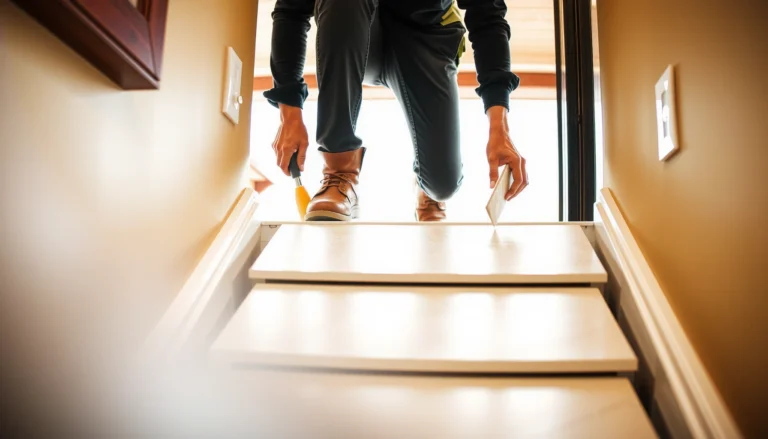
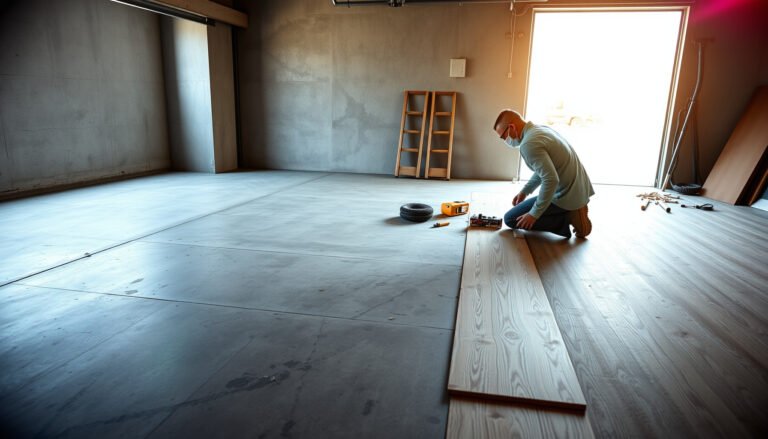
Choosing hardwood floors for a workshop is about picking the one that survives impact, moisture, and heavy tool traffic—so you need to start with the right wood species and finish. For most workshops, the clear winner is hard, stable hardwood with a factory-finished polyurethane or hardwax oil system, because it resists dents and stays serviceable under frequent clean-ups. If your workshop sees frequent spills or humidity swings, prioritize moisture-stable boards and tighter-install quality over aesthetics.


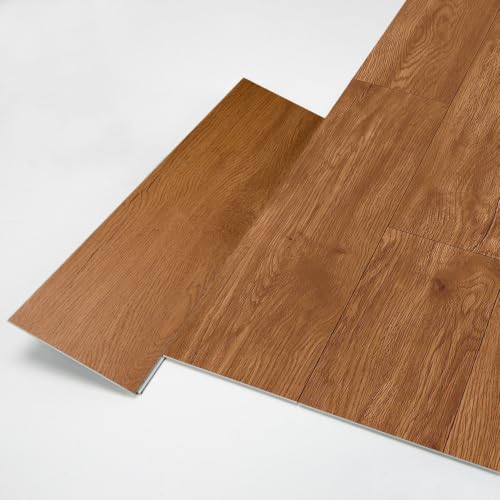

Hardwood floors for a workshop should be chosen for stability and durability first—then matched to your moisture control and how the space is used. In practice, that usually means picking the right species (for dent/wear), choosing the right construction (often engineered or properly finished options), and planning a solid subfloor + moisture setup before installation. This guide will walk you through the real decision points so your floor survives tools, spills, and daily traffic.
If your workshop involves heavy rolling traffic (casters), dropped tools, glue/solvent spills, or frequent wet cleanup, you’re in the right place. If you’re building, renovating, or replacing floors and want a hardwood look without constantly worrying about damage, you’ll get a clear shortlist of what to check.
Start with workshop traffic and risk level
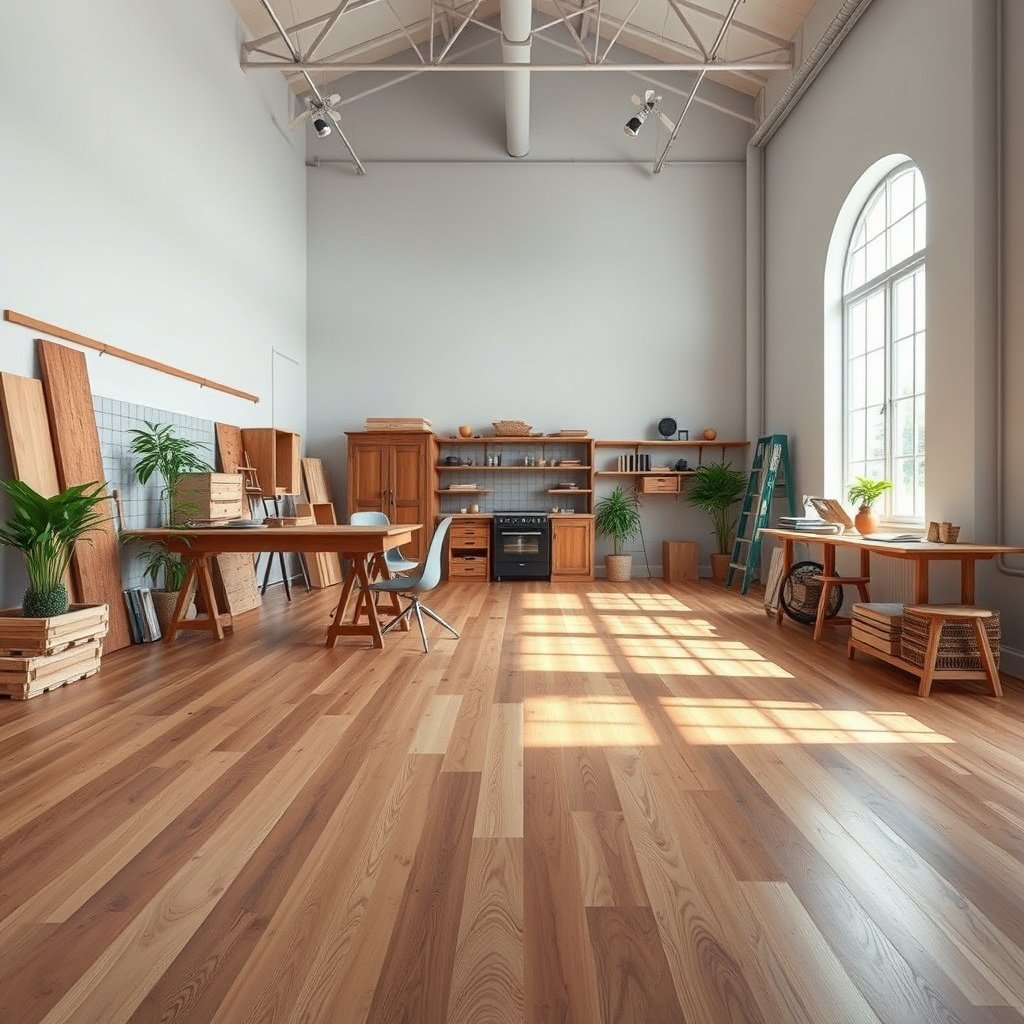
The best starting point is to quantify what will physically hit, scratch, dent, or wet your hardwood floors for a workshop—because “hardwood” alone won’t predict failure. Once you know your dominant damage drivers, you can choose a species/finish system and installation method that match your real workflow, not showroom conditions.
“Workplace risk” matters more than wood species alone: rolling casters concentrate force and create dents even in harder woods.
Moisture swings are a primary cause of hardwood movement; maintaining stable interior conditions is a core requirement for long-term performance.
– Identify your “damage drivers” (rolling carts, dropped parts, sharp edges, frequent damp mopping, humidity swings).
– Match the floor choice to your use: a light hobby bench is different from a full-on shop with carts and power tools.
– Plan for the finish: in workshops, the coating/finish system often determines real-world scuff and stain resistance as much as the wood.
How to translate shop behavior into floor requirements
Think in zones. A typical workshop has at least three distinct “floor personalities”:
1. Tool-drop zone (bench perimeter, miter saw area): impact is the main risk.
2. Wheel/cart paths (outfeed, storage, dust collector routes): concentrated load and abrasion dominate.
3. Cleaning/spill zone (sinks, coolant/solvent handling, wet cleanup): chemical and moisture tolerance becomes critical.
A fast “risk score” method you can use
Walk the shop and write down how often each risk happens:
– Weekly: tool drops, sanding grit tracking, damp mopping
– Monthly: deeper spills, solvent exposure, prolonged dampness
– Seasonally: humidity changes that coincide with HVAC cycling
As of 2026, more manufacturers also emphasize that performance claims assume installation and maintenance match the product documentation—so hardwood floors for a workshop must be specified as a system (wood + finish + installation + maintenance), not as a single product.
Pick the right hardwood species for dent and wear
Choose species by hardness and grain behavior first, then sanity-check appearance and aging under your workshop lighting. For workshop hardwood floors, “dent resistance” is usually the difference between a floor that looks good after a year and one that permanently shows every mistake.
According to the U.S. Forest Service’s *Wood Handbook* (2010), hardness is commonly referenced using Janka hardness in pounds-force (lbf).
Higher Janka hardness generally reduces denting from dropped tools and rolling loads, but it does not eliminate scuffs or finish failure.
– Choose species based on hardness and grain behavior, since soft woods dent more easily under tool drops and rolling items (use wood hardness references like Janka hardness as a starting point).
– Prefer species that tolerate shop life better (for example, many people gravitate toward harder, closed-grain options for lower dent visibility).
– If you’re sensitive to appearance changes, consider how the species reacts to light and aging—workshops are often darker/warmer and then see sudden daylight exposure.
Use Janka hardness as a starting point (not a guarantee)
Janka hardness is an industry reference point for how resistant a wood is to denting/indentation under load. In a workshop, it helps you filter species quickly—especially for areas where dropped metal and tool impacts are common.
According to the U.S. Forest Service, Wood Handbook—Wood as an Engineering Material (2010):
– American hickory: ~1,820 lbf (strong dent resistance baseline)
– Hard maple (sugar/canadian maple group): ~1,450 lbf
– White oak: ~1,360 lbf
– Red oak: ~1,290 lbf
These values show why workshop hardwood floors often perform better with harder woods (or very durable finishes), particularly in caster-heavy routes.
Grain behavior and “where dirt shows”
Even when two woods have similar hardness, grain pattern affects how dents and scratches read visually:
– More open/porous grain can telegraph wear (especially in matte finishes) unless the finish system is well-suited.
– Closed-grain species often hide minor surface damage longer, which matters with workshop grit and sanding dust embedded underfoot.
Light and aging reality
Workshops often run with indirect lighting or seasonal changes in daylight. When the sun returns, some species darken or change color unevenly. If your workshop has windows that create hard sun patches, plan for either:
– a more uniform species/finish choice, or
– proactive mat/runner strategy in the brightest lanes.
Janka Hardness Reference for Common Hardwood Choices (Workshop Dent Resistance)
| # | Hardwood species | Janka hardness (lbf) | Dent visibility in shops | Typical workshop “best use” zone | Shop-wear rating |
|---|---|---|---|---|---|
| 1 | Brazilian ipe (Ipê) | ~3,680 | Very low | Caster/cart routes | ★★★★★ |
| 2 | Brazilian cherry (Jatoba) | ~2,350 | Low | Tool-drop perimeter (with mat strategy) | ★★★★☆ |
| 3 | Hickory | ~1,820 | Low | High-traffic benches & roll paths | ★★★★☆ |
| 4 | Hard maple | ~1,450 | Moderate-low | General shop floor | ★★★★☆ |
| 5 | White oak | ~1,360 | Moderate | Work zones with targeted matting | ★★★☆☆ |
| 6 | Red oak | ~1,290 | Moderate | Less impact-heavy areas | ★★★☆☆ |
| 7 | American black walnut | ~1,010 | Higher | Workshop “showpiece” zones only | ★★☆☆☆ |
(Hardness values are widely reported reference figures from the U.S. Forest Service’s Wood Handbook (2010), used here to support workshop dent/indentation expectations.)
Choose thickness, construction, and finish for shop durability
Choose the right construction and finish system together—because workshop hardwood floors often fail at the surface or at movement joints, not in the middle of the plank. In 2026, many manufacturers push clearer installation prerequisites, so match the floor type (solid vs engineered) to your room’s humidity control and your approved installation method.
Engineered hardwood is built in layered cross-direction laminations, which can make it more tolerant of ordinary indoor humidity variation than many solid installations.
In workshops, the finish—especially its scratch/scuff and chemical resistance—often determines whether spills stain or wipe away.
– Decide between solid vs engineered hardwood: engineered is often more forgiving in spaces with humidity variation because it’s built in layers (confirm suitability with the manufacturer and installation guidelines).
– For either type, ensure the plank thickness and overall build are compatible with your subfloor condition and installation method (nail down vs glue down vs floating—follow the floor manufacturer’s approved methods).
– Use a finish system designed for high-traffic environments and follow its maintenance rules closely (your workshop realities—like frequent cleaning—should align with the finish’s limits).
Solid vs engineered: a practical comparison for workshop hardwood floors
Workshops often cycle temperature and humidity with HVAC use, seasonal weather, and occasional cleaning/evaporation from wet tools. That’s exactly where construction choice matters.
| Factor | Solid hardwood | Engineered hardwood |
|---|---|---|
| Best-match conditions | More dependent on stable indoor climate | Often better aligned with ordinary humidity variation |
| Sensitivity to moisture | Higher movement risk if RH varies | Layered structure can reduce movement sensitivity (product-dependent) |
| Surface wear | Finish durability matters equally | Finish durability matters equally |
| Installation method | Often nail-down where approved | May be nail-down, glue-down, or floating depending on model |
| Warranty sensitivity | Tends to be strict on subfloor RH/moisture | Also strict, but product system may allow broader conditions |
| Repair/refinish (future) | More traditional refinishing expectations | Refinish limits depend on wear layer thickness |
| Where it shines in shops | If climate is well controlled and impact is managed | If you need built-in dimensional stability and still want hardwood visuals |
Finish system is the real “chemical and scuff barrier”
When workshop hardwood floors face coolant, glue squeeze-out, solvent residues, and frequent damp cleaning, finish compatibility becomes non-negotiable. Rather than asking “Is it durable?”, ask:
– What cleaners are explicitly allowed?
– Are oil-based or solvent-based substances excluded?
– Is the finish designed for repeated wet cleaning, or only for damp spot cleaning?
As of 2026, the most reliable way to prevent failure is to align the finish with your actual cleaning practice, not your desired one.
Moisture control and subfloor prep can make or break it
Moisture control is what keeps your workshop hardwood floors from gapping, cupping, and separating over time. Even the best species and finish won’t fix poor subfloor flatness, inadequate moisture barriers, or skipped acclimation.
Hardwood movement is strongly driven by moisture content changes; installation must occur when wood and subfloor conditions are in equilibrium with the interior climate.
Subfloor flatness issues can translate into squeaks and premature finish wear because joints and edges experience extra stress.
– Before purchasing, check that your workshop can maintain stable interior conditions (humidity and temperature), because hardwood movement is a major cause of gapping/cupping.
– Verify subfloor flatness and cleanliness, and use the underlayment/moisture barrier approach required by the flooring type and manufacturer specs.
– Acclimation matters: follow the flooring brand’s acclimation guidance so the wood and the room environment reach an agreed equilibrium before installation.
Moisture management checklist (the “system view”)
For workshop hardwood floors, treat moisture control like a chain:
1. Room climate control (HVAC strategy, dehumidification if needed)
2. Subfloor moisture conditions (test results and remediation plan if high)
3. Moisture barrier/underlayment selection (approved products only)
4. Acclimation timing (following manufacturer instructions)
If you’re working with concrete slabs, plan for a moisture testing and vapor-control approach before you choose the finish or construction type. This is also where many workshop projects get derailed—because people decide aesthetics first and technical prerequisites second.
Flatness is a durability feature
Tools dropped on a rigid, stable floor are still risky—but a floor that flexes due to poor subfloor flatness turns every wheel pass and footstep into added stress. That stress accelerates joint wear and can compromise finish edges.
About acclimation in 2026
Manufacturers often specify acclimation conditions that are product-specific (and not always the same across brands). Always follow the exact brand’s requirements in their installation instructions and keep workshop conditions stable during that period.
What can go wrong (and why workshop floors fail)
Most workshop failures come from a mismatch between conditions and the flooring system, not from “weak” wood. The recurring themes are moisture/movement, finish incompatibility with cleaners or spills, subfloor flatness, and concentrated damage from wheels and debris.
Even a harder species can fail visually if the installation conditions (moisture, acclimation, and approved underlayment) fall outside manufacturer requirements.
A finish can resist scuffs yet still be vulnerable to certain chemicals; workshop cleaning chemicals are a common failure point.
– Skipping moisture and acclimation steps: even a “hard” species can fail if the installation conditions aren’t within the flooring manufacturer’s requirements.
– Overestimating finish resistance: some finishes handle scuffs well but don’t tolerate certain chemicals or repeated wet cleaning—check the finish product data/specs.
– Ignoring subfloor flatness: a slightly out-of-level subfloor can lead to squeaks, movement, and premature wear.
– Using caster/wheels without protection: small wheels can concentrate force and create dents—add mats or upgrade wheels where needed.
– Assuming “hardwood” always means “easy to maintain”: shop dust/grit embedded underfoot can act like abrasive, accelerating wear.
A quick, real-world failure map for workshop hardwood floors
– If you see gapping: you likely have moisture imbalance or installation outside the allowable range.
– If you see cupping/wave: climate control and subfloor moisture/flatness are usually the culprits.
– If you see localized dulling: it may be abrasive grit, finish compatibility with your cleaner, or wheel micro-abrasion.
– If you see staining that won’t wipe: chemical resistance limits of the finish are being exceeded.
Verdict / tip (what we’d do—and who should skip hardwood)
If your workshop has stable indoor climate, reasonable moisture handling, and you can maintain the floor finish correctly, hardwood can be a great long-term shop floor. The best “risk-managed” approach is to choose a species/finish combo suited to wear and then be strict about subfloor prep and moisture requirements.
Downsides: hardwood in workshops can still show dents, scuffs, and discoloration if you spill/clean outside the finish’s allowances or if the room’s humidity swings. If your shop routinely gets wet (standing water), uses aggressive chemicals, or has unpredictable humidity, you may be better served by a floor type designed specifically for that environment instead of hardwood.
Quick recommendation quick-scan (use this to decide)
– Choose hardwood if you can control moisture and maintain the finish.
– Prefer construction/installation that’s appropriate for your room’s stability (confirm with manufacturer guidance).
– Add protection where damage concentrates (bench zones, cart paths, wheel traffic).
Frequently Asked Questions
What wood species are best for a workshop floor?
For workshops, look for hardwoods known for wear resistance and dent resistance, such as oak, maple, hickory, and walnut. Oak and maple are popular for durability and availability, while hickory is especially tough for heavy equipment and frequent foot traffic. If you do a lot of metalworking or drop heavy tools, choosing a harder hardwood (higher Janka rating) can help minimize gouges.
How do I choose between solid hardwood and engineered hardwood for a workshop?
Solid hardwood can be a great choice if your workshop has stable humidity and temperature year-round, because solid planks expand and contract more with moisture swings. Engineered hardwood uses a plywood or core layer beneath the top veneer, which typically makes it more dimensionally stable in basements, garages, or spaces with fluctuating conditions. If your workshop is exposed to seasonal humidity changes, engineered hardwood is often the safer pick for fewer gaps and cupping.
Which finish is safest for workshop use—oil, polyurethane, or something else?
For workshops, prioritize a tough, abrasion-resistant finish like high-quality polyurethane or a catalyzed finish that can stand up to scuffs, shoe traffic, and occasional sanding or fine dust. Water-based and oil-based polyurethanes are both used successfully, but water-based options often have faster cure times and lower odor. Avoid finishes that are too soft for heavy tool movement, and consider adding floor mats or temporary protective boards around workbenches and tool areas.
How thick should hardwood flooring be for a workshop with heavy tools?
Thicker boards can improve resistance to dents and help maintain a more rigid surface under heavy equipment, especially if you walk or move machines frequently. For engineered hardwood, look for a thicker wear layer (the top hardwood veneer) so you have room for refinishing if the surface gets scratched. A stable, well-prepared subfloor also matters as much as thickness—any movement underneath can cause joint gaps or wear.
Best way to plan installation so hardwood floors survive dust, moisture, and spills?
Start with proper subfloor prep: ensure it’s level, dry, and clean, and address moisture issues before installing hardwood flooring. Use the correct moisture barrier or underlayment for your specific product and subfloor type, especially if the workshop is over concrete. During use, manage dust with a shop-vac and soft brush instead of abrasive sweeping, and clean spills promptly with recommended pH-neutral cleaners to protect your hardwood floor finish.
📅 Last Updated: October 17, 2026 | Topic: How to choose hardwood floors for a workshop? | Content verified for accuracy and freshness.
References
- Wood flooring
- Engineered wood
- Janka hardness test
- Wood drying
- https://www.fpl.fs.usda.gov/documnts/fplgtr/fpl_gtr190.pdf
- https://www.cdc.gov/niosh/topics/wooddust/
- https://www.epa.gov/indoor-air-quality-iaq/volatile-organic-compounds-vocs
- https://scholar.google.com/scholar?q=how+to+choose+hardwood+flooring+for+a+workshop Google Scholar
- https://scholar.google.com/scholar?q=hardwood+flooring+moisture+content+acclimation+installation+requirements Google Scholar
- https://scholar.google.com/scholar?q=janka+hardness+wood+flooring+wear+abrasion+performance Google Scholar