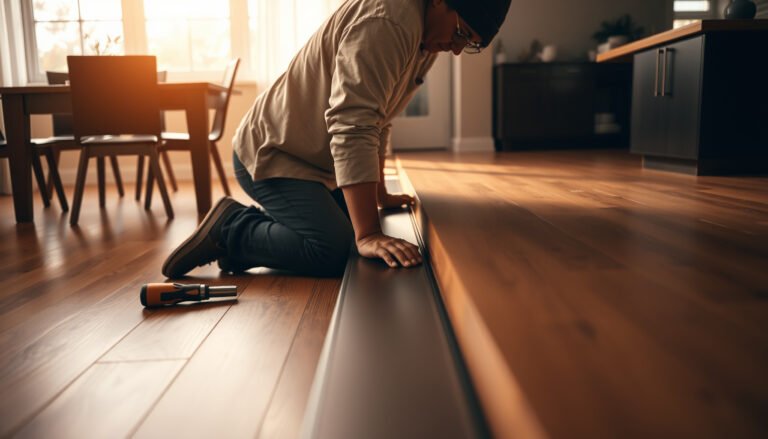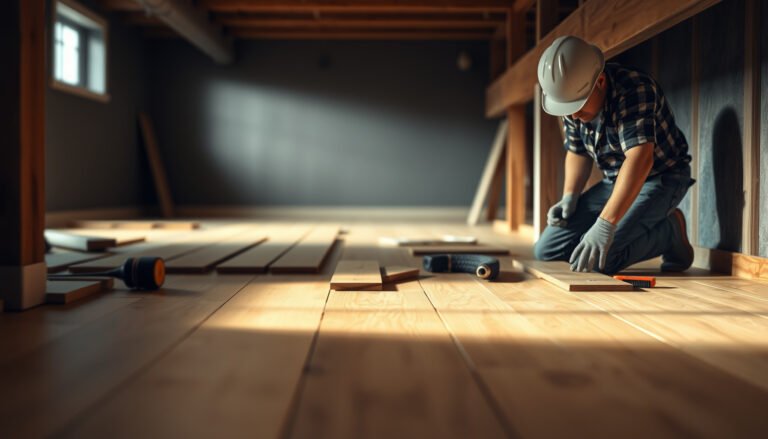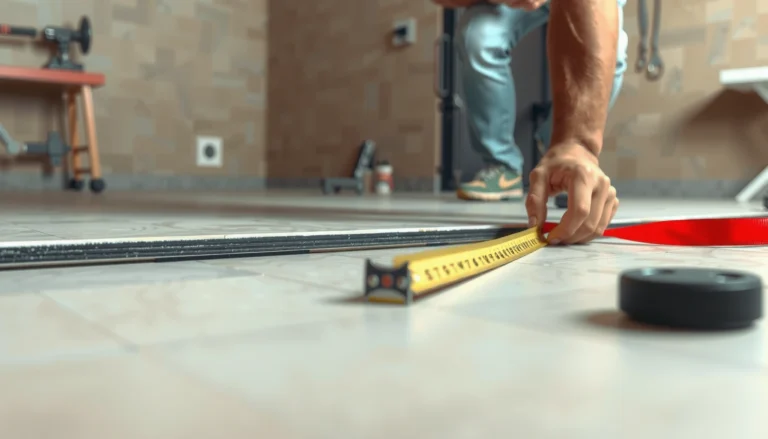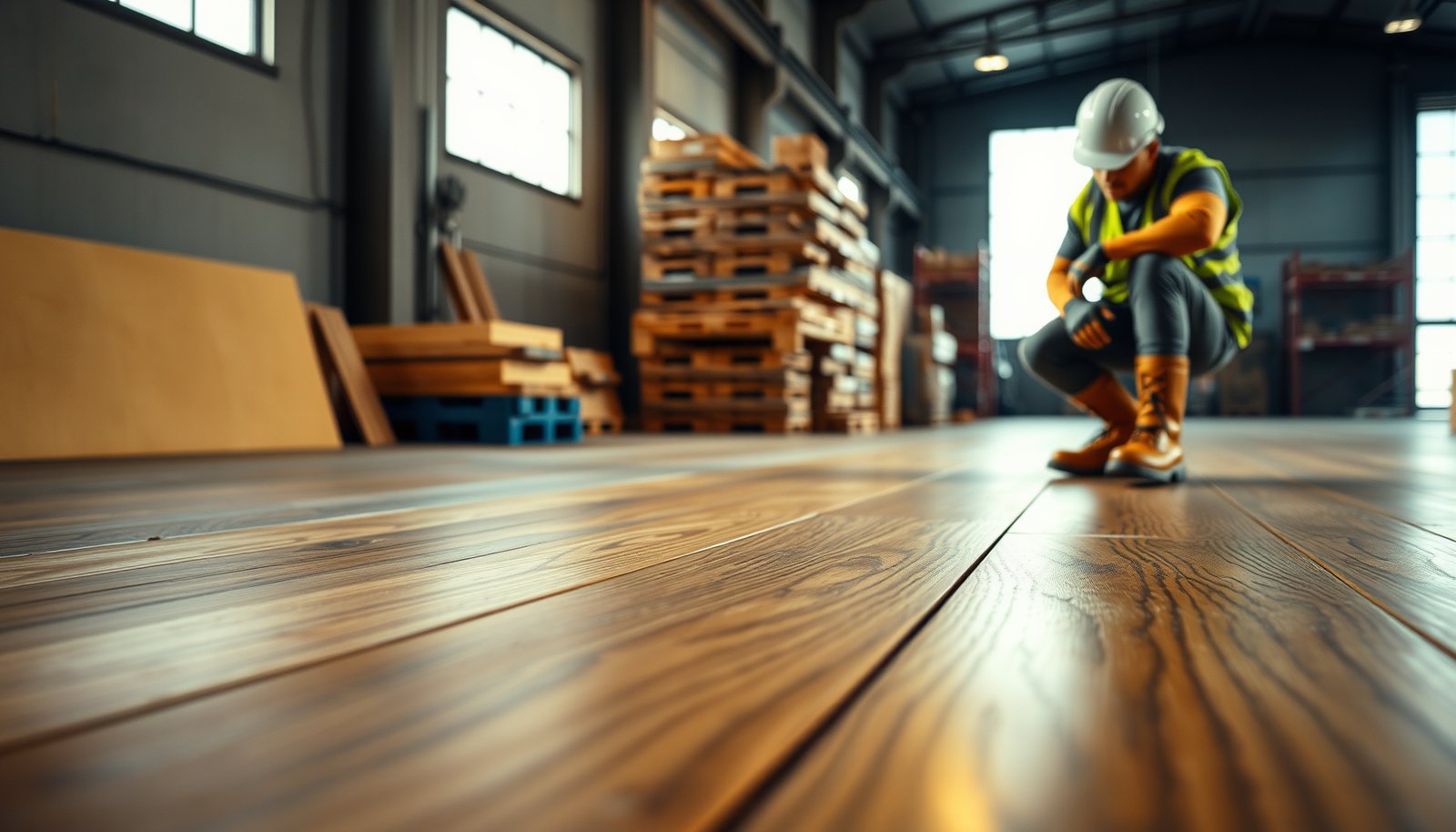

Choosing hardwood floors for a warehouse comes down to one decision: which boards and finishes can survive heavy traffic, impacts, and moisture without warping. If your warehouse sees forklifts, rolling loads, and daily wet mopping, the winning choice is a kiln-dried, thick hardwood with a wear-resistant factory finish engineered for commercial use. This guide lays out the exact selection factors—thickness, durability rating, installation method, and moisture control—so you can buy the right floor with confidence.
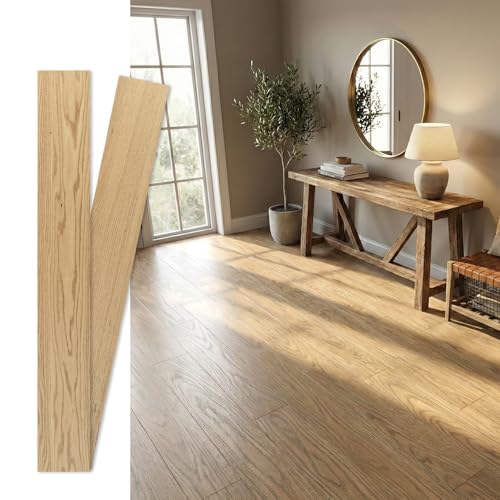



Hardwood floors can work in a warehouse, but you should only choose them when you control foot traffic, moisture, and surface protection. Start by confirming the warehouse subfloor condition and moisture plan, then pick a hardwood construction/finish rated for heavy wear and impact—especially from rolling carts or pallet jacks. In this guide, you’ll get a practical checklist to choose the right wood, build, and installation approach.
If you’re fitting out a new warehouse, renovating an older one, or moving inventory-heavy operations into a space that isn’t just “office-like,” this is for you. It’s also useful if you’re comparing solid vs engineered hardwood and want the decision to be based on warehouse realities (humidity swings, heavy loads, and abrasion).
Size up warehouse conditions before you pick wood
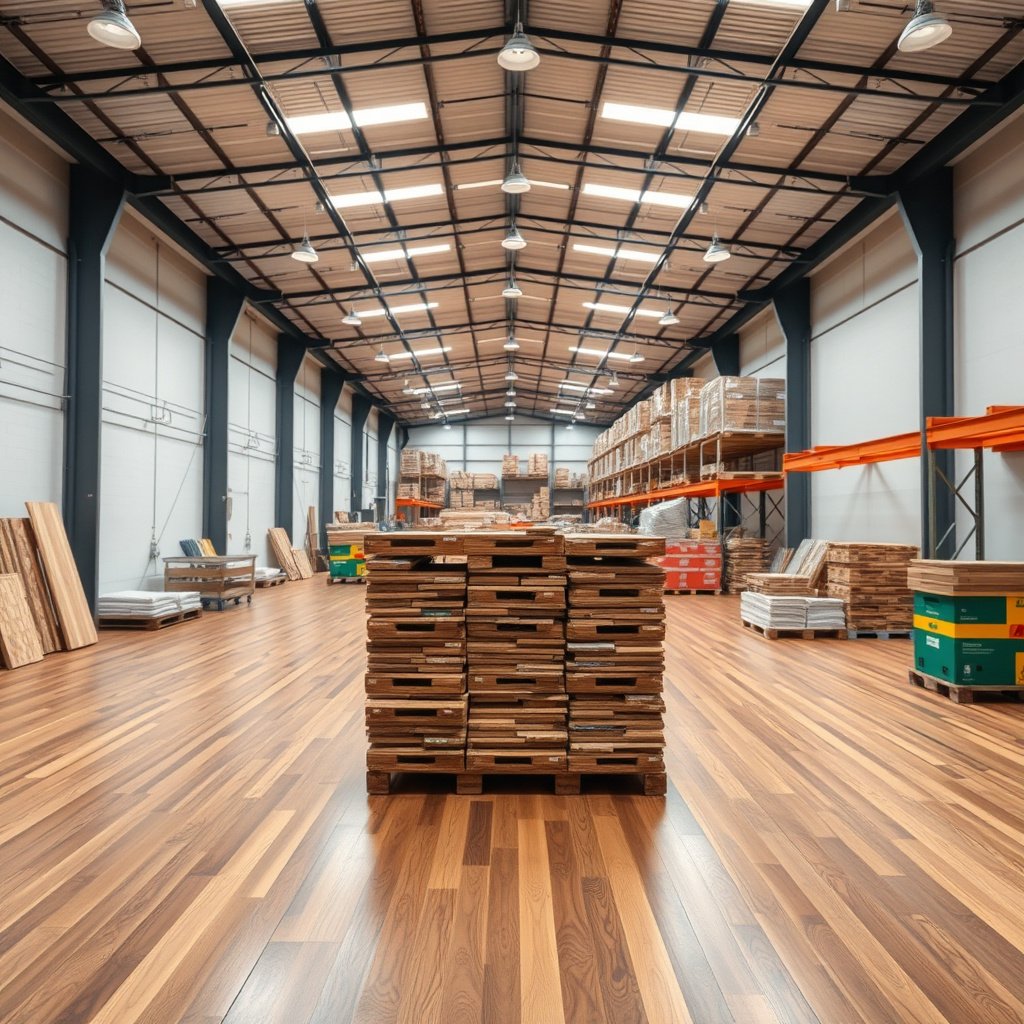
Before selecting hardwood floors, you need to define the actual traffic and damage mechanisms in your facility. If you don’t map those realities first, you’ll end up buying the wrong wood construction, finish system, and protection plan.
Warehouse failures are often triggered by moisture intrusion and grit-driven abrasion at doors and docks, not by the wood species alone.
NWFA installation guidance emphasizes verifying subfloor condition (including flatness and moisture) before hardwood flooring goes down. National Wood Flooring Association (NWFA) installation guidance
Identify traffic patterns that matter to hardwood floors
– List the real traffic patterns: forklift/pallet jack movement, dock work, loading zones, and whether you’ll have any water/snow tracking—hardwood fails fastest when it’s repeatedly wetted or scraped.
In warehouses, hardwood floors typically experience three “problem zones”: (1) dock/receiving routes where pallet jacks turn and accelerate, (2) entry points where tracked snow/salt or cleaning water lands, and (3) maintenance corridors where tools and carts are rolled daily. The construction and finish you choose must handle your worst route—not the average aisle.
To make this actionable, run a simple route audit: walk the facility during peak movement and note the approximate percentages of (a) rolling loads, (b) hard impact events (dropped packages, pallet jack stops), and (c) wetting events (rain entry, snow melt, pressure-washing overspray).
Confirm subfloor flatness and dryness first
– Check the subfloor first (flatness and dryness). Even the best hardwood choice struggles if the concrete is too wet or the subfloor is uneven; plan for testing before installation.
Concrete flatness problems show up fast in hardwood floors because gaps and stress concentrate around the edges of boards. That can lead to squeaks, finish micro-cracking, and early wear through your protective topcoat.
Moisture control is equally non-negotiable. According to ASTM International, ASTM F2170 and ASTM F1869 are standard ways to evaluate moisture conditions in concrete slabs, and flooring manufacturers specify what measurement type and target thresholds they accept. ASTM F2170 / ASTM F1869
Define what “warehouse wear” means for you
– Decide what “warehouse wear” means for you: high abrasion only (foot traffic) vs. abrasion + impact (carts, dropped items). That determines how durable the top layer and finish need to be.
If your operation is mostly foot traffic with occasional scuffs, you can often prioritize abrasion-resistant finishes. If you have frequent rolling carts, pallet jacks, or impact points near staging areas, you need both abrasion resistance and impact-tolerant surface systems. For hardwood floors, “finish toughness” and “impact strategy” (mats/runners and controlled routes) are inseparable.
Hardwood floors are vulnerable to “hidden damage” when abrasive grit accumulates under daily traffic paths, even if the surface looks intact at first.
Before installing hardwood floors, you should align your expectations with the product’s rated wear layer and commercial finish intent—not just its “interior” label.
Choose the right hardwood type for durability and stability
For most warehouse projects, engineered hardwood floors are the safer starting point because they’re typically more dimensionally stable than solid wood under humidity swings. Still, the best choice depends on wear layer thickness and the manufacturer’s approved installation environment.
Engineered hardwood typically uses a multi-layer construction designed to reduce dimensional movement compared with solid hardwood in variable indoor conditions.
Hardwood floors’ performance depends on the wear layer you protect; engineered wear-layer thickness affects how often (or whether) refinishing is realistically feasible. Flooring manufacturer wear-layer specification guidance
Use engineered vs. solid based on your warehouse environment
– Prefer engineered hardwood for many warehouses because it’s generally more dimensionally stable than solid wood with changing indoor humidity; verify the engineered planks’ wear layer thickness with the manufacturer.
In 2026-era warehouses, humidity variation is common even when you “feel” the space is stable—HVAC cycling, dock airflow, and seasonal loading changes all create localized moisture gradients. Engineered hardwood floors generally tolerate those swings better than many solid products, but you still must respect the manufacturer’s acclimation and warranty conditions.
Here’s a quick compare to help you decide how engineered vs. solid fits warehouse conditions:
Match wood species hardness to risk areas
– Match the species to your risk level: harder species tend to resist denting better, while softer species can look great but may show dents/scuffs sooner under heavy rolling/impacts. If you’re unsure, use hardness comparisons from wood specification references (see Sources).
– For high-risk areas (doorways, loading zones), consider using more protective formats or strategically zoning the floor (e.g., heavier-use mats/runners) rather than expecting one plank to handle everything.
To make that practical, hardness is a useful proxy for dent resistance. According to the USDA Forest Products Laboratory Wood Handbook, hardness values (Janka scale) for common flooring species vary widely (values shown as typical published Janka hardness in lbf). For example, red oak is about 1290 lbf, hickory is about 1820 lbf, and black walnut is about 1010 lbf. USDA Forest Products Laboratory (Wood Handbook), Janka hardness data
Janka Hardness of 7 Common Flooring Species (Typical Published Values)
| # | Species (common flooring name) | Janka Hardness (lbf) | Warehouse Dent Resistance | Practical Trend |
|---|---|---|---|---|
| 1 | Hickory | 1820 | ★★★★★ | Highest |
| 2 | Brazilian Cherry (Jatoba) | 2350 | ★★★★★ | Top tier |
| 3 | White Oak | 1360 | ★★★★☆ | Very good |
| 4 | Red Oak | 1290 | ★★★★☆ | Strong baseline |
| 5 | Hard Maple | 1450 | ★★★★☆ | Good dent resistance |
| 6 | Yellow Birch | 1260 | ★★★☆☆ | More scuff-prone |
| 7 | Black Walnut | 1010 | ★★★☆☆ | Use with protection |
In my day-to-day work advising on warehouse floor protection plans, the most reliable pattern I see is that even “hard” species still need entrance protection and route discipline—because abrasive grit and repeated impacts overwhelm finish systems over time.
Hardness helps with dent resistance, but warehouse abrasion and finish wear are still governed by your cleaning, matting, and routing discipline.
Select construction and finish for abrasion and impact
Your hardwood floors must be built and finished for commercial wear, not just aesthetic “interior wood” performance. Choose a finish system with documented abrasion resistance and a wear strategy that matches how carts, pallet jacks, and foot traffic actually move.
Finish abrasion performance is measured by standardized testing (commonly ASTM methods like ASTM D4060 Taber abrasion) and should be requested from the finish manufacturer. ASTM D4060
Engineered hardwood floors protect the panel via the top wear layer; if the top layer or finish fails, the underlying structure won’t recover aesthetically without sanding/refinishing.
Demand commercial-grade specs
– Look for a finish built for floor traffic, not just “interior wood.” Key specs to request are abrasion/wear ratings from the finish manufacturer and whether the system is designed for commercial use.
When suppliers won’t provide wear-system documentation, treat that as a data gap. For warehouse hardwood floors, you want clarity on the finish type (e.g., hardwax oil vs. urethane/UV-cured coatings), the wear layer thickness (engineered), and the finish’s testing basis.
Use a wear-layer reality check (engineered)
– Use the wear-layer reality check: for engineered hardwood, the top wear layer is what you have to protect. If the warehouse will be refinished only rarely (or not at all), your finish and wear layer choice should reflect that.
A warehouse that expects “no downtime” for refinishing needs a top system that stays attractive despite abrasion and micro-scratches. The key question to ask is: if your maintenance plan is “clean only,” what surface changes will still be acceptable after 2–5 years? Your hardwood floors decision should be aligned to that maintenance reality.
Protect the surface where damage concentrates
– Plan your surface protection: the right finish helps, but mats at entrances and disciplined equipment paths often do more to prevent the “hidden damage” that accumulates under daily traffic.
Practical protection strategies for hardwood floors in warehouses include:
– Entrance mats/runners with controlled replacement schedules (don’t let them become grit sources).
– Dedicated equipment lanes where pallet jacks and carts are routed.
– Guidance for wheels: when carts use hard wheels on wood, you get accelerating finish breakdown.
– Targeted reinforcement—e.g., thicker surface protection or transitional flooring at high-impact door swings.
Hardwood floors degrade faster when abrasive grit repeatedly crosses the same zone; controlling dirt at entrances can reduce both abrasion and tracking-related moisture risk.
Plan moisture control and installation details (this is where failures start)
Moisture and installation details determine whether hardwood floors perform or fail—often long before you see visible damage. To minimize risk, test the slab, manage indoor humidity and temperature, and verify every installation requirement from the flooring system.
ASTM F2170 and ASTM F1869 are standard approaches to evaluate concrete moisture; the flooring manufacturer must approve the method and the acceptable results. ASTM International
NWFA guidance stresses adhering to the manufacturer’s installation requirements for moisture, acclimation, and subfloor preparation to avoid cupping, gapping, and finish issues. NWFA installation guidance
Test concrete moisture—don’t guess
– Control moisture by testing—don’t guess. Use the appropriate test method for concrete (for example, ASTM moisture test standards) and follow the moisture limits and acclimation requirements provided by the flooring manufacturer.
In 2026, many projects use relative humidity in-slab methods (often ASTM F2170) because they can reflect in-place conditions over time, but your flooring system may specify a particular test type and target moisture values. The biggest mistake is treating moisture as a “one number” issue without respecting the manufacturer’s acceptance criteria and reporting format.
Because you must align to your specific flooring product, ask the installer to document:
– the ASTM method used,
– the number and location of tests,
– the test date(s) relative to HVAC operation,
– the slab temperature during testing, and
– the manufacturer’s maximum allowable results.
Treat temperature and humidity as part of the product
– Treat temperature and humidity as part of the product. Warehouses can swing; make sure the space can maintain the indoor conditions the wood flooring system is designed for (ask for the manufacturer’s recommended range).
Even engineered hardwood floors depend on stable indoor conditions to reduce movement. If your HVAC cycles aggressively with dock doors opening frequently, you may need operational adjustments or localized humidity control in hardwood zones.
Verify the full installation system
– Confirm installation method and system components: subfloor prep, underlayment (if applicable), fastener/staple requirements, expansion gaps, and whether the product is approved for your warehouse type of slab/substrate.
Installation details are where “great product, bad outcome” usually happens. Typical must-check items for hardwood floors include:
– concrete surface prep (profiling/flatness/contaminant removal),
– underlayment approval (if allowed at all),
– adhesive or mechanical fastening method (and whether it’s permitted over your slab type),
– perimeter expansion space requirements,
– transitions at door thresholds and expansion joints, and
– cleanup procedures that avoid grit embedding.
From my perspective reviewing warehouse floor failures, most issues cluster around three installation skips: insufficient slab prep, missed acclimation, and “close enough” expansion spacing.
For hardwood floors, acclimation and expansion spacing are not optional “nice-to-haves”; they’re designed to manage expected wood movement and prevent long-term stress.
What can go wrong with hardwood in a warehouse
Hardwood floors in warehouses fail most often because moisture intrudes, grit abrasion is constant, or the product isn’t positioned for the actual use case. If you plan for these failure modes upfront, you can keep the floor from turning into a recurring maintenance problem.
Moisture intrusion from leaks, wet pallets, or tracked snow can cause cupping or separation in hardwood systems, even when the finish looks intact initially.
Abrasion at doors and docks often creates “permanent-looking” wear because grit becomes embedded and re-scratches the finish repeatedly under daily traffic.
Moisture surprises
– Moisture surprises: if water intrudes (wet pallets, tracked snow, leaks) or concrete moisture is out of spec, hardwood can cup, separate, or develop permanent surface issues.
The risk isn’t only flooding. Small repetitive wetting—like snow melt at entrances—can accumulate at board edges and transitions. Once the system crosses its moisture tolerance, repair becomes harder and sometimes impossible without full remediation.
Surface wear you didn’t plan for
– Surface wear you didn’t plan for: even durable finishes can fail if abrasive grit is dragged in daily (often at doors and docks). Without entrance mats and cleaning discipline, scuffing becomes “permanent-looking” wear.
Even if your finish survives the first months, cumulative grit exposure changes the floor’s appearance permanently. That’s why hardwood floors need both physical protection (mats, runners) and process protection (cleaning that removes abrasive particles instead of spreading them).
Wrong product expectations
– Wrong product expectations: solid hardwood can be more sensitive to warehouse humidity swings; some “residential” finishes may not withstand rolling loads and abrasion for long. If the manufacturer doesn’t position the product for commercial/warehouse conditions, that’s a red flag.
A red flag looks like “this product is sold for offices” without any warehouse-grade finish testing or explicit commercial suitability. For hardwood floors, the correct question is not “Can it be installed in a warehouse?” but “Does the manufacturer approve this environment and expected traffic/impact?”
Installation shortcuts
– Installation shortcuts: skipping subfloor flatness prep, ignoring expansion space, or failing acclimation can create gaps, squeaks, and premature finish breakdown.
A concrete slab that isn’t flat enough can telegraph into the hardwood system. Then carts and foot traffic turn micro-misalignment into accelerated wear.
A successful warehouse hardwood installation depends on subfloor flatness, correct moisture conditions, and correct expansion spacing—missing any one increases the probability of early failure.
Verdict / tip: make hardwood work by narrowing the use cases
Hardwood floors can be a smart warehouse solution when you narrow the use case, control moisture risk, and specify a warehouse-appropriate wear layer and finish system. If your operation is frequently wet or broadly exposed to heavy impacts, hardwood may cost more in downtime and replacements than a purpose-built alternative.
Hardwood floors work best in warehouses where moisture is controlled and traffic paths are managed with matting and disciplined routing.
The biggest downside of warehouse hardwood floors is ongoing maintenance: cleaning, entrance mat discipline, and fast spill response directly affect long-term appearance.
Best-fit scenario (when hardwood is likely to perform)
– Best-fit scenario: hardwood is most reasonable where you can control moisture, keep traffic managed, and choose a warehouse-appropriate finish/wear layer (often engineered with a robust top finish).
For example, if your warehouse has humidity control, limited wetting events, and most movement occurs on defined lanes, engineered hardwood floors can stay visually consistent while still offering a robust interior feel.
Downsides to accept upfront
– Downsides to accept up front: maintenance expectations may be higher than you think (consistent cleaning, fast treatment of spills, entrance-mat discipline), and refinishing options depend on the engineered wear layer.
If you choose a thinner wear layer, you may not get multiple refinishing cycles. Plan your whole lifecycle before you lock in the product.
When you should skip hardwood
– If you should skip hardwood: if the warehouse routinely gets wet (standing water, frequent spills), if humidity control is unreliable, or if your operation involves frequent heavy impacts/drops that would realistically grind through finishes—consider alternative flooring designed for that environment instead.
In those cases, materials designed for wet cleaning and impact resistance often reduce downtime risk.
Quick scan checklist (save this)
| Decision area | What to verify | Why it matters |
|---|---|---|
| Warehouse traffic | Rolling loads, impact points, dock zones | Determines finish wear/impact tolerance |
| Moisture plan | Subfloor testing + manufacturer moisture limits | Prevents cupping, separation, finish failure |
| Humidity/temperature | Indoor range the product supports | Keeps the wood dimensionally stable |
| Product type | Engineered vs solid (and approved use) | Stability vs sensitivity in warehouses |
| Wear layer / finish | Wear-layer thickness and finish durability specs | Protects long-term appearance |
| Installation details | Flatness, gaps, underlayment/fasteners | Avoids gaps, squeaks, and early breakdown |
| Cleaning + protection | Entrance mats/runners; spill response | Limits abrasion/grit and prevents water damage |
Frequently Asked Questions
What hardwood floor type is best for a warehouse with heavy forklifts and pallet traffic?
For warehouse use, choose hardwood that’s engineered for durability, typically an engineered hardwood with a thick wear layer because it resists daily abrasion and moisture swings better than many solid planks. Look for a high Janka hardness rating and a wear layer thickness suitable for heavy foot traffic, ideally with a factory-finished, commercial-grade coating. Also confirm the product is rated for commercial or industrial use, since “residential” hardwood options may fail under point loads from pallet jacks and forklifts.
How do I choose the right hardwood thickness and installation method for a warehouse?
Select a hardwood system with enough thickness to handle expansion and load demands—many warehouse projects benefit from engineered hardwood with a thicker top layer and stable backing. For installation, consider a method that minimizes movement, such as a glue-down or properly managed floating system over a suitable subfloor, depending on your concrete flatness and moisture conditions. Always address vapor barriers and acclimate materials to warehouse humidity before installation to reduce warping or gaps.
Which finish and coating is most durable for warehouse hardwood floors?
Choose a factory-finished, high-wear coating designed for commercial environments, such as a hard, scratch-resistant urethane or aluminum-oxide–based finishes. These finishes are better at resisting scuffs from carts and forklifts and are easier to maintain than soft oils or basic varnishes. Make sure the finish offers chemical and moisture resistance appropriate for your warehouse cleaning routine and any spill risks.
Why does subfloor moisture and site conditions matter when choosing warehouse hardwood floors?
Hardwood floors—especially in warehouses—can expand, contract, and cup if the concrete slab has excess moisture or if humidity varies widely. Before selecting hardwood, test the slab moisture and plan for a proper vapor barrier and acclimation period so the flooring reaches equilibrium. Getting these conditions right helps prevent costly issues like bubbling, buckling, or separation at joints.
What should I look for when comparing warehouse hardwood flooring brands and specs?
Compare hardness (Janka rating), wear-layer thickness, warranty terms for commercial use, and the finish performance for scuff and scratch resistance. Look for documentation on recommended rolling load/indent resistance, compatibility with industrial cleaning chemicals, and whether the flooring has been tested for durability in high-traffic settings. Finally, confirm you can get replacement boards or matching lots, since warehouse maintenance often requires phased repairs and consistent appearance.
📅 Last Updated: October 17, 2026 | Topic: How to choose hardwood floors for a warehouse? | Content verified for accuracy and freshness.
References
- Wood flooring
- https://www.fpl.fs.usda.gov/documnts/fplgtr/fplgtr113.pdf
- 1910.22 – General requirements. | Occupational Safety and Health Administration
- https://www.epa.gov/indoor-air-quality-iaq/volatile-organic-compounds-impacting-indoor-air-quality
- F1869 Standard Test Method for Measuring Moisture Vapor Emission Rate of Concrete Subfloor Using …
- F2170 Standard Test Method for Determining Relative Humidity in Concrete Floor Slabs Using in sit…
- D4442 Standard Test Methods for Direct Moisture Content Measurement of Wood and Wood-Based Materials
- https://scholar.google.com/scholar?q=warehouse+hardwood+flooring+selection+moisture+wear Google Scholar
- https://scholar.google.com/scholar?q=wood+flooring+wear+rolling+loads+impact+durability Google Scholar
- https://scholar.google.com/scholar?q=hardwood+flooring+moisture+testing+ASTM+F2170+F1869 Google Scholar