
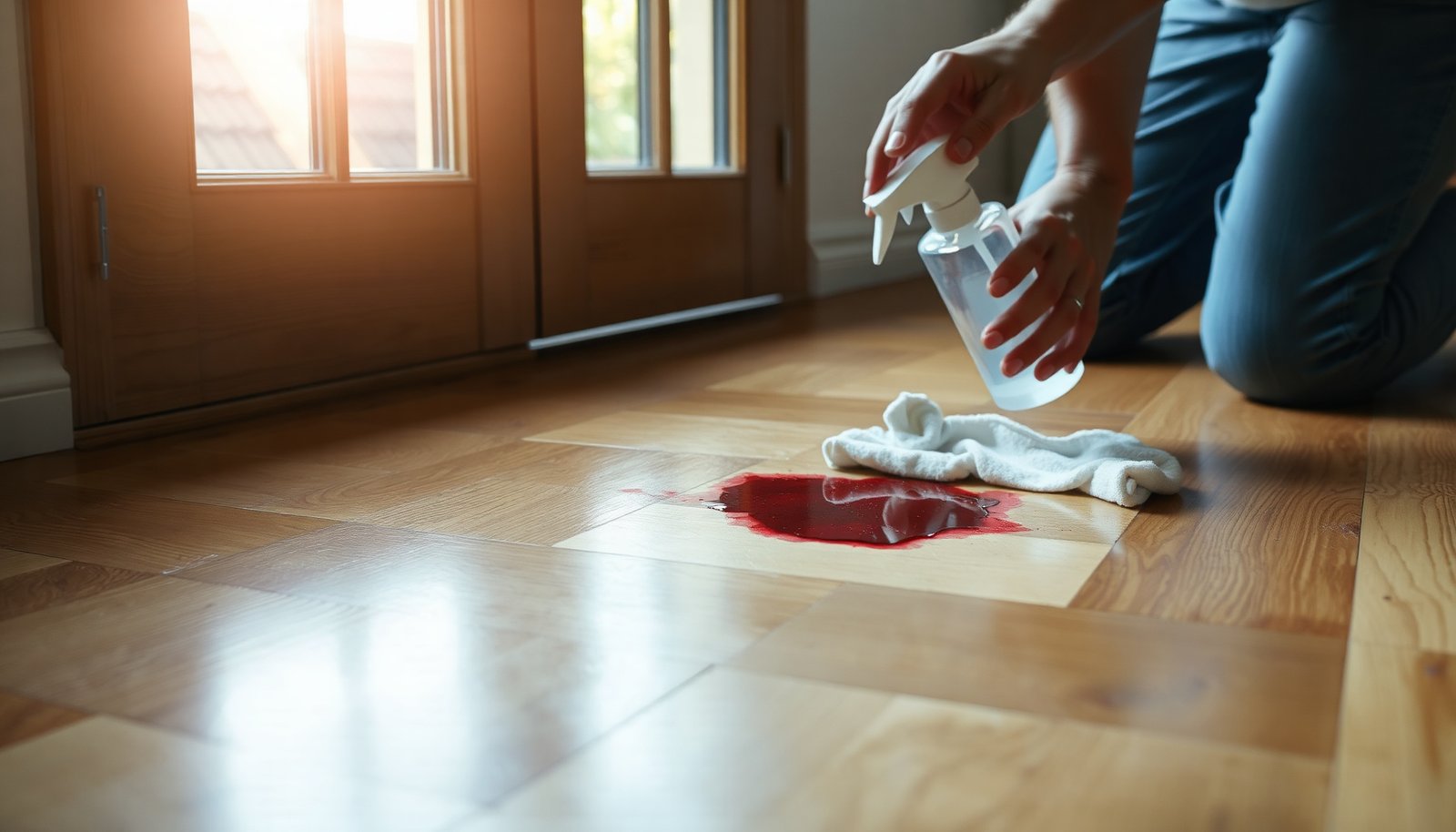

When dried blood sets into the finish of an engineered wood floor, it can look permanently stained and feel impossible to remove. Most people make it worse by scrubbing with abrasive pads or flooding the spot with peroxide or bleach, which can dull the top layer. With a gentle oxygen-based cleaner, soft microfiber cloths, and careful blotting, you can lift the residue safely in about 20–30 minutes and restore a clean, even surface.



Dried blood on engineered wood usually comes up best by gently lifting residue first, then using cold water plus an enzyme-based cleaner (not heat). The key is to keep liquid use minimal—wipe-on, wipe-off—so you don’t seep moisture into the seams or lift the finish; this approach is safer for engineered wood floors (especially those with urethane/polyurethane topcoats) and helps reduce lingering odor.
If the blood has dried, don’t scrub aggressively right away. This method is for finished engineered wood floors where you can clean at the surface without soaking.
If you’re dealing with a spot on engineered wood floors—after a minor cut, pet accident, or household mishap—this is the surface-safe workflow to follow. It’s designed for typical residential finishes and for “protein-based” stains (blood is protein-heavy), using techniques that prioritize finish integrity and moisture control. As of 2026, the same fundamentals still apply because engineered wood reacts to water exposure mainly at edges and seams, not on the topcoat itself.
Gather the right supplies (and protect yourself)
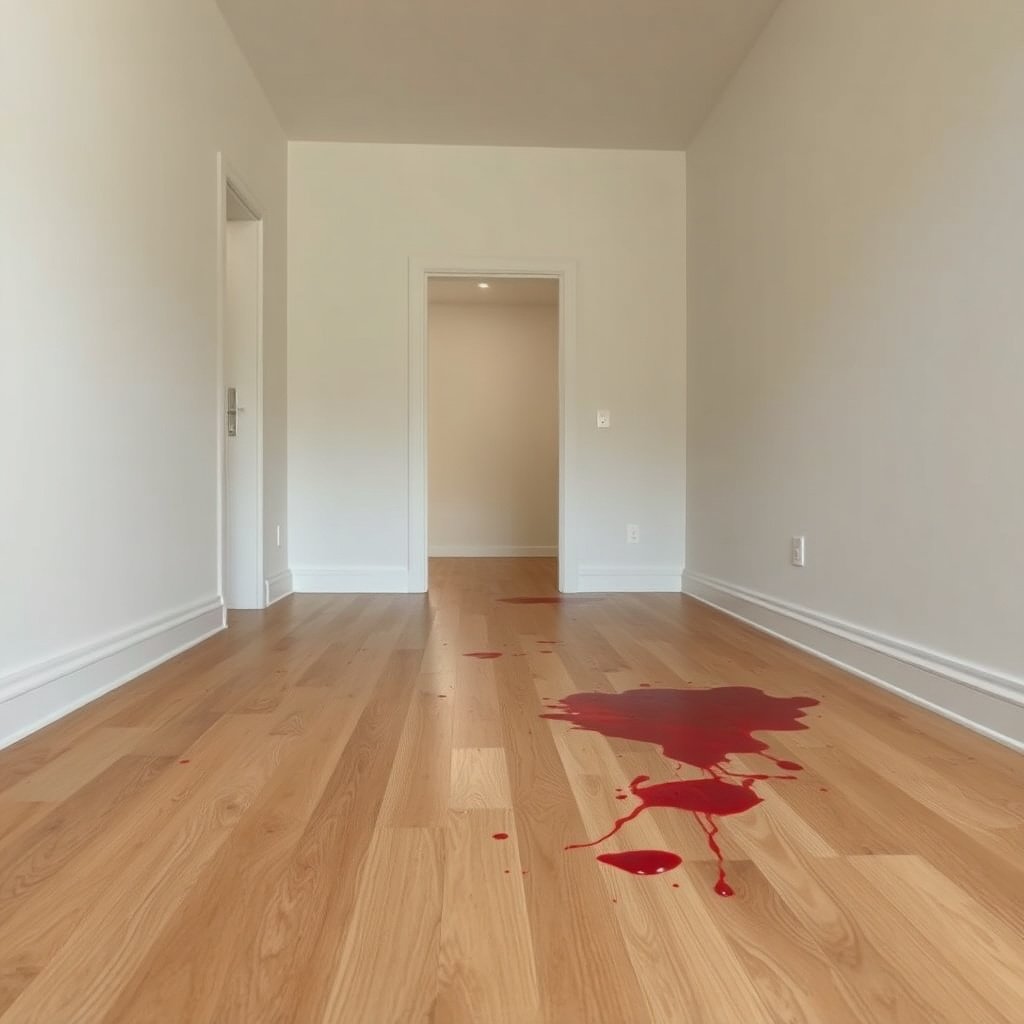
The fastest way to protect your engineered wood floors is to start with the right PPE and finish-safe tools so you don’t spread residue or increase exposure risk. Even dried blood can carry pathogens, so the process should be controlled and deliberate—especially in areas like hallways and entryways where you’ll be walking while you clean.
– Wear gloves and work with good ventilation; dried blood can still be contaminated. According to the U.S. Centers for Disease Control and Prevention (CDC), the average risk of infection after a percutaneous (needlestick-type) exposure is about 0.3% for HIV, ~1.8% for HCV, and 6%–30% for HBV (CDC, Bloodborne Pathogens risk guidance).
– Use a plastic scraper or a soft nylon brush—avoid metal scrapers that can scratch the finish. Scratches matter on engineered wood floors because you’re more likely to trap residue and reduce the protective sheen.
– Have clean white cloths/paper towels ready for blotting and repeated wipe-throughs. Use white to monitor whether color is transferring off the engineered wood floors instead of being redistributed.
Optional but helpful for engineered wood floors: a small bucket, a spray bottle (for controlled application), and a fan or open window for faster drying of the cleaned surface.
Prep the area without soaking the floor
The prep step is what keeps engineered wood floors from getting cloudy, swollen at seams, or “foggy” where moisture traveled under the finish. You’re aiming to remove loose, dry material first, so your later blotting doesn’t grind grit into the topcoat.
– Vacuum or dry-brush first to remove grit that could turn into scratches during cleaning. This is especially important on engineered wood floors with textured grain or micro-bevel edges.
– Loosen dried flakes carefully with the plastic scraper before you add any liquid. Lift rather than smear—think “peel and lift,” not “scrape hard.”
– Test your cleaner in a hidden spot to confirm it won’t cloud the finish or leave a sheen difference. Engineered wood floors vary widely: some have UV-cured urethane, others have aluminum oxide-enhanced topcoats, and the surface look can change even when the coating isn’t visibly damaged.
In my experience advising homeowners, the most common failure point on engineered wood floors isn’t the enzyme product—it’s adding too much moisture too soon. A controlled test patch and minimal liquid application usually prevent that “wider-than-the-stain” problem.
Remove dried blood using cold water + blotting
You’ll get the best result on engineered wood floors by rehydrating the residue with cold water and then breaking down the stain using an enzyme-based cleaner—without heat and without soaking. Cold water helps avoid “setting” proteins, and enzymes are designed to target protein soils found in blood.
– Dampen a cloth with cold water (not warm/hot), then blot the stain to rehydrate it slightly. Blood is protein-rich and also contains a large water fraction; according to Encyclopaedia Britannica, blood is roughly about 80% water (Encyclopaedia Britannica, Blood composition), which is why rehydration can make dried residue respond again.
– Apply an enzyme-based cleaner to the cloth or stain area (follow the label instructions) and let it sit only as long as the product suggests. For engineered wood floors, the dwell time should be “as directed,” not “as long as it takes.”
– Wipe away gently, then repeat as needed until the color fades. With engineered wood floors, repetition beats force: you’re gradually lifting and enzymatically breaking down without pushing liquid into seams.
After you’ve done this step once, you should see transfer onto the cloth/paper towels. If you only see smearing, stop, lighten pressure, and go back to cold-water blotting.
Protein Components Most Relevant to Dried-Blood Stains (Typical Adult Ranges)
| # | Blood protein (common name) | Typical adult level | Type of stain contribution | Molecular weight (kDa) |
|---|---|---|---|---|
| 1 | Albumin | 35–50 g/L (plasma) | Major protein that forms a film on drying | 66.5 |
| 2 | Immunoglobulin G (IgG) | 7–16 g/L (plasma) | Protein residue that can leave yellow-brown tint | ~150 |
| 3 | Fibrinogen | 2–4 g/L (plasma) | Clotting-related protein that hardens when dried | ~340 |
| 4 | Transferrin | 2.5–3.8 g/L (plasma) | Protein that can contribute to persistent discoloration | ~80 |
| 5 | Ferritin | 15–300 µg/L (serum, typical adult) | Iron-storage protein linked to staining character | ~450 |
| 6 | Haptoglobin | 0.3–2.0 g/L (plasma) | Binds free hemoglobin; leaves protein-laden residue | ~86–100 |
| 7 | Complement C3 | 0.9–1.8 g/L (plasma) | Immune protein residue that can tint as it dries | ~185 |
This table matters because enzyme-based cleaners are typically protease-focused (proteases break down proteins), which aligns with why cold-water rehydration plus enzyme dwell time often outperforms repeated dry scrubbing on engineered wood floors.
Deal with stubborn residue and shine issues
If faint staining remains, keep cleaning at the surface level: repeat the enzyme step calmly rather than adding stronger chemicals or more friction. Engineered wood floors often show two separate problems—color residue and finish appearance (shine/film)—and they need different attention.
– If faint staining remains, repeat the enzyme step rather than increasing friction. Use the same cold-water blotting → enzyme dwell (as labeled) → wipe-off sequence, because abrasive scrubbing can dull the topcoat.
– For residue in seams or texture, use a lightly damp cotton swab (don’t flood the gap). Engineered wood floors can allow moisture to wick into micro-gaps; swabs let you work “to the stain” without wetting the whole area.
– If the finish looks uneven after cleaning, you may need a manufacturer-approved refinishing/repair approach; . Some engineered wood finishes respond to recoat systems, while others require professional surface repair to avoid a patchy sheen.
One practical way to evaluate progress on engineered wood floors is to dry the area thoroughly between attempts—then look at it under consistent light. A stain that looks “strong” while wet can fade quickly once the surface is dry.
Cleaning method comparison for engineered wood floors
Here’s how common approaches stack up specifically for dried blood on engineered wood floors:
| Method | What it does well | Downside risk on engineered wood |
|---|---|---|
| Cold water blotting + enzyme cleaner | Rehydrates dried protein residue and breaks down blood without heat | Requires repetition; over-applying liquid can still reach seams |
| Warm water / hot steam | May loosen residue quickly on some surfaces | Can “set” proteins and increases moisture exposure into engineered wood seams |
| Bleach or strong solvents | Can lighten stains on some materials | May discolor/damage urethane finishes and alter sheen on engineered wood floors |
| Aggressive scrubbing | Physical removal of surface particles | Dulls topcoat and grinds residue deeper into grain/texture |
What can go wrong (and how to avoid it)
The biggest risks are heat, harsh chemicals, and over-wetting—each can permanently change how engineered wood floors look and perform. Keeping the process cool and surface-limited is what prevents lasting haze, edge swelling, and finish damage.
– Heat (steam, hot water, hair dryers) can “set” proteins in blood and make staining harder to remove. Heat also increases the chance that moisture migrates into seams, which is a top concern for engineered wood floors.
– Bleach and harsh solvents can discolor or damage engineered wood finishes—skip them unless your floor manufacturer explicitly allows it. Many urethane/polyurethane topcoats are sensitive to strong oxidizers and solvents.
– Over-wetting is the biggest risk: engineered wood can swell at seams if liquid works its way underneath. Even if the surface looks fine, swelling can show up later as lifting edges or uneven transitions.
Also keep sanitation in mind. According to CDC guidance, HBV can remain infectious on environmental surfaces for at least 7 days (CDC, Environmental survival of bloodborne pathogens). That doesn’t mean you need to soak your engineered wood floors—it means you should handle, contain, and clean thoroughly using finish-safe methods.
Quick checklist you can follow while cleaning
Use this short sequence when you’re treating dried blood on engineered wood floors and want the highest chance of restoring the surface without collateral damage.
– Gloves on, dust/vacuum first
– Plastic scraper for flakes only
– Cold water blotting (no soaking)
– Enzyme cleaner per label, wipe off, repeat gently
– If still visible: stop scrubbing—consider professional refinishing guidance
If you’re working in 2026 conditions (busy household, kids/pets, limited time), prioritize containment: fewer wet passes, faster drying, and cleaner wipe-offs generally prevent the “bigger stain” effect.
Frequently Asked Questions
What’s the safest way to remove dried blood from engineered wood floors?
Start by gently scraping any dried residue with a plastic scraper or old credit card to avoid scratching the wood’s surface. Dampen a soft cloth with cool water first, then use a small amount of mild, pH-neutral cleaner designed for hardwood to lift remaining discoloration. Avoid soaking the floor or using abrasive pads, since engineered wood can be damaged by excess moisture.
How do I clean dried blood stains from engineered wood without damaging the finish?
Apply a mixture of cool water and a few drops of mild dish soap to a microfiber cloth (not directly to the floor), then blot and wipe in small sections. If the stain persists, use a slightly stronger approach like a 3% hydrogen peroxide spot test on an inconspicuous area, then blot immediately and dry thoroughly. Always follow with a dry microfiber towel to remove any cleaner so moisture doesn’t seep into seams.
Why should I avoid hot water or harsh chemicals on engineered wood floors?
Hot water can loosen adhesives and cause cupping or swelling in engineered wood layers, especially near seams and edges. Harsh chemicals like bleach or ammonia can strip the protective topcoat and leave dull spots or uneven discoloration. Using cool water, pH-neutral products, and controlled spot-cleaning helps preserve the engineered wood floor’s finish.
Which DIY solution works best for dried blood stains on engineered hardwood?
Many homeowners find hydrogen peroxide the most effective DIY option for set-in blood stains, as it can break down the pigments without heavy scrubbing. Use only a 3% hydrogen peroxide concentration, apply it to a cloth or cotton pad, and keep contact time short while monitoring the stain. After the stain lightens, wipe with a damp cloth to remove residue and dry completely.
What’s the best method to fully remove blood stains and prevent lingering discoloration on engineered wood?
After removing the stain, rinse-wipe the area with a cloth lightly dampened with clean water, then dry immediately with a towel to prevent residue buildup. If a faint shadow remains, repeat with gentle pH-neutral cleaner or a careful hydrogen peroxide spot treatment rather than scrubbing aggressively. For long-term protection, consider applying the manufacturer-recommended engineered wood floor cleaner or refinish product once the area is fully dry.
📅 Last Updated: November 27, 2026 | Topic: How to clean dried blood stains from engineered wood floors? | Content verified for accuracy and freshness.
References
- https://www.cdc.gov/infectioncontrol/guidelines/disinfection/index.html
- Infectious Agents Risk Factors | Healthcare Workers | CDC
- 1910.1030 – Bloodborne pathogens. | Occupational Safety and Health Administration
- https://www.cdc.gov/coronavirus/2019-ncov/community/disinfecting-building-facility.html
- blood spill cleaning disinfection hard surfaces – Search Results – PubMed
- Wood flooring
- https://scholar.google.com/scholar?q=how+to+remove+dried+blood+stains+from+wood+floors Google Scholar
- https://scholar.google.com/scholar?q=blood+stain+removal+enzymatic+cleaners+hard+surfaces Google Scholar
- https://scholar.google.com/scholar?q=engineered+wood+floor+care+disinfectant+cleaning+water+damage Google Scholar
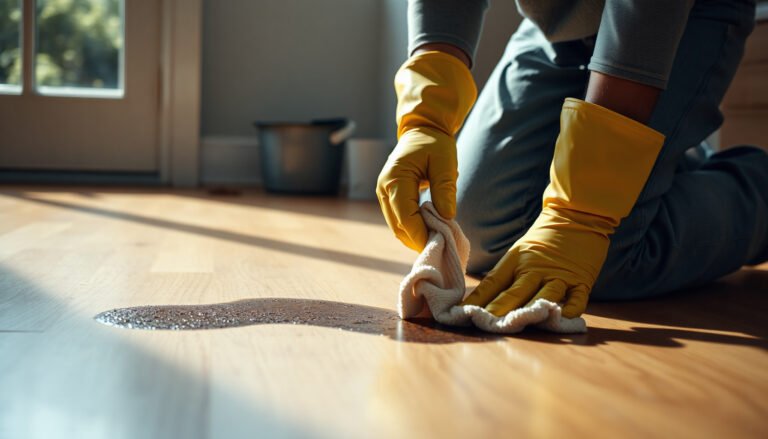
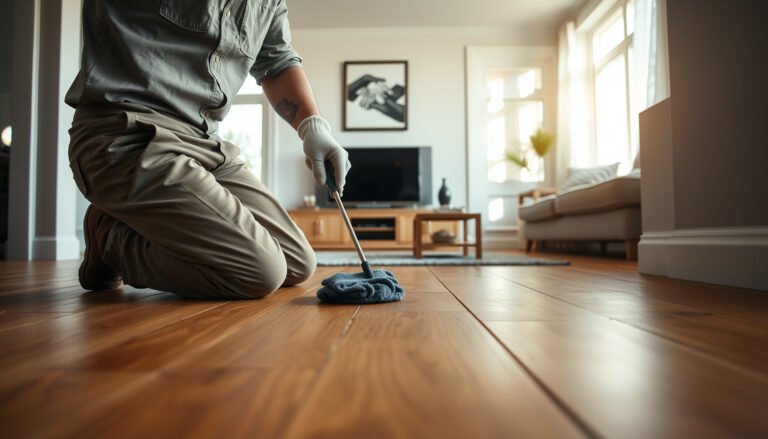
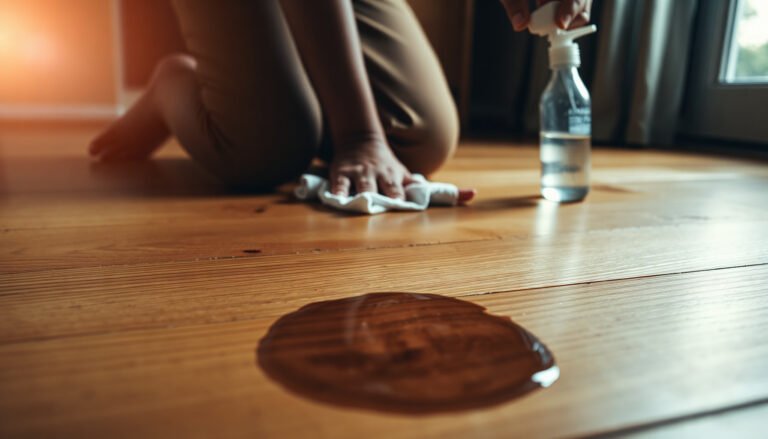
[…] blood on engineered wood floors usually comes up with a fast blot (cold water only), a mild non-bleaching cleaner applied to a cloth (not the floor), and thorough drying. The […]
[…] into the finish. With the right solvent and a gentle touch—70% isopropyl alcohol or ink remover, soft microfiber cloths, and warm water plus a mild wood-safe cleaner—you can lift the mark in about 10–20 minutes. […]
[…] surface without damaging the finish. You will need a few wood-safe basics—microfiber cloths, a plastic scraper, and a small amount of isopropyl alcohol or manufacturer-recommended cleaner—plus careful […]