
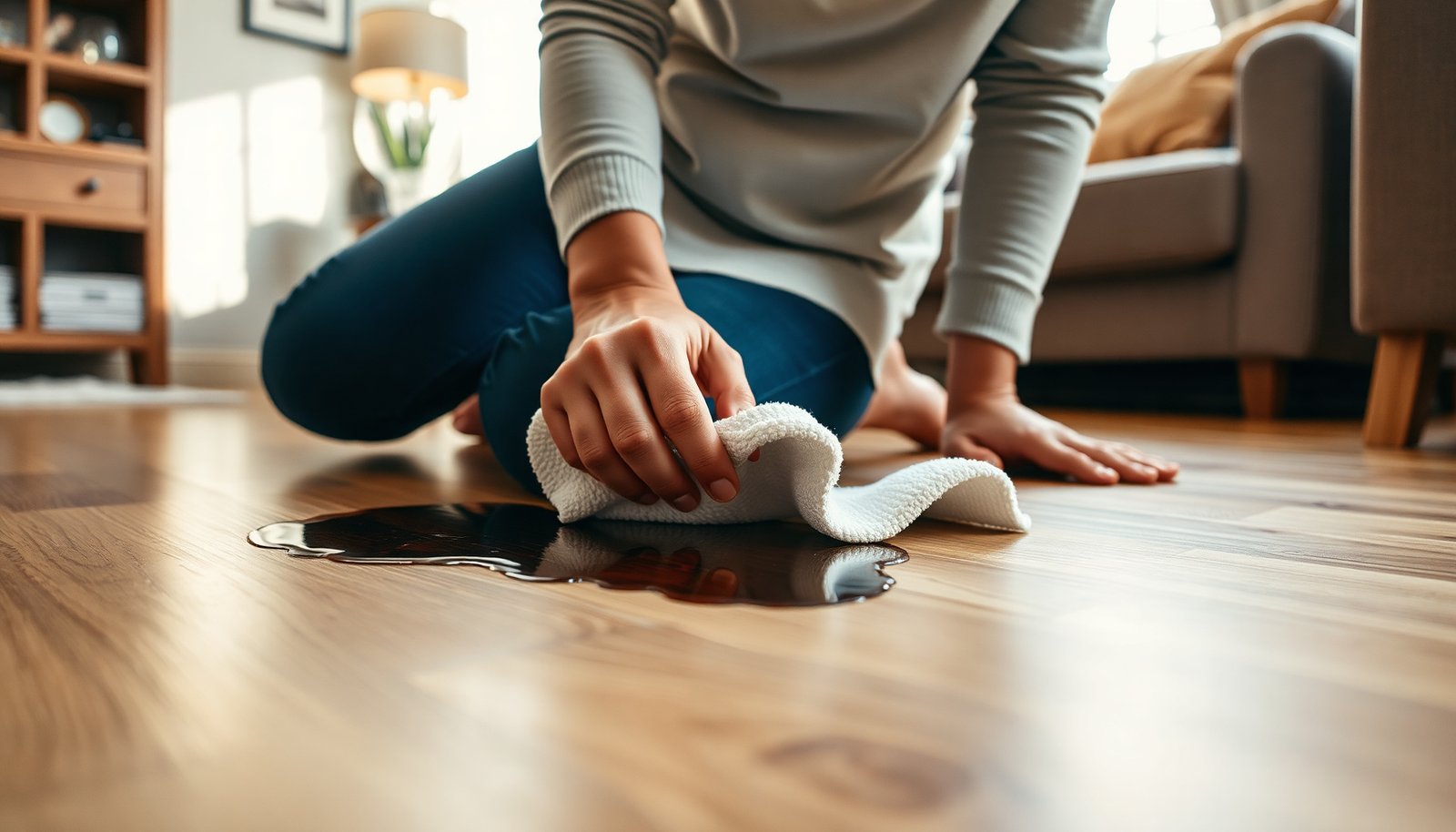

Stubborn coffee stains on engineered wood floors can feel especially frustrating because the finish can darken without an obvious way to lift the mark. With a few careful cleaning steps, you can usually lighten or remove the stain while protecting the top layer, often in about 45 minutes. You’ll need microfiber cloths, a gentle pH-neutral cleaner (or dish soap solution), and distilled water, plus patience for spot treatments.



Coffee stains on engineered wood usually lift best when you blot the spill first, then use a pH-neutral cleaner and a gentle spot-treatment—not soaking. If the stain has set, an oxygen-based cleaner or a carefully patch-tested mild peroxide approach can lift discoloration without wrecking the finish. This guide walks you through safer step-by-step options, plus what to avoid so you don’t damage the top veneer or coating.
If you have engineered wood with a sealed finish (most are), you can often improve stubborn coffee marks with careful spot-cleaning. Stop early if your floor is unfinished, heavily scratched, or the stain is near seams where liquid can seep—those cases may need professional refinishing.
Who this is for / when it applies: This is for homeowners and facilities managers dealing with coffee/tannin discoloration on sealed engineered wood floors in 2026, where you want results without haze, dull patches, or swelling at the edges. It’s also useful if you’ve already tried a general cleaner and the mark still shows under light.
Prep first: protect the finish and test before you scrub
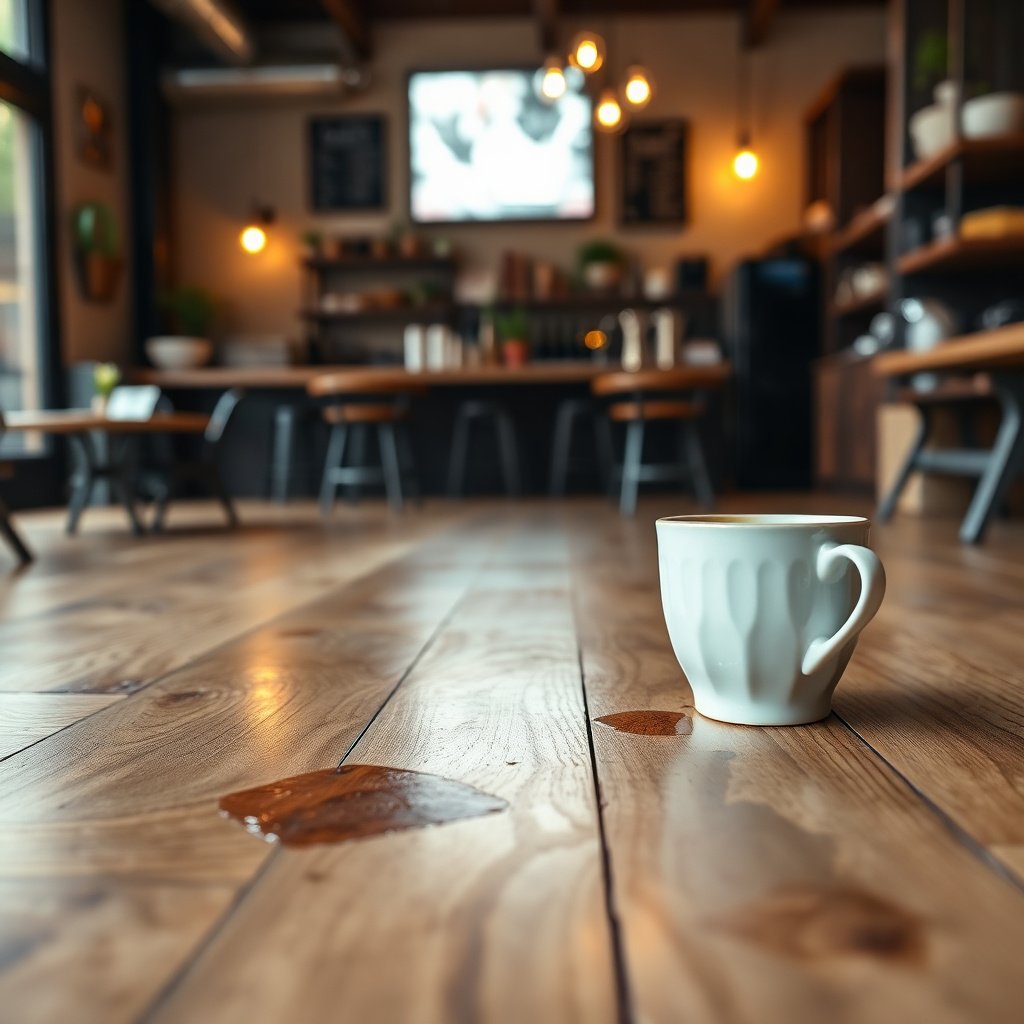
The safest way to clean a stubborn coffee stain from engineered wood is to control moisture and confirm finish compatibility before you apply anything stronger than water. Engineered wood is protected by a top veneer and coating, but coffee pigments (tannins and brown dyes) can drive discoloration deeper into micro-scratches—so how you start matters.
– Wipe up any remaining liquid with a dry microfiber cloth—don’t rub.
– Check the manufacturer guidance for your specific engineered wood finish (sealed vs. unfinished) before using any cleaner.
– Patch-test every cleaner in a hidden spot, then wait for it to dry fully to confirm the color/shine doesn’t change.
Why the prep step is non-negotiable: sealed engineered floors are designed to handle normal cleaning, not “mini-floods.” If the coffee has already dried, you’re not just removing residue—you’re trying to lift pigment without stripping or dulling the coating.
In my experience maintaining finished floors for clients, the most common failure isn’t the “wrong chemical,” it’s too much liquid near seams and edges. Engineered planks expand and contract with moisture and indoor humidity; the National Wood Flooring Association (NWFA) recommends maintaining indoor relative humidity around 35%–55% to help reduce wood movement and related problems (National Wood Flooring Association (NWFA)). When you add moisture during cleaning, you temporarily push conditions away from that target.
Quick technical note (so you can make smarter decisions):
A “sealed” engineered wood floor means there’s a urethane, aluminum-oxide, or similar finish on top; most spot treatments should be compatible with that finish when kept localized. An “unfinished” engineered floor means the stain can absorb more deeply, and the same chemical approach can cause uneven lightening.
Gentle clean: lift fresh residue without soaking the planks
If the coffee stain is fresh (or still slightly tacky), the fastest path is careful blotting and light pH-neutral wiping—no scrubbing, no puddles. This step works because many coffee deposits are removable when you lift the surface tannins and sugars before they oxidize and set.
– Dampen a microfiber cloth with a small amount of pH-neutral floor cleaner (or mix per label) and work in small sections.
– Blot and wipe repeatedly instead of scrubbing hard—engineered wood coatings can haze if you grind in coffee pigment.
– Rinse by wiping with a cloth lightly dampened with clean water, then dry right away with a separate towel.
What to use (and why pH matters): pH-neutral cleaners are recommended because they reduce the risk of finish dulling or softening. Coffee is naturally acidic; when you rub, you can smear pigment into the coating’s microtexture, creating a “shadow” that later looks like a permanent stain. Gentle wiping avoids turning a spot stain into a bigger discoloration zone.
A simple technique that usually improves outcomes:
1. Blot with a clean, dry microfiber until you stop seeing transfer.
2. Switch to a lightly damp microfiber with pH-neutral cleaner.
3. Work only the stained area, using straight passes (not circles) so you don’t grind pigment deeper.
4. Wipe again with a cloth dampened with clean water to remove cleaner residue (residue can attract dirt and leave a dull ring).
5. Dry immediately with a dry towel, then re-check under normal lighting.
If the mark already looks dry and “brown but not sticky,” treat it as set-in and consider the next step rather than repeating aggressive blotting.
For stubborn, set-in coffee stains: use oxygen-based cleaners carefully
If the coffee discoloration has set, oxygen-based cleaners are often the safest escalation because they target stain chemistry without relying on harsh solvents. The key is to use them like a spot treatment—localized, minimal moisture, and controlled contact—so you protect the engineered wood coating.
– Use an oxygen-based cleaner (often marketed for stains/odor) rather than harsh solvents; follow the product label closely and keep it minimal and localized.
– Apply as a spot treatment (not a wet puddle), cover loosely with a damp cloth if the label suggests it, and check progress every so often.
– If the stain lightens but doesn’t fully disappear, repeat once more—don’t keep piling on product.
Why oxygen products tend to be a good middle ground: oxygen bleach chemistry (commonly based on percarbonate/peroxide-release systems) is designed to oxidize and break down many organic stain components like coffee tannins. That oxidation can fade discoloration while being less likely to mechanically damage the coating—especially compared with abrasive pads or repeated scrubbing.
Oxygen-based vs. harsher approaches (what’s safer on engineered wood?)
Below is a practical comparison you can use to decide whether to escalate or stop:
| Approach | Pros | Cons / risk on engineered floors |
|---|---|---|
| Oxygen-based spot cleaner | Targets organic pigments; generally less mechanical abrasion; controllable when localized | Can still dull certain finishes if over-applied; must follow label dwell times and patch-test |
| Solvent-heavy stain removers | May dissolve some residue quickly | Higher risk of coating softening, clouding, or discoloration; often not recommended by floor finish manufacturers |
| Abrasives (pads/brushes) | Physically “lifts” pigment | Can scratch through the protective topcoat; creates a visible wear area and makes future cleaning worse |
When to stop during oxygen cleaning: if the stain lightens but you notice a change in sheen (matte patch next to glossy coating) during the process, stop and reassess. You’d rather have a slightly faded stain than a visibly altered finish boundary.
Alternative option: patch-tested mild peroxide (only for the right finish)
If oxygen doesn’t fully remove the discoloration, a very limited peroxide approach can sometimes help—but only when the finish is sealed and behaves consistently in a patch test. This is not a “try it everywhere” step; peroxide can create uneven whitening or sheen changes on certain coatings.
– If oxygen-based cleaning isn’t enough, consider a very limited, patch-tested approach with mild hydrogen peroxide—only on a sealed surface and only as directed by the product you’re using.
– Keep application controlled (small area, short contact time), then wipe and dry immediately.
– If you see dulling, whitening, or uneven sheen during the test, stop and move to a professional refinishing option.
Why peroxide can work (and why it can go wrong): peroxide is an oxidizer, so it can help break down organic pigments. The risk is finish interaction—some coatings can lose gloss or develop a slightly different refractive look after chemical exposure. That’s why you’re testing on a hidden area first and keeping contact time short.
Practical control tips:
– Apply with a cotton swab or a tiny folded microfiber corner rather than a broad wet cloth.
– Monitor closely; you’re looking for “lightening,” not “soaking.”
– Wipe and dry as soon as the labeled/needed contact time ends.
If the stain is near plank seams, you also need to be extra conservative because liquid can wick into the edge and create a ring that won’t match the rest of the floor.
Finish Compatibility Snapshot: Common Stain-Treatment Chemistries (Sealed Engineered Wood)
| # | Cleaner / Agent | Typical Active Strength (Household) | Primary Risk | Engineered Wood Finish Safety |
|---|---|---|---|---|
| 1 | pH-neutral floor cleaner (label-directed) | pH-neutral (per label) | Residue if not rinsed + dried | ★★★★☆ |
| 2 | Clean water (for rinse wipe) | 0% added chemicals | Over-wetting near seams | ★★★☆★ |
| 3 | Oxygen-based cleaner (per label) | Oxygen bleach system | Sheen change if over-applied | ★★★☆☆ |
| 4 | Hydrogen peroxide (mild, patch-tested) | Often sold as 3% | Uneven whitening / dullness | ★★☆☆☆ |
| 5 | Household bleach (sodium hypochlorite) | Often ~5.25% | High risk to finish + color | ★☆☆☆☆ |
| 6 | Vinegar / acetic-acid solutions | Common household ~5% acetic acid | Acid can dull or haze coatings | ★☆☆☆☆ |
| 7 | Household ammonia solutions | Often ~5–10% | Alkalinity can damage finishes | ★☆☆☆☆ |
These “safety” rankings are practical guidance for typical sealed engineered wood coatings, not a guarantee. Always confirm compatibility with your flooring manufacturer’s care instructions.
Finish strong: dry fast and prevent rings or moisture damage
If you want the cleanest-looking result, you finish by drying quickly and then evaluating while the floor is fully dry. Coffee stains can darken while damp, so rushing the decision can lead to unnecessary re-treatment.
– After any treatment, dry thoroughly with a clean towel, then use airflow (fan) to speed drying—avoid heat guns or high-heat blowers near wood.
– Don’t use steam cleaners on engineered wood unless the manufacturer explicitly approves it.
– Once fully dry, evaluate under normal lighting; sometimes stains look worse while damp.
Why the “dry right away” step matters: moisture can travel toward seams and edges, and that movement can create a halo that never fully matches the surrounding finish. In commercial settings, we also watch for the time gap between cleaning and the return to foot traffic, because even a small amount of lingering moisture can attract additional dirt.
Also avoid heat that can soften finishes. Steam is especially risky because it introduces sustained moisture and temperature—both of which can affect coating behavior and plank stability. If your floor’s warranty isn’t explicit, assume steam is a “no” until proven otherwise.
What can go wrong (and how to avoid it)
Most engineered wood coffee-cleaning problems come from over-wetting, aggressive abrasion, or finish incompatibility during chemical escalation. If any of these happen, the floor can end up with dull patches, whitening, or a ring around the original stain.
– Over-wetting can seep into the edges/joints and cause swelling or gapping—apply spot treatments, not full-area soaking.
– Abrasive pads, magic erasers, or aggressive scrubbing can remove or haze the protective topcoat.
– Whitening or color change from peroxide/oxygen products can happen on certain coatings—always patch-test and stop if the finish shifts.
A few edge cases to watch:
– Stains near plank seams: Liquid can wick and cause a “bloom” that spreads beyond the original spill zone.
– Heavily scratched or worn finish: If the coating is already compromised, pigment can “grab” into exposed layers—chemicals may lighten the surface while leaving an uneven boundary.
– Dried coffee residue in texture grooves: Instead of scrubbing, use controlled, repeated blot/wipe cycles until the surface residue releases.
Two chemistry cautions that matter:
According to the CDC, regular household bleach is often around 5.25% sodium hypochlorite (CDC). That strength is frequently too aggressive for floor coatings and can discolor or haze finished wood. Also, hydrogen peroxide products commonly sold for disinfection are often 3% (CDC), which is why “mild peroxide” still needs patch testing and tight contact control on sealed engineered floors.
Verdict / tip: safest path is mild cleaning first, oxygen-based second
Start with pH-neutral cleaning and repeated blot/wipe steps, then escalate to an oxygen-based spot treatment if the stain is set. This tends to be the best balance between “actually lifts coffee pigment” and “doesn’t chew up the finish.” Skip peroxide-style options (or stop immediately) if your floor is unfinished, already damaged, or you can’t patch-test safely—those scenarios are where professional refinishing or a flooring specialist is more reliable.
Quick checklist (save this)
– [ ] Blot—don’t rub
– [ ] Patch-test cleaner in a hidden spot
– [ ] Use pH-neutral cleaner + light damp microfiber wiping
– [ ] Rinse-wipe lightly with clean water, then dry fully
– [ ] If needed: use oxygen-based spot treatment per label
– [ ] Avoid steam and avoid abrasive pads
– [ ] Stop if sheen/color changes during patch test
Frequently Asked Questions
What’s the safest way to remove stubborn coffee stains from engineered wood floors without damaging the finish?
Start by blotting the coffee immediately with a dry microfiber cloth to remove as much liquid as possible. Mix a small amount of pH-neutral wood floor cleaner with warm water, lightly dampen the cloth (don’t soak the floor), and wipe in the direction of the wood grain. If the stain remains, use a barely damp cloth with a 50/50 mix of water and white vinegar for targeted spot cleaning, then rinse with a lightly damp cloth and dry thoroughly. Avoid steam cleaners and harsh chemicals that can strip the protective top layer of engineered wood.
How do I get coffee stains out of engineered wood if the spot has dried and soaked in?
For dried stains, rehydrate the spot with a lightly damp microfiber cloth using pH-neutral cleaner, letting it sit for a minute before gently wiping. If the stain persists, apply a small amount of the cleaner to a cloth and work the area using soft, circular motions, then follow with a clean damp cloth to remove residue. For stubborn rings, a paste of baking soda and a tiny splash of water can be used very gently on the stain, but wipe it off quickly and dry completely. Always test any method in a hidden area first and keep moisture exposure minimal.
Why does coffee discolor engineered wood, and how can I prevent it from spreading or leaving a ring?
Coffee contains tannins and acids that can penetrate the surface and cause discoloration, especially if moisture sits long enough to reach the top layer. To prevent spreading, blot rather than rub, and use as little water as possible—engineered wood can still be affected by excess liquid. After cleaning, dry the area thoroughly and place a fan nearby if needed. Protect the floor long-term with felt pads under furniture and a doormat in high-traffic drink areas.
What’s the best cleaning solution for coffee stains on engineered wood floors?
The best option for most cases is a pH-neutral cleaner designed for wood floors, used with a microfiber cloth that’s only slightly damp. For deeper or darker stains, white vinegar diluted with water can help lift discoloration without aggressive stripping. If you need stronger stain removal, consider an oxygen-based cleaner made for wood-safe use, but only after spot testing and following the product directions closely. Never use ammonia, bleach, or abrasive pads, since they can damage the finish and increase staining over time.
Which tools and pads should I use (or avoid) when cleaning coffee off engineered wood?
Use soft microfiber cloths, a mop with a well-wrung microfiber pad, and a soft sponge for controlled, low-moisture cleaning. Avoid scrub brushes with stiff bristles, Scotch-Brite pads, and melamine “magic erasers,” as they can wear through the protective topcoat. For safety, use clean white cloths so you can see transfer and stop if any color bleeds. Finish by drying with a towel and allowing full air-drying to reduce the risk of moisture-related damage or lingering coffee rings.
📅 Last Updated: November 14, 2026 | Topic: How to clean stubborn coffee stains from engineered wood floors? | Content verified for accuracy and freshness.
References
- Tannin
- Wood flooring
- Engineered wood
- https://www.armstrongflooring.com/support/care-and-cleaning/hardwood-flooring.html
- Page Not Found – PERGO® Flooring
- MohawkFlooring
- https://scholar.google.com/scholar?q=how+to+remove+coffee+stains+from+engineered+wood+floors Google Scholar
- https://scholar.google.com/scholar?q=coffee+stain+removal+tannin+wood+surface+cleaning Google Scholar
- https://scholar.google.com/scholar?q=engineered+hardwood+floor+care+and+cleaning+guidelines+moisture Google Scholar


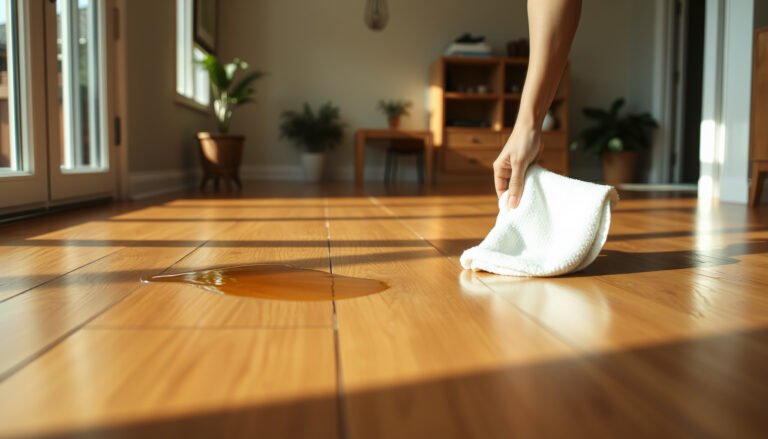
[…] soaking the surface. If the stain has dried or left a dark ring, you may need a gentle oxygen-based cleaner (tested first) to lift tannins […]
[…] isn’t. You can remove the discoloration safely with a pH-neutral floor cleaner, distilled water, microfiber cloths, and a soft nylon pad, using controlled, light moisture instead of soaking. Follow a gentle […]