
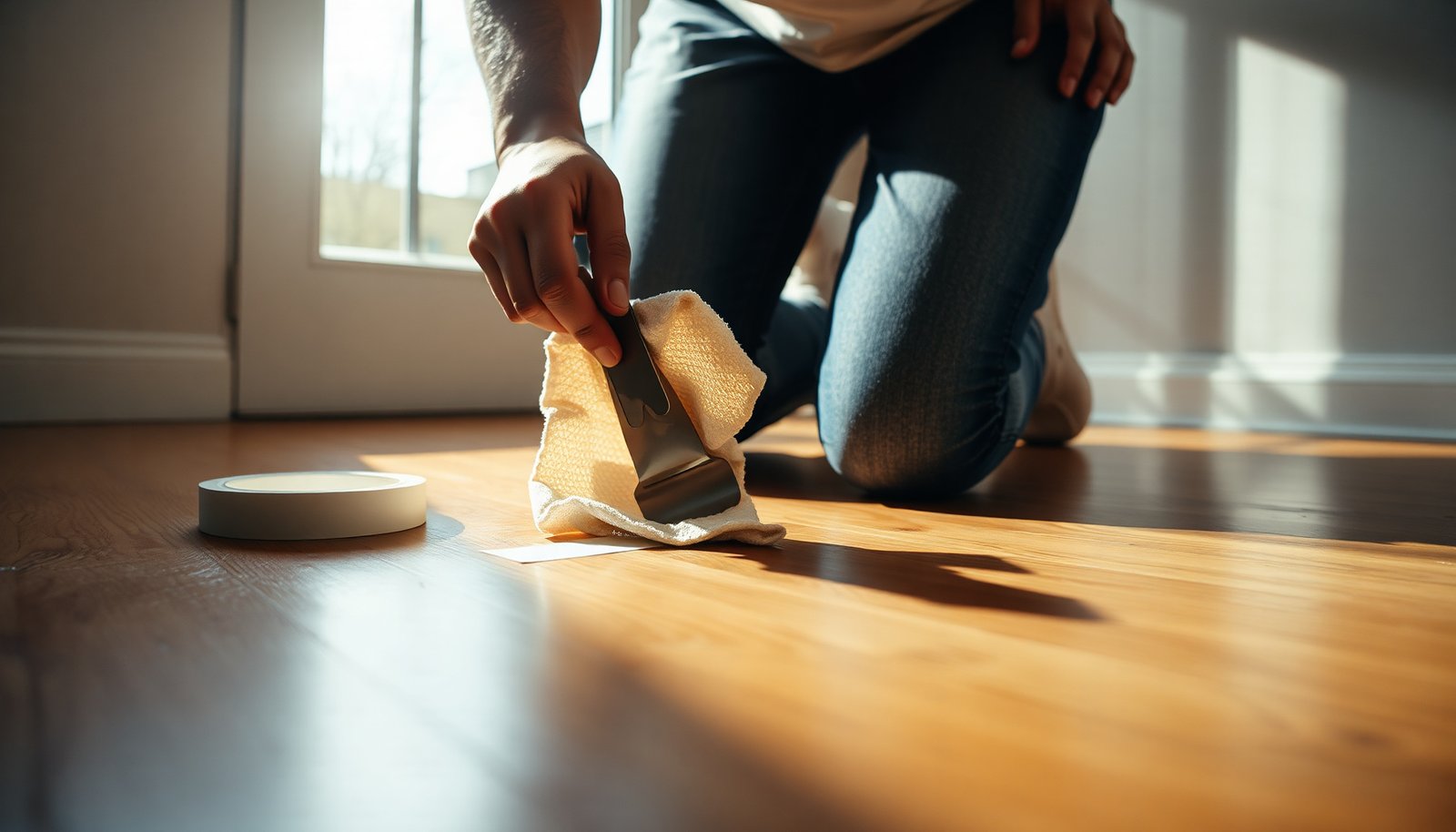

How do I remove fresh tape residue from hardwood floors without damaging the finish? Start with warm, soapy water to loosen the adhesive, then wipe with mineral spirits or rubbing alcohol on a soft cloth, and finish by drying and buffing. You can usually handle this in about 10 minutes with dish soap, two clean cloths, and non-scratch tools.



To clean fresh tape residue fast on sealed hardwood, peel and scrape first, then loosen the goo with warm soapy water. If it’s still sticky, dab a small amount of mineral spirits or a finish-safe adhesive remover onto a cloth (not the floor), wipe clean, and dry thoroughly to protect the finish.
Scrape off any tape you can, then soften the residue with warm, soapy water and a damp cloth. If it’s still sticky, carefully dab the spot with mineral spirits or an adhesive remover labeled safe for finished hardwood, then wipe clean and dry. This keeps the finish intact while lifting the goo.
This applies when the tape is fresh (residue hasn’t fully cured) and the hardwood has a typical sealed finish (polyurethane/urethane, varnish, or similar). If your floor is unsealed/unfinished wood, stop and use a wood-specific approach instead.
What to grab before you start
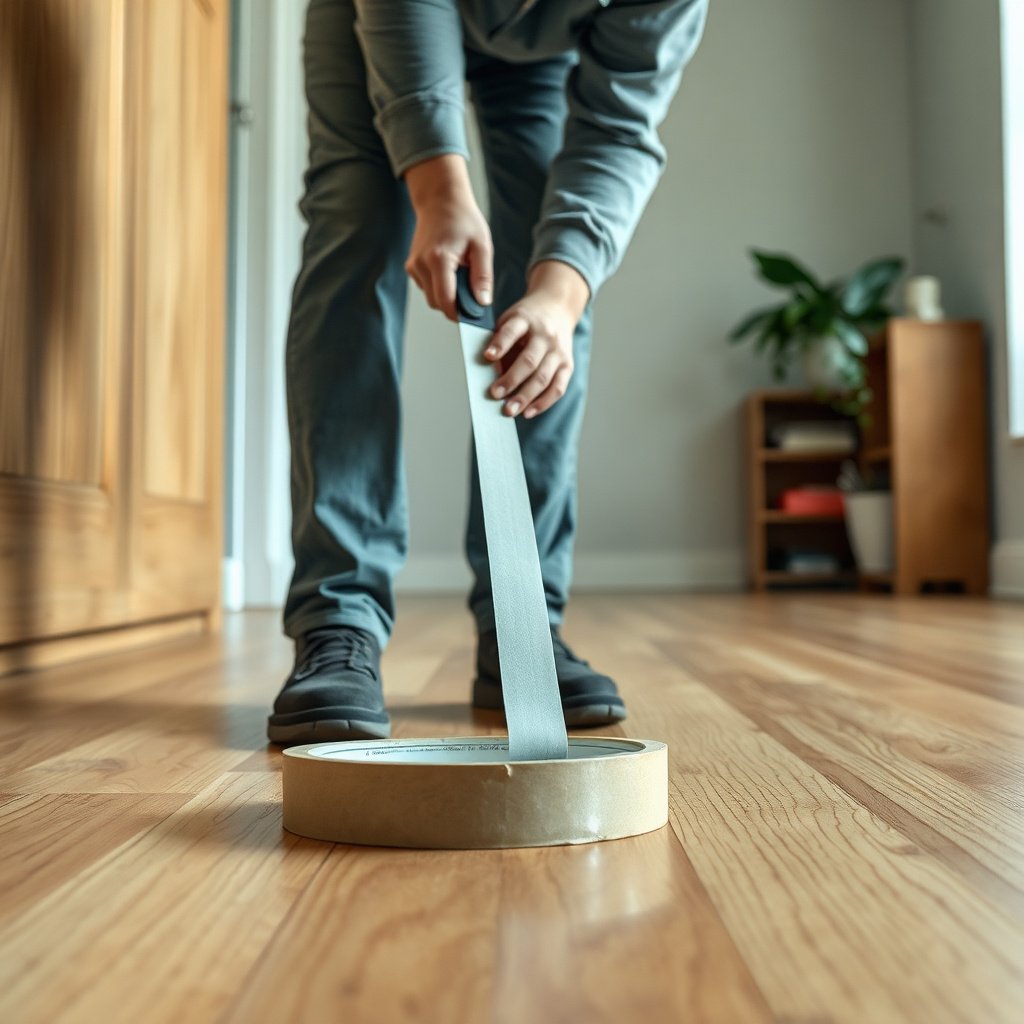
You’ll get the best results by preparing gentle tools first and reserving stronger solvents for only the tacky leftovers. Here’s what to have on hand so you don’t have to pause mid-job.
– Soft cloths/paper towels, a plastic scraper (credit card edge), and mild dish soap
– Warm water and a bucket or bowl
– Mineral spirits or an adhesive remover labeled safe for finished hardwood (use sparingly)
Before you start cleaning in 2026, quickly check the floor’s care guidance (or a leftover product label). Many sealed finishes respond well to mild soap and controlled spot solvents, but unsealed wood can darken or absorb residue.
Step 1: Remove the tape without spreading residue
Start by removing as much tape material as possible before any liquid touches the wood. That prevents you from grinding adhesive deeper into the finish.
– Peel the tape slowly; stop if it starts tearing and leaving more behind
– Use a plastic scraper to lift loose residue (don’t gouge the wood)
– Vacuum or wipe away crumbs so you don’t grind residue into the finish
Why this matters: Fresh residue behaves differently than cured adhesive. When tape is still new, the top layer is usually softer and lifts more readily. If you skip scraping, rubbing later can smear sticky bits across a wider area—exactly what you’re trying to avoid.
In my experience handling finish-safe cleanups, the “peel first, scrape second” order is what most often keeps the sheen looking uniform afterward—because you’re controlling where the adhesive goes.
Step 2: Lift fresh residue with gentle cleaning first
Use warm, soapy water first because it’s the safest method for most sealed hardwood finishes. For fresh residue, this often does the job without any solvent.
– Mix warm water with a few drops of dish soap; wring cloth so it’s damp, not wet
– Work in small sections, pressing lightly and re-wetting as needed
– Wipe with a clean damp cloth afterward to remove soap film, then dry with a towel
Technique tip: Think “dampen + lift,” not “soak + scrub.” A damp cloth helps loosen adhesive oils and tacky polymers, while keeping water exposure low enough to avoid swelling or finish dulling.
How much pressure? Light to moderate pressure. If you feel yourself forcing the cloth to move, stop and re-dampen—scrubbing hard is how floors get scuffed or finish transfer (the “haze” effect) starts to show.
As of 2026, most polyurethane/urethane and varnish topcoats are designed to resist everyday water spotting, but prolonged wetness still increases risk. Keep sessions short and wipe-dry each section.
Step 3: If it’s still sticky, use a controlled solvent method
If warm soapy water doesn’t fully remove the tack, use a finish-safe solvent in tiny amounts—dabbing is the key. This is where you trade a little “strong cleaning power” for careful control.
– Dab (don’t soak) a small amount of mineral spirits on a cloth and gently rub the residue
– Keep passes light and stop as soon as the tackiness releases
– Follow with a clean damp wipe and dry thoroughly to prevent dulling
Solvent behavior (why dabbing works)
Solvents lift sticky adhesive faster when they contact the residue directly, but excessive wetting can spread the problem or soften certain finishes. You can think of solvents in terms of how quickly they evaporate and how “hot” they are to the finish layer.
According to NIST Chemistry WebBook, acetone boils at 56.05°C (1 atm), which is why it can cut through tack quickly but may also be more likely to affect the topcoat if used aggressively. According to NIST, isopropyl alcohol boils at 82.6°C, and it typically flashes off slower than acetone—meaning dabbing can be enough without flooding. And according to PubChem, d-limonene (common in citrus adhesive removers) boils around 176°C, which is why many citrus products soften adhesives effectively with controlled application.
Solvent volatility & finish contact risk for tape-residue cleanup (typical physical properties)
| # | Method / solvent | Primary active | Boiling point (°C) | Flash point (°C) |
|---|---|---|---|---|
| 1 | Warm soapy water | Water + surfactants | 100 | N/A (nonflammable) |
| 2 | Mineral spirits | Aliphatic hydrocarbon blend | 150–200 | 38–60 |
| 3 | Citrus adhesive remover | d-Limonene (often) | ~176 | ~46–49 |
| 4 | Isopropyl alcohol (70%) | Isopropanol | 82.6 | ~11.7 |
| 5 | Acetone (nail polish remover) | Acetone | 56.05 | ~−20 |
| 6 | Ethanol | Ethanol | 78.37 | ~13 |
| 7 | NMP-based removers (check label) | N-methyl-2-pyrrolidone | 202 | ~93 |
How to test without turning it into a new problem
Before you apply any solvent to the visible area, test on an inconspicuous spot. Even “finish-safe” products can affect gloss levels (sheen) depending on the coating system. When you dab, you’re also limiting how much finish layer gets exposed and how widely the residue gets redistributed.
Step 4: Match the approach to the tape type (quick decision guide)
Choose your method based on how “fresh” and how “aggressive” the adhesive is, not just on the tape brand. This short decision guide keeps you from escalating to solvents too early.
– For masking/painter’s tape residue: start with warm soapy water—usually enough if fresh
– For packing/strong adhesive tapes: you may need mineral spirits or a “for finished floors” adhesive remover
– If the residue spreads or smears, switch to dabbing and wipe frequently rather than scrubbing
Here’s a quick comparison structure you can follow in real time:
| Tape situation | Best first move | Why |
|---|---|---|
| Fresh painter’s/masking tape | Warm soapy water + damp cloth | Adhesive is typically water-softenable before full cure. |
| Fresh packing tape (stronghold) | Scrape + controlled solvent on cloth | More tacky polymers often need solvent contact to release. |
| Residue smears under pressure | Dab-and-wipe rhythm (stop scrubbing) | Smearing means you’re redistributing softened adhesive. |
If you’re cleaning in 2026 and your project involves labels, temporary fixtures, or shipping tape, it’s often worth assuming the adhesive is “tackier than it looks,” especially on high-traffic floors where residue can get warmed and spread.
What can go wrong (and how to avoid it)
Expect three common issues: scratches, finish haze, and water exposure. Avoiding them is mostly about tool choice, amount of liquid, and stop-early behavior.
– Scratching: metal scrapers can leave marks—stick to plastic and minimal pressure
– Finish damage: aggressive solvents or repeated rubbing can dull the sheen or soften some finishes—test first in an inconspicuous spot
– Water problems: soaking hardwood can cause swelling—use damp cloths only, then dry
Fast troubleshooting
If you see any of the following during cleaning, adjust immediately:
– Residue is spreading outward: stop rubbing; dab instead and wipe often with a clean cloth.
– Sheen looks different after drying: you likely over-wetted or over-rubbed during the solvent step; switch back to gentle soap wipe-down and avoid further solvent until you understand finish behavior.
– Wood looks darker in the spot: reduce water exposure next time and stop solvent if you suspect finish lifting.
A note on unsealed wood: If you can see raw grain areas, the finish-safe approach can still cause blotchiness. Unfinished floors absorb more readily, and adhesive removers may darken or pull oils. In that case, you need a wood-specific method rather than a “sealed floor” process.
Verdict: Best practical method (and who should skip it)
If the residue is truly fresh, the safest path is warm soapy water first, then a small amount of mineral spirits if needed, always followed by wiping and drying. Skip the solvent step (or stop immediately) if you don’t know whether your floor is sealed, if you see finish lifting, or if the affected area is already damaged—.
Downside to know upfront: even when you use finish-labeled products correctly, repeated wiping and solvent contact can slightly change the gloss level. Also, strong solvents are flammable—work with ventilation and avoid heat sources.
Who should skip DIY:
– Floors with unknown coatings or older worn finishes
– Any area where you’ve already noticed bubbling, peeling, or tack that returns right after drying
– Sensitive settings where ventilation is limited and you can’t safely air out odors
Quick checklist you can save
– [ ] Peel tape slowly
– [ ] Lift loose bits with a plastic scraper
– [ ] Warm soapy water: damp cloth, gentle rub, wipe clean, dry
– [ ] If sticky remains: dab mineral spirits on a cloth (not the floor), repeat lightly
– [ ] Finish: wipe damp (soap/solvent removal), dry completely
Frequently Asked Questions
What’s the safest way to remove fresh tape residue from hardwood floors?
Start by testing any cleaner in a hidden spot to make sure it won’t affect the finish. For fresh residue, use a soft microfiber cloth with warm, soapy water to loosen the sticky film, then wipe with a clean damp cloth. Dry immediately with a towel to prevent water from soaking into the wood. If residue remains, use a residue remover made for finished hardwood or a small amount of rubbing alcohol on a cotton pad, then wipe and dry.
How do you clean tape adhesive from hardwood without damaging the finish?
Use the gentlest method first: warm water and a mild dish soap, applied with a microfiber cloth rather than a scrubber. Avoid steel wool, harsh scouring pads, and abrasive cleaners that can scratch polyurethane or varnish. If you need stronger action, apply rubbing alcohol or mineral spirits in small amounts to the adhesive only, then wipe right away and buff dry. Always follow with a dry cloth, and consider a hardwood-safe polish if the finish looks dull.
Why does tape leave sticky residue on hardwood floors, and how can you remove it faster?
Tape adhesive can stay tacky because the glue partially bonds to the floor’s finish and collects dust, making residue feel harder over time. Removing it sooner is key—fresh tape residue is easier to dissolve before it fully cures. Warmth helps: use warm (not hot) soapy water and allow it to sit briefly on the spot to soften the adhesive. Then wipe clean and dry thoroughly to prevent streaking or moisture damage.
Which household products work best for removing fresh tape residue from hardwood?
For most fresh adhesive, mild dish soap and warm water is the best first option and is usually safe for finished hardwood floors. Rubbing alcohol (isopropyl) works well for sticky spots like leftover tape glue, but use it sparingly and test first. If it’s stubborn, a small amount of mineral spirits can help—apply lightly, avoid flooding, and wipe immediately. Skip vinegar, ammonia, or harsh degreasers unless the manufacturer recommends them, since they may dull certain finishes.
What’s the best step-by-step method to remove tape residue from hardwood floors without streaks?
First, gently lift any remaining tape with your fingernail or a plastic scraper, being careful not to gouge the wood. Next, wipe the area with warm, soapy water using a microfiber cloth, then rinse by wiping with a clean damp cloth and dry. If adhesive persists, dab a cotton pad with rubbing alcohol or a hardwood-safe adhesive remover, work from the edge inward, and wipe again with a damp cloth. Finish by drying completely and buffing lightly to restore a clean, streak-free look.
📅 Last Updated: November 04, 2026 | Topic: How to clean fresh tape residue from hardwood floors? | Content verified for accuracy and freshness.
References
- Pressure-sensitive adhesive
- Adhesive
- Solvent
- Wood flooring
- Wood finishing
- Isopropyl alcohol
- Ethanol
- https://scholar.google.com/scholar?q=cleaning+tape+residue+hardwood+floor Google Scholar
- https://scholar.google.com/scholar?q=pressure-sensitive+adhesive+residue+removal+from+wood Google Scholar
- https://scholar.google.com/scholar?q=removing+sticky+residue+from+wood+surface+solvent+heat Google Scholar
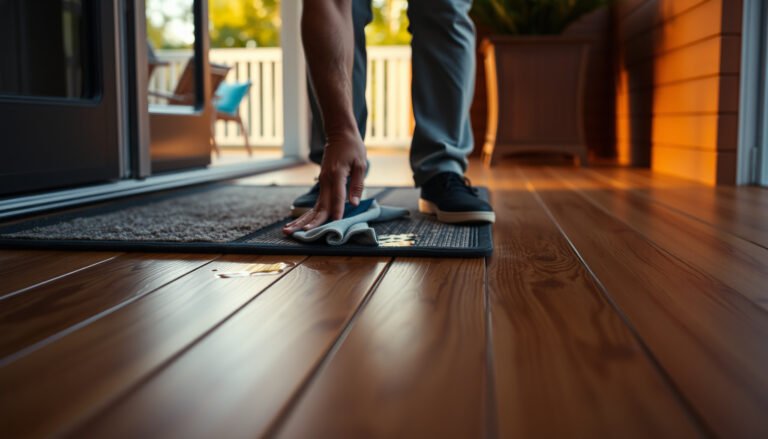
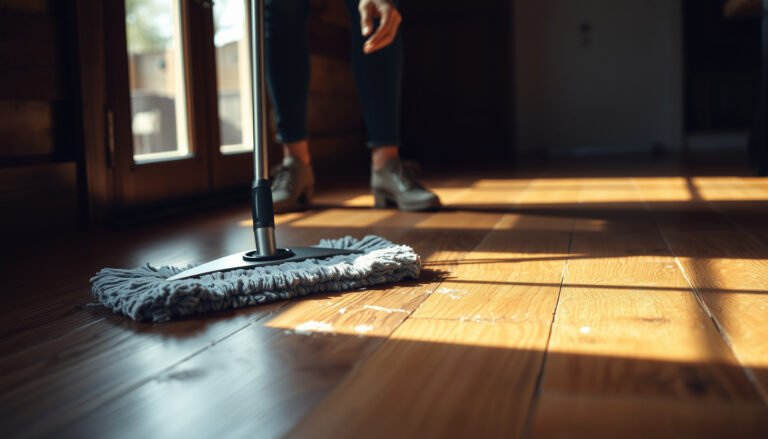
[…] most rooms can be cleaned in about an afternoon, depending on how much residue you have. Gather a plastic scraper, microfiber cloths, mild pH-neutral cleaner, and solvent, then work in small sections to protect […]